
Facets
Browse across eight MeSH (opens in new tab) facets — era, geography, science, specialty, technology, history, culture, and reference. Select one tag per group; counts update across the others. What’s new in facet browse how facets relate to subjects and MeSH.
Clear filtersGeography
Specialties & Disease
- Alternative & Fringe Medicine 383
- Anatomy & Pathology 765
- Cardiology & Blood 914
- Dentistry 259
- Diabetes 80
- ENT & Hearing 293
- Epidemiology & Demography 397
- Gastroenterology & Hepatology 316
- General Clinical Medicine 487
- Immunology & Dermatology 1,008
- Infectious Disease (General) 147
- Internal, Emergency & Geriatric 123
- Microbiology & Virology 1,080
- Military Medicine 436
- Neurology & Psychiatry 1,258
- Obstetrics & Reproductive 551
- Oncology & Cancer 377
- Ophthalmology & Vision 412
- Pediatrics 247
- Physiology & Embryology 924
- Plagues & Epidemics 1,279
- Psychology 202
- Public Health 1,129
- Pulmonary & Respiratory 233
- Rheumatology, Rehab & Pain 189
- Surgery & Anesthesia 1,553
- Urology & Nephrology 309
- Veterinary Medicine 165
Social & Historical Studies
Institutions & Culture
Reference & Scholarly Works
293 entries match ENT & Hearing [C09]
1930
#7225
Action currents in the auditory nerve in response to acoustical stimulation.
Wever and Bray discovered the electrical activity of the inner ear−then called the coclear microphonic−which enabled the development of the physiology of the ear.
1931
#7224
Correlations of the differences in the density of innervation of the organ of Corti with differences in the acuity of hearing, including evidence as to the location in the cochlea of the receptors of certain tones.
The first study to relate hair cell and neuron loss to the hearing of patients. It was the first to show that high frequency sound is "heard" at the base of the cochlea and low frequency sound at the apex. With S. J. …
1933
#1570.1
Über den Knall und die Theorie des Hörens.
In 1961 Békésy was awarded the Nobel Prize in Physiology or Medicine "for his discoveries of the physical mechanism of stimulation within the cochlea." English translation in Békésy, Experiments in hearing, 1960.
1933
#3206
Zur Pathogenese der Bronchiektasien. I. Mitteilung: Bronchiektasien bei Situs viscerum inversus.
Bronchiectasis and sinus maldevelopment associated with transposition of viscera – “Kartageners syndrome”.
1935
#7476
Noise: A comprehensive survey from every point of view.
Chapter 1: General considerations: behaviour of the ear. Chapter 10: Physiological and psychological effects of noise.
1936
#3338.1
Diseases of the air and food passages of foreign-body origin.
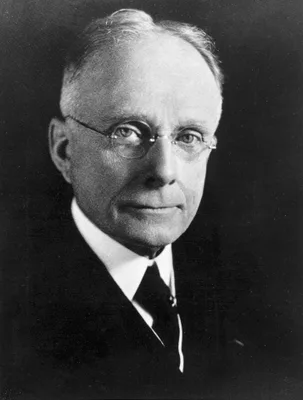
One of the most comprehensive treatises on the subject ever published, with a 636-page appendix describing, and in most cases illustrating, 3266 foreign bodies and how they were removed.
1936
#9893
On certain septicemias due to anaerobic organisms.
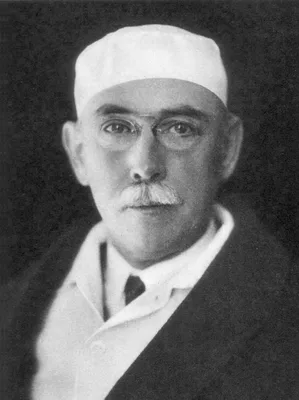
"Lemierre's syndrome (or Lemierre's disease, also known as postanginal shock including sepsis and human necrobacillosis) refers to infectious thrombophlebitis of the internal jugular vein. It most often develops as a …
1937
#3408
New technique in the surgical treatment of severe and progressive deafness from otosclerosis.
First successful attempt to restore hearing in otosclerosis by fenestration.
1938
#3409
Observations on the pathology of Menière’s syndrome.
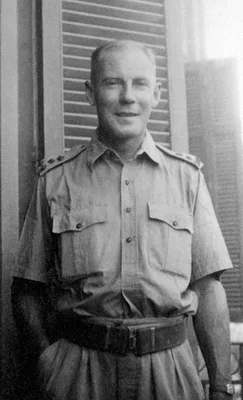
Hallpike and Cairns were first to describe the characteristic histological changes in Menière’s disease. Also published in J Laryng. Otol., 1938, 53, 625-55.
1938
#3410
Improvement of hearing in cases of otosclerosis: a new, one-stage surgical technic.
Lempert’s fenestration operation.
1941
#3411
History and present status of operations on the labyrinthine capsule for otosclerosis.
Kopetzky improved the technique of the fenestration operation. The above has a useful history of the development of this operation. See also his earlier papers in Ann. Otol. (St. Louis), 1930, 39, 996; 1931, 40, 157.
1942
#3412
The surgical treatment of deafness.
Shambaugh improved the technique of the fenestration operation. See also Ann. Otol. (St. Louis), 1942, 51, 817-25.
1943
#13709
A new laryngoscope.
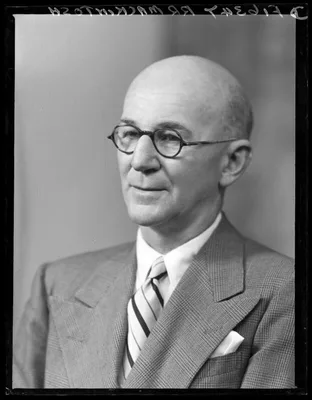
Macintosh larygnoscope.
1944
#3412.1
The ascertainment of deafness in infancy and early childhood.
Tests of hearing in children.
1946
#3412.2
The acoustic impedance measured on normal and pathological ears. Orientating studies on the applicability of impedance measurement.
The modern impedance test was developed by Metz.
1947
#3412.3
A new audiometer.
Semi-automatic (Békésy) audiometer.
1949
#3412.4
Operative treatment of chronic suppurative otitis media.
Tympanoplasty.
1949
#3342
A history of oto-laryngology
From antiquity to the beginning of the 20th century.
1951
#4154.4
A new syndrome combining developmental anomalies of the eyelids, eyebrows and nose root with pigmentary defects of the iris and head hair with congenital deafness.
“Waardenburg’s syndrome”.
1952
#12209
The pathology, symptomatology and diagnosis of certain common disorders of the vestibular system.
Dix–Hallpike test or Nylen–Barany test, a diagnostic maneuver used to identify benign paroxysmal positional vertigo (BPPV). Digital facsimile from PubMedCentral at this link.
1953
#3412.5
Mobilization of the stapes to restore hearing in otosclerosis.
Transmeatal exposure of the middle ear.
1954
#3412.6
A new method for testing hearing in temporal lobe tumours. Preliminary report.
The first tests for disorders of central auditory function were developed by Bocca, C. Calearo, and V. Cassinari.
1958
#3412.7
Fenestration of the oval window.
Stapedectomy.
1960
#3415.1
The conquest of deafness: a history of the long struggle to make possible normal living to those handicapped by lack of normal hearing.
Education for the deaf.
1960
#3415.2
Die geschichtliche Entwicklung der Hörprüfungsmethoden. Kurze Darstellung und Bibliographie von den Anfängen bis zur Gegenwart.
English translation, 1970.
1961
#11993
Surgical exposure of the internal auditory canal and is contents through the middle cranial fossa.
House, an otologist, pioneered exploration of the internal auditory canal and removal of acoustic neuromas through the microscope. His success stimulated neurosurgeons to pursue the application of the operating micros…
1965
#7233
Auditory nerve.
Describes the first "chronically" implanted or permanent cochlear implant. With John M. Epley of Stanford; Robert C. Lummis, Newman Guttman, Lawrence C. Frishkopf of Bell Telephone Laboratories; and Leon D. Harmon and…
1966
#7234
Electrical Stimulation of the Auditory Nerve in Man.
This detailed psychophysical and electrophysiological analysis of one patient proved that a cochlear implant provided sufficient information to the central nervous system for the understanding of speech.
1976
#7486
The wild boy of Aveyron.
1980
#3415.22
Histoire des maladies de l’oreille, du nez et de la gorge. Les grandes étapes de l’oto-rhino-laryngologie.
1981
#3342.1
Naissance et développement de l’oto-rhino-laryngologie dans l’histoire de la médecine. 3 vols.
1984
#3415.21
The hearing aid: its operations and development. Third edition.
Includes a comprehensive listing of manufacturers and the models each produced.
1987
#10212
The human vocal tract: Anatomy, function, development, and evolution.
1990
#12077
Otolaryngology: An illustrated history.
Second edition by Weir and Albert Mudrey, Otorhinolarygngology: An illustrated history, Ashford, UK: Headley Brothers, 2013.
1994
#12924
Antique hearing devices.
2002
#7231
Hear, Hear! Six Centuries of Otology, from the Collection of Robert J. Ruben.
Very well annotated descriptions of over 100 classics in the history of otology.
2003
#7261
The bony labyrinth of Neanderthals.
Computed tomography of the inner ear of 20 Neanderthal specimens directed by Spoor showed that the Neanderthal semicircular canal is subtly distinct in size, shape, and orientation from that of modern humans. With Mar…
2013
#7235
The early history of the cochlear implant: A retrospective.
2014
#11157
An annotated bibliography of the Dennis G. Pappas Otolaryngology Collection at the Reynolds Historical Library.
Digital edition available from https://library.uab.edu/images/reynolds-finley/collections/otolaryngology/pappas-annotated-bibliography.pdf
2017
#14347
Vertigo: Five physician scientists and the quest for a cure.
Concerns the work of Prosper Ménière, Josef Breuer, Robert Bárány, Charles Hallpike, and Harold Schuknecht.
2018
#12390
Landmark papers in otolaryngology. Edited by John S. Phillips and Sally Erskine.
2020
#13517
Hearing happiness: Deafness cures in history.
2021
#13486