
Facets
Browse across eight MeSH (opens in new tab) facets — era, geography, science, specialty, technology, history, culture, and reference. Select one tag per group; counts update across the others. What’s new in facet browse how facets relate to subjects and MeSH.
Clear filtersGeography
Specialties & Disease
- Alternative & Fringe Medicine 52
- Anatomy & Pathology 42
- Cardiology & Blood 4
- Dentistry 259
- Diabetes 0
- ENT & Hearing 10
- Epidemiology & Demography 16
- Gastroenterology & Hepatology 1
- General Clinical Medicine 83
- Immunology & Dermatology 7
- Infectious Disease (General) 2
- Internal, Emergency & Geriatric 10
- Microbiology & Virology 11
- Military Medicine 31
- Neurology & Psychiatry 21
- Obstetrics & Reproductive 19
- Oncology & Cancer 2
- Ophthalmology & Vision 3
- Pediatrics 6
- Physiology & Embryology 9
- Plagues & Epidemics 15
- Psychology 14
- Public Health 142
- Pulmonary & Respiratory 0
- Rheumatology, Rehab & Pain 6
- Surgery & Anesthesia 41
- Urology & Nephrology 4
- Veterinary Medicine 2
Social & Historical Studies
Institutions & Culture
Reference & Scholarly Works
Drugs & Technology
16 entries match Epidemiology & Demography [N02.350 / K01.400.680] · Professions & Education [M01 / N02]
1767
#13557
A comparative history of the increase and decrease of mankind in England, and several countries abroad, according to the different soils, situations, business of life, use of the non-naturals, &c. faithfully collected from, and attested by, above three hundred vouchers, and many of them for a long course of years, in two different Periods. To which is added a syllabus of the general States of health, air, seasons, and food for the last three hundred years; and also a meteorological discourse.
Digital facsimile from Google Books at this link.
1798
#1693
An essay on the principle of population, as it affects the future improvement of society.
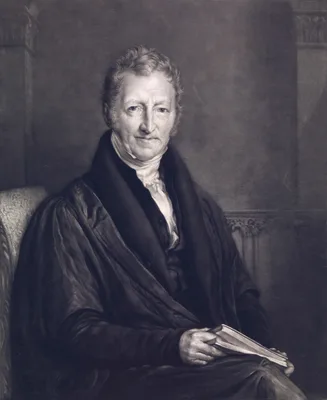
Malthus laid down the principle that populations increase in geometrical ratio, but that subsistence increases only in arithmetical ratio. He argued that a stage is reached where increase of populations must be limite…
1835
#1698.1
Sur l’homme et le développement des facultés, ou essai de physique sociale. 2 vols.
Quetelet’s statistical researches on the development of the physical and intellectual qualities of man, and an exposition of his concept of the “average man”, which became the by-word of quantitative studies. "Quétele…
1837
#9651
A descriptive and statistical account of the British Empire, exhibiting its extent, physical capacities, population, industry and civil and religious institutions. 2 vols.
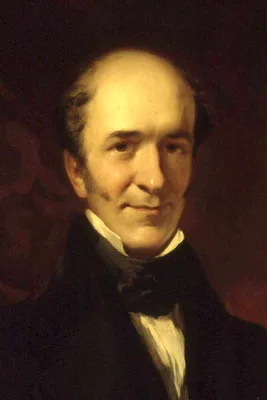
McCulloch indicated on the title page that he was "assisted by numerous contributors." Digital facsimile from the Hathi Trust at this link. Fourth edition, revised with an appendix of tables (2 vols., 1854). Digital f…
1839
#12127
First annual report of the Registrar-General on births, deaths, and marriages in England.
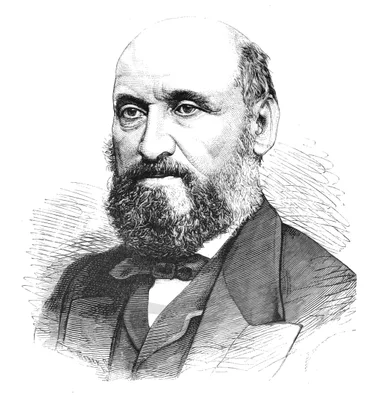
In 1836 the Births and Deaths Registration Act was passed in England with provisions for inquiry into causes of death in the population, and registration began during the following year through the General Registratio…
1870
#171
Anthropométrie, ou mesure des différentes facultés de l’homme.
In his classification of various populations, Quetelet adopted the plan of determining the standard or typical “mean man” as a basis, using stature, weight, or complexion, etc., as a measure in each particular race or…
1875
#7818
Statistics, medical and anthropological, of the Provost-Marshal-General's Bureau, derived from records of the examination for military service in the armies of the United States during the late War of the Rebellion, of over a million recruits.... 2 vols.
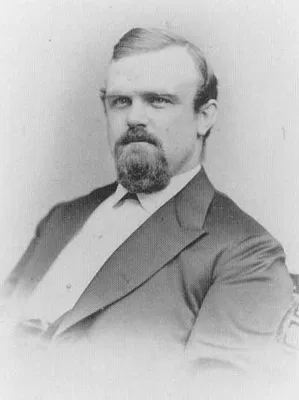
Digital facsimile from the Internet Archive at this link.
1922
#137
The biology of death.
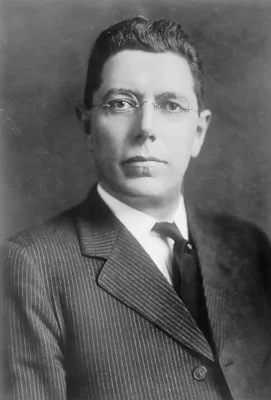
Raymond Pearl did important work on the subject of vital statistics.
1926
#10468
Population problems of the age of Malthus.
Includes chapters on birth and marriage rates relating to conditions of employment, also the influence of the Poor Laws on these rates. Other chapters concern agriculture and food and health of towns and factores, and…
1994
#10084
The health of Native Americans: Towards a biocultural epidemiology.
1995
#10083
Aboriginal health in Canada: Historical, cultural, and epidemiological perspectives.
Revised second edition, same publisher, 2006.
2009
#12021
Death before birth: Fetal health and mortality in historical perspective.
2010
#10342
Shadows in the valley: A cultural history of illness, death, and loss in New England, 1840-1916.
"...The study is organized for the most part around disease categories and the life cycle, so that the cultural framework of people's habits and values often seems secondary. Most of what we learn about illness and de…
2017
#12372
The coronary heart disease pandemic in the twentieth century: Emergence and decline in advanced countries.
"This book demonstrates that a pandemic of coronary heart disease occurred in North America, western and northern Europe, and Australia and New Zealand from the 1930s to about 2000. At its peak it caused more deaths t…
2018
#12103
Age-specific excess mortality patterns during the 1918–1920 influenza pandemic in Madrid, Spain.
Abstract "Although much progress has been made to uncover age-specific mortality patterns of the 1918 influenza pandemic in populations around the world, more studies in different populations are needed to make sense …
2020
#14098
The major genetic risk factor for severe COVID-19 is inherited from Neanderthals.
Expanding on previous findings by a genome wide association study of severe COVID-19, specifically with respiratory failure which had found that a gene cluster residing on chromosome 3 had a significant association wi…