
Facets
Browse across eight MeSH (opens in new tab) facets — era, geography, science, specialty, technology, history, culture, and reference. Select one tag per group; counts update across the others. What’s new in facet browse how facets relate to subjects and MeSH.
Clear filtersGeography
Specialties & Disease
- Alternative & Fringe Medicine 383
- Anatomy & Pathology 765
- Cardiology & Blood 914
- Dentistry 259
- Diabetes 80
- ENT & Hearing 293
- Epidemiology & Demography 397
- Gastroenterology & Hepatology 316
- General Clinical Medicine 487
- Immunology & Dermatology 1,008
- Infectious Disease (General) 147
- Internal, Emergency & Geriatric 123
- Microbiology & Virology 1,080
- Military Medicine 436
- Neurology & Psychiatry 1,258
- Obstetrics & Reproductive 551
- Oncology & Cancer 377
- Ophthalmology & Vision 412
- Pediatrics 247
- Physiology & Embryology 924
- Plagues & Epidemics 1,279
- Psychology 202
- Public Health 1,129
- Pulmonary & Respiratory 233
- Rheumatology, Rehab & Pain 189
- Surgery & Anesthesia 1,553
- Urology & Nephrology 309
- Veterinary Medicine 165
Social & Historical Studies
Institutions & Culture
Reference & Scholarly Works
412 entries match Ophthalmology & Vision [C11]
1842
#5855
A treatise on strabismus, with a description of new instruments designed to improve the operation for its cure.
1843
#5857
Die Krankheiten und Missbildungen des menschlichen Auges und deren Heilung. 2 vols.
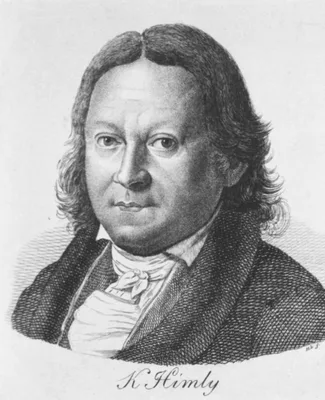
Himly was professor of ophthalmology at Jena and later at Göttingen. He introduced clinical teaching in ophthalmology.
1843
#5858
Schriftnummerprobe für Gesichtsleidende.
Küchler introduced test readings of print at a distance, for examination of patients.
1844 –1850
#11
Suśrutas. Áyruvédas. Id est medicinae systema a venerabili d'hanvantare demonstratum a Suśruta discipulo compositum. Nunc primum ex Sanksríta in Latinum sermonem vertit, introductionem, annotationes et rerum indicem adjecit Dr. Franciscus Hessler. 3 vols.
First translation of the Suśruta Samhitā into Latin, and the first publication of this text in the West. Suśruta is said to have lived in the 6th or 5th centuries, BCE. The principal medical contribution of the ancien…
1844
#1501
Untersuchungen zur Kenntniss des körnigen Pigments der Wirbelthiere in physiologischer und pathologischer Hinsicht.
Includes a description of “Bruch’s membrane” of the choroid.
1845
#1502
Die Farbenerscheinungen im Grunde des menschlichen Auges.
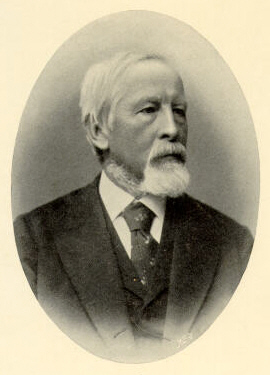
An important description of colour phenomena in the fundus oculi. This paper won for Kussmaul the Karl Friedrich Medal of the University of Heidelberg.
1845
#1503
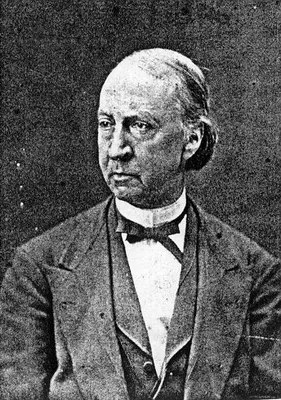
Beitrag zur physiologischen Optik.
1845
#1504
On the vision of objects on and in the eye.
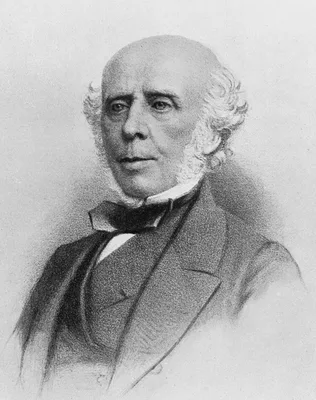
An introduction to the then little-known subject of catoptrics.
1845
#5859
Anatomische Untersuchungen über die sogenannten leuchtenden Augen bei den Wirbelthieren.
Von Brücke studied the luminosity of the eye in animals, and by passing a tube through a candle flame, was able to see the fundus. See also the same journal, 1847, 225-27.
1845
#5860
Ueber die Hornhautflecken.
First description of corneal opacity.
1845
#7330
Nuove ricerche microscopiche sulla tessiture intima della retina nell’ uomo, nei vertebrati, nei cefalapodi, e negli insetti precedute da alcune riflessioni sugli elementi morfologici globulari del sisteme nervoso.
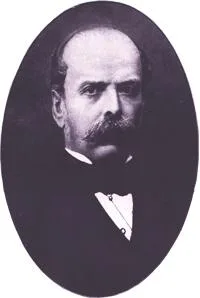
Pacini was the first to provide an accurate description of all the layers of the retina. Digital facsimile of the separate (offprint) edition from the Internet Archive at this link.
1846
#5861
On a luminous appearance of the human eye, and its application to the detection of disease of the retina and posterior part of the eye.
While a student at the London Hospital, Cumming, by shading the eye of a fellow student from the light, was able to look directly into it and obtain both the retinal reflex and the white light from the entrance of the…
1847
#5862
A manual of the principles and practice of ophthalmic medicine and surgery.
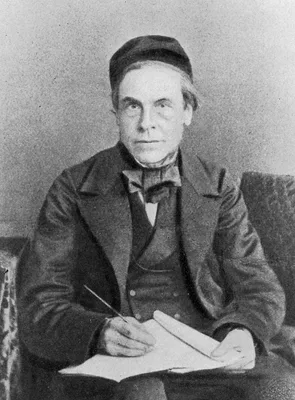
The last important English work on opthalmology published before the invention of the ophthalmoscope. Jones did not appreciate the prototype ophthalmoscope devised by Charles Babbage, and shown to him in 1847. After t…
1847
#5863
Traité théorique et pratique des maladies des yeux.
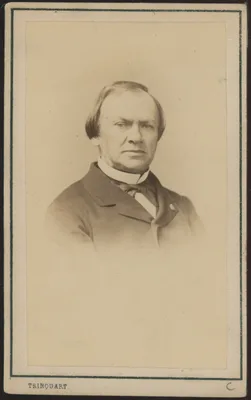
1849
#1505
Lectures on the parts concerned in the operations on the eye, and on the structure of the retina.
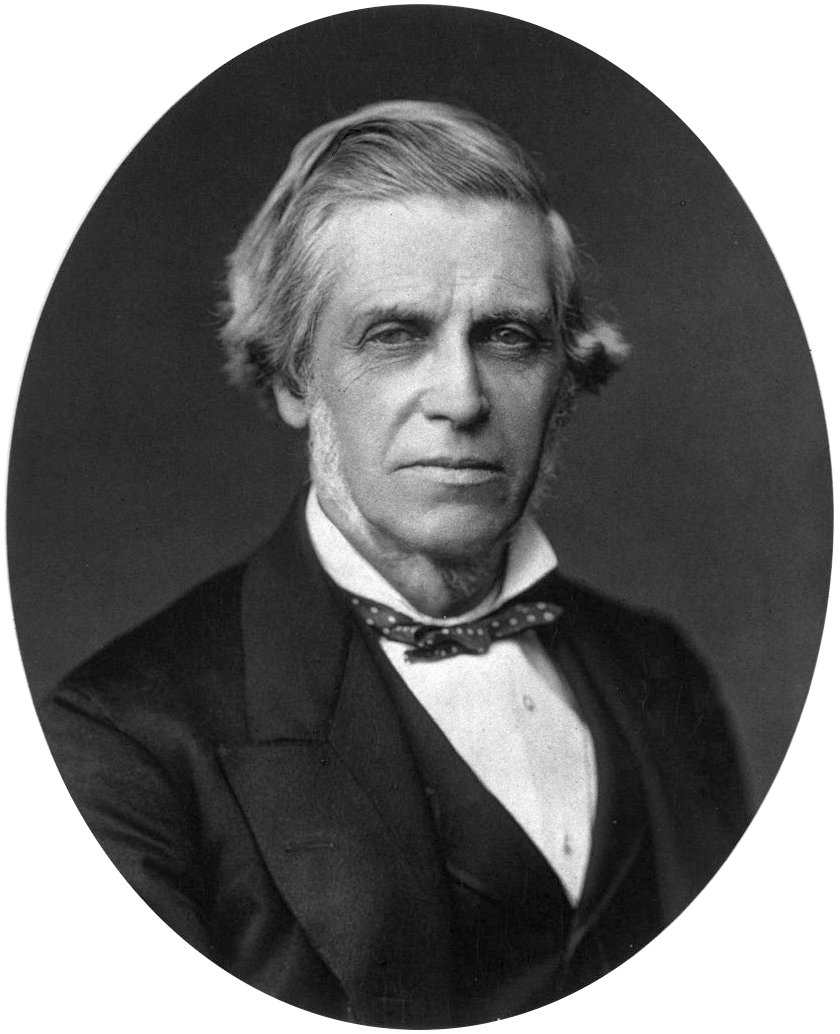
Bowman did more than any other man to advance ophthalmic surgery in England. The above work is the first to include a sound description of the microscopical anatomy of the eye and the ciliary (“Bowman’s”) muscle. The …
1850
#5864
Opérations qui se pratiquent sur les yeux.
1851
#1506
Zur Histologie der Netzhaut.
Discovery of visual purple.
1851 –1856
#5865
Die Krankheiten des Auges. 3 vols.
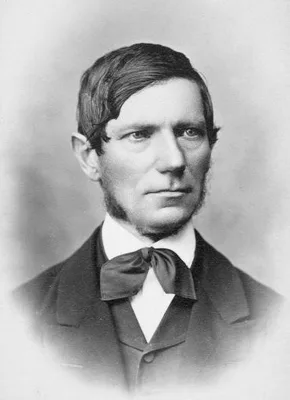
Arlt described granular conjunctivitis (“Arlt’s trachoma”) and an operation for transplantation of the ciliary bulbs in the treatment of distichiasis.
1851
#5866
Beschreibung eines Augen-Spiegels zur Untersuchung der Netzhaut im lebenden Auge.
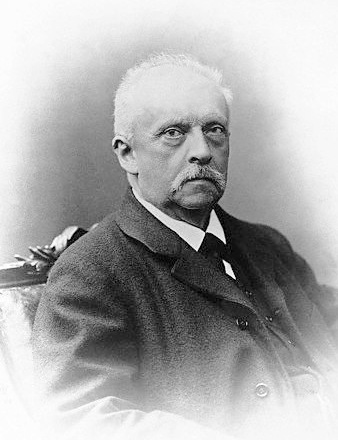
Invention of the ophthalmoscope, one of the greatest events in the history of ophthalmology. English translation by T. H. Shastid, Chicago, Cleveland Press, 1916.
1852
#1507
Ueber den Einfluss des Nervensystems auf die Bewegung der Iris.
1852
#1508
Ueber die Theorie der zusammengesetzten Farben.
1852
#5866.1
Der Augenspiegel und des Optometer für practische Aerzte.
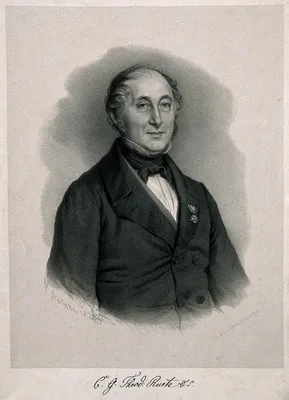
Ruete introduced a practical lens system for examining the inverted image, and improved the illumination, producing the first practical ophthalmoscope.
1852
#5867
Observations on artificial pupil, with a description of a new method of operating in certain cases.
Bowman devised an operation for the formation of an artificial pupil.
1852 –1859
#5868
Iconographie ophtalmologique. 1 vol. and atlas.
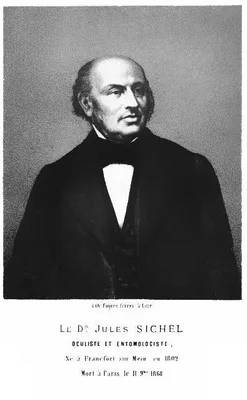
This work and that of Ammon (No. 5852) remain the greatest preophthalmoscopic atlases of ophthalmology.
1853 –1858
#5869
Die Ophthalmologie vom naturwissenschaftlichen Standpunkte aus bearbeitet. 2 vols. [in 3].
English translation, 1868.
1853
#5869.1
Dissertatio ophthalmologica inauguralis de speculo oculi.
Trigt's thesis contains the first printed illustrations of the fundus of the eye. Digital facsimile from Google Books at this link. The following year Trigt's thesis was translated into German by C. H. Schauenberg as …
1853
#5870
Ein Fall von Hamorrhagie der Netzhaut beider Augen.
Türck was the first to note the correlation of retinal hemorrhage with tumors of the brain.
1854 –1855
#1509
Ueber die Accommodation des Auges.
Helmholtz determined the optical constants and explained the mechanism of accommodation, with the help of the ophthalmometer which he had invented in 1852.
1854 –1855
#5872
Vorlaüfige Notiz über das Wesen des Glaucoms.
1854
#5874
Report on the ophthalmoscope.
Jones reported that Charles Babbage (1792-1871), the computer pioneer, had produced a simple ophthalmoscope in 1847. After the success of Helmholtz’s instrument in 1851 (No. 5866) Jones wrote about Babbage’s instrumen…
1854
#5875
Die pyämische Ophthalmie in Beziehung zur feinsten Organisation des Entzündungs-Produkts und zu der eigenthümlichen Struktur des Glaskörpers.
First account of metastatic ophthalmia.
1854 –1855
#5871
Notiz über die Behandlung der Mydriasis
1855
#1510
Ueber die Bewegung der Iris: Für Physiologen und Ärzte,
Digital facsimile from the Internet Archive at this link.
1855
#1511
Osservazioni sul nervo ottico.
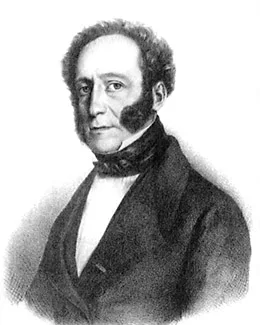
Panizza was the first to attribute the vision function to the posterior cortex.
1855 –1856
#5873
Ueber die Coremorphosis als Mittel gegen chronische Iritis und Iridochorioiditis.
Graefe introduced iridectomy in the treatment of iritis and iridochoroiditis.
1855
#5876
Quelques considérations sur la nature de l’ophthalmie dite militaire, par rapport à son apparition dans l’armée danoise depuis 1851.
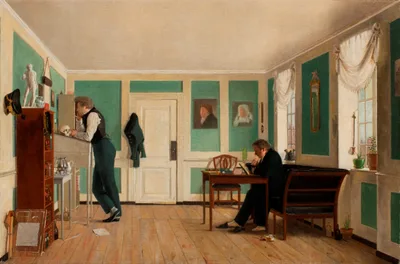
Description of trachoma.
1855
#5877
Ophthalmoskopische Notizen 4. Seitliche Beleuchtung und mikroskopische Untersuchung am lebenden Auge.
Liebreich introduced lateral illumination in microscopic investigation of the living eye.
1856
#5878
Iritis – non-mercurial treatment.
The second and third papers are entitled “On the treatment of iritis without mercury”.
1856
#14062
Kitab-i jarrahi wa yak risalah dar kahhali [in Persian; English translation: Book on surgery with a treatise on ophthalmology]. Lithographed text.
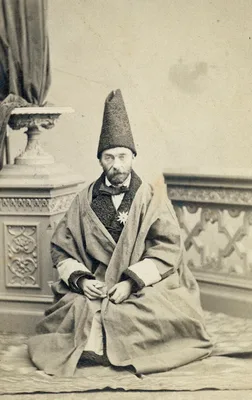
The first Persian-language surgery and ophthalmology textbook based on Western medical science. Polak based his textbook on Joseph Maximilien Chelius’s Handbuch der Chirurgie (1830) and Handbuch der Augenheilkunde (18…
1857 –1859
#5879
On the treatment of lacrymal obstructions.
1857
#5880
Beiträge zur Lehre vom Schielen und von der Schiel-Operation.
Graefe’s operation for strabismus.
1857
#5881
Ueber die Iridectomie bei Glaucom und über den glaucomatösen Process.
Iridectomy for the treatment of glaucoma was introduced by Graefe.
1858
#5883
Klinische Analyse der Motilitätsstörungendes Auges.
Alfred Carl Graefe, cousin of Albrecht, made a careful clinical analysis of disordered movements of the eye. He also invented a special “localization ophthalmoscope”, and, with Saemisch, edited the great Handbuch der …
1858
#13339
Die Entwicklungsgeschichte des menschlichen Auges.
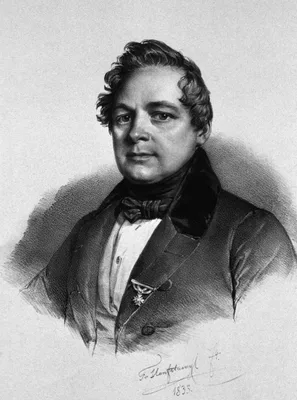
"Ammon's Scleral Prominence - prominence of the postero-external aspect of the globe of the eye of the foetus which appears at the third month of foetal life." Jessie Dobson, eponyms, 2nd. Ed. (1962), p.13 . The artic…
1859
#5882
Ueber Embolie der Arteria centralis retinae als Ursache plötzlicher Erblindung.
Discovery of embolism of the retinal artery as a cause of sudden blindness.
1859
#5884
Die Krümmung der Homhaut des menschlichen Auges.
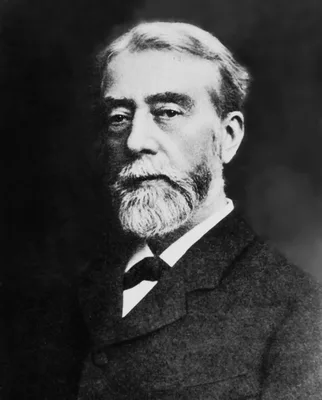
Knapp wrote valuable monographs on curvature of the cornea (above) and on intraocular tumours (see No. 5902). He became one of the leading ophthalmologists in America.
1860
#5885
Ueber Complication von Sehnervenentzündung mit Gehimkrankheiten.
Graefe showed that most cases of blindness and impaired vision connected with cerebral disorders are a result of optic neuritis rather than of paralysis of the optic nerve.
1860
#5887
Schriftskalen. 3te. Aufl.
Jaeger first introduced his test types in 1854; Emil Fuchs improved them in 1895.
1860
#5888
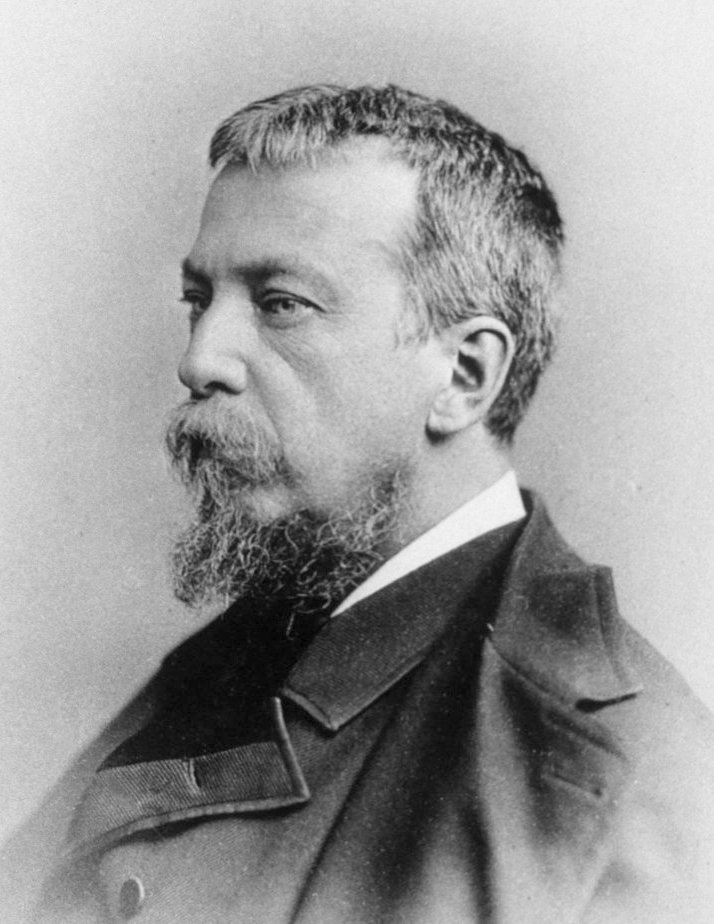
On the production of cataract in frogs by the administration of sugar.
1860
#4536
Ueber Complication von Sehnervenentzündung mit Gehimkrankheiten
Graefe showed that most cases of blindness and impaired vision connected with cerebral disorders can be traced to optic neuritis rather than paralysis of the optic nerve.