
Facets
Browse across eight MeSH (opens in new tab) facets — era, geography, science, specialty, technology, history, culture, and reference. Select one tag per group; counts update across the others. What’s new in facet browse how facets relate to subjects and MeSH.
Clear filtersFacet filters
Geography
Specialties & Disease
- Alternative & Fringe Medicine 383
- Anatomy & Pathology 765
- Cardiology & Blood 914
- Dentistry 259
- Diabetes 80
- ENT & Hearing 293
- Epidemiology & Demography 397
- Gastroenterology & Hepatology 316
- General Clinical Medicine 487
- Immunology & Dermatology 1,008
- Infectious Disease (General) 147
- Internal, Emergency & Geriatric 123
- Microbiology & Virology 1,080
- Military Medicine 436
- Neurology & Psychiatry 1,258
- Obstetrics & Reproductive 551
- Oncology & Cancer 377
- Ophthalmology & Vision 412
- Pediatrics 247
- Physiology & Embryology 924
- Plagues & Epidemics 1,279
- Psychology 202
- Public Health 1,129
- Pulmonary & Respiratory 233
- Rheumatology, Rehab & Pain 189
- Surgery & Anesthesia 1,553
- Urology & Nephrology 309
- Veterinary Medicine 165
Social & Historical Studies
Institutions & Culture
Reference & Scholarly Works
914 entries match Cardiology & Blood [C14 / C15]
1846
#3062.1
Particulars of a case in which enormous enlargement of the spleen and liver, together with dilatation of all the blood vessels of the body, were found coincident with a peculiarly altered condition of the blood.
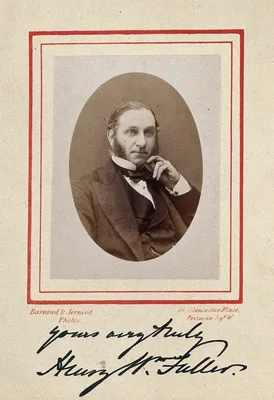
Leukemia diagnosed during life as the result of a blood examination.
1846
#2755.1
Lectures on subjects connected with clinical medicine, comprising disease of the heart. Second edition, 2 vols.
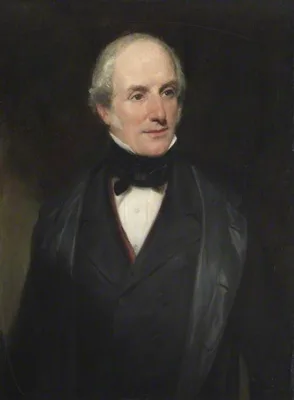
Includes (vol. 2, pp. 373-79) a classic description of coronary thrombosis, although not using the term. The patient was Thomas Arnold, the educationist, and the report was signed by Joseph Hodgson and by S. Bucknill,…
1846
#2756
Observations on some cases of permanently slow pulse.
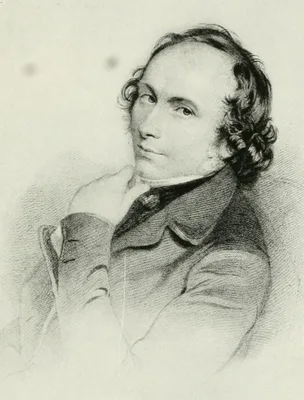
Stokes’s celebrated account of heart block with syncopal attacks – the Stokes–Adams syndrome (see also No. 2745). Stokes was most interested in the diagnostic value of this condition. The paper is reprinted in Med. Cl…
1846
#2902
Lectures illustrative of various subjects in pathology and surgery.
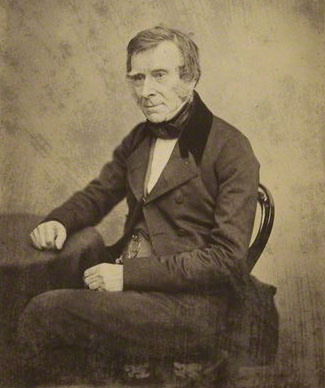
Page 361 contains the first description of intermittent claudication in man. This was first reported (in the horse) by “Boullay” [?J. Bouley] in Arch. gén. Méd.,1831, 27, 425. P. 186: Brodie's test for insufficiency o…
1847
#3117
Puerperal anaemia; or a peculiar anaemic condition, occurring in gestating and lactating females.
Bennett described the anemia of pregnancy and defined it as resulting from the process of reproduction.
1847
#2903
Ueber die acute Entzündung der Arterien.
1847
#2978
Observations on aneurism, and its treatment by compression.
Bellingham introduced the “Dublin method” of treating aneurysm by slow compression.
1848
#865.1
Beobachtungen über eine eiweissartige Substanz in Krystallform.
Reichert obtained hemoglobin crystals in the guinea pig. Digital facsimile from ECHO at this link.
1848
#2979
Untersuchungen über die Natur der krankhaften Veränderungen der Arterienwände, die als Ursachen der spontanen Aneurysmen zu betrachten sind.
1849
#3118
Anaemia; disease of the supra-renal capsules.
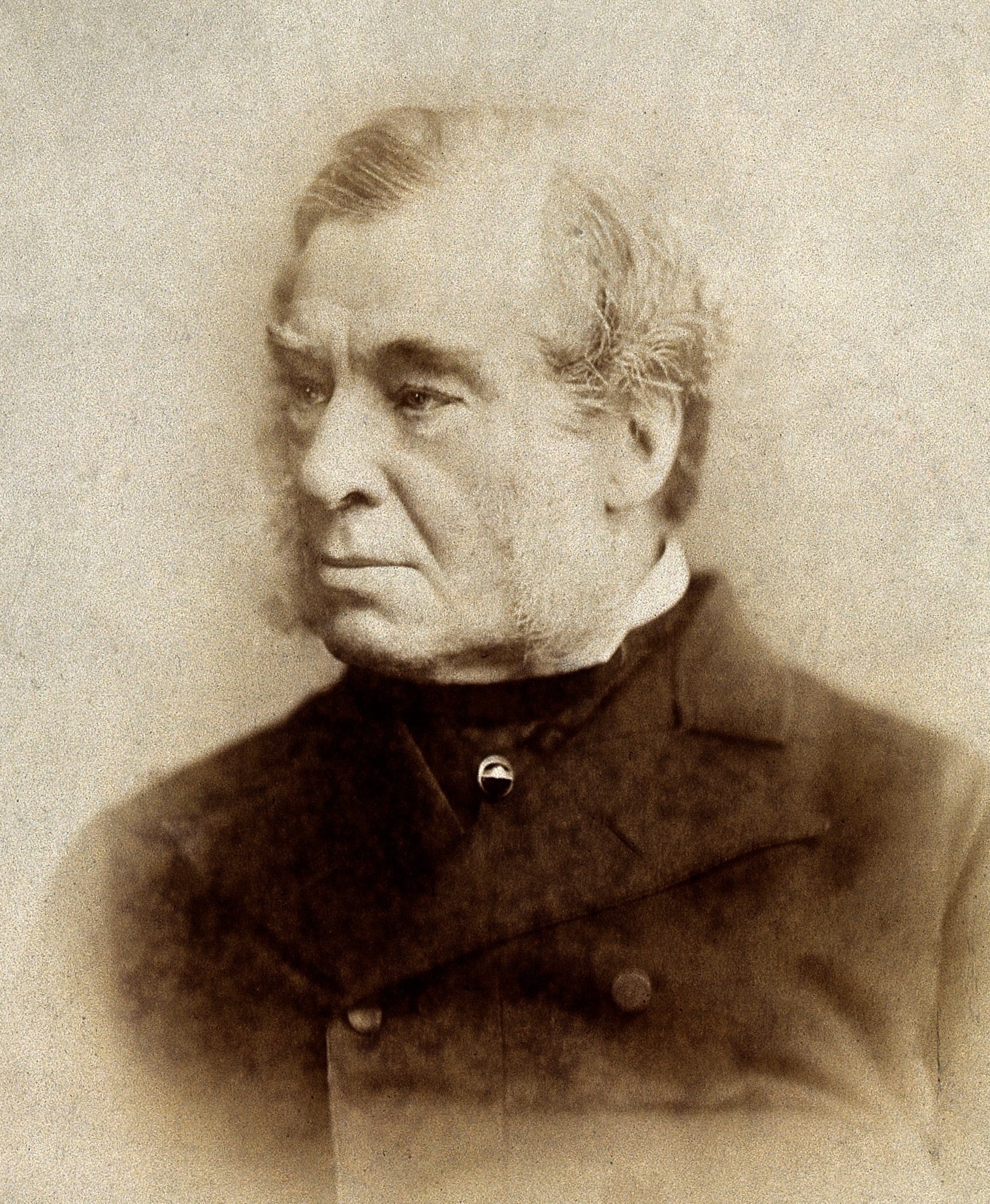
Addison included a classic description of pernicious (Addisonian) anemia in his papers on the condition later known as “Addison’s disease”. Although preceded by Combe, his account was more important in bringing the di…
1850
#810
Einige neue Versuche über Herzbewegung.
Experimental ventricular fibrillation.
1851
#2757
A practical treatise on the diseases of the lungs and heart, including the principles of physical diagnosis.
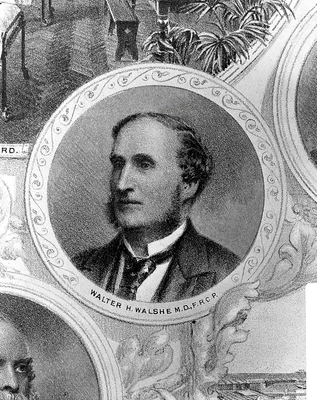
Walshe, physician to University College Hospital, London, was one of the first to recognize the presystolic character of the direct mitral murmur in mitral stenosis.
1852
#866
Ueber das Milzvenenblut.
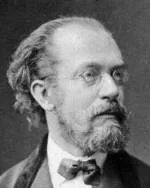
Discovery of hemoglobin. (Title of second paper: Neue Beobachtungen tiber die Krystalle des Milzvenen – und Fisch-Blutes).
1852
#867
Neue Methode der quantitativen mikroskopischen Analyse des Blutes.
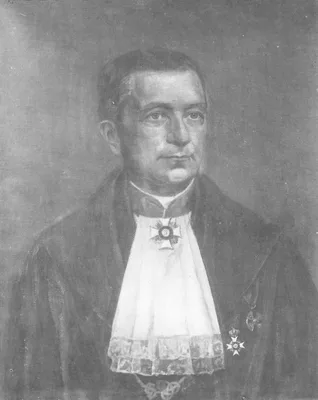
Vierordt was the first to devise an exact method of enumerating the red blood corpuscles. See also his later paper: Zählungen der Blutkörperchen des Menschen, in the same volume, pp. 326-31.
1852
#2758
On some of the principal effects resulting from the detachment of fibrinous deposits from the interior of the heart, and their mixture with the circulating blood.
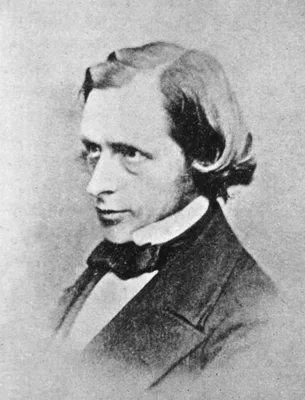
A classic description of embolism resulting from intracardiac coagula. Reprinted in Willius & Keys: Cardiac classics, 1941, pp. 474-82.
1852
#2904
Ueber einige der wichtigsen Krankheiten der Arterien.
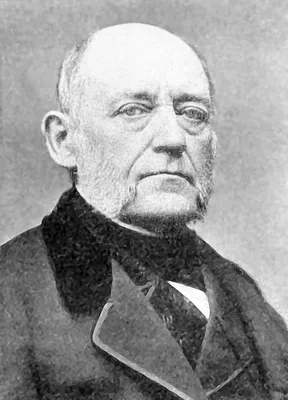
One of Rokitansky’s best works. He described atheroma and calcification in the intima of arteries, and various congenital malformations. Rokitansky "is credited with the initial case report of polyarteritis nodosa in …
1853
#5603
Sur un nouveau moyen d’opérer la coagulation du sang dans les artères, applicable à la guérison des anéurismes.
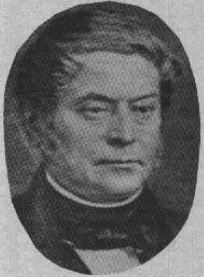
Pravaz invented galvanocautery.
1854
#2759
Die bildliche Darstellung des menschlichen Arterienpulses.
Vierordt invented a sphygmograph which acted on the principle that indirect estimation of blood-pressure could be accomplished by measuring the counter-pressure necessary to obliterate the arterial pulsation. This was…
1854
#2760
The diseases of the heart and aorta.
On pp. 320-27 is to be found Stokes’s account of fatty degeneration of the heart, in which he so well described the periodic form of respiration now known as “Cheyne–Stokes breathing.” Stokes also gave the first descr…
1854
#11549
Notes of M. Bernard's lectures on the blood; with an appendix by Walter F. Atlee.
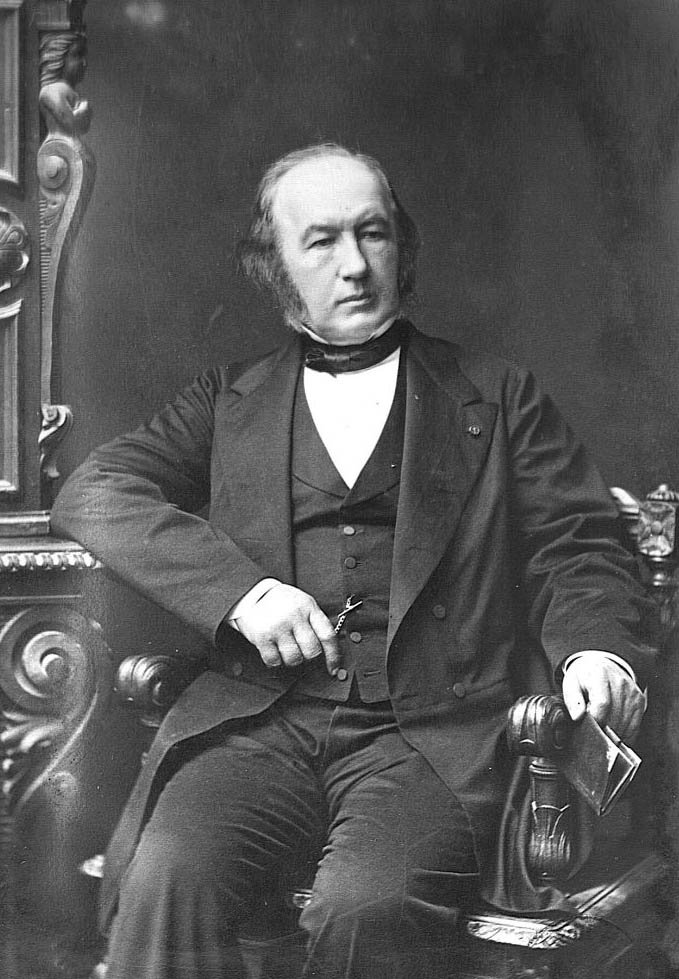
This record of Bernard's actual lectures contains the first published description of Bernard's technique of right and left heart cathererization, a technique that Bernard invented. The appendix includes notes of lectu…
1854
#12342
Histoire de la découverte de la circulation du sang.
Digital facsimile from the Hathi Trust at this link. Revised edition, 1857, of which a digital facsimile is also available from the Hathi Trust at this link. Translated into English by J. C. Reeve as A history of the …
1855 –1856
#615
Leçons de physiologie expérimentale appliquée à la médecine. 2 vols.
Claude Bernard made strenuous efforts to introduce experimental methods into physiology. The above includes his classic work on the function of the liver, pancreas, and gastric glands. Vol. 1, p. 126: Catheterization …
1855
#3063
Die Haemophilie oder die Bluterkrankheit.
First full clinical description of hemophilia.
1855
#3864
On the constitutional and local effects of disease of the supra-renal capsules.
Addison was the first to draw attention to the importance of the adrenals in clinical medicine. The above work first appeared in the Lond. med. Gaz., 1849, 43, 517-18, and was later expanded into book form. It describ…
1856
#3064
Ueber farblose Blutkörperchen und Leukämie. In his Gesammelte Abhandlungen zur wissenschaftlichen Medicin, pp. 147-218.
Includes his paper on “weisses Blut” (see No. 3062) and three later papers on leukemia. See No. 3006.
1856
#3006
Thrombose und Embolie. Gefässentzündung und septische Infektion. In his Gesammelte Abhandlungen zur wissenschaftlichen Medicin.
Reprints of papers published between 1846 and 1853. Virchow gave the first clear description of thrombosis and embolism (see especially Beitr. exp. Path.,1846, 2,227-380). This work was translated into English by A. C…
1857
#934
Die Gase des Blutes.
Meyer showed that the oxygen in the blood was not held in simple solution but came off in quantity only when the air pressure was reduced to one fiftieth of an atmosphere.
1857
#3064.1
Ein neuer Fall von Leukämie.
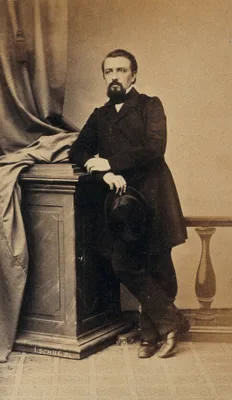
Acute leukemia first described.
1858
#935
De sanguine oxydo carbonico infesto.
Investigation of the blood gases.
1858
#868
Bestimmungen der Menge des Körperblutes und der Blutfärbekraft, sowie Bestimmungen von Zahl, Maass Oberfläche und Volum des einzelnen Blutkörperchens bei Thieren und bei Menschen.
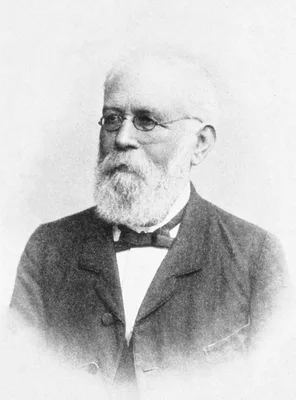
Welcker was the first to determine the total blood volume and the volume of the normal red blood cells. Earlier paper in Vjschr. prakt. Heilk., 1854, 44, 63.
1858
#2761
On malformations, etc., of the human heart.
Includes an account of the “tetralogy of Fallot” (see No. 2792). Peacock’s book was “the first comprehensive study covering the whole field” (Maude Abbott). Reprinted, Boston, Mass., 1973.
1859
#2761.1
Fall af ruptura cordis.
An important account of myocardial infarction, with a histological finding of myocardial necrosis. Abbreviated translation, in German, in Acta med. scand., 1930, 73, 448-50.
1859
#2905
Sur la claudication intermittente.
Charcot was among the first to report intermittent claudication in man.
1859
#7935
A practical treatise on diseases, pathology, and treatment of diseases of the heart.
The first major American textbook on cardiology. Digital facsimile from the Hathi Trust at this link.
1859
#12874
Mémoire sur le sang quand il est fluide, pendant qu’il se coagule et lorsqu’il est coagulé.
The first attempt to isolate and describe fibrinogen, the blood protein essential for clotting. “Prosper-Sylvain Denis, in his Mémoire sur le sang (1859), was the first to recognize that plasma contained a clottable s…
1860
#776
Recherches sur le pouls au moyen d’un nouvel appareil enregistreur le sphygmographe.
Invention of the modern sphygmograph. Also published in C.R. Acad. Sci. (Paris), 1860, 51, 281-309. Preliminary paper in same journal, 1860, 50, 634-37.
1861
#869
Ueber den Faserstoff und die Ursachen seiner Gerinnung.
1861
#2762
Du double souffle intermittent crural, comme signe de l’insuffisance aortique.
The double intermittent murmur over the femoral arteries, diagnostic of aortic insufficiency, has become known as “Duroziez’s sign.” Partial English translation in No. 2241.
1861
#2763
Short account of cardiac murmurs.
The murmur which Fauvel (No. 2754) had called “presystolic” was described by Gairdner, who called it “auricular-systolic.” This paper is important as being largely responsible for the recognition in Britain of the pre…
1862
#814
Ueber Reflexionen von und zum Herzen (Klopfversuch).
Rapidly-repeated blows on the belly of a frog caused cessation of the heart-beat, which Goltz concluded was brought about by reflex inhibition through the vagus, an important contribution to the knowledge of the mecha…
1862
#870
Ueber das Verhalten des Blutfarbstoffe im Spectrum des Sonnenlichtes.
Using the spectroscope, Hoppe-Seyler discovered the absorption spectrum of blood. See No. 873.
1862
#2388
Della trasmissione delle sifilide mediante la inoculazione del sangue.
Proof of the possibility of transmission of syphilis by blood transfusion.
1862
#2704
De l’asphyxie locale et de la gangrène symétrique des extrémités.
First description of “Raynaud’s disease.” Raynaud was the first to describe this disorder, which causes extreme constriction of the peripheral blood vessels resulting in discoloration of the fingers, toes and sometime…
1862
#2764
On cardiac murmurs.
First description of the “Austin Flint murmur,” present at the apex beat in aortic regurgitation. Reprinted in Med. Classics, 1940, 4, 864-900.
1862
#3007
Beiträge zur normalen und pathologischen Anatomie der Lungen.
First description of pulmonary fat embolism in man.
1862
#3008
Experimentelle Beiträge zur Lehre von der Embolie.
Experimental study of the effects of ligation of coronary vessels.
1863
#816
Appareils et expériences cardiographiques.
First direct records of the heart impulse by means of a “cardiac sound” and the sphygmograph – recording tambours, which wrote on a moving drum covered with smoked paper.
1863
#871
On the coagulation of the blood.
In his Croonian Lecture Lister exploded the theory that blood coagulation is due to ammonia and showed that, in the blood vessels, it depends upon their injury. He further showed that by carrying out the strictest pre…
1863 –1864
#872
On the reduction and oxidation of the colouring matter of the blood.
Discovery that oxygen can be removed from hemoglobin by reducing agents.
1863
#11690
Physiologie médicale de la circulation du sang basée sur l'étude graphique des mouvements du coeur et du pouls artériel avec application aux maladies du l'appareil circulatoire.
Marey first recorded atrial fibrillation in this work work in which he used pulse tracings to establish the interelationship of heart rate and blood pressure. The work also includes the first detailed description of t…