
Facets
Browse across eight MeSH (opens in new tab) facets — era, geography, science, specialty, technology, history, culture, and reference. Select one tag per group; counts update across the others. What’s new in facet browse how facets relate to subjects and MeSH.
Clear filtersGeography
Specialties & Disease
- Alternative & Fringe Medicine 383
- Anatomy & Pathology 765
- Cardiology & Blood 914
- Dentistry 259
- Diabetes 80
- ENT & Hearing 293
- Epidemiology & Demography 397
- Gastroenterology & Hepatology 316
- General Clinical Medicine 487
- Immunology & Dermatology 1,008
- Infectious Disease (General) 147
- Internal, Emergency & Geriatric 123
- Microbiology & Virology 1,080
- Military Medicine 436
- Neurology & Psychiatry 1,258
- Obstetrics & Reproductive 551
- Oncology & Cancer 377
- Ophthalmology & Vision 412
- Pediatrics 247
- Physiology & Embryology 924
- Plagues & Epidemics 1,279
- Psychology 202
- Public Health 1,129
- Pulmonary & Respiratory 233
- Rheumatology, Rehab & Pain 189
- Surgery & Anesthesia 1,553
- Urology & Nephrology 309
- Veterinary Medicine 165
Social & Historical Studies
Institutions & Culture
Reference & Scholarly Works
1,279 entries match Plagues & Epidemics [C01.252]
1855
#5454.2
Yellow fever, considered in its historical, pathological, etiological, and therapeutical relations: including a sketch of the disease as it has occurred in Philadelphia from 1699 to 1854, with an examination of the connections between it and the fevers known under the same name in other parts of temperate, as well as in tropical, regions. 2 vols.
The most important 19th century American monograph on yellow fever. La Roche’s work sketched the disease in its appearances from 1699 to 1854 at Philadelphia, which saw some of the worst yellow fever epidemics, and pr…
1855
#8809
Elephantiasis orientalis, and especially elephantiasis genitalis in Bengal.
Digital facsimile from Google Books at this link.
1855
#9921
Portraits of diseases of the skin.
Wilson's atlas, with 48 plates drawn and engraved by the medical artist, William Bagg, was the first English large folio atlas of dermatology in the style of similar folios issued in France by Alibert and Cazenave. Th…
1855
#9982
On the mode of communication of the cholera. Second edition, much enlarged.
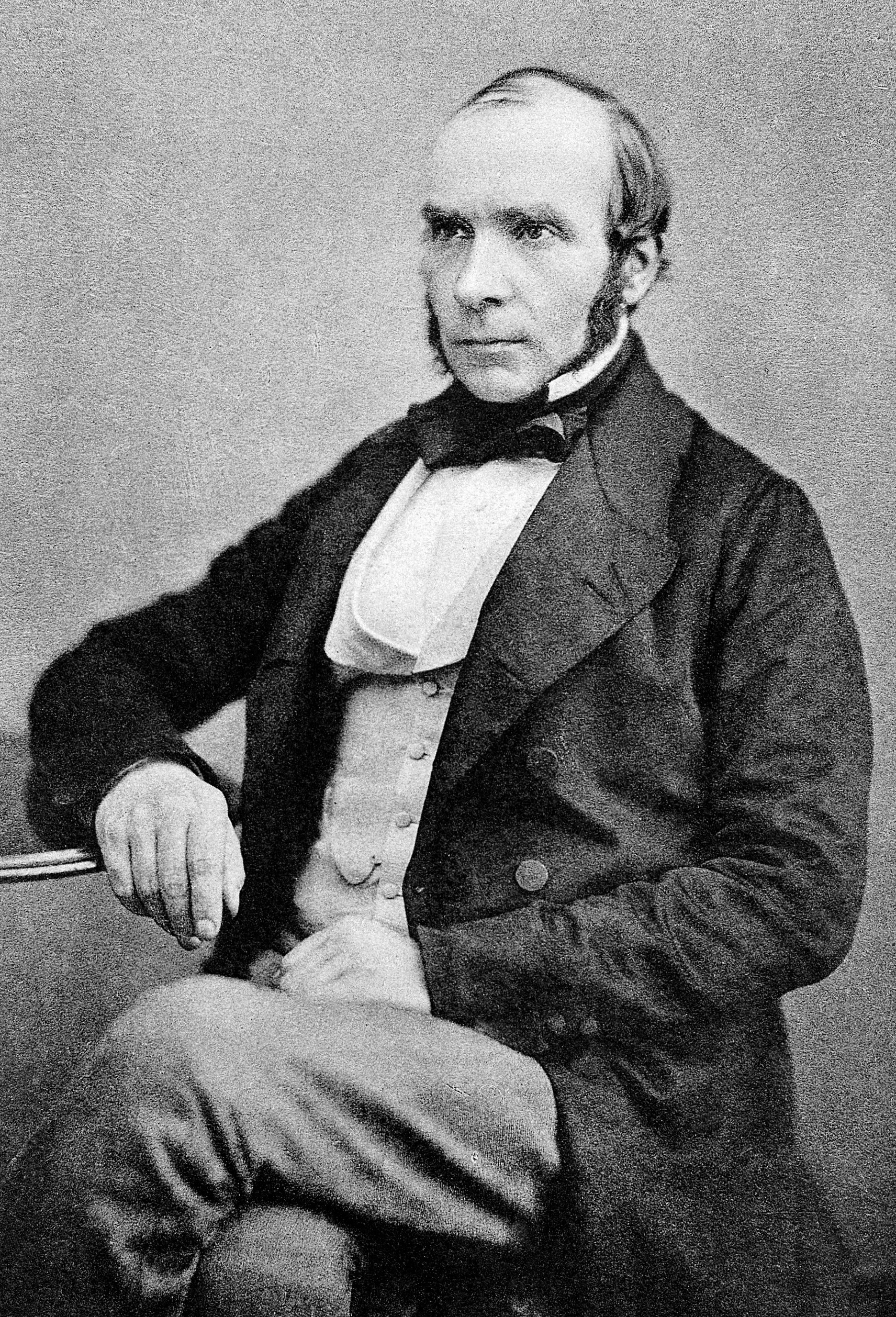
The second edition of Snow's book on cholera, with 162pp. compared to 31pp. in the first edition, incorporated the results of five more years of research, and contained so much additional material that it was essentia…
1856
#2384
First demonstration of the experimental inoculability of syphilis. The information is given in a discussion on the subject by the Society of Physicians of the Palatinate; it appeared anonymously, without title, and id…
1856
#22
Тα ∑ωζομενα. The extant works of Aretaeus, the Cappadocian. Edited and translated by Francis Adams.
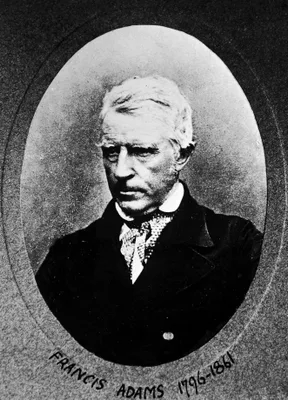
Aretaeus left many fine descriptions of disease; in fact Garrison ranks him second only to Hippocrates in this respect. In the printed editions of this bibliography, before the present online version, the Adams editio…
1856
#10112
Clinical researches on disease in India. 2 vols.
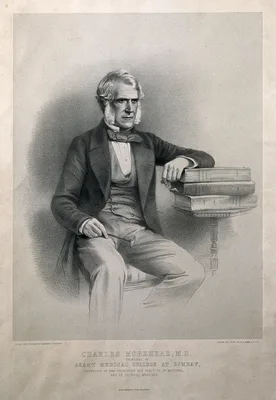
One of the most comprehensive studies of disease in India during the mid-19th century; includes 556 case reports. Digital facsimile from the Internet Archive at this link
1857
#5269
Missionary travels and researches in South Africa.
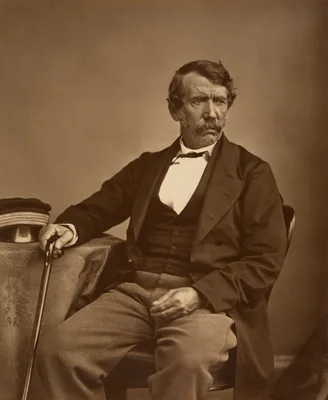
Livingstone gave an accurate account of the tsetse fly Glossina morsitans and of the disease in cattle following its bite (see pp. 80-83; picture of the tsetse fly on p. 571). In his time the bite of the fly was thoug…
1858
#2385
Ueber die Natur der constitutionell-syphilitischen Affectionen.
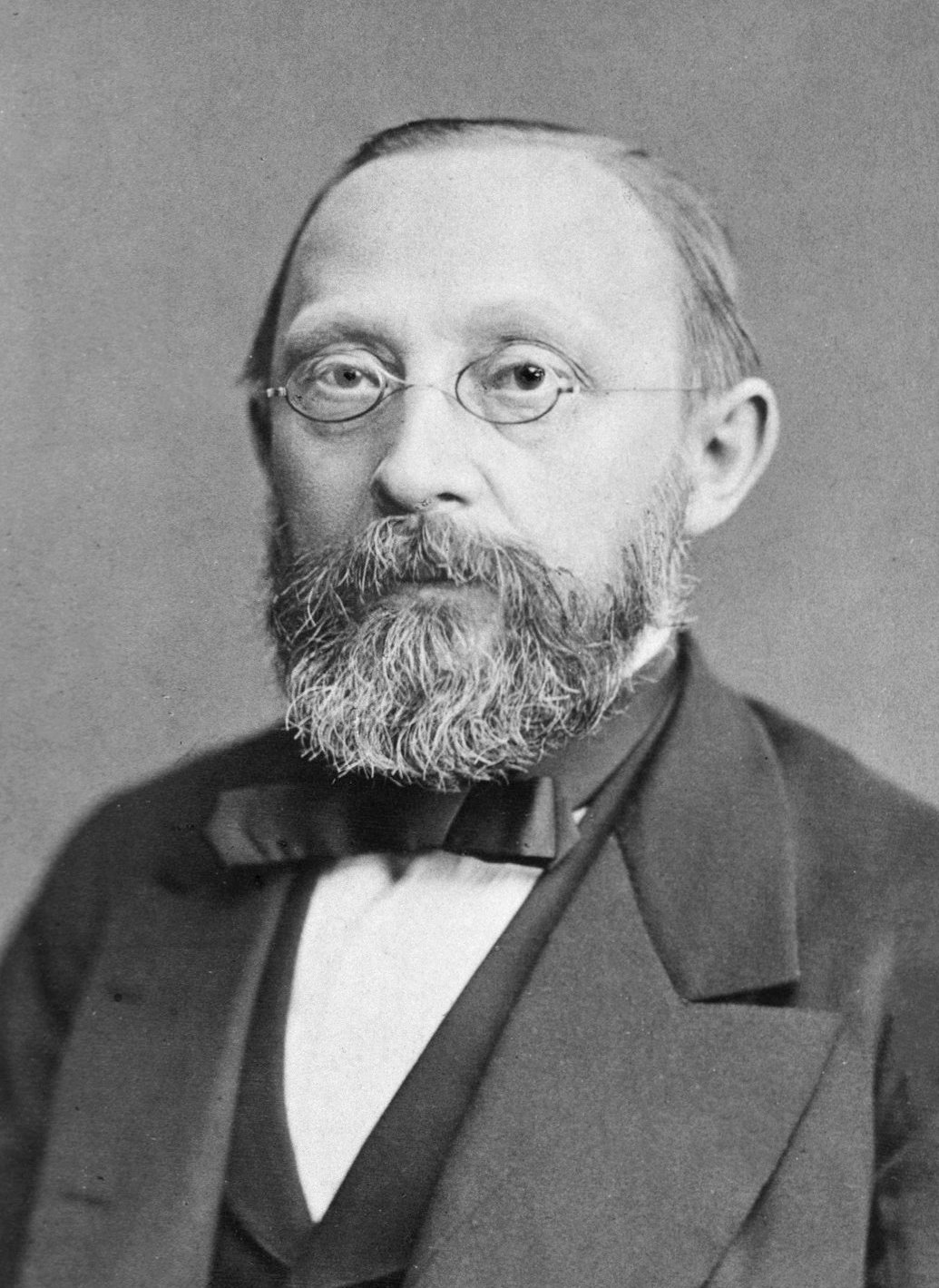
Virchow’s great work on the pathology of syphilis confirmed the fact that it was a disease which involved all organs and tissues of the body and showed that the causal organism was transferred through the blood to the…
1858
#2386
Report on the effects of infantile syphilis in marring the development of the teeth.
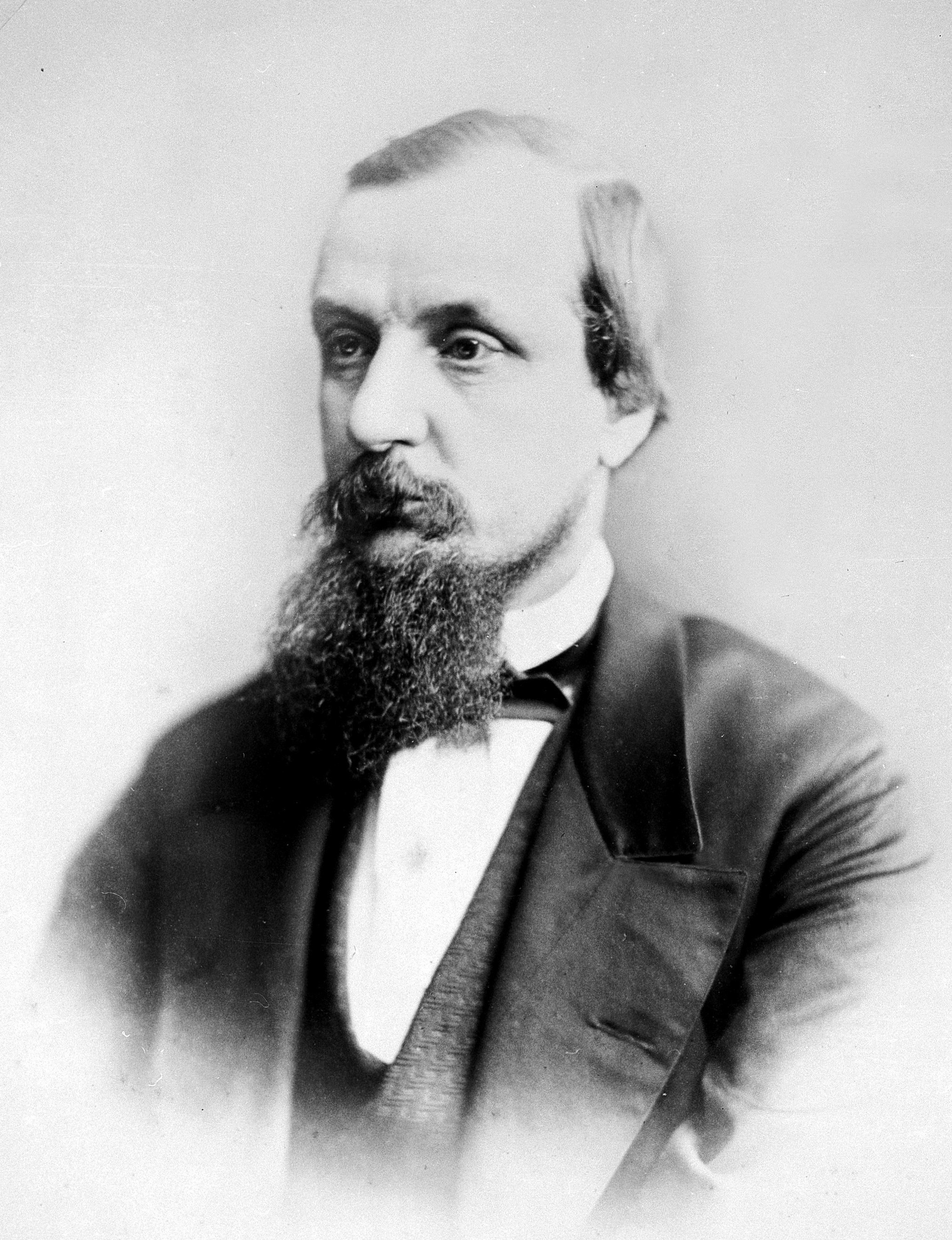
Hutchinson of St. Bartholomew’s Hospital, is memorable for his original description of the notched incisors (“Hutchinson’s teeth”) in congenital syphilis. His name is also associated with “Hutchinson’s triad” (interst…
1858
#5525
Historia de la verrugas.
Verruga peruana.
1858
#5270
Arsenic as a remedy for the tsetse bite.
Livingstone was probably the first to administer arsenic for the treatment of “nagana”, a disease of horses caused by trypanosomes. This followed a suggestion by James Braid. Digital facsimile from PubMedCentral at th…
1858
#12152
Diphtheritis: A concise historical and critical essay on the late epidemic pseudo-membranous sore throat of California (1856-7), with a few remarks illustrating the diagnosis, pathology, and treatment of the disease.
For publishing this 46-page pamphlet Fourgeaud has been called "California's first medical historian." Digital facsimile from U.S. National Library of Medicine at this link.
1858
#12482
Impressions of Western Africa. With remarks on the diseases of the climate and a report on the peculiarities of trade up the rivers in the Bight of Biafra.
Digital facsimile from Google Books at this link.
1860
#2249
Contributions to the natural history of insolatio.
Barclay, an army surgeon in India, wrote an important paper on heat-stroke.
1861
#935.2
Les altitudes de l’Amérique tropicale comparées au niveau des mers au point de vue de la constitution médicale.
Jourdanet discovered the anoxemia theory of high altitude sickness. See No. 943.1. Digital facsimile of the 1861 edition from bibliotecavirtual.ranm.es at this link.
1861
#2387
Untersuchungen über den constitutionellen Mercurialismus und sein Verhältniss zur constitutionellen Syphilis.
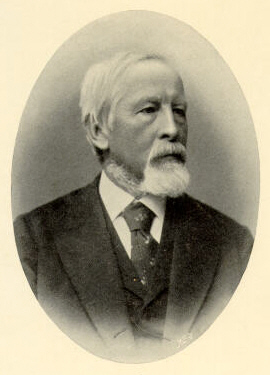
1861
#4047
On a new and striking form of fungus disease, principally affecting the foot, and prevailing endemically in many parts of India.
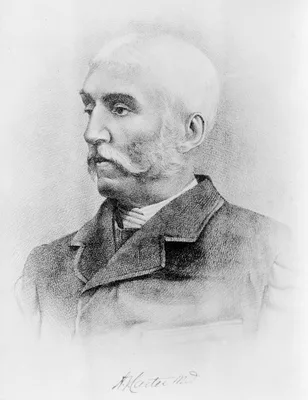
First modern description of mycetoma of the foot – “Madura foot”, “Carter’s mycetoma”. It was mentioned by E. Kaempfer in his Amoenitates exoticae, Lemgo, 1712, p. 561. Colebrook at the Madura Dispensary is said to ha…
1861
#5028
Die Hydrotherapie des Typhus.
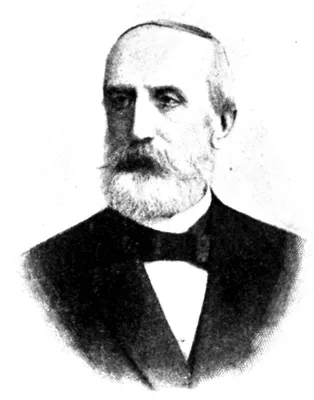
Brand’s cold bath treatment of typhoid fever consisted of total immersion in water at 65°F. and the pouring of cold water over the neck and shoulders. The cold bath treatment of fevers was instituted by Currie (see No…
1862
#2388
Della trasmissione delle sifilide mediante la inoculazione del sangue.
Proof of the possibility of transmission of syphilis by blood transfusion.
1862
#4053
Disease of the skin produced by post mortem examinations, or verruca necrogenica.
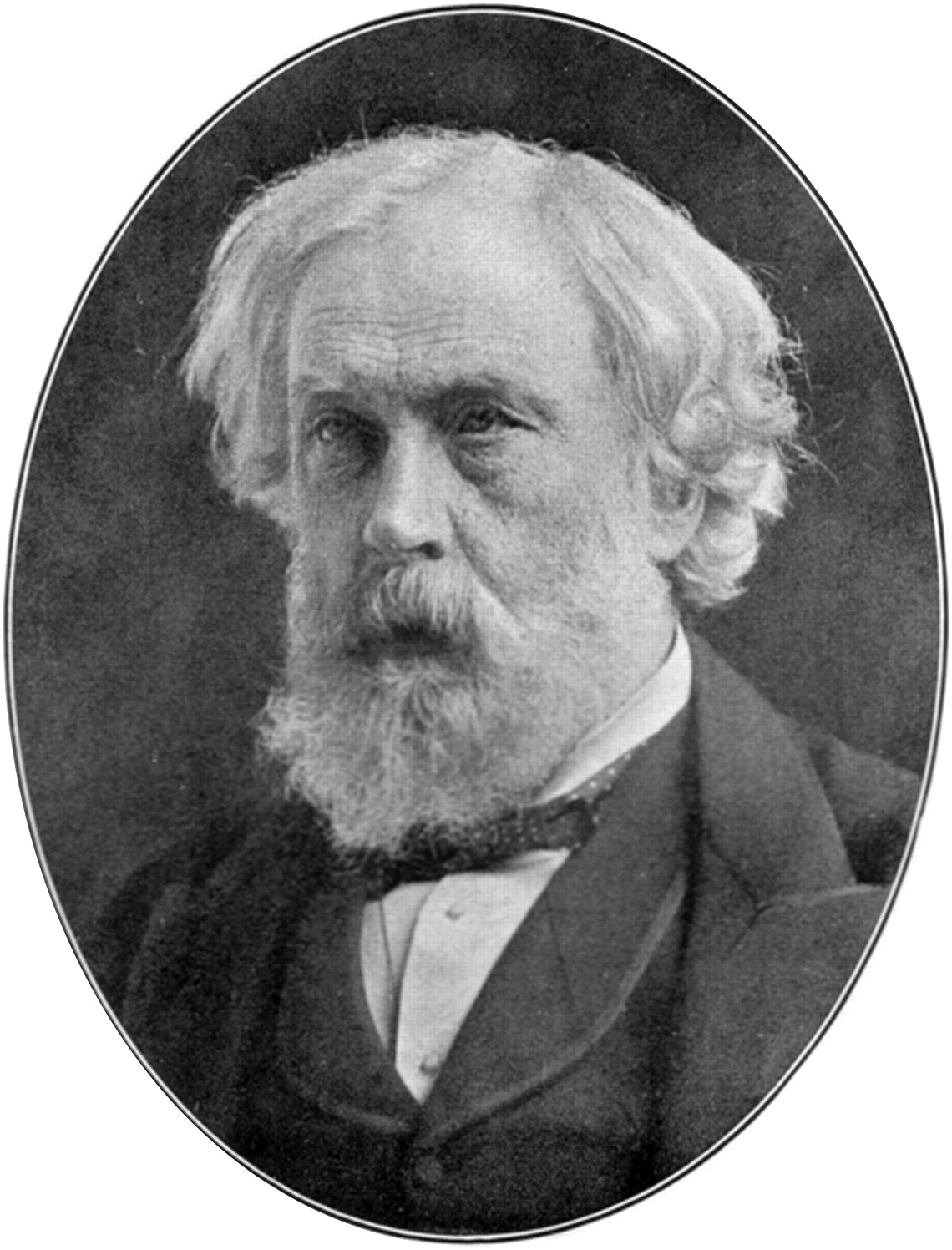
Description of dissecting-room warts (verrucae necrogenicae),tuberculosis verrucosa cutis (also known as Lupus verrucosus, Prosector's wart, and "Warty tuberculosis"[ the cutaneous tuberculosis of Laennec, sometimes c…
1862
#11625
An inquiry into the medicinal value of the excreta of reptiles, in phthisis and some other diseases.
Digital facsimile from the Internet Archive at this link.
1863
#2389
On the syphilitic affections of internal organs.
Wilks’s outstanding work was on visceral syphilis, a subject which he was one of the first to study.
1863
#5165
Recherches sur les infusoires du sang dans la maladie connue sous le nom de sang de rate.
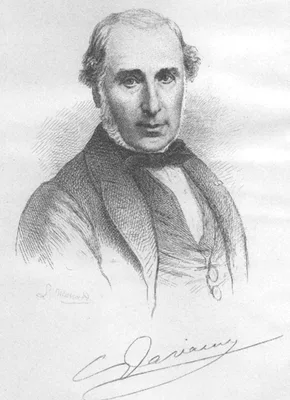
Davaine showed that anthrax could be transmitted to sheep, horses, cattle, guinea-pigs, and mice, and that in such animals the bacilli did not appear in the blood until 4-5 hours before death.
1863
#5344.3
Note sur une tumeur des bourses contenant un liquide laiteux (galactocèle de Vidal) et renfermant de petits êtres vermiformes que l’on peut considérer comme les helminthes hèmatoïdes à l’étatd’embryon.
Description of the embryonic stage of Wuchereria bancrofti in hydrocele fluid.
1864
#5344.4
Entozoa.
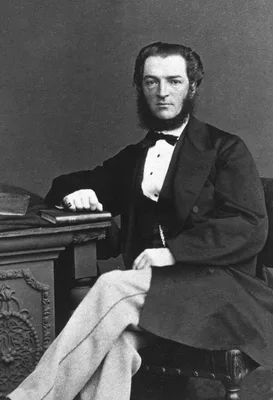
Cobbold suggested (p. 36) that a mollusc was the intermediate host in bilharziasis.
1864
#5344.5
On the endemic haematuria of the Cape of Good Hope.
Like Cobbold, Harley expressed the view that a mollusc was the intermediate host in bilharziasis.
1864
#8109
Le Mexique et l'Amérique tropicale: climats, hygiène et maladies.
Digital facsimile from the Internet Archive at this link.
1865
#1678
Die grossen Volkskrankheiten des Mittelalters. Historischpathologische Untersuchungen. Von J. F. K. Hecker. Gesammelt und in erweiteter Bearbeitung hrsg. von A. Hirsch.
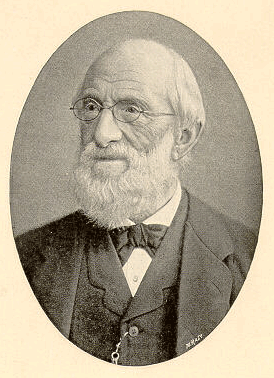
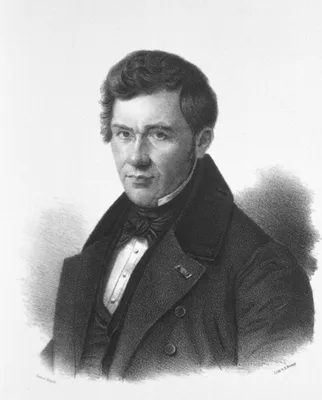
A collection of essays on the Black Death, the dancing mania, and the English sweat, published 1832-34 and later in a collective English edition, The epidemics of the Middle Ages, 2 pts., London, 1833-35; reprinted 18…
1865
#2390
Sulla sifilide per allattamento.
Profeta’s law – a non-syphilitic child born of syphilitic parents is immune.
1865
#5166
Recherches sur la nature et la constitution anatomique de la pustule maligne.
Davaine was the first conclusively to prove that a definite disease (anthrax) was due to a definite micro-organism (B. anthracis), and was thus one of the first to prove the germ theory of disease. He showed that the …
1866
#2390.1
Traité historique et pratique de la syphilis.
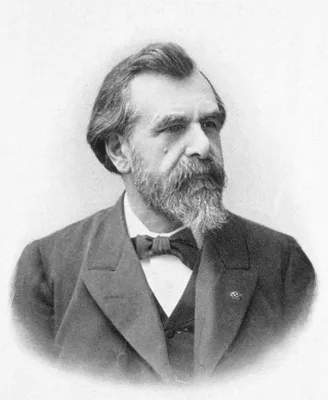
A complete review of contemporary knowledge. English translation, 2 vols., 1868-69.
1866
#5502
History of an epidemic of rötheln, with observations on its pathology.
Veale introduced the term “rubella” to describe German measles.
1866
#5204
Coincidence du chancre syphilitique primitif avec la gale, la blénorrhagie, le chancre simple et la vaccine.
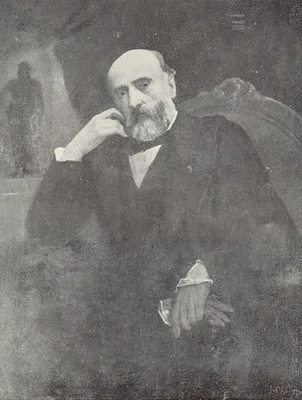
Rollet recognized the possibility of mixed infection of one sore with syphilis and chancroid, thus establishing the dualist theory of venereal infection. The mixed chancre is named “Rollet’s disease”.
1866
#11487
Asiatic cholera: Its origin, history, and progress, for over two hundred years, and the devastations it has caused in the East and West; Its ravages in Europe and America in 1831-2, in 1848-9, in 1854-5, and in 1865-6 with a full description of the causes, nature, and character of the disease, its means of propagation, whether by the atmosphere or by contagion; its premonitory and distinctive symptoms; the best known means of preventing its attack both in communities and individuals; and the most effectual remedies for it according to the celebrated physicians who have treated It; Together with simple and plain directions for the care of those who from any cause can not obtain medical aid.
Digital facsimile from Google Books at this link.
1866
#12347
Die Meningitis cerebro-spinalis epidemica vom historisch-geographischen und pathologisch-therapeutischen Standpunkte.
Digital facsimile from the Hathi Trust at this link.
1867
#3379
Die akute Entzündung des heutigen Labyrinthes, gewöhnlich für Meningitis cerebro-spinalis gehalten.
First description of “Voltolini’s disease” – an acute painful inflammation of the internal ear, followed by fever, delirium, and loss of consciousness. Voltolini was the founder of the Monatsschrift.
1868
#2324
Etudes sur la tuberculose; preuves rationelles et expérimentales de sa spécifité et de son inoculabilité.
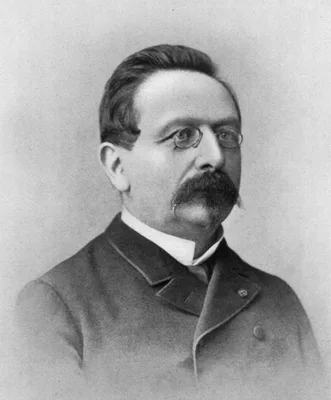
Villemin inoculated guinea-pigs and rabbits with sputum, caseous material, and miliary tubercles, with resulting development of tuberculosis. His brilliant experimental work proved tuberculosis to be a specific infect…
1868
#5344.6
Noticiar preliminar sobre vermes de uma especie ainda nao descripta, encontrados na urina de doentes de hematuria intertropical no Brazil.
In 1866 Wucherer saw the embryo form of the filaria worm. Later the name Wuchereria bancrofti was applied to it. English translation in Kean (No. 2268.1).
1868
#5376
Ueber den Hungertyphus und einige verwandte Krankheitsformen.
Virchow was instrumental in introducing into Germany an epidemiology based on the study of multiple factors – sociological as well as bacteriological. In the above report on the reappearance of typhus in Berlin and Ea…
1868
#5425.1
Nature des virus vaccin. Détermination expérimentale des éléments qui constituent le principe virulent dans le pus varioleux et le pus morveux.
Chauveau first used the term “elementary bodies” to describe the minute bodies inside the inclusions and which were the infective particles.
1869
#5312
Fièvre à rechutes. (Thesis.)
Silliau gave a good account of the epidemic of relapsing fever at Réunion, 1865. He showed the contagious nature of the disease.
1869
#10890
Syphilis: Its nature & diffusion popularly considered.
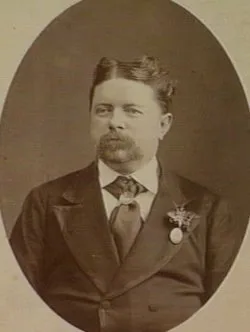
The first work on dermatology or syphilology written, printed and published in Australia. This work is illustrated with chromolithographed plates printed in Australia. This may be the earliest medical book printed in …
1870
#3277
Ueber ein eigenthümliches Neugebilde an der Nase – Rhinosclerom.
Rhinoscleroma is considered a tropical disease, mostly endemic to Africa and Central America, and less common in the United States.
1870
#4339
Ueber hereditäre Knochensyphilis bei jungen Kindern.
“Wegner’s disease” – osteochondritic separation of the epiphyses in congenital syphilis.
1870
#5313
Observations on relapsing fever, as it occurred in Philadelphia in the winter of 1869 and 1870.
Parry called attention to infection from articles of clothing worn by victims of the epidemic of relapsing fever in Philadelphia in 1869.
1870
#5292
Kala azar.
Kala azar is mentioned briefly in the Proceedings in 1869 (No. 34, p. 19) but the above is the first full description, given by Briscoe in a report dated 1 Dec 1869.
1871
#2482
Ueber Bakterien in der Pockenhaut.
Weigert was the first to stain bacteria. He introduced many of the best staining methods in use today. Weigert discovered bacteria in hemorrhagic smallpox. In the same paper is described how carmine will color cocci.
1871
#3883
Du féminisme et de l’infantilisme chez les tuberculeux.
In a letter prefaced to Faneau de La Cour’s thesis, Paul Joseph Lorain (1827-1875) described the idiopathic arrest of growth now known as “Lorain’s type”. It was subsequently ascribed to hypopituitarism. The word “inf…
1871 –1872
#10585
Photographic review of medicine and surgery. A bi-monthly illustration of interesting cases, accompanied by notes. Edited by F.F. Maury [and] L.A. Duhring. Vols. 1 & 2 (All published).
The leading 19th century American publication of artistic medical photography. Each of the two volumes includes 24 mounted photographs. The photographs ilustrate cases of unusual and extreme disease, such as gross def…