
Germany
1,482 entries published in Germany. 93 publication places.
1456
#6818
Aderlasskalender.
The Aderlasskalender for the year 1457, also known as the Laxierkalender, was issued in Mainz, printed in the type of the 36-line Bible, presumably in 1456. It survives in only one incomplete copy in the Bibliothèque …
1471
#91
De proprietatibus rerum.
A condensed encyclopedia of what was then understood by natural science. The work was probably written about the middle of the 13th century. It was one of the most widely read scientific works of the Middle Ages. Caxt…
1471
#11746
Ruralia commoda.
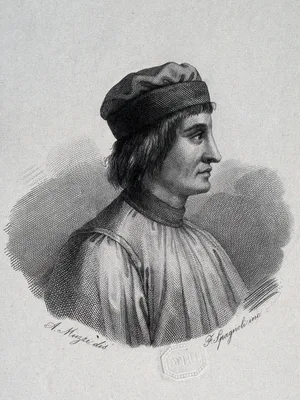
The most famous medieval agricultural treatise, and, apart from the Bartholomaeus Anglicus's De proprietatibus rerum, the earliest non-classical work to deal with agriculture and viticulture. The author, a successful …
1472
#6787
Etymologiae.
The principal work of Isidore of Seville, one of the greatest educationists of the Middle Ages. The Etymologiae, an encyclopedic work, presented the sum of contemporary knowledge on all branches of science. Book IV af…
1473
#5114
Büchlein der Ordnung (Pest Regiment)
Steinhöwel was a Swabian author, humanist, and translator who was much inspired by the Italian Renaissance. His translations of medical treatises and fiction were an important contribution to early Renaissance Humanis…
1473
#6316
Regiment der jungen Kinder.
This work has very little originality, being mainly derived from the Arabic physicians of 500 years before, but is noteworthy as being the first book on pediatrics printed in German. It includes what is probably the f…
1475
#276.1
Buch der Natur.
The first printed book to contain illustrations of animals, and the first notable scientific book in German. It discusses animals, birds, fish, anatomy, physiology, plagues, the medicinal value of plants and stones, e…
c. 1475
#13544
Secreta mulierum et virorum (cum commento).
This work on the physiology and procreative "secrets" of women was attributed to Albertus Magnus, but is now thought to have been written by one of his disciples. It was one of the most widely printed medical works in…
c. 1477
#1794
Artzneibuch.
The first German pharmacopeia, and a very early work written and published in the vernacular. The book was an important German text of popular medicine in its day. Digital facsimile from the Bayerische StaatsBibliothe…
1478 –1482
#5115
Tractatus de pestilentia.
The most widely disseminated of all plague tracts from the time of the Black Death, of which 33 printed editions appeared in the 15th century. A French rhymed version appeared in 1476, but this version is very differe…
1478
#1959.2
Von Bewahrung und Bereitung der Weine.
The first printed book on wine, its production and preservation, translated from the Latin by Wilhelm von Hirnkofen. It discusses the value of wine in diet and as a medication. Wine has been called the oldest document…
1479
#17
Opera. In four parts dated: I) 15 Sept. 1479; II) 13 Oct. 1479; III) 21 Oct. 1479; IV) 8 Nov. 1479. Contents: [I] Praedicamenta, De interpretatione, Analytica priora (Tr: Boethius). Add: Porphyrius: Isagoge in Aristotelis Praedicamenta (Tr: Boethius). Gilbertus Porretanus: Liber sex principiorum. Boethius: Divisiones. [II] Analytica posteriora (Tr: Jacobus Veneticus). [III] Sophistici elenchi, Topica (Tr: Boethius). [IV] Physica (Tr: Guilelmus de Moerbeka).
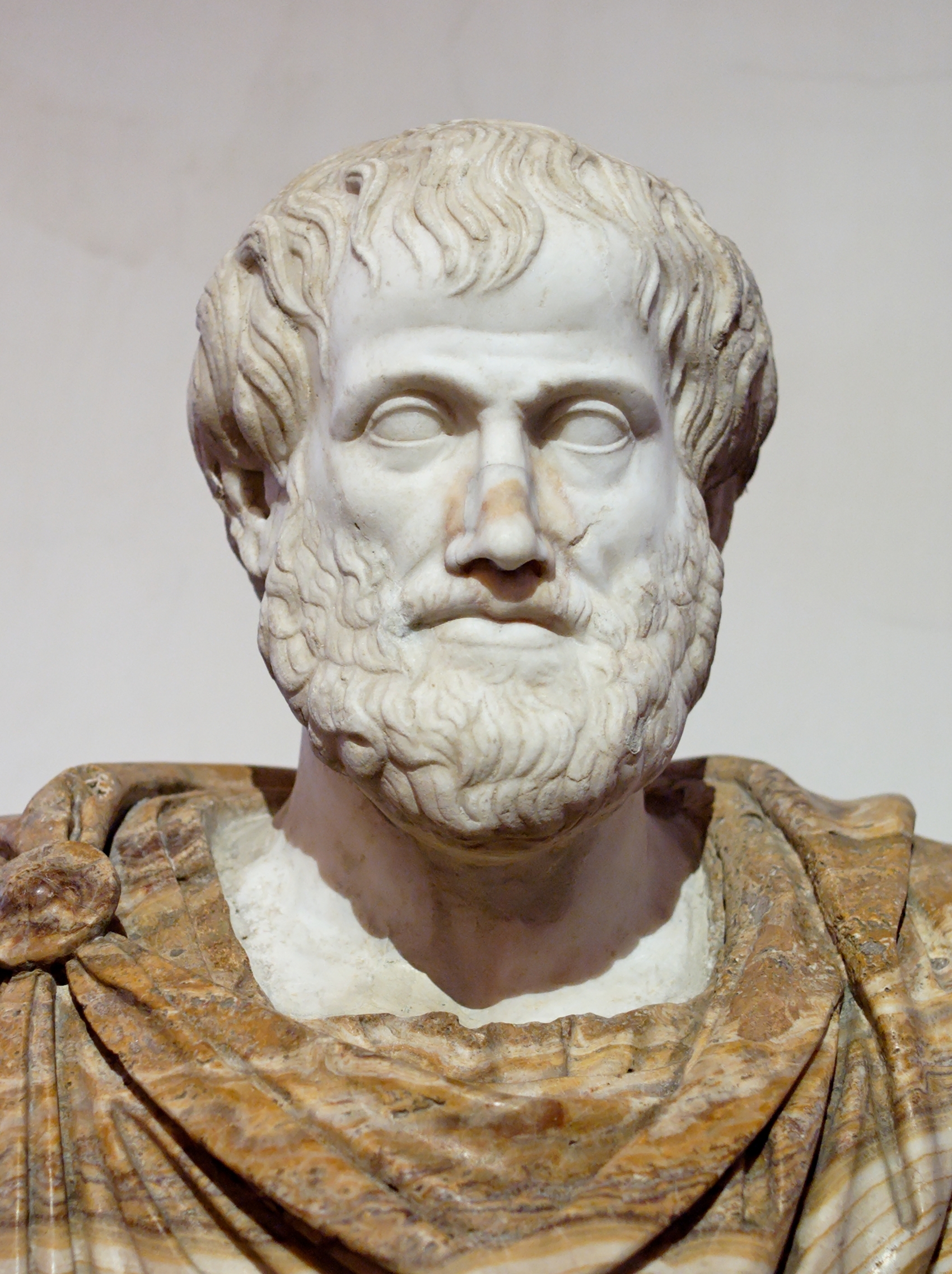
Aristotle, at one time tutor to Alexander the Great, was, among other things, the first observational biologist, and the founder of comparative anatomy. His views had a profound influence in determining the direction …
1482
#8979
Physiologus de naturis duodecim animalium.
The earliest printed edition (circa 1482) of the Physiologus, a Christological natural historical work that originated in Late Antiquity, and remained popular through the Middle Ages. This edition, which was very wide…
1484
#1795
Herbarius latinus.
The first herbal printed in Germany, and the prototype for most of the herbals printed during the remainder of the 15th century. It also contains some fanciful pictures of animals. With text in Latin and with German s…
1485
#1796
Gart der Gesundheit. Ed. Johann von Cube.
The first herbal written and printed in a modern language, sometimes called the "German Herbarius” and Gart der Gesundheit. Like the Herbarius latinus issued the previous year, the text of this work was compiled by Jo…
1491
#1797
Hortus sanitatis.
HORTUS SANITATIS
First edition of an herbal and general treatise on natural history which became very popular; based on the unusually large number of surviving copies in institutions it must have also been a bestseller. The plant illu…
1491
#6314
Versehung des Leibs.
Written in 1429, this didactic poem is the first known text to be devoted to the normal physiology and common illnesses of children. It was written in old Swabian, and its author was a monk. The poem was probably inte…
1495
#6137.1
Büchlein der schwangeren Frauen.
The first obstetrical book printed in the vernacular. Facsimile edition, Munich, 1910. Ortoloff also wrote the first German pharmacopoeia. See No. 1794. ISTC No. io00113000. Digital facsimile from the Bayerische Staat…
1496 –1497
#2362
Tractatus de pestilentiali scorra sive mala de Franzos: originem remediaqu[ue] eiusdem continens.
Grünpeck was first to record mixed primary lesions, multiple primary lesions, and to note the second incubation period of syphilis. A translation of the above is in Arch. Derm. Syph. (Chicago), 1930, 22, 430. Digital …
1499
#363.2
Philosophie naturalis compendium.
The last section of this commentary on Aristotle is an illustrated summary of anatomy, the text of which was derived, with some modifications, from medieval manuscripts. The series of eleven woodcuts has been called “…
1501
#363.3
Antropologium de ho[min]is dignitate, natura, et p[ro]prietatibus.
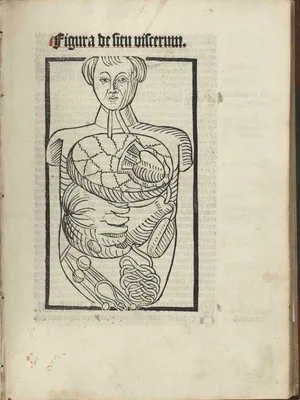
Includes the first illustrations of the viscera in a printed book. The four woodcuts are derived with modifications from Peyligk (No. 363.2). This work also contains the first mention ever of the word anthropology (in…
1519
#3048
Liber theoricae nec non practicae Alsaharavii.
This is the first printing of the medical and therapeutic section of Abul Qasim’s medical encyclopedia or al-Tasrif. It contains what is probably the earliest description of hemophilia (fol. 145). Digital facsimile fr…
1519
#9847
De guaiaci medicina et morbo gallico liber unus.

The German scholar, poet, satirist and reformer von Hutten issued a remarkably widely published and influential account of his suffering from syphilis and his treatment with gum from Guaiacum wood. This is considered …
1524
#2118
Von den gifftigen besen Tempffen und Reuchen.
Written in 1473 but not published until 1524, this pamphlet on the diseases of miners is the first known work on industrial hygiene and toxicology. A reprint of the text appears in Münch. Beitr. Lit. Naturwiss. Med., …
1528
#149
Vier Bücher von menschlicher Proportion.
Written, designed, and illustrated by Dürer, this work is notable for its extraordinary series of anthropometrical woodcuts. The first two books deal with the proper proportions of the human form; the third changes th…
1529
#5520
Ein Regiment: wie man sich vor der newen Plage der Englische Schwaisz genannt, bewaren, und so mann damit ergryffen wirt, darinn halten sall.
Euricius Cordus, father of Valerius, wrote an important account of sweating sickness. Another edition was published at Nuremberg, also in 1529. Reproduced in Gruner’s Scriptores, 1847 (No. 5524).
1530
#3667
Artzney Buchlein, wider allerlei Kranckeyten und Gebrachen der Tzeen: Getzogen auss dem Galeno, Auicenna, Mesue, Cornelio Celso vnd andern mehr der Artzney Doctorn seher nützlich zu lesen.
The first book on dentistry, probably intended for the general public. The unidentified writer confined himself to extracts from the works of ancient and recent writers on the subject. The woodcut on the title page wa…
1532
#12764
De partu hominis, et quae circa ipsum accidunt.
Eucharius Rösslin the Younger translated his father's Der schwangeren Frauwen und Hebammen Rosengarten (1513) into Latin, from which it is was translated into French, Dutch, and English, and was frequently reprinted. …
1533
#12763
Kreutterbuch von allem Erdtgewächs. Anfenglich von Doctor Johan Cuba zusamen bracht/ Jietz widerum(m) new Corrigirt/ und auß den bestberümptsten Artzten/ auch täglicher erfarnuß/ gemehrt. Mit warer Abconterfeiung aller Kreuter. Distillirbuch Hieronymi Braunschwig/ von aller kreuter außgebren(n)ten Wassern/ hiemit füglich ingeleibt.
An illustrated and enhanced version of the Gart der Gesundheit (1485) and the Kleinen Destillierbuchs of Hieronymus Brunschwig (1500). Contents include animals, including imaginery animals, a bit of human anatomy, min…
1534
#11870
Botanologicon. Heus medice vis uariat aliter quam doctuses hactenus herbas scrire, nouus multas iste libellus habet. Ut retinax primum sibi testa referuet odorem, sex nisi quadrantes & brevis hora perit. Quae si quam nostris lusorum perdere chartis malis, tunc aliquid doctius aede tuum.
"generally considered to be the first attempt at a scientific systemization of plants" (D.S.B., 3, 412-13.) Digital facsimile from Biodiversity Heritage Library at this link.
1536
#370
Anatomia capitis humani.
The first work on the anatomy of the head. Elegantly illustrated with 11 woodcuts. English translation in No. 461.3.
1536
#5561
Grosse Wund Artzney von allen Wunden, Stich, Schüssz, Bränd, Bissz, Beynbrüch, und alles was die Wundartzney begreifft.
Paracelsus was a doctor, chemist, lecturer, and reformer. His novel doctrines gained him many followers. He expressed novel ideas for the treatment of wounds, disbelieving in the use of boiling oil for the purificatio…
1537
#371
Anatomiae, hoc est, corporis humani dissectionis pars prior.
Dryander was among the first to make illustrations after his own dissections. His unfinished guide to dissection entitled Anatomiae, expanded from the Anatomia published the previous year, is one of the most important…
1544
#277
Avium praecipuarum, quarum apud Plinium et Aristotelem mentio est, brevis et succincta historia.
The first book on birds with clear descriptions of the appearance of individual birds based on the author’s own experiences and observations. Turner attempted to determine those birds named by Aristotle and Pliny; he …
1545
#10734
New Kochbüch für die Krancken.
A cookbook with recipes to restore the health of convalescents.
1546
#1810
Pharmacorum omnium, quae quidem in usu sunt, conficiendorum ratio: Vulgo vocant dispensatorium pharmacopolarum, ex omni genere bonorum authorum, cum veterum tum recentium collectum, & scholiis utilissimis illustratum, in quibus obiter, plurium simplicium, hactenus non cognitorum, vera noticia traditur. Authore Valerio Cordo. Item De collectione, repositione, & duratione simplicium. De adulterationibus quorundam simplicium. Simplici aliquo absolute scripto, quid sit accipiendum. Antiballomena, id est, succedanea, sive quid pro quo. Qualem virum pharmacopolam esse conveniat. Cum Indice copioso.
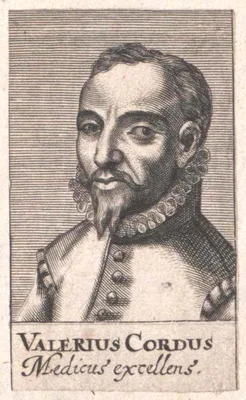
The first "real" pharmacopeia to be published. It was recognized as the official pharmacopeia of Nuremberg. Facsimile edition, 1934. Digital facsimile of the 1546 edition from Goethe Universität, Frankfurt am Main at …
1548
#3667.1
Nützlicher bericht wie man die Augen und das Gesicht wo das selbig magelhafft blöde dunckel oder befinstert. Scherpfen gesundt erhalten stercken und bekrefftigen soll…Mit weitterer unterrichtung. Wie man den Mundt die Zän und Biller…
This popular guide to health includes the first monograph on dentistry for the layman, encouraging the practice of oral hygiene and simple dental care. The first part of the book deals with the eyes, the second with t…
1550
#6142
Ordnung eines erbarn Raths der Statt Regenspurg, die Hebammen betreffende.
The earliest public document in the vernacular containing legislation governing midwives. Digital facsimile from Google Books at this link.
1551 –1568
#1811
A new herball. 3 vols.
The first original scientific herbal written by an Englishman, and the first scientific herbal published in the English language. The illustrations were taken from the blocks cut for the 8vo edition of Fuchs (1546). T…
1553
#2369
Von der frantzösischen kranckheit drey Bücher.
Paracelsus suggested the hereditary transmission of syphilis and advocated mercury internally, as an antisyphilitic. He called the disease “French gonorrhoea” and thus started the confusion over the geographic origins…
1562
#1818
De gradibus, de compositionibus, et dosibus receptorum ac naturalium libri septem.
Paracelsus has been called by some “the pioneer of modern chemists” and by others “uncouth, boorish, vain, ignorant and pretentious”. His De gradibus contains most of his innovations in Chemical therapeutics.
1564
#1816
Enchiridion, sive ut vulgo vocant dispensatorium, compositorum medicamentorum, pro Reipub. Augstburgensis pharmacopoeis.
One of the earliest pharmacopeias, and one which exerted a great influence on later pharmacopeias. Several new editions followed the first, and that of 1613 was adopted as the official pharmacopeia of Augsburg, the fa…
1567
#2118.1
Von der Bergsucht oder Bergkranckheiten drey Bücher…
Paracelsus’s book on the diseases of miners was the first full monograph on the diseases of an occupational group. The first section covers the diseases, mainly pulmonary affections, of miners, including the etiology,…
1572 –1573
#1539
Externarum et internarum principalium humani corporis partium tabulae.
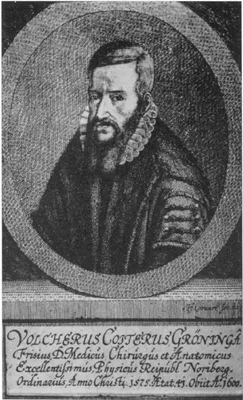
Coiter made several important contributions to the study of human anatomy, and was the first to elevate comparative anatomy to the rank of an independent branch of biology. His Externarum et internarum principalium hu…
1572
#8003
Catalogus bibliothecae.
The catalogue of the private library of the Augsburg physician Jeremias Martius may be the earliest printed catalogue of any private library. It is possible that only one copy survived.
1573
#6143
Reformation oder Ordnung für die Hebammen.
Legislation governing the practice of midwifery was introduced in the city of Frankfurt in 1573, Digital facsimile from the Bayerische Staatsbibliothek at this link.
1575
#284
Lectiones Gabrielis Falloppi de partibus similaribus humani corporis, ex diversis exemplari eus a Volchero Coiter summa cum diligentia collecta. His accessere diversorum animalium sceletorum explicationes iconibus artificiosis, et genuinis illustratae.
Coiter, a pupil of Fallopius and Eustachius, became town physician of Nuremberg. His book on comparative osteology, contained in his edition of the lectures of Fallopius, extended his studies begun in his work of 1572…
1582
#7327
Aigentlich Beschreibung der Raiss, so er vor diser Zeit gegen Auffgang inn die Morgenländer, fürnemlich Syriam, Iudaeam, Arabiam, Mesopotamiam, Babyloniam, Assyriam, Armeniam etc....
Rauwolf provided the first modern descriptions of the flora of the area east of the Levantine coast. He was also the first to describe the riparian flora of the Euphrates, and the first European to publish an account …
1583
#5817
̓Oφθαλμоδоύλεια das ist, Augendienst.
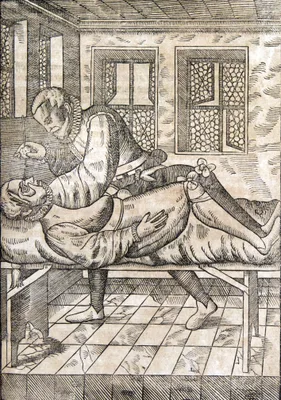
In this treatise on ophthalmic surgery Bartisch, who limited his practice to ophthalmology and hernia repair, left the first extensively illustrated account of any surgical specialty. Bartisch was a skilful operator a…
1587
#5733.52
De decoratione liber…Additi nunc primum duo tractatus, alter, de varicibus, alter de reficiendo naso.
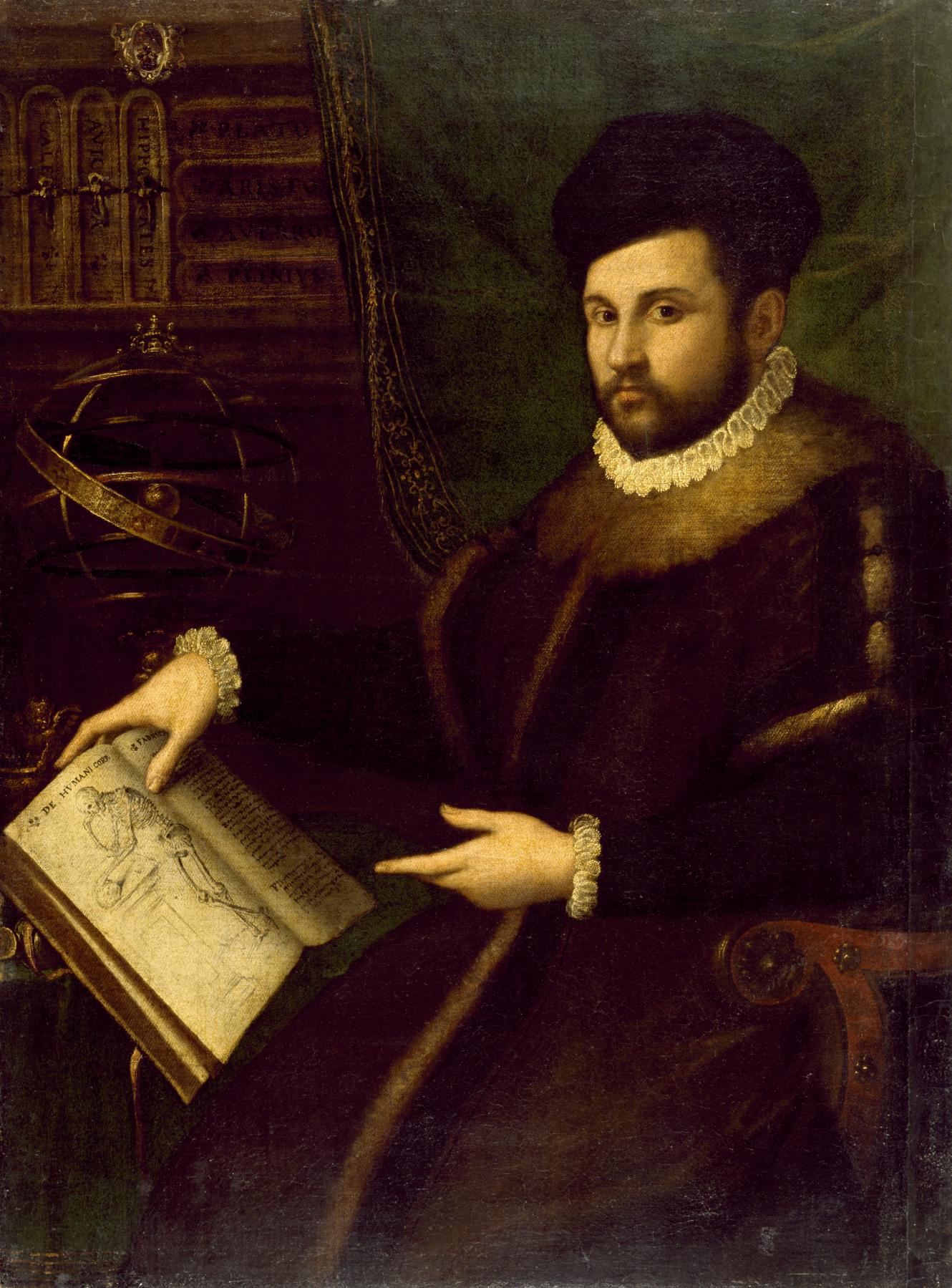
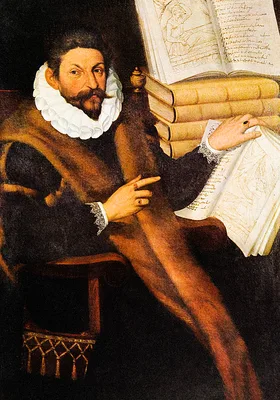
This work on cosmetics contains Tagliacozzi’s first publication on rhinoplasty – De reficiendo naso – a letter written to Mercuriale in response to inaccurate statements about Tagliacozzi's methods made by Mercuriale …