
Netherlands
377 entries published in Netherlands. 19 publication places.
#13458
Mélanges d'histoire de la médecine hébraïque. Études choisies de la Revue d'histoire de la médecine hébraïque (1948-1985). Edited by Gad Freudenthal and Samuel Kottek.
1622
#9633
Tabacologia: Hoc est, tabaci, seu nicotianae descriptio medico-cheirurgico-pharmaceutica: Vel eius praeparatio & usus in omnibus corporis humani incommodis.
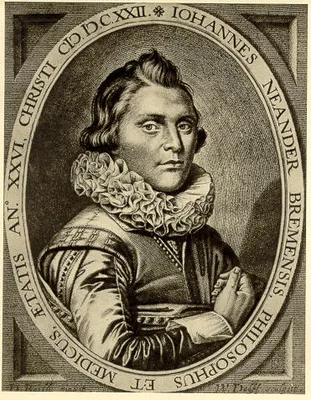
Neander described tobacco, its processing, and medical-pharmaceutical use. His book Includes images of the plants, of Indian, Oriental and European types of pipes, as well as depictions of cultivation and processing b…
1632
#287
Thaumatographia naturalis, in decem classes distincta, in quibus admiranda 1 Coeli. 2 Elementorum. 3 Meteororum. 4 Fossilium. 5 Plantarum. 6 Avium. 7 Quadrupedum. 8 Exanguium. 9 Piscium. 10 Hominis.
A unillustrated pocket guide, issued in duodecimo format on "admiranda" or wonders of nature organized in ten categories (heaven, earth, and topics relating to meteors, fossils or minerals, plants, birds, quadrupeds, …
1634
#381.1
Anatomie der uuterlicke deelen van het menschelick lichaem: Dienende om te verstaen ende volkometlick wt te beelden alle beroerlicheit des selven lichaems.
The earliest of all independent works on anatomy for graphic or plastic artists. The author, a painter and etcher, drew and engraved all the images himself. Digital facsimile from Google Books at this link.
1636
#12135
Pharmacopoea Amstelredamensis, Senatus auctoritate munita. [Edited by Nicolaes Tulp.]
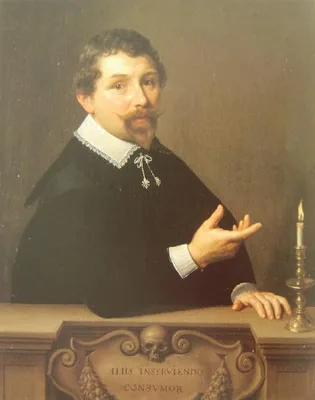
Tulp was both a surgeon and mayor of Amsterdam. As such he was responsible for inspections of apothecary shops. Thanks to new shipping routes, pharmacists in Amsterdam had access to many exotic herbs and spices from t…
1637
#6744
De scriptis medicis, libri duo.
Van der Linden’s book was at the time of its appearance the most complete medical bibliography yet produced. He issued corrected editions in 1651 and 1662, and G.A. Mercklin published a considerably expanded version a…
1638
#11647
De calculo renum & vesicae liber singularis. Cum epistolis & consultationibus magnorum virorum.
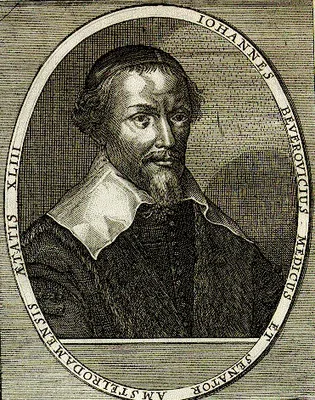
The first medical book to contain an endorsement of Harvey's theory of the circulation of the blood (originally published ten years earlier in 1628). Beverwijck began his work with a treatise on urinary and renal calc…
1639
#11588
De flagrorum usu in re veneria et lumborum renumque officio, epistola.
According to Havelock Ellis, Studies in the psychology of sex (1913) this is the earliest published work on flogging in "medicine" and for sexual gratification, giving accounts of a number of examples. "David Savran d…
1641
#1377.3
Institutiones anatomicae, novis recentiorum opinionibus & observationibus, quarum innumerae hactenus editae non sunt, figurisque auctae ab auctoris filio Thoma Bartholino.
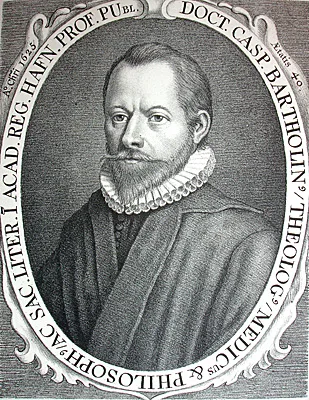
In this revision of his father’s anatomical treatise, Thomas Bartholin included the first depiction of the fissure of Sylvius, the lateral cerebral fissure, and the only part of the surface of the cerebral hemispheres…
1642
#2263
De medicina Indorum.
Bontius was probably the first to regard tropical medicine as an independent branch of medical science. He spent the last four years of his life in the Dutch East Indies, and his book incorporates the experience he ga…
1645
#3727
Disputatio medica inauguralis, de morbo puerili Anglorum, quem patrio idiomate indigenae vocant The Rickets.
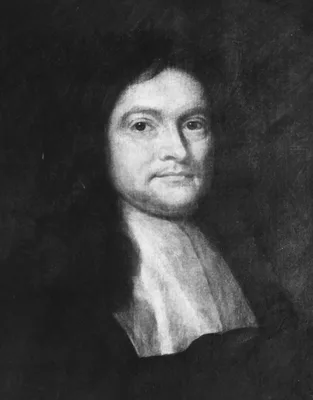
In his 26th year Whistler published his graduation thesis at Leiden; this was the first description of rickets as a definite disease manifesting itself by a more or less constant association of symptoms. Still (No. 63…
1645
#61.2
Opera quae extant omnia. Ex recension Joh. Antonidae vander Linden.
Spieghel succeeded Casseri in the chair of anatomy at Padua. This edition of his collected writings contains the second printing of the 97 copperplates first printed in Casseri’s Tabulae anatomicae (No. 381) plus 9 ex…
1646
#5117
De peste libri quatuor, truculentissimi morbi historiam ratione et experientiâ confirmatum exhibentes.
English translation, 1722. Digital facsimile of the Amsterdam 1665 edition revised and expanded by the author from Google Books at this link.
1648
#665
Ortus medicinae.
Helmont was one of the founders of biochemistry. He was the first to realize the physiological importance of ferments and gases, and indeed invented the word “gas”. He introduced the gravimetric idea in the analysis o…
1648
#2263.1
Historia naturalis Brasiliae.
Piso's study of the natural history of Brazil was also a pioneer work on tropical medicine, and also the largest work from the standpoint of format published by the Elzeviers. The folio includes De medicina brasiliens…
1649
#4965
Des passions de l’âme.
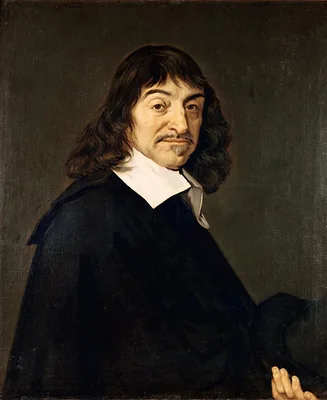
Descartes believed the soul to be a definite entity, giving rise to thoughts, feelings, and acts of volition. He was one of the first to regard the brain as an organ integrating the functions of mind and body. English…
1651
#382
Corporis humani disquisitio anatomica.
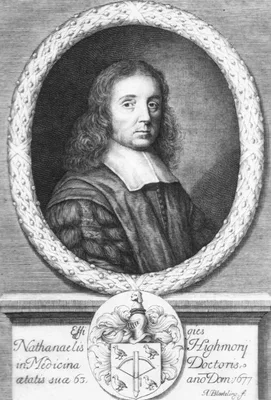
Highmore is remembered for his description of the maxillary sinus, known eponymically as the “antrum of Highmore” (already noticed by Casserius and figured by Leonardo da Vinci), the seminal ducts and the epididymis. …
1652
#3737
Observationes medicae.
One of the earliest accounts of beri-beri is on pp. 300-05 of this work. Tulp, notable as the demonstrator in Rembrandt’s “Anatomy Lesson”, was among the first, in the same book, to describe the ileo-caecal valve (“Tu…
1653
#5160
Thesis de carbunculo.
1655
#261
De vero telescopii inventore.
Borel collected evidence to show that Zacharias (sometimes called Zacharias Janssen) invented the compound microscope about 1590. Zacharias was a spectacle-maker of Middelburg, Holland.
1655
#7551
Museum Wormianum, seu, historia rerum rariorum: tam naturalium, quam artificialium, tam domesticarum, quam exoticarum, quae Hafniae Danorum in aedibus authoris servantur.
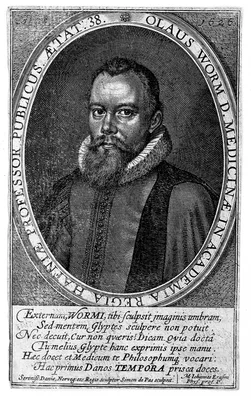
Edited for publication by Worm's son, Willum Worm. Digital facsimile from the Internet Archive at this link.
1655
#10146
Prae-Adamitae, sive exercitatio super versibus duodecimo, decimotertio, & decimoquarto, capitis quinti Epistolae D. Pauli ad Romanos: Quibus inducuntur primi homines ante Adamum conditi.
"In his Prae-Adamitae, published in Latin in 1655 and in English as Men Before Adam in 1656, La Peyrère argued that Paul's words in Chapter 5, verses 12-14 of his Epistle to the Romans should be interpreted such that …
1658
#1825
De Indiae utriusque re naturali et medica libri quatuordecim.
This is an extensively revised and enlarged second edition of Piso’s Historia naturalis Brasiliae (1648). In this edition Piso reprinted Bontius's De medicina Indorum (1642) with two additional books on Asian flora an…
1662
#574
De homine figuris et latinitate donatus a Florentio Schuyl.
Descartes considered the human body a material machine, directed by a rational soul located in the pineal body. This book was the first attempt to cover the whole field of “animal physiology”. The work is really a phy…
1662
#1543
Observationes anatomicae, quibus varia oris, oculorum & narium vas describuntur novique salivae, lacrymarum & muci fontes deteguntur.
Includes the first account of the excretory duct of the parotid gland (“Stensen’s duct”), discovered by Stensen. He first reported his discovery in a letter to his teacher, Thomas Bartholin, dated April, 22, 1661. Ste…
1662 –1669
#291
Metamorphosis naturalis, ofte historische beschryvinghe.... 3 vols.
Engraved frontispieces in Latin; text in Dutch. None of the volumes is dated. An edition in Latin, also undated, was issued by the same publisher in 3 vols. during the same years with the following title: Metamorphosi…
1663
#6015
Heel-konstige aanmerkkingen betreffende de gebreeken der vrouwen.
Roonhuyze’s book is regarded as the first work on operative gynecology in the modern sense. He successfully performed caesarean section several times, and he used retractors for the repair of vesicovaginal fistulae. E…
1664
#974
De succi pancreatici natura et usu exercitatio anatomico-medica.
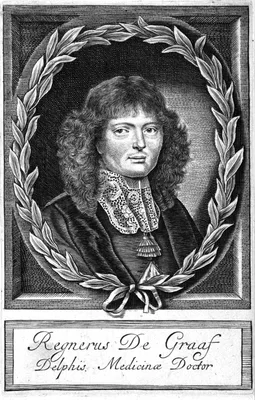
De Graaf was an early investigator of the pancreatic secretion. He collected the pancreatic juice of dogs by means of artificial pancreatic fistulae, commenting on the small quantity of juice secreted and on its alkal…
1665
#1099
Dilucidatio valvularum in vasis lymphaticis et lacteis.
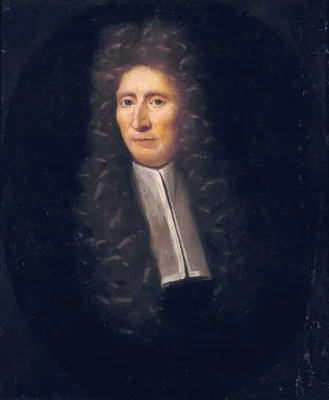
First description of the valves of the lymphatics, discovered by Ruysch. Facsimile reprint, Niewkoop, De Graaf, 1964.
1665
#13820
Catalogus instructissimae bibliothecae...D. Johannes Antoinidae van der Linden...Professoris...in quae omne benus rariorum libris. Quorum auctio habebitur in aedibus Petri Leffen Bibliopolae.
1666
#1354.9
Anatome medullae spinalis, et nervorum.
The first separate work on the spinal cord. Blasius “illustrated the separate origin of the anterior and posterior roots, the dorsal root ganglia and the differentiation between the gray and white matter of the spinal…
1667
#1724
Tractatus physico-anatomico-medicus de respiratione usuque pulmonum.
Swammerdam’s earliest published work. In it he recorded his discovery that the lungs of newborn infants will float on water if respiration has taken place, an important medico-legal point.
1667 –1673
#292.1
Observationes anatomicae selectiores. [Part II: Observationum anatomicarum… pars altera]. 2 vols.
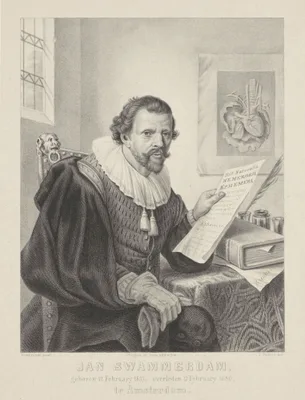
The only publications of one of the earliest scientific societies, active from 1664 to 1672. Founded by Gerard Blaes, and numbering Jan Swammerdam among its members, the college devoted itself to comparative anatomica…
1668
#1210
De virorum organis generationi inservientibus, de clysteribus et de usu siphonis in anatomia.
Exact and detailed account of the male reproductive system. This work and No. 1209 were translated into English and published as Suppl. 17 to J. Reprod. Fertil, 1972. Facsimile of originals, Nieuwkoop, De Graaf, 1965.
1668
#5735
Heel- en geneeskonstige aanmerkingen.
Van Meekeren was first to record a bone graft. He states (Chap. 1) that he read a report of it in a letter received by the Rev. Engebert Sloot of Slooterdijk from John Kraanwinkel, a missionary in Russia, where the op…
1669
#294
Historia insectorum generalis. 2 pts.
Swammerdam, one of the greatest of the early microscopists, spent much time on the study of insects, and mapped out a natural classification of them.
1670
#383
Spicilegium anatomicum.
Kerckring made important investigations on the development of the foetal bones. He was the first to describe the large ossicle sometimes present at the lambdoidal suture; his name is remembered in the valvulae connive…
1671 –1674
#2197
Praxeos medicae idea nova. 4 vols.
Sylvius was a supporter of the Iatrochemical School. At Leiden he established the first university chemical laboratory in Europe. His extensive treatise on the diseases of children was first published as volume 4 of t…
1672
#1209
De mulierum organis generationi inservientibus.
De Graaf demonstrated ovulation anatomically, pathologically and experimentally. In the above work he included the first account of the “Graafian follicle”. Translation of Chapter XII, dealing with the ovaries, by G. …
1672
#1211
Miraculum naturae, sive uteri muliebris fabrica.
After de Graaf published his work on ovulation (No. 1209), Swammerdam asserted his priority in the above work, noting that his researches had been acknowledged in 1668 by van Horne.
1673
#4161
Exercitationes medicae practicae circa medendi methodum.
This work contains the first clear description of proteinuria, noting precipitation of urine with heat or acetic acid. Albuminuria was first described by Dekkers (Chapter V). A translation of this chapter is in Major,…
1673
#9676
Miscellanea anatomica, hominis, brutorumque variorum, fabricam diversam magna parte exhibentia.
The "first comprehensive manual of comparative anatomy based on the original and literary researches of a working anatomist. Blasius's observation on human anatomy are followed by eighty five pages devoted to the anat…
1675
#13272
Ephemeri Vita. Of afbeeldingh van 's menschen leven, Vertoont in de Wonderbaarlijcke en nooyt gehoorde Historie van het vliegent ende een-dagh-levent Haft of Oever-aas. Een dierken, ten aansien van sijn naam, over al in Neerlandt bekent.
In his final publication Swammerdam studied the anatomy, development and behavior of the mayfly. Translated into English as Emphemeri vita: Or the natural history and anatomy of the ephemeron, a fly that lives but fiv…
1678 –1703
#9543
Hortus Indicus Malabaricus: Continens regni Malabarici apud Indos cereberrimi onmis generis plantas rariores, Latinas, Malabaricis, Arabicis, Brachmanum charactareibus hominibusque expressas ....12 vols.
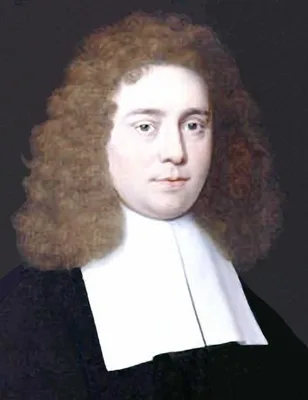
The earliest comprehensive printed work on the flora of Asia and the tropics in 12 folio volumes written and published under the supervision of van Rheede tot Drakenstein, a colonial administrator of the Dutch East In…
1678
#13920
Romani Collegii Societatis Jesu Musaeum celeberrimum.
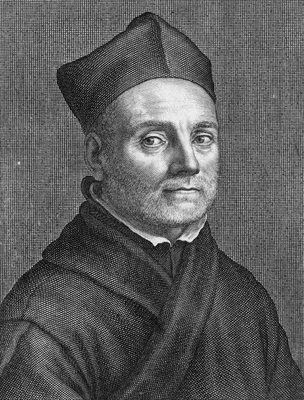
The first catalogue of Kircher's museum collected by Kircher at the Jesuit College in Rome between 1651 and 1680. Digital facsimile from the Internet Archive at this link.
1679
#2321
Opera medica.
Tuberculosis was known to the ancients only in its advanced form, and little progress was made in the knowledge of the condition until the time of Sylvius. He asserted that tubercles are often to be found in the lung …
1680
#580
Physiologia Kircheriana experimentalis.
Includes the first recorded experiment in hypnotism in animals.
1681
#296
Anatome animalium, terrestrium variorum, volatilium, aquatilium, serpentum, insectorum, ovorumque, structuram naturalem, ex veterum, recentiorum, propriisque observationibus proponens, figuris variis illustrata.
“The first comprehensive manual of comparative anatomy based on the original and literary researches of a working anatomist” (Cole). Blaes anticipated Cowper in finding the Cowper’s glands, which he illustrated in his…
1683
#3927
Experimenta nova circa pancreas.
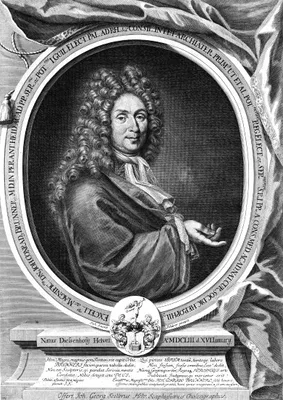
Brunner came near to discovering pancreatic diabetes. His experiments on the dog represent pioneer work on internal secretion. Following excision of the pancreas, he recorded extreme thirst and polyuria. Translated in…
1684
#1545.1
De auditu liber unus.
An early account of the anatomy, physics and physiology of hearing, preceded by a historical summary of earlier work.