
Entry Nos. 10000–10099
100 Garrison-Morton entries in this range.
2016
#10050
Women medical doctors in the United States before the Civil War: A biographical dictionary.
1994
#10051
Nature doctors: Pioneers in naturopathic medicine.
1896
#10052
Kehrt zur Natur zurück! Die wahre naturgemäße Heil- und Lebensweise. Wasser, Licht, Luft, Erde, Früchte und wirkliches Christentum.
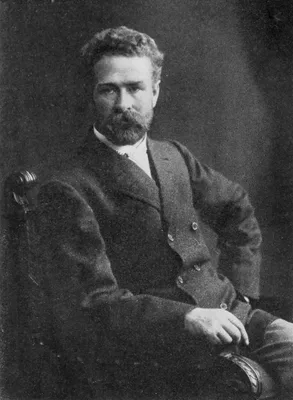
Translated into English from the 4th enlarged German edition and published by the translator, Benedict Lust as: Return to nature! The true natural method of healing and living and the true salvation of the soul. (New …
1999
#10053
The black stork: Eugenics and the death of "defective" babies in American medicine and motion pictures since 1915.
1985
#10054
A calculus of suffering: Pain, professionalism and anesthesia in nineteenth-century America.
1690
#10055
A letter to a friend, upon occasion of the death of his intimate friend.
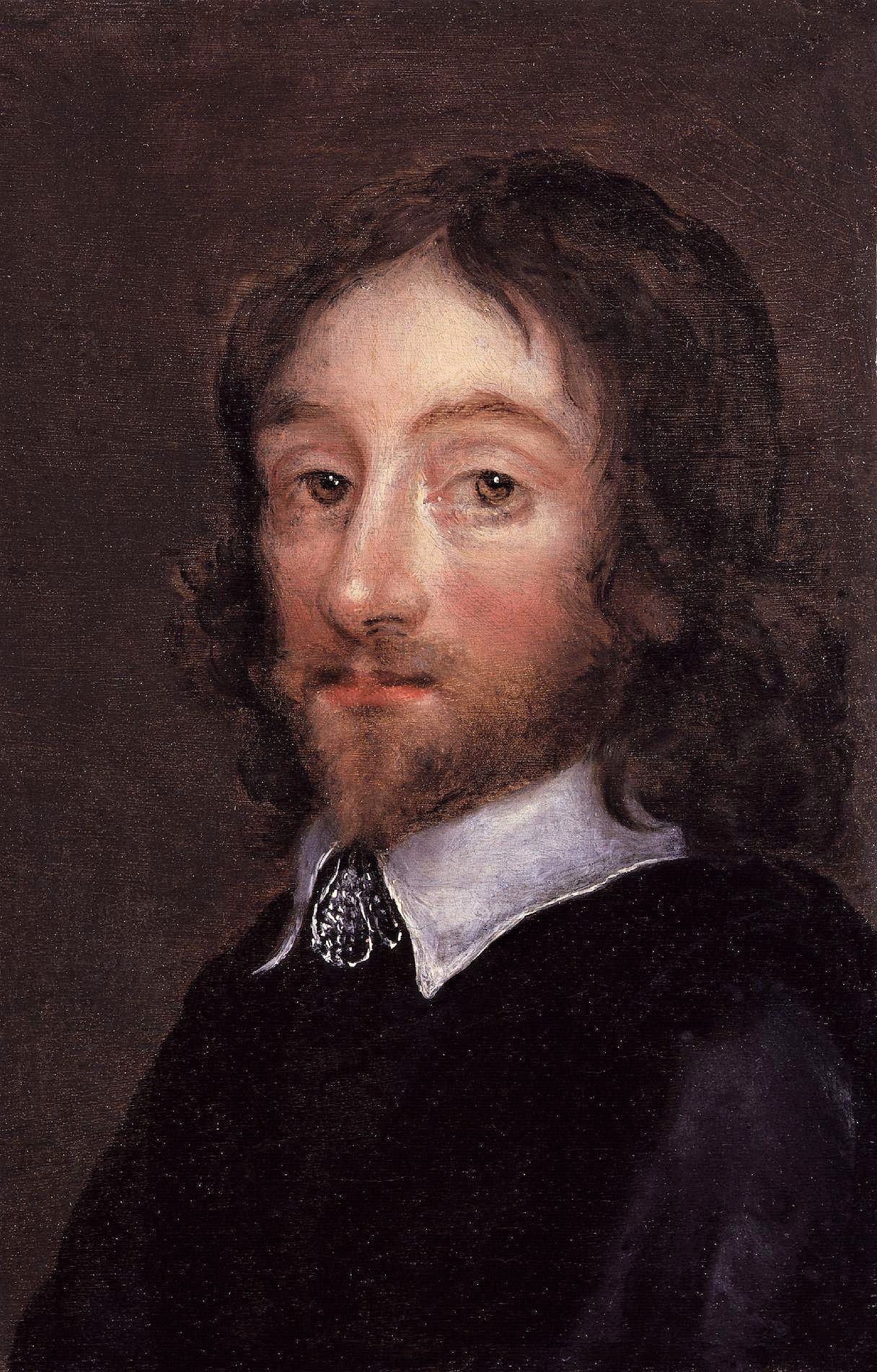
One of the most eloquent and learned discussions of death. Full annotated text from penelope.uchicago.edu at this link.
1848
#10056
Code of ethics of the American Medical Association. Adopted May 1847.
Heavily influenced by Percival's work, the AMA's code of ethics was written by Isaac Hayes. The first leaf of this 30-page pamphlet indicates that it was "Printed for Private Distribution by the Philadelphia Delegatio…
1935
#10057
The care of the aged, the dying and the dead.
Digital facsimile of the 2nd edition (1940) from the Hathi Trust at this link.
1996
#10058
A midwife through the dying process: Stories of healing and hard choices at the end of life.
1970
#10059
The Patient as person: Explorations in medical ethics.
Second edition with a new foreword by Margaret Farley and essays by Albert R. Jonsen and William F. May, New Haven: Yale University Press, 2002.
1977
#10060
The hospice movement: A better way of caring for the dying.
2006
#10061
Selected writings 1958-2004. Foreward by David Clark.
Saunders founded St. Christopher's Hospice in 1967 as the first research and teaching hospice linked with clinical care.
2013
#10062
Transforming the culture of dying: The work of the Project on Death in America.
"Over a period of almost 10 years, the work of the Project on Death in America (PDIA) played a formative role in the advancement of end of life care in the United States. The project concerned itself with adults and c…
1847
#10063
Proceedings of the National Medical Conventions, held in New York, May, 1846, and in Philadelphia, May, 1847.
The complete proceedings of the founding of the American Medical Association. This version also contains the text of the Code of Ethics written by Isaac Hayes and adopted by the AMA. In updated forms, this remains the…
1842
#10064
The history, diagnosis, and treatment of typhoid and of typhus fever: With an essay on the diagnosis of bilious remittent and of yellow fever.
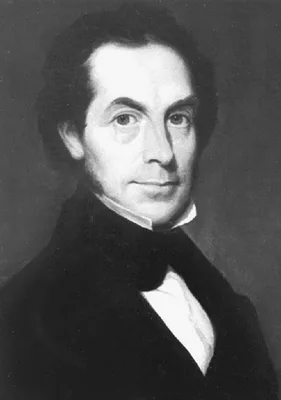
Bartlett's book contains the first complete description of typhoid fever in English. In 1908 Osler wrote, "The chief interest of the work today lies in the remarkably accurate picture which is given of typhoid fever--…
1819
#10065
Reports on the diseases of London, and the state of the weather, from 1804-1816; including practical remarks on the causes and treatment of the former; and preceded by a historical view of the state of health and disease in the metropolis in past times.
1819
#10066
Doctrine médicale de l'École de Montpellier, et comparaison de ses principes avec ceux des autres écoles d'Europe.
Digital facsimile from Google Books at this link.
1808
#10067
The pharmacopoeia of the Massachusetts Medical Society,
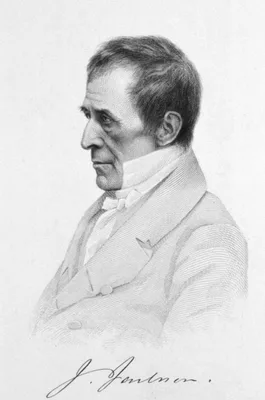
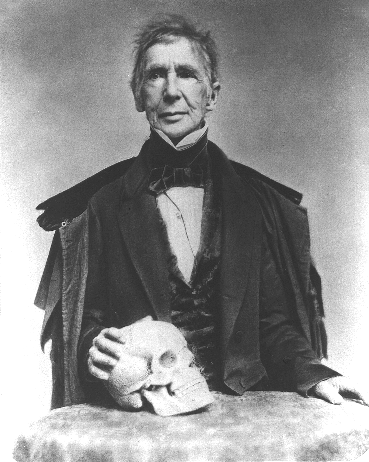
The first state pharmacopeia issued in the United States. Jackson and Warren were the "Committee for the Pharmacopoeia." Digital facsimile from the Internet Archive at this link.
1822
#10068
A treatise on the materia medica, intended as a sequel to the Pharmacopoeia of the United States: Being an account of the origin, qualities and medical uses of the articles and compounds, which constitute that work, with their modes of prescription and administration.
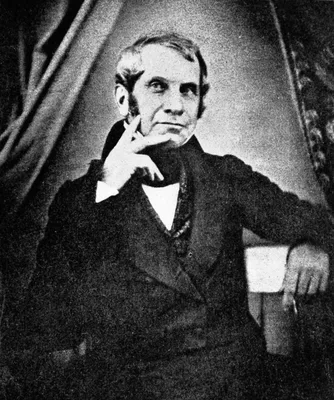
Bigelow, who with Lyman Spalding, was largely responsible for the creation and publication in 1820 of the first U.S. pharmacopeia, published this valuable explanatory and supplementary volume two years later. It was p…
1818
#10069
Oeuvres complètes de Bordeu, précédés d'une notice sur sa vie et sur ses ouvrages, par M. le Chevalier Richerand. 2 vols.
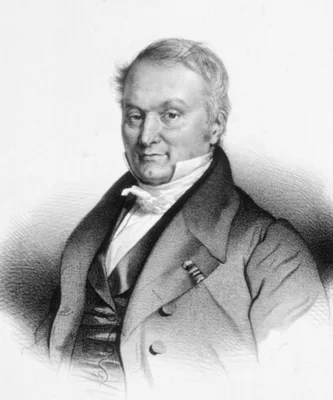
1822 –1823
#10070
Traité de physiologie appliquée à la pathologie. 2 vols.
Broussais was the inventor of "physiological medicine", a crucial step in the development of modern scientific medicine. (Ackerknecht, Bull. Hist. Med. 27, 320). Translated into English by John Bell and R. La Roche as…
1828
#10071
The constitution of man considered in relation to external objects.
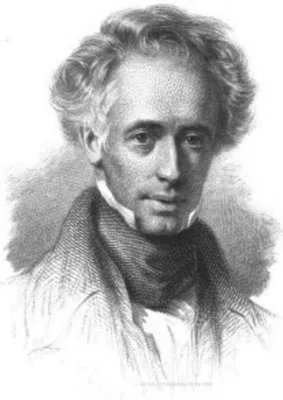
"Combe argues that the human mind is best understood through Phrenology, and that the relative size of the various regions of the brain defined by Phrenology determines a persons behavior and potential interactions wi…
1841
#10072
Notes on the United States of North America during a phrenological visit in 1838-9-40. 3 vols.
Digital facsimile from the Hathi Trust at this link.
1999
#10073
The History of Phrenology on the Web.
http://www.historyofphrenology.org.uk/overview.htm This is the most comprehensive reference source available on phrenology. Van Wyhe divides it into the following following sections: Overview Organs The Phrenological …
2004
#10074
Phrenology and the origins of Victorian scientific naturalism.
2009
#10075
Galen and the world of knowledge. Edited by Christopher Gill, Tim Whitmarsh and John Wilkins.
![GALEN, [Κλαύδιος Γαληνός; Galen of Pergamon] (129 – 216)](/media/portraits/21)
Among the numerous essays in this volume are those by Vivian Nutton on Galen's Library and on Galen's bibiography of his own writings by Jason König.
2005
#10076
Thomas Browne and the writing of early modern science.
1992
#10077
The social ideas of American physicians (1776-1976): Studies of the humanitarian tradition in medicine.
2002
#10078
The copedologist's cabinet: A biographical and bibliographical history.
"Copepod crustaceans are the most numerous multicellular animals on earth. They occur in every free-living and parasitic aquatic niche. Copepods have been known since the time of Aristotle, yet there has never been a …
1989
#10079
Chills and fever: Health and disease in the early history of Alaska.
2005
#10080
Must we all die? Alaska's enduring struggle with tuberculosis.
2016
#10081
Slavery at sea: Terror, sex, and sickness in the middle passage.
2008
#10082
Health transitions in Arctic populations. Edited by T. Kue Young and Peter Bjerregaard.
Concerns indigenous and non-indigenous people in five Arctic regions: Greenland, Northern Canada, Alaska, Arctic Russia, and Northern Fennoscandia (Scandinavia).
1995
#10083
Aboriginal health in Canada: Historical, cultural, and epidemiological perspectives.
Revised second edition, same publisher, 2006.
1994
#10084
The health of Native Americans: Towards a biocultural epidemiology.
2008
#10085
Russkie rukopisnye travniki XVII–XVIII vekov: Issledovanie fol′klora i etnobotaniki. (Russian Manuscript Herbals of the 17th and 18th Centuries: An Investigation of Folklore and Ethnobotany).
1995
#10086
Historia de la medicina chilena.
2014
#10087
Kennewick man: The scientific investigation of an ancient American skeleton. Edited by Douglas W. Owsley and Richard L. Jantz.
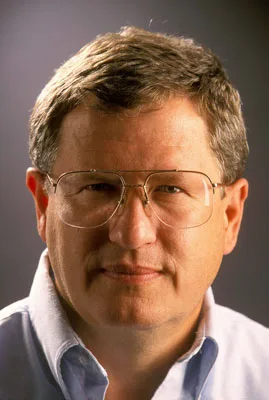
" This volume resents the results of the most comprehensive scientific study of one of the most complete ancient human skeletons ever found in North America" (from the introduction). "Kennewick Man is the name general…
2015
#10088
History of medical practice in Nigeria.
1985
#10089
African pioneers of modern medicine: Nigerian doctors of the nineteenth century.
1994
#10090
Secret doctors: Ethnomedicine of African Americans.
"Based on an ethnographic study of the traditional medicine of African Americans in the rural southern United States, this work concentrates on the original Louisiana Territory, with its Native and African American in…
2001
#10091
Black death, white medicine: Bubonic plague and the politics of public health in colonial Senegal, 1914-1945.
1999
#10092
A flourishing Yin: Gender in China's medical history: 960-1665.
1999
#10093
Essential subtleties on the silver sea: The Yin-Hai Jing-Wei: A Chinese classic on ophthalmology.
Provides detailed descriptions of the etiology, symptomatology, and therapy of every eye disease known to fifteenth-century Chinese practitioners. The translators' introduction also provides the first in-depth analysi…
1985
#10094
The making rehabilitation: A political economy of medical specialization, 1890-1980.

1986
#10095
Who goes first? The story of self-experimentation in medicine.
2016
#10096
Farewell to the god of plague: Chairman Mao's campaign to deworm China.
2014
#10097
Bodies in balance: The art of Tibetan medicine. Edited by Theresia Hofer.
The first comprehensive, interdisciplinary exploration of the triangular relationship among the Tibetan art and science of healing (Sowa Rigpa), Buddhism, and arts and crafts. Sowa Rigpa was influenced by Chinese, Ind…
2009
#10098
Darwin's armada: Four voyages and the battle for the theory of evolution.
Discusses the voyages by Darwin, Huxley, Hooker and Wallace that informed their key Victorian works on the theory of evolution.
1998
#10099
The Huxley File. Created by Charles Blinderman and David Joyce.
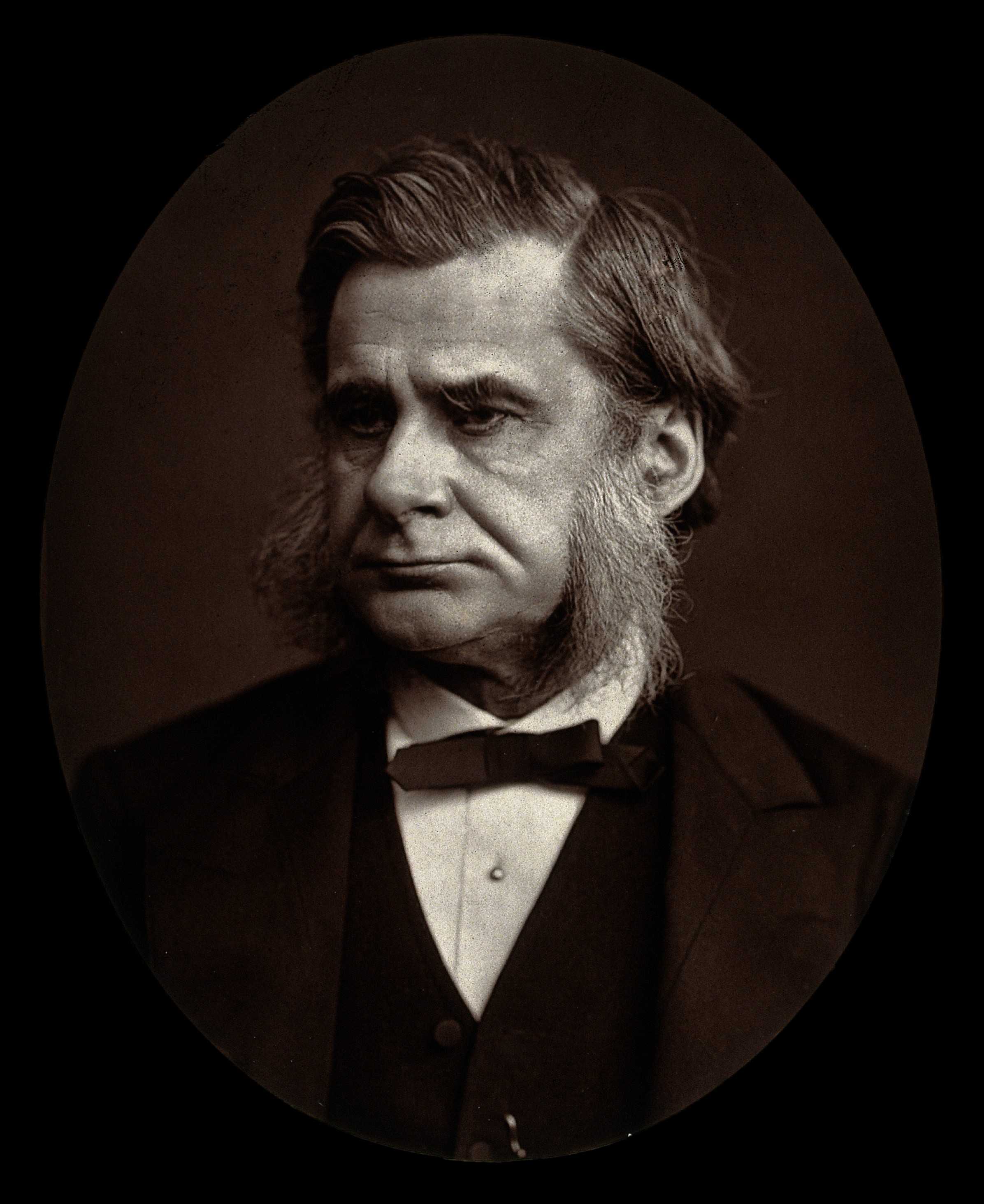
https://mathcs.clarku.edu/huxley/ "Those merely interested in Huxley and scholars engaged in research on him, on Darwinism, on Victorian culture, on the history of science, and on topics such as those noted will find …