
Entry Nos. 7200–7299
100 Garrison-Morton entries in this range.
1857
#7250
[On the Feldhofer Neanderthal.]
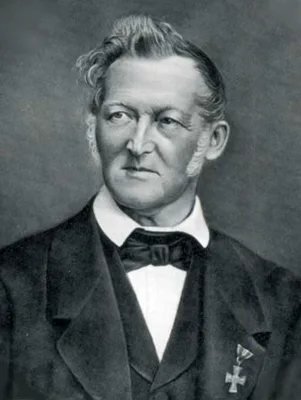
The first account of the Neanderthal remains (Neanderthal 1), discovered in 1856 in the the Feldhofer cave of the Neander valley. The remains, which consist of a partial skull, pelvis and assorted long bones, were sen…
1859
#7251
Menschliche Ueberreste aus einer Felsengrotte des Düssenthals. Ein Beitrag zur Frage über die Existenz fossiler Menschen.
Fuhlrott’s first detailed account of the “Neanderthal 1” skeleton discovered in 1856 in the Kleine Feldhofer Grotte, located in the Düssel River gorge in southwestern Germany.
1868
#7252
Mémoire sur une sépulture des anciens troglodytes du Périgord.
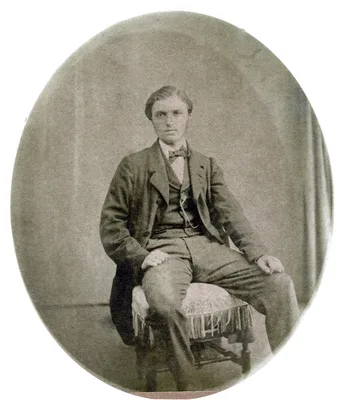
In March 1868, railway workers clearing away debris from a rock shelter known locally as the Abri de Crô-Magnon (shelter of Crô-Magnon) at Les Eyzies, Dordogne, noticed stone tools and pieces of skeleton imbedded in t…
1908
#7253
Der Unterkiefer des Homo heidelbergensis aus den Sanden von Mauer bei Heidelberg. Ein Beitrag zur Paläontologie des Menschens.
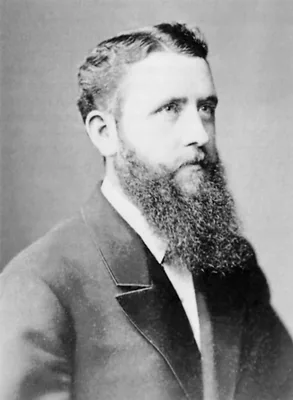
First report on the Mauer jaw discovered by Schoetensack in a sandpit or quarry in the environs of Heidelberg. This was the first fossil specimen unearthed of an extinct hominin species which Schoetensack named Homo h…
1823
#7254
Reliquiae diluvianae; or, observations on the organic remains contained in caves, fissures, and diluvial gravel, and on other geological phenomena, attesting the action of an universal deluge.
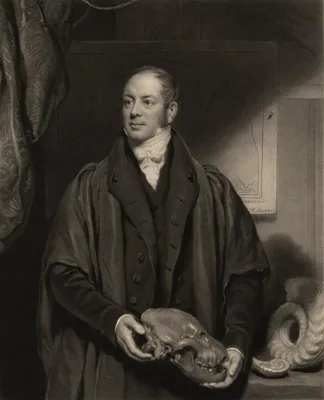
Buckland’s elaborately illustrated Reliquiae diluvianae (Relics of the Flood) describes his geological and paleontological researches of the early 1820s, including his investigations of the Kirkdale and Paviland caves…
1927
#7255
The lower molar hominid tooth from the Chou Kou Tien deposit.
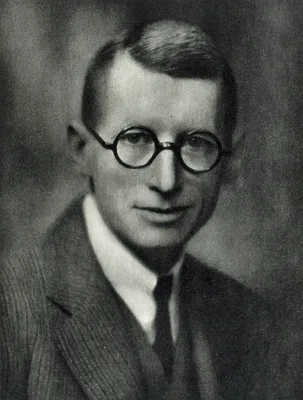
In this report on a single hominid tooth found by Swedish archeologist Birger Bohlin at the Zhoukoudian site in 1927 Black named a new genus and species of hominid, Sinanthropus pekinensis. He characterized the specim…
1987
#7256
Mitochondrial DNA and human evolution.
Cann's discovery that all living humans are genetically descended from a single African mother, known as Mitochrondrial Eve, who lived <200,000 years ago, became the foundation of the Out of Africa theory, the most wi…
1865
#7257
Pre-historic times, as illustrated by ancient remains, and the manners and customs of modern savages.
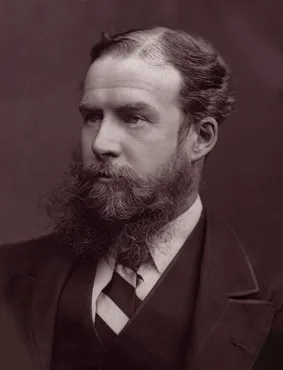
Lubbock introduced the terms "Paleolithic" and "Neolithic". His work addressed not only the topic of human antiquity but also the lives and cultures of people in the Stone Age. In contrast to researchers who focused o…
1864
#7258
Cavernes du Périgord. Objets gravés et sculptés des temps pré-historiques dans l’Europe occidentale.
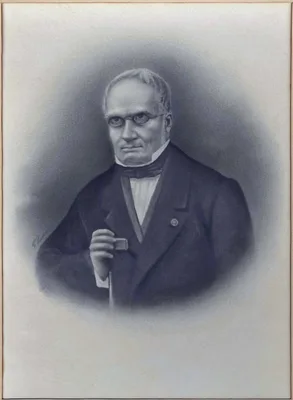
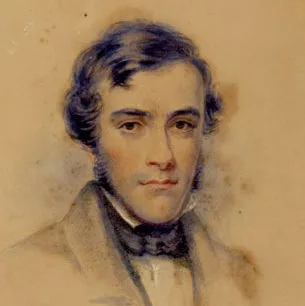
In 1863 Lartet and Christy began systematically examining the caves in the Périgord (Dordogne) region of France. This study of mobiliary or portable art, such as carved stones, carved ivory, carved bones, or carved re…
1937 –1939
#7259
The stone age of Mount Carmel. Volume I: Excavations at the Wady el-Mughara. Volume II: The fossil remains from the Lavalloiso-Mousterian.
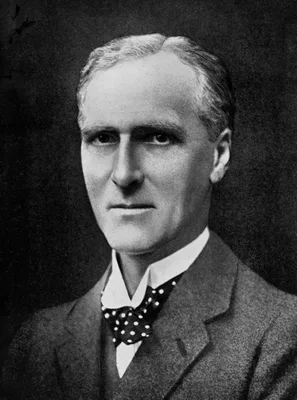
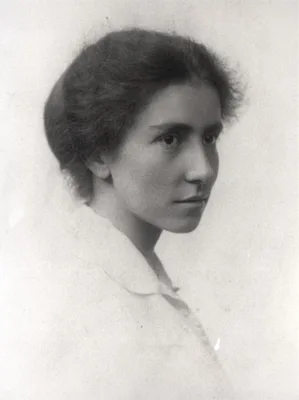
Garrod carried out her landmark excavations of the el-Wad, el-Tabun and es-Skhul caves on the hills of Mount Carmel, close to Wadi el-Mugharah (Valley of the Caves) between 1929 and 1934. Her monograph on the subject …
1833
#7260
Ueber den Zustand der Heilkunde und über die Volkskrankheiten in der europäischen und asiatischen Türkei. Ein Beitrag zur Kultur- und Sittengeschichte.
Digital facsimile from Google Books at this link.
2003
#7261
The bony labyrinth of Neanderthals.

Computed tomography of the inner ear of 20 Neanderthal specimens directed by Spoor showed that the Neanderthal semicircular canal is subtly distinct in size, shape, and orientation from that of modern humans. With Mar…
1860
#7262
On the occurrence of flint-implements, associated with the remains of animals of extinct species in beds of a late geological period, in France at Amiens and Abbeville, and in England at Hoxne.
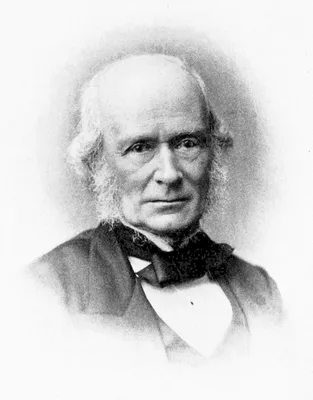
This paper is a key record of the early recognition of the antiquity of man by the scientific establishment. Having returned from a visit to Abbeville, France, in May 1859, where he viewed the evidence for the antiqui…
1964
#7263
The problem of man's antiquity. An historical survey.
1953
#7264
The Piltdown Forgery.
Fiftieth anniversary edition with a new introduction and afterward by Chris Stringer (Oxford University Press, 2003).
2000
#7265
Science and Civilisation in China. Volume 6: Biology and Biological Technology. Part VI: Medicine. By Joseph Needham with the collaboration of Lu Gwei-Djen, edited and with an introduction by Nathan Sivin.
2008
#7266
Pantheon der Dermatologie. Herausragende historische Persönlichkeiten.
Probably the largest and most comprehensive history of a medical specialty published in the 21st century. Expanded and revised English translation: Pantheon of Dermatology: outstanding historical figures by Löser, Ple…
2012
#7267
Dissent with modification. Human origins, palaeolithic archaeology and evolutionary anthropology in Britain 1859-1901
2002
#7268
Biographisches Lexikon der hervorragenden Ärzte der letzten fünfzig Jahre von Isidor Fischer. Nachträge und Ergänzungen: Aba-Kom.
Supplement to Fischer's work (No. 6732), with additions covering last names beginning from Aba to Kom.
1998
#7269
Ancestral images: The iconography of human origins.
1964
#7270
A new species of the genus Homo from Olduvai Gorge.
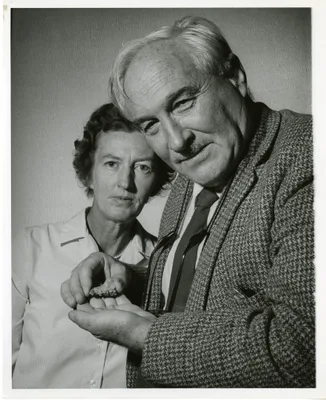
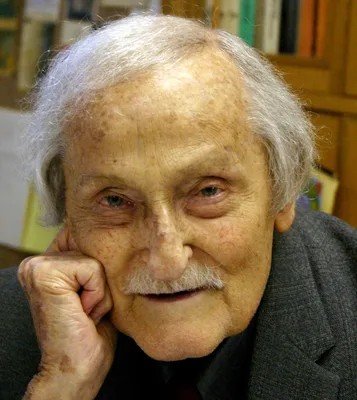
First report on Homo habilis.
2002
#7271
The primate fossil record.
A comprehensive collaborative study edited by Hartwig. Includes an extensive historical bibliography.
1984
#7272
The origins of modern humans: A world survey of the fossil evidence.
An historical and analytical review of the literature up to 1984, with detailed bibliographies, by several outstanding authorities, edited by Smith and Spencer. Includes, pp. 411-483, Milford H. Wolpott, Wu Xin Zhi, a…
1985
#7273
History of physical anthropology in Southern Africa.
2002
#7274
A new hominid from the Upper Miocene of Chad, central Africa.
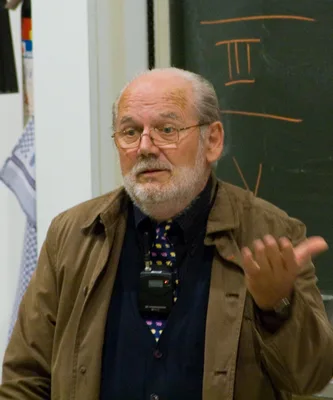
The first paper on Sahelanthropus tchadensis, dating from between 7 and 6 million years ago in West Central Africa (northern Chad). This species had a combination of ape-like and human-like features. Ape-like elements…
2001
#7275
'Millennium Ancestor', a 6-million-year-old bipedal hominid from Kenya - Recent discoveries push back human origins by 1.5 million years.

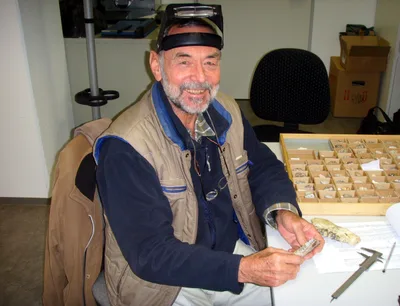
Living around 6 million years ago, in the Tugen hills region of central Kenya, this species, named Orrorin tugenensis, had small teeth with thick enamel similar to modern humans. It climbed trees, but also probably wa…
1994
#7276
Australopithecus ramidus, a new species of early hominid from Aramis, Ethiopia.
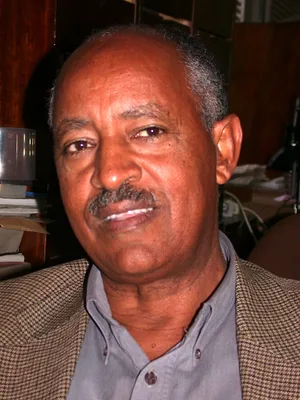
Between 1992 and 1994 White and his team discovered the first Ardipithecus ramidus fossils in the Middle Awash area of Ethiopia. They named their discovery Ardipithecus ramidus (‘ramid’ means ‘root’ in the Afar langua…
1978
#7277
A new species of the genus Australopithecus (Primates: Hominidae) from the Pliocene of Eastern Africa.
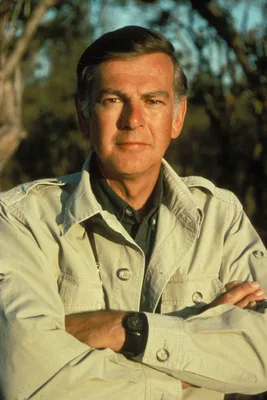
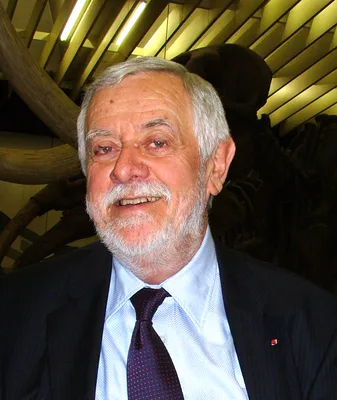
Johanson and colleagues formally named the species Afarensis of the genus Australopithecus in 1978.
1995
#7278
New four-million-year-old hominid species from Kanapoi and Allia Bay, Kenya.
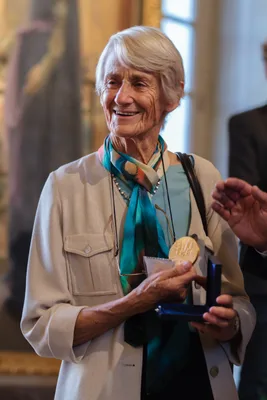
In 1965, a research team led by Bryan Patterson from Harvard University discovered a single arm bone (KNM-KP 271) of an early human at Kanapoi in northern Kenya, but without additional fossils Patterson could not conf…
2001
#7279
New hominin genus from eastern Africa shows diverse middle Pliocene lineages.
In 1998 and 1999, working in the Lake Turkana region of northern Kenya, Meave Leakey and her team found a cranium and other fossil remains of a 3.5 million year old hominin with a mixture of features unseen in other e…
2010
#7280
Australopithecus sediba: A New Species of Homo-Like Australopith from South Africa.
Matthew Berger, the young son of Lee Berger, discovered the first specimen of Australopithecus sediba, the right clavicle of MH1, on the 15th of August in 2008. This species of Australopithecus dates to about 2 millio…
1938
#7281
The Pleistocene anthropoid apes of South Africa.
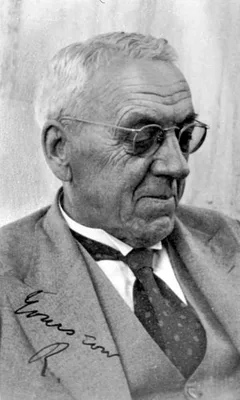
Paranthropus robustus, discovered by Broom in Kromdraal, South Africa, in 1938. The species is generally dated from about 2 million to 1.2 million years before present.
1968
#7282
Sur la decouverte dans le Pleistocene inferieur de la valle de l'Omo (Ethiopie) d'une mandibule d'Australopithecien.
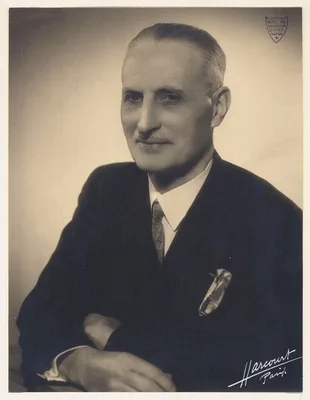
In 1967 Arambourg and Coppens discovered Omo 18, the first specimen of Paranthropus aethiopicus, also known as Paraustralopithecus aethiopicus; however it's classification as a new species was initially dismissed. In …
1986
#7283
The origin of the human race.
First publication in English by Alekseyev of Homo rudolfensis, primarily known from KNM-ER 1470, discovered in Koobi Fora in the Lake Turkana basin, Kenya. Alekseyev (Alexeev) first proposed the species in 1978, initi…
1985
#7284
Early Homo erectus skeleton from west Lake Turkana, Kenya.

The Turkana Boy, (KNM-WT 15000) now called Nariokotome Boy, a Homo erectus fossil which was in 2016 the most complete early human skeleton found. It is a nearly complete skeleton of a hominin youth believed to be 1.5 …
1997
#7285
A hominid from the Lower Pleistocene of Atapuerca, Spain: possible ancestor to Neandertals and modern humans.
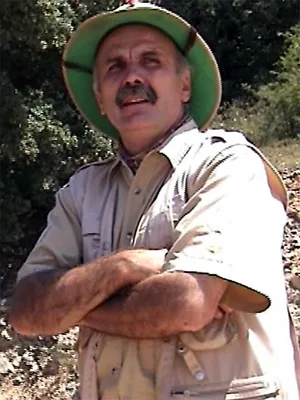
Homo antecessor, an extinct human species (or subspecies) dating from 1.2 million to 800,000 years ago, discovered in the Sierra de Atapuerca region of Northern Spain. With A. Rosas, I Martinez and M. Mosquera.
2004
#7286
A new small-bodied hominin from the Late Pleistocene of Flores, Indonesia.
In 2003 a joint Indonesian-Australian research team led by Michael Morwood found LB-1—a nearly complete female skeleton of a tiny human that lived about 80,000 years ago—in Liang Bua cave on the island of Flores, Indo…
1880
#7287
Breves apuntes sobre algunos objetos prehistóricos de la provincia de Santander
![SANZ DE SAUTUOLA, Marcelino [Marcelino DE SAUTUOLA] (1831 – 1888)](/media/portraits/10315)
Privately printed pamphlet asserting the prehistoric origin of cave paintings discovered in the cave of Altamira, Cantabria, Spain by Maria Sanz de Sautuola, daughter of the author. These were first prehistoric cave p…
1959
#7288
A new fossil from Olduvai.
In 1959 Mary Leakey discovered the "Zinj" skull (OH 5) at Olduvai Gorge. This became the type specimen for Paranthropus boisei, arguably the most famous early human fossil from Olduvai in Northern Tanzania. The specie…
2014
#7289
The complete genome sequence of a Neanderthal from the Altai Mountains.
First complete sequence of a Neanderthal genome. With more than 20 co-authors. In 2022 Pääbo was awarded the Nobel Prize in Physiology or Medicine "for his discoveries concerning the genomes of extinct hominins and hu…
2010
#7290
The complete mitochondrial DNA genome of an unknown hominin from southern Siberia.
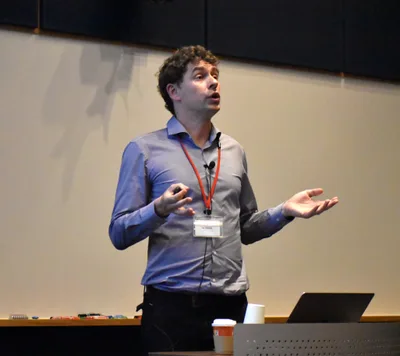
Svante Pääbo and collaborators reconstructed the genome of the Denisova hominins and announced that they were a new species, that they interbred with our species, and that the DNA results suggest that they had dark ha…
1800
#7291
Account of flint weapons discovered at Hoxne in Suffolk.
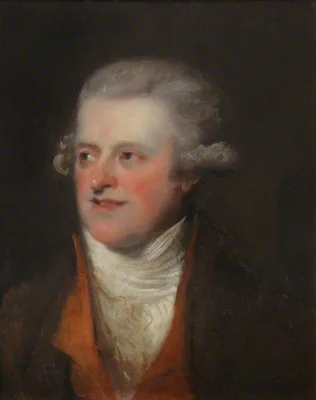
Frere described the discovery of several flint artifacts, which he believed to be “weapons of war,” associated with “some extraordinary bones, particularly a jaw-bone of enormous size of some unknown animal” (p. 204).…
1799
#7292
Mémoire sur les espèces d’éléphans vivantes et fossiles.
Using comparative anatomy, Cuvier demonstrated that the African elephant was a separate species from the Indian elephant, and that the fossil or “mammoth” elephant was yet another species distinct from the two living …
1829
#7293
Notice sur les ossemens humains fossiles des cavernes du Département du Gard, présentée à l’Académie des Sciences le 29 juin 1829.
Christol excavated of the caverns of Pondres and Souvignarges, northeast of Montpellier in the department of Gard. These caverns, which showed no evidence of accidental disturbance, contained human remains intermixed …
1878
#7294
La méthode graphique dans les sciences expérimentales et particulièrement en physiologie et en médecine.
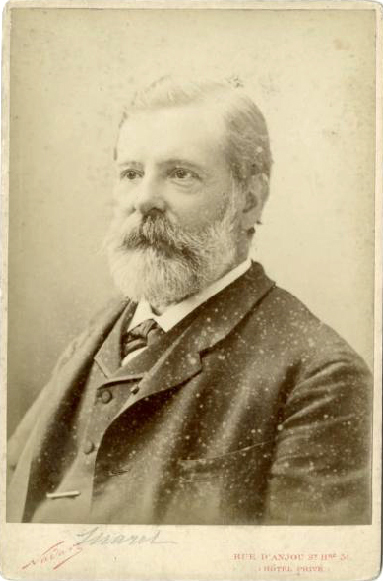
Marey pioneered the use of graphical recording in the experimental sciences, using instruments (many of his own invention) to capture and display data impossible to observe with the senses alone, and to record the pro…
2007
#7295
Finding time for the old stone age: A History of palaeolithic archaeology and quaternary geology in Britain, 1860-1960.
2007
#7296
Le cercle d'Abbeville: Paléontologie et préhistoire dans la France romantique. Edition établie par Marie-Françoise Aufrère.
In May 1940 the Boucher de Perthes Museum in Abbeville was destroyed by bombing. However, in the years before the war Leon Aufrère made copies of archives and correspondence, which became the source material for this …
1949
#7297
Age determinations by radiocarbon content: checks with samples of known age.
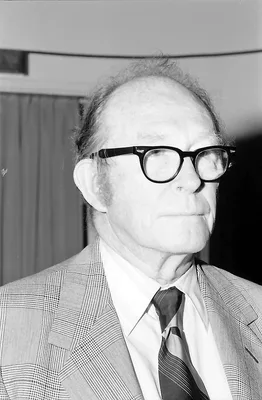
Introduction of radiocarbon dating for dating organic materials, including fossils (maximum 50,000 to 60,000 years old). With J. R. Arnold.
2008
#7298
Worlds before Adam: The reconstruction of geohistory in the age of reform.
1966
#7299
Potassium-Argon dating by activation with fast neutrons.
Argon 40-argon 39 dating (Argon-argon dating). Astrophysicist Merrihue died in a mount-climbing accident at the age of 32.