
Facets
Browse across eight MeSH (opens in new tab) facets — era, geography, science, specialty, technology, history, culture, and reference. Select one tag per group; counts update across the others. What’s new in facet browse how facets relate to subjects and MeSH.
Clear filtersGeography
Specialties & Disease
- Alternative & Fringe Medicine 17
- Anatomy & Pathology 134
- Cardiology & Blood 11
- Dentistry 10
- Diabetes 1
- ENT & Hearing 3
- Epidemiology & Demography 12
- Gastroenterology & Hepatology 4
- General Clinical Medicine 28
- Immunology & Dermatology 27
- Infectious Disease (General) 5
- Internal, Emergency & Geriatric 7
- Microbiology & Virology 92
- Military Medicine 11
- Neurology & Psychiatry 35
- Obstetrics & Reproductive 26
- Oncology & Cancer 10
- Ophthalmology & Vision 2
- Pediatrics 5
- Physiology & Embryology 94
- Plagues & Epidemics 44
- Psychology 16
- Public Health 129
- Pulmonary & Respiratory 3
- Rheumatology, Rehab & Pain 0
- Surgery & Anesthesia 14
- Urology & Nephrology 4
- Veterinary Medicine 11
Social & Historical Studies
Institutions & Culture
Reference & Scholarly Works
1,480 entries match Zoology & Animal Sciences [K01.900.500.750]
1923 –2005
#9321
Handbuch der Zoologie / Handbook of Zoology. Eine Naturgeschichte der Stämme des Tierreichs / A natural history of the phyla of the animal kingdom. Gegründet von / Founded by Willy Kükenthal. 8 vols., each expanded into many parts.
The Handbuch der Zoologie/Handbook of Zoology was founded by Willi Kükenthal in Berlin, and treated the complete animal kingdom from single cell organisms to mammals in eight thematic volumes: Volume I: Protozoa, Pori…
1924
#562
Das reticulo-endotheliale System.
In an earlier paper on this subject (Münch, med. Wschr., 1922, 69, 1352-56) Aschoff introduced the term “reticulo-endothelial system”; as early as 1914 he grouped certain phagocytic cells into his system.
1924
#139
Regeneration from a physico-chemical viewpoint.
1924 –1929
#7097
A bibliography of American natural history. The pioneer century. The role played by the scientific societies; scientific journals; natural history museums and botanic gardens; state geological and natural history surveys; federal exploriing expeditions in the rise and progress of American botany, geology, mineralogy, paleontology and zoology. 3 vols.
Digital facsimile from the Internet Archive at this link.
1924
#7384
Proiskhozhedenie Zhizni.
Oparin’s central thesis was that the first organisms to emerge in the anaerobic environment of the primitive Earth must have been heterotrophic bacteria. He proposed that life had been preceded by a lengthy period of …
1924
#10943
Studies on Rickettsia-like micro-organisms in insects.
Hertig and Wolbach first described the parasitic microbe Wolbachia in the common house mosquito in 1924. In 1936 Hertig formally described the species as Wolbachia pipientis. Since then the genus Wolbachia has become …
1924
#14195
The scrotum as a temperature regulator for the testes.
Moore and Quick established that the scrotal sac, and its ability to expand or contract, helps to regulate the temperature of the testes. Through this mechanism it enables sperm production and supports the viability o…
1925
#145.63
Elements of physical biology.
In this landmark of theoretical population ecology Lotka attempted to provide for parts of biology a basis comparable to that given by theoretical physics to experimental physics. This was the first great exposition a…
1925
#6610
De arts in de caricatuur.
German edition, Berlin, 1927.
1925
#10197
Arrowsmith.
"This novel has been inspirational for several generations of pre-medical and medical students. There is much agonizing along the way concerning career and life decisions. While detailing Arrowsmith's pursuit of the n…
1926
#145.64
Variazioni e fluttuazioni del numero d’individui in specie animali conviventi.
The mathematician Volterra created the basic equations for two species interactions. Abridged English translation as appendix to R. Chapman, Animal ecology, New York, 1931.
1926
#2462
Protozoology. 2 vols.
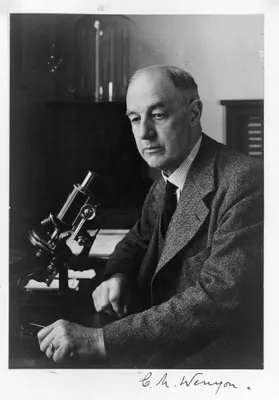
Wenyon was one of the world’s foremost authorities on medical protozoology.
1926
#9656
The natural history of ants: From an unpublished manuscript in the Academy of Sciences of Paris. Translated and annotated by William Morton Wheeler.
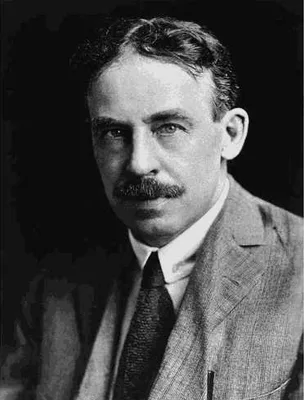
French and English text. The French text was first published in France as the 7th volume of Reaumur's Mémoires, Paris, 1928.
1926
#14025
The isolation and crystallization of the enzyme urease.
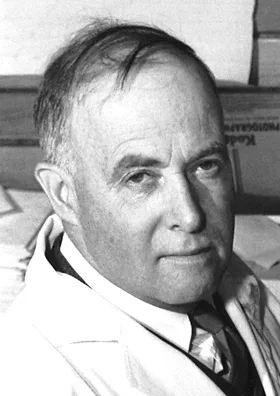
Sumner first isolated and crystallized an enzyme (urease) and proved that enzymes are proteins. One month after publication of the above paper Sumner reinforced his discovery by recrystalizing urease, publishing a fol…
1927
#145.65
Animal ecology.
Elton integrated the concepts of food chains, pyramids of numbers, and the “niche” into a useful framework for ecology.
1927
#5142
The plague in Shakespeare’s London.
1927
#251.1
Artificial transmutation of the gene.
Muller showed that radiation causes mutations that are passed on from one generation to the next. This was the first suggestion that inherited traits might be altered or controlled, and it created a sensation: “Man’s …
1927
#11383
The herbal in antiquity and its transmission to later ages.
1928
#350
The brain from ape to man: A contribution to the study of the evolution and development of the human brain by Frederick Tilney. With chapters on the reconstruction of the gray matter in the primate brain stem by Henry Alsop Riley. 2 vols.
Classic study of the evolution of the central nervous system in the higher mammals. Digital facsimile from the Internet Archive at this link.
1928
#142
The history of biology: A survey. Translated by L. B. Eyre.
Previously published in Swedish and German editions. Many reprints were published.
1928
#194.1
Äskulap und Venus. Eine Kultur- und Sittengeschichte im Spiegel des Ärztes.
An exhaustive and well-illustrated survey of medical anthropology with emphasis on sexuality.
1928
#5194.1
Researches on the intestinal protozoa of monkeys and man.
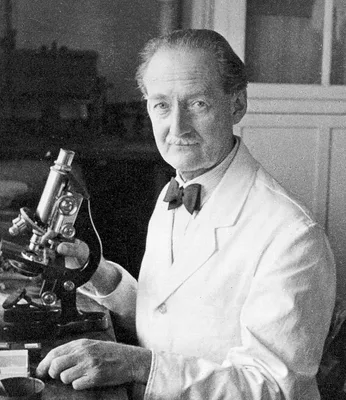
Classic account of the life-cycle of Entamoeba histolytica.
1928
#6610.1
Esculape chez les artistes.
Chapters and illustrations on deformities, infirmities, medicine, surgery, etc.
1928
#251.2
The significance of pneumococcal types.
Griffith’s experiments on transforming type II pneumococci into type III were repeated by Avery who was able sixteen years later (No. 255.3) to demonstrate that DNA was the transforming material.
1928
#10820
Medical and allied topics in Latin poetry.
1928 –1975
#11773
Index litteraturae entomologicae serie I: Die Welt-Literatur über die gesamte Entomologie bis inklusive. Index litteraturae entomologicae series II: von 1864 bis 1900. 9 vols.
The first part, by Horn and Schenkling, was privately published by Horn in 4 vols., 1928-29. The second part, by Derksen and Göllner-Scheiding, was published by the Akademie der Lanwirtschafwissenschaften der DDR in 5…
1929
#968
Cytochrome and respiratory enzymes.
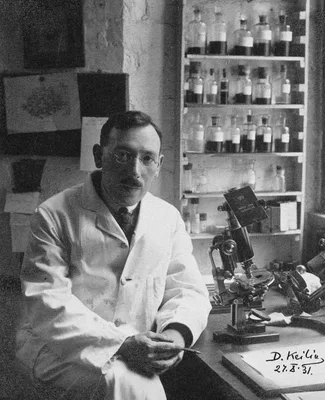
Keilin discovered cytochrome and laid the foundations of the modern concept of cellular respiration. See No. 1588.3.
1929
#566.1
The growth, development and phosphatase activity of embryonic avian femora in limb-buds cultivated in vitro.
First modern organ cultures.
1929
#7186
The female sex hormone. Part I: Biology, pharmacology and chemistry. Part II: Clinical investigations based on the female sex hormone blood test.
The first handbook on female sex hormones. Digital facsimile from the Hathi Trust at this link.
1929
#7467
The origin of life.
Haldane suggested that organic molecules could have been synthesized in an early atmosphere of carbon dioxide.
1929
#9987
Die Ärƶtlichen Kenntnisse in Ilias und Odyssee.
Medical knowledge in the Iliad and Odyssey. Digital facsimile from Google Books at this link.
1929 –1931
#12146
Ticks, mites and venomous animals of medical and veterinary importance. Part 1: Medical. Part 2: Public health.
Part 1 by Patton and the female entomologist Alwen Evans; part 2 by Patton alone.
1929
#12460
A revision of the genus Gorilla.
Basis of the modern taxonomy of the genus Gorilla. Digital facsimile from the Biodiversity Heritage Library at this link.
1929
#13079
Pathfinders: A history of the progress of colored graduate nurses. With biographies of many prominent nurses.
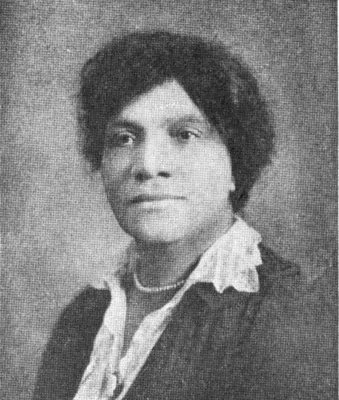
Digital facsimile from the Hathi Trust at this link.
1930
#1038.1
Crystalline pepsin.
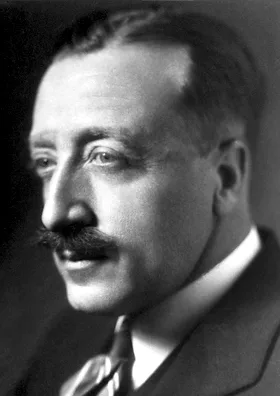
Crystallization of pepsin and its identity as a protein. In 1946 Northrop shared half of the Nobel Prize in Chemistry with Wendell Meredith Stanley "for their preparation of enzymes and virus proteins in a pure form."…
1930
#7308
Mathematische Klimalehre und astronomische Theorie der Klimaschwankungen. Handbuch der Klimatologie, Bd. 1, Teil A.
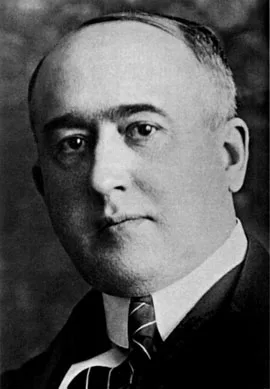
Milankovitch cycles, first exposition (176 pages). Milankovitch theorized that variations in eccentricity, axial tilt, and precession of the Earth's orbit determined climatic patterns on Earth through orbital forcing,…
1930
#12158
Seed, a novel of birth control.
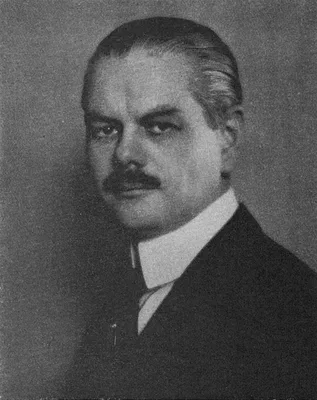
1931
#354
An introduction to the literature of vertebrate zoology. Based chiefly on the titles in the Blacker Library of Zoology, the Emma Shearer Wood Library of Ornithology, the Bibliotheca Osleriana and other libraries of McGill University, Montreal.
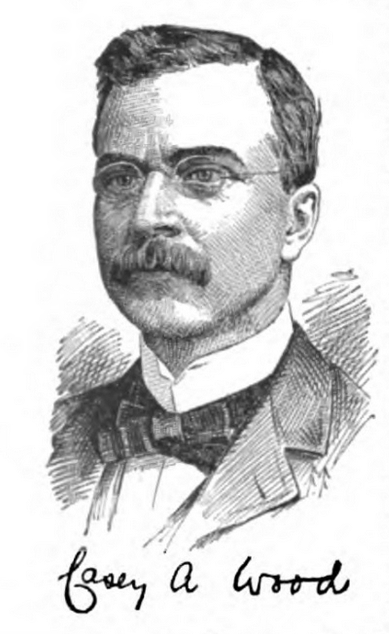
A comprehensive summary and bibliography of the literature on vertebrate zoology. The first 170 pages are a narrative divided into 19 chapters, plus an index. The remainder is a "partially annotated catalogue" arrange…
1931
#139.2
Pinocytosis.
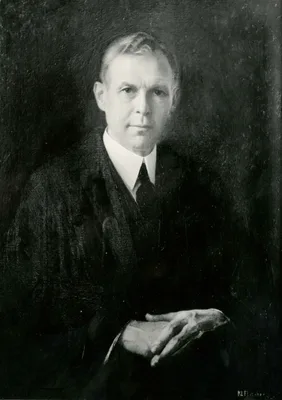
Discovery of pinocytosis.
1931
#9449
The physician of the Dance of Death: A historical study of the evolution of the dance of death mythus in art.
"Reprinted with additions and corrections from Annals of medical history (n. s., vol. II, nos. 4, 5, 6, 1930, and vol. III, nos. 1, 2, 1931)."
1931
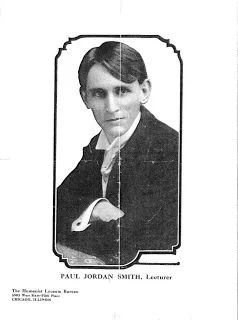
#11250
Bibliographia Burtoniana: A study of Robert Burton's The Anatomy of Melancholy, with a bibliography of Burton's Writings
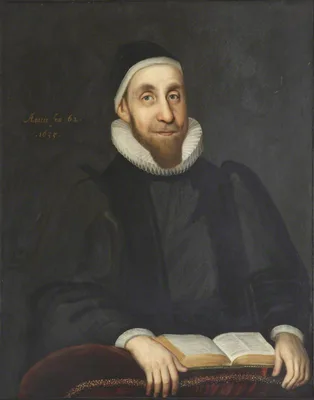
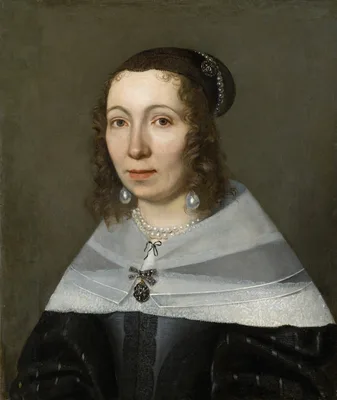
1931
#11777
Die Werke der Maria Sibylle Merian: bibliographisch Zusammengestellt.
1932
#351
The social life of monkeys and apes.
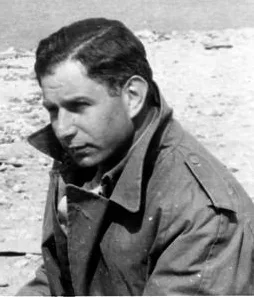
A study of the relationship of Man to the other primates, from the physiological and biochemical standpoint. Zuckerman’s work is considered the first adequate interpretation of simian society. 2nd ed., 1980.
1932
#6918
X-ray studies of the structures of hair, wool, and related fibres. I. General.
Astbury, a student of William Lawrence Bragg, was the first to study proteins by X-ray analysis. He applied X-ray analysis to the structure of hair, wool, and related fibers, of which the protein keratin is the princi…
1932
#12060
Light and life. Address delivered at the opening meeting of the International Congress on Light Therapy in Copenhagen 15. August 1932.
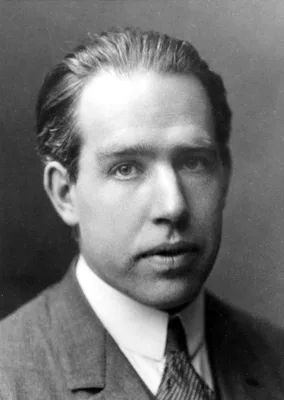
In 1922 Bohr was awarded the Nobel Prize in Physics "for his services in the investigation of the structure of atoms and of the radiation emanating from them." Including Bohr's 1932 address, Light and life, in the Nob…
1932
#12160
Brave new world.
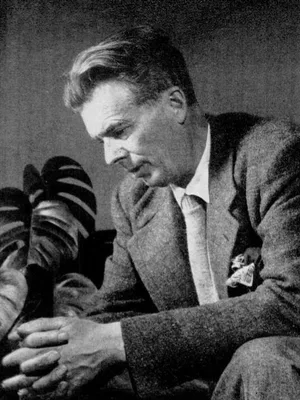
"The novel opens in the World State city of London in AF (After Ford) 632 (AD 2540 in the Gregorian calendar), where citizens are engineered through artificial wombs and childhood indoctrination programmes into predet…
1933
#6621
Bouquet poëtique des médecins, chirurgiens, dentistes et apothicaires.
1933
#6622
Doctors in Elizabethan drama.
1933
#7065
Some notes on the history of the National Medical Association.
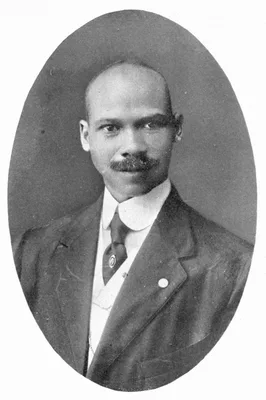
Digital facsimile available from PubMedCental (NLM) at this link.
1934
#145.66
The struggle for existence.
Gause developed the concept of competitive exclusion as formulated by Volterra.