
Facets
Browse across eight MeSH (opens in new tab) facets — era, geography, science, specialty, technology, history, culture, and reference. Select one tag per group; counts update across the others. What’s new in facet browse how facets relate to subjects and MeSH.
Clear filtersGeography
Specialties & Disease
- Alternative & Fringe Medicine 383
- Anatomy & Pathology 765
- Cardiology & Blood 914
- Dentistry 259
- Diabetes 80
- ENT & Hearing 293
- Epidemiology & Demography 397
- Gastroenterology & Hepatology 316
- General Clinical Medicine 487
- Immunology & Dermatology 1,008
- Infectious Disease (General) 147
- Internal, Emergency & Geriatric 123
- Microbiology & Virology 1,080
- Military Medicine 436
- Neurology & Psychiatry 1,258
- Obstetrics & Reproductive 551
- Oncology & Cancer 377
- Ophthalmology & Vision 412
- Pediatrics 247
- Physiology & Embryology 924
- Plagues & Epidemics 1,279
- Psychology 202
- Public Health 1,129
- Pulmonary & Respiratory 233
- Rheumatology, Rehab & Pain 189
- Surgery & Anesthesia 1,553
- Urology & Nephrology 309
- Veterinary Medicine 165
Social & Historical Studies
Institutions & Culture
Reference & Scholarly Works
1,008 entries match Immunology & Dermatology [C19 / C20 / C17]
1791
#4017
Observations on certain horny excrescences of the human body.
Original description of cornu cutaneum.
1792
#3810
Essai sur le goitre et le crétinage. Où l'on recherche particulièrement quelles son les causes de ces deux maladies des habitans des vallées, et quels sont les moyens physiques et moraux qu'il convient d'employer pour s'en préserver entièrement à l'avenir.
Fodéré considered cretinism to be due to the concentrated air in deep valleys, rather than to water. He also drew attention to the skeletal changes. Digital facsimile from Google Books at this link.
1792
#3984
Dermato-pathologia; or practical observations, from some new thoughts on the pathology and proximate cause of diseases of the true skin.
An attempt to classify skin diseases upon the basis of their pathology.
1792
#6358
Von Menschen ohne Haare und Zähne.
Hereditary ectodermal dysplasia first described. Digital facsimile from Google Books at this link.
1793
#11576
Storia di un monocolo con alcune riflessioni.
A rather elegantly produced and illustrated medical monograph on a cyclops, with plates printed in sepia. Engraved headpieces allude to monsters from classical mythology Digital facsimile from Google Books at this link.
1794
#3879
De curandis hominum morbis epitome. Liber V.
Frank was the first to define diabetes insipidus (pp. 38-67).
1796 –1808
#3985
On cutaneous diseases. Vol. 1 [All published].
Modern dermatology may be said to start with Willan. His classification of skin diseases gained him the Fothergillian Medal of the Medical Society of London in 1790. He established a standard nomenclature which is sti…
1797
#11491
A practical inquiry into disordered respiration, distinguishing the species of convulsive asthma, their causes, and indications of cure,
Bree "embodied the numerous experiments in his own case, gave a more full and complete view of asthma and dyspnœa than had hitherto appeared, and laid down some important therapeutic rules, the practical value of whic…
1798
#2529.3
An inquiry into the causes and effects of the variolae vaccinae.
Jenner established the fact that a “vaccination” or inoculation with vaccinia (cowpox) lymph matter protects against smallpox. He performed his first vaccination on May 14, 1796. The above work, describing 23 successf…
1800 –1802
#5424
A prospect of exterminating the small-pox, being the history of the variolae vaccinae, or kine-pox, commonly called the cow-pox; as it has appeared in England: With an account of a series of inoculations performed for the kine-pox in Massachusetts. [Part II:] A prospect of exterminating the small pox part II, being a continuation of a narrative of facts concerning the progress of the new inoculation in America; together with practical observations on the local appearance, symptoms, and mode of treating the variola vaccina, or kine pock; including some letters to the author, from distinguished characters, on the subject of this benign remedy, now passing with a rapid step through all ranks of society in Europe and America.
Waterhouse introduced Jennerian vaccination into the U.S.A. He vaccinated his own child as his first case. See J. B. Blake, Benjamin Waterhouse and the introduction of vaccination. A reappraisal. Philadelphia, 1957. D…
1801
#1118
Le sang, est-il identique dans tous les vaisseaux qu’il parcourt?
Like de Bordeu, and more definitely, Legallois anticipated the conception of internal secretions. He surmised from the identity in composition of all varieties of arterial blood and the diversity of venous blood in di…
1801
#3880
Accroissement singulier en grosseur des os d’un homme âgé de 39 ans. In: Mélanges de chirurgie, 407-11.
Saucerotte described before the Académie de Chirurgie in 1772 a case of what is now known to have been acromegaly. This is the first known clinical description of the disease, and is one of the five cases included in …
1802
#3811
Sopra un tumor freddo nell’anterior parte del collo detto broncocele.
One of the earliest accounts of exophthalmic goitre. The author noted cardiac disturbances in thyroid enlargement.
1802
#5425
Practical observations on vaccination: or inoculation for the cow pock.
Coxe did much to destroy ignorant prejudice against vaccination; he was the first in Philadelphia to practice it. Like Waterhouse, he inoculated his own child as his first case.
1802
#7971
Ausführliche Beschreibung und Abbildung der beiden sogenannten Stachelschweinmenschen aus der bekannten engelischen Familie Lambert, oder, the porcupine man.
Tilesius continued the study of the Lambert family of sufferers from ichthyosis hystrix begun by Machin and Baker (see No. 4013). Notably Tilesius illustrated the bizarre condition with several color plates. In 2016 o…
1806
#1695
Analyse et tableaux de l’influence de la petite vérole sur la mortalité à chaque âge, et de celle qu’un préservatif tel que la vaccine peut avoir sur la population et la longevité.
Duvillard showed statistically the effect of smallpox vaccination on the mortality rate. Digital facsimile from Google Books at this link.
1806
#3986
Description des maladies de la peau observées à l’hôpital Saint Louis.
The largest and most spectacular of the early classics of dermatology, with hand-colored illustrations unsurpassed for their quality of execution. The illustrations are also the first on the subject in a French book. …
1807 –1808
#4020
On an eruptive disease of children.
First description of ecthyma terebrans, “pemphigus gangrenosa”.
1810 –1818
#3987
Précis théorique et pratique sur les maladies de la peau. 2 vols.
1812 –1816
#534.56
Handbuch der pathologischen Anatomie. 2 vols.
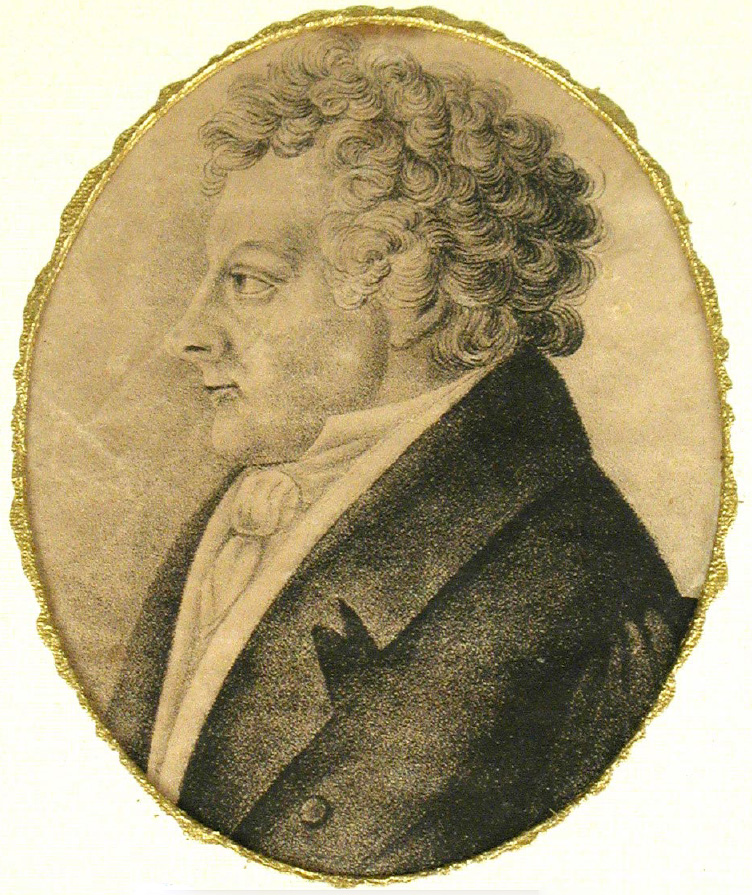
Meckel classified malformations systematically, on the basis of altered developmental mechanisms, basing his work on embryology. See No. 2284.
1813
#4021
A practical synopsis of cutaneous diseases according to the arrangement of Dr. Willan.
This was the most influential textbook of dermatology of the 19th century, and the work which conveyed Willan’s system to most of the medical world. Included in the book was material by Willan which remained unpublish…
1814
#4021.1
Practical treatise on porrigo, or scald head, and on impetigo, the humid or running teter
This treatise on infantile eczema is the only fascicule of the second volume of Willan’s On cutaneous diseases (No.4018) that ever appeared in print. It was edited for publication after Willan's death by his stepson-i…
1814
#12762
An essay on the venereal diseases which have been confounded with syphilis, and the symptoms which exclusively arise from that poison. Illustrated by drawings of the cutaneous eruptions of true syphilis, and the resembling diseases.
Carmichael "subdivided venereal infections into four major classes, each of which he maintained had a distinct exciting poison, a peculiar primary manifestation and a separate series of constitutional affections. From…
1816
#4023
Note sur la keloide.
First accurate description of keloid (“Alibert’s keloid”), although it was mentioned by Retz in 1790.
1817 –1826
#2284
Tabulae anatomico-pathologicae. 4 pts.
Meckel’s work on embryology brought a better understanding of congenital malformations, which had previously been attributed by many to supernatural influence. This work illustrates a number of anomalies and other dis…
1817
#3988
Delineations of cutaneous diseases exhibiting the characteristic appearances of the principal genera and species comprised in the classification of the late Dr. Willan; and completing the series of engravings begun by that author.
Bateman, the pupil of Willan, continued his teacher’s classification of skin diseases. The above work is notable for its 72 colored plates. Strictly speaking it is the first atlas of dermatology, as Willan’s work fall…
1817
#12746
Nosologie naturelle, ou les maladies du corps humain distribuées par familles. Tome premier. (All published.)
This unfinished work with 22 spectacular plates included some full body images of patients, and unlike other illustrated works by Alibert, it concerned more than skin diseases. Vol. 2 was never published but a second,…
1818 –1822
#534.57
Philosophie anatomique. Tome Premier. Des organes respiratoires sou le rapport de la détermination et de l'identité de leur pièces osseuses. Avec figures de 116 nouvelles preparations d'anatomie. [Tome Deuxième]. Des monstruosités humaines, ouvrage contenant une classification des monstres; la description et la comparaison des principaux genres; une histoire raisonnée des phénomènes de la monstruosité et des faits primitifs qui la produisent; des vues nouvelles touchant la nutrition du foetus et d'autres circonstrances de son développement....Avec figures des détails anatomiques. 2 vols.
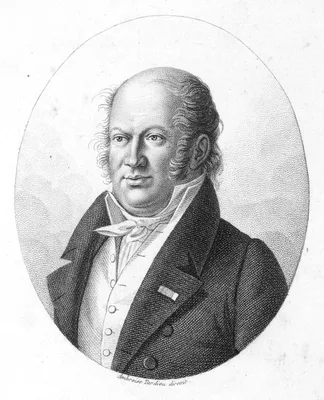
The elder Geoffroy Saint-Hilaire is credited with coining the word teratology, and was the first seriously to attempt the experimental production of anomalies, by manipulating chick eggs. See T. Cahn, La vie et l'oeuv…
1818
#10069
Oeuvres complètes de Bordeu, précédés d'une notice sur sa vie et sur ses ouvrages, par M. le Chevalier Richerand. 2 vols.
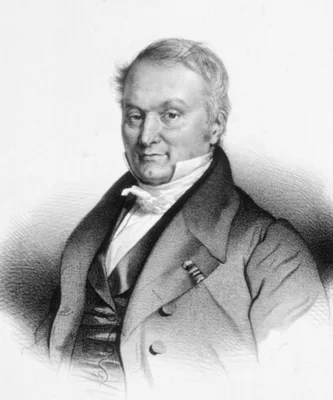
1819
#2582
Case of periodical affection of the eyes and chest.
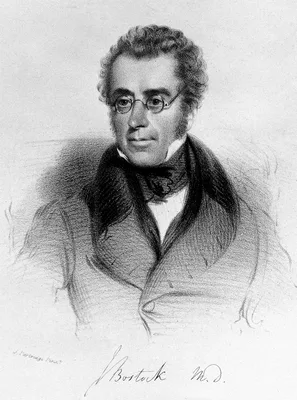
Bostock’s classical description of the “catarrhus aestivus,” hay fever, is also referred to as “Bostock’s catarrh”. It begins the modern era in the clinical recognition of hay fever. The case he described was in fact …
1820
#3812
Découverte d’un nouveau remède contre le goitre.
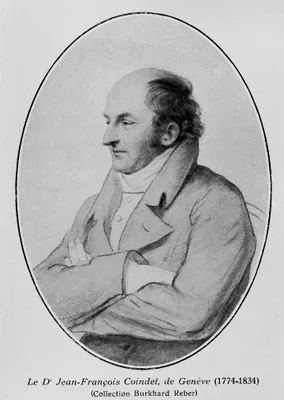
Coindet is usually regarded as the first to administer iodine in cases of goitre, with beneficial results. It had previously been prepared from seaweed by B. Courtois in 1812 (Ann. Chim. (Paris), 1813, 88, 304-10), an…
1820
#9072
Ensaio dermosographico ou Succinta e systematica descripção das doenças cutaneas, conforme os principios e observações dos doutores Willan, e Bateman, com indicacão dos respectivos remedios aconselhados por estes celebres authores, e alguns outros.
The first book on dermatology published in Portuguese. Digital facsimile from the Internet Archive at this link.
1820
#13385
Ueber angeborne menschliche Missbildungen im Allgemeinen und Hermaphroditen insbesondere. Ein Beitrag zur Physiologie, pathologischen Anatomie, und gerichtlichen Arzneiwissenschaft.
Includes an account of the Prussian intersex man, Karl Dürrge (also known as Maria Dorothea Derrier: 1780–1835). With two hand-colored plates of hermaphroditic genitalia. Digital facsimile from Google Books at this link.
1822
#2530
Mémoire physiologique sur les maladies purulentes et putrides, sur la vaccine, etc.
Gaspard was one of the first to make experimental studies on pyemia following the injection of putrid fluids. He experimented on dogs, sheep, foxes, and pigs, injecting putrid infusions pus, vaccine, lymph, blood, bil…
1822 –1823
#3912
Account of a singular variety of urine, which turned black soon after being discharged; with some particulars respecting its chemical properties.
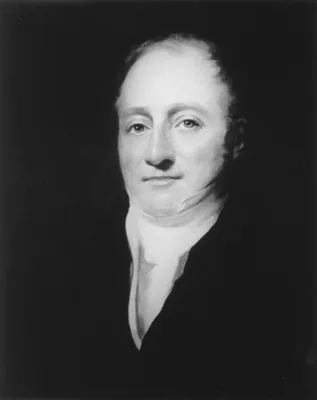
Alkaptonuria described.
1823
#3881
Observations sur les maladies de l’appendice sus-sphenoïdal (glande pituitaire) du cerveau.
Includes description of pituitary obesity.
1823
#1492.1
Commentatio de examine physiologico organi visus et systematis cutanei.
Purkynĕ was first to examine the interior of the human eye and the dog eye, using only a candle and a concave spherical lens. He thus invented the ophthalmoscope three decades before Helmholtz (1851; No. 5866). Reprin…
1824
#11156
A practical treatise on the diseases of the skin, comprehending an account of such facts as have been recorded on these subjects, with original observations. The whole arranged with a view to illustrate the constitutional causes of these diseases, as well as their local characters.
Plumbe was one of the most outspoken critics of Willan and Bateman’s morphological system of skin disease classification. In his Practical Treatise he was the first dermatologist to attempt to produce a classification…
1825
#2210
Collections from the unpublished writings of the late Caleb Hillier Parry. 3 vols.
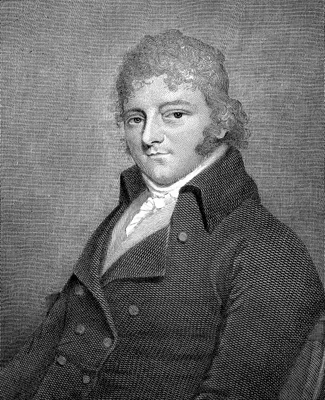
Includes Parry’s interesting description of eight cases of exophthalmic goitre, the first of which was observed in 1786, and his notes on four cases of angina pectoris. Parry's paper, "Enlargement of the thyroid gland…
1825
#4024
Description des maladies de la peau. 2me. édition. 2 vols.
Contains (vol. 2, p. 214) first description of sycosis barbae (“Alibert’s mentagra”).
1826 –1827
#3989
Traité théorique et pratique des maladies de la peau. 2 vols, and atlas.
In this summary of dermatological literature of the period Rayer first described adenoma sebaceum and xanthoma multiplex. He was the first to differentiate between acute and chronic eczema. The second edition, Paris, …
1826
#10529
Clinique de la maladie syphilitique. Enrichie d’observations communiquées par messieurs Cullerier oncle, Cullerier neveu, Bard, Gama, Desruelles et autre médecins. Text and atlas.
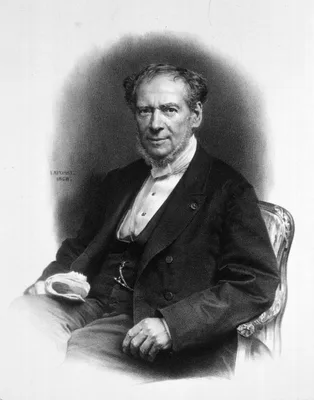
Includes 126 hand-colored engraved plates from drawings by Dupont the elder, assisted by Delestre the younger and Verollot, engraved by Johann Theodor Susemihl, a German engraver working in Paris, known for his zoolog…
1827
#4025
Observations respecting an ulcer of peculiar character, which attacks the eyelids and other parts of the face.
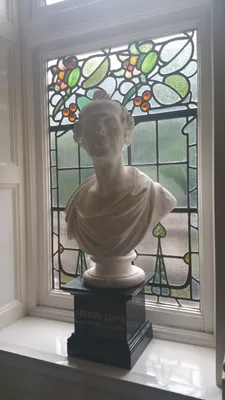
Arthur Jacob, Professor of Anatomy and physiology in Dublin, described “Jacob’s ulcer”, rodent ulcer attacking the face, especially the eyelid.
1827
#14285
Der Leichnam des Menschen in seinen physischen Verwandlungen nach Beobachtungen und Versuchen.
The human corpse in its physical transformations according to observations and experiments.
1828
#2583
Of the catarrhus aestivus, or summer catarrh.
On the history and aetiology of hay fever.
1828 –1829
#3814
Removal of the right lobe of the thyroid gland.
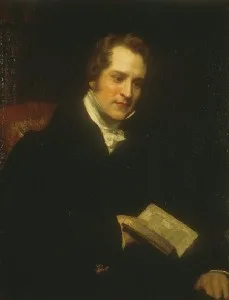
To Joseph Green, of St. Thomas’s Hospital, London, is accredited the first thyroidectomy, the patient succumbing 15 days later from sepsis.
1828
#3990
Abrégé pratique des maladies de la peau.
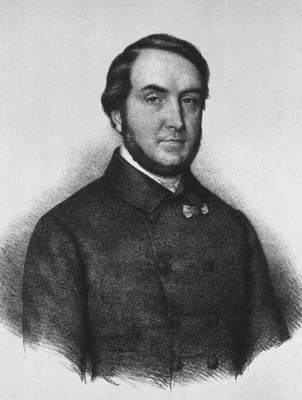
This book codified and published the lectures, doctrines and observations of Laurent Biett (1781-1840), the leading clinical teacher in dermatology of the early 19th century, who published very little himself. Cazenav…
1829
#5291
Sur la pyrophlyctide endémique, ou pustule d’Aleppo.
Important description of “Aleppo boil”, furunculosis orientalis.
1829
#9472
Comments on corpulency, lineaments of leanness ....
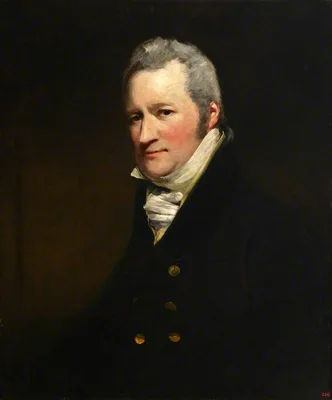
The first illustrated book on obesity research or medical efforts to control overweight. Wadd, one of the surgeons extraordinary to George IV, drew and engraved the illustrations himself. Digital facsimile from the In…
1831 –1849
#534.59
Lehrbuch der pathologischen Anatomie der Haus-Saugethiere. 3 vols.
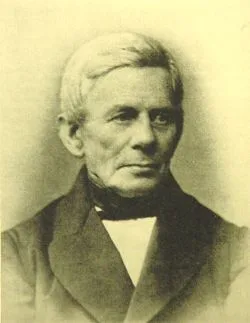
The most comprehensive treatise on malformations of domesticated animals, as well as an important contribution to general teratology. The superb atlas illustrates many rare animal terata. See also his Uber thierische …