
Facets
Browse across eight MeSH (opens in new tab) facets — era, geography, science, specialty, technology, history, culture, and reference. Select one tag per group; counts update across the others. What’s new in facet browse how facets relate to subjects and MeSH.
Clear filtersGeography
Specialties & Disease
- Alternative & Fringe Medicine 383
- Anatomy & Pathology 765
- Cardiology & Blood 914
- Dentistry 259
- Diabetes 80
- ENT & Hearing 293
- Epidemiology & Demography 397
- Gastroenterology & Hepatology 316
- General Clinical Medicine 487
- Immunology & Dermatology 1,008
- Infectious Disease (General) 147
- Internal, Emergency & Geriatric 123
- Microbiology & Virology 1,080
- Military Medicine 436
- Neurology & Psychiatry 1,258
- Obstetrics & Reproductive 551
- Oncology & Cancer 377
- Ophthalmology & Vision 412
- Pediatrics 247
- Physiology & Embryology 924
- Plagues & Epidemics 1,279
- Psychology 202
- Public Health 1,129
- Pulmonary & Respiratory 233
- Rheumatology, Rehab & Pain 189
- Surgery & Anesthesia 1,553
- Urology & Nephrology 309
- Veterinary Medicine 165
Social & Historical Studies
Institutions & Culture
Reference & Scholarly Works
1,279 entries match Plagues & Epidemics [C01.252]
1970
#5145
A history of bubonic plague in the British Isles.
From The Great Pestilence of 1348 to the Plague of London in 1665, discussing efforts to control the disease, and its impacts on social and economic life.
1970
#5289.3
Chagas’s disease (South American trypanosomiasis). A bibliography compiled from Sleeping Sickness Bureau Bulletin 1908-1912, and Tropical Diseases Bulletin, 1912-1970.
Supplement to Trop. Dis. Bull., vol. 67.
1970
#5546.4
Lassa fever, a new virus disease of man from West Africa. I. Clinical description and pathological findings.
An arenovirus infection first noted in Lassa, N. E. Nigeria, in 1969. With J. M. Baldwin, D. J. Gocke, and J. M. Troup.
1970
#5546.5
Lassa fever, a new virus disease of man from West Africa. III. Isolation and characterization of the virus.
Preliminary note in Nature (Lond.), 1970, 227, 174. Lassa Hemorrhagic Fever is endemic to the West African countries of Nigeria, Guinea, Liberia and Sierra Leone.
1970
#5546.8
Bibliography of ticks and tickborne diseases from Homer (about 800 B.C.) to 31 December, 1969. Vol. 1.
Digital facsimile from Washington State University Digital Collections at this link.
1970
#10887
Babesiosis in a Massachusetts resident.
Order of authorship in the original paper was Western, Benson, Gleason. First report of babesiosis in a non-immuncompromised patient, confirming the potential wide spread of this tick-transmitted illness. (Thanks to J…
1971
#10678
The role of the trypanosomiases in African ecology: A study of the Tsetse fly problem.
1971
#13787
Selective epidemiologic control in smallpox eradication.

Foege showed that "ring containment", selective vaccination of those at greatest risk, in closest proximity to an outbreak, was more effective in eradicating smallpox than mass vaccination.
1971
#14304
Oral or nasogastric maintenance therapy in pediatric cholera patients.

1972
#5289.4
A bibliography on Chagas’s disease (1909-1969)
Index-Catalogue of Medical and Veterinary Zoology, Special Publication No. 2.
1972
#9189
Disease and society in provincial Massachusetts: Collected accounts, 1736-1939.
Includes Caulfield's "A history of the terrible epidemic, vulgarly called the throat distemper, as it occurred in His Majesty's New England colonies between 1735 and 1740," Yale J Biol Med. 11 (1939) 219–272. availabl…
1973
#5352.6
Schistosomiasis: the evolution of a medical literature. Selected abstracts and citations, 1852-1952.
Includes 384 core references and bibliography (without abstracts) covering 1963-72.
1973
#8136
Final report of the Tuskegee Syphilis Study Ad Hoc Advisory Panel.
Digital facsimile from http://biotech.law.lsu.edu/ at this link.
1973
#9131
Awakenings.

Revised editions, 1976 and 1991. "It recounts the life histories of those who had been victims of the 1920s encephalitis lethargica epidemic.[2] Sacks chronicles his efforts in the late 1960s to help these patients at…
1974
#12717
A new infantile acute febrile mucocutaneous lymph node syndrome (MLNS) prevailing in Japan.
The first report on Kawasaki Disease in English. By 1973, 6,000 cases of Kawasaki disease were reported in Japan. (Thanks to Juan Weiss for this reference and its interpretation.)
1974
#12718
Myocardial infarction due to coronary thromboarteritis following acute febrile mucocutaneous lymph node syndrome (MLNS) in an infant.
The authors reported the case of a 6 month old baby who died from a myocardiac infarction after "recovering" from Kawasaki disease. Autopsy showed that the baby died from classical coronary artery thrombosis accompani…
1976
#9236
Les hommes et la peste en France et dans les pays européens et méditerranéens. Tome I: La peste dans l'histoire. Tome II: Les hommes face à la peste. 2 vols.
1976
#9689
Plagues and peoples.

1976
#10781
A cluster of arthritis in children and adults in Lyme, Connecticut.
The first publication on Lyme Disease. Abstract from the Proceedings of the 40th Annual Scientific Session of the American Rheumatism Association. Order of authorship in the original paper was Steere, Malawista, Snydm…
1976
#11888
The resistance factor to Plasmodium vivax in blacks.

The authors showed that the Plasmodium vivax parasite requires the Fya/Fyb Duffy antigen/chemokine receptor on the surface of red blood cells for penetration of human red blood cells. Because most African and American…
1976
#14127
The eradication of smallpox.

Henderson's paper in the October 1976 issue of Scientific American was one of the first published announcements of the completion of the eradication of smallpox. Illustrating the iconic photograph of a mother holding …
1977
#3215.7
Legionnaires’ disease. Description of an epidemic of pneumonia.
First major scientific account. With 11 co-authors. Legionnaire's disease acquired its name after an outbreak of a then-unknown "mystery disease" sickened 221 persons, causing 34 deaths. The people affected were atten…
1977
#3215.8
Legionnaires’ disease. Isolation of a bacterium and demonstration of its role in other respiratory disease.

Order of authorship in the original publication: McDade, Shepard, Fraser.... See also p. 1218.
1977
#5145.1
The black death in the Middle East.
1977
#5500.2
Influenza: The last great plague.
1977
#9211
Medical Department, United States Army Internal medicine in Vietnam. Volume I. Skin diseases in Vietnam, 1965-72. Vol. II. General medicine and infectious diseases, edited by Andre J. Ognibene and O'Neill Barrett, Jr.
Digital facsimile of Vol. 1 from the Hathi Trust at this link. Vol. 2 is availabel from the U.S. Army Medical Department, Office of Medical History at this link.
1977
#11245
Unidentified gram-negative rod infection: A new disease of man.
Order of authorship in the original paper: Butler, Weaver, Ramani....Bobo....First description of a newly discovered bacterium associated with dog bites, affecting in this case alcoholic patients or patients predispos…
1978
#2268.1
Tropical medicine and parasitology: Classic investigations. 2 vols.
About 200 key papers, reproduced in whole or in part, in English translation where necessary. Includes useful biographical notes.
1978
#10783
Erythema chronicum migrans and Lyme arthritis: Epidemiologic evidence for a tick vector.
The authors showed that a tick was the insect vector for Lyme disease. The tick (the "Deer Tick") is named lxodes dammini. Order of authorship in the original paper was Steere, Broderick, and Malawista. (Thanks to Jua…
1978
#13020
Epidemic disease in fifteenth century England: The medical response and the demographic consequences.
1979
#10888
Human babesiosis on Nantucket Island, USA: Description of the vector, Ixodes dammini, N. Sp. (Acarina: Ixodidae)
Order of authorship in the original paper was Spielman, Clifford, Piesman. The authors identified and described the insect vector of Babesiosis. This was a new species; the same species causes Lyme disease. (Thanks to…
1979
#11256
Classification of the Legionnaires' disease bacterium: Legionella pneumophila, genus novum, species nova, of the family Legionellaceae, familia nova.
Order of authorship in the original publication: Brenner, Steigerwalt, McDade. (Thanks to Juan Weiss for this reference and its interpretation.)
1979
#13368
Evolution des sciences de la santé et de l'hygiène publique en Haiti. Vol.1, Fin de la période coloniale-1915.
1979
#13788
The eradication of smallpox from India.
1979
#13796
The invisible fire: The story of mankind's victory over the ancient scourge of smallpox.
1980
#5145.2
Bubonic plague in early modern Russia: Public health & urban disaster.
1980
#5434.2
The global eradication of smallpox. Final report of the Global Commission for the Certification of Smallpox Eradication.
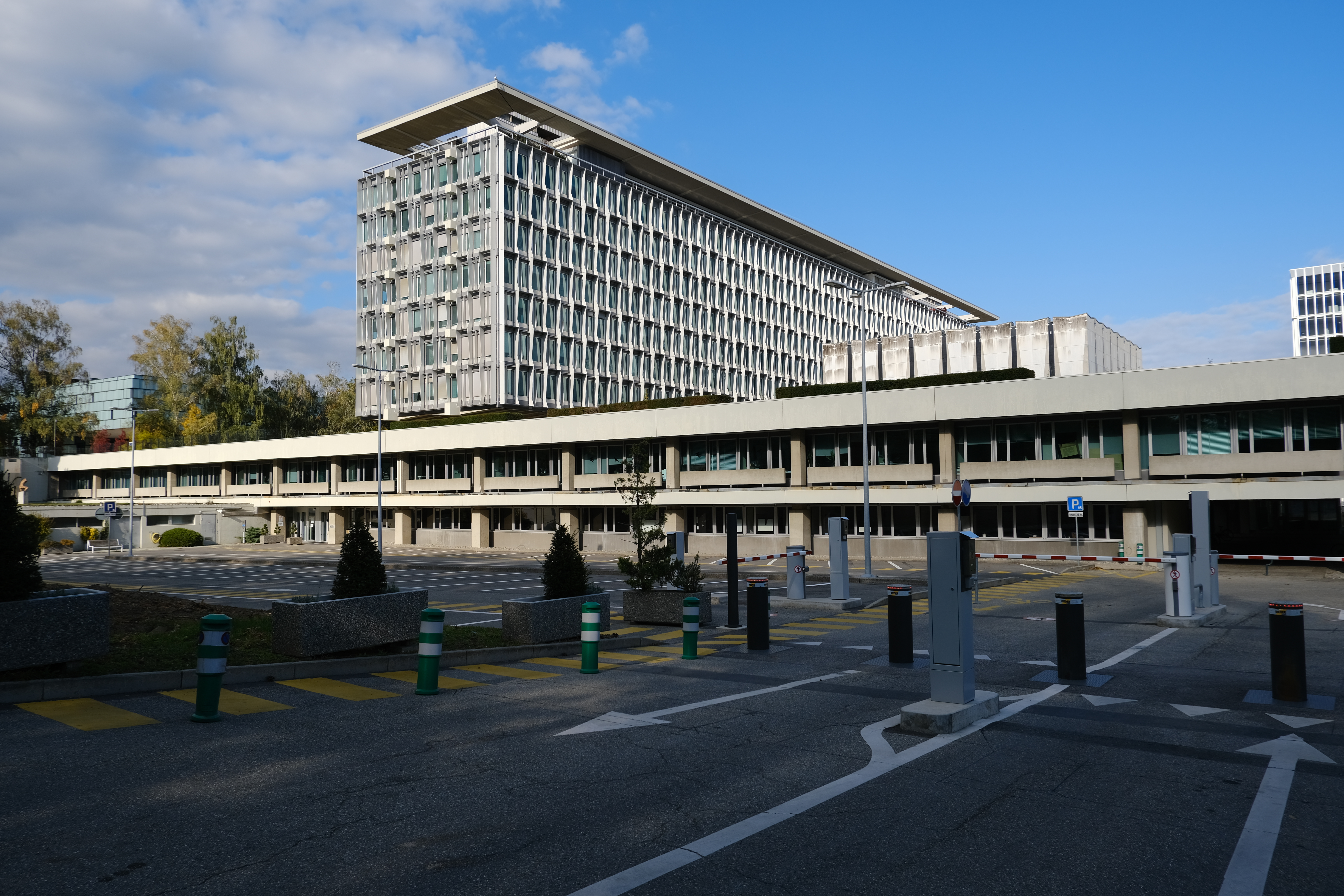
On 8 May 1980, the World Health Organization officially announced that “smallpox eradication has been achieved throughout the world”. The upper cover of this report reproduces an electron micrograph of a specimen of v…
1980
#11257
Preliminary report on the pathogenicity of Legionella pneumophila for freshwater and soil amoebae.
Discovery of the pathogenic relationship between amoebas and Legionella bacteria--a key step in understanding how this bacteria infects mankind. Legionella bacteria, along with amoeba, live in the organic contaminatio…
1980
#13803
The eradication of smallpox from Bangladesh.
1981
#4158.2
The dermatology and syphilology of the nineteenth century.
A scholarly work written in a particularly entertaining style.
1981
#6995
Kaposi's sarcoma and pneumocystis pneumonia among homosexual men--New York City and California.
The second published report on what later became the AIDS epidemic. The report described 26 homosexual men in New York and California with Kaposi's sarcoma, and 10 more Pneumocystis carinii pneumonia (PCP) cases in ho…
1981
#8028
Fighting the plague in seventeenth century Italy.
1981
#8091
Bad blood: The Tuskegee syphilis experiment.
"From 1932 to 1972, the United States Public Health Service conducted a non-therapeutic experiment involving over 400 black male sharecroppers infected with syphilis. The Tuskegee Study had nothing to do with treatmen…
1981
#9329
Pneumocystis pneumonia - Los Angeles.
The first paper on HIV/AIDS, reporting on June 5, 1981 on five cases of Pneumocystis carinii pneumonia (PCP) seen at the University of California at Los Angeles (UCLA) medical center. PCP was then a rare infection; ho…
1982
#5475.2
Bibliography of dengue fever and dengue-like illnesses, 1780-1981.
1982
#10782
Lyme disease - a tick-borne spirochetosis?
Discovery of the agent causing Lyme disease. Though the authors initially thought the disease might be a spirochetosis, the agent was attributed to a bacterium Borrelia burgdorferi, named for Burgdorfer who discovered…
1983
#5436.2
Princes and peasants: Smallpox in history.

Reissued in 2002 with a new introduction as The greatest killer: Smallpox in history.
1983
#6996
Isolation of a T-lymphotropic retrovirus from a patient at risk for acquired immune deficiency syndrome (AIDS).

Isolation of the human immunodeficiency virus (HIV-1). In 2008 Barré-Sinoussi and Montagnier shared half of the Nobel Prize in Physiology and Medicine "for their discovery of human immunodeficiency virus." The other h…
1983
#11376
Hemorrhagic colitis associated with a rare Escherichia coli serotype.
Order of authorship in the original publication: Riley, Remis, Helgerson. First description in print of a particularly virulent E.coli (0157-H7) infection, for which no antibiotics were effective; the only treatment b…
1983
#13021