
Facets
Browse across eight MeSH (opens in new tab) facets — era, geography, science, specialty, technology, history, culture, and reference. Select one tag per group; counts update across the others. What’s new in facet browse how facets relate to subjects and MeSH.
Clear filtersGeography
Specialties & Disease
- Alternative & Fringe Medicine 0
- Anatomy & Pathology 2
- Cardiology & Blood 43
- Dentistry 22
- Diabetes 0
- ENT & Hearing 25
- Epidemiology & Demography 1
- Gastroenterology & Hepatology 9
- General Clinical Medicine 7
- Immunology & Dermatology 2
- Infectious Disease (General) 0
- Internal, Emergency & Geriatric 13
- Microbiology & Virology 0
- Military Medicine 5
- Neurology & Psychiatry 9
- Obstetrics & Reproductive 29
- Oncology & Cancer 2
- Ophthalmology & Vision 25
- Pediatrics 2
- Physiology & Embryology 38
- Plagues & Epidemics 5
- Psychology 2
- Public Health 3
- Pulmonary & Respiratory 14
- Rheumatology, Rehab & Pain 2
- Surgery & Anesthesia 78
- Urology & Nephrology 11
- Veterinary Medicine 0
Social & Historical Studies
Institutions & Culture
Reference & Scholarly Works
311 entries match Instruments & Devices [E07]
1929
#1446
Über das Elektrenkephalogramm des Menschen.
First recording of human brain activity, which Berger called electroencephalography. Berger actually recorded his first EEG in 1924, but did not publish the technique until 1929. He showed that the electrical activity…
1929
#6299.1
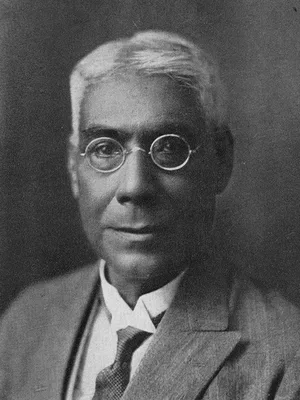
Obstetric forceps, its history and evolution.
1931
#4400.1
Arthroscopy or the direct visualization of joints: An experimental cadaver study.
The first description of arthroscopic appearance of joints other than the knee, and a classic on the fundamental principles of the procedure. Follow-up paper by Burman, H. Finkelstein, & L. Mayer: Arthroscopy of the k…
1932
#3553
Ein völlig ungefährliches, flexibles Gastroskop.
Introduction of the flexible gastroscope.
1935
#858.1
An apparatus for the culture of whole organs.
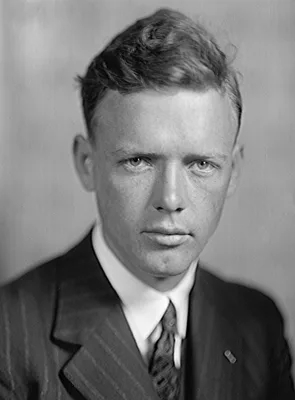
In 1931, the year before his son’s sensational kidnapping, the celebrity aviator began working with Alexis Carrel at the Rockefeller Institute on a perfusion pump which would allow the cultivation of whole organs in v…
1937
#9441
The cataract operations of 'Ammar Ibn Alī Al-Mausilī by Max Meyerhof.
Mausilī invented a hollow metallic syringe, which he applied through the sclerotic, and successfully extracted cataracts through suction.
1938
#2682.51
The history of the forceps: An investigation on the occurrence, evolution, and use of the forceps from prehistoric times to the present (with a summary in Danish). Translated by William Ernest Calvert.
Not limited to the obstetric forceps.
1939
#3038.1
An oxygenator with a large surface–volume ratio.
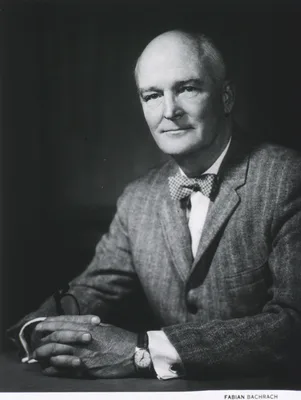
First heart–lung machine used successfully on an animal.
1941
#5723
The Oxford vaporiser No. 1.
With R. R. Macintosh and K. Mendelssohn. The Oxford vaporiser No. 2 is described in the same journal, pp. 64-66 by S. L. Cowan, R. D. Scott, and S. F. Suffolk.
1942
#5811
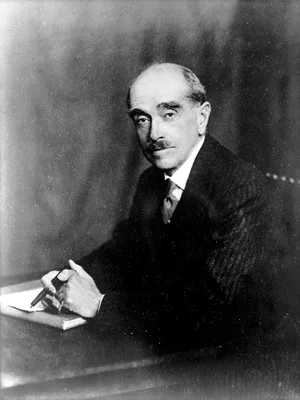
The history and evolution of surgical instruments.
1944
#4255
The artificial kidney: Dialyser with great area.
The Kolff artificial kidney. With H. T. J. Berk and others. Kolff first published his discovery in a neutral country (Sweden) since in 1944 Holland was occupied by the Germans. See also No. 1976.
1947
#2063
A critical study of the origins and early development of hypodermic medication.
1947
#3412.3
A new audiometer.
Semi-automatic (Békésy) audiometer.
1947
#4912.1
Stereotaxic apparatus for operations on the human brain.
"The first successful cranial application of stereotactic surgery in humans is credited to the team of Ernest Spiegel and Henry Wycis in the Department of Experimental Neurology at Temple University in Philadelphia (S…
1947
#6311
The secret instrument. The birth of the midwifery forceps.
Reprinted with No. 6311.5, San Francisco, Norman Publishing, 1989.
1949
#6310
The development of gynaecological surgery and instruments… from the Hippocratic age to the Antiseptic period.
Reprint, San Francisco, Norman Publishing, 1990.
1949
#11987
A stereotaxic apparatus for intracerebral surgery.
"In 1947 Leksell visited Wycis in Philadelphia and then developed and described his instrument in a publication in 1949. This was the first example of a stereotactic system based on the principle of ‘‘center-of-arc’’.…
1952
#2680.1
Ultrasonic visualization of soft-tissue structures of the body.
First tomogram of soft tissue.
1952
#2883
Resuscitation of the heart in ventricular standstill by external electric stimulation.
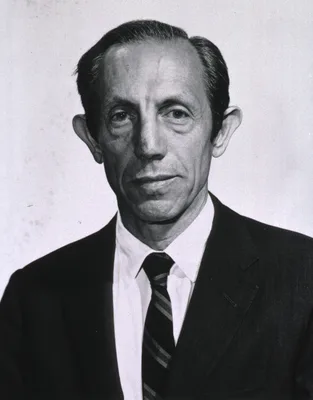
External cardiac pacemaker. "The medical world took notice when Zoll announced in 1952 that he had successfully kept a patient alive through numerous episodes of ventricular standstill using a bedside device that deli…
1952
#3705
Old instruments used for extracting teeth.
1954
#3047.5
Application of a mechanical heart and lung apparatus to cardiac surgery.
First pump oxygenator used on humans. Performed on May 6, 1953, this was the first successful intracardiac operation in a patient with the use of total heart-lung bypass.
1954
#3558.1
A flexible fibrescope, using static scanning.
1955
#3047.7
Controlled cross circulation for direct-vision intracardiac surgery; correction of ventricular septal defects, atrioventricularis communis, and tetralogy of Fallot.
Controlled cross circulation (human heart–lung “machine”) for intracardiac surgery.
1955
#10995
Intracardiac surgery with the aid of a mechanical pump oxygenator system (Gibbon type): Report of eight cases.
Co-authored with JW Dushane, RT Patrick, DE Donald, PS Hetzel and EH Wood, "Kirklin refined the heart-lung machine (screen type) originally developed by Gibbon, to the point that it allowed the person to receive oxyge…
1955
#14036
Old English silver and its medical interest. Presidential Address, Liverpool Medical Institution, 14th October 1954.
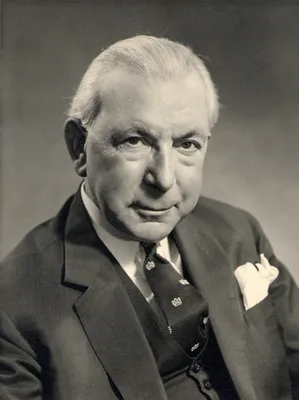
Digital facsimile from wellcomecollection.org at this link.
1955
#14312
The maser - new type of microwave amplifier, frequency standard, and spectrometer.
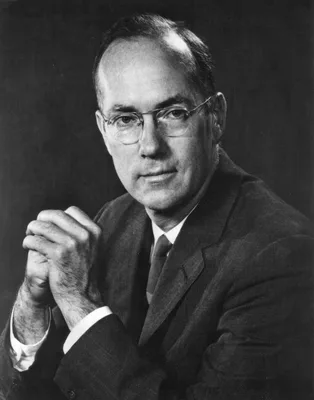
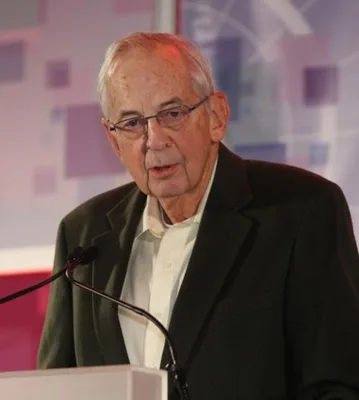
In 1964 Townes shared the Nobel Prize in Physics with Nicolay Gennadiyevich Basov and Alexandr Mihailovich Prokhorov "for fundamental work in the field of quantum electronics, which has led to the construction of osci…
1956
#3047.9
A simple, expendable, artificial oxygenator for open heart surgery.
DeWall bubble oxygenator. With six co-authors.
1956
#4257.1
Further developments of a coil kidney. Disposable artificial kidney.
Disposable twin coil kidney.
1957
#4405.01
Atlas of arthroscopy.
The first atlas of arthroscopy, a major step in gaining wide acceptance of this operating technique. The color illustrations were prepared by an artist as available arthroscopes did not permit color photography. Watan…
1958
#3047.11
The treatment of complete heart block by the combined use of a myocardial electrode and artificial pacemaker.
Order of authorship in the original publication: Weirich, Gott, Lillehei. Attachment of a wire to the ventricular epicardium, and bringing it out percutaneously to an external pacemaker. This was a key development lea…
1958
#3558.3
Demonstration of the new gastroscope, the “fiberscope”.
The Hirschowitz fiber optic endoscope, the "Fiberscope." In February 1957 Hirschowitz passed the first prototype instrument down his own throat and, a few days later, down that of a patient. Hirschowitz gave the first…
1959
#3047.10
The use of intracardiac pacemaker in the correction of total heart block.
First use of pacemaker for Stokes–Adams syndrome, using dogs as subjects. External power source. See also Furman and Scawadel, John B., "An intracardiac pacemaker for Stokes–Adams seizures ," New Engl. J. Med.,1959, 2…
1959
#2883.3
A bipolar myocardial electrode for complete heart block.
With N. A. Roth, D. Bernardez, and J. L. Noble.
1959
#14227
Einführung in die stereotaktischen Operationen mit einem Atlas des menschlichen Gehirns. Introduction to stereotaxis with an atlas of the human brain. Large folio text plus 2 large folio binders of plates with captions.
One of the most elaborately produced medical books of the 20th century, with numerous very large plates folding out to the size of four folio sheets, and numerous photographs with plastic overlays.
1960
#3047.15
A transistorized, self-contained, implantable pacemaker for the long-term correction of complete heart block.
The first fully-implantable pacemaker.
1960
#11590
An implantable pacemaker in the heart. IN: Medical electronics: Proceedings of the Second International Conference on Medical Electronics, Paris 24-27 June 1959. Edited by C. N. Smyth.
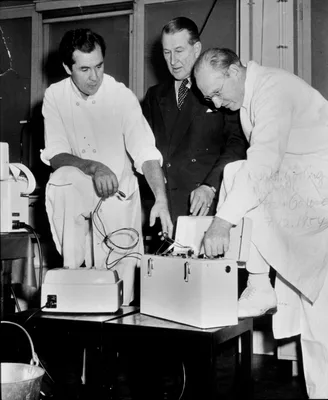
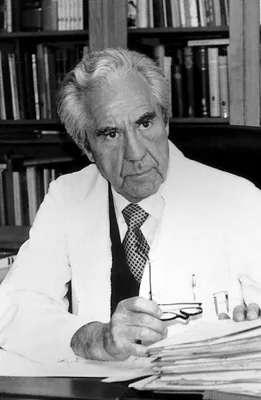
"This is the original report of the first fully implantable pacemaker that was designed by Elmqvist and surgically inserted under the skin of a patient in October 1958. It is an abstract of their presentation that sig…
1962
#11602
Heart-lung bypass: Principles and techniques of extracorporeal circulation.
1963
#6941
Effect of the laser beam on the skin.
One of the first papers on the application of lasers in medicine. In 1961 Goldman became the first researcher to use a laser to treat a human skin disease when he treated melanoma. The method later became popular in r…
1965
#4914.3
Stereotactic tractotomy in the surgical treatment of mental illness.
1965
#7233
Auditory nerve.
Describes the first "chronically" implanted or permanent cochlear implant. With John M. Epley of Stanford; Robert C. Lummis, Newman Guttman, Lawrence C. Frishkopf of Bell Telephone Laboratories; and Leon D. Harmon and…
1965
#13189
Die Geschichte der Hersteller und Verkäufer zahnärztlicher Bedarfsartikel bis um 1900: eine historische Sammlung unter besonderer Berücksichtigung der ältesten deutschen Dentaldepots.
1966
#7234
Electrical Stimulation of the Auditory Nerve in Man.
This detailed psychophysical and electrophysiological analysis of one patient proved that a cochlear implant provided sufficient information to the central nervous system for the understanding of speech.
1966
#12912
Catalogue of the Menzies Campbell collection of dental instruments, pictures, appliances, ornaments, etc.
1967
#6942
Biomedical aspects of the laser: The introduction of laser applications into biology and medicine.
The first book on the use of lasers in medicine and biology.
1971
#6007.1
A history of the ophthalmoscope.
1971
#7405
Histology of the human eye.
Hogan and Alvarado's work was the first book on histology of the eye to include electron microscopy. It also reproduced spectacular three-dimensional representations of ocular ultrastructures by Joan Esperson Weddell.
1973
#4914.6
Stereotactic limbic leucotomy: Neurophysiological aspects and operative technique.
With A. Richardson and N. Mitchell-Heggs.
1973
#9353
Albucasis on surgery and instruments. A definitive edition of the Arabic text, with English translation and commentary by M. S. Spink and G. L. Lewis.
1978
#2682.52
Medicine and the reign of technology.
1979
#2682.54
Bloodletting instruments in the National Museum of History and Technology.
Digital facsimile from Smithsonian Research Online at this link.