
Germany
1,482 entries published in Germany. 93 publication places.
1819 –1826
#1358
Vom Baue und Leben des Gehirns. 3 vols.
Includes description of “Burdach’s column”, the posterior column of the spinal cord. This work is also “an unrivalled source of historical information on macroscopical neuroanatomy” (Meyer).
1819
#12115
Entozoorum synopsis cui accedunt mantissa duplex et indices locupletissimi.
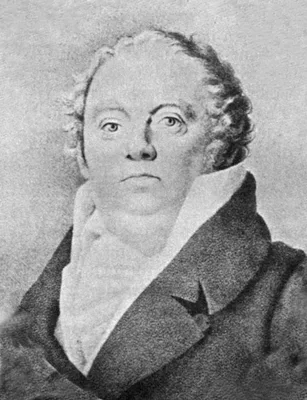
In this work Rudolphi detailed the life cycle of nematode parasites of mankind, such as the parasitic roundworm Ascaris lumbricoides. Digital facsimile from Biodiversity Heritage Library at this link.
1820
#1556
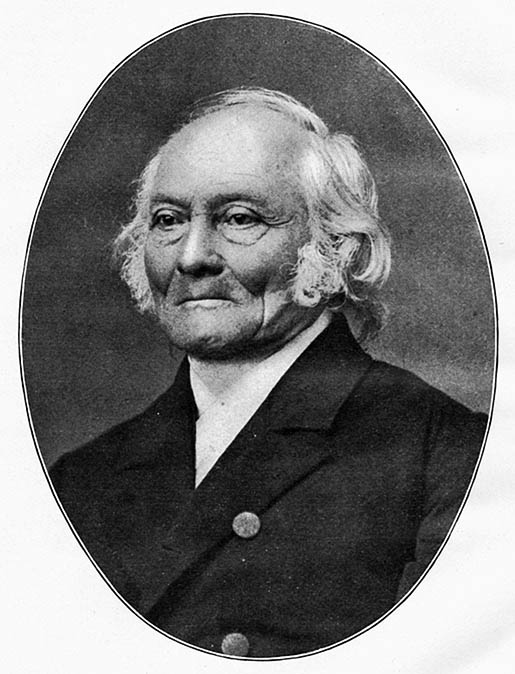
De aure et auditu hominis et animalium.
1820 –1821
#11411
Neueste phytochemische Entdeckungen zur Begründung einer wissenschaftlichen Phytochemie. 2 vols.
On pp. 144-146 of vol. 1 Runge reported the isolation of relatively pure caffeine for the first time. He called it "Kaffebase." Digital facsimile from Google Books at this link. In 1821 the French chemists Pierre-Jose…
1820 –1847
#12750
Chirurgische Kupfertafeln. 4 vols.
This collection of 417 plates on surgical procedures, instruments, and bandages, with 4 pages of explanatory text, was published in 96 parts between 1820 and 1847. Fifty-two of the plates were issued hand-colored. The…
1820
#13385
Ueber angeborne menschliche Missbildungen im Allgemeinen und Hermaphroditen insbesondere. Ein Beitrag zur Physiologie, pathologischen Anatomie, und gerichtlichen Arzneiwissenschaft.
Includes an account of the Prussian intersex man, Karl Dürrge (also known as Maria Dorothea Derrier: 1780–1835). With two hand-colored plates of hermaphroditic genitalia. Digital facsimile from Google Books at this link.
1821 –1833
#318
System der vergleichenden Anatomie. 6 vols.
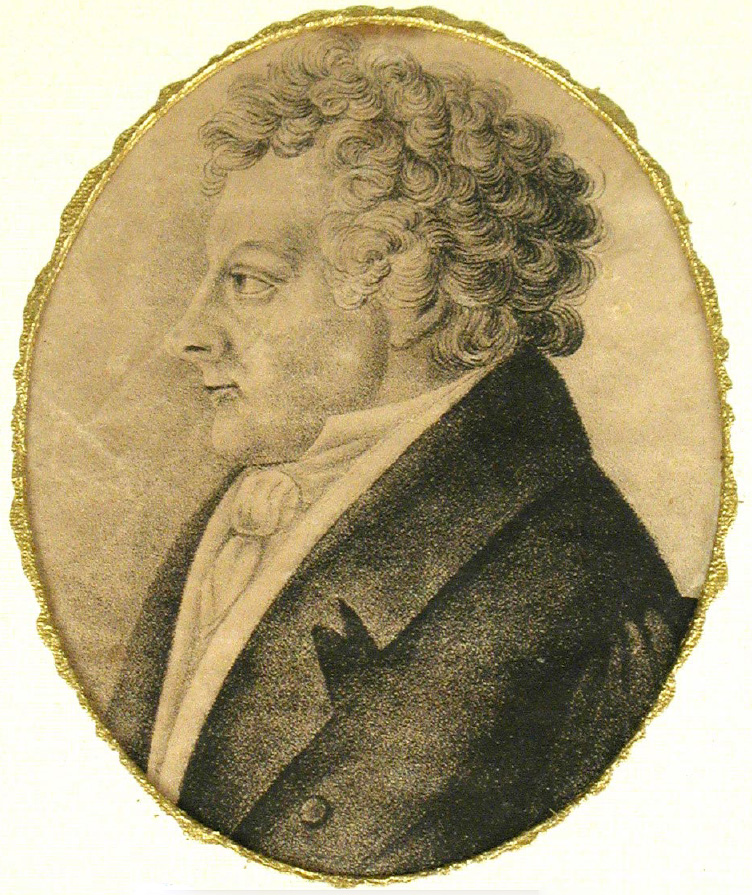
Meckel is considered the greatest comparative anatomist before Johannes Müller. Digital facsimile from the Hathi Trust Digital Library at this link.
1821 –1833
#28
Opera omnia. 20 vols., [in 22].
![GALEN, [Κλαύδιος Γαληνός; Galen of Pergamon] (129 – 216)](/media/portraits/21)
This Greek–Latin edition, edited by C. G. Kühn, is reprinted from much earlier editions, and leaves much to be desired with respect to scholarship. However, it remained the standard edition for about 100 years.
1821
#9700
Icones cerebri simiarum et quorundam mammalium rariorum.
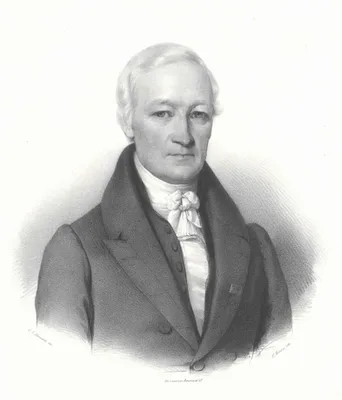
"Although a few more reports were published furing the next hundred years [after Tyson] it was Tiedemann alone who gave a more detailed account, on monkeys, in his... Icones Simiarum.... In monkeys he found the brain …
1822
#5741
Nonnula de regeneratione et transplantatione.
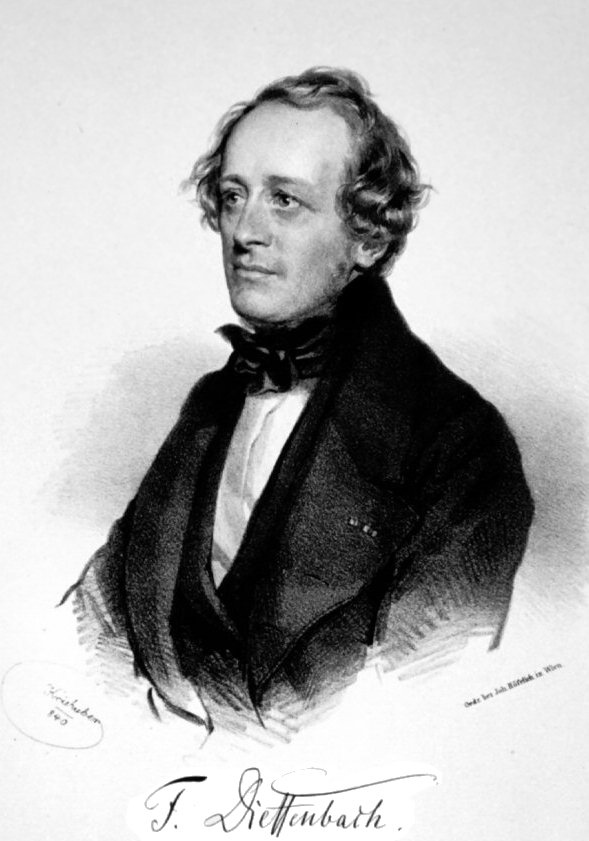
Dieffenbach’s thesis for the M.D., Würzburg.
1822 –1829
#6383
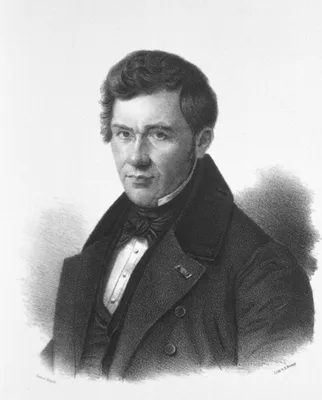
Geschichte der Heilkunde. 2 vols.
1823
#9579
Bibliothek de Veterinairkunde.
An early attempt at a bibliography of the literature of veterinary medicine, including historical works. Strangely, the author cited publication dates only by their last 3 digits, thus 1800 is printed as 800, etc. Dig…
1823 –1825
#10503
Chronik der Seuchen in Verbindung mit der gleichzeitigen Vorgängen in der physischen Welt und in der Geschichte der Menschen. Erster Theil vom Anfang der Geschichte bis in die Mitte des fünfzehnten Jahrhunderts. Zeiter Theil von der Mitte des fünzehnten Jahrhunderts bis auf die neuste Zeit. (2 vols.)
Digital facsimile from the Internet Archive at this link.
1824
#2606
De tumoribus praeter naturam. In his Opera omnia, ed. cur. C.G. Kühn. 7, 705-32.
Galen’s classification of tumors persisted for more than 1,000 years. He considered neoplasms to be due to an excess of black bile, which solidified in certain sites. He advocated purges to dissolve the black bile, an…
1824
#2531
Origines contagii.
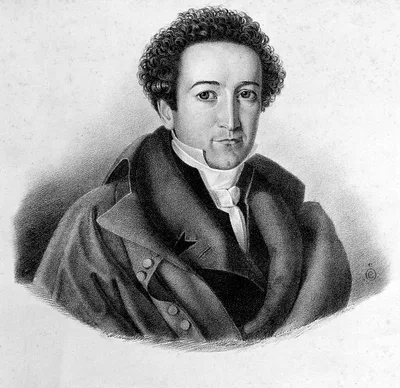
History of contagious disease in the ancient world through readings from the texts. A supplementary “Additamenta” was published in 1826. Digital facsimile of the 1824 edition from the Internet Archive at this link.
1824
#6025
Ueber den Gebärmutterkrebs, dessen Entstehung und Verhütung.
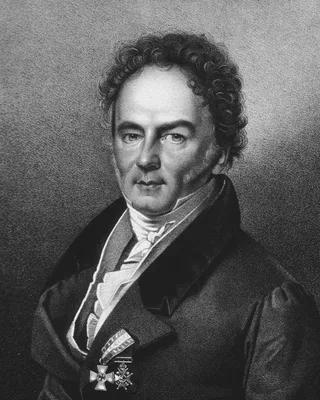
Classic account of cancer of the uterus.
1824
#4511
De tremore, palpitatione, convulsione, et rigore. IN: Opera omnia ed. cur. C.G. Kühn, cur 7, 584-642.
Complete English translation by D. Sider and M. McVaugh in Trans. stud. Coll. Phys. Phila., 1979, 1, 183-210.
1824 –1827
#9531
Reise im Norden Europa's, vorzüglich in Island: in den Jahren 1820 bis 1821. 2 vols.
Digital facsimile from Google Books at this link.
1825
#766
Wellenlehre auf Experimente gegründet oder über die Wellen tropfbarer Flüssigkeiten mit Anwendung auf die Schall- und Lichtwellen.
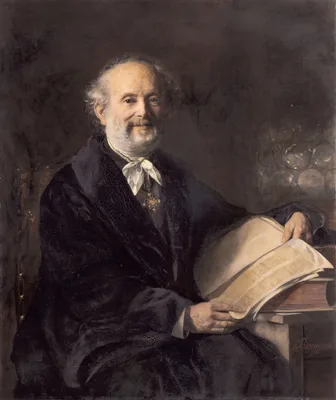
The first work to apply hydrodynamics to the circulation of the blood.
1825 –1835
#1696
Beiträge zur medizinischen Statistik un Staatsarzneikunde. 2 vols.
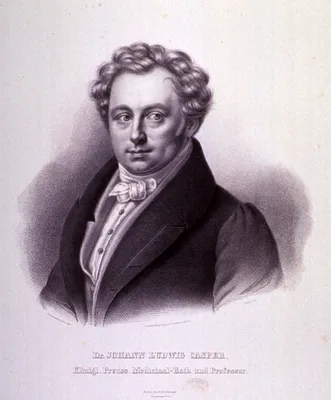
1825
#1494.1
Beobachtungen und Versuche zur Physiologie der Sinne. Neue Beiträge zur Kenntniss des Sehens in subjectiver Hinsicht. 2 vols.
“Purkynĕ phenomenon” or “Purkynĕ shift”, a change in the apparent relative luminosity of colors in a dim light (scotopic vision) compared with that in full daylight (photopic vision). Also published in Rust’s Mag. ges…
1825
#1736
System der psychisch-gerichtlichen Medizin, oder theoretisch-praktische Anweisung zur wissenschaftlichen Erkenntniss und gutachtlichen Darstellung der krankhaften persönlichen Zustände, welche vor Gericht in Betracht kommen.
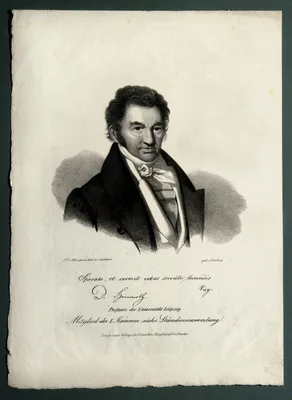
The first important work exclusively on medico-legal aspects of insanity. Digital facsimile from the Internet Archive at this link.
1825
#6256
Das weibliche Becken.
1825
#13841
Index numismatum in virorum de rebus medicis vel physicis meritorum memoriam percussorum.
At head of title: Ioanni Fr. Blumenbach ... viro illustri Germaniae decori diem semisecularem physiophili germanici laete gratulantur. Digital facsimile from wellcomecollection.org at this link.
1825
#14177
Commentatio de vera materiae sanguini purpureum colorem impertientis natura.
Engelhart’s dissertation, presented before the medical faculty at the University of Göttingen, contains the first determination of the molecular mass of a protein (hemoglobin). Engelhart proved that the ratio of iron …
1826 –1840
#599
Die Physiologie als Erfahrungswissenschaft. Edited by Karl Friedrich Burdach. 6 vols.
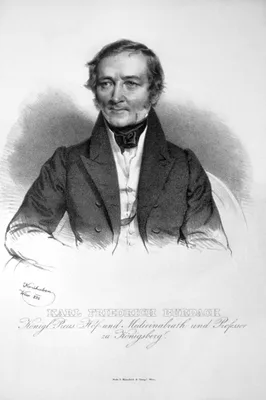
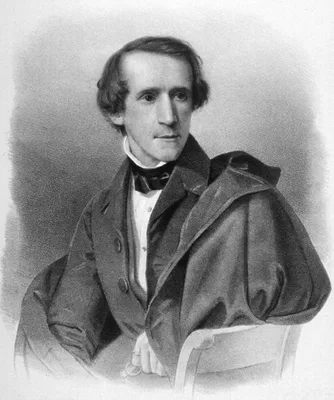
Burdach’s great textbook of physiology was planned to run to 10 vols., but the death of his wife quenched his enthusiasm for the task. Parts of the text were written by von Baer, Rathke, Johannes Müller, R. Wagner and…
1826 –1827
#988
Die Verdauung nach Versuchen. 2 vols.
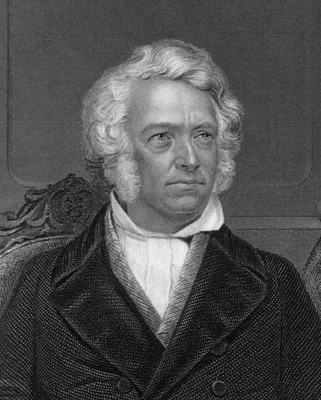
Confirmation of the work of Prout.
1826
#1257
Zur vergleichenden Physiologie des Gesichtssinnes des Menschen und der Thiere.
Includes Müller’s law of specific nerve energies. For an English translation, see his Elements of physiology, transl. W. Baly, London, 1838, vol. 1, pp. 766-67. Includes (p. 73) his explanation of the color sensations…
1826
#1456
Ueber die phantastischen Gesichtserscheinungen.
Müller’s early studies on specific nerve energies are included in the above work. Later he stated, in his Handbuch der Physiologie, Coblenz, 1840, 2, 258, his law of specific nerve energies – each nerve of special sen…
1826
#5481.1
Die Geschichte der Hundswuth und der Wasserscheu und deren Behandlung.
A full account of rabies, summarizing current knowledge, with a bibliography of about 300 items.
1826 –1838
#6752
Repertorium bibliographicum. 2 vols. [in 4].
Alphabetical author-index of 16,299 incunabula. Originally based on the contents of the Munich Hofbibliothek, it was made more useful when Walter Arthur Copinger published a 3-volume supplement, 1895-1902, which added…
1826
#10037
De euthanasia medica prolusio.
The first "modern" discussion of medical euthanasia. Translated into English by Walter Crane as "Medical euthanasia: A paper published in Latin in 1826, translated and reintorduced to the medical Profession," J. Hist.…
1827
#477
De ovi mammalium et hominis genesi.
Announces Baer’s discovery of the mammalian ovum, the culmination of a search begun by scientists at least as early as the work of de Graaf in the 17th century (No. 1209). The pamphlet was reprinted in facsimile in Is…
1827
#4773
De tabe dorsuali praelusio.
Gives the views of his father, Ernst Horn (1744-1848), on tabes.
1827 –1834
#9545
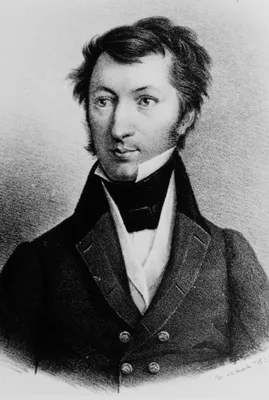
Pharmaceutische Waarenkunde mit illuminirten Kupfern nach der Natur gezeichnet von Ernst Schenk. Begonnen von Friedemann Goebel. Fortgesetzt von Gustav Kunze. 14 parts in 2 vols.
1827
#10507
Charte über die geographische Ausbreitung der Krankheiten.
The first world map of the distribution of human disease. For Schnurrer's work in epidemiology and his map, which was published separately from his books, see Brömer, "The first global map of the distribution of human…
1827
#14285
Der Leichnam des Menschen in seinen physischen Verwandlungen nach Beobachtungen und Versuchen.
The human corpse in its physical transformations according to observations and experiments.
1828 –1888
#479
Ueber Entwicklungsgeschichte der Thiere. 2 vols.
Baer, the founder of modern embryology, definitely established the “germ-layer theory”, discovered the notochord and the human ovum, and postulated the law of corresponding stages in embryonic development. With Cuvier…
1828
#4414.1
Theoretisch-praktische Handbuch der Lehre von den Bruchen und Verrenkungen der Knochen. 1 vol. and atlas.
The remarkable atlas accompanying this work illustrates in remarkable detail all of the various types of dressings, splints and apparatus used in the treatment of fractures at the time.
1828
#6753
Handbuch der Bücherkunde für die ältere Medizin zur Kenntniss der griechischen, lateinischen und arabischen Schriften im ärztlichen Fache und zur bibliographischen Unterscheidung ihrer verschiedenen Ausgaben, Uebersetzungen und Erläuterungen.
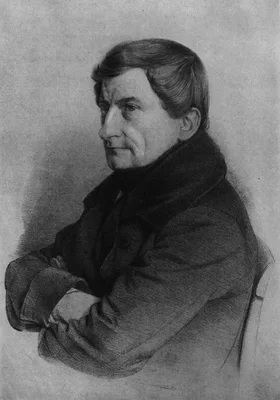
This check list of printed works of the older medical writers underwent a second edition in 1841, which was reprinted in 1911, 1926 and 1956. Digital facsimile of the 1841 edition from Google Books at this link.
1828 –1830
#6853
Die chronischen Krankheiten, ihre eigenthümliche Natur und homöopathische Heilung. 4 vols.
Second edition, 6 vols., 1835-39.
1828
#12937
De foetu humano: Adnotationes anatomicae quibus praemissis viro perillustri Samueli Thomae de Soemmerring ... doctoratus in medicina impetrati semisaecularia gratulatur Universitas Literarum Regiomontana. Interprete Carlo Friderico Burdach.
Reproduction of a drawing by Soemmerring of the first stages of embryonic development visible with the naked eye, with a note by Burdach. Digital facsimile from Bayerische StaatsBibliothek at this link.
1829
#3256
Die Pathologie und Therapie der Kehlkopfkrankheiten.
1829
#5742.1
Die Bildung neuer Augenlider (Blepharoplastik) nach Zerstörungen und dadurch hervorgebrachten Auswärtsweundungen derselben.
First extensive treatise on the use of pedicle grafts from the temple and cheek for supplying necessary skin for the reconstruction of deformed eyelids.
1829 –1834
#5743
Chirurgische Erfahrungen besonders über die Wiederherstellung zerstörter Theile des menschlichen Körpers nach neuen Methoden. 3 vols. [in 4] and atlas.
Dieffenbach was Professor of Surgery in Berlin. He was a pioneer in the field of plastic and orthopedic surgery, performing tenotomy and skin-grafting successfully. English translation of the section on rhinoplasty, w…
1829
#13840
Recentioris aevi numismata virorum de rebus medicis et physicis meritorum memoriam servantia.
Digital facsimile from Biodiversity Heritage Library at this link.
1830
#538
De glandularum secernentium structura penitiori.
Müller’s most important histological work. In it he described the microscopic anatomy of a large series of secreting glands. Müller’s greatest influence was not so much through his own work as through the influence he…
1830
#1456.1
Arteriarum capitis superficialium icon nova.
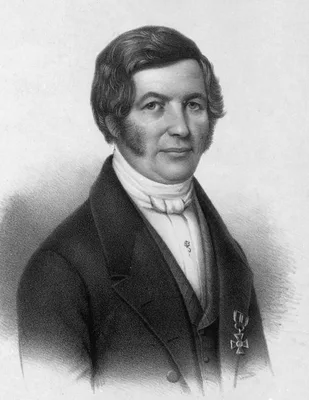
Includes description of the “canal of Schlemm”, the circular canal at the junction of the cornea and the sclerotic.
1830 –1845
#6754
Medicinisches Schriftsteller-Lexicon der jetzt lebenden Aerzte, Wundärzte, Geburtschelfer, Apotheker, und Naturforscher aller gebildeten Völker. 33 vols.
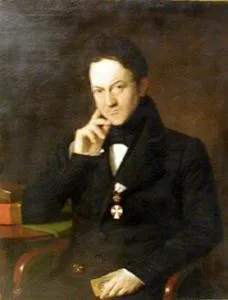
In 25 vols. and and 8-vol. supplement, Callisen’s great medical bibliography of writings by physicians, surgeons, obstetricians, pharmacists, and naturalists then living gives a complete view of the literature of the …
1830
#11452
Organisation, Systematik und geographische Verhältniss der Infusionsthierchen. Zwei Vorträge, in der Akademie der Wissenschaften zu Berlin gehalten in den Jahren 1828 und 1830.
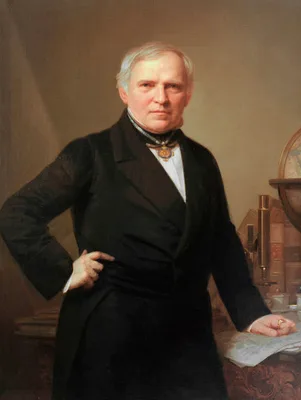
In this work Ehrenberg first published his classification of infusioria, including the naming of bacteria for the first time. The work published two papers based on his expeditions. The first, read on January 10, 1828…