
United Kingdom
2,632 entries published in United Kingdom. 64 publication places.
1714
#3981
De morbis cutaneis. A treatise of diseases incident to the skin.
Turner may be regarded as the founder of British dermatology. His book, the first English text on the subject, gives a good idea of contemporary knowledge of skin diseases. Turner began his career as a barber surgeon,…
1715
#6745
Bibliographiae anatomicae specimen, sive catalogus omnium penè auctorum qui ab Hippocrate ad Harveum re anatomicam ex professo, vel obiter, scriptis illustrarunt.
The first attempt at a systematic medical bibliography. Revised edition with annotations by revisions by Bernhard Siegfried Albinus (Leiden, 1734). Douglas's original autograph manuscript for the book is preserved in …
1715
#7303
A letter to the publisher, written by the ingenious Mr. John Bagford, in which are many curious remarks relating to the city of London, and some things about Leland. In: John Leland, Joannis Lelandi antiquarii de rebus britannicis collectanea, ed. Thomas Hearne, I, pp. lviii-lxxxvi.
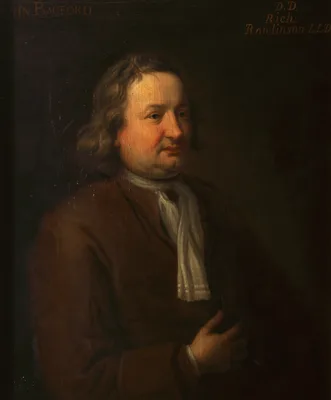
Includes an account of the discovery by Bagford’s friend and fellow antiquarian John Conyers of a flint handaxe in London, unearthed circa 1680 near the bones of what was then thought to be an elephant, as neither the…
1717
#10530
Syphilis: A practical dissertation on the venereal disease. In which, after a short account of its nature and original; the diagnostick and prognostick signs, with the best ways of curing the several degrees of that distemper, together with some historical observations relating to the same, are candidly and without reserve, communicated. In two parts.
The first work published in English to include the word syphilis, and also the first English work to include the word condom. Digital facsimile from the Internet Archive at this link.
1720
#4487
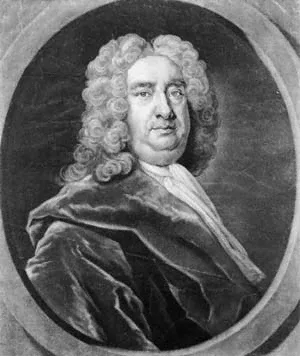
Observations concerning the nature and due method of treating the gout.
1720
#3217
A new theory of consumptions : more especially of a phthisis, or consumption of the lungs.
Marten believed that an infectious micro-organism was the cause of tuberculosis, thus forecasting the existence of the tubercle bacillus 162 years before its actual discovery. Though Leeuwenhoek reported seeing bacter…
1720
#4281
Lithotomia Douglassiana; or, an account of a new method of making the high operation, in order to extract the stone out of the bladder.
Douglas accused Cheselden of plagiarizing his work, although the latter had acknowledged his indebtedness to Douglas. It is possible that this was the reason which prompted Cheselden to drop the high operation in favo…
1720
#5123
A short discourse concerning pestilential contagion, and the methods to be used to prevent it.
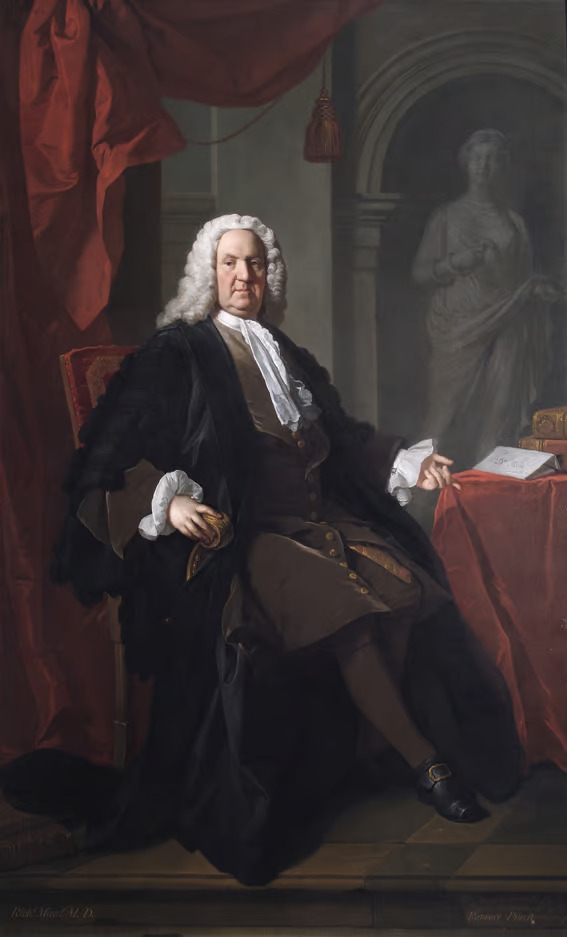
In 1719 Mead was asked for advice concerning an outbreak of plague in Marseilles, and replied with the above tract of 59 pages, which has been called the first epidemiological report produced by a physician at the com…
1720
#13743
A natural history of English insects. Illustrated with a hundred copper plates, curiously engraven from the life: And (for those who desire it) exactly coloured by the author.
"Little is known of Albin’s early life, though he was probably born in Germany to a family named Weiss. By 1708 he had changed his surname to Albin and was living in London with his family. His profession of art teach…
1721
#9521
A Collection of Very Valuable and Scarce Pieces relating to the last Plague in the year 1665. viz. I. Orders drawn up and published by the Lord Mayor and Aldermen of the City of London to prevent the spreading of the infection. II. An account of the first rise, progress, symptoms and cure of the Plague, being the substance of a letter from Doctor Hodges to a person of quality. III. Necessary directions for the prevention for cure of the plague, with divers remedies of small charge by the College of Physicians. IV. Reflections on the Weekly Bills of Mortality, so far as they relate to all the plagues which have happend in London from the year 1592 to the Great Plague in 1665, and some other particular diseases. With a preface shewing the usefulness of this collection: some errors of Dr. Mead, and his misrepresentations of Dr. Hodges and some authors. To which is added An Account of the plague at Naples in 1656, etc. [Compiled by William Beckett.].
Attributed to William Beckett by OCLC. Digital facsimile of the 1721 second edition from the Internet Archive at this link.
1721
#13695
The farriers dispensatory, in three parts. Containing I. A description of the medicinal simples, commonly made use of in the diseases of horses, with their virtues and manner of operation, distributed into proper classes, &c. II. The preparations of simples, vegetable, animal and mineral ; with an explanation of the most usual terms, both in the chymical and galenical pharmacy. III. A number of useful compositions and receipts suited to the cure of all diseases, never before published; as also those of greatest account from Solleysell, Ruini, Blundevill, and other most celebrated authors, digested under their proper heads of powders, balls, drinks, ointments, charges, &c. The proper Method of compounding and making them, with many other useful observations and improvements tending to their right administration. To which is also added, a compleat index of all the medicines contained in the book, whether simple or compound, with a table of diseases pointing to the remedies proper in each malady.
1721
#13879
The virtue and use of coffee, with regard to the plague, and other infectious distempers: containing the most remarkable observations of the greatest men in Europe concerning it ... To which is prefix'd an exact figure of the tree, flower, and fruit taken from the life.
Digital facsimile from wellcomecollection.org at this link.
1722
#5414
An account of the method and success of inoculating the small pox in Boston in New England.
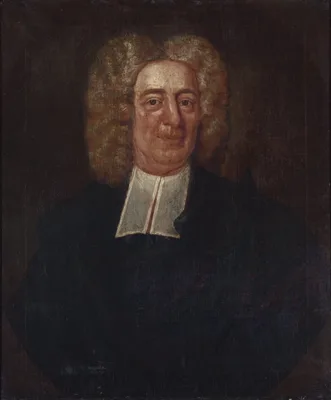
Mather republished reports of earlier writers on inoculation. He persuaded Boylston to adopt the practice in June 1721, and he supported Boylston during a period of great opposition to inoculation.
1722
#5414.1
Mr. Maitland’s account of inoculating the small pox.
Maitland inoculated the children of Lady Mary Wortley Montagu in 1721, and also inoculated six condemned prisoners as part of the so-called “Royal Experiment”. Success with these trials lead to his inoculation of the …
1722
#10199
A journal of the plague year: Being observatrions or memorials, of the most remarkable occurrences, as well publick as private, which happened in London during the last great visitation in 1665. Written by a citizen who continued all the while in London. Never made publick before.
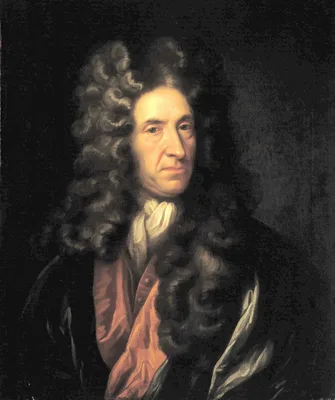
Though he may be most widely remembered as a novelist--especially for Robinson Crusoe, Defoe was an English trader, writer of non-fiction as well as fiction, journalist, pamphleteer and spy. This book is an account of…
1722
#10703
A treatise of the hypochondriack and hysterick passions.
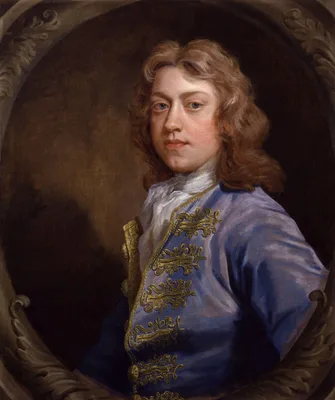
Probably the first psychiatric self-help book. Hunter and Macalpine call Mandeville's work "the first book on minor mental maladies `writ by way of Information to Patients' rather than `to teach other Practitioners' .…
1723
#1689
A letter … containing, a comparison between the mortality of the natural small pox, and that given by inoculation.
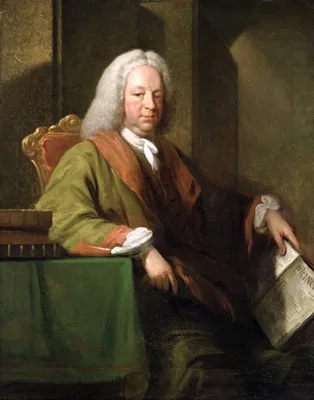
Jurin was an enthusiastic supporter of inoculation against smallpox, and proved statistically that the fatality of inoculated smallpox is very much less than the fatality of natural smallpox. This is one of the earlie…
1723
#4282
A treatise on the high operation for the stone.
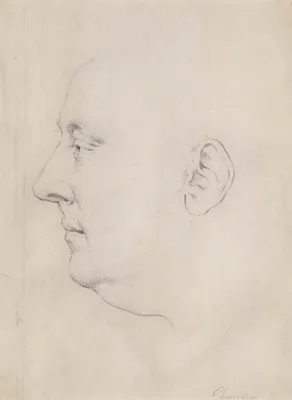
Cheselden was surgeon to St. Thomas’s Hospital and an outstanding figure in British surgery in the first half of the 18th century. The above work describes his method of performing suprapubic lithotomy, a method which…
1724
#392.1
Myotomia reformata.
This work made a modest first appearance in 1694 as an octavo, but Cowper worked until his death on a new edition which was finally published posthumously under the supervision and at the expense of Richard Mead (1673…
1724
#1595
Medicina gerocomica; or the Galenic art of preserving old men’s healths.
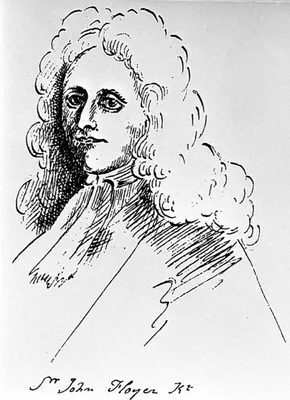
The first English book devoted to gerontology. Digital facsimile of the second edition (1725) from the Internet Archive at this link.
1724
#12698
An impartial history of Michael Servetus, burnt alive at Geneva for heresie.
Authorship of this early English account of Servetus and his martyrdom for heresy has never been determined, according to Geoffrey Sill, "The authorship of An impartial history of Michael Servetus," Papers of the Bibl…
1725
#1690
Annuities upon lives; or, the valuation of annuities upon any number of lives; as also, of reversions. To which is added, an appendix concerning the expectations of life and probabilities of survivorship.
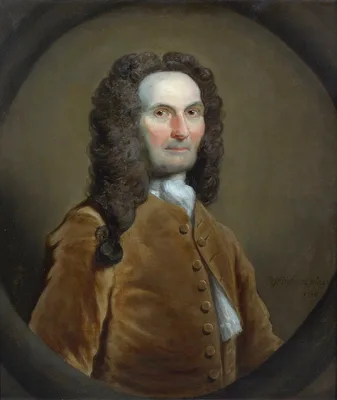
De Moivre, French Huguenot mathematician and demographer, formulated the hypothesis that among a body of persons over a certain age the successive annual decreases by death are nearly equal.
1725 –1726
#6378
The history of physick; from the time of Galen to the beginning of the sixteenth century. 2 vols.
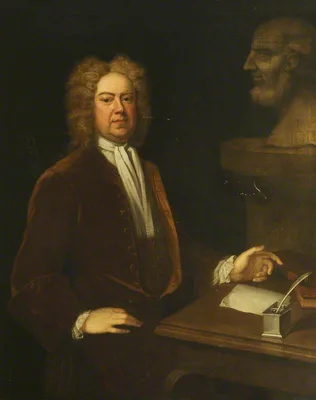
Freind was the first English historian of medicine, and his book is a classic study of the period with which it treats. Freind dabbled in politics and planned the above work while committed to the Tower of London on a…
1726
#5415
An historical account of the small-pox inoculated in New-England, upon all sorts of persons, whites, blacks, and of all ages and constitutions: With some account of the nature of the infection in the natural and inoculated way, and their different effects on human bodies; with some short directions to the unexperienced in this method of practice .
Boylston was the first in America to inoculate for smallpox, at Boston on 26 June 1721. "During a smallpox outbreak in 1721 in Boston, he inoculated about 248 people[5] by applying pus from a smallpox sore to a small …
1727 –1733
#765
Vegetable staticks: Or, an account of some statical experiments on the sap in vegetables. Statical essays, containing haemastaticks. 2 vols.
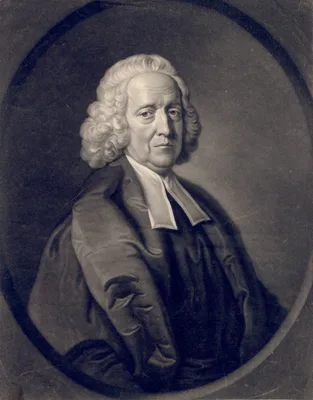
Hales initiated a new stage in physiological experimentation with his "statical" methods, which were characterized by precise quantitative measurements, repetition and the used of controls, and were based on the assum…
1727
#7061
A discourse concerning the causes and effects of corpulency, together with the method for its prevention and cure.
The first book on obesity in English.
1728 –1737
#13676
Historia plantarum rariorum [centuriae primae decas prima-quinta].
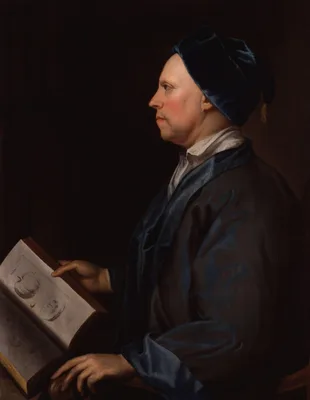
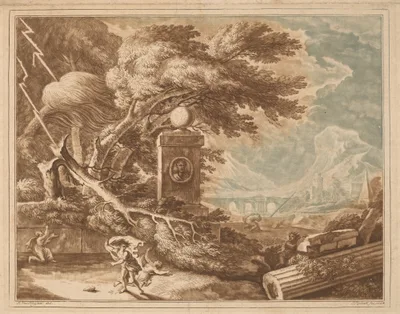
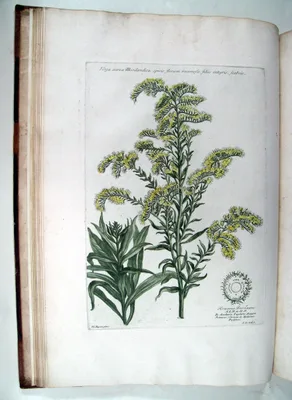
Contains some of the earliest attempts at printing copper plates in color. The plates were "engraved by [Elisha] Kirkall in what is generally called 'mezzotint printed in colour.' The phrase is misleading. ... Kirkall…
1729
#1482
A treatise of the diseases of the horny coat of the eye, and the various kinds of cataracts.
“Descemet’s membrane” was first described by Duddell. Descemet described it in 1758; see No. 1484.1.
1729
#9503
Medicina musica: Or, a mechanical essay on the effects of singing, musick, and dancing, on human bodies. Revis'd and corrected. To which is annex'd a new essay on the nature and cure of the spleen and vapours.
A very early book on music therapy. Among other things Browne was aware of the effect of music upon mood, and recognized that music could lift depression. OCLC states "Originally published anonymously in 1727 under ti…
1730
#1217
A description of the peritonaeum, and of that part of the membrane cellularis which lies on its outside. With an account of the true situation of all the abdominal viscera, in respect of these two membranes.
Douglas described the peritoneum in detail; his name is perpetuated in the “pouch”, “line”, and “fold of Douglas”. He was a friend of John Hunter and brother of John Douglas, the lithotomist.
1730
#10109
Exanthematologia ; or, an attempt to give a rational account of eruptive fevers, especially of the measles and small pox, In two parts. Parts I Of the blood, the air, venoms, Infection: fever of all kinds in general with their varieties, descriptions, names & C but more professedly and fully of the measles ... Part II Of the small pox ... To which is added. An appendix concerning inoculation.
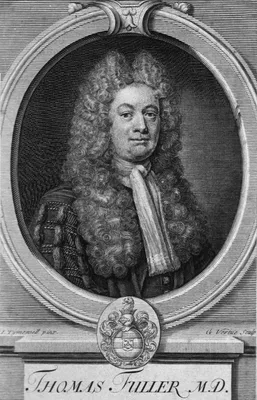
Includes the first clear account of chicken pox as a distinct disease, and the first distinction between the spots made by flea bites from those seen in eruptive fevers.
1730
#11974
Catalogus plantarum, tum exoticarum tum domesticarum.... A catalogue of trees, shrubs, plants, and flowers, both exotic and domestic, which are proposed for Sale, In the gardens near London. Divided, according to their different degrees of hardiness, into particular books, or parts; in each of which the plants are ranged in an alphabetical order. To which are added, the characters of the genus; and an enumeration of all particular species which are at present to be found in the several nurseries near London, with directions for the proper soil and situation, in which each particular kind is found to thrive
A deluxe sale catalogue illustrated with 21 plates, including 7 mezzotints. "The Catalogus Plantarum is notable as one of the earliest flower books to contain plates printed in colors. It is perhaps unique in that one…
1730
#13626
A dissertation upon tea, explaining its nature and properties by many new experiments; and demonstrating from philosophical principles, the various effects it has on different constitutions. To which is added the natural history of tea; and a detection of the several frauds used in preparing it. Also a discourse on the virtues of sage and water, and an enquiry into the reasons why the same food is not equally agreeable to all constitutions....
Digital facsimile from wellcomecollection.org at this link.
1731
#9461
Tabular observations recommended as the plainest and surest way of practising and improving physick. In a letter to a friend.
Clifton argued that physicians should base their judgments about the effects of treatments on a sufficient number of their own observations, or trusted observations by other physicians, rather than on the correlation …
1731 –1747
#9571
The natural history of Carolina, Florida and the Bahama Islands: Containing the figures of birds, beasts, fishes, serpents, insects, and plants: Particularly, the forest-trees, shrubs, and other plants, not hitherto described, or very incorrectly figured by authors. Together with their descriptions in English and French. To which are added observations on the air, soil and waters: With remarks on agriculture, grain, pulse, roots &c. To the whole is prefixed a new and complete map of the countries treated of. 2 vols.
The only attempt to record the natural history of a region of America during the colonial period. Includes 220 fine handcolored etched plates after and by Catesby and mostly signed with his cipher, excepting plates 61…
1731 –1738
#12877
A natural history of birds. Illustrated with two hundred and five copper plates, curiously engraven from the life. Published by the author Eleazar Albin, and carefully colour'd by his daughter and self, from the originals, drawn from the live birds. 3 vols.
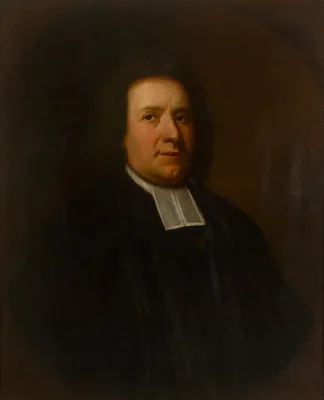
This was the first English bird book issued with hand-colored plates, colored by Albin and his daughter Elizabeth. "For the most part Albin delineated one bird per plate. The birds are placed on a branch or on the gro…
1731
#13393
The gardeners dictionary: Containing the methods of cultivating and improving the kitchen, fruit and flower garden. As also, the physick garden, wilderness, conservatory and vineyard, according to the practice of the most experienc'd gardeners of the present age. Interspers'd with the history of the plants, the characters of each genus, and the names of all the particular species, in Latin and English, and an explanation of all the terms used in botany and gardening.
Miller was chief gardener and curator (or 'Hortulanus') at the Apothecaries' (later Physic) Garden in Chelsea. Besides covering methods of cultivation, Miller's Dictionary provided a systematic botanical compendium of…
1732
#393
A syllabus or index, of all the parts that enter the composition of the human body…For the use of those that go through courses of anatomy.
Chovet was born in England and died in Philadelphia. He made many beautiful wax models to illustrate his lectures, and was among the first to popularize the use of wax and natural preparations in the teaching of anato…
1732
#9460
The state of physick, ancient and modern, briefly considered: with a plan for the improvement of it.
Instead of assessing the efficacy of therapies by their correlation with theories, Clifton argued that physicians should base their judgments about the effects of treatments on a sufficient number of their own observa…
1732
#11747
Hortus Elthamensis seu plantarum rariorum quas in horto suo Elthami in cantio coluit vir ornatissimus et praestantissimus Jacobus Sherard, M. D. Soc. Reg. et Coll. Med. Lond. Soc. Guilielmi P.M. frater, delineationes et descriptiones quarum historia vel plane non, vel imperfecte a rei herbariae scriptoribus tradita fuit.
Catalogue of the rare plants growing at Eltham, London, in the collection of James Sherard, who, after making a fortune as an apothecary, devoted himself to gardening and music. For this work Dillenius wrote the text …
1733
#395
Osteographia, or the anatomy of the bones.
This splendidly designed and illustrated work contained full and accurate descriptions of all the human bones, as well as many of animals. Cheselden is the first person to have used the camera obscura to gain precisio…
1733
#4840
The English malady; or, a treatise of nervous diseases of all kinds.
Cheyne attributed hypochondria (“Cheyne’s disease”) to the moisture of the air and variability of the weather in the British Isles. Cheyne himself suffered from this disease and the work includes a careful account of …
1733
#4438
An account of a new method of treating diseases of the joints of the knee and elbow.
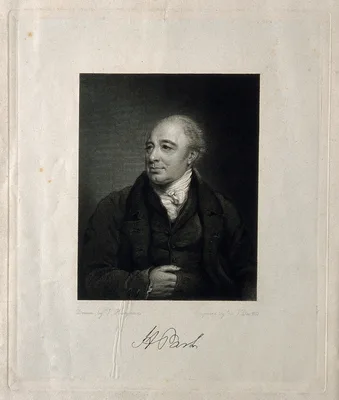
This was originally a letter to Pott. Park became famous for his operation of excision and arthrodesis as a treatment for destructive joint disease. The title page is misprinted “MDCCXXXIII”; the letter is dated 1783.…
1733
#6156.2
An essay on the improvement of midwifery.
Gives the first published account of the forceps, kept secret by the Chamberlen family for generations. Chapman was the second person in England to teach midwifery publicly. The first edition of his book was not illus…
1733
#12499
An essay concerning the effects of air on human bodies.
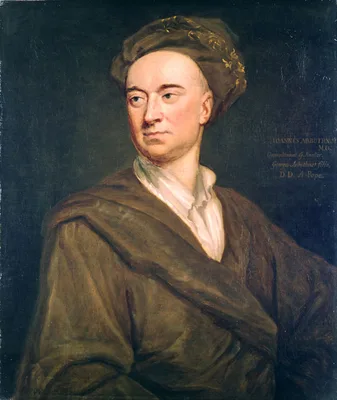
Arbuthnot believed that air had significant effects on personality, and he believed that the air of locations resulted in the characteristics of the people, as well as particular diseaes. He recommended ventilation of…
1734
#2148
The navy-surgeon, or a practical system of surgery.
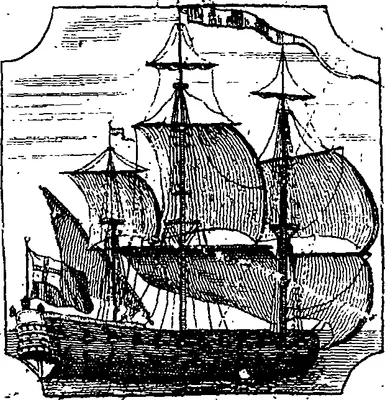
Atkins was an English naval surgeon. His book includes some useful case reports and contains the first English description of African trypanosomiasis.
1734
#6156.3
Cases in midwifry. Revised by Edward Hody.
Giffard was one of the first, after the Chamberlens, to use the forceps. His book contains, under case 14, the earliest published record of the use of the hitherto secret Chamberlen forceps, in 1726, together with ill…
1735
#8483
A voyage to Guinea, Brasil and the West Indies; in His Majesty's ships, the Swallow and Weymouth: Describing the several islands and Settlements, viz, Madeira, the Canaries, Cape de Verd, Sierraleon, Sesthos, Cape Apollonia, Cabo Corso, and others on the Guinea coast; Barbadoes, Jamaica, &c. in the West-Indies; the colour, diet, languages, habits, manners, customs, and religions of the respective natives, and inhabitants. With remarks on the gold, ivory, and slave-trade; and on the winds, tides and currents of the several coasts.
Atkins, surgeon on the voyage, included information about the slave trade and the natural history of the Gold Coast. "Atkins describes the manatee accurately, and tells much about fetish worship. He shows that there w…
1736
#395.1
Human osteogeny explained in two lectures.
Nesbitt pointed out that bones may develop in membrane as well as cartilage, an observation which was ignored until the 19th century. He left an outstanding description of bone growth.
1736
#10978
Aphrodisiacus. Containing a summary of the ancient writers on the venereal disease ... Extracted from the two tomes of Aloysius Luisinus, which by the direction of Dr. Boerhaave, were lately revised and reprinted at Leyden. Together with an index of all others omitted in that collection ... from the beginning of the sixteenth century down to the present time. With a large preface, by Daniel Turner.
A partial English translation of Luisinus's, De morbo gallico omnia quae extant (1566-67) as expanded by Boerhaave (1728). Digital facsimile of the 1736 work from the Internet Archive at this link.