
Italy
447 entries published in Italy. 42 publication places.
1576
#2193
De febribus opus sane aureum, non magis utile, quam rei medicae profitentibus necessarium. In quo trium sectarum clarissimi medici habentur, qui de hac re egerunt: Nempe Gaeci, Arabes, atque Latini, quorum nomina versa pagina indicabit.
DE FEBRIBUS
An anthology of selected writings on fevers by Greek, Arab and Latin authors, including Hippocrates, Galen, Paul of Aegina, Alexander of Tralles, Aetius, Oribasius, Nonus, Actuarius, Avicenna, Rhazes, Avenzoar, Averro…
1577
#7990
De arte medica infantium libri quatuor. Quorum duo Priores de tuenda eorum sanitate, posteriores de curandis morbis agunt.
An early illustrated work on pediatrics. The three parts of his book deal with the management of the nurse and her milk, the care and feeding of the new-born, and diseases of children, including skin diseases, and cha…
1583
#8940
De plantis libri XVI.
Cesalpino developed the first scientific classification system for flowering plants. "Unlike the "herbals" of that period, it contains no illustrations. The first section, including thirty pages of the work, is the pa…
1584
#7555
De reconditis et praecipuis collectaneis ab honestissimo et solertissimo Francisco Calceolario Veronensi in Musaeo adservatis, Joannis Baptistae Olivi medici testificatio.
Digital facsimile from Google Books at this link.
1584
#9654
Discorsi intorno al sanguinar i corpi humani, il modo di ataccare le sanguisuche e ventose e far frittioni e vescicatorii con buoni et utili avertimenti.
Digital facsimile from Google Books at this link.
1585
#7595
Anatomicae praelectiones.
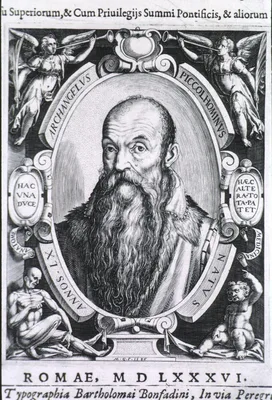
First description of a clear distinction between what is now known as gray and white matter in the central nervous system. The work also includes the first attempt to illustrate the brain in a sagittal view. The nine …
1585
#10959
Herbario nuovo...con figure, che rappresentano le vive piante, che nascondo in tutta Europa, & nell' Indie Orientali, & Occidentali.
Durante, physician to Pope Sixtus V, published this encyclopedia of medicinal plants from Europe and the East and West Indies, illustrated with woodcuts by Leonardo Parasole. The work contains discussions of the habit…
1586
#150
De humana physiognomonia libri IIII.
Della Porta preceded Lavater in attempting to estimate human character by the features. This is one of the first works on the ancient “science” of physiognomy to be extensively illustrated.
1586
#3417
De medica historia mirabili.
An early history of diseases, with extensive sections on ophthalmology (ff. 66-77) and urology (ff. 260-271). Lib. IV, Cap. iii, page 196 contains the first recorded case of gastric ulcer. Lib. VI. cap. iii contains t…
1586
#10634
De venenis, et antidotis prolegomena: seu communia praecepta ad humanam vitam tuendam saluberrima; in quibus diffinitiva methodus venenorum proponitur per genera, ac differentias suas, partes, & passiones, praeservandi modum, & communia ad eorum curationem antidota complectens; de canis rabiosi morsu, et eius curatione.
Digital facsimile from cervantesvirtual.com at this link.
1587
#7337
De humano foetu liber tertio editus, ac recognitus. Eiusdem anatomicarum observationum liber: ac De tumoribus secundum locos affectos liber nunc primum editi.
First edition of Aranzi's Anatomicarum observationum published with the third edition of De humano foetu. In the Anatomicarum observationum Aranzi pointed out that the eye muscles arise from the margin of the optic ca…
1587
#10660
De virtutibus et viciis cordis libri tres. Primus agit de virtutibus & functionibus cordis. Secundus de palpitatione cordis. Tertius de syncope.
The earliest separate treatise on cardiac physiology and pathology. Digital facsimile from Google Books at this link.
1588
#13546
De medico hebraeo: Enarratio apologica ... Apposita sunt praeterea, non paucorum amplissimorum principum, quam multa decreta, in hebraeorum fauorem constituta. Annectuntur, quinetiam, in tractatus calce, nonnulla aurea dicta; ex priscorum hebraeorum monumentis excerpta; nunc primum, latinitate donata, & ad studiosorum vtilitatem, in lucem edita. Dauid de Pomis, medico physico hebraeo, auctore.
De Pomis was a rabbi and physician. "... on account of the edict of Pius IV forbidding Jewish physicians to attend Christians (1555), he moved from town to town in Italy before he settled in 1569 in Venice, where he p…
1590
#3343
De compositione medicamentorum; De morbis oculorum, & aurium….
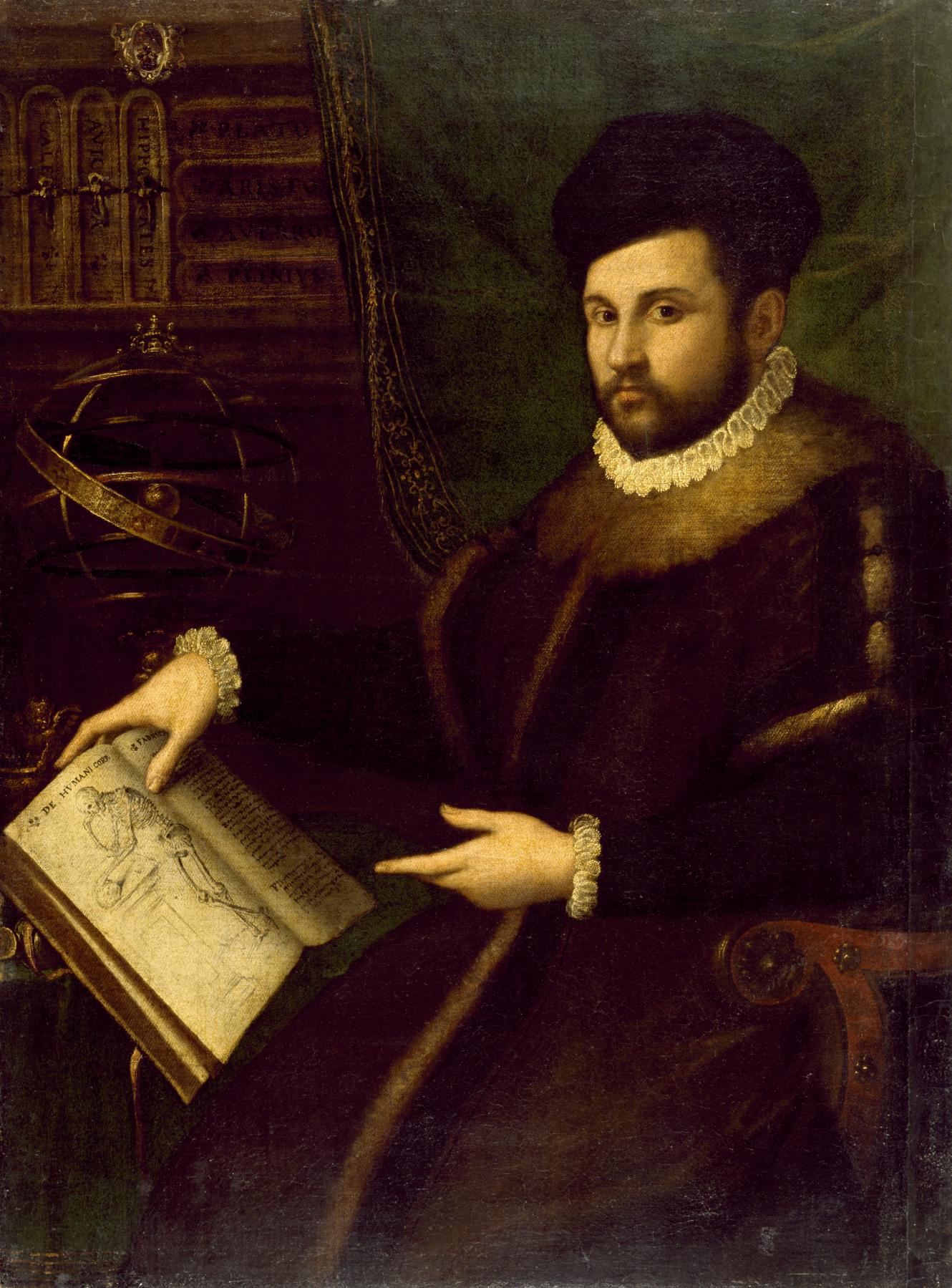
The De oculorum et aurium represents the first “clinical” manual on diseases of the ear. Mercuriali was primarily concerned with treatment.
1591
#6468
De medicina Aegyptiorum, libri quatuor.
The first significant work on the history of Egyptian medicine, and one of the first European studies of non-European medicine. Alpini became professor of botany at Padua after having spent three years in Egypt. Frenc…
1591
#13351
L'horto dei semplici di Padova, oue si vede primieramente la forma di tutta la pianta con le sue misure: & indi i suoi partimenti distinti per numeri in ciascuna arella, intagliato in rame.
First catalogue of the Orto botanico di Padova, the oldest academic botanical garden that remains in its original location., Digital facsimile from fc.cab.unipd.it at this link.
1593
#756
Quaestionum peripateticum, libri V.
A greatly expanded second edition. The results of tying a vein and the centripetal flow in veins were first recorded in print by Cesalpino (lib. ii, Qu. xvii, p. 234). See the English translation, with commentary, of …
1593
#44
Kitāb al-Qānūn fial-ţibb. [Libri V Canonis medicinae.]
![AVICENNA, [Abū ʿAlī al-Ḥusayn ibn ʿAbd Allāh ibn Al-Hasan ibn Ali ibn Sīnā] (980 – 1037)](/media/portraits/9572)
Title transliterated. Text and title page (except imprint) are in Arabic. This is the first printing of the text in Arabic of Book V of al-Qānūn. See also S. M. Afnan, Avicenna, his life and works. London, 1958.
1595
#2667
De iis qui morborum simulant deprehendendis liber.
The first treatise on feigned diseases.
1596
#6144
La commare o riccoglitrice.
First Italian book on obstetrics. It is a work of importance for the study of the history of Caesarean section; in it Mercurio advocated the Caesarean operation in cases of contracted pelvis.
1596
#7968
De naturali vinorum historia de vinis Italiae et de conviviis antiquorum libri septem....Accessit de factitiis ac cervisiis de q[ue] Rheni, Galliae, Hispaniae et de totius Europa vinis et de omni vinorum usu compendiaria tractatio.
A comprensive study of the production, storage, characteristics, and use of wines. Book two considers wine in relation to health. Digital facsimile from Google Books at this link.
1597
#5734
De curtorum chirurgia per insitionem.
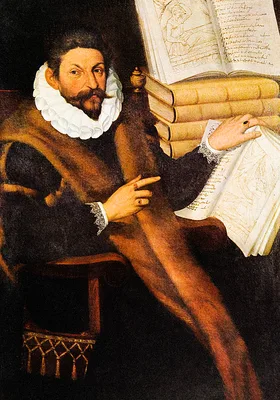
Tagliacozzi of Bologna became famous for his work on rhinoplasty, but Paré and Fallopius both abused him and his work, and the Church (which regarded such operations as meddling with the work of God) exhumed his body …
1598
#6794
Lexicon medicum Graeco-Latinum…ex Hippocrate et Galeno desumptum.
The earlier lexicon of Gorraeus formed the basis of this work, which was reprinted in several editions, the last in 1792.
1598
#285
Dell’anotomia, et dell’infermità del cavallo.
In 1598 Conte Ottavio Ruini edited and had published in Bologna, with a dedication to Cardinal Pietro Aldobrandini, Dell'anotomia [sic], et dell'infirmita del cavallo [Book ii: Dell'infirmita del cavallo] by il marche…
1599 –1667
#290
Opera omnia. 13 vols.
Aldrovandi, first director of the botanical garden at Bologna, was a prolific writer. Some of his writings made their first appearance in print after his death. He designed them as a whole to form an enormous illustra…
1599
#7553
Dell'historia naturale di Ferrante Imperato napolitano Libri XXVIII. Nella quale ordinatamente si tratta della diversa condition di miniere, e pietre. Con alcune historie di piante et animali; sin hora non date in luce.
The famous illustration of Imperato's museum or "cabinet of curiosities" published in this work was the first pictorial representation of the natural history research collection formed by Renaissance humanist". The co…
1600 –1601
#1540
De vocis auditusque organis historia anatomica. 2 pts.
Casseri, originally a servant to Fabrizio, was personally trained by his employer and eventually succeeded to Fabrizio’s chair of anatomy. Like Fabrizio, who studied the development of the chick for clues to human emb…
1600
#6144.1
De natura partus octomestris adversus vulgatam opinionem libri decem ... In quo absolutissima de humani partus natura cognitio traditur; nimirum de conceptione, articulatione, maturitate, de partuum numero, pariendique terminis ac temporibus; utrum ante septimum mensem, ac post decimum, undecimique initium partus naturaliter edi possit. De septimestri, nonomestri, decimestri, undecimestrique partu, deque veris horum omnium causis plenissime Aristotele duce disputatur ... Item ejusdem auctoris compendiosa de eodem partu disceptatio ...
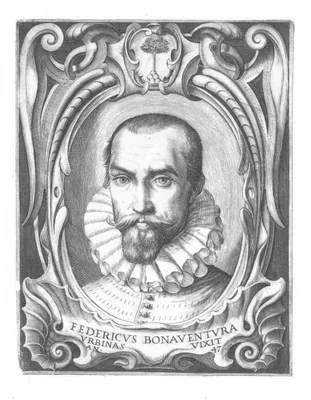
An encyclopedic work on ancient and contemporary medical, scientific and juridical opinion on premature birth and the period of gestation. Digital facsimile from the Internet Archive at this link.
1601
#2194
De praesagienda vita et morte aegrotantium.
A classical work on prognosis. English translation, London, 1746.
1602
#1719
De relationibus medicorum libri quatuor. In quibus ea omnia, quae in forensibus, ac publicis causis medici referre solent, plenissime traduntur.
Digital facsimile from the Internet Archive at this link.
1603
#572.1
Methodi vitandorum errorum omnium, qui in arte medica…
First mention of Santorio’s pulse-clock (“pulsilogium”) and his scale. Through most of the 17th and 18th centuries Santorio’s name was linked with that of Harvey as the greatest figure in physiology and experimental m…
1603
#757
De venarum ostiolis.
Fabricius, teacher of Harvey at Padua, discovered the venous valves, and illustrated them in life-size copperplates in this monograph. He failed to recognize their true function, however, considering their function si…
1603
#1541
In Galeni librum de ossibus.
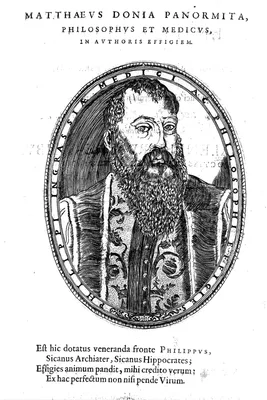
Ingrassia is by some accredited with the discovery of the stapes; he also observed the sound-conducting capacity of the teeth.
1603
#2726
De pulsibus libri tres nunc primum in lucem editi.
Sassonia emphasized the importance of the pulse in diagnosis, and provided the first recorded description of heart block. Pages 57-61 contain graphic representations of the pulse using dashes of unequal length. Digita…
1604
#465
De formato foetu.
Fabricius wrote at great length on embryology, inventing many theories, some of which were false. His illustrations marked a great advance on previous work. Fabricius recorded for the first time the dissection of seve…
1608
#8002
Il vero modo et ordine per dissegnar tutte le parti et membra del corpo humano.
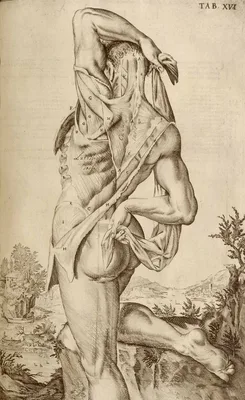
An entirely etched book of 40 leaves, drawn and etched by Fialetti, this was probably the first printed manual on drawing the human body, as distinct from earlier manuals on anatomy for artists. For further informatio…
1611
#380
De anatome corporis humani libri vii.
Guidi, professor of philosophy and medicine at Pisa, discovered the Vidian nerve, the Vidian canal, and the Vidian artery. The above was edited by his nephew.
1612
#572.2
Commentaria in artem medicinalem Galeni.
First printed mention of the air thermometer, an instrument that played a vital part in the creation of static medicine. This device was similar to Galileo’s open-air thermoscope, of which Santorio may have known, but…
1614
#573
Ars…de statica medicina aphorismorum sectionibus septem comprehensa.
This collection of aphorisms is the work by which Santorio’s ideas became widely known. Santorio used a beam balance to measure metabolism. See also nos. 572.1 & 572.2. For description of his experiments, see No. 2668…
1616
#534.52
De monstrorum caussis, natura, & differentiis libri duo.
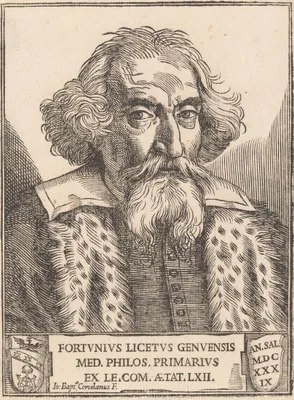
One of the earliest classifications of deformities, Liceti’s work was still under review in works on malformation in the 19th century. Includes both real and imaginary cases. The first of many illustrated editions app…
1616
#2143
De rara medicatione vulnerum.
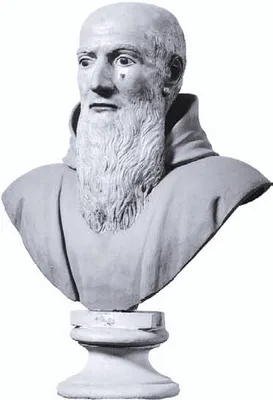
Like Paré, Magati believed that gunshot wounds were not in themselves poisonous. He suggested a bandage moistened with plain water in place of the various salves then in vogue.
1616
#3344
L’arte de’ cenni, con quale, formandosi favella visible, si tratta della muta eloquenza.
Bonifacio’s sign-language for the deaf and dumb employed almost every part of the body for conversational purposes.
1618
#10502
De affectionibus cordis. Libri tres. Qvorum primus agit de naturalibus. Secundus & tertius De preternaturalibus, de paliptatione nempe, & syncope, atque earum curatione.
The first book on heart disease. "The recognition of heart disease as of clinical interest and importance was exceedingly slow. In 1618, one hundred and eleven years after the pioneer publication of Benivieni of the p…
1621
#466
De formatione ovi et pulli.
1621 –1661
#1720
Quaestiones medico-legales. 9 vols.
Zacchias, a Papal physician, was one of the founders of medical jurisprudence. His treatise includes information concerning injuries of the eye, etc., and contains section on the medico-legal aspects of insanity. The …
1622
#7554
Musaeum Franc. Calceolari Jun. Veronensis, a Benedicto Ceruto, medico, inceptum, et ab Andrea Chiocco, med. physico, descriptum et perfectum.
Digital facsimile from the Internet Archive at this link.
1625
#2668
Commentaria in primam fen primi libri canonis Avicennae.
The chief value of this work is in its cautious revelation of the principles of construction of various instruments that Santorio had invented, including a hygrometer, a pendulum for measuring pulse rate, a syringe fo…
1626
#12781
Barbiere di Tiberio Malfi da Monte Sarchio Barbiere, e consule dell’arte in Napoli Libri Tre. Ne qualisi ragiona dell’eccellenza dell’Arte, e de’ suoi precetti. Delle Vene, e regole d’aprirle.
Published when barbers saw their work increasingly competed with by professional surgeons, Malfi’s book stresses medical knowledge of barbers and their expertise in performing medical procedures. It is Illustrated wit…
1627
#381
Tabulae anatomicae lxxiix.
First publication of the very beautiful copperplates engraved by Francesco Valesio after Odoardo Fialetti, a pupil of Titian. Casseri commissioned these plates covering the whole field of human anatomy for his unfinis…
1627
#1094
De lactibus sive lacteis venis.
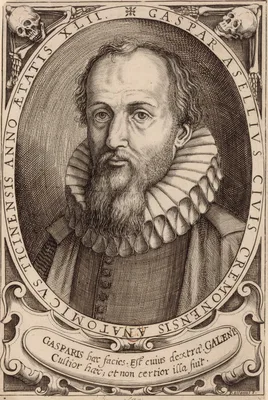
Records the discovery of the lacteal vessels. While performing vivisection on a dog that had recently fed, Aselli noticed a network of vessels in the mesentery and along the peritoneal surface of the intestine. The ve…