
1920–1929
805 entries with publication dates in this decade.
1928
#10287
History of medicine in Nebraska. Albert F. Tyler, Editor. Ella F. Auerbach, Compiler.
This work was edited by Tyler from the writings of 24 collaborators. Reprinted and augmented, with an index, by Bernice M. Hetzner. Omaha, NE: University fo Nebraska Medical Center, 1977. Digital facsimile of the 1977…
1928
#10639
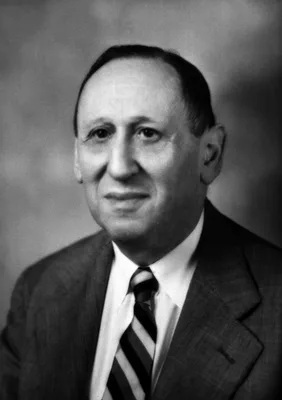
Folklore of the teeth.
1928
#10820
Medical and allied topics in Latin poetry.
1928
#10950
De retardatione accidentium senectutis cum aliis opusculis de rebus medicinalibus. Nunc primum ediderunt A. G. Little [and] E. Withington.
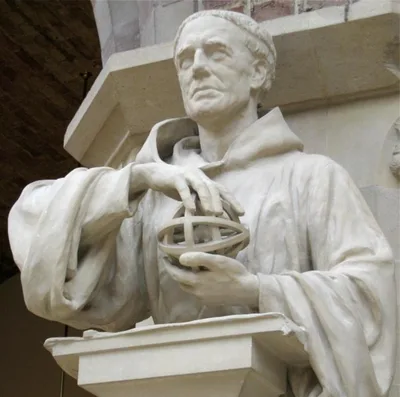
New edition edited from the 1590 printed edition in comparison with existing medieval manuscripts.
1928
#11005
A medical review of Soviet Russia.
Gantt went to Russia in the 1920s with the American Relief Administration, and became a student of Pavlov. Moving to Johns Hopkins in 1929, he founded the Pavlovian Laboratory, and devoted his career to understanding …
1928 –1975
#11773
Index litteraturae entomologicae serie I: Die Welt-Literatur über die gesamte Entomologie bis inklusive. Index litteraturae entomologicae series II: von 1864 bis 1900. 9 vols.
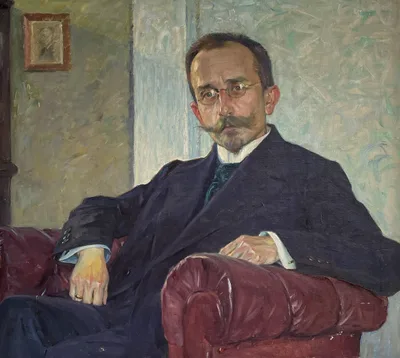
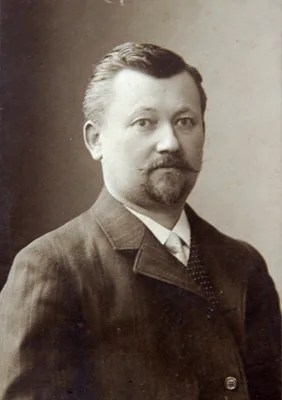
The first part, by Horn and Schenkling, was privately published by Horn in 4 vols., 1928-29. The second part, by Derksen and Göllner-Scheiding, was published by the Akademie der Lanwirtschafwissenschaften der DDR in 5…
1928
#12605
With a woman's unit in Serbia, Salonika and Sebastopol.
Hutton, a physician who specialized in mental and nervous disorders, began working with the Scottish Women’s Hospitals, a voluntary organisation established by her older colleague Elsie Inglis, in 1915 first in France…
1928
#12622
Les associations microbiennes: Leurs applications thérapeutiques.
This work included a 60-page chapter on bacterial inhibition by molds and antibiosis, with several hundred historical references. It appeared one year before Fleming's landmark paper.
1928
#12678
The divine origin of the craft of the herbalist.
A semi-popular account useful for its surveys of the earliest herbal literature: Egyptian, Sumerian, Assyrian, Greece, Syriac, Arabic, Coptic, Ethiopian (Abyssinian). Digital facsimile from the Internet Archive at thi…
1928
#12909
Partial denture construction: A text book describing the technics of impression taking and the construction of that type of removable partial dentures which are supported and retained by external attachments.
First book form exposition of the Kennedy Classification for partially edentulous arches or partial removable dentures. The Kennedy Classification system was originally introduced by Dr. Edward Kennedy in New York in …
1928
#13778
Tumors arising from the blood-vessels of the brain. Angiomatous malformations and hemangioblastomas.
1929
#967
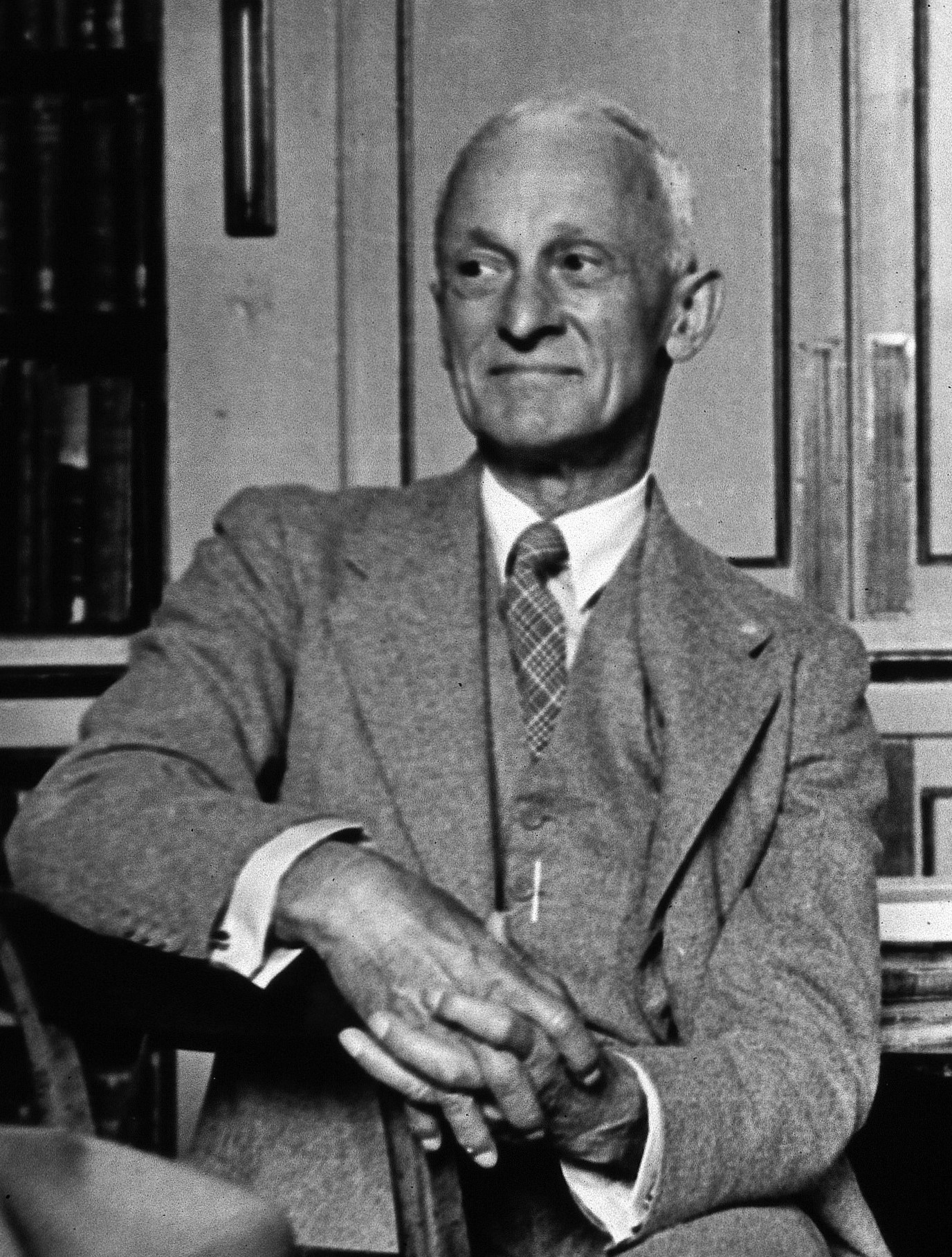
Le sinus carotidienet la zone homologue cardio-aortique.
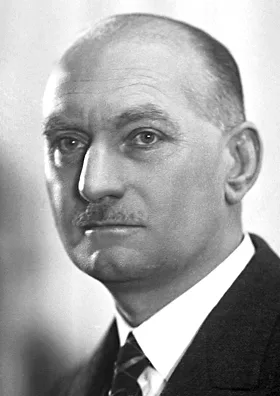
In 1938 Heymans was awarded the Nobel Prize in Physiology or Medicine "for the discovery of the role played by the sinus and aortic mechanisms in the regulation of respiration."
1929
#968
Cytochrome and respiratory enzymes.
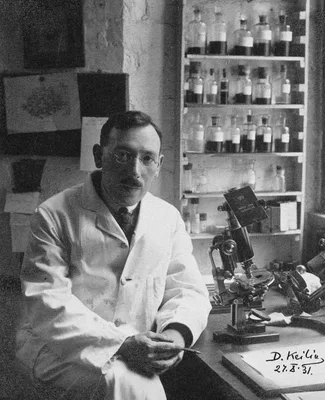
Keilin discovered cytochrome and laid the foundations of the modern concept of cellular respiration. See No. 1588.3.
1929
#566.1
The growth, development and phosphatase activity of embryonic avian femora in limb-buds cultivated in vitro.
First modern organ cultures.
1929
#969
Ueberden Absorptionsspektrum des Atmungsferments.
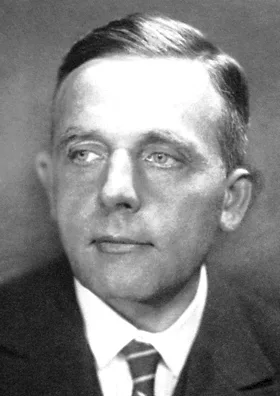
Warburg discovered the nature and function of the respiratory ferment. In 1931 Warburg was awarded the Nobel Prize in Physiology or Medicine "for discovery of the nature and mode of action of the respiratory enzyme."
1929
#4506.1
L’aurothérapie dans les rhumatismes chroniques.
Introduction of gold therapy.
1929
#1061
The absorption spectrum of vitamin D.
See No. 1065. With C. Fischmann, R. G. C. Jenkins, and T. A. Webster.
1929
#1062
Cholesterinstoffwechsel in Hühnereiern und Hühnchen.
In 1943 Dam shared the Nobel Prize with Doisy "for discovery of vitamin K, the blood coagulating factor."
1929
#857
The determination of the cardiac output of man by the use of acetylene.
Grollman introduced the acetylene method of determination of cardiac output.
1929 –1934
#1125
Die Hormone; ihre Physiologie und Pharmakologie. 2 vols.
1929
#2186
A history of the Medical Department of the United States Army.
1929
#1138.01
Effect of hormones of anterior pituitary on thyroid gland in the guinea pig.
Loeb and Aron (No.1138.2) demonstrated the thyroid-stimulating hormone (TSH) in the anterior pituitary.
1929
#1138.02
Action de la préhypophyse sur le thyroïde chez le cobaye.
Simultaneously with Loeb (No. 1138.1) Aron demonstrated the thyroid-stimulating hormone (TSH) in the anterior pituitary.
1929
#1149
The preparation of an active extract of the supra-renal cortex.
First practical method of preparing an extract of the active agent of the adrenal cortical hormone. It was named cortin until it was recognized that there are several active agents in the secretion.
1929
#1345
The presence of histamine and acetylcholine in the spleen of the ox and the horse.
Isolation of acetylcholine from ox and horse spleen.
1929
#1168.2
Action du lobe antérieur de l’hypophyse sur la montée laiteuse.
Demonstration of the existence of a pituitary lactogenic hormone (prolactin).
1929
#1188
Physiology of the corpus luteum.
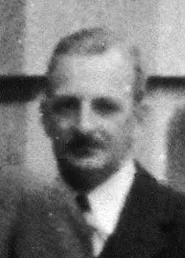
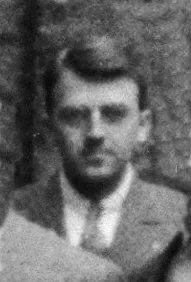
Discovery of the corpus luteum hormone, progesterone.
1929
#1189
The male hormone.
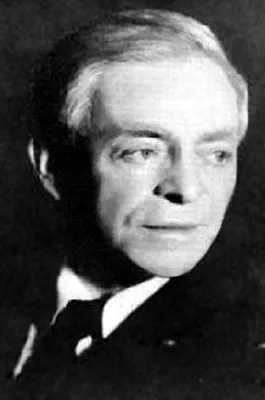
Funk and Harrow obtained crude active male hormone extracts from male urine.
1929
#1190
The chemistry of oestrin. I. Preparation from urine and separation from an unidentified solid alcohol.
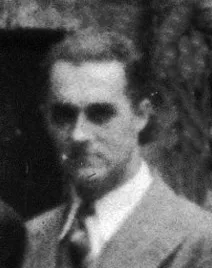
Isolation of pregnanediol.
1929
#1191
The effects of extracts of testis in correcting the castrated condition in the fowl and in the mammal.
C. R. Moore, T. F. Gallagher, and F. C. Koch were the first to obtain a potent testicular extract containing the male sex hormone, androsterone, later obtained in crystalline form by Butenandt. They also gave a detail…
1929
#751
Phosphorus compounds of muscle and liver.
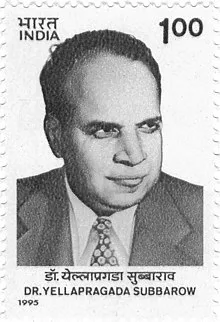
Discovery of adenosine-5′-triphosphate (ATP).
1929
#1243
The aglomerular kidney of the toadfish (Opsanus tau).
Proof that the tubules of the kidney of a vertebrate could secrete foreign substances.
1929
#1657
The treatment of the sick poor of this country and the preservation of the health of the poor in this country.
1929
#1446
Über das Elektrenkephalogramm des Menschen.
First recording of human brain activity, which Berger called electroencephalography. Berger actually recorded his first EEG in 1924, but did not publish the technique until 1929. He showed that the electrical activity…
1929
#1446.1
Brain mechanisms and intelligence: a quantitative study of injuries to the brain.
Lashley related nervous function and behavior with well-defined areas of the brain, particularly in connection with cerebral lesions.
1929
#2054
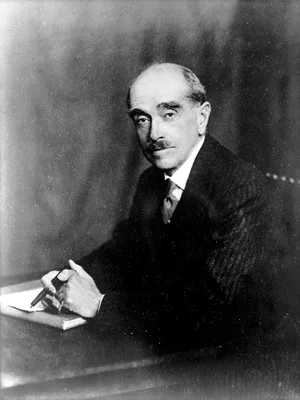
The mystery and art of the apothecary.
1929
#1933
On the antibacterial action of cultures of a penicillium, with special reference to their use in the isolation of B. influenzae.
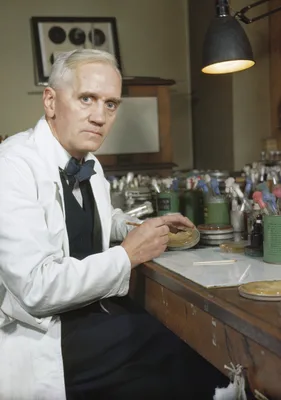
Discovery of the growth-inhibiting action of Penicillium on certain bacteria. In 1945 Fleming shared the Nobel Prize in Physiology or Medicine with Ernst Boris Chain and Sir Howard Walter Florey "for the discovery of …
1929
#2312.4
Human paleopathology, with some original observations on symmetrical osteoporosis of the skull.
1929
#2318
Selected readings in pathology.
This work makes it possible to read many of the classical writings on the subject which previously, through language difficulties, were beyond the reach of many. The book forms a valuable companion to Long’s history o…
1929
#2463
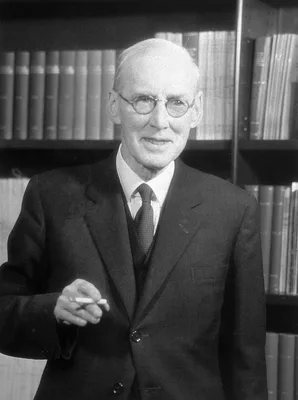
Landmarks in medical helminthology.
1929
#2857
Medionecrosis aortae idiopathica (cystica).
Classic description of aortic medionecrosis.
1929
#2858
Die Sondierung des rechten Herzens.
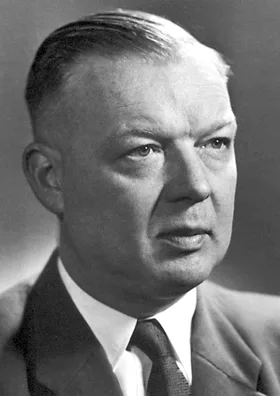
The first cardiac catheterization on a living person. Forssmann catheterized his own heart. Historical note by N. Howard-Jones, Bull. Hist. Med.,1973, 47,524-6. English translation in Callahan, Keys & Key, Classics of…
1929
#2859
L’artériographie des membres de l’aorte et de ses branches abdominales.
Aortography. With A. C. Lamas and J. Pereira Caldas. Also published in Bull. Soc.méd.chir. Paris, 1929, 55,587-601.
1929
#2576.01
A quantitative study of the precipitin reaction between Type III pneumococcus polysaccharide and purified homologous antibody.
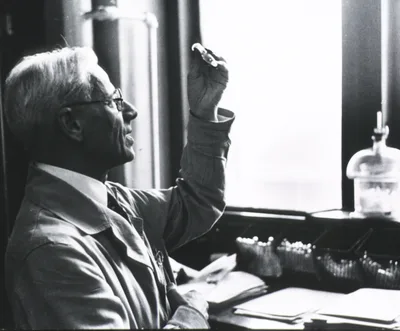
Heidelberger and Kendall adapted the precipitin reaction to permit the quantitative measurement of antibody and antigen. This established the principle of quantitative immunochemistry.
1929
#2576.02
Hypersensitiveness to arsphenamine in guinea pigs. I. Experiments in prevention and desensitization.
First demonstration of specific, acquired, lasting refractoriness to sensitization. This is the same or a closely related phenomenon to that demonstrated later by Burnet and Medawar under the name immune tolerance. Se…
1929
#1978
The use of a new apparatus for the prolonged administration of artificial respiration. I. A fatal case of poliomyelitis.
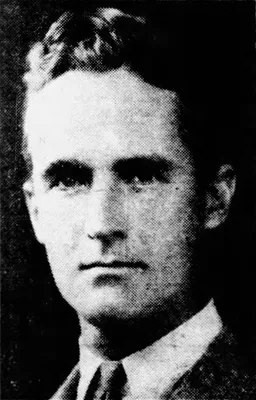
The Drinker respirator (“iron lung”).
1929
#3090
The velocity of blood flow in health and disease as measured by the effect of histamine on the minute vessels.
Measurement of circulation time.
1929
#3143
Observations on the etiologic relationship of achylia gastrica to pernicious anemia. I. The effect of the administration to patients with pernicious anemia of the contents of the normal human stomach recovered after the ingestion of beef muscle.
Castle showed pernicious anemia to be due to absence from the gastric juice of a substance (Castle’s intrinsic factor, hemopoietin) that reacts with an extrinsic factor present in many foodstuffs to form the anti-pern…
1929
#3144
Desiccated stomach in the treatment of pernicious anemia.
Sturgis and Isaacs showed that stomach tissue contains a factor active in the treatment of pernicious anemia.
1929
#3547