
Facets
Browse across eight MeSH (opens in new tab) facets — era, geography, science, specialty, technology, history, culture, and reference. Select one tag per group; counts update across the others. What’s new in facet browse how facets relate to subjects and MeSH.
Clear filtersFacet filters
Geography
Specialties & Disease
- Alternative & Fringe Medicine 3
- Anatomy & Pathology 59
- Cardiology & Blood 48
- Dentistry 8
- Diabetes 2
- ENT & Hearing 19
- Epidemiology & Demography 31
- Gastroenterology & Hepatology 10
- General Clinical Medicine 169
- Immunology & Dermatology 37
- Infectious Disease (General) 2
- Internal, Emergency & Geriatric 1
- Microbiology & Virology 49
- Military Medicine 8
- Neurology & Psychiatry 49
- Obstetrics & Reproductive 10
- Oncology & Cancer 23
- Ophthalmology & Vision 26
- Pediatrics 3
- Physiology & Embryology 34
- Plagues & Epidemics 55
- Psychology 9
- Public Health 31
- Pulmonary & Respiratory 5
- Rheumatology, Rehab & Pain 3
- Surgery & Anesthesia 14
- Urology & Nephrology 13
- Veterinary Medicine 1
Social & Historical Studies
Institutions & Culture
Reference & Scholarly Works
169 entries match General Clinical Medicine [G02] · Diagnostics & Imaging [E01]
1932
#271
The history of the microscope.
A classic history of microscopes up to 1800.
1934
#2864
Electrocardiograms that represent the potential variations of a single electrode.
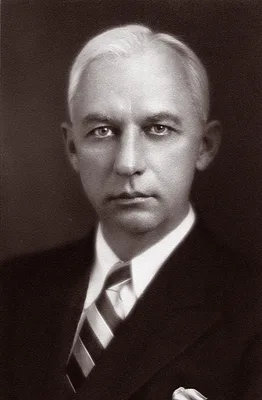
Unipolar leads. With F. D. Johnston, A. G. MacLeod, and P. S. Barker.
1934
#269.4
Die Methoden der Fluoreszenzmikroskopie. In: Abderhalden, Handbuch der biologischen Arbeitsmethoden, Abt. II, Teil 3, pp. 3307-37.
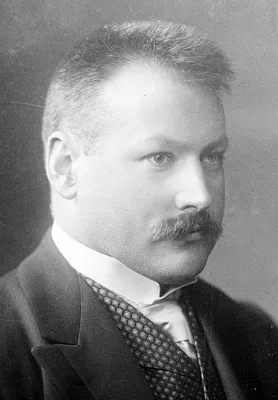
Modern methods of fluorescence microscopy were developed by Haitinger.
1934
#12387
The isolation and properties of the purified protein derivative of tuberculin
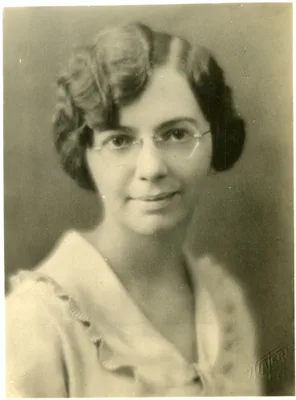
Purification of tuberculin (PPD). By the 1940s Seibert's PPD was the international standard for tuberculin tests.
1935
#3096
A standardized technique for the blood sedimentation test.
Wintrobe’s method for the determination of the erythrocyte sedimentation rate.
1935
#269.5
Das Phasenkontrastverfahren b.d. mikroskopischen Beobachtung.
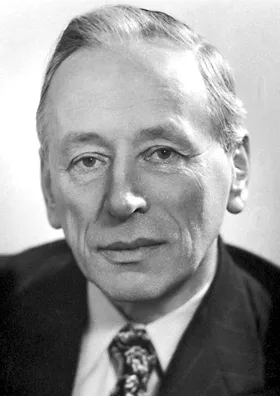
Zernicke invented phase contrast microscopy. In 1953 Zernike was awarded the Nobel Prize in Physics "for his demonstration of the phase contrast method, especially for his invention of the phase contrast microscope."
1936
#2865.1
Elektrographische Diagnostik der Herzmuskelerkrankungen.
Introduction of the vectorcardiogram.
1936
#269.6
Microscopy with ultra-violet light. A simplification of method.
1937
#4824
The electro-encephalogram in epilepsy.
Demonstration of the changes in the electro-encephalogram in epilepsy. With S. Graham and W. Grey Walter.
1937
#2348
A new tuberculin patch test.
1937
#12831
A new apparatus for electrophoretic analysis of colloidal mixtures.
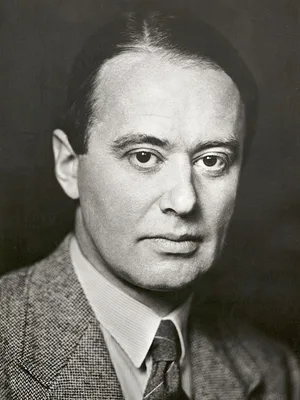
Between 1931 and 1937, with financial support from the Rockefeller Foundation, Tiselius developed his "Tiselius apparatus" for moving boundary electrophoresis. In this paper he demonstrated that electrophoresis separa…
1937
#12832
Electrophoresis of serum globulin. II- Electrophoretic analysis of normal and immune sera.
Tiselius showed that an antibody that he produced in a rabbit by immunizing it with albumin (ovalbumin) was clearly located in the gamma globulin fraction. He summarized the paper with this statement: "Investigation o…
1938
#2868
Praecordial leads in electrocardiography. A joint memorandum of a committee of the Cardiac Society of Gt. Britain and Ireland and the Committee of the American Heart Association.
PRECORDIAL LEADS
Also in Amer. Heart J.,1938, 15,107-08, 235-39. Precordial leads are also called unipolar leads.
1939
#2870
Studies on the estimation of cardiac output in man, and abnormalities in cardiac function, from the heart’s recoil and the blood’s impacts; the ballistocardiogram.
Introduction of the ballistocardiogram. With A. J. Rawson, H. A. Schroeder, and N. R. Joseph.
1939 –2015
#12964
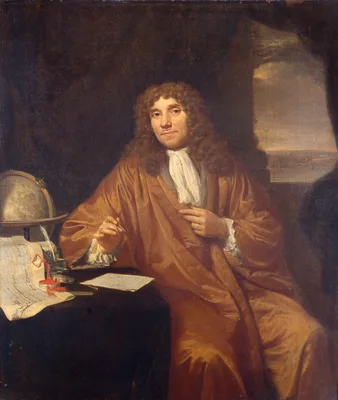
The collected letters of Antoni Van Leeuwenhoek / Alle de Brieven van Antoni Van Leeuwenhoek. Edited, illustrated & annotated by a committee of Dutch scientists. 17 vols. through 2015.
1941
#1533
Continuous and reproducible records of the electrical activity of the human retina.
Electroretinography
1941
#2577
The agglutination of red cells by allantoic fluid of chick embryos infected with influenza virus.
Discovery of virus hemagglutination. Between 1941 and 1942 Hirst developed the hemagglutination assay for quantifying the relative concentration of viruses, bacteria or antibodies.
1942
#2875
A simple indifferent electrocardiographic electrode of zero potential and a technique of obtaining augmented, unipolar, extremity leads.
Augmented unipolar leads.
1945
#3104
Detection of weak and “incomplete” Rh agglutinins: a new test.
Coombs’s test for detecting antibodies in various clinical scenarios, such as Rh disease and blood transfusion. With A. E. Mourant and R. R. Race. A fuller description appears in Brit. J. exp. Path.,1945, 26, 255-66.
1945
#3105
Conglutination test for Rh sensitization.
Conglutination test.
1946
#2418.1
A microflocculation test for syphilis using cardiolipin antigen: preliminary report.
V. D. Research Laboratory test (Harris test). With A. A. Rosenberg and L. M. Riedel.
1950
#2352
A new and practical B.C.G. skin test (the B.C.G. scarification test) for the detection of the total tuberculous allergy.
1950
#7568
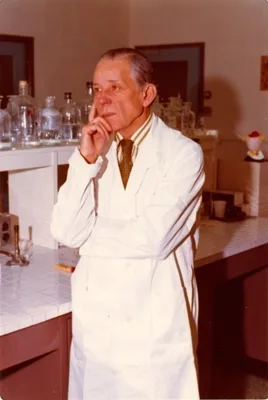
An inferometer microscope.
Dyson designed one of the first usable interference microscopes This optical system achieved interference imaging without requiring polarizing elements in the beam path.
1951
#2352.1
The multiple-puncture tuberculin test.
The Heaf multiple-puncture tuberculin test.
1951
#269.7
X-ray shadow microscope.
1951
#269.8
An electrostatic focusing system and its application to a fine focus x-ray tube.
X-ray microscopy.
1952 –1961
#9033
World-atlas of epidemic diseases. Welt-Seuchen-Atlas: Weltatlas der Seuchenverbreitung und Seuchenbeweng. In collaboration with Richard-Ernst Bader ... [et al.]. Edited by Ernst Rodenwaldt; assistant scientific editors: Ludwig Bachmann, Helmut J. Jusatz. Organization, Heinz Dörrfuss. Cartography, Konrad Voppel, in cooperation with Fritz Hölzel and Henry Petersen. Sponsorship, Bureau of Medicine and Surgery, Navy Dept., Washington, D.C. 3 vols.
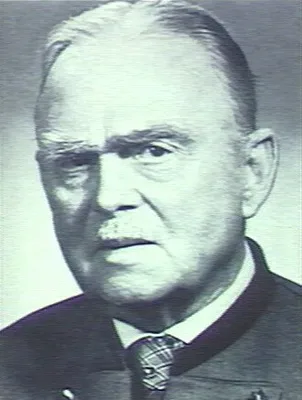
In English and German.
1962
#10506
Atlas of the British flora.
A pioneering large-scale project in plant distribution cartography, containing 10-km square distribution maps for all non-critical native and frequently occurring alien vascular plant species found in Britain and Irel…
1963 –1966
#273
Geschichte der Mikroskopie. 3 vols.
A biographical history.
1964
#3161.1
The history of electrocardiography.
Reprinted with new introduction by Joel D. Howell, San Francisco, Norman Publishing, 1990.
1966
#11105
Antibiotic susceptibility testing by a standardized single disk method.
The disk diffusion test, or agar diffusion test, or Kirby–Bauer test (disc-diffusion antibiotic susceptibility test, disc-diffusion antibiotic sensitivity test, KB test), for the antibiotic sensitivity of bacteria. (T…
1967
#2419.4
Haemagglutination test utilizing pathogenic Treponema pallidum for the sero-diagnosis of syphilis.
Treponemal hemagglutination (TPHA) test.
1967
#5509.4
Rubella-virus hemagglutination-inhibition test.
With five co-authors.
1967
#273.1
The evolution of the microscope.
1967
#7699
Sémiologie graphique: Les diagrammes. Les reseaux. Les cartes.
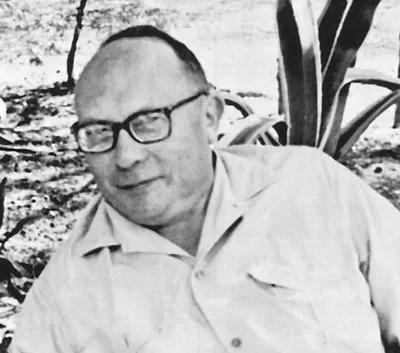
Foundational work in design and cartography concerning the graphic display of quantitative information. Includes display of medical or statistical information. Translated into English by William J. Berg as Semiology o…
1968
#273.2
Early history of the electron microscope.
1969
#10611
Computerized mapping of disease and environmental data. A report of the Mapping of Disease (MOD) Project.
This appears to be the earliest monograph on computerized disease mapping. At the time the research was conducted both computer graphics processing and data output in mainframe computers were inadequate for drawing al…
1971
#7405
Histology of the human eye.
Hogan and Alvarado's work was the first book on histology of the eye to include electron microscopy. It also reproduced spectacular three-dimensional representations of ocular ultrastructures by Joan Esperson Weddell.
1971
#12601
Enzyme-linked immunosorbent assay (ELISA). Quantitative assay of immunoglobulin G.
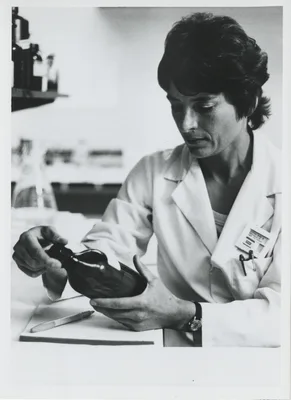
Perlmann (principal investigator) and Engvall conceptualized and developed the very commonly used enzyme-lined immunosorbent assay (ELISA) that uses antibodies to detect proteins and other different immunogens. The as…
1972
#10505
Medical geography: Techniques and field studies. Ediited by N. D. McGlashan
Chapter 5: "Computers and mapping in medical geography" by R. W. Armstrong appears to be one of the earliest reviews of this subject.
1975
#14182
Three-dimensional model of purple membrane obtained by electron microscopy.
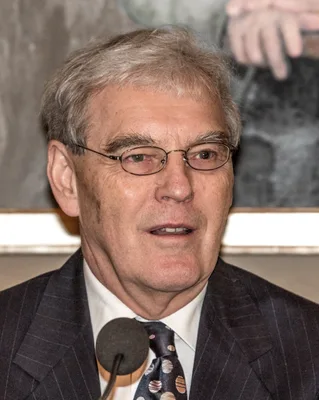
The invention of Cryogenic electron microscopy (cryo-EM). The novel technique was achieved by "by applying the method to tilted specimens, and using the principles put forward by De Rosier and Klug (GM - 13935), for t…
1976
#14222
Correlation of glucose regulation and hemoglobin AIc in diabetes mellitus.
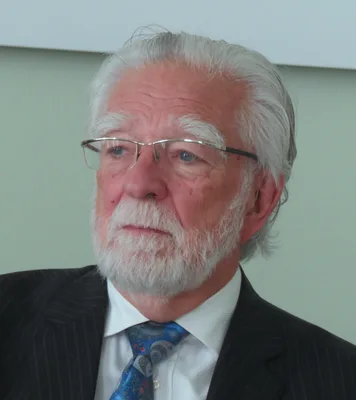
The authors studied 5 diabetic patients and first realized that A1c was an ideal index to reveal the overall control of a patient’s blood sugar over the past several months before a doctor’s visit. They were the first…
1978
#567.2
A history of microtechnique: The evolution of the microtome and the development of tissue preparation.
1981
#14183
Computer averaging of electron micrographs of the 405 ribosomal subunit.
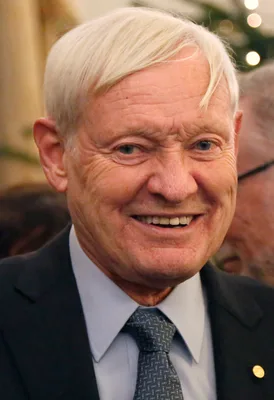
Frank and colleagues developed a method that allows sorting of particle images into classes based on their orientation, as well as their structural features. Specifically Frank developed mathematical tools used for im…
1983
#272
History of staining by Harold J. Cohn. 3rd edition by George C. Lusk and Frederick H.Kasten.
1984
#14184
Cryo-electron microscopy of viruses.
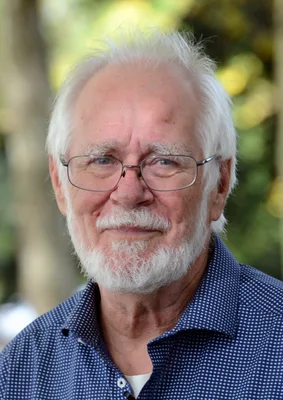
Dubochet and colleagues introduced "Dubochet's vitrification method" to vitrify water by cooling it so rapidly that it solidified to form a glass instead of crystals. Using this method, the authors published the first…
1989
#10340
Cancer mapping, edited by Peter Boyle, Calum S. Muir, and Ekkehard Grundmann.
The first chapter, by G. M. Howe is "Historical evolution of disease mapping in general and specifically of cancer mapping." The book as a whole discusses the wide range of cancer maps and atlases in U.S., Europe and …
1989
#13311
The great age of the microscope: The collection of the Royal Microscopical Society through 150 years.
1989
#13312
God bless the microscope! A history of the Royal Microscopical Society over 150 years.
1991
#12938
Mapping the brain and its functions: Integrating enabling technologies into neuroscience research. Edited by Constance M. Pechura and Joseph B. Martin. Committee on a National Neural Circuitry Database....
The digital edition is available from nap.edu at this link.