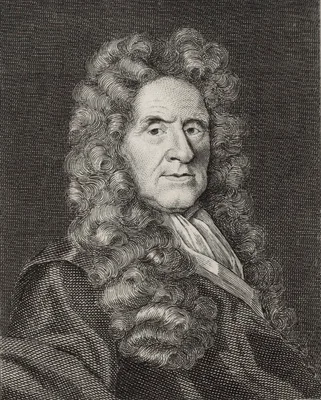
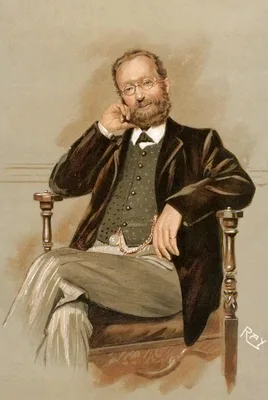
1534 ELYOT, Sir Thomas (1490 – 1546)
The castel of helth gathered and made by Syr Thomas Elyot knyghte, out of the chiefe authors of physyke, wherby euery manne may knowe the state of his owne body, the preseruatio[n] of helthe, and how to instructe welle his physytion in syckenes that he be not deceyued.
A few copies are dated 1534, but by internal evidence they cannot be dated before 1536. The next printing was in 1539. Digital text from Old English Books Online at this link.
GMN 12223 · https://historyofmedicine.com/id/14435
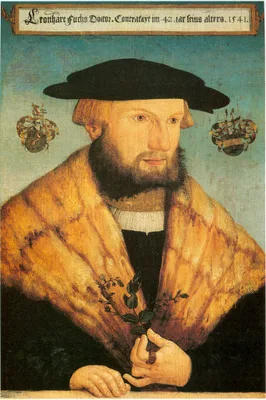
1555 –1556 FUCHS, Leonhart (1501 – 1566)
Le benefice commun de tout le monde, ou commodité de vie d’vn chascun, pour la conseruation de santé: Remedes segretz tirées des plantes contre toutes maladies. 3 vols.
A vernacular guide for living a healthy life compiled from the writings of Fuchs. Includes herbal and dietary remedies, recipes for oils, pills and other preparations to treat maladies such as fever, plague and wounds.
GMN 9773 · https://historyofmedicine.com/id/11961
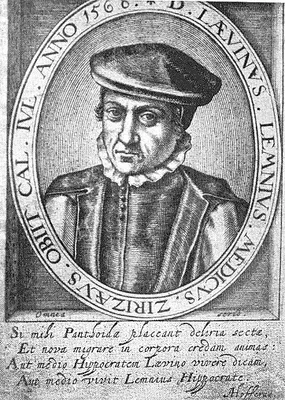
1561 LEMNIUS, Levinus (1505 – 1568)
De habitu et constitutione corporis, quam Greci χρασιν, triviales complexionem vocant, libri duo.
One of the earliest self-help medical guides, written by a pupil of Vesalius. Translated into English by Thomas Newton as The touchstone of complexions generallye appliable, expedient and profitable for all such, as b…
GMN 8987 · https://historyofmedicine.com/id/11166
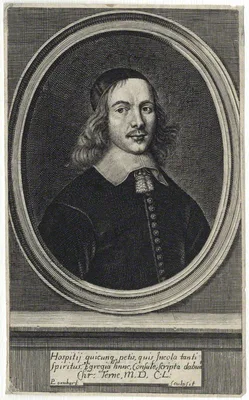
1655 MOFFET, Thomas (Muffet, Mouffet, Moffett) (1553 – 1604); BENNET, Christopher (1617 – 1655)
Health's improvement, or rules for preparing all sorts of food used in this nation. Written by that ever famous Thomas Muffet, Doctor in physick: Corrected and enlarged by Christopher Bennet, Doctor in Physick, and fellow of the Colledg of Physitians in London.
Moffet's work in nutrition was collected in his book Health's Improvement, which was designed more for the layman than for physicians. It also contains the first list of British wildfowl, recognizing for the first tim…
GMN 9324 · https://historyofmedicine.com/id/11506
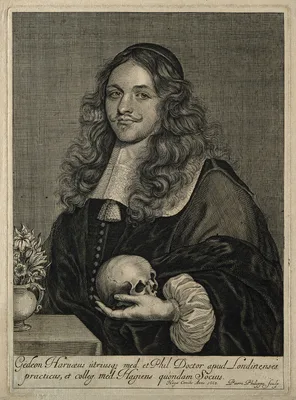
1676 HARVEY, Gideon (1640 – 1700)
The family physician, and the house apothecary: Containing I. Medicines against all such diseases people usually advise with apothecaries to be cured of, II. Instructions, whereby to prepare at your own houses all kinds of necessary medicines that are prepared by apothecaries, or prescribed by physicians, III. The exact prices of all drugs, herbs, seeds, simple and compound medicines, as they are sold at the druggists, or may be sold by the apothecaries, IV. That it's plainly made to appear, that in preparing medicines thus at your own houses, that it's not onely a far safer way, but you shall also save nineteen shillings in twenty, comparing it with the extravagant rates of many apothecaries.
The text of the second edition (1678) is available from Early English Books Online at this link.
GMN 9511 · https://historyofmedicine.com/id/11696
1682 TRYON, Thomas (1634 – 1703)
A treatise of cleanness in meats and drinks of the preparation of food, the excellency of good airs and the benefits of clean sweet beds also of the generation of bugs and their cure : to which is added, a short discourse of the pain in the teeth shewing from what cause it does chiefly proceed, and also how to prevent it.
Digital text from Early English Books Online at this link.
GMN 12612 · https://historyofmedicine.com/id/14852
1683 TRYON, Thomas (1634 – 1703)
The way to health, long life and happiness, or, a discourse of temperance and the particular nature of all things requisit for the life of man as all sorts of meats, drinks, air, exercise, &c. with special directions how to use each of them to be the best advantage of the body and mind. Shewing from the true ground of nature whence most diseases proceed, and how to prevent them. To which is added, a treatise of most sorts of English herbs ... the like never before published / communicated to the world for a general good, by Philotheos Physiologus.
Tryon, an English merchant, was the author of popular self-help books and an early advocate of vegetarianism. Digital facsimile from the Hathi Trust at this link.
GMN 9308 · https://historyofmedicine.com/id/11490
1734 TENNENT, John (1700 – 1760)
Every man his own doctor: or, The poor planter's physician. Prescribing plain and easy means for persons to cure themselves of all, or most of the distempers, incident to this climate, and with very little charge, the medicines being chiefly of the growth and production of this country.
The first medical hand-book for lay persons written and published in America. It is probable that this book was first published in 1734, though the earliest recorded copy or copies appear to be the "second edition" wi…
GMN 9675 · https://historyofmedicine.com/id/11862
1746 SHORT, Thomas (1690 – 1772)
Medicina Britannica; or, a treatise on such physical plants as are generally to be found in the fields or gardens of Great-Britain: Containing a particular account of their nature, virtues, and uses. Together with the observations of the most learned physicians, as well ancient as modern, communicated to the late ingenious Mr. Ray, and the learned Dr. Sim. Pauli. Adapted more especially to the occasions of those, whose condition or situation of life deprives them, in a great measure, of the helps of the learned. To which are added, three indexes: The first containing the England and Latin names of the plants treated of: The second of the diseases, and their remedies: The third to the notes.
Short focused his book on the medical uses of plants readily available in England. Many of the plants recommended in the traditional herbal literature were difficult to find in England. Digital facsimile from the Biod…
GMN 8869 · https://historyofmedicine.com/id/11047
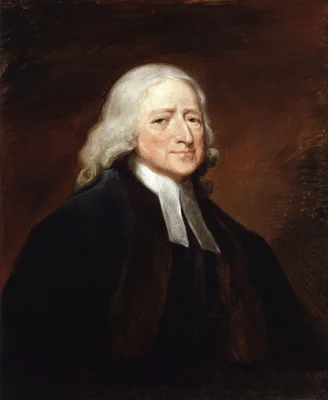
1747 WESLEY, John (1703 – 1791)
Primitive physick; or, an easy and natural method of curing most diseases.
Wesley, an English cleric, theologian, and evangelist, was a leader of a revival movement within the Church of England known as Methodism. Digital facsimile of the 14th American edition, Philadelphia, 1770, from the I…
GMN 9149 · https://historyofmedicine.com/id/11328
1761 TISSOT, Samuel Auguste André David (1728 – 1797)
Avis au peuple sur la santé.
A tract on medicine written for the lay public; it ran through many editions and was translated into all European languages. It has been called "the greatest medical best-seller of the eighteenth century" (Singy, "The…
GMN 1597 · https://historyofmedicine.com/id/1713
1769 BUCHAN, William (1729 – 1805)
Domestic medicine or, the family physician: Being an attempt to render the medical art more generally useful, by shewing people what Is in their own power both with respect to the prevention and cure of diseases: Chiefly calculated to recommend a proper attention to regimen and simple medicines.
This pioneering medical self-help book was an instant success, selling 80,000 copies in Buchan's lifetime— a huge number for that time, and was translated into all the major European languages. Digital facsimile from …
GMN 9148 · https://historyofmedicine.com/id/11327
1774 FALCK, Nicolai Detlef (1736 – 1783)
The seaman's medical instructor, in a course of lectures on accidents and diseases incident to seamen, in the various climates of the world. Calculated for ships that carry no surgeon. The whole delivered in a plain language and founded upon a long and successful experience.
Digital facsimile from the Hathi Trust at this link.
GMN 9519 · https://historyofmedicine.com/id/11704
1784 HALLE, Johann Samuel (1727 – 1810)
Die Deutsche [sic] Giftpflanzen, zur Verhütung der tragischen Vorfälle in den Haushaltungen, nach ihren botanischen Kennzeichen, nebst den Heilungsmitteln.
On poisonous plants in Germany, for prevention of tragic household accidents, and remedies for the poisons. Illustrated with 16 plates. Digital facsimile from Google Books at this link.
GMN 14210 · https://historyofmedicine.com/id/16526
1793 WESLEY, John (1703 – 1791); WILKINS, Henry (1767 – 1847)
The family adviser, or, a plain and modern practice of physic; calculated for the use of private families, and accommodated to the diseases of America
Wilkins' book intended for Methodists was issued with the 23rd edition of Wesley's work. Digital facsimile from wellcomecollection.org at this link.
GMN 13897 · https://historyofmedicine.com/id/16189
1801 DUPLANIL, Jean-Denis (1740 – 1802)
Médecine du voyageur; ou avis sur les moyens de conserver la santé, et de remédier aux accidens et aux maladies auxquels on est exposé dans les voyages, tant par terre que par mer. Suivie d'un essai de médecine pratique sur les voyages, considérés comme remèdes. 3 vols.
Digital facsimile from wellcomecollection.org at this link.
GMN 13750 · https://historyofmedicine.com/id/16034
1822 THOMSON, Samuel (1769 – 1843)
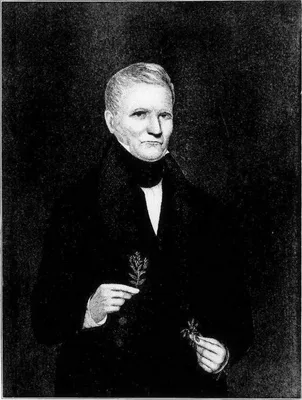
New guide to health; or botanic family physician, containing a complete system of practice, upon a plan entirely new; with a description of the vegetables made use of, and directions for preparing and adminstering them to cure disease. To which is prefixed a narrative of the life and medical discoveries of the author.
The "Bible" of Thomsonism or "Thomsonian medicine", which employed botanical remedies, often based on native American medicines. Digital facsimile from the Medical Heritage Library, Internet Archive, at this link.
GMN 6988 · https://historyofmedicine.com/id/9154
1822 THOMSON, Samuel (1769 – 1843)
A narrative of the life and medical discoveries of Samuel Thomson: Containing an account of his system of practice, and the manner of curing disease with vegetable medicine, upon a plan entirely new; to which is added an introduction to his New Guide to Health, or Botanic Family Physician containing the principles upon which the system is founded, with remarks on fevers, steaming, poison &c.
Thomson issued this introductory work shortly before publication of his New Guide. Three issues appeared in 1822: one with 180 pages, another with 182 pages including testimonials, and a 204 page issue with the introd…
GMN 10751 · https://historyofmedicine.com/id/12947
1824 APPERT, Nicolas (1742 – 1841); COOPER, Thomas (1759 – 1839)
A treatise of domestic medicine, intended for families: in which the treatment of common disorders are alphabetically enumerated. To which is added, a practical system of domestic cookery, describing the best, most economical, and most wholesome methods of dressing victuals; intended for the use of families who do not affect magnificence in their style of living. Also, The art of preserving all kinds of animal and vegetable substances for many years, by M. Appert.
Digital facsimile from U.S. National Library of Medicine at this link.
GMN 13482 · https://historyofmedicine.com/id/15756
1830 GUNN, John C.
Gunn’s domestic medicine, or poor man’s friend in the hours of affliction, pain, and sickness. This book points out, in plain language, free from doctor's terms the diseases of men, women, and children, and the latest and most approved means used in their cure, and is expressly written for the benefit of families in the western and southern states. It also contains descriptions of the medicinal roots and herbs of the western and southern country, and how they are to be used in the cure of diseases: arranged on a new and simple plan, by which the practice of medicine reduced to the principles of common sense.
Gunn intended his book to serve as a guide for frontier and rural families who lived far away from any sort of medical care so it contained instructions on how to treat a wide variety of illnesses. While the first edi…
GMN 9150 · https://historyofmedicine.com/id/11329
1837 CHILD, Lydia Maria Francis (1802 – 1880)
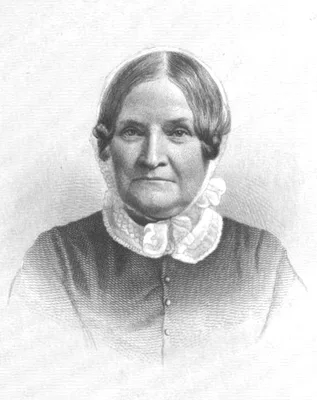
The family nurse; or companion of the frugal housewife. Revised by a member of the Massachusetts Medical Society.
Child was was an abolitionist, women's rights activist, Native American rights activist, novelist, journalist, and opponent of American expansionism. Her journals, both fiction and domestic manuals, reached wide audie…
GMN 10411 · https://historyofmedicine.com/id/12604
1845 RIVERS, Henry Wheaton (1814 – 1867)
Accidents: Popular directions for their immediate treatment; with observations on poisons and their antidotes.
Digital facsimile from Google Books at this link.
GMN 11698 · https://historyofmedicine.com/id/13899
1847 SOUTH, John Flint (1797 – 1882)
Household surgery; or, hints on emergencies.
GMN 13772 · https://historyofmedicine.com/id/16059
1851 HUTCHINSON, E.
Ladies' indispensable assistant: Being a companion for the sister, mother, and wife ... Here are the very best directions for the behavior and etiquette of ladies and gentlemen ... ; also, safe directions for the management of children ... a great variety of valuable recipes, forming a complete system of family medicine ... : to which is added one of the best systems of cookery ever published ....
In spite of the verbose title, the Table of Contents of this work indicates that roughly the first half of the book concerns home remedies for the widest range of complaints and illnesses, and medical properties of pl…
GMN 10416 · https://historyofmedicine.com/id/12609
1857 FLETCHER, Frederick Dicker
The seaman's medical friend, a companion to the government medicine chest, intended for use in ships not carrying surgeons. Containing directions for the preservation of health and the cure of diseases, wounds, fractures, dislocations, and other accidents likely to occur at sea. Comprising also the Admiralty scale of medicines. Second edition.
"The present edition of The Seaman's Medical Friend is a new book rather than a mere revision of an old one; since the whole of that portion which relates to the Preservation of health, and the symptoms and treatment …
GMN 9165 · https://historyofmedicine.com/id/11344
1862 MUSSEY, Reuben Dimond (1780 – 1866)
Health: Its friends and foes.
This work, which promoted vegetarianism and abstinence from tobacco along with other hygiene and overall health advice, was written as the author stated in his preface, "to meet the comprehension of the general reader…
GMN 11311 · https://historyofmedicine.com/id/13509
1868 JAMES, Constantin (1813 – 1888)
Accidents et maladies: Premier soins a donner avant l'arrivée du médecin.
Digital facsimile from Google Books at this link.
GMN 9470 · https://historyofmedicine.com/id/11654
1876 PIERCE, Ray Vaughn (1840 – 1914)
The people's medical advisor.
A graduate of the Eclectic Medical College in Cincinnati, Vaughn was a member of the New York State Senate (31st D.) in 1878 and 1879, and was elected as a Republican to the 46th United States Congress, holding office…
GMN 10412 · https://historyofmedicine.com/id/12605
1880 KELLOGG, John Harvey (1852 – 1943)
The home hand-book of domestic hygiene and rational medicine.
"Kellogg was not only a physician, surgeon, author, and administrator, but also an inventor. Although less discussed in comparison to his food creations, he designed and improved upon a number of medical devices that …
GMN 9306 · https://historyofmedicine.com/id/11488
1883 BURDETT, Sir Henry Charles (1847 – 1920)
Hints in sickness: Where to go and what to do.
Digital facsimile from Google Books at this link.
GMN 13111 · https://historyofmedicine.com/id/15364
1886 ALLINSON, Thomas Richard (1858 – 1918)
A system of hygienic medicine, or the only rational way of treating disease.
"In place of orthodox medicine, he [Allinson] promoted health through diet, exercise, fresh air and bathing. He advocated a vegetarian diet and the avoidance of alcohol, tobacco, coffee and tea. He especially promoted…
GMN 12417 · https://historyofmedicine.com/id/14647
1911 HARRIS, Henry Fauntleroy (1867 – 1926)
Health on the farm: A manual of rural sanitation and hygiene.
Digital facsimile from the Hathi Trust at this link.
GMN 11837 · https://historyofmedicine.com/id/14041
1917 EVANS, William Augustus (1865 – 1948)
Dr. Evans' How to keep well: A health book for the home.
Digital facsimile from the Internet Archive at this link.
GMN 13144 · https://historyofmedicine.com/id/15403
1977 NUMBERS, Ronald L. (1942 – ); RISSE, Guenter B. (1932 – ); LEAVITT, Judith Walzer (1940 – )
Medicine without doctors: Home health care in American history. Edited by Guenter B. Risse, Ronald L. Numbers, and Judith Walzer Leavitt.
GMN 9151 · https://historyofmedicine.com/id/11330
1981 FELLMAN, Anita Clair; FELLMAN, Michael
Making sense of self: Medical advice literature in late nineteenth-century America.
GMN 9674 · https://historyofmedicine.com/id/11861
1991 MURPHY, Lamar Riley (1953 – )
Enter the physician: The transformation of domestic medicine, 1760-1860.
GMN 9673 · https://historyofmedicine.com/id/11860
1998 ROSENBERG, Charles Ernest (1936 – ); HELFAND, William H. (1926 – 2018)
"Every man his own doctor." Popular medicine in early America: An exhibition drawn from the collections of Charles E. Rosenberg, William H. Helfand and the Library Company of Philadelphia.
GMN 9642 · https://historyofmedicine.com/id/11829
2003 ROSENBERG, Charles Ernest (1936 – )
Right living: An Anglo-American tradition of self-help medicine and hygiene. Edited by Charles Rosenberg.
GMN 9152 · https://historyofmedicine.com/id/11331
2016 STOBART, Anne
Household medicine in seventeenth-century England.
GMN 8550 · https://historyofmedicine.com/id/10727