1493 –1494 MONDINO DE LUZZI, [MUNDINUS] (1270 – 1326); KETHAM, Johannes de [Johannes von Kirchheim] ( – 1490); TOSSIGNANO, Pietro da (PETRUS DE TUSSIGNANO) (1350 – 1401); MANILIO, Sebastiano (Sebastianus Manilius); MORSIANUS, Petrus Andreas ( – 1501)
Fascicolo di medicina. Tr: Sebastianus Manilius. Add: Petrus de Tussignano: Consilium pro peste evitanda. Mundinus: Anatomia (Ed: Petrus Andreas Morsianus).
This Italian translation contains an entirely new and more extensive series of woodcuts and additional text. The dramatically improved and more realistic illustrations, which were reproduced in the numerous later edit…
GMN 363.1 · https://historyofmedicine.com/id/327
1521 BERENGARIO DA CARPI, Giacomo (1460 – 1530)
Commentaria cum amplissimis additionibus super anatomia Mundini una cum textu ejusdem in pristinum et verum nitorem redacto.
Giacomo Berengario da Carpi (Jacobus Berengarius Carpensis, Jacopo Barigazzi, Giacomo Berengario da Carpi or simply Carpus) introduced iconography and independent anatomical observation into the teaching of anatomy. H…
GMN 367 · https://historyofmedicine.com/id/441
1528 DÜRER, Albrecht (1471 – 1528)
Vier Bücher von menschlicher Proportion.
Written, designed, and illustrated by Dürer, this work is notable for its extraordinary series of anthropometrical woodcuts. The first two books deal with the proper proportions of the human form; the third changes th…
GMN 149 · https://historyofmedicine.com/id/2731
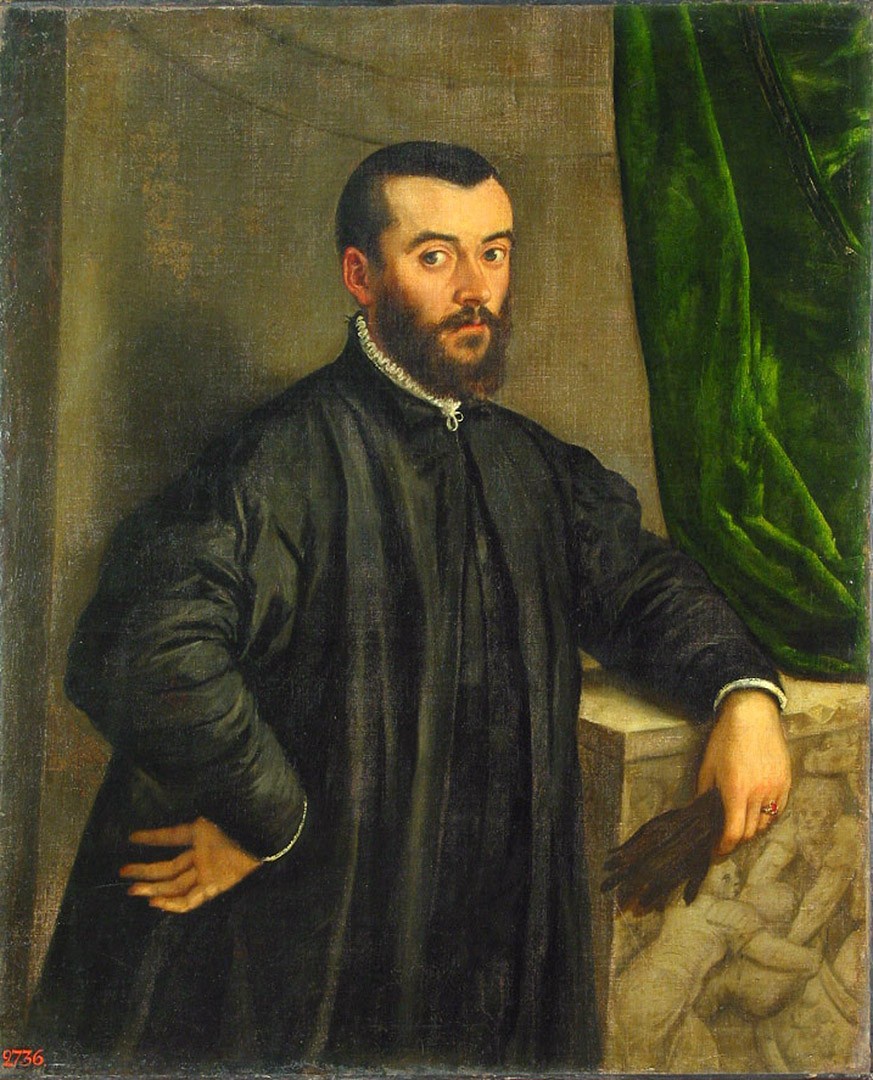
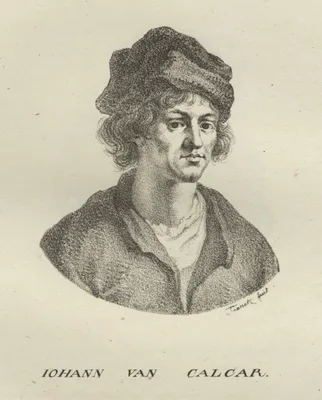
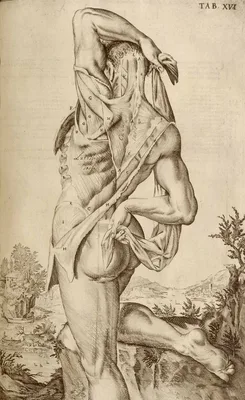
1538 VESALIUS, Andreas (1514 – 1564); CALCAR, Jan Steven van (1499 – 1546)
Tabulae anatomicae sex.
Vesalius’ first anatomical publication, consisting of six oversized anatomical charts, resembling fugitive sheets. The three skeletal woodcuts are signed by the artist, Jan Stephan van Calcar, who also acted as the pu…
GMN 372 · https://historyofmedicine.com/id/468
1541 CANANO, Giovanni Battista (1515 – 1579)
Musculorum humani corporis picturata dissectio.
The first book in which each muscle was illustrated separately, with copper-plates of the bones and muscles of the upper limb from drawings by Girolamo da Carpi, which in realism and exactitude surpassed anything betw…
GMN 373 · https://historyofmedicine.com/id/488
1541 RYFF, Walther Hermann [RYF, REIFF, REIF, RUEFF, RUFF] (1500 – 1548); GRIEN, Hans Baldung (1484 – 1545)
Des aller fürtrefflichsten…erschaffen. Das is des menchen…warhafftige beschreibung oder Anatomi…
This plagiarism of Vesalius’s Tabulae anatomicae sex contains 25 woodcuts by Hans Baldung Grien (1484/1485-1545), and represents the artist’s only contribution to medical illustration. The woodcuts include the best il…
GMN 373.1 · https://historyofmedicine.com/id/494
1543 VESALIUS, Andreas (1514 – 1564)
Suorum de humani corporis fabrica librorum epitome.
Shortly after publishing his encyclopedic De humani corporis fabrica libri septem, Vesalius issued De humani corporis fabrica epitome, also from the press of Johannes Oporinus of Basel. This thin set of 14 unnumbered …
GMN 376 · https://historyofmedicine.com/id/492
1543 VESALIUS, Andreas (1514 – 1564)
De humani corporis fabrica libri septem.
Published when the author was only 29 years old, the Fabrica revolutionized not only the science of anatomy but how it was taught. Throughout this encylopedic work on the structure and workings of the human body, Vesa…
GMN 375 · https://historyofmedicine.com/id/497
1544 GUIDI, Guido [VIDIUS] (1508 – 1569)
Chirurgia e graeco in latinum conversa.
This elegantly printed and illustrated small folio included 210 text woodcuts, most probably after drawings by the school of Francesco Salviati (Francesco de'Rossi). It was issued from the press operated by Pierre Gau…
GMN 4406.1 · https://historyofmedicine.com/id/6142
1545 GEMINUS, Thomas [Thomas Lambrit; Thomas Lambert] (1510 – 1562)
Compendiosa totius anatomie delineatio, aere exarata.
Compendiosa totius anatomie delineatio by Belgian engraver, mathematical and surgical instrument maker, Thomas Geminus (Thomas Lambert or Lambrit) was a slightly abridged version of Vesalius's Epitome illustrated with…
GMN 376.1 · https://historyofmedicine.com/id/498
1545 ESTIENNE, Charles [Stephanus] (1504 – 1564); LA RIVIÈRE, Estienne de (1500 – )
De dissectione partium corporis humani.
De dissectione partium corporis humani libri tres by French physician, writer, and translator, Charles Estienne, of the Estienne printing dynasty, is one of the most interesting woodcut books of the French Renaissance…
GMN 378 · https://historyofmedicine.com/id/546
1555 VESALIUS, Andreas (1514 – 1564)
De humani corporis fabrica libri septem.
Containing Vesalius’s final published revisions of the text, this edition is also superior for its enlarged format, improved typography and printing, better paper, larger woodcut initials, and changes to the lettering…
GMN 377 · https://historyofmedicine.com/id/547
1556 VALVERDE DE HAMUSCO, Juan (1525 – 1587)
Historia de la composicion del cuerpo humano…
Historia de la composicion del cuerpo humano Spanish physician Juan Valverde de Amusco was issued in Rome at the press of Antonio Salamanca. This was the first great original medical book in Spanish and the most origi…
GMN 378.02 · https://historyofmedicine.com/id/551
1559 COLOMBO, Matteo Realdo [Renaldus Columbus] (1515 – 1559)
De re anatomica libri xv.
Colombo was a pupil of Vesalius, and succeeded him in the chair of anatomy at Padua before proceeding to chairs first at Pisa and later at Rome. His book, published just after his death, rectified a number of anatomic…
GMN 378.1 · https://historyofmedicine.com/id/560
1608 FIALETTI, Odoardo (1573 – 1638)
Il vero modo et ordine per dissegnar tutte le parti et membra del corpo humano.
An entirely etched book of 40 leaves, drawn and etched by Fialetti, this was probably the first printed manual on drawing the human body, as distinct from earlier manuals on anatomy for artists. For further informatio…
GMN 8002 · https://historyofmedicine.com/id/10178
1627 CASSERI, Giulio Cesare [Julius Casserius Placentinus; Giulio Casserio] (1552 – 1616)
Tabulae anatomicae lxxiix.
First publication of the very beautiful copperplates engraved by Francesco Valesio after Odoardo Fialetti, a pupil of Titian. Casseri commissioned these plates covering the whole field of human anatomy for his unfinis…
GMN 381 · https://historyofmedicine.com/id/577
1634 GRACHT, Jacob van der (1593 – 1652)
Anatomie der uuterlicke deelen van het menschelick lichaem: Dienende om te verstaen ende volkometlick wt te beelden alle beroerlicheit des selven lichaems.
The earliest of all independent works on anatomy for graphic or plastic artists. The author, a painter and etcher, drew and engraved all the images himself. Digital facsimile from Google Books at this link.
GMN 381.1 · https://historyofmedicine.com/id/579
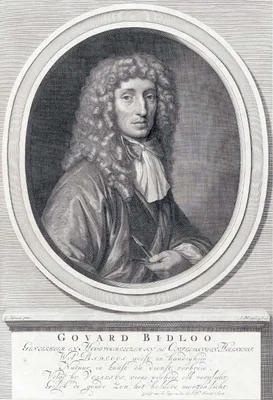
1685 BIDLOO, Govert (1649 – 1713); LAIRESSE, Gerard de (1641 – 1711)
Anatomia humani corporis, centum et quinque tabulis, per artificiosiss. G. de Lairesse ad vivum delineatis.
This large folio by Dutch physician, anatomist, poet, and playwright Govert Bidloo contains an engraved title, engraved portrait of Bidloo by Abraham Bloteling after Gérard de Lairesse and 105 engraved plates after La…
GMN 385 · https://historyofmedicine.com/id/602
1691 GENGA, Bernardino (1665 – 1734); LANCISI, Giovanni Maria (1654 – 1720)
Anatomia per uso et intelligenza del disegno ricercata non solo su gl’ossi, e muscoli del corpo humano.
Contains 56 copper-plates, excellent anatomically and artistically, with commentary by Giovanni Maria Lancisi. This is one of the finest of all books on anatomy for artists. English translation with plates re-engraved…
GMN 386 · https://historyofmedicine.com/id/611
1698 COWPER, William (1666 – 1709)
The anatomy of humane bodies, with figures drawn after the life by some of the best masters in Europe.
The largest in format, and most elaborate and beautiful of all 17th century English treatises on anatomy, and also one of the most extraordinary plagiarisms in the entire history of medicine. Cowper purchased sets of …
GMN 385.1 · https://historyofmedicine.com/id/605
1701 –1715 RUYSCH, Frederik (1638 – 1731)
Thesaurus anatomicus primus [-decimus]... Het eerste [-tiende] anatomisch cabinet....
Probably the most original artist in the history of anatomical preparations, Ruysch enjoyed making up elaborate three-dimensional emblems of mortality from his specimens. These fantastic, dream-like concoctions constr…
GMN 389 · https://historyofmedicine.com/id/623
1724 COWPER, William (1666 – 1709)
Myotomia reformata.
This work made a modest first appearance in 1694 as an octavo, but Cowper worked until his death on a new edition which was finally published posthumously under the supervision and at the expense of Richard Mead (1673…
GMN 392.1 · https://historyofmedicine.com/id/654
1725 BOERHAAVE, Herman (1668 – 1738); VESALIUS, Andreas (1514 – 1564); ALBINUS, Bernhard Siegfried (1697 – 1770)
Opera omnia anatomica & chirurgica. Edited by Herman Boerhaave and Bernhard Siegfried Albinus. 2 vols.
Vesalius's collected works with the famous woodcuts reproduced as copperplate engravings by Jan Wandelaar (1690-1759). Notably Boerhaave and Albinus had this edition published because Vesalius's works still had practi…
GMN 8095 · https://historyofmedicine.com/id/10271
1733 CHESELDEN, William (1688 – 1752)
Osteographia, or the anatomy of the bones.
This splendidly designed and illustrated work contained full and accurate descriptions of all the human bones, as well as many of animals. Cheselden is the first person to have used the camera obscura to gain precisio…
GMN 395 · https://historyofmedicine.com/id/671
1737 –1747 ALBINUS, Bernhard Siegfried (1697 – 1770)
Tabulae sceleti et musculorum corporis humani.
The splendid series of 40 large copperplates of the bones and muscles in this work were drawn and engraved by Jan Wandelaar (1690-1759). They established a newstandard in anatomical illustration, and remain unsurpasse…
GMN 399 · https://historyofmedicine.com/id/745
1741 PIETRO DA CORTONA, [Pietro BERRETINI] (1596 – 1669)
Tabulae anatomicae.
27 anatomical copperplates after drawings by the most influential painter of the Italian Baroque movement, who also excelled as an architect. The editor, Cajetano Petrioli, supplied the text and small numbered anatomi…
GMN 395.2 · https://historyofmedicine.com/id/695
1745 GAUTIER D’AGOTY, Jacques Fabien (1716 – 1785); DU VERNEY, Guichard-Joseph (Guichard Joseph Duverney) (1648 – 1730)
Essai d’anatomie en tableaux imprimés, qui represent au naturel tous les muscles de la face, du col, de la tête, de la langue & du larinx. d'après les parties disséquées & préparées par Monsieur Duverney....comprenant hit grandes planches.
Remarkable for its striking mezzotints printed in color. Digital facsimile from the Internet Archive at this link.
GMN 398 · https://historyofmedicine.com/id/739
1751 STUBBS, George (1724 – 1806); BURTON, John (1697 – 1771)
An essay towards a complete new system of midwifery, theoretical and practical.
Burton was the first to suggest that puerperal fever is contagious, and the first to give a detailed discussion of Caesarean section. Laurence Steme satirized him as “Dr. Slop” in The life and opinions of Tristram Sha…
GMN 6268 · https://historyofmedicine.com/id/7976
1754 SMELLIE, William (1697 – 1763)
A sett [sic] of anatomical tables, with explanations, and an abridgment, of the practice of midwifery…
The celebrated atlas for No. 6154, which is a complete work in itself. The 39 superb engravings include 26 after drawings by Jan van Rymsdyk, which are preserved in the Hunterian Collection at the University of Glasgo…
GMN 6154.1 · https://historyofmedicine.com/id/7722
1766 STUBBS, George (1724 – 1806)
The anatomy of the horse.
The first original work on equine anatomy after Ruini (No. 285). Stubbs, the great painter of animals, prepared his own dissections of horse carcasses, and personally engraved the 24 double folio plates for this work,…
GMN 308.1 · https://historyofmedicine.com/id/119
1771 MOEHSEN, Johann Karl Wilhelm (1722 – 1795)
Verzeichnis einer Samlung von Bildnissen, gröstentheils berühmter Aerzte; so wohl in Kupferstichen, schwarzer Kunst und Holzschnitten, als auch in einigen Handzeichungen: diesem sin verschiedene Nachrichten und Unmerkungen Vorgesekt, die so wohl zur Geschichte der Arzenengelahrtheit; als vornehinsich zur Geschichte der Künste gehören.
“Very valuable reports on artistic anatomy and the history of anatomic illustration” (Choulant). Probably represents the first history of medical portraiture. Digital facsimile from Googe Books at this link.
GMN 6604.9 · https://historyofmedicine.com/id/8565
1772 LAVATER, Johann Caspar (1741 – 1801)
Von der Physiognomik.
Lavater was the last of the descriptive physiognomists. He expanded the above work into Physiognomische Fragmente zur Beförderung der Menschenkenntnis und Menschenliebe, 1775-78. This was translated into English by H.…
GMN 154 · https://historyofmedicine.com/id/2771
1773 RUBENS, Peter Paul (1577 – 1640)
Théorie de la figure humaine.
This work on the human figure, published more than 100 years after the death of Rubens, is one of a handful of anatomical treatises illustrated by an artist of the first magnitude.
GMN 155 · https://historyofmedicine.com/id/3164
1774 HUNTER, William (1718 – 1783)
Anatomia uteri humani gravidi tabulis illustrata. The anatomy of the human gravid uterus exhibited in figures.
Hunter originally trained as Smellie’s assistant. Once he achieved brilliant professional and financial success he became a great collector of rare books and manuscripts, coins, paintings, minerals, shells, and antiqu…
GMN 6157 · https://historyofmedicine.com/id/7736
1775 SANTORINI, Giovanni Domenico (1681 – 1737)
Septemdecim tabulae…
Santorini died before the completion of these anatomical plates which he intended to be his chef d’oeuvre. This elegantly printed volume is the only significant medical book printed by the celebrated Giambattista Bodo…
GMN 399.1 · https://historyofmedicine.com/id/748
1778 RYMSDYK, Jan van (Rijmsdijck, Riemsdyk, Remsdyke) (1730 – 1790); RYMSDYK, Andreas van (1754 – 1786)
Museum Britannicum : being an exhibition of a great variety of antiquities and natural curiosities, belonging to that noble and magnificent cabinet, the British Museum, illustrated with curious prints, engraved after the original designs, from nature, other objects: and with distinct explanations of each figure.
Digital facsimile from the Internet Archive at this link.
GMN 7662 · https://historyofmedicine.com/id/9834
1779 GAMELIN, Jacques (1738 – 1803)
Nouveau recueil d’ostéologie et de myologie…
“Without contest the most beautiful of all anatomies for the artist and one of the most remarkable books of its time” (Hahn & Dumaitre). The plates in this work are more fantastic than any other anatomy, suggesting th…
GMN 401.1 · https://historyofmedicine.com/id/781
1792 CAMPER, Petrus (Pieter) (1722 – 1789)
Redevoeringen over die wijze om de verscheidene hartstogten op onze wezens te verbeelden…
Lectures on the methods of representing the passions in the human face, and on other aspects of medicine and the arts. German translation, Berlin, 1793. See No. 158.
GMN 6604.91 · https://historyofmedicine.com/id/8604
1794 BELL, John (1763 – 1820)
Engravings, explaining the anatomy of the bones, muscles and joints.
Bell’s atlas of the bones, muscles and joints was issued as a separate work a year after his text, The Anatomy of the Bones, Muscles, and Joints. Bell’s illustrations are some of the most striking in the entire litera…
GMN 9833 · https://historyofmedicine.com/id/12021
1797 SOEMMERRING, Samuel Thomas von (1755 – 1830)
Tabula sceleti feminini juncta descriptione.
Soemmerring was noted for his accuracy in anatomical illustration, and the above work is a fine example of his artistic sense. For it he selected the skeleton of a well-built girl of 20 years. Great care was taken in …
GMN 401 · https://historyofmedicine.com/id/775
1797 –1804 BELL, Sir Charles (1774 – 1842); BELL, John (1763 – 1820)
The anatomy of the human body. 4 vols.
“The first great textbook contributed by the British school to modern anatomy” (Russell, No. 461).
GMN 401.3 · https://historyofmedicine.com/id/797
1806 BELL, Sir Charles (1774 – 1842)
Essays on the anatomy of expression in painting.
Bell’s artistic and literary skills combined with his knowledge of anatomy and physiology to make this work a tour de force of art history and the anatomical and physiological basis of facial expression.
GMN 6604.92 · https://historyofmedicine.com/id/8566
1811 MEDICO, Giuseppe del
Anatomia per uso de’pittori e scultori.
This anatomy for artists and sculptors contains 38 good copperplates in black and red.
GMN 406 · https://historyofmedicine.com/id/840
1816 MASCAGNI, Paolo (1752 – 1815)
Anatomia per uso degli studiosi di scultura e pittura.
Mascagni's anatomy for artists and sculptors, edited for posthumous publication by Mascagni's literary execultor Francesco Antonmarchi. 15 hand-colored engraved plates after drawings by Antonio Serantoni (1780j-1837),…
GMN 7488 · https://historyofmedicine.com/id/9660
1821 –1831 CLOQUET, Jules Germain (1790 – 1883)
Anatomie de l’homme, ou descriptions et figures lithographiées de toutes les parties du corps humain. 5 vols.
The first anatomical atlas illustrated by lithography, containing 300 plates in folio format. This was one of the most elaborate of the lithographic “incunabula” produced by Charles Philibert de Lasteyrie, one of the …
GMN 409 · https://historyofmedicine.com/id/864
1822 –1832 MASCAGNI, Paolo (1752 – 1815)
Anatomia universa… 2 vols.
The largest of all medical books from the standpoint of format. The 44 life size engraved plates are reproduced in double elephant folio size measuring 950 x 635 mm., and include an almost incredible level of detail. …
GMN 409.1 · https://historyofmedicine.com/id/884
1822 ANDERSON, William; DURAND, Asher Brown (1796 – 1886)
System of surgical anatomy. Part first [all published]: On the structure of the groin, pelvis, and perineum. As connected with inguinal and femoral hernia; Tyeing the iliac arteries; and the operation of lithotomy. Illustrated by nine copper-plate engravings
Anderson trained at the Royal College of Surgeons in Edinburgh, emigrated to America in 1820 and, after delivering a series of anatomical lectures in New York under the patronage of Valentine Mott, became affiliated w…
GMN 13314 · https://historyofmedicine.com/id/15580
1823 –1826 MASCAGNI, Paolo (1752 – 1815); ANTOMMARCHI, Francesco (1789 – 1838)
Planches anatomiques du corps humain executes d’après les dimensions naturelles. Double elephant folio atlas and small folio text.
Considering that it is among the rarest of all anatomies, and certainly the largest and probably the most spectacular, it is remarkable that two nearly identical editions of Mascagni’s posthumous life-size anatomy wer…
GMN 7242 · https://historyofmedicine.com/id/9411
1825 –1829 DOIN, Guillaume Tell (1794 – 1845); VIGNERON, Pierre Roche (1789 – 1872)
Galerie médicale dessinée et lithographiée par Vigneron avec des notices biographiques et littéraires par G. T. Doin.
32 finely lithographed portraits in small folio format with biographies of notable figures in the history of medicine. The original intention was to publish 100 portraits but only 32 were issued.
GMN 10580 · https://historyofmedicine.com/id/12773
1825 MORISON, Alexander (1779 – 1866)
Outlines of lectures on mental diseases.
Of particular note for the greatly expanded second edition published in 1826. That edition contained 150 pages compared to 72 pages in the first edition. The second edition also contained 13 plates derived from images…
GMN 10744 · https://historyofmedicine.com/id/12940

![PIETRO DA CORTONA, [Pietro BERRETINI] (1596 – 1669)](/media/portraits/743)