
Facets
Browse across eight MeSH (opens in new tab) facets — era, geography, science, specialty, technology, history, culture, and reference. Select one tag per group; counts update across the others. What’s new in facet browse how facets relate to subjects and MeSH.
Clear filtersGeography
Specialties & Disease
- Alternative & Fringe Medicine 0
- Anatomy & Pathology 1
- Cardiology & Blood 0
- Dentistry 0
- Diabetes 0
- ENT & Hearing 0
- Epidemiology & Demography 0
- Gastroenterology & Hepatology 0
- General Clinical Medicine 4
- Immunology & Dermatology 0
- Infectious Disease (General) 0
- Internal, Emergency & Geriatric 0
- Microbiology & Virology 1
- Military Medicine 0
- Neurology & Psychiatry 1
- Obstetrics & Reproductive 0
- Oncology & Cancer 3
- Ophthalmology & Vision 0
- Pediatrics 0
- Physiology & Embryology 11
- Plagues & Epidemics 0
- Psychology 0
- Public Health 1
- Pulmonary & Respiratory 0
- Rheumatology, Rehab & Pain 0
- Surgery & Anesthesia 0
- Urology & Nephrology 0
- Veterinary Medicine 0
Social & Historical Studies
Institutions & Culture
Reference & Scholarly Works
31 entries match Diagnostics & Imaging [E01] · Nobel Prizes [K01.150.567]
1886
#1416
Sulla fina anatomia degli organi centrali del sistema nervoso.
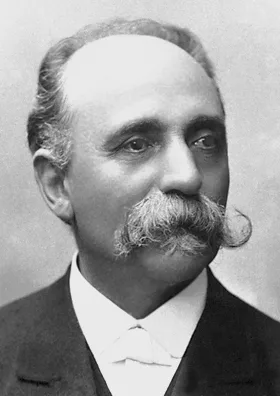
Golgi’s histological studies made a clear conception of the nervous system possible for the first time. He demonstrated the existence of multipolar nerve-cells (Golgi cells) by means of his silver nitrate stain, and d…
1895
#2683
Ueber eine neue Art von Strahlen. (Vorläufige Mittheilung.); Eine neue Art von Strahlen. II. Mittheilung.
The discovery of x rays, which Kölliker later renamed “Roentgen rays”; the foundation stone of the science of roentgenology. English translation in Nature, (February,) 1896, 53, 274 and 377. See also Röntgen’s third p…
1896
#2001
Sur les radiations émises par phosphorescence.
The discovery of radioactivity – research stimulated by Roentgen’s discovery of x rays. In 1903 Becquerel received half of the Nobel Prize in Physics 1903 "in recognition of the extraordinary services he has rendered …
1898
#2003
Sur une substance nouvelle radio-active, contenue dans la pechblende.
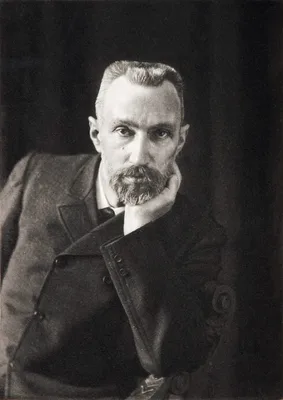
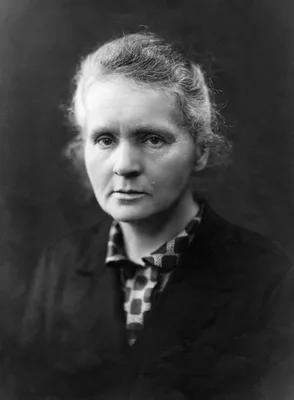
The Curies, studying the radioactivity of minerals containing uranium and thorium, isolated from pitchblend a substance which they called radium and which they showed to possess an astonishing degree of radioactivity.…
1912
#6917
Interferenz-Erscheinungen bei Röntgenstrahlen. . . . Eine quantitative Prüfung der Theorie für die Interferenz-Erscheinungen bei Röntgenstrahlen
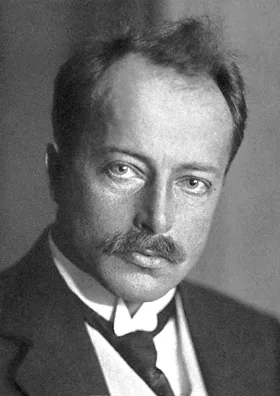
Discovery of the diffraction of X-rays in crystals. Laue’s discovery was of dual importance: it allowed the subsequent investigation of X-radiation by means of wavelength determination, and it provided the means for t…
1913
#6920
The reflection of x-rays by crystals.
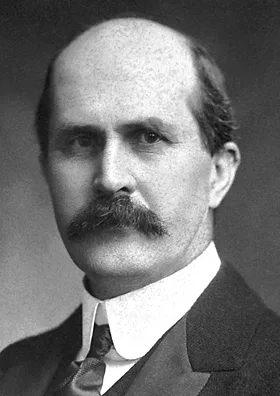
Discovery of X-ray crystallography. The father and son team of physicists, William Henry Bragg and William Lawrence Bragg, constructed the first X-ray spectrometer using crystals as gratings, using a known wavelength …
1923
#9333
The absorption and translocation of lead by plants: A contribution to the application of the method of radioactive indicators in the investigation of the change of substance in plants.
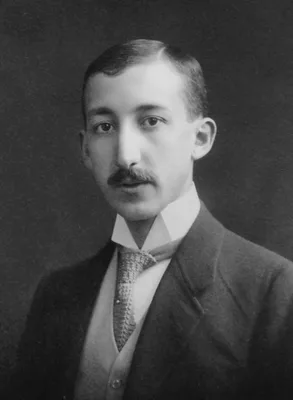
The first application of radioactive tracers in biological studies. Digital facsimile from PubMedCentral at this link. Hevesy received the 1943 Nobel Prize in Chemistry "for his work on the use of isotopes as tracers …
1926
#14025
The isolation and crystallization of the enzyme urease.
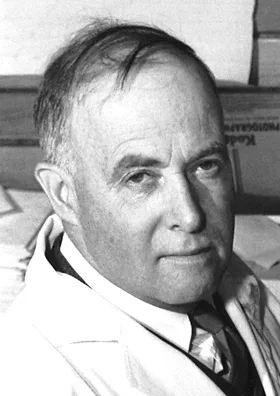
Sumner first isolated and crystallized an enzyme (urease) and proved that enzymes are proteins. One month after publication of the above paper Sumner reinforced his discovery by recrystalizing urease, publishing a fol…
1930
#12830
The moving boundary method of studying the electrophoresis of proteins. (Nova Acta Reg. Soc. Scient. Upsaliensis, IV, 7, No. 4.)
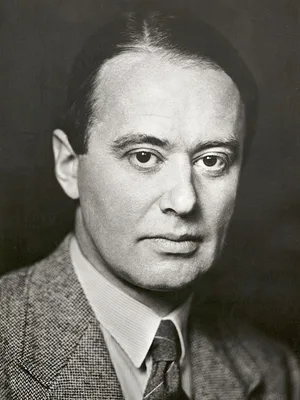
Tilesius's doctoral dissertation introduced the laboratory technique of moving-boundary electrophoresis, a technique for separation of chemical compounds by electrophoresis in free solution. For this work, and the wor…
1934
#9340
I. Un nouveau type de radioactivité. II. Séparation chimique des nouveaux radioéléments émetteur d’électrons positifs.
Discovery of artificially produced radionuclides or radioisotopes. In February 1934, the Joliot-Curies reported the first artificial production of radioactive material after discovering radioactivity in aluminum foil …
1935
#2524.5
Isolation of a crystalline protein possessing the properties of tobacco-mosaic virus.
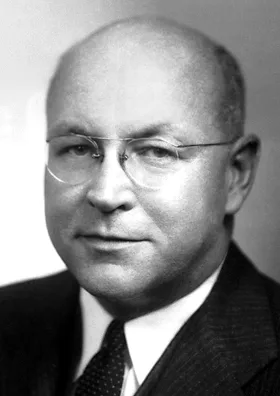
Stanley first crystallized a virus— tobacco mosaic virus. The following year Bawden, Pirie, Bernal and Fankuchen (No. 12005) showed that tobacco mosaic virus molecules are asnisometric and consist of ribonucleoprotein…
1935
#269.5
Das Phasenkontrastverfahren b.d. mikroskopischen Beobachtung.
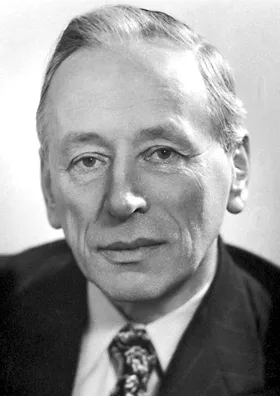
Zernicke invented phase contrast microscopy. In 1953 Zernike was awarded the Nobel Prize in Physics "for his demonstration of the phase contrast method, especially for his invention of the phase contrast microscope."
1938
#14335
A new method of measuring nuclear magnetic moment.
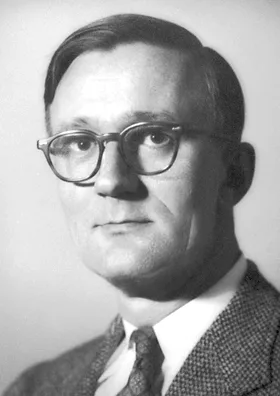
Order of authorship in the original publication: Rabi, Zacharais,...Kusch. Followed by: (2) The magnetic moments of 3Li6, 3Li7, and 9F19. Physical Review 53, 1938. (3) The molecular beam resonance method for measuring…
1946
#2659.5
The design of a proton linear accelerator.
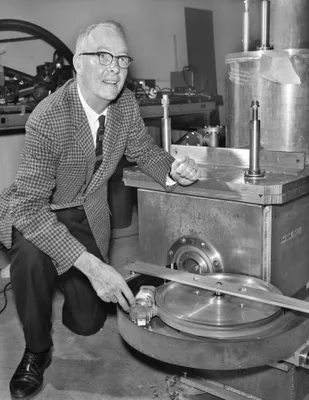
Linear ion accelerator. In 1968 Alvarez received the Nobel Prize in Physics "for his decisive contributions to elementary particle physics, in particular the discovery of a large number of resonance states, made possi…
1953
#256.4
Helical structure of crystalline deoxypentose nucleic acid.
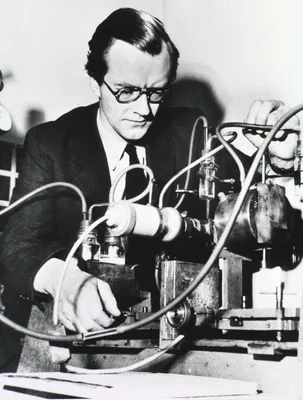
In 1962 Wilkins shared the Nobel Prize in Physiology or Medicine with Crick and Watson "for their discoveries concerning the molecular structure of nucleic acids and its significance for information transfer in living…
1955
#6928
The crystal structure of the hexacarboxylic acid derived from B12 and the molecular structure of the vitamin.
The final structure of vitamin B12. With J. Pickworth, J.H. Robertson, K.N. Trueblood, R.J. Prosen, J. G. White. In 1964 Hodgkin was awarded the Nobel Prize in Chemistry "for her determinations by X-ray techniques of …
1963
#8149
Representation of a Function by its Line Integrals, with Some Radiological Applications.
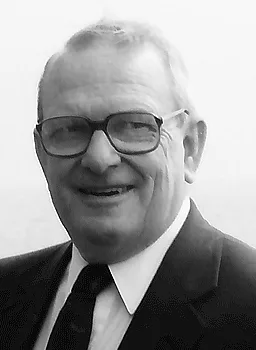
Cormack showed that changes in tissue density could be computed from x-ray data. Because of limitations in computing power no machine was constructed during the 1960s. Cormack's papers generated little interest until …
1966
#14064
"Fertile" intestine nuclei.
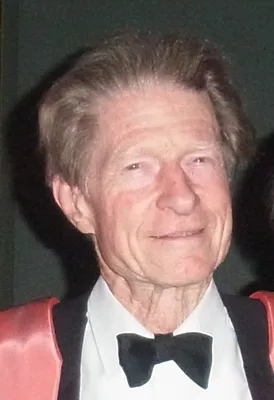
Gurdon and Uehlinger replaced the cell nucleus of frog ova with frog intestinal nuclei to generate tadpoles, some of which became fertile adult male and female frogs. In 2012 the Nobel Prize in Physiology or Medicine …
1968
#13935
Reconstruction of three-dimensional structures from electron micrographs.
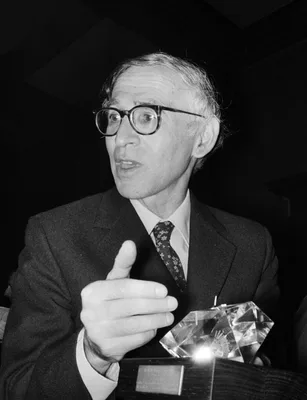
Klug and deRosier invented methods for two-dimensional and three-dimensional digital image processing of electron microscope images. The latter method provided the theory behind the development of computed tomography …
1973
#2700.4
Computerized transverse axial scanning (tomography).
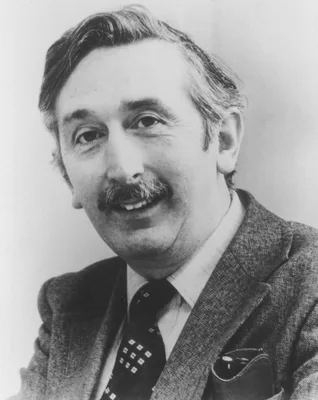
Hounsfield invented computer-assisted tomography (CAT), or computed tomography (CT). In 1979 Hounsfield shared the Nobel Prize in Physiology or Medicine with Allen M. Cormack "for the development of computer assisted …
1973
#2700.5
Image formation by induced local interactions: Examples employing nuclear magnetic resonance.
Lauterbur proposed a workable method for using nuclear magnetic resonance to produce images of tissues. In 2003 Lauterbur shared the Nobel Prize in Physiology or Medicine with Sir Peter Mansfield “for their discoverie…
1975
#14182
Three-dimensional model of purple membrane obtained by electron microscopy.
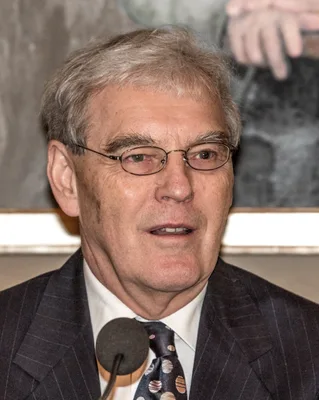
The invention of Cryogenic electron microscopy (cryo-EM). The novel technique was achieved by "by applying the method to tilted specimens, and using the principles put forward by De Rosier and Klug (GM - 13935), for t…
1977
#8150
Medical imaging by NMR.
Mansfield developed a mathematical technique that would allow NMR scans to take seconds rather than hours and produce clearer images than the technique Paul Lauterbur developed in 1973. Mansfield showed how gradients …
1981
#13285
Establishment in culture of pluripotential cells from mouse embryos.
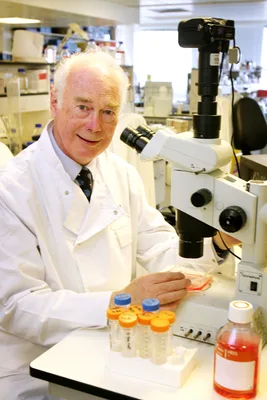
Evans and Kauffman were the first to identify, isolate and successfully culture embryonic stem cells using mouse blastocysts. This discovery opened the doors to the creation of “murine genetic models” -- mice that hav…
1981
#14183
Computer averaging of electron micrographs of the 405 ribosomal subunit.
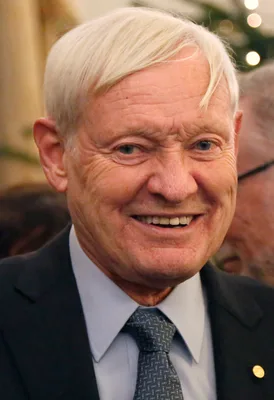
Frank and colleagues developed a method that allows sorting of particle images into classes based on their orientation, as well as their structural features. Specifically Frank developed mathematical tools used for im…
1987
#13931
Site-directed mutagenesis by gene targeting in mouse embryo-derived stem cells.
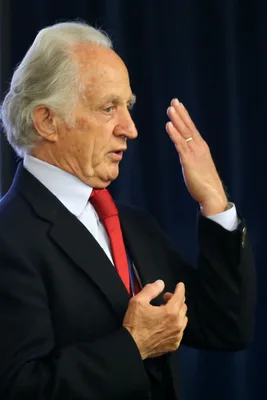
In 2007 Capecchi shared the 2007 Nobel Prize in Physiology or Medicine with Martin J. Evans and Oliver Smithies "for their discoveries of principles for introducing specific gene modifications in mice by the use of em…
1987
#13940
Targeted correction of a mutant HPRT gene in mouse embryonic stem cells.
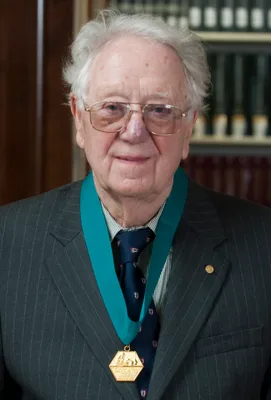
Smithies discovered, simultaneously with Mario Capecchi and Martin Evans, the technique of homologous recombination of transgenic DNA with genomic DNA, a much more reliable method of altering animal genomes than previ…
1990
#14340
Phage antibodies: Filamentous phage displaying antibody variable domains.

Working in the Laboratory of Molecular Biology at Cambridge University, Winter became interested in the idea that all antibodies have the same basic structure, with only small changes making them specific for one targ…
2003
#14300
Design of a novel globular protein fold with atomic-level accuracy.
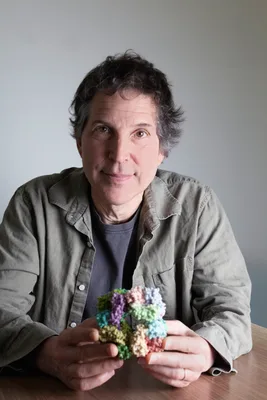
Called, "the breakthrough in computational de novo protein design." This was the proof of concept paper that computers and AI could be used to predict protein structures accurately and much faster than with convention…
2006
#13287
Induction of pluripotent stem cells from mouse embryonic and adult fibroblast cultures by defined factors.
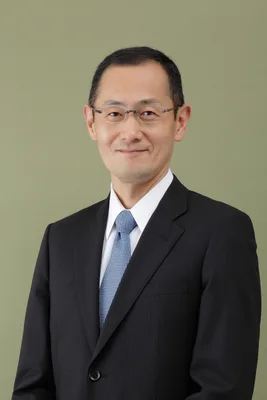
Takahashi and Yamanaka reprogrammed mice fibroblast cells, which can produce only other fibroblast cells, to become pluripotent stem cells, which have the capacity to produce many different types of cells. This they a…
2021
#14026
Highly accurate protein structure prediction with AlphaFold.

Abstract: "Proteins are essential to life, and understanding their structure can facilitate a mechanistic understanding of their function. Through an enormous experimental effort1,2,3,4, the structures of around 100,0…