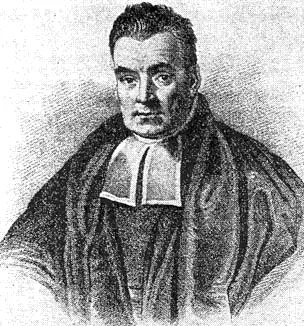
1763 BAYES, Thomas (1701 – 1761)
An essay towards solving a problem in the doctrine of chances
Bayes's paper enunciated Bayes's Theorem for calculating "inverse probabilities”—the basis for methods of extracting patterns from data in decision analysis, data mining, statistical learning machines, Bayesian networ…
GMN 8370 · https://historyofmedicine.com/id/10547
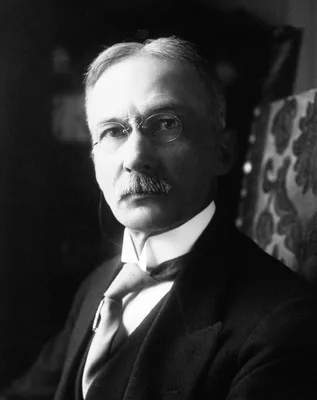
1895 BALDWIN, James Mark (1861 – 1934)
The mental development of the child and the race.
A central text in the development of social psychology in North America; now also considered a pioneering study of adaptive learning, and in this sense a precursor to research in artificial intelligence. Digital facsi…
GMN 9320 · https://historyofmedicine.com/id/11502
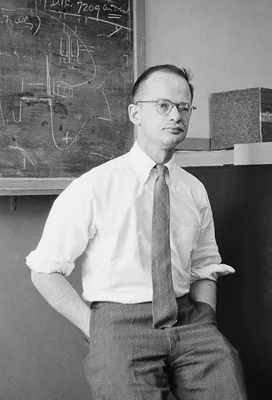
1943 MCCULLOCH, Warren Sturgis (1898 – 1969); PITTS, Walter Harry Jr. (1923 – 1969)
A logical calculus of the ideas immanent in nervous activity.
This paper described the McCulloch-Pitts neuron, the first mathematical model of a neural network. Digital text available at this link.
GMN 7357 · https://historyofmedicine.com/id/9529
1949 JEFFERSON, Sir Geoffrey (1886 – 1961)
The mind of mechanical man.
Jefferson’s paper on the differences between electronic computers and the human brain inspired Alan Turing to respond with his famous paper, “Computing machinery and intelligence” (1950), which introduced the “Turing …
GMN 14289 · https://historyofmedicine.com/id/16612
1953 MESZAR, John
Switching systems as mechanized brains.
Written in the earliest days of automatic switching systems when few electronic computers existed, Meszar's paper raised the question of whether certain aspects of human thought are computable and others are not. Mesz…
GMN 14290 · https://historyofmedicine.com/id/16613
1959 LEDLEY, Robert Steven (1926 – 2012); LUSTED, Lee B. (1922 – 1994)
Reasoning foundations of medical diagnosis.
The beginning of the development of clinical decision support systems (CDSS) — interactive computer programs, or expert systems, designed to assist physicians and other health professionals with decision making tasks,…
GMN 6908 · https://historyofmedicine.com/id/9072
1959 MCCARTHY, John (1927 – 2011)
Programs with Common Sense. IN: Mechanisation of thought processes, Proceedings of the Symposium of the National Physics Laboratory, pages 77-84.
"Programs with Common Sense was probably the first paper on logical AI, i.e. AI in which logic is the method of representing information in computer memory and not just the subject matter of the program. The paper was…
GMN 12655 · https://historyofmedicine.com/id/14899
1960 MCCARTHY, John (1927 – 2011)
Recursive functions of symbolic expressions and their computation by machine, Part 1.
The original paper on LISP, the first programming language designed for symbolic computation, which made the development of artificial intelligence programming possible. Part 2 was never published. Digital text from j…
GMN 12654 · https://historyofmedicine.com/id/14898
1964 LEDERBERG, Joshua (1925 – 2008)
HPP-64-1 DENDRAL-64-A system for computer construction, enumeration and notation of organic molecules as three structures and cyclic graphs. Interim report to the National Aeronautics and Space Administration, December 15, (1964).
DENDRAL is considered the first expert system because it automated the decision-making process and problem-solving behavior of organic chemists. The project consisted of research on two main programs, Heuristic Dendra…
GMN 8174 · https://historyofmedicine.com/id/10350
1965 LEDLEY, Robert Steven (1926 – 2012)
Use of computers in biology and medicine.
GMN 7356 · https://historyofmedicine.com/id/9528
1965 STACEY, Ralph W.; WAXMAN, Bruce
Computers in biomedical research. Edited by Ralph W. Stacy and Bruce Waxman. 2 vols.
Section A, Chapter 2: "New mathematical methods in the life sciences" by George B. Dantzig. Section D, Chapter 12: "The application of computers to electroencephalography" by Mary A. B. Brazier. Section E, Chapter 13:…
GMN 8834 · https://historyofmedicine.com/id/11012
1974 COHEN, Stanley Norman (1935 – ); SHORTLIFFE, Edward Hance (1947 – ); ET AL
"A computer-based system for the study and control of drug interactions in hospitalized patients," P. L. Morselli, S. Garattini, and S. N. Cohen, Drug interactions, 363-373.
MEDIPHOR System (Monitoring and Evaluation of Drug Interactions by a Pharmacy-Oriented Reporting System) developed by Cohen, Shortliffe and colleagues at Stanford University Medical School, published as a chapter in t…
GMN 9487 · https://historyofmedicine.com/id/11671
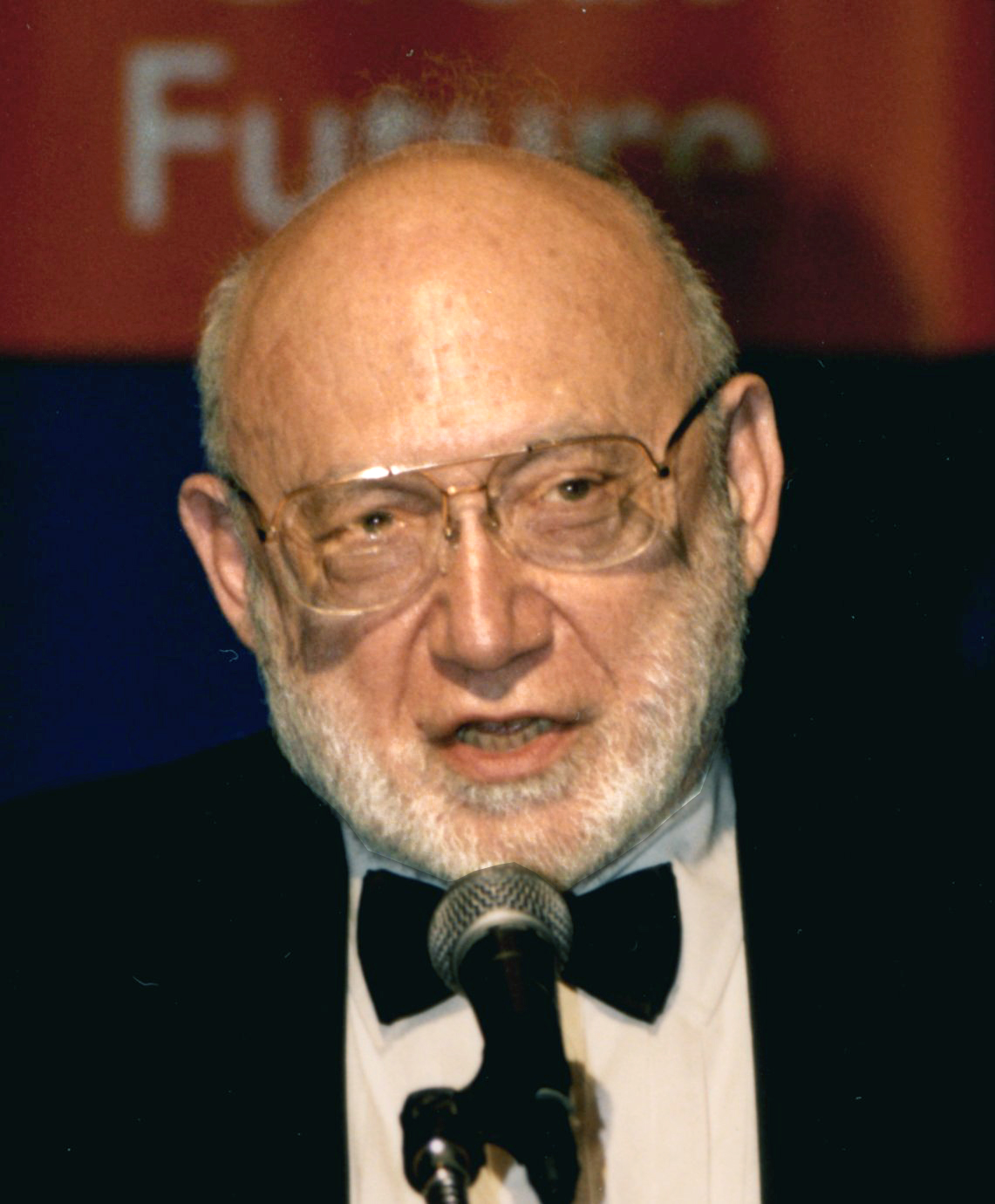
1975 BUCHANAN, Bruce G. (1940 – ); SHORTLIFFE, Edward Hance (1947 – )
A model of inexact reasoning in medicine.
"MYCIN was an early backward chaining expert system that used artificial intelligence to identify bacteria causing severe infections, such as bacteremia and meningitis, and to recommend antibiotics, with the dosage ad…
GMN 9486 · https://historyofmedicine.com/id/11670
1980 LEDERBERG, Joshua (1925 – 2008); FEIGENBAUM, Edward Albert (1936 – ); BUCHANAN, Bruce G. (1940 – ); LINDSAY, Robert K.
Applications of artificial intelligence for organic chemistry: The Dendral project.
GMN 8175 · https://historyofmedicine.com/id/10351
1980 FREIHERR, Gregory
The seeds of artificial intelligence: SUMEX-AIM.
A semi-popular and extensively illustrated summary of research on artificial intelligence in medicine at Stanford Medical School as directed by Edward A. Feigenbaum, Stanley N. Cohen, Carl Djerassi, and Elliott C. Lev…
GMN 11488 · https://historyofmedicine.com/id/13687
1984 SHORTLIFFE, Edward Hance (1947 – ); CLANCEY, William J. (1952 – )
Readings in medical artificial intelligence: The first decade. Edited by William Clancey and Edward H. Shortliffe.
GMN 11363 · https://historyofmedicine.com/id/13562
2003 BAKER, David (1962 – ); KUHLMAN, Brian A.; DANTAS, Gautam; IRETON, Gregory C.; VARANI, Gabriele; ET AL
Design of a novel globular protein fold with atomic-level accuracy.
Called, "the breakthrough in computational de novo protein design." This was the proof of concept paper that computers and AI could be used to predict protein structures accurately and much faster than with convention…
GMN 14300 · https://historyofmedicine.com/id/16625
2009 NILSSON, Nils John (1933 – 2019)
The quest for artificial intelligence.
A history of artificial intelligence in general, including medical applications, from the 18th century onward by a pioneer of artificial intelligence.
GMN 11355 · https://historyofmedicine.com/id/13553
2009 SHORTLIFFE, Edward Hance (1947 – ); PATEL, Vimla Lodhia; STEFANELLI, Mario; SZOLOVITS, Peter; BERTHOLD, Michael R.; BELLAZZI, Riccardo; ABU-HANNA, Ameen
The coming of age of artificial intelligence in medicine.
Order of authorship in the original publication: Patel, Shortliffe, Stefanelli, Szolovits, Berthold, Bellazzi, Abu-Hanna. "Abstract: This paper is based on a panel discussion held at the Artificial Intelligence in Med…
GMN 11399 · https://historyofmedicine.com/id/13598
2019 SHORTLIFFE, Edward Hance (1947 – )
Artificial intelligence in medicine: Weighing the accomplishments, hype and promise.
GMN 11400 · https://historyofmedicine.com/id/13599
2019 PUTHA, Preetham; WARIER, Prashant; RAO, Pooja; ET AL
Can artificial intelligence reliably report chest x-rays? Radiologist validation of an algorithm trained on 2.3 million x-rays.
"Background: Chest X-rays are the most commonly performed, cost-effective diagnostic imaging tests ordered by physicians. A clinically validated AI system that can reliably separate normals from abnormals can be inval…
GMN 12407 · https://historyofmedicine.com/id/14637
2019 COOK, Steven J.; JARRELL, Travis A.; EMMONS, Scott W.; ET AL
Whole-animal connectomes of both Caenorhabditis elegans sexes.
The first whole-animal connectomes for both adult sexes of a single species. "As none of the EM series cover an entire single animal, to generate whole animal connectomes, data from different reconstruction series wer…
GMN 12970 · https://historyofmedicine.com/id/15218
2019 DEL MAESTRO, Rolando Fausto (1949 – ); WINKLER-SCHWARTZ, Alexander; YILMAZ, Recai; ET AL
Machine learning identification of surgical and operative factors associated with surgical expertise in virtual reality simulation.
"Abstract "Importance Despite advances in the assessment of technical skills in surgery, a clear understanding of the composites of technical expertise is lacking. Surgical simulation allows for the quantitation of ps…
GMN 14014 · https://historyofmedicine.com/id/16321
2020 SENIOR, Andrew W.; EVANS, Richard; JUMPER, John; ET AL
Improved protein structure prediction using potentials from deep learning.
Order of authorship in the original paper: Senior, Evans, Jumper. ABSTRACT: "Protein structure prediction can be used to determine the three-dimensional shape of a protein from its amino acid sequence. This problem is…
GMN 13106 · https://historyofmedicine.com/id/15359
2021 EVANS, Richard; JUMPER, John; HASSABIS, Demis (1976 – ); ET AL
Highly accurate protein structure prediction with AlphaFold.
Abstract: "Proteins are essential to life, and understanding their structure can facilitate a mechanistic understanding of their function. Through an enormous experimental effort1,2,3,4, the structures of around 100,0…
GMN 14026 · https://historyofmedicine.com/id/16333
2022 VIRADI, Mihaly; ANYANGO, Stephen; VELANKAR, Sameer; ET AL
AlphaFold Protein Structure Database: massively expanding the structural coverage of protein-sequence space with high-accuracy models.
Abstract: "The AlphaFold Protein Structure Database (AlphaFold DB, https://alphafold.ebi.ac.uk) is an openly accessible, extensive database of high-accuracy protein-structure predictions. Powered by AlphaFold v2.0 of …
GMN 14027 · https://historyofmedicine.com/id/16334
2022 KUNG, Tiffany Hsiang; CHEATHAM, Morgan; CHATGPT (GENERATIVE PRE-TRAINED TRANSFORMER); TSENG, Victor; ET AL
Performance of ChatGPT on USMLE: Potential for AI-assisted medical education using large language models.
Abstract: "We evaluated the performance of a large language model called ChatGPT on the United States Medical Licensing Exam (USMLE), which consists of three exams: Step 1, Step 2CK, and Step 3. ChatGPT performed at o…
GMN 14106 · https://historyofmedicine.com/id/16417
2023 VERMEULEN, Carlo; DE RITTER, Jeroen; PAGÈS-GALLEGO, Marc; ET AL
Ultra-fast deep-learned CNS tumour classification during surgery.
Published "open access" 11 October 2023. https://www.nature.com/articles/s41586-023-06615-2 "Abstract: "Central nervous system tumours represent one of the most lethal cancer types, particularly among children1. Prima…
GMN 14200 · https://historyofmedicine.com/id/16516
2024 HOWELL, Michael D.; CORRADO, Greg S.; DESALVO, Karen Bollinger (1966 – )
Three epochs of artificial intelligence in health care.
https://jamanetwork.com/journals/jama/fullarticle/2813874 Abstract: "Importance Interest in artificial intelligence (AI) has reached an all-time high, and health care leaders across the ecosystem are faced with questi…
GMN 14326 · https://historyofmedicine.com/id/16651