1531 IBN BUTLĀN, Abuʾl-Ḥasan Al-Mukhtār Ibn ʿAbdūn Ibn SaʿDūn. ابو الحسن المختار ابن عبدون ابن بطلان (Elluchasem Elimithar) ( – 1068); IBN AL-WAFID, Ali Ibn al-Husain (Abenguefit) (997 – 1074); AL-KINDĪ, Abu Yūsuf Yaʻqūb ibn ʼIsḥāq aṣ-Ṣabbāḥ ;أبو يوسف يعقوب بن إسحاق الصبّاح الكندي ( Alkindus) (801 – 873); WEIDITZ, Hans The Younger (1495 – 1537)
Tacuini sanitatis Elluchasem Elimithar Medici de Baldath, de sex rebus non naturalibus, earum naturis, operationibus, & rectificationibus, publico omnium usui, conseruandae sanitatis, recens exarati. Albengnefit De uirtutibus medicinarum, & ciborum. Iac. Alkindus De rerum gradibus.
A Christian physician of Baghdad, Ibn Butlān traveled widely, eventually settling in Antioch. His treatise on hygiene and dietetics, Taqwām al-sihhah (The Almanac of Health) presented a guide to medical regimen in tab…
GMN 7627 · https://historyofmedicine.com/id/9799
1667 STENO, Nicolas [Niels Steensen, Nicholaus Stenonis] (1638 – 1686)
Elementorum myologiae specimen.
In this work Stensen, in collaboration with the mathematician Vincenzio Viviani (1622-1703), a pupil of Galileo, developed a geometrical description of muscular contraction, and attempted to show theoretically that mu…
GMN 577 · https://historyofmedicine.com/id/358
1708 KEILL, James (1673 – 1719)
An account of animal secretion, the quantity of blood in the humane body, and muscular motion.
Keill applied measurement and mathematics in his researches, claiming the "first calculations of the absolute velocity at which blood travels through the aorta and smaller vessels; he also recognized that the blood's …
GMN 11673 · https://historyofmedicine.com/id/13874
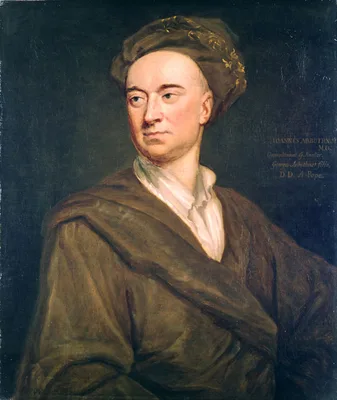
1710 ARBUTHNOT, John (1667 – 1735)
An argument for Divine Providence, taken from the constant regularity observed in the births of both sexes.
"Arbuthnot examined birth records in London for each of the 82 years from 1629 to 1710 and the human sex ratio at birth: in every year, the number of males born in London exceeded the number of females. If the probabi…
GMN 12498 · https://historyofmedicine.com/id/14731
1731 CLIFTON, Francis ( – 1836)
Tabular observations recommended as the plainest and surest way of practising and improving physick. In a letter to a friend.
Clifton argued that physicians should base their judgments about the effects of treatments on a sufficient number of their own observations, or trusted observations by other physicians, rather than on the correlation …
GMN 9461 · https://historyofmedicine.com/id/11644
1732 CLIFTON, Francis ( – 1836)
The state of physick, ancient and modern, briefly considered: with a plan for the improvement of it.
Instead of assessing the efficacy of therapies by their correlation with theories, Clifton argued that physicians should base their judgments about the effects of treatments on a sufficient number of their own observa…
GMN 9460 · https://historyofmedicine.com/id/11643
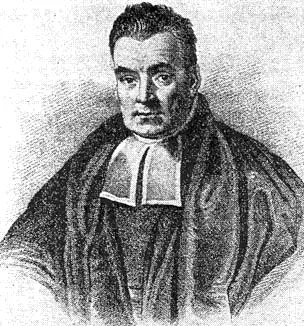
1763 BAYES, Thomas (1701 – 1761)
An essay towards solving a problem in the doctrine of chances
Bayes's paper enunciated Bayes's Theorem for calculating "inverse probabilities”—the basis for methods of extracting patterns from data in decision analysis, data mining, statistical learning machines, Bayesian networ…
GMN 8370 · https://historyofmedicine.com/id/10547
1779 MILLAR, John (1733 – 1805)
Observations on the management of the prevailing diseases particularly in the Army and Navy; together with a review of that in other countries, and arithmetical calculations of the comparative success of different methods of cure.
Millar promoted mathematical methods for computing the comparative success of different methods of cure. Digital facsimile from Google Books at this link.
GMN 9467 · https://historyofmedicine.com/id/11650
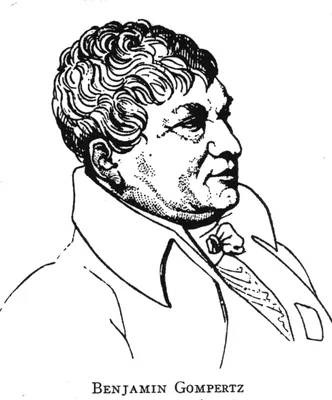
1825 GOMPERTZ, Benjamin (1779 – 1865)
On the nature of the function expressive of the law of human mortality, and on a new mode of determining the value of life contingencies.
Gompertz function. "Gompertz showed that over much of the adult human lifespan, age-specific mortality rates increased in an exponential manner. Gompertz's work played an important role in shaping the emerging statist…
GMN 8375 · https://historyofmedicine.com/id/10552
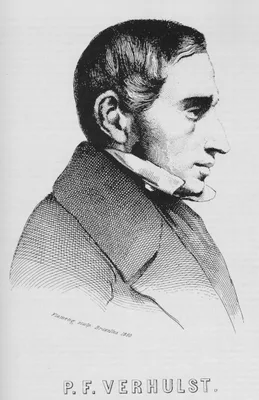
1838 VERHULST, Pierre François (1804 – 1849)
Notice sur la loi que la population suit dans son accroissement.
Verhulst constructed the simplest mathematical model of a continously growing population with an upper limit to its size.
GMN 145.57 · https://historyofmedicine.com/id/2473
1845 VERHULST, Pierre François (1804 – 1849)
Recherches mathématiques sur la loi d’accroissement de la population.
In his second paper on population growth Verhulst introduced the term, logistic. He modified his equation so its early part is exponential and becomes logistic only after a definite length of time. Verhulst published …
GMN 145.58 · https://historyofmedicine.com/id/2477
1859 FARR, William (1807 – 1883)
On the construction of life-tables, illustrated by a new life-table of the healthy districts of England.
Preliminary report, describing the use of the Scheutz Engine no. 3, a Babbage-style difference engine, to prepare life tables. The report's table B1, "Life-Table of Healthy English Districts," printed from stereotype …
GMN 7388 · https://historyofmedicine.com/id/9560
1860 FECHNER, Gustav Theodor (1801 – 1887)
Elemente der Psychophysik. 2 vols.
The first treatise on the subject. Fechner applied the laws of mathematical physics to the physiology of sensation. He discussed the functional relations of the dependence between mind and body and investigated the cu…
GMN 4972 · https://historyofmedicine.com/id/6387
1860 MAKEHAM, William Matthews (1826 – 1891)
On the law of mortality and the construction of annuity tables.
Gompertz-Makeham law. Makeham proposed the age-independent Makeham term that, together with the exponentially age-dependent Gompertz term, compose the Gompertz-Makeham law of mortality--one of the most effective theor…
GMN 8376 · https://historyofmedicine.com/id/10553
1864 FARR, William (1807 – 1883)
English life table. Tables of lifetimes, annuities, and premiums.
First extensive application of a mechanical computer to medical statistics. The appendix details the use of the Scheutz version of Charles Babbage’s calculating machine in the construction of English Life Table No. 3.…
GMN 1700.1 · https://historyofmedicine.com/id/2484
1878 MÜLLER, Johann Friedrich Theodor (Fritz) (1821 – 1897)
Ueber die Vortheile der Mimicry bei Schmetterlingen.
Bates’s theory of mimicry did not account for the superficial resemblances between two or more unpalatable species. Müller explained such mimicry, known today as “Müllerian mimicry”. A predator must learn which potent…
GMN 228.1 · https://historyofmedicine.com/id/8324
1883 GALTON, Sir Francis (1822 – 1911)
Inquiries into human faculty and its development.
Galton, cousin of Charles Darwin, founded the science of Eugenics. In his important Inquiries he showed mathematically “the results of his experiments on the relations between the powers of visual imagery and of abstr…
GMN 230 · https://historyofmedicine.com/id/8330
1885 FARR, William (1807 – 1883)
Vital statistics. A memorial volume of selections from the reports and writings of William Farr.
Farr applied statistical methods to epidemiology and was the first mathematically to express the rise and fall of epidemic diseases, thus making possible the more accurate prediction of the occurrence of epidemics.
GMN 1704 · https://historyofmedicine.com/id/2507
1899 FRANK, Otto (1865 – 1944)
Die Grundform des arteriellen Pulses.
"The First Mathematical Description of the Pressure-Volume Diagram "Not until 60 years after 1899 Otto Frank's mathematical formulation of the volume-pressure diagram and his concept of the mechanism of the cardiac wo…
GMN 12286 · https://historyofmedicine.com/id/14507
1902 SUDHOFF, Karl Friedrich Jakob (1853 – 1938)
Iatromathematiker vornehmlich im 15. und 16. Jahrundert.
Digital facsimile from the Internet Archive at this link.
GMN 6399 · https://historyofmedicine.com/id/8387
1908 HARDY, Godfrey Harold (1877 – 1947)
Mendelian proportions in a mixed population.
Hardy–Weinberg equilibrium.
GMN 243 · https://historyofmedicine.com/id/8668
1908 WEINBERG, Wilhelm (1836 – 1937)
Überden Nachweis der Vererbung beim Menschen.
Weinberg, a general practitioner and obstetrician in Stuttgart, was also a founder of population genetics. He co-discovered the Hardy–Weinberg equilibrium.
GMN 244 · https://historyofmedicine.com/id/8669
1908 PETTIGREW, James Bell (1834 – 1908)
Design in nature illustrated by spiral and other arrangements in the inorganic and organic kingdoms as exemplified in matter, force, life, growth, rhythms, &c., especially in crystals, plants, and animals. 3 vols.
"Illustrated by nearly two thousand figures, mostly original and from nature." Digital facsimile from the Internet Archive at this link.
GMN 12276 · https://historyofmedicine.com/id/14495
1917 THOMPSON, D'Arcy Wentworth (1860 – 1948)
On growth and form.
Thompson's description of the mathematical beauty of nature eventually inspired others, such as Alan Turing, to develop the scientific explanation of morphogenesis, the process by which patterns are formed in plants a…
GMN 6972 · https://historyofmedicine.com/id/9137
1918 FISHER, Sir Ronald Aylmer (1890 – 1962)
The correlation between relatives on the supposition of Mendelian inheritance.
"Fisher put forward a genetics conceptual model that shows that continuous variation amongst phenotypic traits could be the result of Mendelian inheritance. The paper also contains the first use of the statistical ter…
GMN 248 · https://historyofmedicine.com/id/8678
1924 BERNSTEIN, Felix (1878 – 1956)
Ergebniss einer biostatischen zusammenfassenden Betrachtung über die erblichen Blutstrukturen des Menschen.
Bernstein, a mathematician, determined the correct blood group inheritance pattern of multiple alleles at one locus through statistical analysis.
GMN 907.1 · https://historyofmedicine.com/id/1049
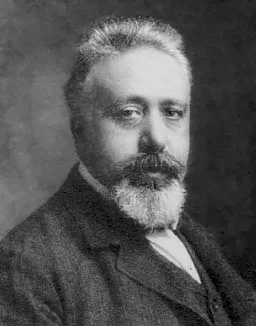
1926 VOLTERRA, Vito (1860 – 1940)
Variazioni e fluttuazioni del numero d’individui in specie animali conviventi.
The mathematician Volterra created the basic equations for two species interactions. Abridged English translation as appendix to R. Chapman, Animal ecology, New York, 1931.
GMN 145.64 · https://historyofmedicine.com/id/2549
1930 FISHER, Sir Ronald Aylmer (1890 – 1962)
The genetical theory of natural selection.
The first coherent general algebraic analysis of Mendelian population behavior. The work contains Fisher’s rigorous development of his “fundamental theorem of natural selection”–”the rate of increase in fitness of any…
GMN 253 · https://historyofmedicine.com/id/8682
1932 HALDANE, John Burdon Sanderson (1892 – 1964)
The causes of evolution.
Haldane’s summary of his mathematical theory of natural selection. The detailed mathematical theory appeared as Mathematical theory of natural and artificial selection, first published (Pt. I) in Trans. Camb. philos. …
GMN 254 · https://historyofmedicine.com/id/8685
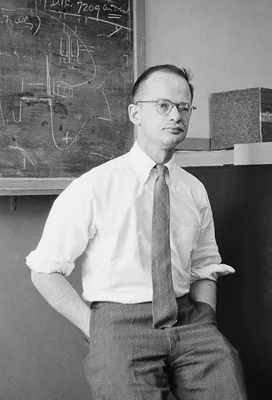
1943 MCCULLOCH, Warren Sturgis (1898 – 1969); PITTS, Walter Harry Jr. (1923 – 1969)
A logical calculus of the ideas immanent in nervous activity.
This paper described the McCulloch-Pitts neuron, the first mathematical model of a neural network. Digital text available at this link.
GMN 7357 · https://historyofmedicine.com/id/9529
1945 LESLIE, Patrick Holt (1900 – 1972)
On the use of matrices in certain population mathematics.
"... the Leslie matrix is a discrete, age-structured model of population growth that is very popular in population ecology.... The Leslie matrix (also called the Leslie model) is one of the most well known ways to des…
GMN 9891 · https://historyofmedicine.com/id/12079
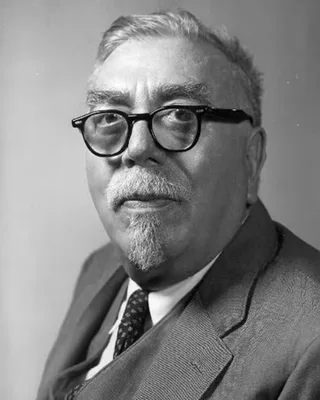
1948 WIENER, Norbert (1894 – 1964)
Cybernetics: or control and communication in the animal and the machine.
Foundation of "the science of control and communication theory, named ‘cybernetics’ by Wiener, from the Greek word ‘kubernetes’ or steersman. Automation, information feedback, regulators in engineering and biology, an…
GMN 4991.1 · https://historyofmedicine.com/id/6492
1949 LARKEY, Sanford Vincent (1898 – 1969)
The Army Medical Library research project at the Welch Medical Library.
One of the first reports on one of the earliest projects in automating information retrieval, the expression for which was coined by Calvin Mooers the following year. At this early date electronic computers were not y…
GMN 7992 · https://historyofmedicine.com/id/10168
1949 HODGKIN, Dorothy Crowfoot (1910 – 1994); ROGERS-LOW, Barbara Wharton (1920 – 2019)
X-ray crystallographic investigation of the structure of penicillin. IN: Clarke, Johnson, Robinson (eds.) Chemistry of penicillin (1949) 310-67.
Hodgkin and colleagues, including biochemist Barbara Low, solved the structure of penicillin in 1945, demonstrating, contrary to scientific opinion at the time, that it contains a β-lactam ring. The discovery was orig…
GMN 12635 · https://historyofmedicine.com/id/14876
1949 JEFFERSON, Sir Geoffrey (1886 – 1961)
The mind of mechanical man.
Jefferson’s paper on the differences between electronic computers and the human brain inspired Alan Turing to respond with his famous paper, “Computing machinery and intelligence” (1950), which introduced the “Turing …
GMN 14289 · https://historyofmedicine.com/id/16612
1951 –1952 BENNETT, John Makepeace (1921 – 2010); KENDREW, Sir John Cowdery (1917 – 1997)
The computation of Fourier syntheses with a digital electronic calculating machine.
The first paper published in a scientific journal on the application of an electronic computer to computational biology. At the second English computer conference held in Manchester from July 9-12, 1951 computer scien…
GMN 6910 · https://historyofmedicine.com/id/9075
1953 LARKEY, Sanford Vincent (1898 – 1969)
The Welch Medical Library indexing project.
A progress report on this pioneering information retrieval project. Digital facsimile from PubMedCentral at this link.
GMN 7993 · https://historyofmedicine.com/id/10169
1953 MESZAR, John
Switching systems as mechanized brains.
Written in the earliest days of automatic switching systems when few electronic computers existed, Meszar's paper raised the question of whether certain aspects of human thought are computable and others are not. Mesz…
GMN 14290 · https://historyofmedicine.com/id/16613
1958 KENDREW, Sir John Cowdery (1917 – 1997); DINTZIS, Howard M.
A three-dimensional model of the myoglobin molecule obtained by x-ray analysis.
Initial paper on the first solution of the three-dimensional molecular structure of a protein. Computing the molecular structure in 3 dimensions was possible through the use of the Cambridge EDSAC stored-program elect…
GMN 6911 · https://historyofmedicine.com/id/9076
1959 LEDLEY, Robert Steven (1926 – 2012); LUSTED, Lee B. (1922 – 1994)
Reasoning foundations of medical diagnosis.
The beginning of the development of clinical decision support systems (CDSS) — interactive computer programs, or expert systems, designed to assist physicians and other health professionals with decision making tasks,…
GMN 6908 · https://historyofmedicine.com/id/9072
1959 TABAK, L.; MARDEN, E.; MASON, H. L.; PIPBERGER, Hubert V.
Digital recording of electrocardiographic data for analysis by a digital computer.
This is probably the earliest paper on the use of computers to analyze electrocardiograms. The abstract: "A corrected orthogonal 3-lead system has been used to record electrocardiograms directly from patients at Veter…
GMN 11560 · https://historyofmedicine.com/id/13759
1959 MCCARTHY, John (1927 – 2011)
Programs with Common Sense. IN: Mechanisation of thought processes, Proceedings of the Symposium of the National Physics Laboratory, pages 77-84.
"Programs with Common Sense was probably the first paper on logical AI, i.e. AI in which logic is the method of representing information in computer memory and not just the subject matter of the program. The paper was…
GMN 12655 · https://historyofmedicine.com/id/14899
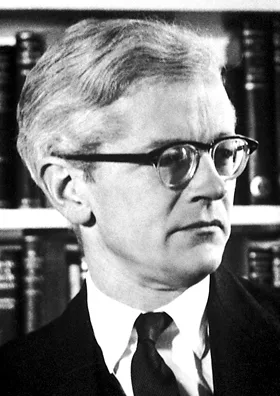
1960 KENDREW, Sir John Cowdery (1917 – 1997); ET AL
Structure of myoglobin: A three-dimensional Fourier synthesis at 2 Å resolution.
Kendrew's second paper reporting the first solution of the three-dimensional molecular structure of a protein, for which he shared the 1962 Nobel Prize in chemistry with Max Perutz, who solved the structure of the rel…
GMN 6912 · https://historyofmedicine.com/id/9077
1960 MCCARTHY, John (1927 – 2011)
Recursive functions of symbolic expressions and their computation by machine, Part 1.
The original paper on LISP, the first programming language designed for symbolic computation, which made the development of artificial intelligence programming possible. Part 2 was never published. Digital text from j…
GMN 12654 · https://historyofmedicine.com/id/14898
1961 ROBINETTE, Joan C.
Bionics Symposium. Living prototypes-the key to new technology. Wadd Technical Report 60-600. Edited by Joan C. Robinette.
GMN 13057 · https://historyofmedicine.com/id/15309
1962 ENSLEIN, Kurt (1924 – 2015)
Data acquisition and processing in biology and medicine. Proceedings of the 1961 Rochester conference. Edited by Kurt Enslein.
Records of the first conference on "biomedical data processing" held in a medical school in the United States.
GMN 8484 · https://historyofmedicine.com/id/10661
1963 U.S. NATIONAL LIBRARY OF MEDICINE
The MEDLARS story at the National Library of Medicine.
Digital facsimile from the Internet Archive at this link.
GMN 7947 · https://historyofmedicine.com/id/10122
1963 CORMACK, Allan McLeod (1924 – 1998)
Representation of a Function by its Line Integrals, with Some Radiological Applications.
Cormack showed that changes in tissue density could be computed from x-ray data. Because of limitations in computing power no machine was constructed during the 1960s. Cormack's papers generated little interest until …
GMN 8149 · https://historyofmedicine.com/id/10325
1964 LEDERBERG, Joshua (1925 – 2008)
HPP-64-1 DENDRAL-64-A system for computer construction, enumeration and notation of organic molecules as three structures and cyclic graphs. Interim report to the National Aeronautics and Space Administration, December 15, (1964).
DENDRAL is considered the first expert system because it automated the decision-making process and problem-solving behavior of organic chemists. The project consisted of research on two main programs, Heuristic Dendra…
GMN 8174 · https://historyofmedicine.com/id/10350
1964 COLLEN, Morris Frank (1913 – 2014); RUBIN, Leonard; NEYMAN, Jerzy (1894 – 1981); DANTZIG, George Bernard (1914 – 2005); ET AL
Automated multiphasic screening and diagnosis.
Describes aspects of the pioneering automated multiphasic screening and diagnosis program at the Kaiser Foundation Health Plan, the origins of their medical informatics system, developed by Collen and colleagues at Ka…
GMN 8178 · https://historyofmedicine.com/id/10354