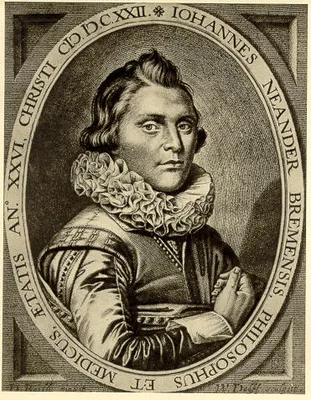
1622 NEANDER, Johann (1596 – 1630)
Tabacologia: Hoc est, tabaci, seu nicotianae descriptio medico-cheirurgico-pharmaceutica: Vel eius praeparatio & usus in omnibus corporis humani incommodis.
Neander described tobacco, its processing, and medical-pharmaceutical use. His book Includes images of the plants, of Indian, Oriental and European types of pipes, as well as depictions of cultivation and processing b…
GMN 9633 · https://historyofmedicine.com/id/11820
1672 JOSSELYN, John (1630 – 1675)
New-Englands rarities discovered: in birds, beasts, fishes, serpents, and plants of that country. Together with the physical and chyrurgical remedies wherewith the natives constantly use to cure their distempers, wounds, and sores…
The first detailed account of the natural history and botany of North America, including the first extensive study of native North American medicine.
GMN 1826.1 · https://historyofmedicine.com/id/2138
1672 HUGHES, William ( – 1683)
The American physician : or, a treatise of the roots, plants, trees, shrubs, fruit, herbs, etc., growing in the English Plantations in America ; ... whereunto is added a discourse of the Cacao-nut-Tree, and the use of its fruit ; with all the ways of making Chocolate
The earliest work in English on the medicinal virtues of North American tropical plants. Based on first-hand observations made in the West Indies, Evidence suggests that Hughes began his career in 1651 with a privatee…
GMN 7007 · https://historyofmedicine.com/id/9173
1737 BRICKELL, John (1710 – 1745)
The natural history of North Carolina. With an account of the trade, manners and customs of the Christian and Indian inhabitants. Illustrated with copper-plates, whereon are curiously engraved the map of the country, several strange beasts, birds, fishes, snakes, insects, trees, and plants, &c.
Brickell accompanied provincial governor George Burrington to North Carolina in 1724, remaining in the region for six years and becoming one of the first medical doctors in North Carolina. Brickell took the material o…
GMN 12473 · https://historyofmedicine.com/id/14706
1751 BARTRAM, John (1699 – 1777)
Descriptions, virtues, and uses of sundry plants of these northern parts of America, and particularly of the newly discovered Indian cure for the venereal disease.
Bartram founded one of the first botanical gardens in America (at Kingsessing). Linnaeus referred to him as the “greatest natural botanist in the world”. A few copies of this 7-page work printed by Benjamin Franklin w…
GMN 1832 · https://historyofmedicine.com/id/2171
1763 STONE, Edward (1702 – 1768)
An account of the success of the bark of the willow in the cure of agues.
Stone, a vicar from Chipping Norton, Oxfordshire, discovered that the bark of the willow tree (active ingredient: salicylic acid) was effective in reducing a fever. This was the first report in the scientific literatu…
GMN 6970 · https://historyofmedicine.com/id/9135
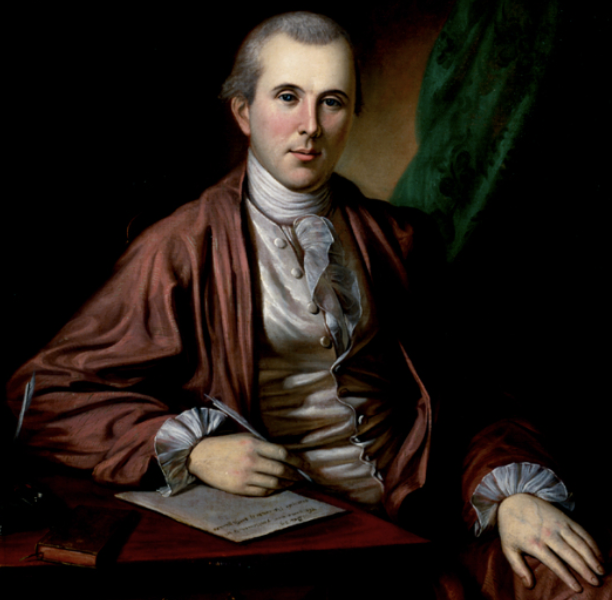
1774 RUSH, Benjamin (1745 – 1813)
An oration…containing an enquiry into the natural history of medicine among the Indians in North-America; and a comparative view of their diseases and remedies, with those of civilized nations.
Rush was the first American physician to publish a detailed study of native American medicine. Digital facsimile from the Medical Heritage Library, Internet Archive, at this link.
GMN 6451.90 · https://historyofmedicine.com/id/7588
1775 ADAIR, James (1709 – 1793)
The history of the American Indians; particularly those nations adjoining to the Missisippi [sic] East and West Florida, Georgia, South and North Carolina, and Virginia: containing an account of their origin, language, manners, religious and civil customs, laws, form of government, punishments, conduct in war and domestic life, their habits, diet, agriculture, manufactures, diseases and method of cure... With observations on former historians, the conduct of our colony governors, superintendents, missionaries, & c. Also an appendix, containing a description of the Floridas, and the Missisippi [sic] lands, with their productions--the benefits of colonizing Georgiana, and civilizing the Indians--and the way to make all the colonies more valuable to the mother country....
The author characterized himself on the title page as "a Trader with the Indians and a Resident in their Country for Forty Years." Digital facsimile from the Internet Archive at this link.
GMN 7505 · https://historyofmedicine.com/id/9677
1787 SCHOEPFF, Johann David (1752 – 1800)
Materia medica Americana, potissimum regni vegetabilis.
Schoepff came to America in 1777 as a surgeon with the Hessian troops employed by the British Forces. He returned to Germany in 1784 and compiled the first full American materia medica, describing about 400 plants, in…
GMN 1837 · https://historyofmedicine.com/id/2194
1801 STEARNS, Samuel (1741 – 1810)
The American herbal, or materia medica.
The first herbal both produced and printed in the United States, as opposed to those which were reprints of European works. Includes information on native American remedies. Digital facsimile from the Medical Heritage…
GMN 1838.2 · https://historyofmedicine.com/id/2218
1805 –1806 ROBERTSON, James (1742 – 1814)
Remarks on the management of the scalped-head.
Treatment for the quintessential American war injury suffered by troops and settlers alike on the American frontier.
GMN 2159.1 · https://historyofmedicine.com/id/863
1814 HENRY, Samuel
Botanic medicine: A new and complete American medical family herbal: Wherein is displayed the true properties and medical virtues of the plants, indigenous to the United States of America, together with Lewis' secret remedy newly discovered, which has been found infallible in the cure of that dreadful disease hydrophobia, produced by the bite of a mad dog.
Henry wrote that he had been a captive of the Indians during the Creek War and that he incorporated what he learned during his captivity. His work was one of the first illlustrated herbals published in the United Stat…
GMN 9641 · https://historyofmedicine.com/id/11828
1817 –1820 BIGELOW, Jacob (1786 – 1879)
American medical botany, being a collection of the native medicinal plants of the United States, containing their botanical history and chemical analysis, and properties and uses in medicine, diet and the arts. 3 vols.
Bigelow was professor of materia medica and botany at Harvard. This work included native American remedies. It was the first book printed in the United States to include color plates printed in color. See R.J. Wolfe, …
GMN 1842 · https://historyofmedicine.com/id/2280
1822 THOMSON, Samuel (1769 – 1843)
New guide to health; or botanic family physician, containing a complete system of practice, upon a plan entirely new; with a description of the vegetables made use of, and directions for preparing and adminstering them to cure disease. To which is prefixed a narrative of the life and medical discoveries of the author.
The "Bible" of Thomsonism or "Thomsonian medicine", which employed botanical remedies, often based on native American medicines. Digital facsimile from the Medical Heritage Library, Internet Archive, at this link.
GMN 6988 · https://historyofmedicine.com/id/9154
1822 THOMSON, Samuel (1769 – 1843)
A narrative of the life and medical discoveries of Samuel Thomson: Containing an account of his system of practice, and the manner of curing disease with vegetable medicine, upon a plan entirely new; to which is added an introduction to his New Guide to Health, or Botanic Family Physician containing the principles upon which the system is founded, with remarks on fevers, steaming, poison &c.
Thomson issued this introductory work shortly before publication of his New Guide. Three issues appeared in 1822: one with 180 pages, another with 182 pages including testimonials, and a 204 page issue with the introd…
GMN 10751 · https://historyofmedicine.com/id/12947
1823 HUNTER, John Dunn (1788 – 1827)
Manners and customs of several Indian tribes located west of the Mississippi; including some account of the soil, climate, and vegetable productions, and the Indian materia medica: to which is prefixed the history of the author's life during a residence of several years among them.
Hunter claimed that as a child he had been captured by the Cherokee before they came to Texas. He adopted the name of an English benefactor, John Dunn, and later added the name "Hunter" given by the Indians because of…
GMN 8798 · https://historyofmedicine.com/id/10976
1828 –1830 RAFINESQUE, Constantine Samuel (1783 – 1840)
Medical flora; or, manual of the medical botany of the United States of North America. Containing a selection of above 100 figures and descriptions of medical plants, with their names, qualities, properties, history &c; and notes or remarks on nearly 500 equivalent substitutes. 2 vols.
Rafinesque was a great botanist, conchologist, archaeologist, and economist. Born in a suburb of Istanbul, he was also a world citizen and a prolific writer with 939 works to his credit. He died in extreme poverty in …
GMN 1849 · https://historyofmedicine.com/id/2331
1836 BOWKER, Pierpont F.
The Indian vegetable family instructer: Containing the names and descriptions of all the most useful herbs and plants that grow in this country, with their medicinal qualities annexed; also, a treatise on many of the lingering diseases to which mankind are subject, ... with a large list of recipes, which have been carefully selected from Indian prescriptions ... Designed for the use of families in the United States.
GMN 9524 · https://historyofmedicine.com/id/11710
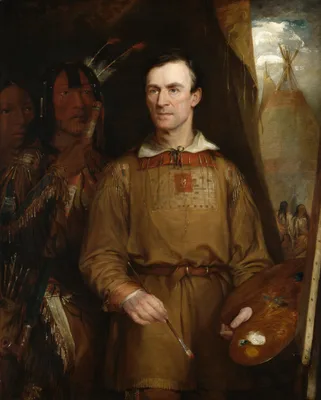
1861 CATLIN, George (1796 – 1872)
The breath of life; or mal-respiration, and its effects upon the enjoyments and life of man.
Catlin, the famous American artist, was the first in America to call attention to the bad effects of mouth-breathing. He based his book on observations of native American practices, and illustrated his book with humor…
GMN 3267 · https://historyofmedicine.com/id/3961
1862 BILL, Joseph Howland (1835 – 1885)
Notes on arrow wounds.
The definitive work on American Indian arrow wounds suffered by U. S. troops and settlers in frontier warfare during the Western expansion of the United States. Bill eventually developed a "Forceps for the Extraction …
GMN 2166.1 · https://historyofmedicine.com/id/1101
1885 MATHEWS, Percy W.
Notes on diseases among the Indians frequenting York Factory, Hudson's Bay. Read before the Medico-Chirurgical Society of Montreal, February, 1885.
Mathews was a surgeon employed by the Hudson's Bay Company. "York Factory was a settlement and Hudson's Bay Company (HBC) factory (trading post) located on the southwestern shore of Hudson Bay in northeastern Manitoba…
GMN 10192 · https://historyofmedicine.com/id/12381
1886 WHITNEY, William Fiske (1850 – 1921)
Notes on the anomalies, injuries and diseases of the bones of the native races of North America.
The first American contribution to paleopathology. Digital facsimile from Google Books at this link.
GMN 7708 · https://historyofmedicine.com/id/9880
1886 BELL, Robert (1847 – 1917)
The "medicine-man"; or, Indian and Eskimo notions of medicine. Reprinted from the "Canada Medical and Surgical Journal" for March and April, 1886.
Digital facsimile from the Internet Archive at this link.
GMN 10191 · https://historyofmedicine.com/id/12380
1891 BOURKE, John Gregory (1846 – 1896)
Scatologic rites of all nations. A dissertation upon the employment of excrementitious remedial agents in religion, therapeutics, divination, witchcraft, love-philters, etc., in all parts of the globe. Based upon original notes and person observation, and upon compilation from over one thousand authorities. Not for general perusal.
Digital facsimile of the 1891 edition from the Internet Archive at this link. Translated in to German as: Der Unrat in Sitte, Brauch, Glauben und Gewohnheitrecht der Völker, von John Gregory Bourke. Verdeutscht und ne…
GMN 9888 · https://historyofmedicine.com/id/12076
1892 BOURKE, John Gregory (1846 – 1896)
The medicine-men of the Apache.
Bourke, a U.S. Army officer with experience on the American Indian frontier, was a pioneer student of native American medicine and anthropology. Digital facsimile from the Internet Archive at this link.
GMN 6452.1 · https://historyofmedicine.com/id/7595
1900 BARROWS, David Prescott (1873 – 1954)
The ethno-botany of the Coahuilla Indians.
"The ʔívil̃uqaletem (or Ivilyuqaletem) are Native Americans of the inland areas of southern California.[2] Their original territory included an area of about 2,400 square miles (6,200 km2). The traditional Cahuilla te…
GMN 9475 · https://historyofmedicine.com/id/11659
1908 HRDLIČKA, Aleš (1869 – 1943)
Physiological and medical observations among the Indians of Southwestern United States and Northern Mexico.
Digital facsimile from the Internet Archive at this link.
GMN 6455.1 · https://historyofmedicine.com/id/8626
1911 CHAMBERLIN, Ralph Vary (1879 – 1967)
The ethno-botany of the Gosiute Indians of Utah.
Digital facsimile from the Internet Archive at this link.
GMN 9347 · https://historyofmedicine.com/id/11529
1915 STEVENSON, Matilda Coxe (1849 – 1915)
Ethnobotany of the Zuñi Indians. Thirtieth annual report of the Bureau of American Ethnology.
Digital facsimile from swsbm.com at this link.
GMN 9293 · https://historyofmedicine.com/id/11475
1916 ROBBINS, Wilfred William (1884 – 1952); HARRINGTON, John Peabody (1884 – 1961); FREIRE-MARRECO, Barbara (1879 – 1967)
Ethnobotany of the Tewa Indians. Bureau of American Ethnology Bulletin 55.
Digital facsimile from the Internet Archive at this link.
GMN 9346 · https://historyofmedicine.com/id/11528
1919 GILMORE, Melvin Randolph (1868 – 1940)
Uses of plants by the Indians of the Missouri River region. Thirty-third annual report of the Bureau of American Ethnology, 1911-1912.
Medicinal and edible plants used by the Dakota, Omaha/Ponca, Winnebago and Pawnee peoples. Gilmore reports on 180 plants, and offers 16 pages of tables of names in various languages. Digital facsimile from the Biodive…
GMN 9287 · https://historyofmedicine.com/id/11469
1923 MADDOX, John Lee (1878 – 1946)
The medicine man: A sociological study of the character and evolution of shamanism.
Digital facsimile from the Internet Archive at this link.
GMN 6456 · https://historyofmedicine.com/id/7612
1923 SMITH, Huron Herbert (1883 – 1933)
Ethnobotany of the Menomini Indians.
Digital facsimile from spiritoftherivers.wikispaces.com at this link.
GMN 9294 · https://historyofmedicine.com/id/11476
1928 DENSMORE, Frances Theresa (1867 – 1957)
Use of plants by the Chippewa Indians. Smithsonian Institution-Bureau of American Ethnology Annual Report 44.
Digital facsimile from the Internet Archive at this link.
GMN 9271 · https://historyofmedicine.com/id/11453
1928 SMITH, Huron Herbert (1883 – 1933)
Ethnobotany of the Meskwaki Indians.
GMN 9289 · https://historyofmedicine.com/id/11471
1932 STONE, Eric Percy (1892 – )
Medicine among the American Indians.
Reprinted, New York, Hafner, 1962.
GMN 6460 · https://historyofmedicine.com/id/7621
1932 MOONEY, James (1861 – 1921); OLBRECHTS, Frans Maria (1899 – 1958)
The Swimmer manuscript. Cherokee sacred formulas and medicinal prescriptions, by James Mooney, revised, completed and edited by Frans M. Olbrechts. Smithsonian Institution, Bureau of American Ethnology Bulletin 99.
Digital facsimile from the Internet Archive at this link.
GMN 7003 · https://historyofmedicine.com/id/9169
1932 SWANK, George R.
The ethnobotany of the Acoma and Laguna Indians. M.A. thesis.
GMN 9283 · https://historyofmedicine.com/id/11465
1932 SMITH, Huron Herbert (1883 – 1933)
Ethnobotany of the Ojibwe Indians.
Digital facsimile from nwic.edu at this link.
GMN 9295 · https://historyofmedicine.com/id/11477
1933 SMITH, Huron Herbert (1883 – 1933)
Ethnobotany of the Forest Potawatomi Indians.
Digital facsimile from swsbm.com at this link.
GMN 9348 · https://historyofmedicine.com/id/11530
1935 CORLETT, William Thomas (1854 – 1948)
The medicine-man of the American Indian and his cultural background.
Digital facsimile from the Hathi Trust at this link.
GMN 6461 · https://historyofmedicine.com/id/7623
1935 CASTETTER, Edward Franklin (1896 – 1978); UNDERHILL, Ruth Murray (1883 – 1984)
The ethnobiology of the Papago Indians. Ethnological Studies in the American Southwest II.
"The Tohono O’odham ... are a Native American people of the Sonoran Desert, residing primarily in the U.S. state of Arizona and the Mexican state of Sonora. Tohono O’odham means "Desert People." The federally recogniz…
GMN 9303 · https://historyofmedicine.com/id/11485
1936 CASTETTER, Edward Franklin (1896 – 1978); OPLER, Morris Edward (1907 – 1996)
The ethnobiology of the Chiricahua and Mescalero Apache: A. the use of plants for food, beverages and narcotics. Ethnobiological studies in the American Southwest, Vol. 3. Biological series (Vol. 4, No. 5); Bulletin, University of New Mexico, whole, (No. 297).
GMN 9304 · https://historyofmedicine.com/id/11486
1938 LA BARRE, Raoul Weston (1911 – 1996)
The peyote cult.
The history of the study of the cult, the various botanical questions surrounding peyote, its physiological action and the various ethnological, psychological and historical questions involved in its diffusion.
GMN 13291 · https://historyofmedicine.com/id/15557
1939 MIGUELITO (1865 – 1936); REICHARD, Gladys Amanda (1893 – 1955); HUCKEL, John Frederick (1863 – 1936)
Navajo medicine man. Sandpaintings and legends of Miguelito from the John Frederick Huckel Collection
Navajo sandpaintings are traditionally made only for the healing ceremony in which they are used, and then destroyed. This book contains superb reproductions on sand-colored paper of watercolor versions of the sandpai…
GMN 6465.1 · https://historyofmedicine.com/id/7636
1939 WHITING, Alfred Frank (1912 – 1978)
Ethnobotany of the Hopi. Bulletin No. 15.
GMN 9323 · https://historyofmedicine.com/id/11505
1940 TAYLOR, Lyda Averill
Plants used as curatives by certain Southeastern tribes.
Digital facsimile from herablstudies.net at this link.
GMN 9278 · https://historyofmedicine.com/id/11460
1941 WYMAN, Leland Clifton (1897 – 1988); HARRIS, Stuart K.
Navajo Indian medical ethnobotany. University of New Mexico Bulletin, Anthropological Series, Vol. 3, No. 5.
Digital facsimile from herbaltherapeutics.net at this link.
GMN 9281 · https://historyofmedicine.com/id/11463
1942 TANTAQUIDGEON, Gladys Lola (1899 – 2005)
A study of Delaware Indian medicine practice and folk beliefs.
In this publication Delaware refers to the name of the Native American people known as Lenape, or Leni Lenape, or Delaware people, rather than the U.S. state. In terms of geographical scope, the book covers traditiona…
GMN 9284 · https://historyofmedicine.com/id/11466
1944 ELMORE, Francis Hapgood
Ethnobotany of the Navajo. Monographs of the School of American Research, No. 8.
Digital facsimile from uair.library.arizona.edu at this link.
GMN 9282 · https://historyofmedicine.com/id/11464