1465 SABUNCUOGLU (OTTOMAN TURKISH: شرف الدّین صابونجی اوغلی), Şerafeddin (1385 – 1468)
Cerrahiyyetu'l-Haniyye (Imperial Surgery)
In 1465, at the age of 80, Ottoman surgeon and physician Şerafeddin Sabuncuoğlu published in manuscript an illustrated atlas of surgery and dentistry. This was also the first medical textbook written in Turkish, proba…
GMN 6819 · https://historyofmedicine.com/id/8982
1544 TROTA OF SALERNO, (Trotula) (1150 – )
Experimentarius medicinae. Continens Trotulae curandarum aegriudinum muliebrium ante, in & post partium lib. unicum, nusquam antea editum…[Georg Kraut]
First printed edition of the gynecological writings attributed to the woman physician, Trota, who is frequently called Trotula after the name of the collection of works with whom she is associated. Trota is said to ha…
GMN 6009.1 · https://historyofmedicine.com/id/7186
1609 BOURGEOIS, Louise [or Louise Boursier or Louise Bourgeois or Louyse Bourgeous] (1563 – 1636)
Observations diverses sur la sterilité, perte de fruict, foecondité, accouchements, et maladies des femmes, et enfants nouveaux naiz.
The first book on obstetrics published by a midwife. Louise Bourgeois was accoucheuse to the French court. She was one of the pioneers of scientific midwifery; her Observations was the vade mecum of contemporary midwi…
GMN 6145 · https://historyofmedicine.com/id/7698
1666 MEURDRAC, Marie (1610 – 1680)
La chymie charitable et facile, en faveur des dames.
A book on practical chemistry, pharmacology and medicine written for the common reader by French autodidact Marie Meurdrac, La chymie charitable et facile, en faveur des dames, was the first treatise on chemistry writ…
GMN 6822 · https://historyofmedicine.com/id/8985
1671 SHARP, Jane (1625 – )
The midwives book: or the whole art of midwifery discovered.
The first book written by an English midwife. Sharp was the most accomplished midwife of 17th-century England. Scholarly, extensively annotated edition edited by Jane Hobby, New York & Oxford: Oxford University Press,…
GMN 6156.1 · https://historyofmedicine.com/id/7728
1690 SIEGEMUNDIN, Justine [DITTRICHIN] (1650 – 1705)
Die Chur-Brandenburgische Hoff-Wehe-Mutter.
With Mauriceau, Justine Siegemundin was responsible for introducing the practice of puncturing the amniotic sac to arrest hemorrhage in placenta praevia. She was midwife to the Court of the Elector of Brandenburg, and…
GMN 6149 · https://historyofmedicine.com/id/7712
1759 COUDRAY, Angélique Marguerite Le Boursier du (1712 – 1794)
Abregé de l'art des accouchements, dans lequel on donne les préceptes nécessaires pour le mettre heureusement en pratique, et auquel on a joint plusieurs observations intéressantes sur des cas singuliers.
After ten years as a midwife in Paris, Madame du Coudray was hired by King Louis XV to travel across France to better train rural midwives.There were political motivations for this; Louis wanted to boost a “declining”…
GMN 6848 · https://historyofmedicine.com/id/9012
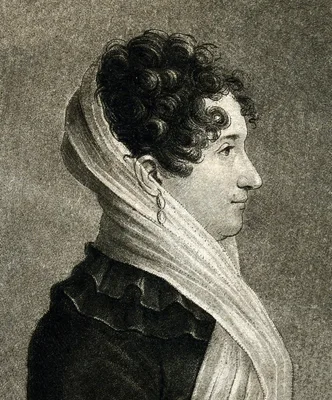
1812 BOIVIN, Marie Anne Victoire (1773 – 1841)
Mémorial de l’art des accouchements.
Mme Boivin was one of the most famous of the Paris midwives. She improved the speculum and wrote intelligently on hydatidiform mole.
GMN 6165 · https://historyofmedicine.com/id/7752
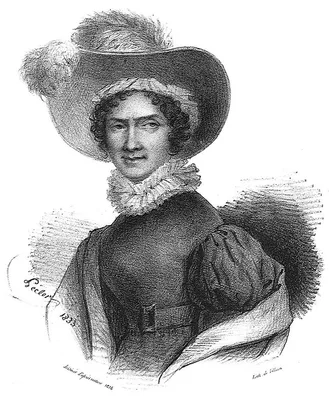
1821 –1825 DUGÈS, Antoine Louis (1798 – 1838); LACHAPELLE, Marie-Louise (1769 – 1821)
Pratique des accouchemens…par Marie Louise La Chapelle. Publiés par Antoine Dugès. 3 vols.
Mme La Chapelle was a famous midwife and a colleague of Baudelocque. She supervised 5,000 deliveries and her vast experience enabled her to write her book. She reduced the 94 theoretical presentations suggested by Bau…
GMN 6170 · https://historyofmedicine.com/id/7762
1821 GARDANNE, Charles-Pierre-Louis de (1788 – )
De la ménopause, ou de l'age critique des femmes; Traité dans lequel sont exposés du description anatomique et physiologique de l'utérus à la ménopause, les changemens que cette époque opère tant sur le physique que sur le moral de la femme, les moyens hygiéniques qui doivent être alors employés, enfin les maladies qui surviennent ordinairement à l'âge critique. Seconde edition.
In this work, a revised second edition of Gardanne's Avis aux femmes qui entrent dans l'age critique (1816), Gardanne coined the term menopause. Digital facsimile of the 1816 edition from the Internet Archive at this …
GMN 10546 · https://historyofmedicine.com/id/12739
1827 BOIVIN, Marie Anne Victoire (1773 – 1841)
Nouvelles recherches sur l’origine, la nature et le traitement de la mole vésiculaire ou grossesse hydatique.
Classic description of hydatidiform mole.
GMN 6172 · https://historyofmedicine.com/id/7766
1833 BOIVIN, Marie Anne Victoire (1773 – 1841); DUGÈS, Antoine Louis (1798 – 1838)
Traité pratique des maladies de l’utérus et de ses annexes. 2 vols. and atlas.
Boivin and Dugès practiced amputation of the cervix for chronic ulceration. On page 648 of vol. 2 is the first recorded case of cancer of the female urethra. English translation, 1834.
GMN 6028 · https://historyofmedicine.com/id/7255
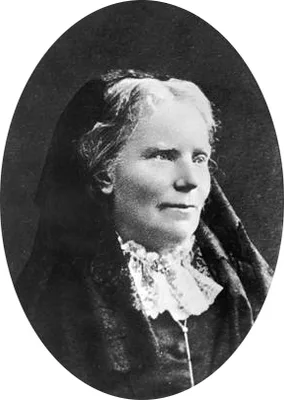
1852 BLACKWELL, Elizabeth (1821 – 1910)
The laws of life, with special reference to the physical education of girls.
Blackwell's first book, a volume about the physical and mental development of girls, emphasizing the value of exercise, intended to help prepare young women for motherhood. Digital facsimile from Google Books at this …
GMN 11950 · https://historyofmedicine.com/id/14155
1856 TAYLOR, Frances Margaret (1832 – 1900)
Eastern hospitals and English nurses; the narrative of twelve months' experience in the hospitals of Koulali and Scutari by a lady volunteer. 2 vols.
Taylor accompanied Florence Nightingale to Scutari, and worked as nurse in the military hospitals. She provided one of the first eye-witness acounts of military hospitals at Scutari and Koulali, and wrote about the ma…
GMN 7809 · https://historyofmedicine.com/id/9981
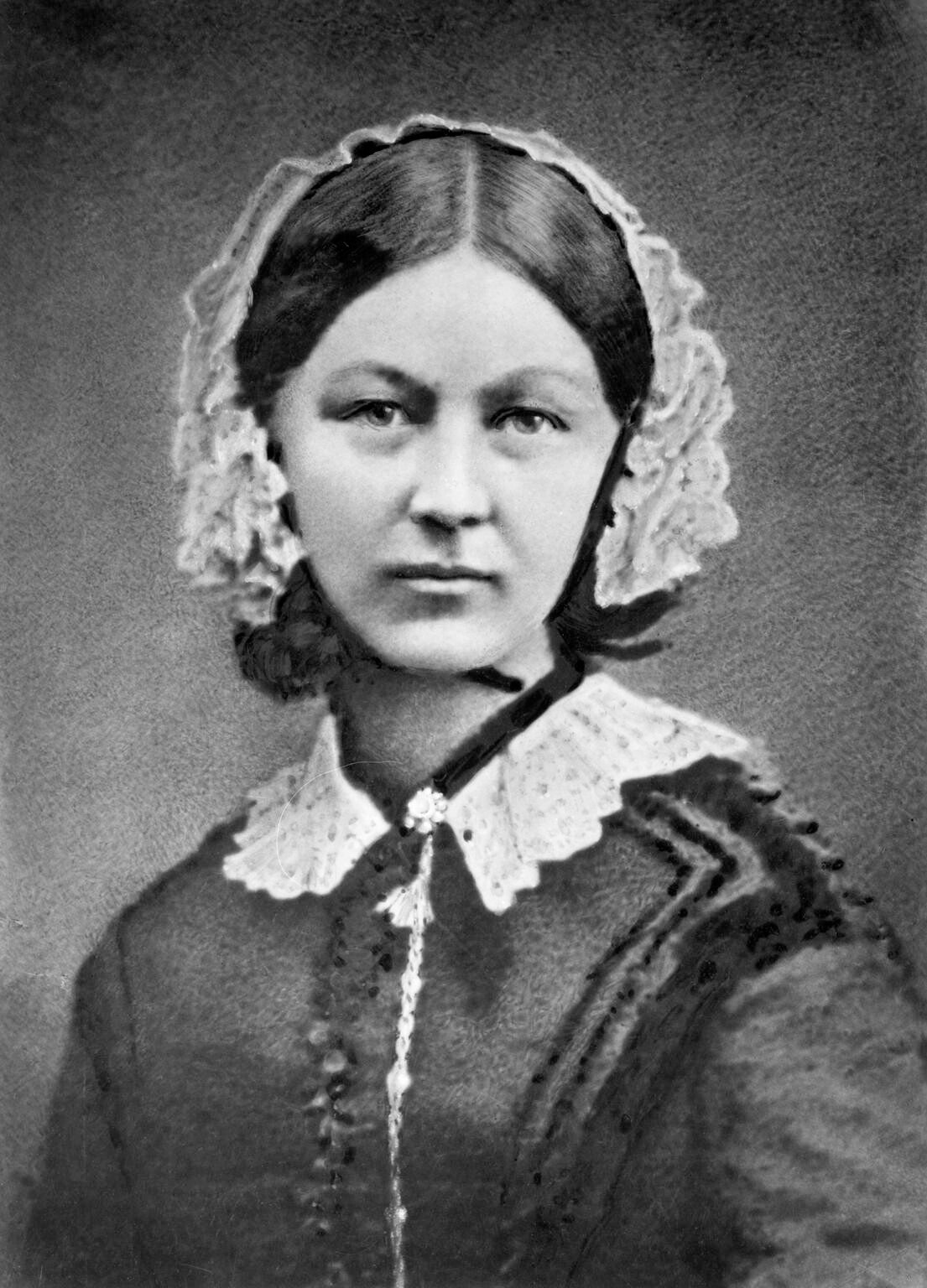
1859 NIGHTINGALE, Florence (1820 – 1910)
Notes on hospitals.
Includes four plans of hospitals. A third edition, completely revised, was published by Longmans, Green & Co., London, 1863.
GMN 1611 · https://historyofmedicine.com/id/1907
1860 NIGHTINGALE, Florence (1820 – 1910)
Notes on nursing: what it is, and what it is not.
After receiving training in Germany and France, Florence Nightingale had some nursing experience in England. The Crimean war gave her an opportunity to demonstrate the value of trained nurses. Within a few months of h…
GMN 1612 · https://historyofmedicine.com/id/1912
1860 BLACKWELL, Elizabeth (1821 – 1910)
Medicine as a profession for women.
GMN 6649.9 · https://historyofmedicine.com/id/7778
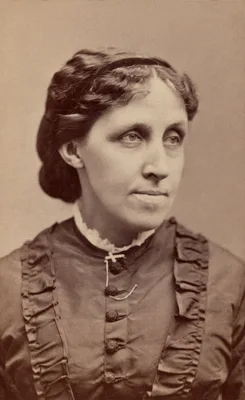
1863 ALCOTT, Louisa May (1832 – 1888)
Hospital sketches.
Digital facsimile of the 1863 edition from the Internet Archive at this link. Alcott expanded the work for the edition of 1869. Edited, with an extensive introduction by Bessie Z. Jones (Cambridge: Harvard University …
GMN 7419 · https://historyofmedicine.com/id/9591
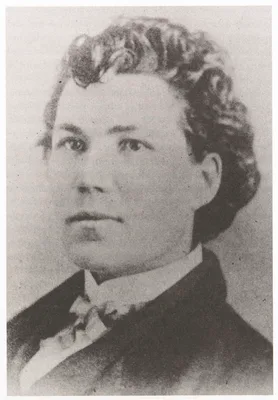
1864 EDMONDS, Sarah Emma (1841 – 1898)
The female spy of the union army. The thrilling adventures, experiences, and escapes of a woman nurse, spy, and scout, in hospitals, camps and battlefields.
Digital facsimile of a reprint of the 1864 edition from the Internet Archive at this link. Reissued in 1865 as Nurse and spy in the Union Army: Containing the adventures and experience of a woman in hospitals, camps, …
GMN 8994 · https://historyofmedicine.com/id/11173
1867 BROCKETT, Linus Pierpont (1820 – 1893); VAUGHAN, Mary C.
Woman's work in the Civil War: A record of heroism, patriotism and patience.
Details the work of women in the American Civil War in the fields of nursing, supply and sanitary organization (i.e. the Sanitary Commission) with biographies of notable women. Digital facsimile from the Internet Arch…
GMN 7748 · https://historyofmedicine.com/id/9920
1868 WOOLSEY, Jane Stuart (1830 – )
Hospital days.
Woolsey participated in the first meetings of the Women's Central Relief Association, which preceded the U.S. Sanitary Commission. In 1863 she became Superintendent of Nurses at Fairfax Seminary Hospital, and served t…
GMN 8998 · https://historyofmedicine.com/id/11177
1869 BROCKETT, Linus Pierpont (1820 – 1893)
Woman: Her rights, wrongs, privileges, and responsibilities . . . Her relations to man, physiological, social, moral, and intellectual: Her ability to fill the enlarged sphere of duties and privileges claimed for her: Her true position in education, professional life, employments, and wages considered. Woman suffrage, its folly and inexpediency, and the injury and deterioration which it would cause in her character shown . . .
Also published in Cincinnati, Ohio by Howe's Subscription Book Concern, 1869. The author, a physician and semi-popular writer, appears mainly to be writing in opposition to woman suffrage or to granting to women any f…
GMN 11703 · https://historyofmedicine.com/id/13904
1872 JEX-BLAKE, Sophia Louisa (1840 – 1912)
Medical women: Two essays. I. Medicine as a profession for women. II. Medical education for women
From the time of her admission to medical school Jex-Blake became virtually the leader of the movement in Great Britain to open the medical profession to women. Greatly expanded second edition, Edinburgh, 1886.
GMN 6649.91 · https://historyofmedicine.com/id/7780
1876 STALLARD, Joshua Harrison
Female health and hygiene on the Pacific Coast.
This was probably the first book on female health and hygiene published in California and intended for the residents of the state. The book was written for women rather than for medical professionals. Little is known …
GMN 12089 · https://historyofmedicine.com/id/14298
1879 CHADWICK, James Read (1844 – 1905)
The study and practice of medicine by women.
Probably the first study of how women physicians used their medical training. Digital facsimile from the Internet Archive at this link.
GMN 11826 · https://historyofmedicine.com/id/14028
1881 POPE, Emily F.; CALL, Emma Louise (1847 – 1937); POPE, C. Augusta
The practice of medicine by women in the United States.
"Emily F. Pope, C. Augusta Pope, and Emma Call, doctors on the staff of the New England Hospital, published a study on women physicians. Their sample included a group of 430 women doctors who had graduated from variou…
GMN 11021 · https://historyofmedicine.com/id/13217
1881 BODLEY, Rachel Litter (1831 – 1888)
The college story: Valedictory address to the twenty-ninth graduating class of the Woman's Medical College of Pennsylvania.
"Bodley sought to survey all the graduates of the Woman's Medical College of Pennsylvania from its founding 1850 through 1880. Of the total 276 graduates, 244 were alive. Her survey is based on the 186 graduates who r…
GMN 11022 · https://historyofmedicine.com/id/13218
1885 DEJERINE-KLUMPKE, Augusta (1859 – 1927)
Contribution à l’étude des paralysies radiculaires du plexus brachial.
First description of atrophic paralysis of the muscles of the hand following lesion of the brachial plexus and eighth cervical and first dorsal nerves (“Klumpke’s paralysis”).
GMN 4748 · https://historyofmedicine.com/id/1347
1885 PLUNKETT, H. M. (1826 – )
Women, plumbers, and doctors: or, household sanitation
Dedicated "To Dr. Henry I. Bowditch, whose early, persistent, and enthusiastic labors make him the apostle of sanitation in America." Digital facsimile from the Hathi Trust at this link.
GMN 9159 · https://historyofmedicine.com/id/11338
1888 LIVERMORE, Mary Ashton Rice (1820 – 1905)
My story of the war: The Civil War memories of the famous nurse, relief organizer and suffragette.
GMN 8996 · https://historyofmedicine.com/id/11175
1889 DEJERINE-KLUMPKE, Augusta (1859 – 1927)
Des polynévrites en général et des paralysies et atrophies saturnines en particulier.
Madame Dejerine-Klumpke, famous neurologist, contributed an important work on lead palsies.
GMN 2100 · https://historyofmedicine.com/id/2596
1890 ARTHUS, Nicolas Maurice (1862 – 1945); PAGES, Calixte
Nouvelle théorie chimique de la coagulation du sang.
First demonstration of the essential role of calcium in the mechanism of blood coagulation.
GMN 884 · https://historyofmedicine.com/id/918
1891 OSLER, Sir William (1849 – 1919); JACOBI, Mary Corinna Putnam (1842 – 1906); ET AL
The opening of the Johns Hopkins Medical School to women. Reprinted from Open Letters in the Century Magazine for February 1891.
A collection of articles by various experts supporting the opening of the planned Johns Hopkins Medical School to women. Contributors included Cardinal Gibbons, Mary Putnam Jacobi, Josephine Lowell, C. F. Folsom, Care…
GMN 11911 · https://historyofmedicine.com/id/14116
1892 GILMAN, Charlotte Perkins (1860 – 1935)
The yellow wall-paper.
This 6,000-word short story by is regarded as an important early work of American feminist literature, illustrating and critiquing 19th century attitudes toward women's health, both physical and mental. Digital facsim…
GMN 9725 · https://historyofmedicine.com/id/11912
1892 MEYER, Annie Nathan (1867 – 1951)
Helen Brent, M. D. A social study.
A short, memorable novel about a woman who faces the agonizing choice between career and marriage, and chooses medicine. Among her achievements, Meyer was a founder of Barnard College. Digital facsimile from Google Bo…
GMN 13199 · https://historyofmedicine.com/id/15460
1893 LADD-FRANKLIN, Christine (1847 – 1930)
Eine neue Theorie der Licht-Empfindung.
Ladd-Franklin theory of vision.
GMN 1522 · https://historyofmedicine.com/id/2847
1895 –1901 DEJERINE, Joseph Jules (1849 – 1917); DEJERINE-KLUMPKE, Augusta (1859 – 1927)
Anatomie des centres nerveux. 2 vols.
Classic summary of neuroanatomy at the end of the nineteenth century—comprehensive, beautifully illustrated, and scholarly. It is a goldmine of historical information with an outstanding bibliography.
GMN 1424 · https://historyofmedicine.com/id/2158
1895 BLACKWELL, Elizabeth (1821 – 1910)
Pioneer work in opening the medical profession to women; autobiographical sketches.
Blackwell led the movement in America to open the medical profession to women.
GMN 6649.92 · https://historyofmedicine.com/id/7781
1895 HOLLAND, Mary A. Gardner
Our army nurses. Interesting sketches, addresses, and photographs of nearly one hundred of the noble women who served in hospitals and on battlefields during our civil war.
Digital facsimile from the Internet Archive at this link.
GMN 9001 · https://historyofmedicine.com/id/11180
1896 KELLY, Howard Atwood (1858 – 1943)
Women in medicine.
Kelly was one of the first influential male physicians in America to advocate for the advancement of women physicians. This presentation was primarily a review of Elizabeth Blackwell's Pioneering work in opening the m…
GMN 13592 · https://historyofmedicine.com/id/15871
1898 CURIE, Pierre (1859 – 1906); CURIE, Marie Sklodowska (1867 – 1934)
Sur une substance nouvelle radio-active, contenue dans la pechblende.
The Curies, studying the radioactivity of minerals containing uranium and thorium, isolated from pitchblend a substance which they called radium and which they showed to possess an astonishing degree of radioactivity.…
GMN 2003 · https://historyofmedicine.com/id/1914
1900 LIPINSKA, Mélanie (1865 – 1933)
Histoire des femmes médecins depuis l’antiquité jusqu’à nos jours.
GMN 6649.93 · https://historyofmedicine.com/id/7784
1902 MENDENHALL, Dorothy Mabel Reed (1874 – 1964)
On the pathological changes in Hodgkin’s disease, with especial reference to its relation to tuberculosis.
Dorothy Reed’s classic work on Hodgkin’s disease included a study of the histological picture. She described the proliferation of the endothelial and reticular cells, and the formation of lymphadenoma cells – “Dorothy…
GMN 3780 · https://historyofmedicine.com/id/4677
1905 –1906 STARLING, Ernest Henry (1866 – 1927); LANE-CLAYPON, Janet Elizabeth (1877 – 1967)
An experimental enquiry into the factors which determine the growth and activity of the mammary glands.
In their classic paper on the mammary gland, these workers attributed its changes during pregnancy to the fetus.
GMN 1180 · https://historyofmedicine.com/id/1633
1906 MACALLUM, Archibald Byron (1858 – 1934); MENTEN, Maud Lenore (1879 – 1960)
On the distribution of chlorides in nerve cells and fibres.
GMN 1300 · https://historyofmedicine.com/id/2370
1917 –1940 SANGER, Margaret (1879 – 1966)
The Birth Control Review.
Sanger edited The Birth Control Review until 1929. A new series began in 1933. It was a birth control advocacy periodical published by the American Birth Control League, and later by its successor, the Birth Control F…
GMN 7106 · https://historyofmedicine.com/id/9273
1920 MURRAY, Flora (1869 – 1923); ANDERSON, Louisa Garrett (1873 – 1943)
Women as army surgeons. Being the history of the Women's Hospital Corps in Paris, Wimereux & Endell Street, September 1914 - October 1919
Together with Louisa Garrett Anderson (1873-1943), to whom the book was dedicated, Murray co-founded the Women's Hospital for Children in 1912. The hospital provided health care for working-class children of the area,…
GMN 7157 · https://historyofmedicine.com/id/9324
1927 LOVEJOY, Esther Pohl (1869 – 1967)
Certain samaritans.
A first-hand account of the American Women's Hospitals especially in Greece, Turkey and the Balkans helping to relieve the poulations uprooted by World War I and its aftermath. Lovejoy became the second woman to gradu…
GMN 7842 · https://historyofmedicine.com/id/10014
1928 BROUSSEAU, Kate ( – 1938)
Mongolism. A study of the physical and mental characteristics of mongolian imbeciles. Revised by H. G. Brainerd.
Down syndrome.
GMN 4958 · https://historyofmedicine.com/id/6301
1929 BALFOUR, Margaret Ida (1866 – 1945); YOUNG, Ruth (1884 – 1993)
The work of medical women in India.
GMN 8812 · https://historyofmedicine.com/id/10990