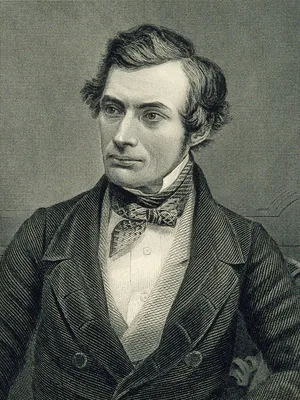
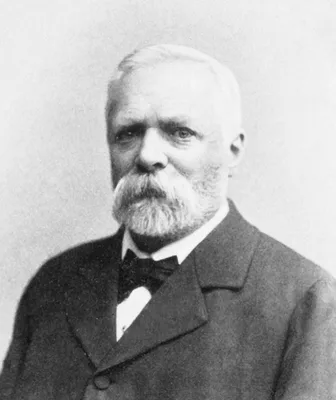
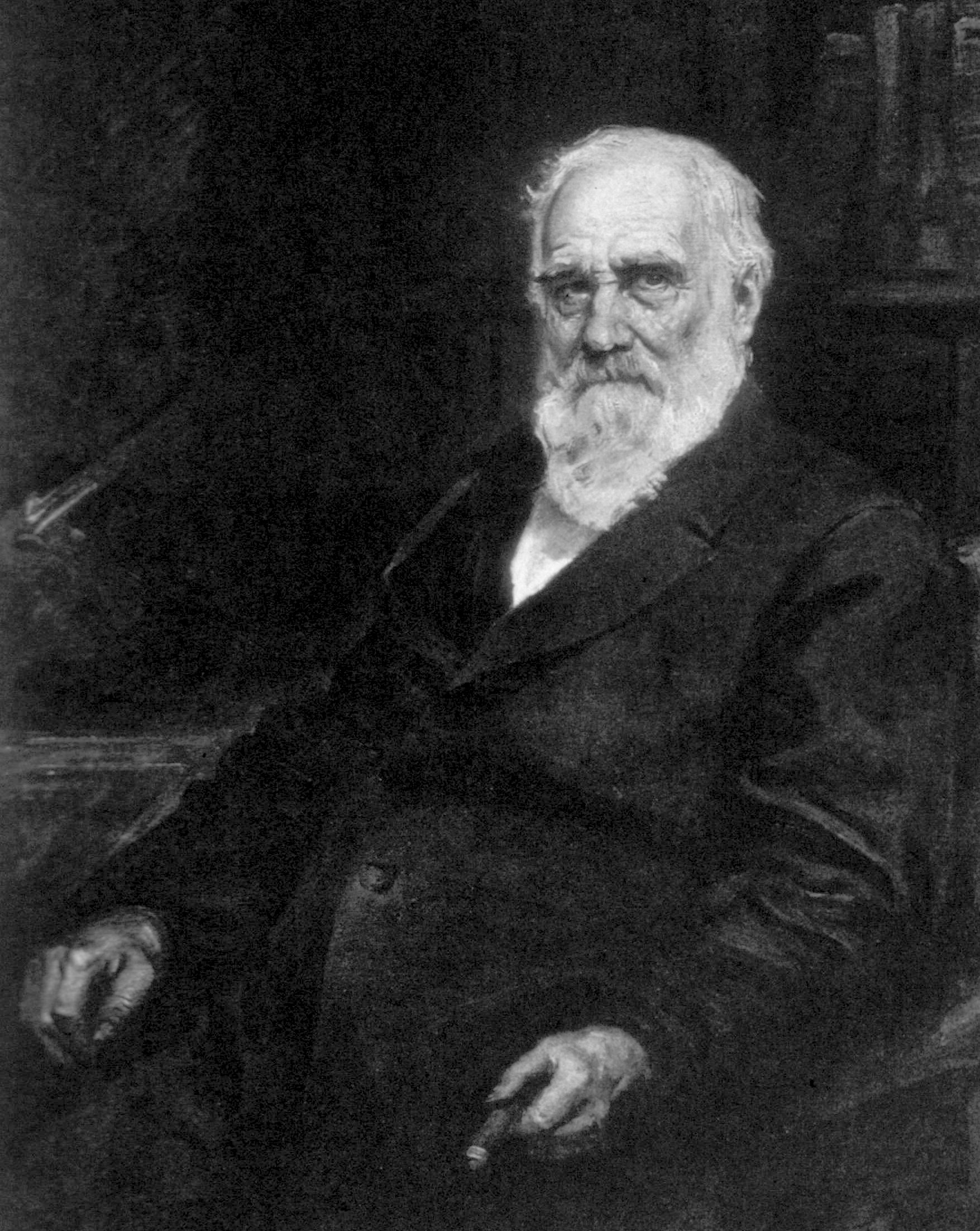
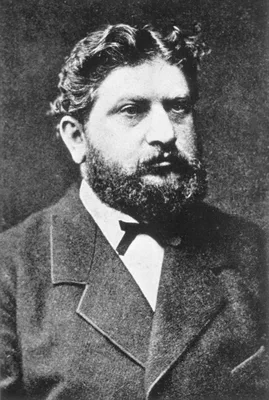
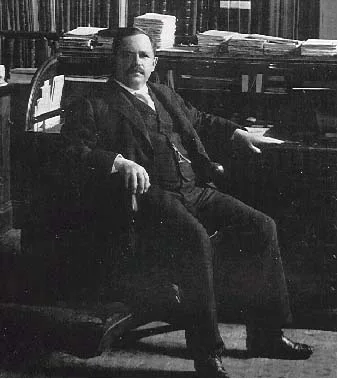
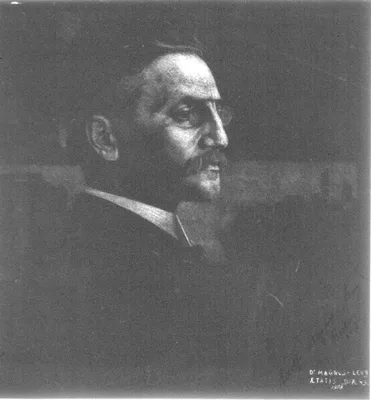
1857 MARCET, William (1829 – 1900)
On the immediate principles of human excrements in the healthy state.
First important publication on coprosterol as a product of excretion.
GMN 687 · https://historyofmedicine.com/id/833
1858 KLETZINSKY, Vincenz (1826 – 1882)
Compendium der Biochemie. 2 vols.
Kletzinsky coined the term "Biochemie" (biochemistry). Digital facsimile from the Hathi Trust at this link.
GMN 14181 · https://historyofmedicine.com/id/16496
1859 KÜHNE, Wilhelm Friedrich (1837 – 1900)
Untersuchungen über Bewegungen und Veränderungen der contraktilen Substanz.
Proof of the coagulability of muscle proteins.
GMN 620 · https://historyofmedicine.com/id/503
1861 GRAHAM, Thomas (1805 – 1869)
Liquid diffusion applied to analysis.
Graham’s method of separating animal and other fluids by dialysis introduced the distinction between colloidal and crystalloid substances.
GMN 688 · https://historyofmedicine.com/id/839
1862 –1863 VOIT, Carl von (1831 – 1908); PETTENKOFER, Max Josef von (1818 – 1901)
Untersuchungen über die Respiration.
The first combined feeding–respiration experiments. Pettenkofer and Voit devised an apparatus for their important experiments on respiration and metabolism. They were first to estimate the amounts of protein, fat, and…
GMN 938 · https://historyofmedicine.com/id/181
1863 COHNHEIM, Julius Friedrich (1839 – 1884)
Zur Kenntnis der zuckerbildenden Fermente.
Investigation of the sugar-forming ferments.
GMN 690 · https://historyofmedicine.com/id/847
1867 –1868 HERMANN, Ludimar (1838 – 1914)
Untersuchungen über den Stoffwechsel der Muskeln, ausgehend vom Gaswechsel derselben. 3 vols.
Hermann’s views on nitrogen metabolism in muscular work correctly anticipated the later conclusions of Fletcher, Hopkins, and others.
GMN 625 · https://historyofmedicine.com/id/508
1867 TRAUBE, Moritz (1826 – 1894)
Experimente zur Theorie der Zellenbildung und Endosmose.
Employing, for the first time, copper ferrocyanide as a semi-permeable membrane, Traube investigated osmosis and the permeability of membranes.
GMN 692 · https://historyofmedicine.com/id/859
1868 JAFFE, Max (1841 – 1911)
Beitrag zur Kenntniss der Gallen-und Harnpigmente.
Jaffe discovered urobilin in the urine.
GMN 693 · https://historyofmedicine.com/id/866
1868 –1869 FRASER, Sir Thomas Richard (1841 – 1919); BROWN, Alexander Crum (1838 – 1922)
On the connection between chemical constitution and physiological action.
Brown and Fraser were the first to investigate the relationship between the chemical constitution of substances and their action upon the body. "Although Crum Brown apparently never contemplated the practice of medici…
GMN 1867 · https://historyofmedicine.com/id/2446
1871 FLINT (YOUNGER), Austin (1836 – 1915)
On the physiological effects of severe and protracted muscular exercise; with special reference to the influence of exercise upon the excretion of nitrogen.
Flint made investigations on the nitrogen output of a long-distance walker, before, during, and after the latter’s attempt to walk 400 miles in five days. The useful data in this paper are often referred to in discuss…
GMN 626 · https://historyofmedicine.com/id/633
1871 JAFFE, Max (1841 – 1911)
Ueber das Vorkommen von Urobilin im Darminhalt.
Discovery of urobilin in the intestines.
GMN 694 · https://historyofmedicine.com/id/876
1871 MIESCHER, Johann Friedrich (1844 – 1895)
Ueber die chemische Zusammensetzung der Eiterzellen.
In 1869 Miescher discovered a substance which he termed nuclein (nucleoprotein), later shown to be the hereditary genetic material. He demonstrated it in pus cells. The discovery he first published in 1871. He was als…
GMN 695 · https://historyofmedicine.com/id/897
1872 PFLÜGER, Eduard Friedrich Wilhelm (1829 – 1910)
Ueber die Diffusion des Sauerstoffs, den Ort und die Gesetze der Oxydationsprocesse im thierischen Organismus.
GMN 627 · https://historyofmedicine.com/id/509
1874 MIESCHER, Johann Friedrich (1844 – 1895)
Die Spermatozoen einiger Wirbelthiere. Ein Beitrag zur Histochemie.
Miescher first isolated DNA and identified it as an acid through chemical analysis of salmon spermatozoa. See Ralf Dahm, "Discovering DNA: Friedrich Miescher and the early years of nucleic acid research," Human Geneti…
GMN 11093 · https://historyofmedicine.com/id/13289
1876 VIERORDT, Karl von (1818 – 1884)
Die quantitative Spectralanalyse in ihrer Anwendung auf Physiologie, Physik, Chemie und Technologie.
Vierordt’s spectral analyses of hemoglobin, bile and urine were of great value. He studied the variations in the spectrum of oxyhemoglobin produced by different dilutions of this substance and was thus able to estimat…
GMN 696 · https://historyofmedicine.com/id/891
1876 KÜHNE, Wilhelm Friedrich (1837 – 1900)
Ueber das Verhalten verschiedener organisirter und sog. ungeformter Fermente (pp.191-193); Trypsin (Enzym des Pankreas) (pp.194-198).
Kühne was one of the people who introduced the term “enzyme”. He wrote, "Um Missverständnisse vorzubeugen und lästige Umschreibungen zu vermeiden schlägt Vortragender vor, die ungeformten oder nicht organisierten Ferm…
GMN 700.1 · https://historyofmedicine.com/id/922
1877 JAFFE, Max (1841 – 1911)
Ueber die Ausscheidung des Indicans unter physiologischen und pathologischen Verhältnissen.
Isolation of indican in the urine.
GMN 697 · https://historyofmedicine.com/id/904
1877 WALTER, Friedrich
Untersuchungen über die Wirkung der Säuren auf den thierischen Organismus.
GMN 699 · https://historyofmedicine.com/id/915
1878 PFLÜGER, Eduard Friedrich Wilhelm (1829 – 1910)
Ueber Wärme und Oxydation der lebendigen Materie.
GMN 633 · https://historyofmedicine.com/id/513
1878 BERNARD, Claude (1813 – 1878)
La fermentation alcoolique.
Bernard disbelieved Pasteur’s definition of a ferment as “a living form originating from a germ”.
GMN 700 · https://historyofmedicine.com/id/919
1881 HOPPE-SEYLER, Ernst Felix Immanuel (1825 – 1895)
Physiologische Chemie.
Hoppe-Seyler, one of the greatest of the physiological chemists, founded the Zeitschrift für physiologische Chemie and wrote a classical textbook on the subject.
GMN 701 · https://historyofmedicine.com/id/927
1882 –1883 KOSSEL, Albrecht (1853 – 1927)
Zur Chemie des Zellkerns.
Among the many important contributions of Kossel was his study of the chemistry of the cell and cell-nucleus. Kossel correctly concluded that the function of nuclein is neither to act as a storage substance nor to fur…
GMN 702 · https://historyofmedicine.com/id/1829
1883 KJELDAHL, Johann (1849 – 1900)
Enny Methode til kvaelstofbestemmelse i organiske Stoffer.
Kjeldahl, a Danish chemist, devised a method of determining the amount of nitrogen in an organic compound (“Kjeldahl’s method”). A German translation is in Z. anal. Chem., 1883, 22, 366-82.
GMN 703 · https://historyofmedicine.com/id/931
1884 KÜLZ, Rudolph Eduard (1845 – 1895)
Ueber eine neue linksdrehende Säure (Pseudooxybuttersäure).
Isolation of (ß-oxybutyric acid. (Title of second paper: Beiträge zur Kenntniss der activen ß-Oxybuttersäure).
GMN 704 · https://historyofmedicine.com/id/946
1884 THUDICHUM, Johann Ludwig Wilhelm (1829 – 1901)
A treatise on the chemical constitution of the brain.
Thudichum, a German emigré, discovered cephalins and myelins in brain tissue. An enlarged German edition of his book was published at Tübingen, 1901. See biography by D. L. Drabkin, 1958, which includes an annotated b…
GMN 1415.1 · https://historyofmedicine.com/id/2101
1885 –1886 BRIEGER, Ludwig (1849 – 1909)
Ueber Ptomaine. 3 vols.
Brieger isolated and determined the composition of a number of the ptomaines.
GMN 705 · https://historyofmedicine.com/id/951
1885 VAN’T HOFF, Jacobus Hendricus (1852 – 1911)
Lois d’équilibre chimique dans l’état dilué, gazeux ou dissous.
Van’t Hoff stated that osmotic pressure is proportional to the concentration if the temperature remains invariable, and proportional to the absolute temperature if the concentration remains invariable. In 1901 Van't H…
GMN 706 · https://historyofmedicine.com/id/956
1886 JAFFE, Max (1841 – 1911)
Ueber den Niederschlag, welchen Pikrinsäure in normalen Harn erzeugt und über eine neue Reaction des Kreatinins.
Jaffe’s creatinine test.
GMN 708 · https://historyofmedicine.com/id/962
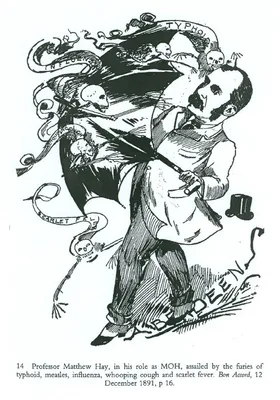
1886 STIRLING, William (1851 – 1932); HAY, Matthew (1855 – 1932); LANDOIS, Leonard (1837 – 1902)
A text-book of human physiology, including histology and microscopical anatomy....by L. Landois. Translated from the fifth German edition. With additions by William Stirling. 2 vols.
Second edition in English. Matthew Hay devised a test for the determination of bile acids in the urine, published in vol. 1, p. 381. Digital facsimile from the Hathi Trust at this link.
GMN 707 · https://historyofmedicine.com/id/1837
1887 BUNGE, Gustav Piers Alexander von (1844 – 1920)
Lehrbuch der physiologischen und pathologischen Chemie.
GMN 710 · https://historyofmedicine.com/id/967
1888 VAUGHAN, Victor Clarence (1851 – 1929); NOVY, Frederick George (1864 – 1957)
Ptomaines and leucomaines, or the putrefactive and physiological alkaloids.
GMN 712 · https://historyofmedicine.com/id/1835
1889 BERTHELOT, Pierre Eugène Marcellin (1827 – 1907)
Fixation de l’azote par la terre végétale nue ou avec le concours des légumineuses.
Berthelot showed that bacteria acting in clay soils are able to fix nitrogen.
GMN 714 · https://historyofmedicine.com/id/977
1890 STADELMANN, Ernst (1853 – 1941)
Ueber den Einfluss der Alkalien auf den menschlichen Stoffwechsel.
GMN 715 · https://historyofmedicine.com/id/980
1891 CHAUVEAU, Jean Baptiste Auguste (1827 – 1917)
Le travail musculaire et l’énergie qu’il représente.
Important studies on thermodynamics of muscular work.
GMN 638 · https://historyofmedicine.com/id/518
1891 MOSSO, Angelo (1846 – 1910)
La fatica.
Mosso investigated muscular fatigue with the ergograph of his invention. He showed fatigue to be due to a toxin produced by muscular contraction. English translation, 1906.
GMN 639 · https://historyofmedicine.com/id/519
1891 DRECHSEL, Edmund (1843 – 1897)
Der Abbau der Eiweissstoffe.
Drechsel discovered that the protein molecule contains both mono and di-amino acids.
GMN 716 · https://historyofmedicine.com/id/984
1891 HARLEY, Edward Vaughan Berkeley (1863 – 1923)
The behaviour of saccharine matter in the blood.
Destruction of sugar in the blood.
GMN 717 · https://historyofmedicine.com/id/986
1892 HOPKINS, Sir Frederick Gowland (1861 – 1947)
On the estimation of uric acid in the urine: a new process by means of saturation with ammonium chloride.
Hopkins’s method of estimating uric acid in urine.
GMN 718 · https://historyofmedicine.com/id/989
1893 KOSSEL, Albrecht (1853 – 1927)
Ueber die Nucleinsaure.
See No. 702.
GMN 719 · https://historyofmedicine.com/id/1040
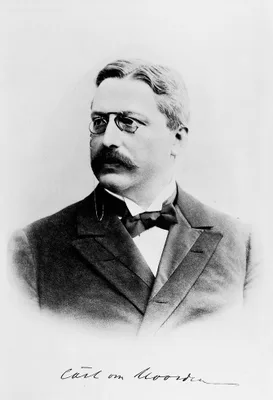
1893 NOORDEN, Carl Harko von (1858 – 1944)
Beiträge zur Lehre von Stoffwechsel. I. Grundriss einer Methodik der Stoffwechsel-Untersuchungen.
GMN 640 · https://historyofmedicine.com/id/1833
1895 FISCHER, Hermann Emil Louis (1852 – 1919); ACH, Lorenz (1868 – 1948)
Neue Synthese der Harnsäure und ihrer Methylderivate.
GMN 1888 · https://historyofmedicine.com/id/2504
1896 STARLING, Ernest Henry (1866 – 1927)
On the absorption of fluids from the connective tissue spaces.
Starling discovered the functional significance of the serum proteins.
GMN 647 · https://historyofmedicine.com/id/526
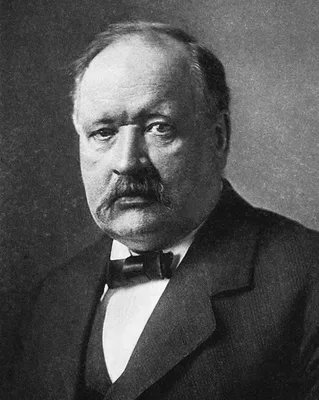
1896 ARRHENIUS, Svante August (1859 – 1927)
Ueber den Einfluss des atmosphärischen Kohlensäuregehalts auf die Temperatur der Erdoberfläche.
Arrhenius used basic principles of physical chemistry to estimate the extent to which increases in atmospheric carbon dioxide are responsible for the Earth's increasing surface temperature, the "greenhouse effect."
GMN 13046 · https://historyofmedicine.com/id/15297
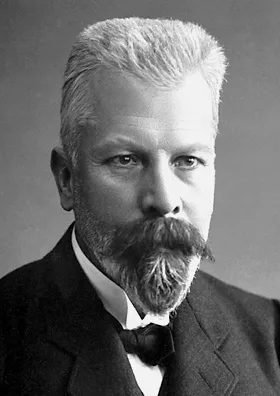
1897 BUCHNER, Eduard (1860 – 1907)
Alkoholische Gärung ohne Hefezellen.
Discovery of cell-free fermentation, the turning point in the study of enzymes. In 1907 Buchner was awarded the Nobel Prize in Chemistry "for his biochemical researches and his discovery of cell-free fermentation."
GMN 719.1 · https://historyofmedicine.com/id/1043
1897 MIESCHER, Johann Friedrich (1844 – 1895)
Die histochemischen und physiologischen Arbeiten. 2 vols.
In a letter to his uncle, the embryologist, Wilhelm His, written on December 17, 1892, and first published in this collected edition, Miescher described a kind of genetic code. He remarked how "some of the large molec…
GMN 11094 · https://historyofmedicine.com/id/13290
1898 ATWATER, Wilbur Olin (1844 – 1907); LANGWORTHY, Charles Ford (1864 – 1932)
A digest of metabolism experiments in which the balance of income and outgo was determined.
GMN 648 · https://historyofmedicine.com/id/527
1898 –1899 FISCHER, Hermann Emil Louis (1852 – 1919)
Bedeutung der Stereochemie fur die Physiologie.
GMN 720 · https://historyofmedicine.com/id/1046
1898 KOSSEL, Albrecht (1853 – 1927)
Ueber die Eiweissstoffe.
Kossel forecast the polypeptide nature of the protein molecule.
GMN 721 · https://historyofmedicine.com/id/1051
1899 MAGNUS-LEVY, Adolf (1865 – 1955); FALK, Ernst
Der Lungengaswechsel des Menschen in den verschiedenen. Altersstufen.
The first systematic study of the basal metabolism of normal individuals from childhood to old age.
GMN 649.1 · https://historyofmedicine.com/id/617