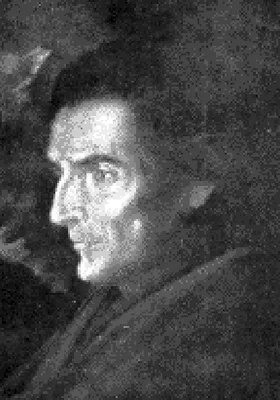
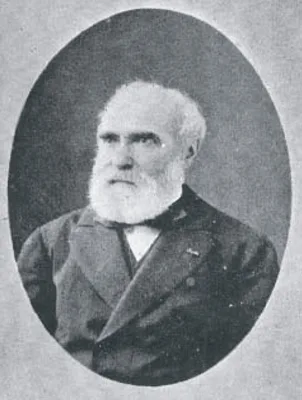
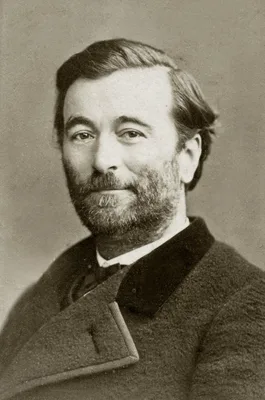
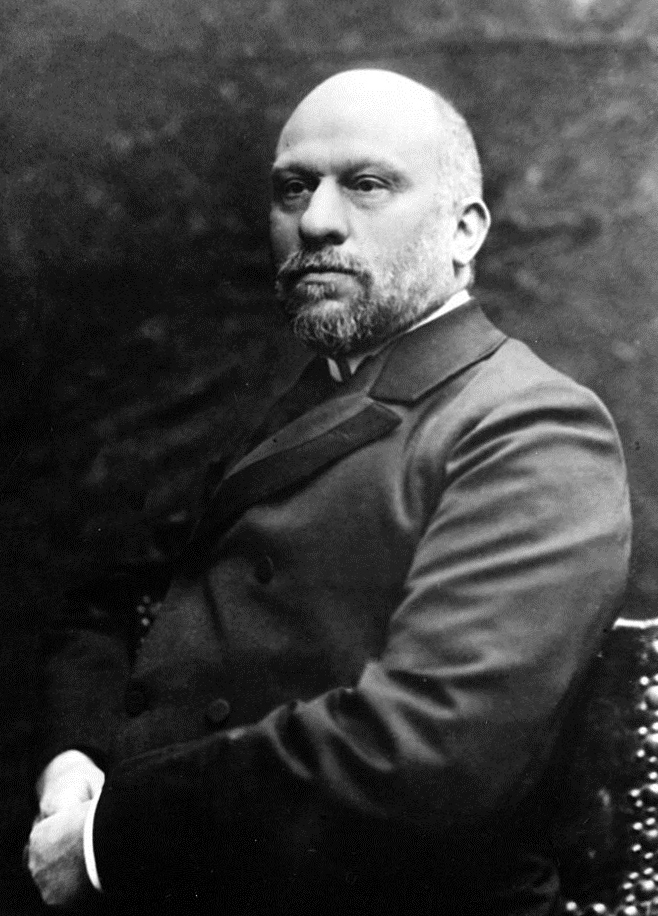
1590 ACOSTA, José de (1539 – 1600)
Historia natural y moral de las Indias.
One of the earliest detailed and realistic descriptions of the New World. Acosta hypothesized that the indigenous peoples of Latin America had migrated from Asia. He also divided the native peoples into three barbaria…
GMN 2244 · https://historyofmedicine.com/id/3843
1854 POL, B; WATELLE, T. J. J.
Mémoire sur les effets de la compression de l’air.
An early paper on “caisson sickness”.
GMN 2124 · https://historyofmedicine.com/id/2644
1861 JOURDANET, Denis (1815 – 1892)
Les altitudes de l’Amérique tropicale comparées au niveau des mers au point de vue de la constitution médicale.
Jourdanet discovered the anoxemia theory of high altitude sickness. See No. 943.1. Digital facsimile of the 1861 edition from bibliotecavirtual.ranm.es at this link.
GMN 935.2 · https://historyofmedicine.com/id/168
1871 JAMINET, Alphonse
Physical effects of compressed air, and of the causes of pathological symptoms produced on man, by increased atmospheric pressure employed for the sinking of piers, in the construction of the Illinois and St. Louis Bridge over the Mississippi River at St. Louis, Missouri.
Study of caisson disease and its treatement resulting from experience in treating workmen constructing the Eads Bridge, which opened in 1874. Digital facsimile from the Internet Archive at this link.
GMN 10483 · https://historyofmedicine.com/id/12676
1873 SMITH, Andrew Heermance (1837 – 1910)
The effects of high atmospheric pressure, including the caisson disease.
Classic study of caisson disease. Smith was "Late Surgeon to the New York Bridge Co. (Caisson Work)", treating workmen who built the Brooklyn Bridge. The Eads Bridge (St. Louis) and the Brooklyn Bridge (New York City)…
GMN 10482 · https://historyofmedicine.com/id/12675
1875 JOURDANET, Denis (1815 – 1892)
Influence de la pression de l’air sur la vie de l’homme. Climats d'altitude et climats du montagne. 2 vols.
Jourdanet’s observational work in remote areas of Latin America and Asia produced important evidence for Bert’s proof that altitude sickness is due to anoxemia. In La pression barométrique (No. 944) Bert described how…
GMN 943.1 · https://historyofmedicine.com/id/201
1878 BERT, Paul (1833 – 1886)
La pression barométrique. Recherches de physiologie expérimentale.
The most famous work in the history of altitude physiology, in which Bert proved that the principal symptoms of altitude sickness arise from reduced partial pressure of oxygen and not from diminution of total pressure…
GMN 944 · https://historyofmedicine.com/id/204
1897 MOSSO, Angelo (1846 – 1910)
Fisiologia dell’uomo sulle Alpi. Studii fatti sul Monte Rosa.
Mosso made important investigations on respiration at high altitudes. He considered that the respiratory symptoms produced at high altitudes were due to lack of carbon dioxide. English translation, London, 1898.
GMN 950 · https://historyofmedicine.com/id/1072
1906 ZUNTZ, Nathan (1847 – 1920); LOEWY, Adolf (1862 – 1937); CASPARI, Wilhelm (1872 – 1944); MÜLLER, Franz Robert (1871 – 1945)
Höheklima und Bergwanderungen in ihrer Wirkung auf den Menschen. Ergebnisse experimenteller Forschungen im Hochgebirge und Laboratorium.
Digital facsimile from Google Books at this link.
GMN 12297 · https://historyofmedicine.com/id/14519
1912 HILL, Sir Leonard Erskine (1866 – 1952)
Caisson sickness, and the physiology of work in compressed air.
GMN 2131 · https://historyofmedicine.com/id/2666
1912 SCHRÖTTER, Anton Hermann Victor Thomas von (Schrötter von Kristelli) (1870 – 1928)
Hygiene der Aeronautik und Aviatik.
Schrötter conducted a great deal of research on the physiological influence of barometric pressure and was one of the first to apply these observations to aviation medicine. Following flight tests he was the first to …
GMN 7177 · https://historyofmedicine.com/id/9344
1912 ZUNTZ, Nathan (1847 – 1920)
Zur Physiologie und Hygiene der Luftfahrt.
Luftfahrt und Wissenschaft, herausgegeben on Joseph Stricker. Heft 3.
GMN 7178 · https://historyofmedicine.com/id/9345
1913 DOUGLAS, Claude Gordon (1882 – 1963); HENDERSON, Yandell (1873 – 1944); HALDANE, John Burdon Sanderson (1892 – 1964); SCHNEIDER, E. C. (1874 – 1854)
Physiological observations made on Pike’s Peak, Colorado, with special reference to adaptation to low barometric pressures.
GMN 957 · https://historyofmedicine.com/id/254
1918 U.S. WAR DEPARTMENT, Air Service, Division of Military Aeronautics; WILMER, William Holland (1863 – 1936)
Manual of medical research laboratory.
Digital facsimile from Google Books at this link.
GMN 9597 · https://historyofmedicine.com/id/11784
1922 HALDANE, John Scott (1860 – 1936)
Respiration.
An account of the work of the Oxford School of Physiology, in particular the Pike’s Peak expedition (No. 957). Second edition, 1935, with J. G. Priestley.
GMN 961 · https://historyofmedicine.com/id/263
1943 BERT, Paul (1833 – 1886); FULTON, John Farquhar (1899 – 1960); HITCHCOCK, Fred A.; HITCHCOCK, Mary Alice
Barometric pressure: Researches in experimental physiology. Translated from the French by Mary Alice Hitchcock and Fred A. Hitchcock. [Foreward by John F. Fulton].
Digital facsimile from the Internet Archive at this link.
GMN 12192 · https://historyofmedicine.com/id/14402
1948 –1966 HOFF, Ebbe Curtis (1906 – 1985); GREENBAUM, Leon Jack Jr.
A bibliographical sourcebook of compressed air, diving and submarine medicine. 3 vols.
Vol. 1 by Hoff; Vols. 2 and 3 by Hoff and Greenbaum, Jr. Digital facsimiles of all three volumes from U.S. National Library of Medicine at this link.
GMN 12191 · https://historyofmedicine.com/id/14401
1960 HOUSTON, Charles Snead (1913 – 2009)
Acute pulmonary edema of high altitude.
Houston described four individuals who developed "edema of the lungs" as a result of high elevation activities. "He described chest X-rays with edema and non-specific changes on EKG. Even though these cases had been t…
GMN 12996 · https://historyofmedicine.com/id/15245
1987 HOUSTON, Charles Snead (1913 – 2009); SUTTON, John Robert (1941 – 1996); CYMERMAN, Allen; REEVES, J. T.
Operation Everest II: Man at extreme altitude.
In 1985 Houston, Sutton and Cymerman and colleagues in Canada used a decompression chamber to simulate a seven week ascent of Mt. Everest. This appears to be their first paper summarizing the overall results. Many pub…
GMN 12997 · https://historyofmedicine.com/id/15246
1998 WEST, John B. (1928 – )
High life: A history of high-altitude physiology and medicine.
GMN 7780 · https://historyofmedicine.com/id/9952
2003 PIANTADOSI, Claude Anthony
Human survival: Life and death in extreme environments.
GMN 12195 · https://historyofmedicine.com/id/14405