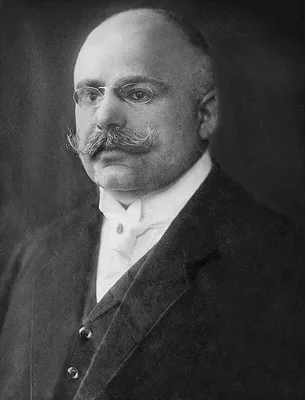
1680 ZAMBECCARI, Giuseppe (1665 – 1728)
Esperienze del Dottor Giuseppe Zambeccari intorno a diverse viscere tagliate a diversi animali viventi.
Proof that the spleen is not essential to life. For a translation and notes on the book, see Bull. Hist. Med., 1941, 9, 144-76, 311-31 (S. Jarcho).
GMN 3761 · https://historyofmedicine.com/id/4620
1832 HODGKIN, Thomas (1798 – 1866)
On some morbid appearances of the absorbent glands and spleen.
First full description of lymphadenoma, which Wilks in 1865 referred to as “Hodgkin’s disease”. This is more typically designated as Hodgkin's lymphoma. In 1666 Malpighi had vaguely outlined the condition. Hodgkin was…
GMN 3762 · https://historyofmedicine.com/id/4624
1836 QUITTENBAUM, Carl Friedrich (1793 – 1852)
Commentatio de splenis hypertrophia et historia extirpationis splenis hypertrophici cum fortuna adversa.
While most people in Germany still considered splenectomy beyond the bounds of possibility, Quittenbaum performed the operation in 1829, establishing it as a surgical procedure.
GMN 3763 · https://historyofmedicine.com/id/4627
1856 WILKS, Sir Samuel (1824 – 1911)
Cases of a peculiar enlargement of the lymphatic glands frequently associated with disease of the spleen.
Wilks really put Hodgkin’s disease “on the map”; the second paper for the first time attached Hodgkin’s name to the disease
GMN 3764 · https://historyofmedicine.com/id/4641
1857 SIMON, Gustav (1824 – 1876)
Die Exstirpation der Milz am Menschen.
GMN 3765 · https://historyofmedicine.com/id/4644
1866 GRIESINGER, Wilhelm (1817 – 1868)
Ein Fall von Anaemia splenica bei einem Kinde
First reported case of (infantile) splenic anemia.
GMN 3119 · https://historyofmedicine.com/id/4646
1872 LANGHANS, Theodor (1839 – 1915)
Das maligne Lymphosarkom (Pseudoleukämie).
Langhans noted the presence of giant cells in the lesions of Hodgkin’s disease.
GMN 3767 · https://historyofmedicine.com/id/4651
1878 GREENFIELD, William Smith (1846 – 1919)
Specimens illustrative of the pathology of lymphadenoma and leucocythemia
Greenfield also drew attention to the giant cells in lymphadenoma, which later became known as “Dorothy Reed’s giant cells” (see No. 3780).
GMN 3768 · https://historyofmedicine.com/id/4652
1885 PEL, Pieter Klazes (1852 – 1919)
Zur Symptomatologie der sog. Pseudo-Leukämie
“Pel-Ebstein disease”, a remittant pyrexia occurring in Hodgkin’s disease (see also No. 3771).
GMN 3770 · https://historyofmedicine.com/id/4654
1887 EBSTEIN, Wilhelm (1836 – 1912)
Das chronische Rückfallsfieber, eine neue Infektionskrankheit.
GMN 3771 · https://historyofmedicine.com/id/4657
1892 DRESCHFELD, Julius (1845 – 1907)
Clinical lecture on acute Hodgkin’s disease
Dreschfeld preceded Kundrat in differentiating Hodgkin’s disease and lymphosarcoma.
GMN 3772 · https://historyofmedicine.com/id/4659
1893 KUNDRAT, Hans (1845 – 1893)
Ueber Lympho-Sarkomatosis.
Kundrat separated lymphosarcoma (“Kundrat’s disease”) from other malignant tumors involving the lymphatic system.
GMN 2623 · https://historyofmedicine.com/id/3163
1894 BANTI, Guido (1852 – 1925)
La splenomegalia con cirrosi del fegato
“Banti’s syndrome”, Splenomegalic anemia. Reprinted with translation in Med. Classics, 1937, 1, 901-27. (For his earlier work on the subject, see No. 3126.)
GMN 3774 · https://historyofmedicine.com/id/4664
1897 PALTAUF, Richard (1858 – 1924)
Lymphosarkom (Lymphosarkomatose, Pseudoleukämie, Myelom, Chlorom).
“Paltauf-Sternberg disease” (see also No. 3776). On the European Continent the name “Hodgkin-Paltauf-Sternberg disease” is in use.
GMN 3775 · https://historyofmedicine.com/id/4668
1898 STERNBERG, Carl (1872 – 1935)
Ueber eine eigenartige, unter dem Bilde der Pseudoleukämie verlaufende Tuberkulose des lymphatischen Apparates.
In his classic description of lymphadenoma, Sternberg separated it from aleukemic leukemia, with which it had hitherto been included.
GMN 3776 · https://historyofmedicine.com/id/4672
1898 HAYEM, Georges (1841 – 1933)
Sur une variété particulière d’ictère chronique splénomégalique.
“Hayem–Widal disease” –acquired hemolytic anemia (see also No. 3783).
GMN 3777 · https://historyofmedicine.com/id/4673
1900 MINKOWSKI, Oscar (1858 – 1931)
Ueber eine hereditäre, unter dem Bilde eines chronischen Icterus mit Urobilinurie Splenomegalie, und Nierensiderosis verlaufende Affection.
“Minkowski–Chauffard disease”, familial hemolytic jaundice. See also No. 3781.
GMN 3779 · https://historyofmedicine.com/id/4676
1907 CHAUFFARD, Anatole Marie Émile (1855 – 1932)
Pathogénie de l’ictère de l’adulte.
“Minkowski–Chauffard disease” (see No. 3779).
GMN 3781 · https://historyofmedicine.com/id/4679
1907 WIDAL, Georges-Fernand Isidor (1862 – 1929); ABRAMI, Pierre (1879 – 1945)
Ictères hémolytiques non congénitaux avec anémie.
“Widal-Abrami disease” (Hayem-Widal disease), acquired hemolytic anemia. (See also No. 3777.)
GMN 3783 · https://historyofmedicine.com/id/4682
1925 BRILL, Nathan Edwin (1860 – 1925); ET AL
Generalized giant lymph follicle hyperplasia of lymph nodes and spleen; a hitherto undescribed type.
See No. 3787. With G. Baehr and N. Rosenthal.
GMN 3786 · https://historyofmedicine.com/id/4690
1926 PICK, Ludwig (1868 – 1935)
Der Morbus Gaucher und die ihm ähnlichen Erkrankungen. (Die lipoidzellige Splenohepatomegalie Typus Niemann und die diabetische Lipoidzellenhyperplasie der Milz.)
“Niemann-Pick disease” – a group of inherited, severe metabolic disorders, first noted by Albert Niemann in 1914, (No. 3784) in 1914. Pick’s account is of greater importance.
GMN 3785 · https://historyofmedicine.com/id/4686
1927 SYMMERS, Douglas (1879 – 1952)
Follicular lymphadenopathy with splenomegaly: a newly recognized disease of the lymphatic system.
“Brill-Symmers disease” (see No. 3786).
GMN 3787 · https://historyofmedicine.com/id/4691
1938 DAMESHEK, William (1900 – 1969); SCHWARTS, Steven Otto (1911 – )
Hemolysins as the cause of clinical and experimental hemolytic anemias.
Acquired hemolytic anemia was the first condition to be recognized as an auto-immune disease.
GMN 3787.1 · https://historyofmedicine.com/id/4694
1939 GILBERT, René
Radiotherapy in Hodgkin’s disease (malignant granulomatosis). Anatomic and clinical foundations; governing principles; results.
Gilbert was among the first to achieve durable responses to radiotherapy in Hodgkin’s disease.
GMN 3787.2 · https://historyofmedicine.com/id/4696
1946 GILMAN, Alfred Zack (1908 – 1984); PHILLIPS, Frederick Stanley (1916 – )
The biological actions and therapeutic applications of the ß-chloroethyl amines and sulfides.
Introduction of nitrogen mustard in treatment of Hodgkin’s disease
GMN 3788 · https://historyofmedicine.com/id/4698
1950 RHOADS, Cornelius Packard (1898 – 1959); ET AL
Triethylene melamine in the treatment of Hodgkin’s disease and allied neoplasms
With D. A. Karnofsky, J. H. Burchenal, and L. F. Craver.
GMN 3788.1 · https://historyofmedicine.com/id/4699
1963 JOHNSON, Irving Stanley (1925 – 2014); ET AL
The Vinca alkaloids: a new class of oncolytic agents.
Clinical use of vinblastine (for Hodgkin’s disease and other lymphomas) and vincristine (for acute leukemias of childhood). With J. G. Armstrong, M. Gorman, and J. P. Burnett. Preliminary communication in J. Lab. clin…
GMN 2660.16 · https://historyofmedicine.com/id/3406
1994 GLISSON, Francis (1597 – 1677); CUNNINGHAM, Andrew
English manuscripts of Francis Glisson (1): from Anatomia hepatis (The anatomy of the liver), 1654. Cambridge Wellcome Texts and Documents, no. 3. Edited by Andrew Cunningham.
Publishes for the first time the surviving partial English text of Glisson's book on the liver, and of the work's postscript on the lymphatic system. Glisson wrote in English, but his text was translated into Latin fo…
GMN 11506 · https://historyofmedicine.com/id/13705