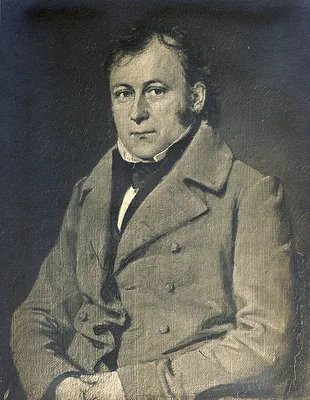
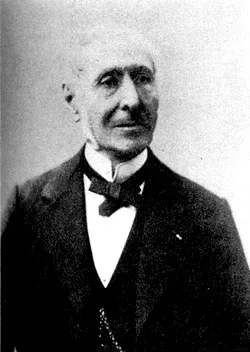
1776 –1778 LE PECQ DE LA CLÔTURE, Louis (1736 – 1804)
(1) Observations sur les maladies épidemiques, Année 1770, ouvrage rédigé d'après le tableau des epidémiques d'Hippocrate, et dans lequel on indique la meilleure méthode d'observer ce genre de maladies ... Publié par ordre du gouvernement, et aux fraix du roi. (2) Collection d'observations sur les maladies et constitutions épidémiques; ouvrage qui expose une suite de quinze années d'observations, & dans lequel les épidémies, les constitutions régnantes & intercurrentes, sont liées, selon le voeu d'Hippocrate, avec les causes météorologiques, locales & relatives aux différens climats, ainsi qu'avec l'histoire naturelle & médicale de la Normandie. On y a joint un appendix sur l'ordre des constitutions épidémiques ... Pub. par ordre du gouvernement .… 3 vols.
The first title, in 1 volume, was published in 1776; the second work in 2 vols., supplementing the first work, was published in 1778. In these two bioclimatological and biogeographical studies of disease in Normandy, …
GMN 12272 · https://historyofmedicine.com/id/14490
1777 ZIMMERMANN, Eberhard August Wilhelm von (1743 – 1815)
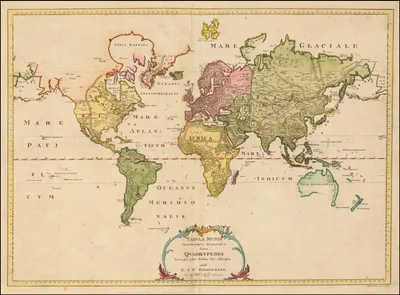
Specimen zoologiae geographicae, quadrupedem domicilia et migrationes sistens dedit, tabulamque mundi zoographicam adjunxit.
The first textbook of zoogeography, containing the first world map showing the distribution of mammals. French translation of part 1 only by Jakob Mauvillon: Zoologie géographique. Premier article, L'homme (Cassel: Im…
GMN 145.53 · https://historyofmedicine.com/id/2442
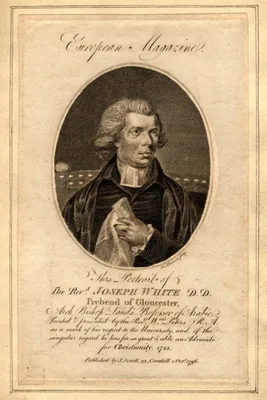
1800 ABDALLATIF AL-BAGHDADI (عبداللطيف البغدادي), [Abd al-Latif al-Baghdadi] (1162 – 1231); WHITE, Joseph (1745 – 1814); POCOCKE, Edward (1648 – 1727)
Historiae Aegypti compendium, Arabice et Latine. Partim ipse vertit, partim a Pocockio versum edendum curavit, notisque illustravit J. White.
Arabic-Latin bilingual text, edited by White, incorporating a translation begun by Edward Pococke the Younger (1648-1727). Abd al-Latif gave a good description of the fauna and flora of Egypt, its inhabitants and some…
GMN 1768 · https://historyofmedicine.com/id/3306
1805 HUMBOLDT, Friedrich Wilhelm Heinrich Alexander von (1769 – 1859); BONPLAND, Aimé Jacques Alexandre (1773 – 1858)
Essai sur la géographie des plantes; accompagné d’un tableau physique des régions équinoxiales.
One of the first works on the geographical distribution of plants. Humboldt was a pioneer student of geographical–ecological plant associations. The sheets of this work were reissued as Vol. I of the authors' Voyage a…
GMN 145.55 · https://historyofmedicine.com/id/2459
1807 –1834 HUMBOLDT, Friedrich Wilhelm Heinrich Alexander von (1769 – 1859); BONPLAND, Aimé Jacques Alexandre (1773 – 1858)
Voyage aux régions équinoxiales du nouveau continent, fait en 1799, 1800, 1801, 1802, 1803 et 1804. 34 vols.
In 1799 Humboldt and Bonpland embarked on a six-year tour of research through South America and Mexico, a trip which would afterwards be called, justifiably, "the scientific discovery of America." The two amassed exha…
GMN 7452 · https://historyofmedicine.com/id/9624
1815 DRAKE, Daniel (1785 – 1852)
Natural and statistical view, or picture of Cincinnati and the Miami country, illustrated by maps: With an appendix, containing observations on the late earthquakes, the aurora borealis, and south-west wind.
Modeled on Thomas Jefferson's Notes on the State of Virginia, this work covered the geography, antiquities, topography, medical conditions and goverment of Ohio. Digital facsimile from digital.cincinnatilibrary.org at…
GMN 11520 · https://historyofmedicine.com/id/13719
1817 HEUSTIS, Jabez Wiggins (1784 – 1841)
Physical observations, and medical tracts and researches, on the topography and diseases of Louisiana.
Digital facsimile from U.S. National Library of Medicine at this link.
GMN 10519 · https://historyofmedicine.com/id/12712
1819 BATEMAN, Thomas (1778 – 1821)
Reports on the diseases of London, and the state of the weather, from 1804-1816; including practical remarks on the causes and treatment of the former; and preceded by a historical view of the state of health and disease in the metropolis in past times.
GMN 10065 · https://historyofmedicine.com/id/12254
1822 SCHOUW, Joakim Frederik (1789 – 1852)
Grundtræk til en almindelig Plantegeographie.
The first atlas of the geography of plants, including distribution maps for the eastern and western hemisphere. Schouw translated the work into German and had the translation published the following year: Grundzüge ei…
GMN 7695 · https://historyofmedicine.com/id/9867
1830 HENNEN, John (1779 – 1828)
Sketches of the medical topography of the Mediterranean; comprising an account of Gibraltar, the Ionian Islands, and Malta. To which is prefixed a sketch of a plan for memoirs on medical topography
Digital facsimile from Google Books at this link.
GMN 9713 · https://historyofmedicine.com/id/11900
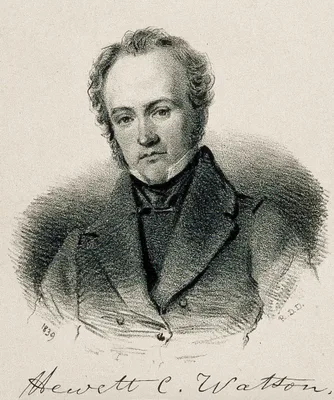
1832 WATSON, Hewett Cottrell (1804 – 1881)
Outlines of the geographical distribution of British plants; belonging to the division of vasculares or cotyledones.
“Watson's major botanical endeavour was producing several versions of a work first entitled Outlines of the Geographical Distribution of British Plants (1832); it reached its most extensive form as Cybele Britannica, …
GMN 11642 · https://historyofmedicine.com/id/13843
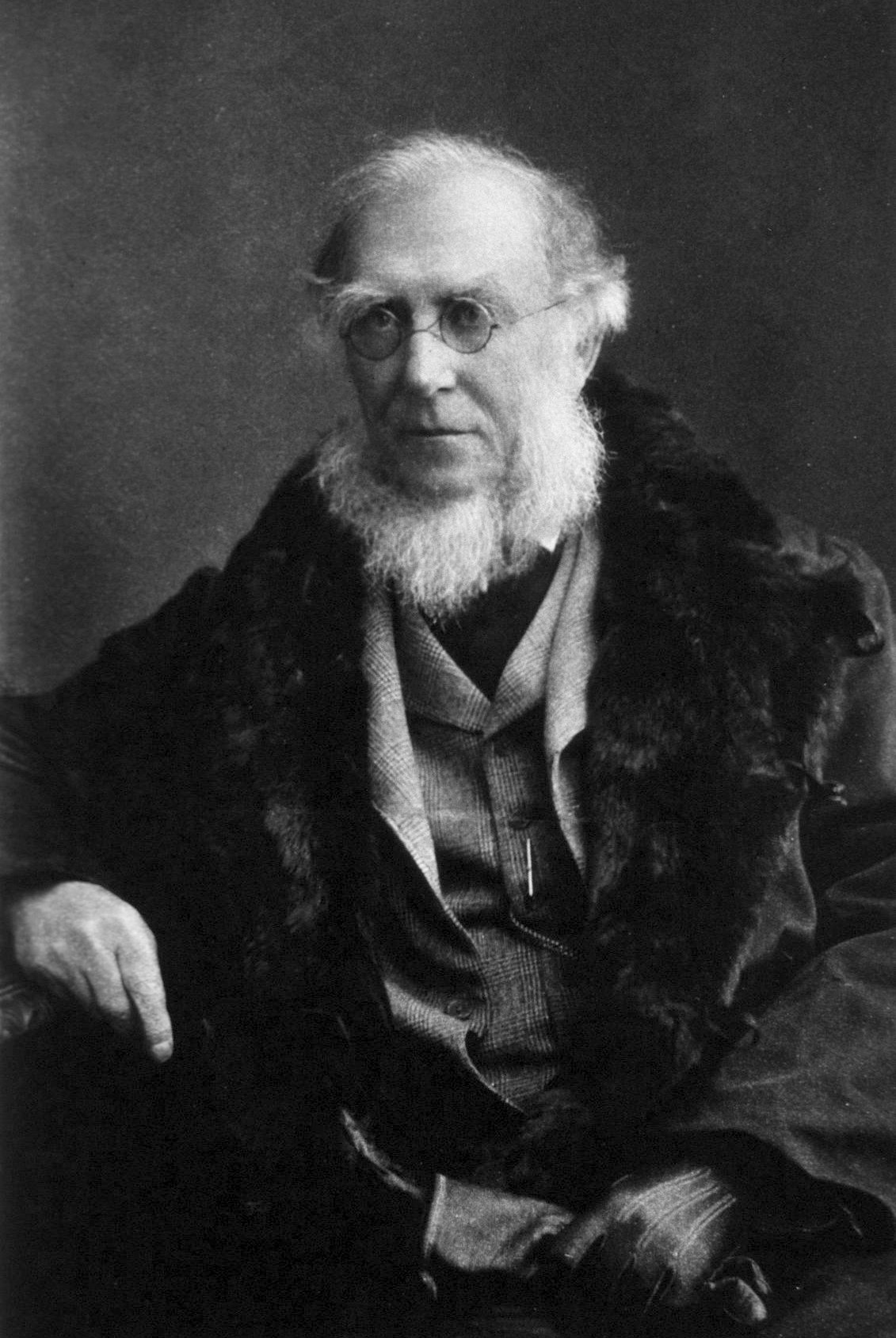
1843 –1859 HOOKER, Sir Joseph Dalton (1817 – 1911)
The botany of the Antarctic voyage of H. M. Discovery Ships Erebus and Terror in the years 1839-1843.
Part 1: Flora of Lord Auckland and Campbell's Islands (1843-45); Part 2: Flora of Fuegia, the Falklands, Karguellen's land, etc. (1845-47); Part 3: Flora of New Zealand. 2 vols. (1851-53); Part 4: Flora of Tasmania. 2…
GMN 7448 · https://historyofmedicine.com/id/9620
1843 HINDS, Richard Brinsley (1811 – 1846)
The regions of vegetation; being an analysis of the distribution of vegetable forms over the surface of the globe in connexion with climate and physical agents.
Digital facsimile of the copy presented by Hinds to Charles Darwin, with Darwin's annotations, from the Biodiversity Heritage Library at this link. This work also appeared as a section of Edward Belcher's Narrative of…
GMN 9168 · https://historyofmedicine.com/id/11347
1843 CRUZ, Francisco Ignacio dos Santos (1787 – 1859)
Ensaio sobre a topographia medica de Lisboa. ou consideraçoens especiaes relativas a' sua historia; meteorologia; geognosia; agoas potaveis; zoologia, quanto aos animaes mais utei, e em quanto ao homem sua parte hygienica e medica; a população, e suas respectivas observaçoens, &c.
GMN 10234 · https://historyofmedicine.com/id/12424
1845 –1849 BERGHAUS, Heinrich Karl Wilhelm (1797 – 1884)
Dr. Heinrich Berghaus’ Physikalischer Atlas: oder, Sammlung von Karten, auf denen die hauptsächlichsten Erscheinungen der anorganischen und organischen Natur nach ihrer geographischen Verbreitung und Vertheilung bildlich dargestellt sind. 2 vols.
Berghaus created a new genre of thematic atlases. He issued this work gradually in eighteen installments from 1837 to1848. The first edition of the complete atlas consists of ninety maps in two vols., dated 1845 and 1…
GMN 7694 · https://historyofmedicine.com/id/9866
1845 –1862 HUMBOLDT, Friedrich Wilhelm Heinrich Alexander von (1769 – 1859)
Kosmos. Entwurf einer physischen Weltbeschreibung. 5 vols. and atlas.
This work includes founding material in geography, plant geography, orography, climatology and meterology, among other sciences, and citations to 9,000 sources. The atlas was issued without Humboldt's participation, a…
GMN 8223 · https://historyofmedicine.com/id/10399
1849 JOHNSTON, Alexander Keith (1804 – 1871)
Physical Atlas. A series of maps & illustrations of the geographical distribution of natural phenomena. Embracing I. Geology. II Hydrography. III Meterology. IV. Natural History.
30 double-page maps, 15 of which are after the physical atlas of Berghaus. Contributors included Edward Forbes, George Waterhouse, Abbe Boué, etc. Various concern disease.
GMN 7693 · https://historyofmedicine.com/id/9865
1850 –1851 FENNER, Erasmus Darwin (1807 – 1866)
Southern medical reports: Consisting of general and special reports, on the medical topography, meteorology, and prevalent diseases, in the following states: Louisiana, Alabama, Mississippi, North Carolina, South Carolina, Georgia, Florida, Arkansas, Tennessee, Texas. Edited by E. D. Fenner. 2 vols.
Regarding Fenner see, John Duffy, "Erasmus Darwin Fenner (1807–1866) Journalist, Educator, and Sanitarian," Academic Medicine. 35 (1960) 819-831. Digital facsimile of the 1850-51 edition from the Internet Archive at t…
GMN 10517 · https://historyofmedicine.com/id/12710
1851 STILLMAN, Jacob David Babcock (1819 – 1888)
Observations on the medical topography and diseases (especially diarrhoea) of the Sacramento Valley, California, during the Years 1849, 1850.
Stillman was personal physician to Leland Stanford, the first governor of California, and was a partner of railroad magnate Mark Hopkins from their days on board a ship to California in 1849. Stillman was also co-foun…
GMN 12086 · https://historyofmedicine.com/id/14295
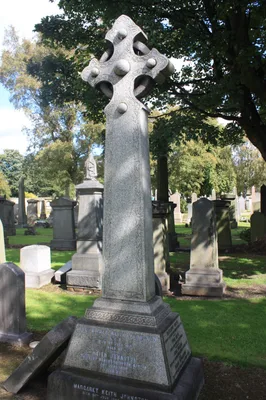
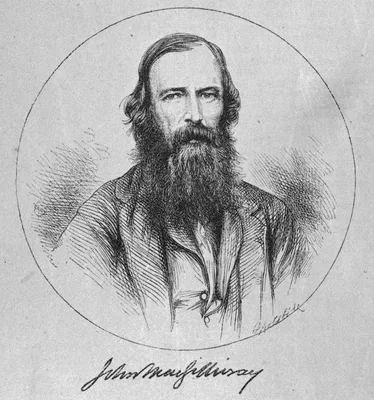
1852 MACGILLIVRAY, John (1821 – 1867)
Narrative of the voyage of H.M.S. Rattlesnake, commanded by the late Captain Owen Stanley ...during the years 1846-1850, including discoveries and surveys in New Guinea, the Louisiade Archipelago, etc. to which is added the account of Mr. E. B. Kennedy's Expedition for the exploration of the Cape York Peninsula. 2 vols.
Macgillivray was naturalist to the expedition. Thomas Huxley served as assistant surgeon on this voyage; Huxley's diary of the voyage was first published posthumously in 1935. See No. 7449. Digital facsimile of MacGil…
GMN 7451 · https://historyofmedicine.com/id/9623
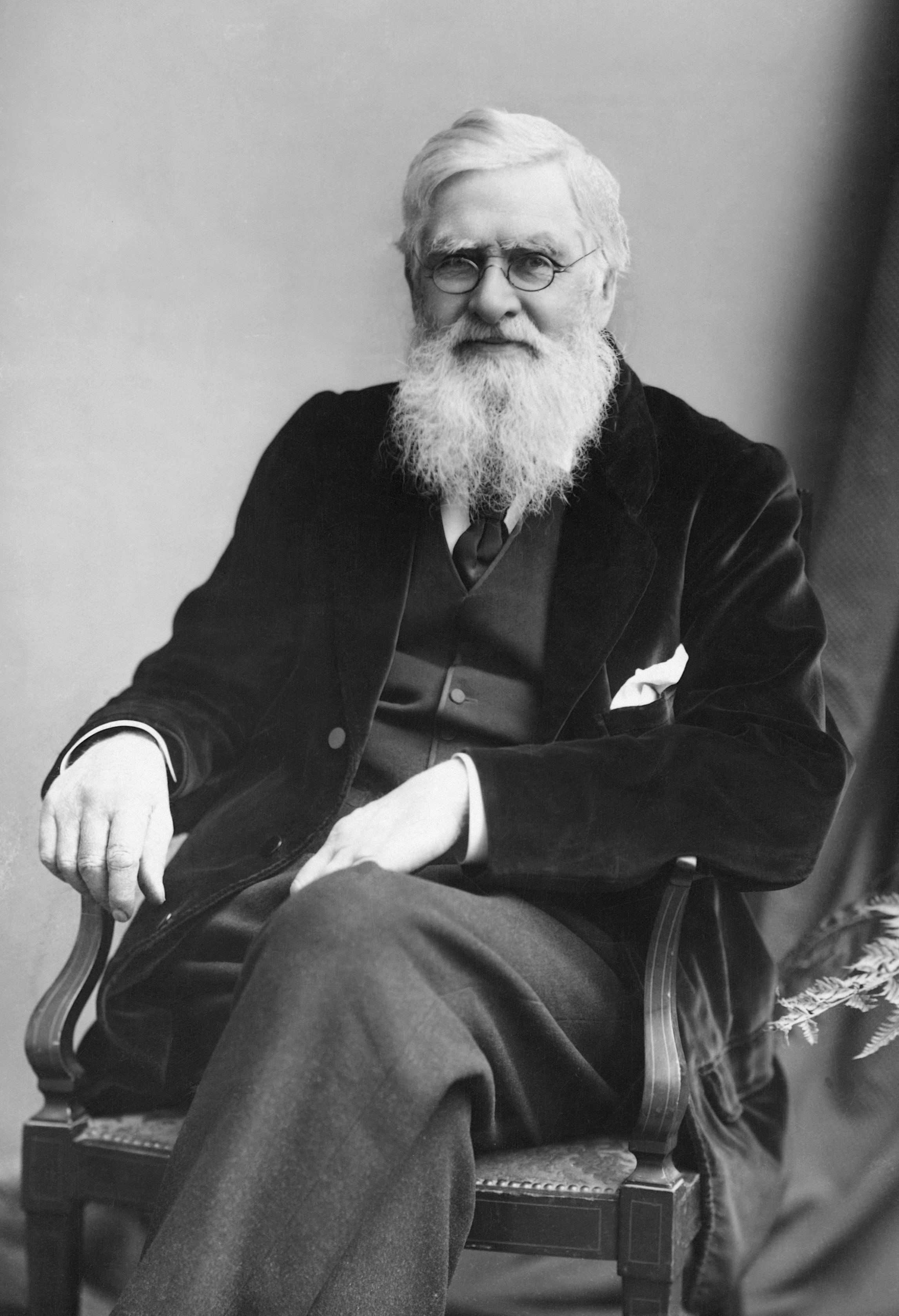
1853 WALLACE, Alfred Russel (1823 – 1913)
A narrative of travels on the Amazon and Rio Negro, with an account of the native tribes and observations on the climate, geology and natural history of the Amazon Valley.
Digital facsimile from Google Books at this link.
GMN 7445 · https://historyofmedicine.com/id/9617
1853 FRANCIS, D. J. T.
Change of climate considered as a remedy in dyspetic, pulmonary, and other chronic affections; with an account of the most eligible places of residence for invalids in Spain, Portugal, Algeria, etc., at different seasons of the year; and an appendix on the mineral springs of the Pyrenees, Vichy, and Aix les Bains.
The author, a pulmonary specialist at Cavendish Square, London, provides a detailed manual for invalid travellers, seeking cures for tuberculosis, and indigestion and "nervous affections." It may be one of the first t…
GMN 10235 · https://historyofmedicine.com/id/12425
1854 HOOKER, Sir Joseph Dalton (1817 – 1911)
Himalayan journals; or, notes of a naturalist in Bengal, the Sikkim and Nepal Himalayas, the Khasia Mountains, &c. 2 vols.
Digital facsimile from the Internet Archive at this link.
GMN 7447 · https://historyofmedicine.com/id/9619
1855 PIÑA Y PEÑUELA, Ramón
Topografía médica de la isla de Cuba.
Digital facsimile from the U.S. National Library of Medicine at this link.
GMN 11522 · https://historyofmedicine.com/id/13721
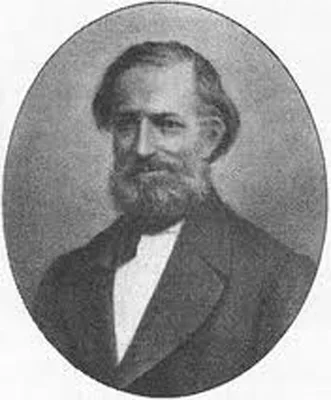
1855 CANDOLLE, Alphonse Pyramus de (1806 – 1893)
Géographie botanique raisonnée ou exposition des faits principaux et des lois concernant la distribution géographique des plantes de l'époque actuelle. 2 vols.
This work work organized and systematized the huge mass of data being collected by the numerous scientific expeditions of the time to explain the geographical distribution of plants. Digital facsimile from BnF Gallica…
GMN 11884 · https://historyofmedicine.com/id/14088
1857 PRASLOW, J.
Der Staat Californien in medicinisch-geographischer Hinsicht.
Dr. Praslow practiced medicine in San Francisco from 1849-1856, after which he returned to Germany. His book provides information concerning health and epidemics in San Francisco during this early period. Translated i…
GMN 10427 · https://historyofmedicine.com/id/12620
1857 BLODGET, Lorin (1823 – 1901)
Climatology of the United States, and of the temperate latitudes of the North American Continent. Being a full comparison of these with the climatology of the temperate latitudes of Europe and Asia. And especially in regard to agriculture, sanitary investigations, and engineering. With isothermal and rain charts for each season, the extreme months, and the year...
Digital facsimile from Google Books at this link.
GMN 12091 · https://historyofmedicine.com/id/14300
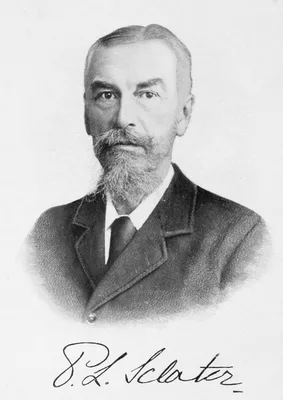
1858 SCLATER, Philip Lutley (1829 – 1913)
On the general geographical distribution of the members of the class Aves.
Sclater defined and named six zoological regions: the Palaearctic, Aethiopian, Indian, Australasian, Nearctic and Neotropical. With some name revision (Afrotropic for Aethiopian, and Indomalayan for Indian,) these zoo…
GMN 9178 · https://historyofmedicine.com/id/11357
1859 HOOKER, Sir Joseph Dalton (1817 – 1911)
On the flora of Australia, its origin, affinities, and distribution; being an introductory essay to the Flora of Tasmania. Offprint from The Botany of the Antarctic Voyage of H. M. Discovery Ships ‘Erebus’ and ‘Terror’, Vol. III (Flora Tasmaniae), part I (June, 1859).
The first important botanical work by a supporter of Darwin’s theory of evolution by natural selection. Hooker, a botanist and plant geographer, had been a close friend of Darwin for many years, and was aware of Darwi…
GMN 7446 · https://historyofmedicine.com/id/9618
1863 –1878 BENTHAM, George (1800 – 1884); MUELLER, Baron Sir Ferdinand Jacob Heinrich von (1825 – 1896)
Flora Australiensis: A description of the plants of the Australian territory by George Bentham, assisted by Ferdinand Mueller. 7 vols.
The first comprehensive flora of any large continental area. It included descriptions of 8125 species. "Bentham prepared the flora from Kew; with Mueller, the first plant taxonomist residing permanently in Australia, …
GMN 9172 · https://historyofmedicine.com/id/11351
1866 HIRSCH, August (1817 – 1894)
Die Meningitis cerebro-spinalis epidemica vom historisch-geographischen und pathologisch-therapeutischen Standpunkte.
Digital facsimile from the Hathi Trust at this link.
GMN 12347 · https://historyofmedicine.com/id/14571
1875 GIFT, George Washington (1833 – 1879)
Something about California: Being a description of its climate, health, wealth and resources, compressed into small compass: Marin County: Its industries, roads, appearance, health and population, also, a series of carefully written and well considered articles and paragraphs describing the sanatarium of San Rafael in which the mildness and equability of its climate are explained.
This 32-page pamphlet was probably the first separate publication concerning health matters in Marin County, California, my county of residence during the years in which I wrote this online bibliography-- J.M.N. Digit…
GMN 11307 · https://historyofmedicine.com/id/13505
1876 WALLACE, Alfred Russel (1823 – 1913)
The geographical distribution of animals. 2 vols.
"In 1872, at the urging of many of his friends, including Darwin, Philip Sclater, and Alfred Newton, Wallace began research for a general review of the geographic distribution of animals. He was unable to make much pr…
GMN 145.6 · https://historyofmedicine.com/id/2488
1878 WALLACE, Alfred Russel (1823 – 1913)
Tropical nature and other essays.
"Wallace's extensive work in biogeography made him aware of the impact of human activities on the natural world. In Tropical Nature and Other Essays (1878), he warned about the dangers of deforestation and soil erosio…
GMN 9174 · https://historyofmedicine.com/id/11353
1880 WALLACE, Alfred Russel (1823 – 1913)
Island life: Or, the phenomena and causes of insular faunas and floras, including a revision and attempted solution of the problem of geological climates.
"In 1880, Wallace published the book Island Life as a sequel to The Geographical Distribution of Animals. It surveyed the distribution of both animal and plant species on islands. Wallace classified islands into three…
GMN 7440 · https://historyofmedicine.com/id/9612
1883 DEBLENNE, Paul-Richard (1853 – )
Essai de géographie médicale de l'Ille Nosi-Bé près la cote nord-ouest de Madagascar (avec cartes). Thèse pour le doctorat en médicine.
GMN 14039 · https://historyofmedicine.com/id/16347
1884 POINCARÉ, Émile Léon (1828 – 1892)
Prophylaxie et géographie médicale: Des principales maladies tributaires de l'hygiène.
Includes several colored world maps of diseases. Digital facsimile from the Internet Archive at this link.
GMN 12161 · https://historyofmedicine.com/id/14371
1898 SCHIMPER, Andreas Franz Wilhelm (1856 – 1901)
Pflanzengeographie auf Physiologischer Grundlage.
In this work on the geographical distribution of plants Schimper coined the terms tropical rainforest and sclerophyll. English translation by William R. Fisher, revised and edited by Percy Groom and Isaac Bayley Balfo…
GMN 8536 · https://historyofmedicine.com/id/10713
1908 WALLACE, Alfred Russel (1823 – 1913); SPRUCE, Richard (1817 – 1893)
Notes of a botanist on the Amazon & Andes, being records of travel on the Amazon and its tributaries, the Trombetas, Rio Negro, Uaupés, Casiquiari, Pacimoni, Huallaga, and Pastas; as also to the cataracts of the Orinoco, along the eastern side of the Andes of Peru and Ecuador, and the shores of the Pacific during the years 1849-1864. Edited and condensed by Alfred Russel Wallace..., with a biographical introduction, portrait, seventy-one illustrations and seven maps. 2 vols.
Digital facsimile from Google Books at this link.
GMN 7444 · https://historyofmedicine.com/id/9616
1918 COUNCILMAN, William Thomas (1854 – 1933); LAMBERT, Robert Archibald (1883 – 1960)
The medical report of the Rice Expedition to Brazil.
The expedition was led by Alexander H. Rice, Jr., an American physician, geographer, geologist and explorer noted for his expeditions to the Amazon Basin. "As a geographer and explorer Rice specialized in rivers.[1][7…
GMN 11014 · https://historyofmedicine.com/id/13210
1935 EKMAN, Sven
Tiergeographie des Meeres.
An analysis of all pertinent literature on marine animal distribution. Second edition published as English translation: Zoogeography of the sea (London: Sidgwick & Jackson, 1953).
GMN 9184 · https://historyofmedicine.com/id/11364
1947 ASHBURN, Percy Moreau (1872 – 1940)
The ranks of death: A medical history of the conquest of America
Digital facsimile from the Hathi Trust at this link.
GMN 10216 · https://historyofmedicine.com/id/12405
1948 DARLINGTON, Philip Jackson Jr. (1904 – 1983)
The geographical distribution of cold-blooded vertebrates.
"Darlington's most important contribution to science was his theory of the Old World tropical origin of dominant vertebrate groups. He first sketched out this formulation—which would influence research in zoogeography…
GMN 9179 · https://historyofmedicine.com/id/11358
1967 WILSON, Edward Osborne (1929 – 2021); MACARTHUR, Robert Helmer (1930 – 1972)
The theory of island biogeography.
MacArthur and Wilson showed that the species richness of an area could be predicted in terms of such factors as habitat area, immigration rate and extinction rate.
GMN 8155 · https://historyofmedicine.com/id/10331
1972 MCGLASHAN, Neil D.
Medical geography: Techniques and field studies. Ediited by N. D. McGlashan
Chapter 5: "Computers and mapping in medical geography" by R. W. Armstrong appears to be one of the earliest reviews of this subject.
GMN 10505 · https://historyofmedicine.com/id/12698
1977 –2019
Geographers biobibliographical studies. Vols. 1-38
Annual volumes edited by a changing group of experts. Ongoing.
GMN 13018 · https://historyofmedicine.com/id/15268
1994 CAVALLI-SFORZA, Luigi Luca (1922 – ); MENOZZI, Paolo; PIAZZA, Alberto (1941 – )
The history and geography of human genes.
The first full-scale attempt to reconstruct where human populations originated and the paths by which they spread throughout the world, using genetic data integrated with data from geography, ecology, archaeology, phy…
GMN 8538 · https://historyofmedicine.com/id/10715
1996 QUAMMEN, David (1948 – )
The song of the Dodo: Island biogeography in an age of extinctions.
GMN 10435 · https://historyofmedicine.com/id/12628
2000 BARRETT, Frank A.
Disease & geography: The history of an idea.
GMN 9789 · https://historyofmedicine.com/id/11977
2003 ALCHON, Susan Austin (1952 – )
A pest in the land: New World epidemics in a global perspective.
GMN 10183 · https://historyofmedicine.com/id/12372