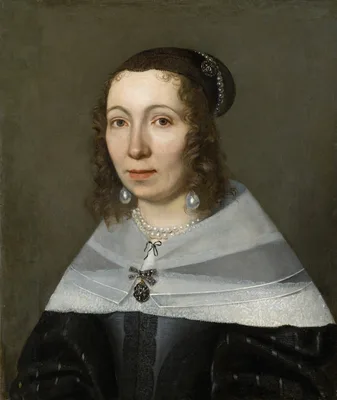
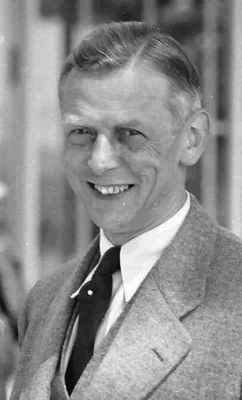
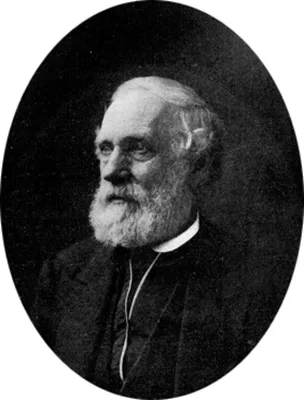
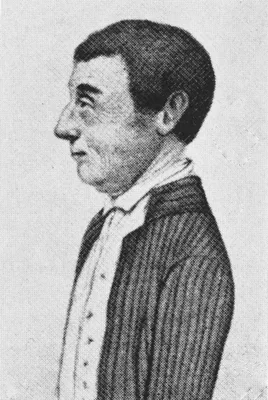
1931 PFEIFFER, Max Adolf (1875 – 1957); MERIAN, Maria Sibylla (1647 – 1717)
Die Werke der Maria Sibylle Merian: bibliographisch Zusammengestellt.
GMN 11777 · https://historyofmedicine.com/id/13978
1937 –1946 OSBORN, Herbert (1856 – 1954)
Fragments of entomological history including some personal recollections of men and events. 2 vols.
GMN 9358 · https://historyofmedicine.com/id/11540
1938 SHANNON, Raymond Corbett (1894 – 1945); ET AL
Yellow fever virus in jungle mosquitoes.
Haemagogus sp. shown to be vectors of yellow fever. With L. Whitman and M. Frania.
GMN 5467.1 · https://historyofmedicine.com/id/7600
1946 FRISCH, Karl Ritter von (1886 – 1982)
Die Tänze der Bienen.
Von Frisch discovered the waggle dance, a particular figure-eight dance of honey bees by which successful foragers can communicate information with other members of their colony about the direction and distance to pat…
GMN 14138 · https://historyofmedicine.com/id/16452
1952 OSBORN, Herbert (1856 – 1954)
A brief history of entomology including time of Demosthenes and Aristotle to modern times with over five hundred portraits.
GMN 9357 · https://historyofmedicine.com/id/11539
1953 REEVES, William C. (1916 – 2004)
Quantitative field studies on a carbon dioxide chemotropism of mosquitoes.
Reeves demonstrated that mosquitoes detect their prey by sensing the carbon dioxide that animals exhale. (It was later shown that some mosquitoes can detect their prey from more than 165 feet away.) (Thanks to Juan We…
GMN 11075 · https://historyofmedicine.com/id/13271
1959 BUTENANDT, Adolf Friedrich Johann (1903 – 1995); KARLSON, Peter
Pheromones (ectohormones) in insects.
Karlson and Butenandt (Nobel Prize 1939) defined pheromones as “substances which are secreted to the outside by an individual of the same species, in which they release a specific reaction, for example, a definite beh…
GMN 14056 · https://historyofmedicine.com/id/16366
1960 CHRISTOPHERS, Samuel Rickard (1873 – 1978)
Aëdes Aegypti (L.) The yellow fever mosquito: Its life history, bionomics and structure.
GMN 9390 · https://historyofmedicine.com/id/11573
1960 LISNEY, Arthur A.
A bibliography of British Lepidoptera, 1608-1799.
Bibliography of British works on butterflies and moths from the early seventeenth to late eighteenth centuries. Includes biographical information on the authors covered. Plates are mainly portraits of the authors.
GMN 10569 · https://historyofmedicine.com/id/12762
1978 SERVICE, Michael William
A short history of medical entomology.
GMN 358.1 · https://historyofmedicine.com/id/306
1979 SPIELMAN, Andrew (1930 – 2006); CLIFFORD, Carlton M.; PIESMAN, Joseph; ET AL
Human babesiosis on Nantucket Island, USA: Description of the vector, Ixodes dammini, N. Sp. (Acarina: Ixodidae)
Order of authorship in the original paper was Spielman, Clifford, Piesman. The authors identified and described the insect vector of Babesiosis. This was a new species; the same species causes Lyme disease. (Thanks to…
GMN 10888 · https://historyofmedicine.com/id/13084
1988 DAVIES, Richard Gareth (1920 – )
Outlines of entomology. Seventh edition.
Includes an outstanding analytical bibliography of the primary entomological literature.
GMN 11774 · https://historyofmedicine.com/id/13975
1992 –2012 CLEMENTS, Alan N.
The biology of mosquitos. Vol. 1: Development, nutrition and reproduction. Vol. 2: Sensory perception and behaviour. Vol. 3: Transmission of viruses and interraction with bacteria.
GMN 11862 · https://historyofmedicine.com/id/14066
1993 BUSVINE, James Robert
Disease transmission by insects: Its discovery and 90 years of effort to prevent it.
GMN 13187 · https://historyofmedicine.com/id/15448
2000 SALMON, Michael A.; MARREN, Peter; HARLEY, Basil H. (1931 – 2017)
The Aurelian legacy: British butterflies and their collectors. By Michael A. Salmon with additional material by Peter Marren and Basil Harley.
GMN 10670 · https://historyofmedicine.com/id/12863
2002 DAMKAER, David M.
The copedologist's cabinet: A biographical and bibliographical history.
"Copepod crustaceans are the most numerous multicellular animals on earth. They occur in every free-living and parasitic aquatic niche. Copepods have been known since the time of Aristotle, yet there has never been a …
GMN 10078 · https://historyofmedicine.com/id/12267
2002 HOLT, Robert A.; SUBRAMANIAN, G. Mani; HALPERN, Aaron L.; ET AL
The genome sequence of the malaria mosquito Anopheles gambiae.
Order of authorship in the original publication: Holt, Subramanian, Halpern.... Sequence of the genome of Anopheles gambiae, the mosquito that carries the malaria parasite, Plasmodium falciparum. (Thanks to Juan Weiss…
GMN 11337 · https://historyofmedicine.com/id/13535
2004 GOUILLARD, Jean
Histoire des entomologistes français, 1750-1950. Édition entièrement revue et augmentée.
"The new edition of "Histoire des Entomologistes Français" is completely revised and expanded. The author has supplemented this work with five new biographies, a chapter on Agricultural Entomology, a list of the Socie…
GMN 8944 · https://historyofmedicine.com/id/11123
2007 NENE, Vishvanath M.; WORTMAN, Jennifer Russo; LAWSON, Daniel; ET AL
Genome sequence of Aedes aegypti, a major arbovirus vector.
Order of authorship in the original publication: Nene, Wortman, Lawson.... Sequence of the genome of the mosquito that transmits Zika, Yellow fever, Dengue, Chikungunya, etc. (Thanks to Juan Weiss for this reference a…
GMN 11338 · https://historyofmedicine.com/id/13536
2010 CAREY, Allison F.; WANG, Guirong; CARLSON, John R.; ET AL
Odorant reception in the malaria mosquito Anopheles gambiae.
Order of authorship in the original publication: Carey, Wang, ... Carlson. The authors showed that besides CO2, the odorant receptors in the malaria mosquistoes Anopheles gambiae are sensitive to other "mostly sweat" …
GMN 11076 · https://historyofmedicine.com/id/13272
2012 GAEDIKE, Reinhardt (1942 – ); GROLL, Eckhard K.; TRAEGER, Andreas
Index Novus Litteraturae Entomologicae : Bibliography of the entomological literature from the beginning until 1863 : online database - version 1.0 - Senckenberg Deutsches Entomologisches Institut.
http://sdei.senckenberg.de/index/index.php "This database is a completely revised new edition of the "Index Litteraturae Entomologicae : Serie I : Die Welt-Literatur über die gesamte Entomologie bis inclusive 1863" pu…
GMN 9563 · https://historyofmedicine.com/id/11749
2014 TSIAMIS, George; FALCHETTO, Marco; BRELSFOARD, Corey; ET AL
Presence of extensive Wolbachia symbiont insertions discovered in the genome of its host Glossina morsitans morsitans.
Order of authorship in the original publication: Brelsfoard, Tsiamis, Falchetto....The authors suggested that infection by Wolbachia may give a reproductive advantage to the fly that carries the parasite causing Sleep…
GMN 11341 · https://historyofmedicine.com/id/13539
2015 PEALE, Titian Ramsay (1799 – 1885)
The butterflies of North America: Titian Peale's lost manuscript. Foreward by Ellen V. Futter. Preface and scientific captions by David A. Grimaldi. Introduction by Kenneth Haltman.
GMN 10442 · https://historyofmedicine.com/id/12635
2015 BUSVINE, James Robert
Insects, hygiene and history.
GMN 13186 · https://historyofmedicine.com/id/15447
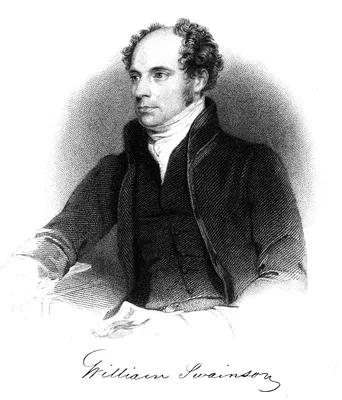
2019 ABBOT, John (1751 – 1840); SWAINSON, William John (1789 – 1855)
John Abbot and William Swainson: Art, science, and commerce in nineteenth-century natural history illustration
"During his lifetime (1751-ca. 1840), English-born naturalist and artist John Abbot rendered more than 4,000 natural history illustrations and profoundly influenced North American entomology, as he documented many spe…
GMN 13095 · https://historyofmedicine.com/id/15347
2023 NIEH, James C.; DONG, Shihao; LIN, Tao; TAN, Ken
Social signal learning of the waggle dance in honey bees.
The authors showed that the complex waggle dance, previously thought to be an inborn trait, is partly learned by young bees as they observe more experienced bees. Abstract: "Honey bees use a complex form of spatial re…
GMN 14139 · https://historyofmedicine.com/id/16453