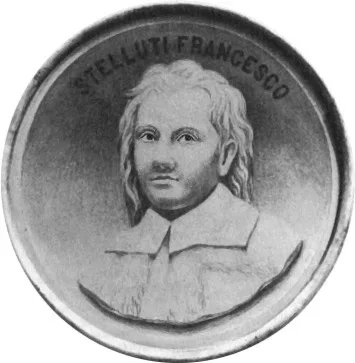
1630 STELLUTI, Francesco (1577 – 1653)
Persio tradotto.
The first book to contain illustrations of natural objects as seen through the microscope— specifically an engraving of the exterior surface of bees. The work includes the Latin text of the Satyrae VI of Aulus Persius…
GMN 259 · https://historyofmedicine.com/id/8731
1634 GESNER, Conrad [Konrad Gessner] (1516 – 1565); WOTTON, Edward (1492 – 1555); MOFFET, Thomas (Muffet, Mouffet, Moffett) (1553 – 1604); PENNY, Thomas (1532 – 1589); MAYERNE, Théodore Turquet de (1573 – 1654)
Insectorum sive minimorum animalium theatrum: Olim ab Edoardo Wottono, Conrado Gesnero, Thomaque Pennio inchoatum: Tandem Tho. Movfeti Londinâtis operâ sumptibusque maximis concinnatum, auctum, perfectum: Et ad vivum expressis iconibus suprà quingentis illustratum.
Edited for publication, and with an introduction by Théodore de Mayerne. Moffet, or Muffet, travelled extensively in Europe and kept copious notes of his observations on insects. He "first studied silkworms while work…
GMN 288 · https://historyofmedicine.com/id/8829
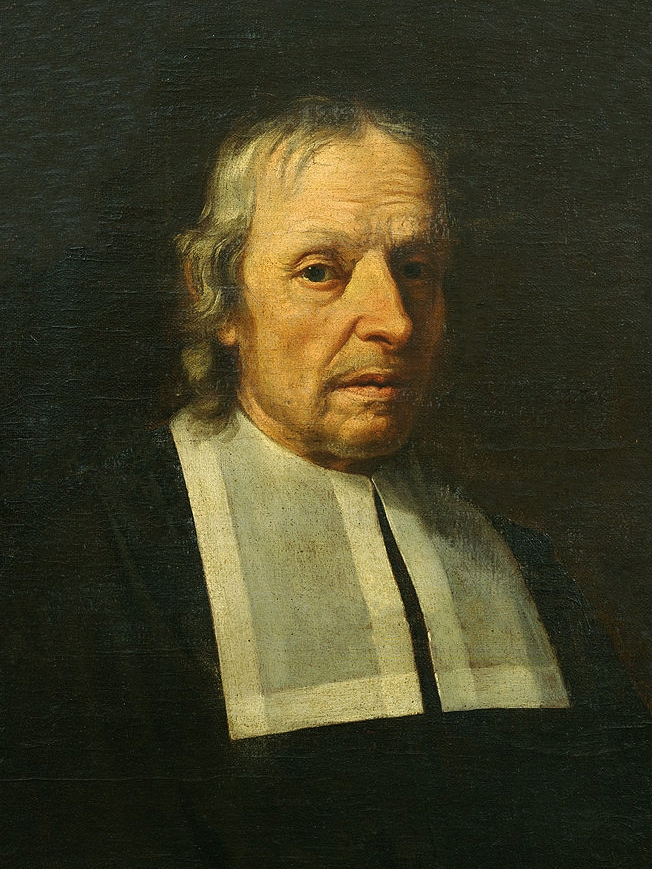
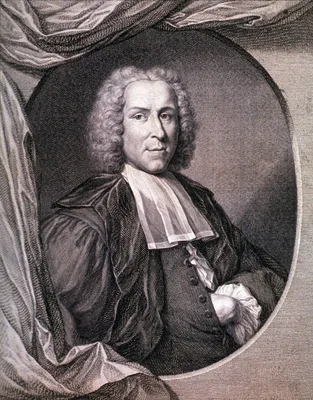
1644 ODIERNA, Giovanni Battista [Hodierna] (1597 – 1660)
l’Occhio della mosca In his: Opusculi…
The first microscopical section in biology is discussed and illustrated in Odierna’s study of the fly’s eye, which is also the first description of the faceted eye of an arthropod.
GMN 259.1 · https://historyofmedicine.com/id/8732
1650 –1653 JONSTON, John [Jan] (1603 – 1675)
Historia naturalis. 6 vols: Historiae naturalis de quadrupedibus; Historiae naturalis de avibus; Historiae naturalis de piscibus et cetis; Historiae naturalis de exanguibus aquaticis; Historiae naturalis de insectis, de serpentibus et draconbius; Historiae naturalis de serpentibus.
The first 5 volumes were published in 1650; the last volume was published in 1653. This work, published in small folio format, includes 249 engraved plates and six elegant engraved title pages (4 resembling frontispie…
GMN 11704 · https://historyofmedicine.com/id/13905
1662 –1669 GOEDAERT, Jan [GOEDARTIUS] (1620 – 1668)
Metamorphosis naturalis, ofte historische beschryvinghe.... 3 vols.
Engraved frontispieces in Latin; text in Dutch. None of the volumes is dated. An edition in Latin, also undated, was issued by the same publisher in 3 vols. during the same years with the following title: Metamorphosi…
GMN 291 · https://historyofmedicine.com/id/8833
1669 MALPIGHI, Marcello (1628 – 1694)
Dissertatio epistolica de bombyce.
Malpighi’s work on the silkworm represents the first monograph on an invertebrate and records one of the most striking pieces of research work on his part. He dissected the silkworm under the microscope with great ski…
GMN 293 · https://historyofmedicine.com/id/8836
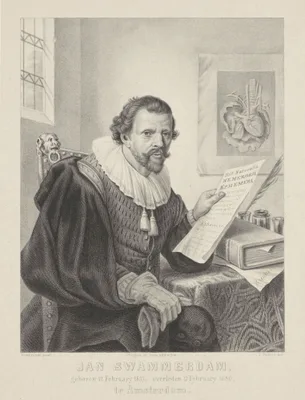
1669 SWAMMERDAM, Jan (1637 – 1680)
Historia insectorum generalis. 2 pts.
Swammerdam, one of the greatest of the early microscopists, spent much time on the study of insects, and mapped out a natural classification of them.
GMN 294 · https://historyofmedicine.com/id/8838
1675 SWAMMERDAM, Jan (1637 – 1680)
Ephemeri Vita. Of afbeeldingh van 's menschen leven, Vertoont in de Wonderbaarlijcke en nooyt gehoorde Historie van het vliegent ende een-dagh-levent Haft of Oever-aas. Een dierken, ten aansien van sijn naam, over al in Neerlandt bekent.
In his final publication Swammerdam studied the anatomy, development and behavior of the mayfly. Translated into English as Emphemeri vita: Or the natural history and anatomy of the ephemeron, a fly that lives but fiv…
GMN 13272 · https://historyofmedicine.com/id/15538
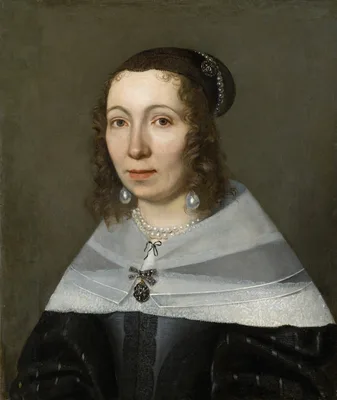
1719 MERIAN, Maria Sibylla (1647 – 1717)
Mariæ Sibillæ Merian Dissertatio de generatione et metamorphosibus insectorum Surinamensium: In quâ, præter vermes et erucas Surinamenses, earumque admirandam metamorphosin, plantæ, flores & fructus, quibus vescuntur, & quibus fuerunt inventæ, exhibentur. His adjunguntur bufones, lacerti, serpentes, araneæ, aliaque admiranda istius regionis animalcula
Originally as Metamorphosis insectorum Surinamensium. Amsterdam, 1705. The 1719 contains 12 additional plates and corresponding text, 10 provided by the author's daughters from material left at her death, and 2 suppli…
GMN 13450 · https://historyofmedicine.com/id/15724
1720 ALBIN, Eleazar (1690 – 1742)
A natural history of English insects. Illustrated with a hundred copper plates, curiously engraven from the life: And (for those who desire it) exactly coloured by the author.
"Little is known of Albin’s early life, though he was probably born in Germany to a family named Weiss. By 1708 he had changed his surname to Albin and was living in London with his family. His profession of art teach…
GMN 13743 · https://historyofmedicine.com/id/16027
1731 –1747 CATESBY, Mark (1683 – 1749)
The natural history of Carolina, Florida and the Bahama Islands: Containing the figures of birds, beasts, fishes, serpents, insects, and plants: Particularly, the forest-trees, shrubs, and other plants, not hitherto described, or very incorrectly figured by authors. Together with their descriptions in English and French. To which are added observations on the air, soil and waters: With remarks on agriculture, grain, pulse, roots &c. To the whole is prefixed a new and complete map of the countries treated of. 2 vols.
The only attempt to record the natural history of a region of America during the colonial period. Includes 220 fine handcolored etched plates after and by Catesby and mostly signed with his cipher, excepting plates 61…
GMN 9571 · https://historyofmedicine.com/id/11758
1734 –1742 RÉAUMUR, René Antoine Ferchault de (1683 – 1757)
Mémoires pour servir à l’histoire des insectes. 6 vols.
Réaumur’s greatest work describes the appearance, habits and locality of all the known insects except the beetles, and includes 267 plates. Posthumously published: Tome VII: Histoire des fourmis, (Paris: Paul Lecheval…
GMN 304 · https://historyofmedicine.com/id/107
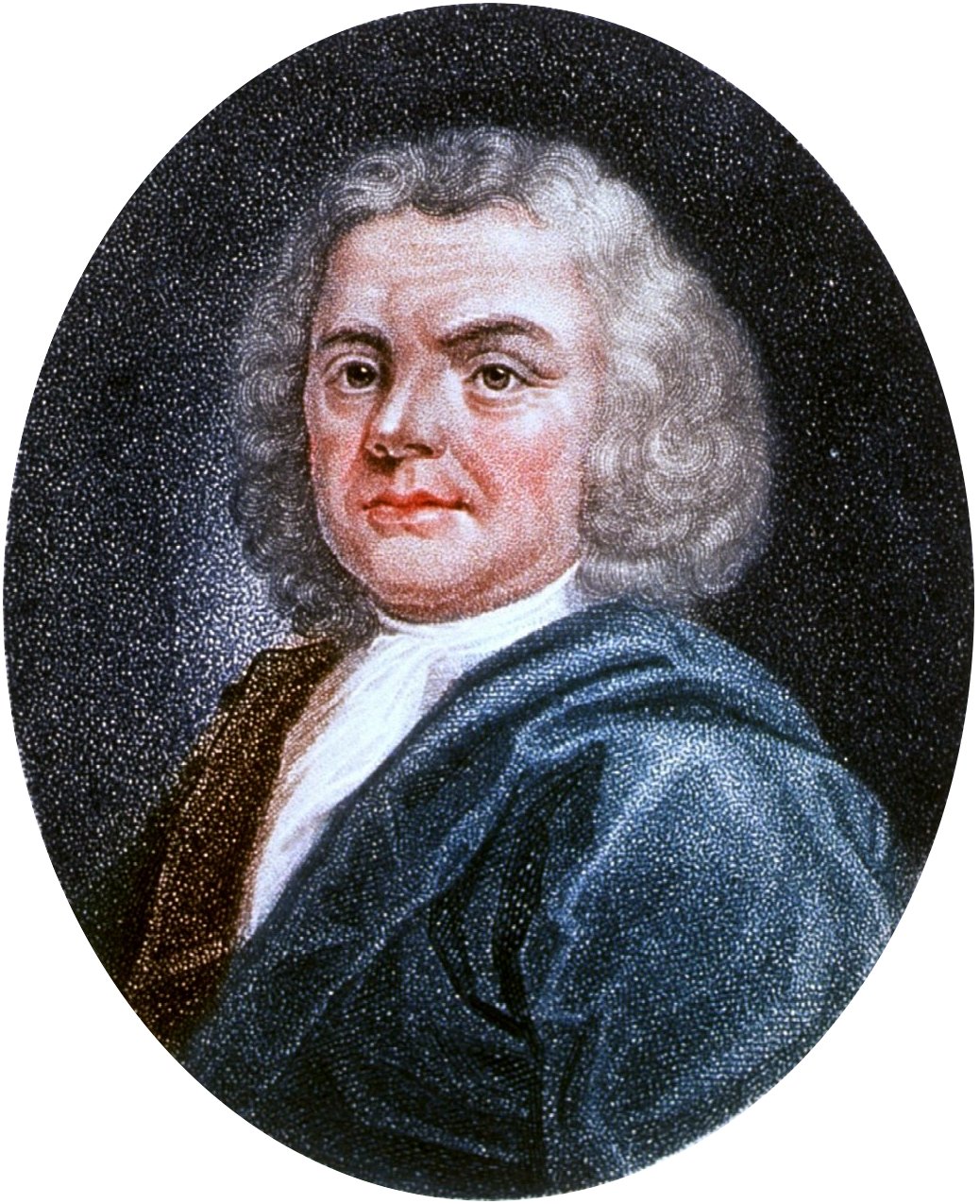
1737 –1738 BOERHAAVE, Herman (1668 – 1738); SWAMMERDAM, Jan (1637 – 1680); GAUBIUS, Hieronymus David (1705 – 1780)
Bybel der Natuure door Jan Swammerdam, Amsteldammer...Biblia naturae; sive historia insectorum, in classes certas redacta, nec non exemplis, et anatomico variorum animalculorum examine, aeneisque tabulis illustrata. Insertis numerosis rariorum naturae observationibus. Omnia lingua Batava, auctori vernacula, conscripta. Accedit praefatio, in qu vitam auctoris descripsit Hermannus Boerhaave... Latinam versionem adscriptsit Hieronimus David Gaubius. 2 vols.
Swammerdam's extensive collection of microscopical observations on insects was written in Dutch, and edited for publication 57 years after Swammerdam's death, with an extensive life of the author, by Herman Boerhaave.…
GMN 7472 · https://historyofmedicine.com/id/9644
1740 –1761 RÖSEL VON ROSENHOF, August Johann (1705 – 1759)
Die monatlich-herausgegeben Insecten-Belustigung. 4 vols.
Spectacular hand-colored plates."Insecten-Belustigung, appeared in 1740 and was devoted to the insects and other invertebrates like the sea anemones. His classification of the insects followed a natural system and he …
GMN 9561 · https://historyofmedicine.com/id/11747
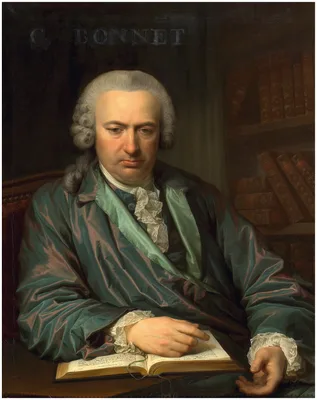
1745 BONNET, Charles (1720 – 1793)
Traité d’insectologie.
This pioneering work on experimental entomology incorporates Bonnet’s most important discovery–parthenogenetic reproduction–based on his study of aphids. Bonnet used the result of this and other discoveries as a basis…
GMN 308 · https://historyofmedicine.com/id/115
1762 LYONET, Pierre (1707 – 1789)
Traité anatomique de la chénille, qui ronge le bois de saule. Augmenté d'une explication abrégée des planches, et d'une description de l'instrument et des outils dont l'auteur s'est servi pour anatomiser à la loupe et au microscope, & pour déterminer la forcer de ses verres, suivant les règles de l'optique, & méchaniquement.
Lyonet’s monograph on the goat moth caterpillar remains a famous example of anatomical examination. It is also a thorough treatise on the microscope and lenses that Lyonet used. Digital facsimile from Biodiversity Her…
GMN 305 · https://historyofmedicine.com/id/239
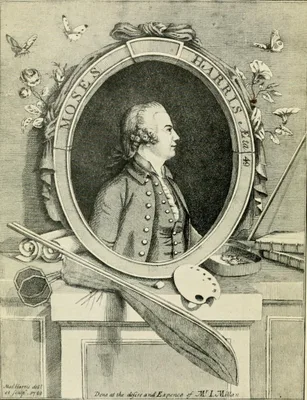
1766 HARRIS, Moses (1730 – 1788)
The Aurelian or natural history of English insects; namely, moths and butterflies.
Harris drew and engraved his own illustrations. The second edition (1778) was considerably expanded, and with four more plates than the first, for a total of 45. Some of the hand-colored copies were hand-colored by th…
GMN 10570 · https://historyofmedicine.com/id/12763
1781 SMEATHMAN, Henry (1742 – 1786)
Some account of the termites, which are found in Africa and other hot climates. In a letter from Mr. Henry Smeathman...to Sir Joseph Banks, Bart.
Pioneering study of tropical termites, their mounds, and their behavior, well illustrated with engravings. Digital facsimile from the Royal Society at this link.
GMN 10230 · https://historyofmedicine.com/id/12420
1785 GEOFFROY, Étienne Louis (1725 – 1810); FOURCROY, Antoine François, comte (1755 – 1809)
Entomologia Parisiensis; sive, catalogus insectorum quae in agro Parisiensi reperiuntur; secondum methodum Geoffraeanam in sections, genera & species distributus; Cui addit sun nomina trivalia & sere recentae novae species.
In this work co-written with Geoffroy, Fourcroy presented a major contribution to the systemization of entomology. Digital facsimile from the Internet Archive at this link.
GMN 8943 · https://historyofmedicine.com/id/11122
1792 –1813 DONOVAN, Edward (1768 – 1837)
The natural history of British insects; explaining them in their several states, with the periods of their transformations, their food, oeconomy, &c. Together with the history of such minute insects as require investigation by the microscope. The whole illustrated by coloured figures, designed and executed from living specimens. 16 vols.
Includes a total of 576 plates, of which 568 were colored.
GMN 9087 · https://historyofmedicine.com/id/11266
1797 ABBOT, John (1751 – 1840); SMITH, Sir James Edward (1759 – 1828)
The natural history of the rarer lepidopterous insects of Georgia. Including their systematic characters, the particulars of their several metamorphoses, and the plants on which they feed. Collected from the observations of Mr. John Abbot, many years resident in that country, by James Edward Smith.
The earliest illustrated monograph on the butterflies and moths of North America. Text in English and French. 104 hand-colored plates. Digital facsimile from the Internet Archive at this link.
GMN 7768 · https://historyofmedicine.com/id/9940
1798 DONOVAN, Edward (1768 – 1837)
An epitome of the natural history of the insects of China: Comprising figures and descriptions of upwards of one hundred new, singular, and beautiful species: together with some that are of importance in medicine, domestic economy, &c. The figures are accurately, drawn, engraved, and coloured, from speciemsn of the insects; the descriptions are arranged accordig to the system of Linnaeus, with references to the writings of Fabricius, and other systematic authors.
The first work in a Western language on the insects of China, including pharmaceutical aspects. For this work Donovan obtained specimens and information from George Macartney a British envoy to China. Includes 50 colo…
GMN 9082 · https://historyofmedicine.com/id/11261
1800 DONOVAN, Edward (1768 – 1837)
An epitome of the natural history of the insects of India, and the islands in the Indian seas: Comprising upwards of two hundred and fifty figures and descriptions of the most singular and beautiful species, selected chiefly from those recently discovered, and which have not appeared in the works of any preceding author. The figures are accurately drawn, engraved, and coloured, from specimens of the insects; the descriptions are arranged according to the system of Linnaeus; with references to the writings of Fabricius, and other systematic authors.
"For Insects of India Donovan described and figured specimens in his own cabinet, that were originally collected by the late Duchess of Portland, Marmaduke Tunstall, a Governor Holford (many years resident in India), …
GMN 9084 · https://historyofmedicine.com/id/11263
1801 NODIER, Jean Charles Emmanuel (1780 – 1844)
Bibliographie entomologique, ou catalogue raisonné des ouvrages relatifs à l'entomologie et aux insectes, avec des notes critique et l'exposition des méthodes.
Digital facsimile from Google Books at this link.
GMN 13616 · https://historyofmedicine.com/id/15896
1805 DONOVAN, Edward (1768 – 1837)
An epitome of the natural history of the insects of New Holland, New Zealand, New Guinea, Otaheite, and other islands in the Indian, Southern, and Pacific oceans: Including the figures and descriptions of one hundred and fifty-three species of the more splendid, beautiful, and interesting insects, hitherto discovered in those countries, and which for the most part have not appeared in the works of any preceding author. The figures are correctly delineated from specimens of the insects; and with the descriptions are arranged according to the Linnæan system, with reference to the writings of Fabricius and other entomologists.
"Apart from occasional excursions in England and Wales Donovan never left London. His Insects of New Holland is based on specimens collected by Joseph Banks and William Bayly an astronomer on the second and third voya…
GMN 9085 · https://historyofmedicine.com/id/11264
1817 CUVIER, Jean Léopold Chrétien Frédéric "Georges" (1769 – 1832)
Le règne animal. 4 vols.
Second edition in five vols., 1829–1830. After Cuvier's death 12 "disciples" of Cuvier brought out a third edition in 22 vols. from 1836 to 1849. The 12 "disciples" were Jean Victor Audouin (insects), Gerard Paul Desh…
GMN 327 · https://historyofmedicine.com/id/173
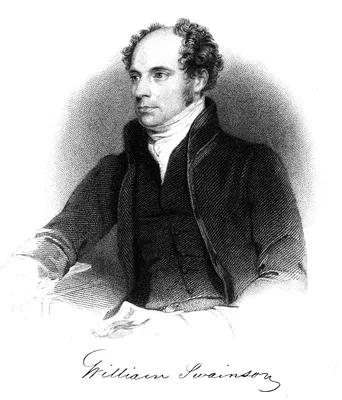
1820 –1823 SWAINSON, William John (1789 – 1855)
Zoological illustrations, or, original figures and descriptions of new, rare, or interesting animals, selected chiefly from the classes of ornithology, entomology, and conchology, and arranged on the principles of Cuvier and other modern zoologists. 3 vols.
"Apart from the common and scientific names of many species, it is for the quality of his illustrations that he [Swainson] is best remembered. His friend William Elford Leach, head of zoology at the British Museum, en…
GMN 9197 · https://historyofmedicine.com/id/11378
1824 –1828 SAY, Thomas (1787 – 1834)
American entomology, or descriptions of the insects of North America. Illustrated by coloured figures from original drawings executed from nature. 3 vols.
Plates by Titian Ramsay Peale, H. Bridport, C. A. Lesueur, W. W. Wood, and C. Tiebout; engraved by Tiebout, G. Lang, and Longacre. Digital facsimile from the Internet Archive at this link.
GMN 9484 · https://historyofmedicine.com/id/11668
1829 –1837 BOISDUVAL, Jean Baptiste Alphonse Déchauffour de (1799 – 1879); LE CONTE, John Eatton Jr. (1784 – 1860)
Histoire général et iconographie des lepidoptérès et des chenilles de l’Amerique septentrionale.
Includes illustrations from drawings by John Abbot.
GMN 9574 · https://historyofmedicine.com/id/11761
1833 –1866 JARDINE, Sir William (1800 – 1874)
The naturalist's library. Edited by Sir William Jardine. 40 vols.
"1833, Natural History of Humming Birds, Part I, (Ornithology Vol. VI) by William Jardine, with memoir of Carl Linnaeus. (online) 1833, Monkeys, (Mammalia Vol. I) by William Jardine, with a memoir of Comte de Buffon (…
GMN 10177 · https://historyofmedicine.com/id/12366
1834 RASPAIL, François-Vincent (1794 – 1878)
Mémoire comparatif sur l'histoire naturelle de l'insecte de la gale.
Raspail first described and illustrated the Sarcoptes scabei, diffrentiating it from the horse's sarcopt and the cheese moth that Galès and Patrix, followed by Alibert, had confused with the scabies parasite. Raspail …
GMN 13415 · https://historyofmedicine.com/id/15687
1841 –1854 DUMONT D'URVILLE, Jules Sébastien César (1790 – 1842); DUMOUTIER, Pierre-Marie-Alexandre (1797 – 1873); BLANCHARD, Charles Émile (1819 – 1900); JACQUINOT, Charles Hector (1796 – 1879); HOMBRON, Jacques Bernard (1798 – 1852); PUCHERAN, Jacques (1817 – 1895); GUICHENOT, Antoine Alphonse (1809 – 1876); LUCAS, H.; ROUSSEAU, L.; MONTAGNE, Jean Pierre François Camille (1784 – 1866); DECAISNE, Joseph (1807 – 1882); GRANGE, J.; VINCENDON-DUMOULIN, Clément Adrien (1811 – 1858); COUPVENT-DESBOIS, Aimé Auguste Élie (1814 – 1892)
Voyage au Pôle Sud et dans l'Océanie sur les corvettes l'Astrolabe et la Zélée, exécuté...pendant...1837-1840, sous le commandement de M. J. DUMONT D'URVILLE... publié... sour la direction supérieure de M. [C. H.] Jacquinot, &c. 23 vols. in 22.
In 1836 King Louis-Philippe, enthusiastic for Southern Hemisphere exploration, sponsored Dumont d'Urville's plan for a circumnavigation focusing on the South Seas. D'Urville had already distinguished himself on two Pa…
GMN 11902 · https://historyofmedicine.com/id/14107
1842 DONOVAN, Edward (1768 – 1837); WESTWOOD, John Obadiah (1805 – 1893)
Natural history of the insects of China, containing upwards of two hundred and twenty figures and descriptions by E. Donovan. A new edition, brought down to the present state of the science, with systematic characters of each species, synonyms, indexes, and other additional matter by J. O. Westwood.
Digital facsimile from the Biodiversity Heritage Archive at this link.
GMN 9083 · https://historyofmedicine.com/id/11262
1862 BATES, Henry Walter (1825 – 1892)
Contributions to an insect fauna of the Amazon valley: Lepidoptera: Heliconidae.
Bates spent eleven years in the Amazon and there collected 8,000 species of insects new to science. In the above paper he clearly stated and solved the problem of “mimicry”, known today as “Batesian mimicry”. The supe…
GMN 220.1 · https://historyofmedicine.com/id/4046
1874 BELT, Thomas (1832 – 1878)
The naturalist in Nicaragua: A narrative of a residence at the gold mines of Chontales; journeys in the savannahs and forests, with observations on animals and plants in reference to the theory of evolution of living forms.
In this book Belt first described "the mutualistic relationship of certain Acacias and the ant we now know as Pseudomyrmex spinicola. These are a species of red myrmecophyte-inhabiting neotropical ants which are found…
GMN 7443 · https://historyofmedicine.com/id/9615
1887 BALFOUR, Edward Green (1813 – 1889)
The agricultural pests of India, and of eastern and southern Asia, vegetable and animal, injurious to man and his products.
Digital facsimile from the Internet Archive at this link.
GMN 11756 · https://historyofmedicine.com/id/13956
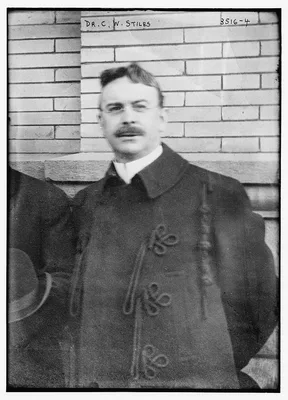
1892 –1982 HASSALL, Albert (1862 – 1942); STILES, Charles Wardell (1867 – 1941); ET AL
Index-catalogue of medical and veterinary zoology.
An index to the world's literature on parasites and parasitisms of man, of domestic animals, and of wild animals whose parasites may be transmitted to man and domestic animals. It also contains references to fur-beari…
GMN 355 · https://historyofmedicine.com/id/289
1894 MÉGNIN, Jean Pierre (1828 – 1905)
La faune des cadavres: Application de l'entomologie à la médecine légale.
Digital facsimile from U.S. National Library of Medicine at this link.
GMN 13770 · https://historyofmedicine.com/id/16055
1899 NUTTALL, George Henry Falkiner (1862 – 1937)
On the rôle of insects, arachnids and myriapods, as carriers in the spread of bacterial and parasitic diseases of man and animals. A critical and historical study.
GMN 2554 · https://historyofmedicine.com/id/3669
1900 DENTON, Sherman Foote (1856 – 1937)
As nature shows them. Moths and butterflies of the United States east of the Rocky Mountains. With over 400 photographic illustrations in the text and many transfers of species from life. 2 vols.
Includes 56 nature-printed and handcolored plates produced from impressions of the wings of the actual insects pressed onto the paper. Digital facsimile from Biodiversity Heritage Library at this link.
GMN 13204 · https://historyofmedicine.com/id/15465
1901 –1910 THEOBALD, Frederick Vincent (1868 – 1930)
A monograph of the Culicidae, or mosquitoes. Mainly compiled from the collections received at the British Museum from various parts of the world in connection with the cause of malaria conducted by the Colonial Office and the Royal Society. 4 vols. and atlas.
Digital facsimile from the Internet Archive at this link.
GMN 346 · https://historyofmedicine.com/id/253
1906 –1954 SEITZ, Adalbert (1880 – 1938); ET AL
Die Gross-Schmetterlinge der Erde. The Macrolepidoptera of the world: A systematic description of the known Macrolepidoptera. 16 vols. plus 4 supplements. Written and edited by Adalbert Seitz.
Published in French, German and English. The first 4 vols. describe the Palaearctic fauna and vols. 5–16 describe the exotic fauna (Volums 1–4, Palaearctic fauna, with 4 supplements; Vols. 5–8, American fauna; Vol. 9–…
GMN 9393 · https://historyofmedicine.com/id/11576
1913 PATTON, Walter Scott (1876 – 1960); CRAGG, Francis William (1882 – 1924)
A textbook of medical entomology.
Digital facsimile from Biodiversity Heritage Library at this link.
GMN 349 · https://historyofmedicine.com/id/265
1914 FAIRCHILD, David Grandison (1869 – 1954); FAIRCHILD, Marion Bell
Book of monsters.
The first book of macro photographs (extreme close-up photography) of insects.
GMN 13877 · https://historyofmedicine.com/id/16167
1915 PUNNETT, Reginald Crundall (1875 – 1967)
Mimicry in butterflies.
GMN 13114 · https://historyofmedicine.com/id/15367
1924 WOLBACH, Simeon Burt (1880 – 1954); HERTIG, Marshall (1893 – 1978)
Studies on Rickettsia-like micro-organisms in insects.
Hertig and Wolbach first described the parasitic microbe Wolbachia in the common house mosquito in 1924. In 1936 Hertig formally described the species as Wolbachia pipientis. Since then the genus Wolbachia has become …
GMN 10943 · https://historyofmedicine.com/id/13139
1926 RÉAUMUR, René Antoine Ferchault de (1683 – 1757); WHEELER, William Morton (1865 – 1937)
The natural history of ants: From an unpublished manuscript in the Academy of Sciences of Paris. Translated and annotated by William Morton Wheeler.
French and English text. The French text was first published in France as the 7th volume of Reaumur's Mémoires, Paris, 1928.
GMN 9656 · https://historyofmedicine.com/id/11843
1928 –1975 HORN, Walther Hermann Richard (1871 – 1939); SCHENKLING, Sigmund (1865 – 1946); DERKSEN, W.; GÖLLNER-SCHEIDING, U.
Index litteraturae entomologicae serie I: Die Welt-Literatur über die gesamte Entomologie bis inklusive. Index litteraturae entomologicae series II: von 1864 bis 1900. 9 vols.
The first part, by Horn and Schenkling, was privately published by Horn in 4 vols., 1928-29. The second part, by Derksen and Göllner-Scheiding, was published by the Akademie der Lanwirtschafwissenschaften der DDR in 5…
GMN 11773 · https://historyofmedicine.com/id/13974
1929 –1931 PATTON, Walter Scott (1876 – 1960); EVANS, Alwen Myfanwy (1895 – 1937)
Ticks, mites and venomous animals of medical and veterinary importance. Part 1: Medical. Part 2: Public health.
Part 1 by Patton and the female entomologist Alwen Evans; part 2 by Patton alone.
GMN 12146 · https://historyofmedicine.com/id/14356
1931 PFEIFFER, Max Adolf (1875 – 1957); MERIAN, Maria Sibylla (1647 – 1717)
Die Werke der Maria Sibylle Merian: bibliographisch Zusammengestellt.
GMN 11777 · https://historyofmedicine.com/id/13978

![ODIERNA, Giovanni Battista [Hodierna] (1597 – 1660)](/media/portraits/9538)