1528 SCRIBONIUS LARGUS (1 – 50)
De compositionibus medicamentorum liber unus
Written in 47 CE, this is an important compilation of drugs and prescriptions. Among the 271 remedies are the first use of electrotherapy (for headaches) using the shock of the torpedo fish. and it records the drinkin…
GMN 1785 · https://historyofmedicine.com/id/8816
1671 FEHR, Johannes Michael (1610 – 1688); SCHMIDT, Elias
Naturae genius, medicorum Celsus, Jason Argonautarum, Bauschius occubuit.
First authentic case of trigeminal neuralgia. It concerned J. L. Bausch, who died from the condition in 1665. The account is to be found in the unpaged part of the volume, starting at sig. d 3 and occupying the two fo…
GMN 4512 · https://historyofmedicine.com/id/8900
1672 WILLIS, Thomas (1621 – 1675)
De anima brutorum
Chap. XIV is devoted to the sense of hearing; in it Willis described the “paracusis of Willis” (p. 73). English translation, 1683. A probable description of myasthenia gravis is given in Pars. 2, Cap. IX. In Pars 2, C…
GMN 1544 · https://historyofmedicine.com/id/3644
1776 FOTHERGILL, John (1712 – 1780)
Of a painful affection of the face.
Original description of facial neuralgia. Reprinted in Med. Classics, 1940, 5, 100-06.
GMN 4516 · https://historyofmedicine.com/id/363
1782 PERCIVAL, Thomas (1740 – 1804)
Observations on the medical uses of the oleum jecoris aselli, or cod liver oil, in the chronic rheumatism, and other painful disorders.
First record of the clinical use of cod liver oil in England.
GMN 1835 · https://historyofmedicine.com/id/2181
1784 MOORE, James Carrick (1763 – 1834)
A method of preventing or diminishing pain in several operations of surgery.
Moore revived the ancient concept of nerve compression, developing a special clamp for its use. John Hunter used Moore’s clamp in a leg amputation in 1784 in which analgesia was successfully obtained.
GMN 5645.91 · https://historyofmedicine.com/id/7279
1816 BERLIOZ, Louis V. J. (1776 – 1848)
Mémoires sur les maladies chroniques, les évacuations sanguines et l’acupuncture.
Berlioz, father of the composer, published the first French monograph on acupuncture. He had his best success with muscle and joint stiffness after falls, and rheumatic and arthritic states. Digital facsimile from Goo…
GMN 6374.13 · https://historyofmedicine.com/id/8319
1821 CHURCHILL, James Morss (1796 – 1863)
A treatise on acupuncturation, being a description of a surgical operation originally peculiar to the Japonese and Chinese, and by them denominated zin-king, now introduced into European practice, with directions for its performance, and cases illustrating its success.
The first English monograph on acupuncture. Churchill had most success with rheumatic conditions, sciatica, back-pain, etc. Digital facsimile from the Internet Archive at this link. The German translation of Churchill…
GMN 6374.14 · https://historyofmedicine.com/id/8321
1825 MORAND, J.
Mémoire sur l'acupuncture, suivi d'une série d'observations recueillies sous les yeux de M. Jules Cloquet by M. Morand.
Little is known about Morand. He refers to his teacher, Jules Cloquet throughout. Cloquet's book on acupuncture was published the following year in 1826. (No. 6829). Digital facsimile of Morand's book from BnF Gallica…
GMN 14163 · https://historyofmedicine.com/id/16478
1826 BACHE, Franklin (1792 – 1864)
Cases illustrative of the remedial effects of acupuncturation.
The first original study of acupuncture published in North America, and one of the earliest American publications on the alleviation of pain. Franklin Bache, great-grandson of Benjamin Franklin, was the first American…
GMN 6828 · https://historyofmedicine.com/id/8992
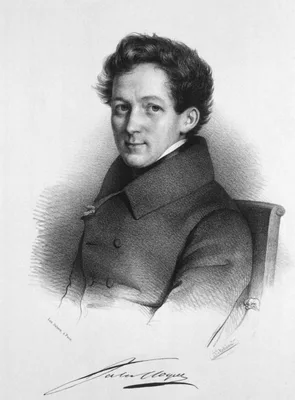
1826 CLOQUET, Jules Germain (1790 – 1883); DANTU, T. M.
Traité de acupuncture, d'après les observations de M. Jules Cloquet. Édité par Dantu de Vannes.
As adjunct chief surgeon at the Hôpital St. Louis, Cloquet had an ample number of patients at his disposal, and he was able to test acupuncture on upwards of 300 cases with mostly beneficial results. Cloquet did not p…
GMN 6829 · https://historyofmedicine.com/id/8993
1841 VALLEIX, François Louis Isidore (1807 – 1855)
Traité des néuralgies ou affections douloureuses des nerfs.
Includes (p. 40 et seq.) description of ”Valleix’s points”, tender points on the course of certain nerves in neuralgia.
GMN 4526 · https://historyofmedicine.com/id/389
1844 –1845 NOTT, Josiah Clark (1804 – 1873)
Exstirpation of the os coccygis for neuralgia.
GMN 4852 · https://historyofmedicine.com/id/5602
1845 RYND, Francis (1801 – 1861)
Neuralgia - introduction of fluid to the nerve.
Rynd, an Irish physician, invented the hollow needle used in hypodermic syringes. The description of his instrument is given in Dublin Quart. J. med. Sci., 1861, 32, 13.
GMN 1968 · https://historyofmedicine.com/id/3749
1855 WOOD, Alexander (1817 – 1884)
New method of treating neuralgia by the direct application of opiates to the painful joints.
Wood of Edinburgh was the first (1853) to employ hypodermic injection that used a true syringe and hollow needle as a therapeutic procedure. He referred to his invention as "subcutaneous" rather than hypodermic. See a…
GMN 1969 · https://historyofmedicine.com/id/3750
1858 CARNOCHAN, John Murray (1817 – 1887)
Exsection of the trunk of the second branch of the fifth pair of nerves, beyond the ganglion of Meckel, for severe neuralgia of the face; with three cases.
First excision of the superior maxillary nerve for the treatment of trigeminal neuralgia.
GMN 4854 · https://historyofmedicine.com/id/5612
1863 HILTON, John (1804 – 1878)
On the influence of mechanical and physiological rest in the treatment of accidents and surgical diseases, and the diagnostic value of pain.
Hilton, surgeon to Guy’s Hospital, suggested that symptoms are disordered reflexes. He advocated complete rest in the treatment of surgical disorders of all parts of the body. Second and later editions were entitled O…
GMN 5609 · https://historyofmedicine.com/id/7127
1864 DIETL, Josef (1804 – 1878)
Wandernde Nieren und deren Einklemmung.
“Dietl’s crisis”. Dietl described the sudden severe attacks of nephralgic or gastric pain, chills, fever, nausea and vomiting, and general collapse, ascribing them to partial turning of the kidney upon its pedicle. Fi…
GMN 4211 · https://historyofmedicine.com/id/6252
1871 –1872 PANCOAST, Joseph (1805 – 1882)
New operation for the relief of persistent facial neuralgia.
Pancoast devised the operative procedure of sectioning the second and third branches of the fifth pair of nerves as they emerge from the base of the brain. Reported by F. Woodbury.
GMN 4855 · https://historyofmedicine.com/id/5618
1872 MITCHELL, Silas Weir (1829 – 1914)
Clinical lecture on certain painful affections of the feet.
Mitchell suggested the name “erythromelalgia” for this condition, which is also known as “Weir Mitchell’s disease”. He records four earlier writers on the subject, the first being Graves in 1848. See also his paper in…
GMN 2706 · https://historyofmedicine.com/id/406
1873 LIVEING, Edward (1832 – 1919)
On megrim, sick-headache, and some allied disorders.
Liveing’s classic account of migraine showed the close association of this condition with tetany, asthma, and false angina pectoris, with epilepsy, and the alternation of all these conditions in the same subject or th…
GMN 2587 · https://historyofmedicine.com/id/409
1874 MITCHELL, Silas Weir (1829 – 1914)
Headaches, from heat-stroke, from fevers, after meningitis, from overuse of brain, from eyestrain.
Mitchell drew attention to the importance of eyestrain as a cause of headache.
GMN 4551 · https://historyofmedicine.com/id/411
1876 MORTON, Thomas George (1835 – 1903)
A peculiar and painful affection of the fourth metatarso-phalangeal articulation.
First complete description of anterior metatarsalgia (“Morton’s disease”). See also No. 4325.
GMN 4341 · https://historyofmedicine.com/id/5695
1877 MITCHELL, Silas Weir (1829 – 1914)
The relation of pain to weather, being a study of the natural history of a case of traumatic neuralgia.
First study of the subject.
GMN 4555 · https://historyofmedicine.com/id/417
1879 THOMSON, William (1833 – 1907)
On astigmatism as a cause for persistent headache and other nervous symptoms.
Thomson was a pioneer in the study of refraction. He was much interested in color-blindness and modified Holmgren’s wool-skein test. Himself affected with hypermetropia, he made important investigations on this condit…
GMN 5917 · https://historyofmedicine.com/id/6819
1880 MANTEGAZZA, Paolo (1831 – 1910)
Fisologia del dolore.
Mantegazza performed pioneering research into the physiology of pain at his experimental laboratory. His work marks the beginning of algometry, the scientific measurement of responses to pain stimuli. Mantegazza inven…
GMN 12884 · https://historyofmedicine.com/id/15131
1884 MEARS, James Ewing (1838 – 1919)
Study of the pathological changes occurring in trifacial neuralgia, with the report of a case in which three inches of the inferior dental nerve were excised.
Mears first suggested Gasserian ganglionectomy for trigeminal neuralgia.
GMN 4857 · https://historyofmedicine.com/id/5626
1889 BENNETT, Sir William Henry (1852 – 1931)
A case in which acute spasmodic pain in the left lower extremity was completely relieved by sub-dural division of the posterior roots of certain spinal nerves, all other treatment having proved useless. Death from sudden collapse and cerebral haemorrhage on the twelfth day after the operation, at the commencement of apparent convalescence.
Posterior rhizotomy.
GMN 4861.1 · https://historyofmedicine.com/id/5649
1890 ROSE, William (1847 – 1910)
Removal of the gasserian ganglion for severe neuralgia.
Gasserian ganglionectomy for trigeminal neuralgia; the patient lived for at least two years.
GMN 4863 · https://historyofmedicine.com/id/5657
1891 HORSLEY, Sir Victor Alexander Haden (1857 – 1916); ET AL
Remarks on the various surgical procedures devised for the relief or cure of trigeminal neuralgia (tic douloureux).
Horsley, with J. Taylor and W. S. Coleman, devised an operation for treatment of trigeminal neuralgia in which the Gasserian ganglion was removed by a temporal approach.
GMN 4865 · https://historyofmedicine.com/id/5667
1892 HARTLEY, Frank (1856 – 1913)
Intracranial neurectomy of the second and third divisions of the fifth nerve.
Hartley originated the operation of intracranial neurectomy for trigeminal neuralgia.
GMN 4870 · https://historyofmedicine.com/id/5705
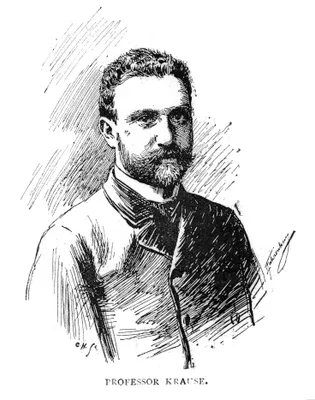
1892 KRAUSE, Fedor (1856 – 1937)
Resection des Trigeminus innerhalb der Schädelhöhle.
Hartley–Krause operation for relief of trigeminal neuralgia (see also No. 4870).
GMN 4871 · https://historyofmedicine.com/id/5710
1893 HEAD, Sir Henry (1861 – 1940)
On disturbances of sensation with especial reference to the pain of visceral disease.
“Head’s areas”, zones of hyperalgesia of skin, associated with visceral disease.
GMN 4581 · https://historyofmedicine.com/id/8921
1895 ASKANAZY, S
Klinisches über Diuretin.
In 1895 Askanazy proposed diuretin as a remedy for anginal pain.
GMN 2893 · https://historyofmedicine.com/id/4365
1900 CUSHING, Harvey Williams (1869 – 1939)
A method of total extirpation of the Gasserian ganglion for trigeminal neuralgia, by a route through the temporal fossa and beneath the middle meningeal artery.
GMN 4875 · https://historyofmedicine.com/id/5722
1901 SPILLER, William Gibson (1863 – 1940); FRAZIER, Charles Harrison (1870 – 1936)
The division of the sensory root of the trigeminus for the relief of tic douloureux; an experimental, pathological, and clinical study, with a preliminary report of one surgically successful case.
Introduction of intracranial trigeminal neurotomy, using a modification of the techniques of Horsley (No. 4865) and Krause (No. 4871). Also published in Philad. med. J., 1901, 8, 1039-49.
GMN 4876 · https://historyofmedicine.com/id/5732
1903 ABADIE, Joseph Louis Irenée Jean (1873 – 1934)
Névralgie faciale; présentation de malade.
Alcohol injection of the Gasserian ganglion for treatment of trigeminal neuralgia. See also pp. 91-96 of the same volume. Digital facsimile from Google Books at this link.
GMN 4877 · https://historyofmedicine.com/id/5736
1910 SLUDER, Greenfield (1865 – 1928)
The syndrome of sphenopalatine-ganglion neurosis.
“Sluder’s neuralgia” first described.
GMN 4595 · https://historyofmedicine.com/id/485
1911 TROTTER, Wilfred Batten Lewis (1872 – 1939)
On certain clinically obscure malignant tumours of the naso-pharyngeal wall.
“Trotter’s syndrome”; deafness, palatal paralysis, and facial neuralgia, usually due to a nasopharyngeal carcinoma.
GMN 3319.1 · https://historyofmedicine.com/id/4542
1911 BÁRÁNY, Robert (1876 – 1936)
Vestibularapparat und Zentralnervensystem.
“Bárány’s syndrome” – unilateral deafness, vertigo, and pain in the occipital region.
GMN 3402 · https://historyofmedicine.com/id/5169
1911 GOLDTHWAIT, Joel Ernest (1866 – 1961)
The lumbo-sacral articulation. An explanation of many cases of “lumbago”, “sciatica” and paraplegia.
Goldthwait suggested that lumbago and sciatica might be due to intervertebral disc injury.
GMN 4383 · https://historyofmedicine.com/id/5898
1912 SPILLER, William Gibson (1863 – 1940); MARTIN, Edward (1859 – 1938)
The treatment of persistent pain of organic origin in the lower part of the body by division of the anterolateral column of the spinal cord.
Cordotomy for the relief of intractable pain.
GMN 4883 · https://historyofmedicine.com/id/5781
1915 ALLBUTT, Sir Thomas Clifford (1836 – 1925)
Diseases of the arteries, including angina pectoris. 2 vols.
Includes his suggestion of the aortic genesis of angina pectoris, and (vol. 2, p. 368) his mechanical theory of cardiac pain in coronary occlusion.
GMN 2894 · https://historyofmedicine.com/id/4368
1918 PEET, Max Minor (1885 – 1949)
Tic douloureux and its treatment, with a review of the cases operated upon at the University Hospital in 1917.
Trigeminal nerve resection with conservation of the motor root, for treatment of trigeminal neuralgia.
GMN 4889 · https://historyofmedicine.com/id/5848
1920 SICARD, R
Algievélo-pharyngée essentielle. Traitement chirurgical.
Idiopathic glossopharyngeal neuralgia described and treated.
GMN 4892 · https://historyofmedicine.com/id/5870
1921 COPE, Sir Vincent Zachary (1881 – 1974)
Early diagnosis of the acute abdomen.
The classic treatise on the initial approach to abdominal pain. This work underwent its 22nd edition in 2011.
GMN 10823 · https://historyofmedicine.com/id/13019
1925 DANDY, Walter Edward (1886 – 1946)
Section of the sensory root of the trigeminal nerve at the pons. Preliminary report of the operative procedure.
Intracranial section for glossopharyngeal neuralgia. For a more detailed account see his paper in Arch. Surg. (Chicago), 1929, 18, 687-734.
GMN 4896 · https://historyofmedicine.com/id/5904
1931 DOGLIOTTI, Achile Mario (1897 – 1966)
Traitement des syndromes douloureux de la périphérie par 1’alcoolisation sub-arachnoïdienne des racines postérieures à leur émergence de la moelle épinière.
Subarachnoid injection of alcohol for the relief of pain.
GMN 4898 · https://historyofmedicine.com/id/5920
1931 CUTLER, Max (1899 – 1984)
The cause of “painful breasts” and treatment by means of ovarian residue.
Cutler was the first to employ ovarian hormone systematically in the treatment of chronic mastitis.
GMN 5785 · https://historyofmedicine.com/id/6843
1932 BALLANCE, Sir Charles Alfred (1865 – 1936); DUEL, Arthur Baldwin (1870 – 1936)
The operative treatment of facial palsy by the introduction of nerve grafts into the Fallopian canal and by other intratemporal methods.
A classic paper which includes some history of the surgical treatment of facial palsy.
GMN 4899 · https://historyofmedicine.com/id/5927