1597 CODRONCHI, Giovanni Battista (1547 – 1628)
De vitiis vocis, libri duo.
First treatise devoted solely to diseases of the larynx. (See also No. 1718.)
GMN 3244 · https://historyofmedicine.com/id/3870
1600 –1601 CASSERI, Giulio Cesare [Julius Casserius Placentinus; Giulio Casserio] (1552 – 1616)
De vocis auditusque organis historia anatomica. 2 pts.
Casseri, originally a servant to Fabrizio, was personally trained by his employer and eventually succeeded to Fabrizio’s chair of anatomy. Like Fabrizio, who studied the development of the chick for clues to human emb…
GMN 1540 · https://historyofmedicine.com/id/2863
1620 HABICOT, Nicholas (1550 – 1624)
Question chirurgicale par laquelle il est demonstré que le chirurgien doit assurément practiquer l’opération de la bronchotomie, vulgairement dicte Laryngotomie ou perforation de la fluste tuyau du polmon.
Four successful cases. Scott Stevenson and Guthrie (see No. 3342) state that Brasavola performed laryngotomy (in 1546) and that Sanctorius also did so.
GMN 3244.1 · https://historyofmedicine.com/id/3872
1655 SCHNEIDER, Conrad Viktor (1614 – 1680)
Dissertatio de osse cribriformi, et sensu ac organo odoratus et morbis ad utrumque spectantibus, de coryza, hemorrhagia narium, polypo, sternutatione, amissione odoratus.
“Schneider’s membrane”, the pituitary membrane of the nasal chamber and sinuses.
GMN 1452 · https://historyofmedicine.com/id/2336
1660 –1662 SCHNEIDER, Conrad Viktor (1614 – 1680)
Liber primus [-liber quintus et ultimus] de catarrhis. 6 vols.
Schneider put an end to the idea that nasal mucus originated in the pituitary. He demonstrated anatomically and clinically that the mucous membrane lining the nose (“Schneider’s membrane”) is the source of nasal disch…
GMN 3245 · https://historyofmedicine.com/id/3876
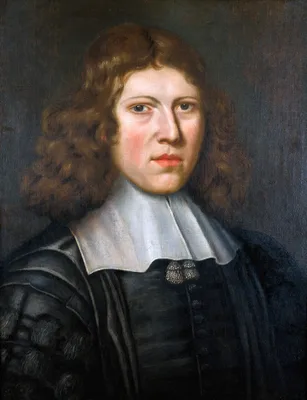
1670 LOWER, Richard (1631 – 1691)
Dissertatio de origine catarrhi in qua ostenditur illum non provenire a cerebro. IN: Tractatus de corde, pp. 221-39.
With Schneider, Lower overthrew the idea that nasal mucus originated in the brain. This discovery localized nasal catarrh in the air passages and put an end to the use of many recipes for “purging the brain”. The Diss…
GMN 3246 · https://historyofmedicine.com/id/3891
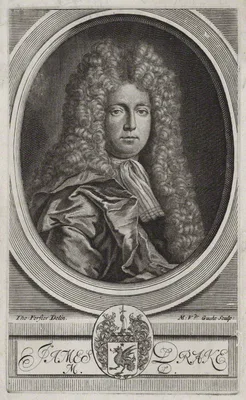
1707 COWPER, William (1666 – 1709); DRAKE, James (1667 – 1707)
Anthropologia nova; or, a new system of anatomy. Describing the animal oeconomy, and a short rationale of many distempers incident to human bodies.
In his preface Drake credited the surgeon, anatomist and artist, William Cowper, for valuable aid in both the text and illustrations this work. Drake also included a chapter, "Of the Nose" written by Cowper which desc…
GMN 3670.1 · https://historyofmedicine.com/id/5558
1743 VIRGILI, Pedro (1699 – 1776)
Sur une bronchotomie faite avec succès.
Virgili is said to have performed successful tracheotomy at Cadiz, for quinsy (peritonsillar abscess)
GMN 3248 · https://historyofmedicine.com/id/3894
1767 JOURDAIN, Anselme Louis Bernard Bréchillet (1734 – 1816)
Recherches sur les différens moyens de traiter les maladies des sinus maxillaires, et sur les avantages qu’il y a, dans certains cas, d’injecter des sinus par le nez.
Jourdain reported a method of washing out the antrum of Highmore through the natural opening.
GMN 3249 · https://historyofmedicine.com/id/3897
1791 PLAIGNAUD, M.
Observation sur un fongus du sinus maxillaire.
First successful operation on a tumor of the maxillary sinus, 1789.
GMN 3250 · https://historyofmedicine.com/id/3901
1804 DESCHAMPS, Joseph-François-Louis (1740 – 1824)
Dissertation sur les maladies des fosses nasales et de leurs sinus.
First important work on diseases of the nose and nasal sinuses.
GMN 3251 · https://historyofmedicine.com/id/3904
1809 CHEYNE, John (1777 – 1836)
The pathology of the membranes of the larynx and bronchia.
Cheyne’s important book deals mainly with the lesions of croup.
GMN 3252 · https://historyofmedicine.com/id/3916
1821 CLOQUET, Jules Hippolyte (1787 – 1840)
Osphrésiologie, ou traité des odeurs, du sens et des organes de l’olfaction. 2me. éd.
An exhaustive work which discusses olfaction, diseases of the nose, membranous occlusion of the nostrils, deviations of the septum, rhinoplasty, coryza, vasomotor rhinitis, rhinorrhoea, etc. The first edition was enti…
GMN 3253 · https://historyofmedicine.com/id/3919
1826 PORTER, William Henry (1790 – 1861)
Observations on the surgical pathology of the larynx and trachea.
Porter was Professor of Surgery at the Royal College of Surgeons in Ireland. The above includes a description of “Porter’s sign”, tracheal tugging in aortic aneurysm.
GMN 3254 · https://historyofmedicine.com/id/3920
1828 PHYSICK, Philip Syng (1768 – 1837)
Description of a forceps, employed to facilitate the extirpation of the tonsil.
Invention of the modern tonsillotome.
GMN 3255 · https://historyofmedicine.com/id/3923
1829 ALBERS, Johann Friedrich Hermann (1805 – 1867)
Die Pathologie und Therapie der Kehlkopfkrankheiten.
GMN 3256 · https://historyofmedicine.com/id/3925
1829 BABINGTON, Benjamin Guy (1794 – 1866)
[Description of the glottiscope.]
Babington was responsible for the introduction of laryngoscopy. He demonstrated a crude “glottiscope” to the Hunterian Society on March 18, 1829, but his effort attracted little attention.
GMN 3327 · https://historyofmedicine.com/id/4569
1836 LUDWIG, Wilhelm Friedrich von (1790 – 1865)
Ueber eine Form von Halsentzündung.
“Ludwig’s angina” first described. English translation and biographical note. Bull. Hist. Med., 1939, 7, 1115-26.
GMN 3257 · https://historyofmedicine.com/id/3928
1837 RYLAND, Frederick ( – 1857)
A treatise on the diseases and injuries of the larynx and trachea.
“A clear exposition of diseases of the larynx as known before the invention of the laryngoscope”. (Scott Stevenson and Guthrie, see No. 3342).
GMN 3257.1 · https://historyofmedicine.com/id/3929
1837 TROUSSEAU, Armand (1801 – 1867); BELLOC, Pierre Hippolyte (1804 – 1880)
Traité pratique de la phthisie laryngée, de la laryngite chronique, et des maladies de la voix.
A laryngological classic. English translation, 1839.
GMN 3258 · https://historyofmedicine.com/id/3931
1837 LISTON, Robert (1794 – 1847)
Practical surgery.
In his day Liston was the most dexterous and resourceful surgeon in the British Isles. He was the first in the country to remove the scapula and the first – on 21 Dec. 1846 – to perform a major operation with the aid …
GMN 3328 · https://historyofmedicine.com/id/4572
1843 MOTT, Valentine (1785 – 1865)
A nasal operation for the removal of a large tumour filling up the entire nostril and extending to the pharynx.
Removal of a fibrous growth from the nostril by division of the nasal and maxillary bones, July 8, 1841. Preliminary note in the same journal, 1842, 3, 257.
GMN 3259 · https://historyofmedicine.com/id/3933
1844 EHRMANN, Charles Henri (1792 – 1878)
Sur une opération de laryngotomie pratiquée dans un cas de polype du larynx.
First removal of a laryngeal polyp.
GMN 3260 · https://historyofmedicine.com/id/3934
1846 GREEN, Horace (1802 – 1866)
A treatise on diseases of the air-passages.
Green was the “father of laryngology” in America, and this is the first American treatise in otorhinolaryngology. He was the first successfully to introduce medicaments into the larynx, trachea, and bronchi for local …
GMN 3261 · https://historyofmedicine.com/id/3937
1852 GREEN, Horace (1802 – 1866)
The surgical treatment of polypi of the larynx and oedema of the glottis.
Green was one of the few to remove a laryngeal tumor before the invention of the laryngoscope.
GMN 3262 · https://historyofmedicine.com/id/3952
1853 BUCK, Gurdon (1807 – 1877)
On the surgical treatment of morbid growths within the larynx, illustrated by an original case and statistical observations, elucidating their nature and forms.
Thyrotomy for removal of cancer of the larynx. The operation took place in May 1851, and the patient died in 1852.
GMN 3263 · https://historyofmedicine.com/id/3954
1854 GROSS, Samuel David (1805 – 1884)
A practical treatise on foreign bodies in the air-passages.
First systematic study of the subject. In this celebrated work Gross laid down principles concerning symptoms which are still fundamental, despite the advent of roentgenology.
GMN 3264 · https://historyofmedicine.com/id/3956
1854 –1855 GARCIA, Manuel Patricio Rodríguez (1805 – 1906)
Observations on the human voice.
Garcia, a teacher of singing, invented the modern laryngoscope.
GMN 3329 · https://historyofmedicine.com/id/4575
1856 COCK, Edward (1805 – 1892)
Case of pharyngotomy.
First pharyngotomy in England. Fuller report in Guy’s Hosp. Rep., 1858, 3 ser., 4, 217.
GMN 3265 · https://historyofmedicine.com/id/3959
1858 TÜRCK, Ludwig (1810 – 1868)
Der Kehlkopfrachenspiegel und die Methode seines Gebrauches.
Türck, at first sceptical of Garcia’s laryngoscope, later adopted it and claimed from Czermak priority in its clinical employment; these two gentlemen fought one another bitterly for some years over this point.
GMN 3330 · https://historyofmedicine.com/id/4580
1858 CZERMAK, Johann Nepomuk (1828 – 1873)
Physiologie Untersuchungen mit Garcia’s Kehlkopfspiegel.
Czermak was the first to demonstrate the utility of the laryngoscope invented by Garcia. He substituted artificial light for sunlight and made other improvements.
GMN 3331 · https://historyofmedicine.com/id/4582
1859 CZERMAK, Johann Nepomuk (1828 – 1873)
Ueber die Inspektion des Cavum pharyngo-nasale und der Nasenhöhle durch Choanen vermittelstkleiner Spiegel.
Czermak’s method of exploring the nose and nasopharynx with small mirrors.
GMN 3332 · https://historyofmedicine.com/id/4586
1860 TÜRCK, Ludwig (1810 – 1868)
Praktische Anleitung zur Laryngoscopie.
GMN 3333 · https://historyofmedicine.com/id/4589
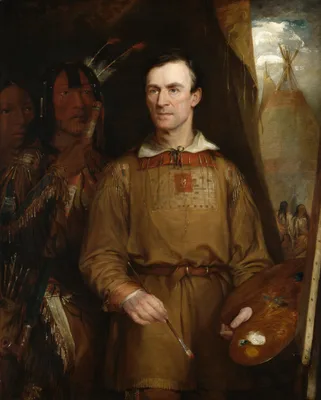
1861 CATLIN, George (1796 – 1872)
The breath of life; or mal-respiration, and its effects upon the enjoyments and life of man.
Catlin, the famous American artist, was the first in America to call attention to the bad effects of mouth-breathing. He based his book on observations of native American practices, and illustrated his book with humor…
GMN 3267 · https://historyofmedicine.com/id/3961
1862 BRUNS, Viktor von (1812 – 1883)
Die erste Ausrottung eines Polypen in der Kehlkopfshöhle durch Zerschneiden ohne blutige Eröffnung der Luftwege.
First enucleation of a laryngeal polyp by the bloodless method. Digital facsimile of the second edition (1862) from the Internet Archive at this link.
GMN 3268 · https://historyofmedicine.com/id/3965
1862 LEWIN, Georg Richard (1820 – 1896)
Beiträge zur Laryngoscopie.
Lewin was probably the first to extirpate a laryngeal growth with the aid of the laryngoscope. Bruns claimed this distinction, but may not have heard of Lewin.
GMN 3269 · https://historyofmedicine.com/id/3969
1863 GERHARDT, Carl Adolph Christian Jacob (1833 – 1902)
Studien und Beobachtungen über Stimmbandlähmung.
An important study of paralysis of the vocal cords was made by Gerhardt. He diagnosed the growth in the larynx of Friedrich III, Emperor of Germany, whose eventual death from this condition was to have such disastrous…
GMN 3270 · https://historyofmedicine.com/id/3971
1865 BRUNS, Viktor von (1812 – 1883)
Die Laryngoskopie und die laryngoskopische Chirurgie. 1 vol. and atlas.
Bruns claimed to have been the first to remove a tumor from the larynx with the aid of the laryngoscope.
GMN 3271 · https://historyofmedicine.com/id/3974
1865 SANDS, Henry Berton (1830 – 1888)
Case of cancer of the larynx, successfully removed by laryngotomy.
Laryngectomy for papillomata.
GMN 3272 · https://historyofmedicine.com/id/3976
1865 MACKENZIE, Sir Morell (1837 – 1892)
The use of the laryngoscope in diseases of the throat; with an appendix on rhinoscopy.
GMN 3334 · https://historyofmedicine.com/id/4592
1866 TÜRCK, Ludwig (1810 – 1868)
Klinik der Krankheiten des Kehlkopfes und der Luftröhre. 1 vol. and atlas.
On p. 295 is a classic description of laryngitis sicca – “Türck’s trachoma”.
GMN 3273 · https://historyofmedicine.com/id/3979
1867 SOLIS-COHEN, Jacob da Silva (1838 – 1927)
Removal of a fibrous polyp from the inferior anterior surface of the right vocal cord with the aid of the laryngoscope.
First successful operation for cancer of the larynx.
GMN 3274 · https://historyofmedicine.com/id/3982
1867 VOLTOLINI, Friedrich Eduard Rudolph (1819 – 1889)
Die Anwendung der Galvanokaustik im Innern des Kehlkopfes und Schlundkopfes.
Voltolini was the first to use the galvanocautery in laryngeal surgery.
GMN 3275 · https://historyofmedicine.com/id/3985
1868 MEYER, Hans Wilhelm (1825 – 1895)
Om adenoide Vegetationer i Naesesvaelgrummet.
First clinical description of adenoid growths. For an English translation of the paper see Med. -chir. Trans., 1870, 53, 191-215
GMN 3276 · https://historyofmedicine.com/id/3995
1870 HEBRA, Hans von (1847 – 1902)
Ueber ein eigenthümliches Neugebilde an der Nase – Rhinosclerom.
Rhinoscleroma is considered a tropical disease, mostly endemic to Africa and Central America, and less common in the United States.
GMN 3277 · https://historyofmedicine.com/id/3998
1871 MACKENZIE, Sir Morell (1837 – 1892)
Essay on growths in the larynx.
An analysis of 100 of Mackenzie’s own cases.
GMN 3278 · https://historyofmedicine.com/id/3999
1872 GERHARDT, Carl Adolph Christian Jacob (1833 – 1902)
Ueber Diagnose und Behandlung der Stimmbandlähmung.
See No. 3270. Continuing his study of laryngeal paralysis. Gerhardt proposed the term “cadaveric position” to indicate the position of the vocal cord in total paralysis of the larynx.
GMN 3279 · https://historyofmedicine.com/id/4001
1872 SOLIS-COHEN, Jacob da Silva (1838 – 1927)
Diseases of the throat: A guide to the diagnosis and treatment of affections of the pharynx, oesophagus, trachea, larynx, and nares.
First American textbook on oto-rhino-laryngology.
GMN 3280 · https://historyofmedicine.com/id/4004
1873 FRÄNKEL, Bernhard (1836 – 1911)
Fall von gutartiger Mycosis des Pharynx.
Mycosis pharyngitis first reported.
GMN 3281 · https://historyofmedicine.com/id/4006
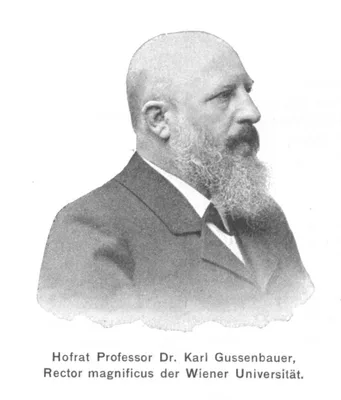
1874 GUSSENBAUER, Carl (1842 – 1903)
Ueber die erste durch Th. Billroth am Menschen ausgeführte Kehlkopf-Exstirpation und die Anwendung eines künstlichen Kehlkopfes.
The first complete excision of the larynx for cancer, performed by Billroth on 31 December 1873 and reported by Gussenbauer. The patient left the hospital in good state on 3 March 1874. Also published in Arch. klin. C…
GMN 3282 · https://historyofmedicine.com/id/4009