1497 LEONICENO, Niccolò [Nicolaus Leonicenus] (1428 – 1524)
Libellus de Epidemia, quam uulgo morbum Gallicum uocant,
One of the earliest treatises on syphilis, and one of the few medical books printed by Aldus Manutius in the 15th century. Leoniceno included a good description of syphilitic hemiplegia. He believed that syphilis was …
GMN 2363 · https://historyofmedicine.com/id/3186
1529 CORDUS, Euricius (1486 – 1535)
Ein Regiment: wie man sich vor der newen Plage der Englische Schwaisz genannt, bewaren, und so mann damit ergryffen wirt, darinn halten sall.
Euricius Cordus, father of Valerius, wrote an important account of sweating sickness. Another edition was published at Nuremberg, also in 1529. Reproduced in Gruner’s Scriptores, 1847 (No. 5524).
GMN 5520 · https://historyofmedicine.com/id/6588
1531 SCHYLLER, Joachim [SCHILLER] (1500 – )
De peste Brittanica commentariolus vere aureus.
Schyller’s book on sweating sickness deals with the German epidemic of 1528-30.
GMN 5521 · https://historyofmedicine.com/id/6591
1546 FRACASTORO, Girolamo [FRACASTORIUS] (1478 – 1553)
De sympathia et antipathia rerum liber unus. De contagione et contagiosis morbis et curatione.
Though Fracastoro wrote this book more than a century before Leewenhoek invented the microscope, and could only express the theory of contagion in very general terms, this book represents a landmark in the development…
GMN 2528 · https://historyofmedicine.com/id/3485
1552 CAIUS, John [Johannes Caius; born John Kays] (1510 – 1573)
A boke, or conseill against the disease commonly called the sweate, or sweatyng sicknesse.
First English book on sweating sickness, and the first devoted to a single disease to be published in England. Caius’s work appeared a year after the last epidemic visit of the disease. From it we learn that the disea…
GMN 5522 · https://historyofmedicine.com/id/6594
1640 BAILLOU, Guillaume de [BALLONIUS] (1538 – 1616)
Epidemiorum et ephemeridum libri duo.
A pupil of Fernel, De Baillou was a follower of Hippocrates in his advancement of the doctrine of “epidemic constitutions”. Crookshank regards him as the first modern epidemiologist. This work includes the first descr…
GMN 1673 · https://historyofmedicine.com/id/2328
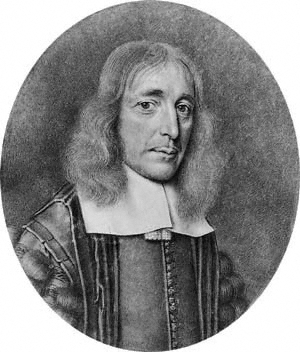
1684 WILLIS, Thomas (1621 – 1675); PORDAGE, Samuel (1633 – 1691)
Dr. Willis's practice of physick.
The only complete edition of Willis's works in English, translated by the poet Samuel Pordage. It contains the translations of all his works except his Affectionum quae dicuntur hystericae (1671). The collection inclu…
GMN 1311 · https://historyofmedicine.com/id/10280
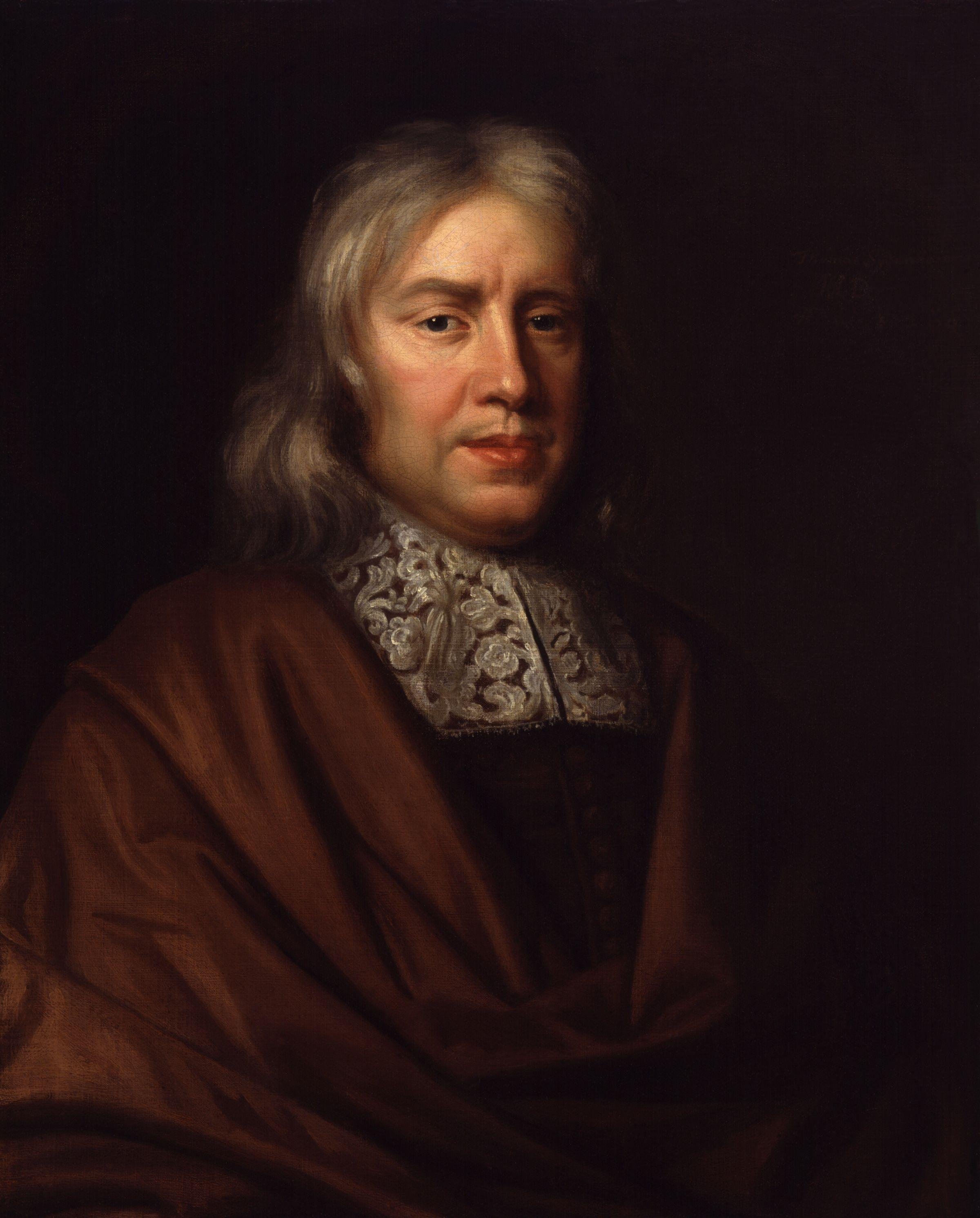
1685 SYDENHAM, Thomas (1624 – 1689)
Observationes medicae circa morborum acutorum historiam et curationem. Ed. quarta.
Contains (Book 3, Cap. 2; Book 5, Cap. 4) an important account of smallpox, particularly the epidemics of 1667-69 and 1674-75. Sydenham attributed smallpox to a specific inflammation of the blood; he clearly distingui…
GMN 5407 · https://historyofmedicine.com/id/7260
1694 ROSA, João Ferreira da (Ferreyra da Rosa)
Trattado unico da constituiçam pestilencial de Pernambuco, offerecido a ElRey N.S. por ser servido ordenar por seu Governador aos Medicos da America, que assistem aonde ha este contagio, que o compusessem para se conferirem pelos Coripheos da Medicina aos dictames com que he trattada esta pestilencial febre.
The first scientific description of yellow fever in Brazil by the first European physician to treat the disease in Brazil, and perhaps in all of Latin America. It includes the description of the first autopsy of a yel…
GMN 8930 · https://historyofmedicine.com/id/11108
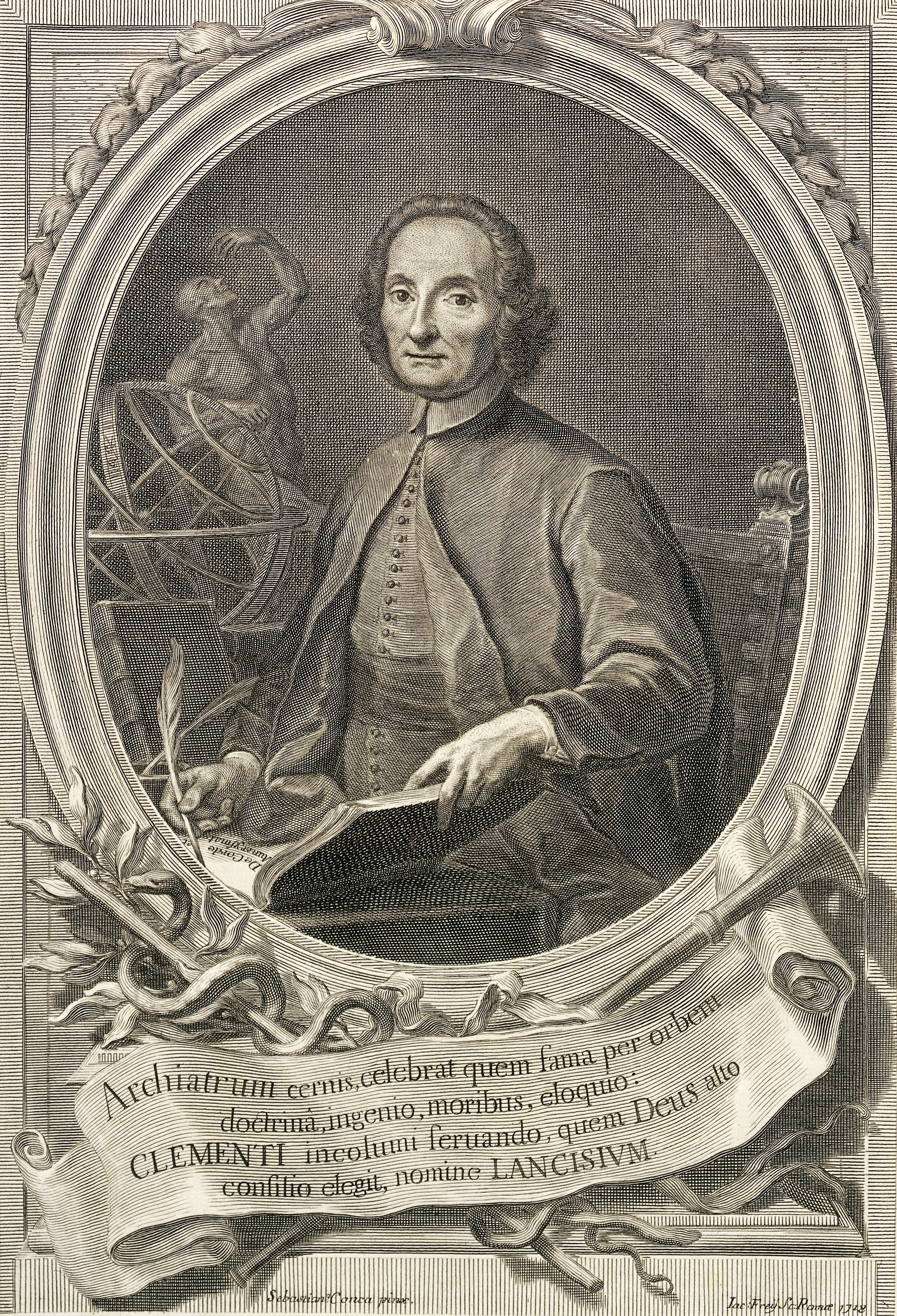
1717 LANCISI, Giovanni Maria (1654 – 1720)
De noxiis paludum effluviis, eorumque remediis.
Lancisi suggested that since malaria disappears after drainage it was due to some sort of poison emanating from marshes and possibly transmitted by mosquitoes. He planned a drainage scheme for marshy regions. His work…
GMN 5232 · https://historyofmedicine.com/id/7877
1718 LANCISI, Giovanni Maria (1654 – 1720); ASSALTI, Pietro (1680 – 1728)
Jo. Mariae Lancisii archiatri pontificii. Opera quae hactenus prodierunt omnia; dissertationibus nonnullis adhuc dum ineditis locupletata, & ab ipso auctore, recognita atque emendata. Collegit, ac in ordinem digessit Petrus Assaltus. 2 vols.
Lancisi's collected works edited by Pietro Assalti. Lancisi was the first to describe cardiac syphilis; he was also notable as an epidemiologist, with a clear insight into the theory of contagion. He was physician to …
GMN 71 · https://historyofmedicine.com/id/1266
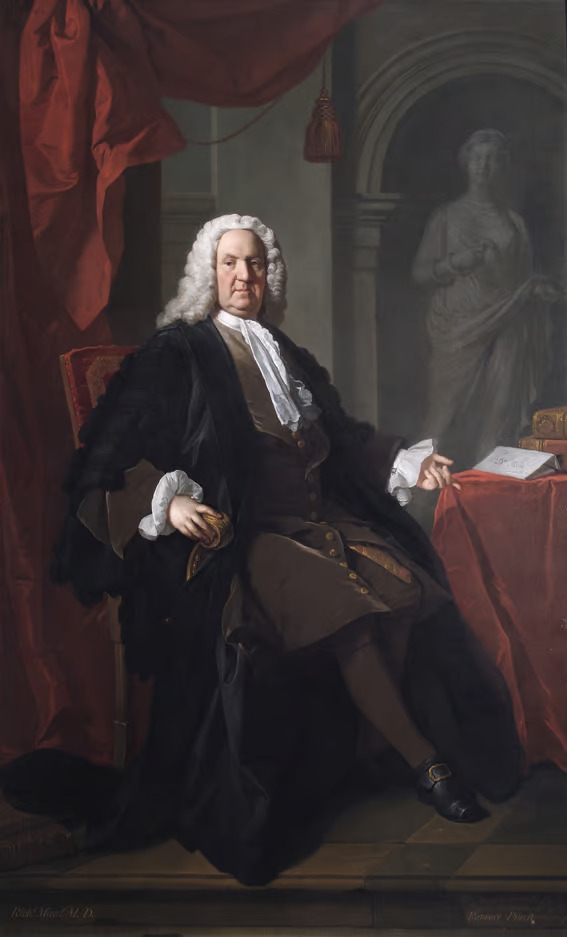
1720 MEAD, Richard (1673 – 1754)
A short discourse concerning pestilential contagion, and the methods to be used to prevent it.
In 1719 Mead was asked for advice concerning an outbreak of plague in Marseilles, and replied with the above tract of 59 pages, which has been called the first epidemiological report produced by a physician at the com…
GMN 5123 · https://historyofmedicine.com/id/6107
1734 –1736 BAILLOU, Guillaume de [BALLONIUS] (1538 – 1616)
Opera medica omnia. 4 vols.
De Baillou, “the first epidemiologist of modern times”, foreshadowed much that was afterwards taught by Sydenham. He first described whooping-cough and is often credit with introducing the term “rheumatism”. Baillou w…
GMN 60 · https://historyofmedicine.com/id/965
1736 DOUGLASS, William (1691 – 1752)
The practical history of a new epidemical eruptive miliary fever, with an angina ulcusculosa, which prevailed in Boston New England in the years 1735 and 1736.
Douglass left the first adequate clinical description of scarlet fever, which he called angina ulcusculosa, in his account of New England’s first scarlet fever epidemic. He was one of the first American physicians to …
GMN 5076 · https://historyofmedicine.com/id/5925
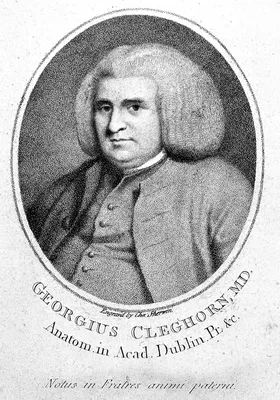
1751 CLEGHORN, George (1716 – 1789)
Observations on the epidemical diseases in Minorca. From the year 1744 to 1749.
Cleghorn left a good account of several diseases and conditions not previously observed, among them epidemic jaundice. He included accounts of many post-mortems. Digital facsimile from the Internet Archive at this link.
GMN 1674 · https://historyofmedicine.com/id/2332
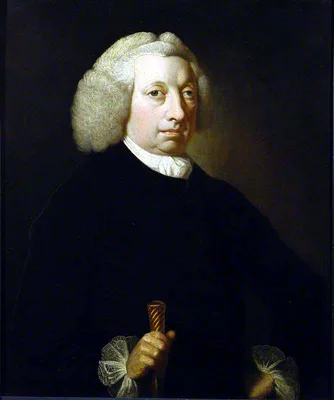
1752 –1770 HUXHAM, John (1692 – 1768)
Observationes de aëre et morbis epidemicis. 3 vols.
Huxham made daily records of the weather and prevailing diseases; his aim was to establish a relationship between atmospheric conditions and disease. The work was first published in 1728; vol. 1 and 2 of the edition g…
GMN 1675 · https://historyofmedicine.com/id/2334
1759 HILLARY, William (1697 – 1763)
Observations on the changes of the air and the concomitant epidemical diseases, in the Island of Barbados.
Hillary included good accounts of lead colic and infective hepatitis, and probably the first description of sprue (celiac disease).
GMN 1770 · https://historyofmedicine.com/id/3314
1776 –1778 LE PECQ DE LA CLÔTURE, Louis (1736 – 1804)
(1) Observations sur les maladies épidemiques, Année 1770, ouvrage rédigé d'après le tableau des epidémiques d'Hippocrate, et dans lequel on indique la meilleure méthode d'observer ce genre de maladies ... Publié par ordre du gouvernement, et aux fraix du roi. (2) Collection d'observations sur les maladies et constitutions épidémiques; ouvrage qui expose une suite de quinze années d'observations, & dans lequel les épidémies, les constitutions régnantes & intercurrentes, sont liées, selon le voeu d'Hippocrate, avec les causes météorologiques, locales & relatives aux différens climats, ainsi qu'avec l'histoire naturelle & médicale de la Normandie. On y a joint un appendix sur l'ordre des constitutions épidémiques ... Pub. par ordre du gouvernement .… 3 vols.
The first title, in 1 volume, was published in 1776; the second work in 2 vols., supplementing the first work, was published in 1778. In these two bioclimatological and biogeographical studies of disease in Normandy, …
GMN 12272 · https://historyofmedicine.com/id/14490
1778 LÉPECQ DE LA CLOTURE, Louis (1736 – 1804)
Collection d'observations sur les maladies et constitutions épidémiques: Ouvrage qui expose une suite de quinze années d'observations, & dans lequel les épidémies, les les constitutions régnantes & intercurrentes, sont liées, selon le voeu d'Hippocrate, avec les causes météorologiques, locales & relatives aux différens climats, ainsi qu'avec l'histoire naturelle & médicale de la Normandie. On y joint un appendix sur l'ordre des constitutions épidémiques ... 2 vols.
This work is divided into four parts: "The first, which occupies the first volume, contains a general description of Normandy, considerations about its climate, its people, their morals and habits, and the most common…
GMN 13852 · https://historyofmedicine.com/id/16142
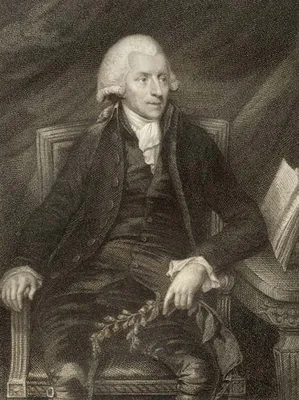
1779 WITHERING, William (1741 – 1799)
An account of the scarlet fever and sore throat, or scarlatina anginosa; particularly as it appeared at Birmingham in the year 1778.
Withering, best remembered for his book on the foxglove, described the epidemics of scarlet fever which occurred in England in 1771 and 1778.
GMN 5079 · https://historyofmedicine.com/id/5934
1780 SAILLANT, Charles Jacques (1747 – 1804)
Tableau historique et raisonné des épidémies catharrales vulgairement dites la grippe; depuis 1510 jusques et y compris celle de 1780.
GMN 5488 · https://historyofmedicine.com/id/6429
1780 BYLON, David
Korte aantekening wegens eene algemeene ziekte, doorgaans genaamd knokkel-koorts.
Bylon described an epidemic of dengue which appeared in the Dutch East Indies in 1779, the first definite description of the disease. O. H. P. Pepper published a photographic reproduction of the article in Ann. med. H…
GMN 5469 · https://historyofmedicine.com/id/7605
1784 MASDEVALL, Josep (José)
Dictamen del mismo doctor Don Joseph Masdevall dado de órden del rey sobre Si las fábricas de algodon y lana son perniciosas ó no á la salud pública de las ciudades donde están establecidas. IN: Relacion de las epidemias de calenturas putridas y malignas....
Digital facsimile of Masdevall's work on occupational medicine from helvia.uco.es at this link. Digital facsimile of the complete epidemiological work from Google Books at this link.
GMN 10484 · https://historyofmedicine.com/id/12677
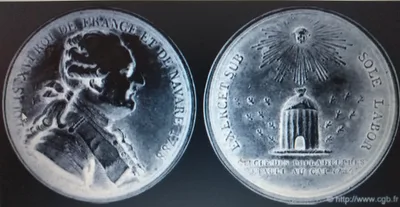
1788 ARTHAUD, Charles (1748 – 1791); CERCLE DES PHILADELPHES
Recherches, mémoires et observations sur les maladies épizootiques de Saint-Dominique, recueillis & publiés par le Cercle des Philadelphes du Cap-François.
The Cercle des Philadelphes, of which Charles Arthaud was president, was an academic scientific society in Saint-Domingue, in existence between 1784 and 1791. It was the most prominent academic society in the Americas…
GMN 9896 · https://historyofmedicine.com/id/12084
1789 RUSH, Benjamin (1745 – 1813)
An account of the bilious remitting fever. In his Medical inquiries and observations, 1, 104-21
One of the first important accounts of dengue (“breakbone fever”). Rush described the Philadelphia outbreak of 1780.
GMN 5470 · https://historyofmedicine.com/id/7607
1793 CAREY, Mathew (1760 – 1839)
A short account of the malignant fever, lately prevalent in Philadelphia: With a statement of the proceedings that took place on the subject in different parts of the United States.
Carey was a Philadelphia publisher and economist rather than a physician. In this little book, which passed through four editions in a few months, Carey left a graphic description of the great yellow fever epidemic of…
GMN 5451 · https://historyofmedicine.com/id/7515
1794 RUSH, Benjamin (1745 – 1813)
An account of the bilious remitting yellow fever, as it appeared in the city of Philadelphia in the year 1793.
Benjamin Rush was the most eminent figure in Philadelphia medicine in his day. His description of the yellow fever epidemic of 1793 is classic. He did magnificent work in treating the sick during the epidemic and in p…
GMN 5453 · https://historyofmedicine.com/id/7528
1794 JONES, Absolom (1746 – 1818); ALLEN, Richard (1760 – 1831); CLARKSON, Matthew (1733 – 1800)
A narrative of the proceedings of the black people during the late awful calamity in Philadelphia, in the year 1793: and a refutation of some censures thrown upon them in some late publications.
A refutation of slights by Matthew Carey in his Short account of the malignant fever, lately prevalent in Philadelphia (1793; No. 5451) to the important contributions of black people, many of whom served as nurses and…
GMN 5453.1 · https://historyofmedicine.com/id/7530
1796 BAYLEY, Richard (1745 – 1801)
An account of the epidemic fever which prevailed in the city of New York, during part of the summer and fall of 1795.
Traces the spread of yellow fever in late July, 1795, to the ship Zephyr, recently arrived from the West Indies. After spreading to nearby ships and then into the neighborhoods surrounding the port, the epidemic kille…
GMN 13162 · https://historyofmedicine.com/id/15421
1797 SEAMAN, Valentine (1770 – 1817)
An inquiry into the cause of the prevalence of the yellow fever in New-York.
Includes four early plot maps; Seaman was one of the first to create maps that attempted to show the spread of contagious disease.
GMN 7687 · https://historyofmedicine.com/id/9859
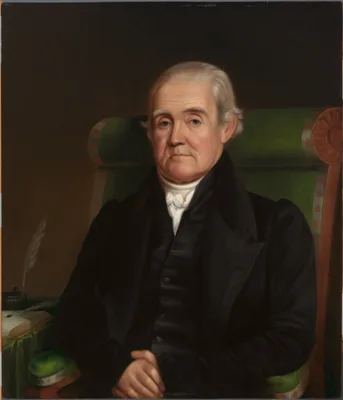
1799 WEBSTER, Noah (1758 – 1843)
A brief history of epidemic and pestilential diseases. 2 vols.
“The best general summary of epidemiological opinion at the beginning of the nineteenth century; and few works surpass it as a compendium of earlier speculations in this field”. (Winslow). A great linguist, Webster wa…
GMN 1675.1 · https://historyofmedicine.com/id/2338
1799 LINING, John (1708 – 1760)
A description of the American yellow fever, which prevailed at Charleston, in South Carolina, in the year 1748.
Digital facsimile from U.S. National Library of Medicine at this link.
GMN 10511 · https://historyofmedicine.com/id/12704
1802 VILLALBA, Joaquín de (1752 – 1807)
Epidemiologia española o historia cronológica de las pestes, contagios, epidemias y epizootias que han acaecido en España: Desde la venida de los cartagineses hasta el año 1801.... 2 vols.
A chronological history of epidemics (plagues, contagions and epizootics) occurring in Spain to the end of the 18th century. Digital facsimile from Google Books at this link.
GMN 1676 · https://historyofmedicine.com/id/2341
1803 WITTMAN, William
Travels in Turkey, Asia-Minor, Syria, and across the desert into Egypt during the years 1799, 1800, and 1801, in company with the Turkish Army, and the British Military Mission.To which are annexed, observations on the plague, and on the diseases prevalent in Turkey, and a meteorological journal.
Wittman described the plague and other epidemics that afflicted both the Ottoman and British armies. In the Appendix he provided medical suggestions for treatment, together with a history of the plague. Digital facsim…
GMN 7367 · https://historyofmedicine.com/id/9539
1806 VINCENT, DE MARCIAC, J.
Dissertation sur la fièvre-jaune qui a régné épidémiquement à Saint-Domingue, et qui a fait tant de ravages dans l'Armée expéditionnaire, en l'an X et en l'an XI, et sur les causes qui l'ont rendue si funeste.
Describes the yellow fever epidemic that swept through French troops on the island of Saint Domingue (Haiti) in 1802. In the midst of the slave uprising that led to the island’s independence, Napoleon sent an expediti…
GMN 13161 · https://historyofmedicine.com/id/15420
1815 GALLUP, Joseph Adams (1769 – 1849)
Sketches of epidemic diseases in the state of Vermont; from the first settlement to the year 1815, with a consideration of their causes, phenomena, and treatment. To which is added remarks on pulmonary consumption.
Digital facsimile from U.S. National Library of Medicine at this link:
GMN 13487 · https://historyofmedicine.com/id/15761
1817 –1818 OZANAM, Jean Antoine François (1773 – 1837)
Histoire médicale générale et particulière des maladies épidémiques, contagieuses et épizootiques qui ont régné en Europe depuis les temps les plus reculés, et notamment depuis le XIVe siècle jusqu’à nos jours. 2 vols.
The history of epidemics and epizootics in Europe since the 14th century. Digital facsimile of the first edition from Google Books at this link. Greatly revised, corrected and augmented second edition, Paris & Lyon, 1…
GMN 11540 · https://historyofmedicine.com/id/13739
1822 –1824 FODÉRÉ, François-Emmanuel (1764 – 1835)
Leçons sur les épidémies et l’hygiène publique. 4 vols.
GMN 1605 · https://historyofmedicine.com/id/1870
1823 –1825 SCHNURRER, Christian Friedrich von (1742 – 1822)
Chronik der Seuchen in Verbindung mit der gleichzeitigen Vorgängen in der physischen Welt und in der Geschichte der Menschen. Erster Theil vom Anfang der Geschichte bis in die Mitte des fünfzehnten Jahrhunderts. Zeiter Theil von der Mitte des fünzehnten Jahrhunderts bis auf die neuste Zeit. (2 vols.)
Digital facsimile from the Internet Archive at this link.
GMN 10503 · https://historyofmedicine.com/id/12696
1825 HEUSTIS, Jabez Wiggins (1784 – 1841)
Medical facts and inquiries, respecting the causes, nature, prevention and cure of fever: more expressly in relation to the endemic fevers of summer and autumn in the southern states: Together with a history of the bilious remitting fever of Alabama, as it appeared in Cahawba and its vicinity in the summers and autumns of 1821 and 1822.
Digital facsimile from the U.S. National Library of Medicine at this link.
GMN 10518 · https://historyofmedicine.com/id/12711
1827 SCHNURRER, Christian Friedrich von (1742 – 1822)
Charte über die geographische Ausbreitung der Krankheiten.
The first world map of the distribution of human disease. For Schnurrer's work in epidemiology and his map, which was published separately from his books, see Brömer, "The first global map of the distribution of human…
GMN 10507 · https://historyofmedicine.com/id/12700
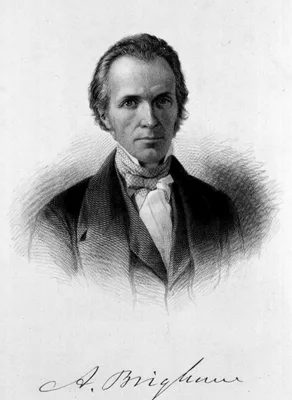
1832 BRIGHAM, Amariah (1798 – 1849)
A treatise on epidemic cholera; including an historical account of its origin and progress, to the present period. Compiled from the most authentic sources.
This compendium contains one of the first world charts of a disease, tracing the spread of cholera from two main sources, India (1817) and China (1820), across Asia and the Middle East via trade routes, to France and …
GMN 7688 · https://historyofmedicine.com/id/9860
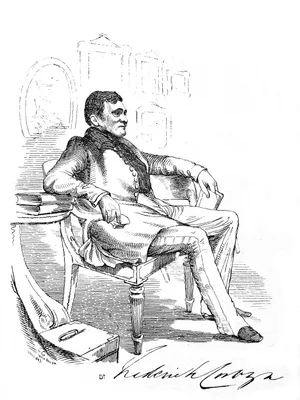
1832 CORBYN, Frederick
A treatise on the epidemic cholera, as it has prevailed in India; together with the reports of the medical officers, made to the medical boards of the presidencies of Bengal, Madras, and Bombay, for the purpose of ascertaining a successful mode of treating that destructive disease; And a critical examination of all the works that have hitherto appeared on the subject.
Corbyn mapped the history of cholera in India within British regimental stations. He included the date of each reported outbreak in a table of British regimental locations to describe the temporal progression of the d…
GMN 10463 · https://historyofmedicine.com/id/12656
1832 TANNER, Henry Schenck (1786 – 1858)
A geographical and statistical account of the epidemic cholera: From its commencement in India to its entrance into the United States: Comprehended in a series of maps and tables, exhibiting the names of places visited by the pestilence, the time of its commencement, the number of cases, and deaths, and duration, at each place: Compiled from a great variety of printed and manuscript documents.
Tanner, a prolific cartographer, wished to provide a geographic account of the spread of the worldwide cholera epidemic of 1817. Statistics concerning the epidemic, he complained, were "given in such a loose and uncon…
GMN 10526 · https://historyofmedicine.com/id/12719
1834 CHÂTEAUNEUF, Louis-François Benoiston de (1776 – 1856)
Rapport sur la marche et les effets du choléra-morbus dans Paris et les communes rurales du département de la Seine par la commission nommée, avec l'approbation de M. le ministre du commerce et des travaux publics, par MM. les préfets de la Seine et de police; année 1832.
This work contained one of the earliest applications of spatial analysis in epidemiology—an early thematic map by geographer and cartographer Charles Picquet, in which the 48 districts of Paris were represented by gra…
GMN 7480 · https://historyofmedicine.com/id/9652
1839 DICKSON, Samuel Henry (1798 – 1872)
On dengue; its history, pathology, and treatment.
GMN 5471 · https://historyofmedicine.com/id/7610
1840 CLOT, Antoine Barthélemy (Clot-Bey) (1793 – 1868)
De la peste observée en Égypte. Recherches et considérations sur cette maladie.
Includes two hand-colored lithographs depicting costumes of "plague doctors" -- one from the Middle Ages in Marseille, the other from Marseille in 1819; the similarities are striking! Digital facsimile from wellcomeco…
GMN 13663 · https://historyofmedicine.com/id/15945
1843 HAESER, Heinrich (1811 – 1884)
Bibliotheca epidemiographica.
A second edition was published in 1862. Digital facsimile of the second edition from the Medical Heritage Library at the Internet Archive, at this link.
GMN 1677 · https://historyofmedicine.com/id/2343
1843 CORMACK, Sir John Rose (1815 – 1882)
Natural history, pathology and treatment of the epidemic fever at present prevailing in Edinburgh and other towns.
The epidemic of relapsing fever in Edinburgh in 1843 was well described by Cormack. He was first editor of the Association Medical Journal which later became the British Medical Journal.
GMN 5310 · https://historyofmedicine.com/id/6575
1844 HENDERSON, William (1810 – 1872)
On some of the characters which distinguish the fever at present epidemic from typhus fever.
Henderson, professor of pathology at Edinburgh, gave a good account of relapsing fever seen during the epidemic in 1843. He was one of the first to differentiate it from typhus.
GMN 5311.1 · https://historyofmedicine.com/id/6582