1564 BOTALLO, Leonardo (BOTALLUS) (1519 – 1587)
De catarrho commentarius.
Summer catarrh (hay fever) first described. Partial English translation in No. 2241.
GMN 2581.99 · https://historyofmedicine.com/id/4364
1644 DIGBY, Sir Kenelm (1603 – 1665)
Two treatises in the one of which the nature of bodies, in the other, the nature of mans soule is looked into in way of discovery of the immortality of reasonable soules.
"Digby's Two Treatises was intended to prove the immortality of the rational soul and its distinction from the material body, a dualistic view shared by many of his contemporaries. the work is noteworthy on several co…
GMN 11581 · https://historyofmedicine.com/id/13780
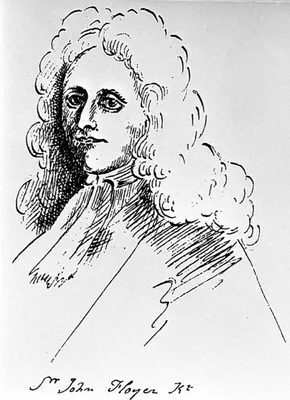
1698 FLOYER, Sir John (1649 – 1734)
A treatise of the asthma.
Floyer provided the first clear descriptions of cases of bronchial asthma. Floyer himself suffered from asthma for over 30 years. He recognized the influence of heredity in asthma. The above includes (p. 239) an impor…
GMN 3166 · https://historyofmedicine.com/id/4120
1746 WATSON, Sir William (1715 – 1787)
An account of what appeared on opening the body of an asthmatic person.
Probably the earliest comprehensive clinical and pathological account of emphysema.
GMN 3166.1 · https://historyofmedicine.com/id/4122
1769 MILLAR, John (1733 – 1805)
Observations on the asthma and on the hooping cough.
Includes Millar’s original description of laryngismus stridulus (“Millar’s asthma”).
GMN 3167 · https://historyofmedicine.com/id/4124
1797 BREE, Robert (1759 – 1839)
A practical inquiry into disordered respiration, distinguishing the species of convulsive asthma, their causes, and indications of cure,
Bree "embodied the numerous experiments in his own case, gave a more full and complete view of asthma and dyspnœa than had hitherto appeared, and laid down some important therapeutic rules, the practical value of whic…
GMN 11491 · https://historyofmedicine.com/id/13690
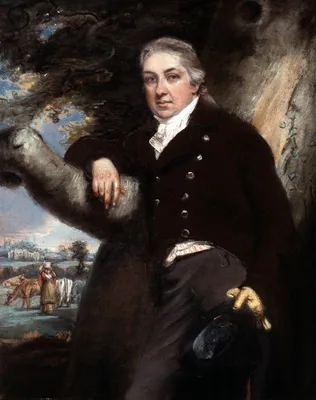
1798 JENNER, Edward (1749 – 1823)
An inquiry into the causes and effects of the variolae vaccinae.
Jenner established the fact that a “vaccination” or inoculation with vaccinia (cowpox) lymph matter protects against smallpox. He performed his first vaccination on May 14, 1796. The above work, describing 23 successf…
GMN 2529.3 · https://historyofmedicine.com/id/7353
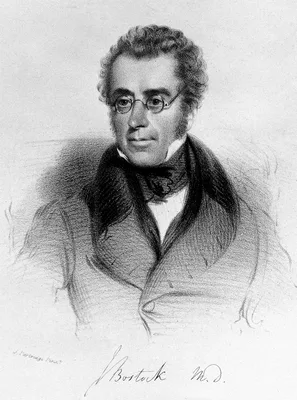
1819 BOSTOCK, John (1773 – 1846)
Case of periodical affection of the eyes and chest.
Bostock’s classical description of the “catarrhus aestivus,” hay fever, is also referred to as “Bostock’s catarrh”. It begins the modern era in the clinical recognition of hay fever. The case he described was in fact …
GMN 2582 · https://historyofmedicine.com/id/4366
1828 BOSTOCK, John (1773 – 1846)
Of the catarrhus aestivus, or summer catarrh.
On the history and aetiology of hay fever.
GMN 2583 · https://historyofmedicine.com/id/4369
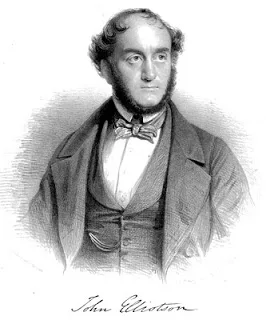
1831 ELLIOTSON, John (1791 – 1868)
Hay fever.
Elliotson was the first to ascertain that pollen was the cause of hay fever.
GMN 2584 · https://historyofmedicine.com/id/4371
1839 MAGENDIE, François (1783 – 1855)
Lectures on the blood, and on the changes which it undergoes during disease: Delivered at the College of France in 1837-8.
Pp. 244-49: Magendie showed that secondary or subsequent injections of egg/albumin caused death in rabbits who had tolerated an initial injection. This was the first experiment in anaphylaxis, though Jenner in 1798 ha…
GMN 2585 · https://historyofmedicine.com/id/4372
1860 SALTER, Henry Hyde (1823 – 1871)
On asthma: its pathology and treatment.
The best work on asthma to appear during the 19th century. Salter, who had suffered from asthma from childhood, may be considered the first modern student of the condition. He called special attention to asthma from a…
GMN 2586 · https://historyofmedicine.com/id/4136
1872 WYMAN, Morrill (1812 – 1903)
Autumnal catarrh (Hay fever) with three maps.
Wyman conducted experiments that convinced him that ragweed was a cause of hay fever. He then collected data from correspondents and published the first pollen maps of the U.S. so that sufferers could plan vacations i…
GMN 13212 · https://historyofmedicine.com/id/15475
1873 LIVEING, Edward (1832 – 1919)
On megrim, sick-headache, and some allied disorders.
Liveing’s classic account of migraine showed the close association of this condition with tetany, asthma, and false angina pectoris, with epilepsy, and the alternation of all these conditions in the same subject or th…
GMN 2587 · https://historyofmedicine.com/id/409
1873 BLACKLEY, Charles Harrison (1820 – 1900)
Experimental researches on the causes and nature of catarrhus aestivus.
Blackley showed that pollen can produce hay fever in both the asthmatic and catarrhal forms; he also showed that skin reactions were evoked in sensitive persons.
GMN 2588 · https://historyofmedicine.com/id/4390
1880 BLACKLEY, Charles Harrison (1820 – 1900)
Hay fever.
GMN 2589 · https://historyofmedicine.com/id/4392
1902 RICHET, Charles Robert (1850 – 1935); PORTIER, Paul (1866 – 1962)
De l’action anaphylactique de certains venins.
First full description of the phenomenon of “anaphylaxis,” the name of which was coined by Richet. Abbreviated English translation in Bibel, Milestones of immunology (1988). In 1913, Richet was awarded the Nobel Prize…
GMN 2590 · https://historyofmedicine.com/id/4397
1903 ARTHUS, Nicolas Maurice (1862 – 1945)
Injections répétées de sérum de cheval chez le lapin.
The “Arthus phenomenon” – a symptom of anaphylaxis. Arthus showed that “antibody-mediated inflammation could be elicited in the skin of sensitized animals upon local introduction of an appropriate antigen” (Silverstei…
GMN 2591 · https://historyofmedicine.com/id/4400
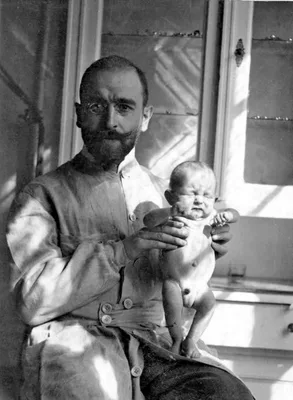
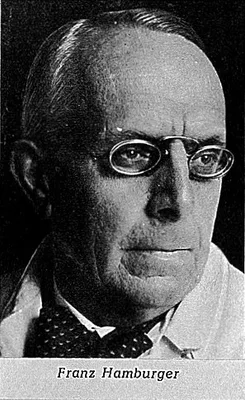
1903 MORO, Ernst (1874 – 1951); HAMBURGER, Franz (1874 – 1954)
Ueber die biologisch nachweisbaren Veränderungen des menschlichen Blutes nach den Seruminjektion.
Serum sickness first described.
GMN 2591.1 · https://historyofmedicine.com/id/4403
1905 DUNBAR, William Philipps (1863 – 1922)
Ursache und Behandlung des Heufiebers.
Dunbar studied the relationship of pollen to hay fever, separated the active substances responsible for producing the condition, and introduced a specific therapy.
GMN 2592 · https://historyofmedicine.com/id/4406
1905 PIRQUET, Clemens Peter Freiherr von (1874 – 1929); SCHICK, Béla (1877 – 1967)
Die Serumkrankheit.
Serum sickness and its significance. English translation, Baltimore: Williams & Wilkins, 1951.
GMN 2593 · https://historyofmedicine.com/id/4409
1906 ROSENAU, Milton Joseph (1869 – 1946); ANDERSON, John Fleetezelle (1873 – 1958)
A study of the cause of sudden death following the injection of horse serum.
Forms Bulletin No. 29 of the Hygienic Laboratory, U. S. Marine Hospital Service. Rosenau and Anderson drew attention to the fact that animals receiving an injection of a foreign protein became sensitive to a second do…
GMN 2595 · https://historyofmedicine.com/id/2959
1907 OTTO, Richard (1872 – 1952)
Zur Frage der Serum-Ueberempfindlichkeit.
Otto discovered that a state of tolerance developed in animals that survived anaphylactic shock. He induced passive transfer of hypersensitivity.
GMN 2594.1 · https://historyofmedicine.com/id/2956
1907 BESREDKA, Alexandre (1870 – 1940); STEINHARDT, Edna
De l’anaphylaxie et de l’anti-anaphylaxie vis-à-vis du sérum de cheval.
“Anti-anaphylaxis” was the term given by Besredka and Steinhardt to the specific desensitization of sensitized animals.
GMN 2596 · https://historyofmedicine.com/id/2960
1907 NICOLLE, Maurice (1862 – 1932)
Contribution à l’étude du “phénomène d’Arthus.”
“Passive” anaphylaxis first demonstrated.
GMN 2597 · https://historyofmedicine.com/id/2966
1907 PIRQUET, Clemens Peter Freiherr von (1874 – 1929)
Klinische Studien über Vakzination und vakzinale Allergie.
Pirquet suggested the word “Allergie”; see also his paper with this title in Münich. med. Wschr., 1906, 53, 1457-58.
GMN 2598 · https://historyofmedicine.com/id/2970
1907 RICHET, Charles Robert (1850 – 1935)
De l’anaphylaxie en général et de l’anaphylaxie par la mytilocongestine en particulier.
In 1913 Richet was awarded the Nobel Prize in Physiology or Medicine "in recognition of his work on anaphylaxis."
GMN 2599 · https://historyofmedicine.com/id/2974
1907 NOWOTNY, Franz (1872 – 1925)
Bronchoskopie und bronchoskopische Behandlung von Bronchialasthma.
Introduction of therapeutic bronchoscopy, for treatment of asthma.
GMN 3186 · https://historyofmedicine.com/id/4211
1910 DALE, Sir Henry Hallett (1875 – 1968); BARGER, George (1878 – 1939)
Chemical structure and sympathomimetic action of amines.
Discovery of histamine in an ergot extract.
GMN 1898 · https://historyofmedicine.com/id/2640
1910 LEWIS, Paul Adin (1879 – 1929); AUER, John (1875 – 1948)
The physiology of the immediate reaction of anaphylaxis in the guinea-pig.
First adequate account of the physiological reactions leading to fatal anaphylactic shock.
GMN 2600 · https://historyofmedicine.com/id/2978
1910 MELTZER, Samuel James (1851 – 1920)
Bronchial asthma as a phenomenon of anaphylaxis.
The work of Auer and Lewis (see No. 2600) led Meitzer to the conclusion that bronchial asthma was due to anaphylaxis, although he did not appreciate that not all cases of asthma were so caused.
GMN 2600.1 · https://historyofmedicine.com/id/2981
1910 SCHULTZ, William Henry (1873 – 1947)
Physiological studies in anaphylaxis. I. The reaction of smooth muscle of the guinea-pig sensitized with horse serum.
Schultz-Dale test for anaphylaxis. See also No. 2600.5
GMN 2600.2 · https://historyofmedicine.com/id/2984
1911 NOON, Leonard (1878 – 1913)
Prophylactic inoculation against hay fever.
Noon and Freeman introduced the treatment of hay fever by means of injections of pollen extract.
GMN 2600.3 · https://historyofmedicine.com/id/2993
1911 FREEMAN, John (1877 – 1962)
Further observations on the treatment of hay fever by hypodermic inoculations of pollen vaccine.
See No. 2600.3.
GMN 2600.4 · https://historyofmedicine.com/id/2997
1913 DALE, Sir Henry Hallett (1875 – 1968)
The anaphylactic reaction of plain muscle in the guinea-pig.
See No. 2600.2. Dale concluded that histamine induced hypersensitivity reactions.
GMN 2600.5 · https://historyofmedicine.com/id/3001
1916 COOKE, Robert Anderson (1880 – 1960); VANDER VEER, Albert (1841 – 1929)
Human sensitization.
The concept of atopy had its origin in the report by Cooke and Vander Veer in 1916.
GMN 2600.6 · https://historyofmedicine.com/id/3007
1917 BESREDKA, Alexandre (1870 – 1940)
Anaphylaxie et antianaphylaxie.
English translation, 1919.
GMN 2601 · https://historyofmedicine.com/id/3010
1921 PRAUSNITZ, Otto Carl Willy [Carl Prausnitz-Giles] (1876 – 1963); KÜSTNER, Heinz (1897 – 1964)
Studien über die Ueberempfindlichkeit.
Prausnitz–Küstner reaction. These workers demonstrated antibodies in the blood of persons suffering from atopic allergic diseases. They produced local passive sensitization by intracutaneous injection of serum from a …
GMN 2601.1 · https://historyofmedicine.com/id/3017
1922 HIRSCH, Samson Raphael (1890 – 1960)
Klinische und experimentelle Beitrag zur krampflösenden Wirkung der Purinderivate.
Hirsch established the value of theophylline in the management of asthma.
GMN 3197.2 · https://historyofmedicine.com/id/4278
1924 LEWIS, Sir Thomas (1881 – 1945); GRANT, Ronald Thomson (1892 – 1989)
Vascular reactions of the skin to injury. II. The liberation of a histamine-like substance in injured skin; the underlying cause of factitious urticaria and of wheals produced by burning; and observations upon the nervous control of certain skin reactions.
Lewis postulated that a histamine-like substance (“H-substance”) was responsible for the anaphylaxis symptom-complex. See also The blood-vessels of the human skin and their responses, 1927 (No. 797).
GMN 2602 · https://historyofmedicine.com/id/3024
1925 STORM VAN LEEUWEN, Willem (1882 – 1933)
Allergic diseases; diagnosis and treatment of bronchial asthma, hay fever, and other allergic diseases.
In his important studies of asthma, Storm van Leeuwen demonstrated that in the great majority of patients allergens are the cause of the condition and also that patients are sensitive to mold spores. He experimented w…
GMN 2603 · https://historyofmedicine.com/id/3028
1927 LEWIS, Sir Thomas (1881 – 1945)
The blood-vessels of the human skin and their responses.
GMN 797 · https://historyofmedicine.com/id/136
1929 CAMPS, Percy William Leopold (1877 – 1956)
A note on the inhalation treatment of asthma.
First use of adrenaline by the respiratory route for the treatment of bronchial asthma.
GMN 3202.1 · https://historyofmedicine.com/id/4303
1929 SWANSON, Edward E.
The action of ephedrine, pseudoephedrine and epinephrine on the bronchioles.
Swanson showed that just 0.01 mg. of epinephrine was as vasconstrictive as 2 mg. of ephedrine and 4 mg. of pseudoephedrine. He also showed that all three of these drugs have bronchodilator properties, but epinephrine …
GMN 14192 · https://historyofmedicine.com/id/16508
1930 SULZBERGER, Marion Baldur (1895 – 1983)
Arsphenamine hypersensitiveness in guinea pigs. II. Experiments demonstrating the role of the skin, both as originator and as site of the hypersensitiveness.
Sulzberger showed that allergens gaining access to the epidermis are processed there in some manner (Langerhans cells?) that determines their allergenicity. See No. 2576.02
GMN 2603.1 · https://historyofmedicine.com/id/3033
1930 PIRQUET, Clemens Peter Freiherr von (1874 – 1929)
Allergie des Lebensalters, die bösartigen Geschwülste.
Important study of the age and sex incidence of cancer.
GMN 2653 · https://historyofmedicine.com/id/3315
1931 FRANKLIN, Philip Julius (1880 – 1951)
Treatment of hay fever by intranasal zinc ionization.
Introduction of the method.
GMN 2604 · https://historyofmedicine.com/id/3036
1932 DRAGSTEDT, Carl Albert (1895 – 1983); GEBRAUER-FUELNEGG, Erich von (1900 – 1934)
Studies in anaphylaxis.
Detection of the release of histamines into the circulation during anaphylactic reaction. Thereafter histamine was identified as Lewis’s “H-substance.”
GMN 2605 · https://historyofmedicine.com/id/3038
1932 CAMPBELL, John Munro ( – 1916)
Acute symptoms following work with hay.
“Farmer’s lung”.
GMN 3203.1 · https://historyofmedicine.com/id/4313
1934 SULZBERGER, Marion Baldur (1895 – 1983)
Experiments in silk hypersensitivity and the inhalation of allergen in atopic dermatitis (neurodermatitis disseminatus).
Proof that inhaled allergens can reach the skin in a quantity and quality capable of eliciting urticarial reactions. With W.T. Vaughn. Coca and Sulzberger coined the term, “atopic dermatitis.”
GMN 2605.1 · https://historyofmedicine.com/id/3041