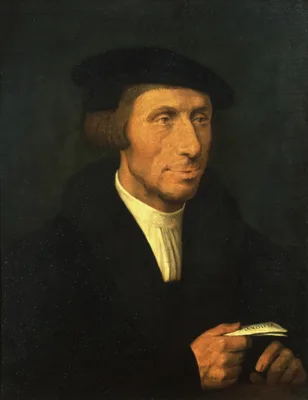
1514 GALEN, [Κλαύδιος Γαληνός; Galen of Pergamon] (129 – 216); LEONICENO, Niccolò [Nicolaus Leonicenus] (1428 – 1524)
Galen: De differentiis morborum libri ii…
First Renaissance Latin translation by Niccolò Leoniceno of Vicenza of Galen's work on physical diagnosis.
GMN 2664 · https://historyofmedicine.com/id/3480
1519 ACTUARIUS, Joannes Zacharias [Aktouarios] (1275 – 1330)
HOC.IN.VOLVMINE.ACTVARI.GRÆCI auctoris medici praestantissimi digesti sunt de urinis libri septem de græco sermone in latinum conversi: in quibus omnia: que de urinis dici possunt: sive practicam sive Theoricam: sive cognitionem: sive prognostica quæsiveris: doctissime tractata continentur, Unde lector optime: si diligenter his libris infadaveris glumam paucă ex aliorsi lectionet: ex hac ipsa grans multum te colle gisse cognoveris.
The most complete medieval treatise on urinoscopy, translated from the Greek by Ambrogio Leone (1458/9- 1525) professor of medicine in Naples). Johannes Actuarius, the last of the great Byzantine physicians, was first…
GMN 2666 · https://historyofmedicine.com/id/3492
1522 GALEN, [Κλαύδιος Γαληνός; Galen of Pergamon] (129 – 216); LINACRE, Thomas (Lynaker) (1460 – 1524)
De morborum symptomatis.
This volume of Galen’s selected works includes Thomas Linacre’s Latin translation of De symptomatum differentiis.
GMN 2665 · https://historyofmedicine.com/id/3486
1595 SILVATICO, Giambattista (1550 – 1621)
De iis qui morborum simulant deprehendendis liber.
The first treatise on feigned diseases.
GMN 2667 · https://historyofmedicine.com/id/3500
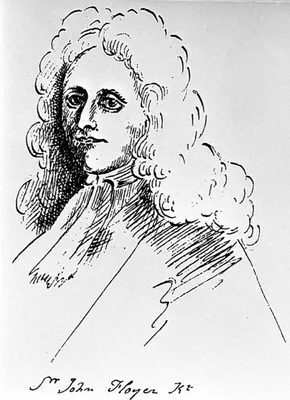
1707 –1710 FLOYER, Sir John (1649 – 1734)
The physician’s pulse-watch. 2 vols.
Before watches had hands to record the seconds, Floyer invented a pulse-watch which divided the minute. He was the first to count the pulse with the aid of a watch and to make regular observations on the pulse-rate. T…
GMN 2670 · https://historyofmedicine.com/id/3507
1761 AUENBRUGGER, Leopold (1722 – 1809)
Inventum novum ex percussione thoracis humani ut signo abstrusos interni pectoris morbos detegendi.
The greatness of Auenbrugger’s discovery of the value of immediate percussion of the chest as a diagnostic measure was not recognized until many years after he first published. His little book met with a cold receptio…
GMN 2672 · https://historyofmedicine.com/id/3511
1786 STOLL, Maximilian (1742 – 1788)
Aphorismi de cognoscendis et curandis febribus.
Stoll was one of the few physicians of the Viennese school who supported Auenbrugger's views on percussion. In this treatise on fevers Stoll referred favorably to the practice, and it is thought that Corvisart became …
GMN 11711 · https://historyofmedicine.com/id/13912
1806 CORVISART DES MAREST, Jean Nicolas (1755 – 1821)
Essai sur les maladies et les lésions organiques du coeur et des gros vaisseaux.
Corvisart really created cardiac symptomatology and made possible the differentiation between cardiac and pulmonary disorders. He was first to explain heart failure mechanically and to describe the dyspnoea of effort.…
GMN 2737 · https://historyofmedicine.com/id/4558
1817 DOUBLE, François Joseph (1776 – 1842)
Séméiologie générale, ou traité des signes et de leur valeur dans les maladies. Vol. 2.
Double introduced and applied auscultation (pp. 31 and 186).
GMN 2672.2 · https://historyofmedicine.com/id/3516
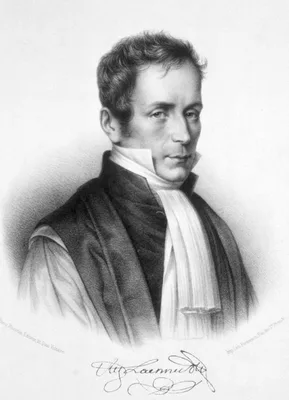
1819 LAENNEC, René Théophile Hyacinthe (1781 – 1826)
De l’auscultation médiate, ou traité du diagnostic des maladies des poumons et du coeur. 2 vols.
This book revolutionized the study of diseases of the chest. Auscultation in the instrumental sense dates from Laennec’s invention of the stethoscope (at first merely a roll of stiff paper) with a view to amplifying t…
GMN 2673 · https://historyofmedicine.com/id/3518
1822 KERGARADEC, Jean Alexandre le Jumeau, vicomte de (1787 – 1877)
Mémoire sur l’auscultation appliquée à l’étude de la grossesse.
Although not the first to record the auscultation of the fetal heart sound, Le Jumeau (Kergaradec), a pupil of Laennec, brought the importance of this diagnostic procedure to the notice of the medical profession. Laen…
GMN 6171 · https://historyofmedicine.com/id/7764
1824 AUENBRUGGER, Leopold (1722 – 1809); FORBES, Sir John (1788 – 1861)
Original cases with dissections and observations illustrating the use of the stethoscope and percussion in the diagnosis of diseases of the chest: Also commentaries on the same subjects selected and translated from Auenbrugger, Corvisart, Laennec and others
This is the earliest English work on the stethoscope. It "includes the first English translation of Auenbrugger's book on percussion, selected sections from Laennec's book on auscultation, and detailed reports from 39…
GMN 11599 · https://historyofmedicine.com/id/13798
1825 STOKES, William (1804 – 1878)
An introduction to the use of the stethoscope.
Stokes, famous member of the Irish school of medicine, published the first systematic treatise on the use of the stethoscope – and this before his qualification at Edinburgh. His name is perpetuated in medical literat…
GMN 2674 · https://historyofmedicine.com/id/3519
1826 LAENNEC, René Théophile Hyacinthe (1781 – 1826)
Traité de l'auscultation médiate ou traité diagnostic des maladies des poumons et du coeur. 2 vols.
Second edition, hugely revised, expanded, and improved. The pagination of the first edition (1819) was 456 pp. in vol. 1 and 472 pp. in vol. 2. The second edition was expanded to 728pp. in vol. 1 and 790 pp. in vol. 2…
GMN 14323 · https://historyofmedicine.com/id/16648
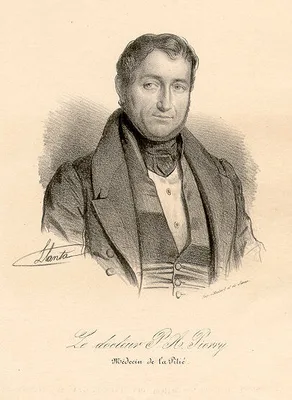
1828 PIORRY, Pierre Adolphe (1794 – 1879)
De la percussion médiate.
Piorry, pioneer of mediate percussion, introduced the percussor and the pleximeter in 1826. He also developed refinements to Laennec’s stethoscope.
GMN 2675 · https://historyofmedicine.com/id/3521
1838 NAEGELE, Hermann Franz Joseph (1810 – 1858)
Die geburtshülfiche Auscultation
Pioneering work on obstetric auscultation, including the sounds of the foetal heart. English translation by C. West, London, 1839.
GMN 6175 · https://historyofmedicine.com/id/7772
1839 ŠKODA, Josef (1805 – 1881)
Abhandlung über Perkussion und Auskultation.
Skoda classified the various sounds obtained on percussion according to their musical pitch and tone. “Skoda’s resonance” is an important diagnostic sign in pneumonia and pericardial effusion. Following Skoda’s work, …
GMN 2676 · https://historyofmedicine.com/id/3525
1846 BOWDITCH, Henry Ingersoll (1808 – 1892)
The young stethoscopist; or, the student's aid to auscultation.
Through this book Bowditch established the stethoscope as a diagnostic tool in America. Digital facsimile from the Medical Heritage Library, Internet Archive, at this link.
GMN 8587 · https://historyofmedicine.com/id/10764
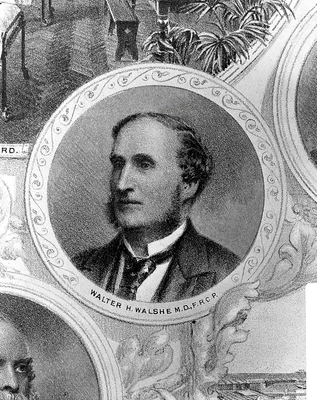
1851 WALSHE, Walter Hayle (1812 – 1892)
A practical treatise on the diseases of the lungs and heart, including the principles of physical diagnosis.
Walshe, physician to University College Hospital, London, was one of the first to recognize the presystolic character of the direct mitral murmur in mitral stenosis.
GMN 2757 · https://historyofmedicine.com/id/4661
1855 CAMMANN, George Philip (1804 – 1863)
Self-adjusting stethoscope of Dr. Cammann.
The American physician George P. Cammann invented the binaural flexible stethoscope. By 1852 Cammann "had developed a stethoscope with flexible tubing (spirals of wire covered with silk, later rubber, or as he called …
GMN 11566 · https://historyofmedicine.com/id/13765
1856 LEARED, Arthur (1822 – 1879)
On the self-adjusting double stethoscope.
Leared demonstrated a binaural stethoscope at the Great Exhibition, London, 1851. Camman introduced the pattern whose main design continues in use today; this was illustrated in the N.Y. med. Times, Jan. 1855, and rep…
GMN 2676.1 · https://historyofmedicine.com/id/3530
1864 NEUMANN, Franz Ernst Christian (1834 – 1918)
Ueber dasverschiedene Verhalten gelähmter Muskeln gegen den constanten und inducirten Strom und die Erklärung desselben.
One of the first publications on electrodiagnosis.
GMN 2676.2 · https://historyofmedicine.com/id/3533
1864 DA COSTA, Jacob Mendes (1833 – 1900)
Medical diagnosis with special reference to practical medicine: A guide to the knowledge and discrimination of diseases.
During the Civil War Da Costa was an acting surgeon in Philadelphia where he supervised a ward for patients with heart disease. In this book he presented the first description of a condition that he called "irritable …
GMN 11578 · https://historyofmedicine.com/id/13777
1868 WUNDERLICH, Carl Reinhold August (1815 – 1877)
Das Verhalten der Eigenwärme in Krankheiten.
This work on temperature in disease laid the foundation of modern knowledge regarding clinical thermometry. Wunderlich reportedly took over a million measurements from 25,000 people. Temperatures ranged from 97.2 to 9…
GMN 2677 · https://historyofmedicine.com/id/3542
1869 WILKS, Sir Samuel (1824 – 1911)
On markings of furrows on the nails as the result of illness.
GMN 2678 · https://historyofmedicine.com/id/3552
1870 ALLBUTT, Sir Thomas Clifford (1836 – 1925)
Medical thermometry.
Allbutt introduced the modern clinical thermometer.
GMN 2679 · https://historyofmedicine.com/id/3555
1878 PINARD, Adolphe (1844 – 1934)
Traité du palper abdominal au point de vue obstétrical.
Pinard, professor of obstetrics in Paris, showed the importance of abdominal palpation as an aid to obstetrical diagnosis. English translation, 1885.
GMN 6193 · https://historyofmedicine.com/id/7542
1880 GOWERS, Sir William Richard (1845 – 1915)
The diagnosis of diseases of the spinal cord.
Gowers demonstrated the dorsal spinocerebellar tract, “Gowers’s tract”, and introduced the terms myotatic and knee-jerk, which he elicited with the rubber edge of his stethoscope or a percussion hammer.
GMN 4562 · https://historyofmedicine.com/id/427
1882 KERNIG, Vladimir Mikhailovich (Woldemar) (1840 – 1917)
Ein Krankheitssymptom der acuten Meningitis.
Kernig drew attention to a flexor contracture of the leg on attempting to extend it on the thigh (“Kernig’s sign”), almost always present in cerebrospinal meningitis and an important diagnostic sign. A fuller descript…
GMN 4677 · https://historyofmedicine.com/id/947
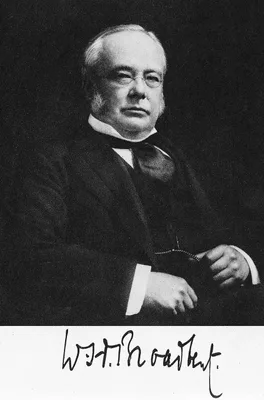
1890 BROADBENT, Sir William Henry (1835 – 1907)
The pulse.
GMN 2680 · https://historyofmedicine.com/id/3561
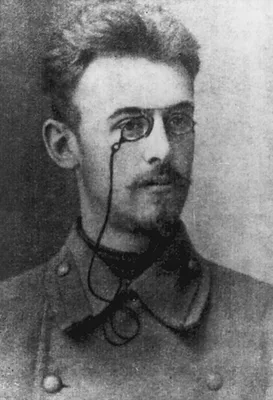
1905 KOROTKOV, Nikolai Sergeievich (1874 – 1920)
On methods of studying blood pressure.
Korotkov introduced the modern method of applying the stethoscope to the brachial artery during blood-pressure examination with Riva-Rocci’s sphygmomanometer, for the purpose of investigating the sounds made by the bl…
GMN 2818 · https://historyofmedicine.com/id/3498
1984 GALEN, [Κλαύδιος Γαληνός; Galen of Pergamon] (129 – 216); FURLEY, David John (1922 – 2010); WILKIE, James S.
Galen on respiration and the arteries. An edition with English translation and commentary of De usu respirationis, An in arteriis natura sanguis contineatur, De usu pulsuum, and De causis respirationis, by David J. Furley and J. S. Wilkie.
Galen's system of medicine based on the minutiae of pulse variations persisted into the 18th century.
GMN 2663 · https://historyofmedicine.com/id/3476

![GALEN, [Κλαύδιος Γαληνός; Galen of Pergamon] (129 – 216)](/media/portraits/21)