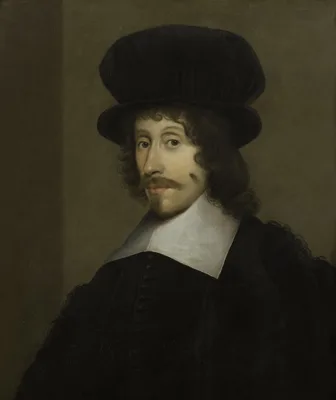
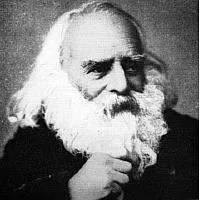
1603 PARACELSUS, [Philippus Aureolus Theophrastus Bombastus von Hohenheim] (1493 – 1541)
De generatione stultorum. In his Opera, 2, 174-82.
Paracelsus was the first to note the coincidence of cretinism and endemic goitre. It was not until the 19th century that the possibility of the occurrence of cretinism in adults was entertained. Partial English transl…
GMN 3805 · https://historyofmedicine.com/id/4777
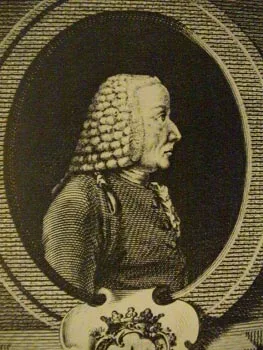
1609 DU LAURENS, André [LAURENTIUS] (1558 – 1609)
De mirabili strumas sanandi.
An early historical record of goitre which du Laurens maintained was contagious. Du Laurens was at one time physician to Henri IV.
GMN 3806 · https://historyofmedicine.com/id/4781
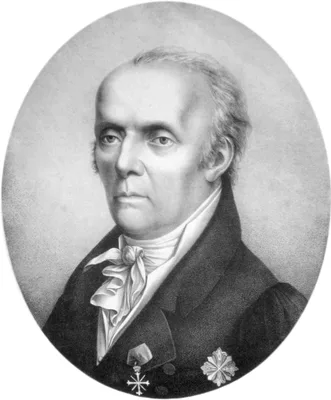
1614 PLATER, Felix [PLATTER] (1536 – 1614)
Observationum in hominis affectibus plerisque, corpori & animo, functionum laesione, dolore, aliave molestia & vitio incommodantibus, libri tres.
First known report of a case of death from hypertrophy of the thymus, in an infant, is reported on p. 172; it is reproduced on p. 239 of J. Ruhräh’s Pediatrics of the past, New York, 1925. Platter first described flex…
GMN 3789 · https://historyofmedicine.com/id/4706
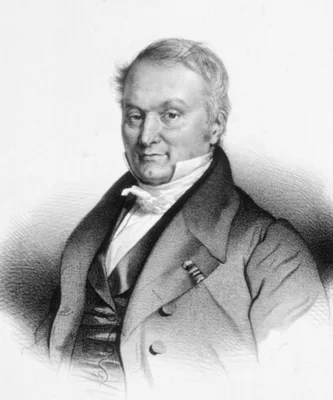
1656 WHARTON, Thomas (1614 – 1673)
Adenographia: sive, glandularum totius corporis descriptio.
Wharton described the duct of the submaxillary salivary gland (“Wharton’s duct”). He described the thyroid more accurately than his predecessors, naming it. He also described “Wharton’s jelly” of the umbilical cord (p…
GMN 1116 · https://historyofmedicine.com/id/1196
1758 –1763 HAEN, Anton de (1704 – 1776)
De cranii ustione in pertinacioribus capitis vitiis. In his: Ratio medendi in nosocomio practico, 6, 239-287. 8 vols.
Haen provided the first description of amenorrhea in connection with a pituitary tumor. He recorded the case history of a young woman suffering from amenorrhea as well as many neurological symptoms assumed to result f…
GMN 3878 · https://historyofmedicine.com/id/4940
1769 PROSSER, Thomas
An account and method of cure of the bronchocele or Derby neck.
Prosser gave the prescription of a powder containing calcined sponge, to be taken for the cure of goitre. This is probably the first recorded use of an iodine preparation in England.
GMN 3807 · https://historyofmedicine.com/id/4784
1775 BORDEU, Théophile de (1722 – 1776)
Recherches sur les maladies chroniques. Vol. 1. Analyse médicinale du sang.
De Bordeu first conceived the idea of internal secretion by his hypothesis that every organ, tissue, and cell discharges into the blood products which influence other parts of the body. His work was published in a col…
GMN 1117 · https://historyofmedicine.com/id/1198
1779 WILMER, Bradford (1737 – 1813)
Cases and remarks in surgery: to which is subjoined an appendix containing the method of curing the bronchocele in Coventry.
The “Coventry treatment” for goitre, which introduced the burnt sponge remedy into England, is mentioned on pp. 249-54. Digital facsimile from the Hathitrust at this link.
GMN 3808 · https://historyofmedicine.com/id/4787
1789 MALACARNE, Michaele Vincenze Giacinto (1744 – 1816)
Su i gozzi e sulla stupidità che in alcuni paesi gli accompagna tentativi
Hirsch considered this the first important work on cretinism and goitre. See also Malacarne’s Lettre, in J. P. Frank: Delectus opusculorum medicorum, 1789, 6, 241-58. Digital facsimile of Malacarne's pamphlet from Goo…
GMN 3809 · https://historyofmedicine.com/id/4807
1792 FODÉRÉ, François-Emmanuel (1764 – 1835)
Essai sur le goitre et le crétinage. Où l'on recherche particulièrement quelles son les causes de ces deux maladies des habitans des vallées, et quels sont les moyens physiques et moraux qu'il convient d'employer pour s'en préserver entièrement à l'avenir.
Fodéré considered cretinism to be due to the concentrated air in deep valleys, rather than to water. He also drew attention to the skeletal changes. Digital facsimile from Google Books at this link.
GMN 3810 · https://historyofmedicine.com/id/4809
1794 FRANK, Johann Peter (1745 – 1821)
De curandis hominum morbis epitome. Liber V.
Frank was the first to define diabetes insipidus (pp. 38-67).
GMN 3879 · https://historyofmedicine.com/id/5309
1801 SAUCEROTTE, Nicolas (1741 – 1814)
Accroissement singulier en grosseur des os d’un homme âgé de 39 ans. In: Mélanges de chirurgie, 407-11.
Saucerotte described before the Académie de Chirurgie in 1772 a case of what is now known to have been acromegaly. This is the first known clinical description of the disease, and is one of the five cases included in …
GMN 3880 · https://historyofmedicine.com/id/4942
1802 FLAJANI, Giuseppe (1741 – 1808)
Sopra un tumor freddo nell’anterior parte del collo detto broncocele.
One of the earliest accounts of exophthalmic goitre. The author noted cardiac disturbances in thyroid enlargement.
GMN 3811 · https://historyofmedicine.com/id/4814
1818 BORDEU, Théophile de (1722 – 1776); RICHERAND, Anthelme Louis Claude Marie (1779 – 1840)
Oeuvres complètes de Bordeu, précédés d'une notice sur sa vie et sur ses ouvrages, par M. le Chevalier Richerand. 2 vols.
GMN 10069 · https://historyofmedicine.com/id/12258
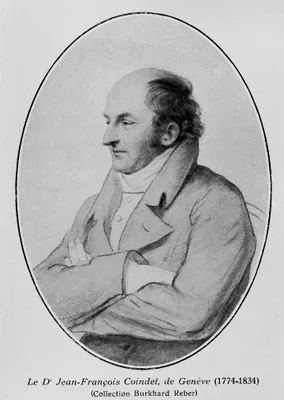
1820 COINDET, Jean François (1774 – 1834)
Découverte d’un nouveau remède contre le goitre.
Coindet is usually regarded as the first to administer iodine in cases of goitre, with beneficial results. It had previously been prepared from seaweed by B. Courtois in 1812 (Ann. Chim. (Paris), 1813, 88, 304-10), an…
GMN 3812 · https://historyofmedicine.com/id/4822
1823 RAYER, Pierre François Olive (1793 – 1867)
Observations sur les maladies de l’appendice sus-sphenoïdal (glande pituitaire) du cerveau.
Includes description of pituitary obesity.
GMN 3881 · https://historyofmedicine.com/id/4943
1825 PARRY, Caleb Hillier (1755 – 1822); PARRY, Charles Henry (1779 – 1860)
Collections from the unpublished writings of the late Caleb Hillier Parry. 3 vols.
Includes Parry’s interesting description of eight cases of exophthalmic goitre, the first of which was observed in 1786, and his notes on four cases of angina pectoris. Parry's paper, "Enlargement of the thyroid gland…
GMN 2210 · https://historyofmedicine.com/id/1678
1828 –1829 GREEN, Joseph Henry (1791 – 1863)
Removal of the right lobe of the thyroid gland.
To Joseph Green, of St. Thomas’s Hospital, London, is accredited the first thyroidectomy, the patient succumbing 15 days later from sepsis.
GMN 3814 · https://historyofmedicine.com/id/4829
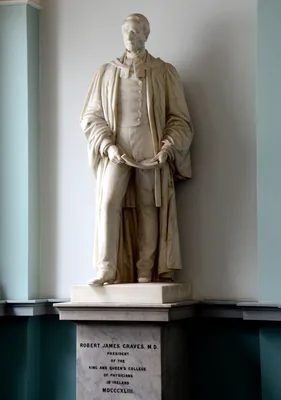
1835 GRAVES, Robert James (1796 – 1853)
Palpitation of the heart with enlargement of the thyroid gland.
This is considered the first accurate account of exophthalmic goitre, later known as “Parry’s disease”, “Graves’s disease”, and “Basedow’s disease”. An interesting fact about the London Medical & Surgical Journal is t…
GMN 3815 · https://historyofmedicine.com/id/4830
1836 KING, Thomas Wilkinson (1809 – 1847)
Observations on the thyroid gland, with notes on the same subject by Sir Astley Cooper.
King, sometimes referred to as the “father of endocrinology”, antici-pated the endocrine action of the thyroid.
GMN 1126 · https://historyofmedicine.com/id/1250
1840 BASEDOW, Carl Adolph von (1799 – 1854)
Exophthalmos durch Hypertrophie des Zellgewebes in der Augenhöhle.
In Europe, outside the British Isles, exophthalmic goitre, or Graves’s disease, is known as “Basedow’s disease”. His accurate description of four cases in which he described exophthalmos, goitre and palpitation led to…
GMN 3816 · https://historyofmedicine.com/id/4831
1840 MOHR, Bernhard (1809 – 1848)
Hypertrophie der Hypophysis cerebri und dadurch bedingter Druck auf die Hirngrundfläche, insbesondere auf die Sehnerven, das Chiasma derselben und den linkseitigen Hirnschenkel.
The first case of pituitary obesity with infantilism (Fröhlich’s syndrome) was reported by Mohr. Coincidentally, this appears in the same volume of the Wochenschrift as does Basedow’s classic description of exophthalm…
GMN 3882 · https://historyofmedicine.com/id/4944
1850 CHATIN, Gaspard Adolph (1813 – 1901)
Existence de l’iode dans les plantes d’eau douce. Conséquences de ce fait pour la géognosie, la physiologie végétale, la thérapeutique et peut-être pour l’industrie.
Chatin was the first to show that iodine could prevent endemic goitre and cretinism.
GMN 3817 · https://historyofmedicine.com/id/4832
1850 CURLING, Thomas Blizard (1811 – 1888)
Two cases of absence of the thyroid body and symmetrical swellings of fat tissue at the sides of the neck, connected with defective cerebral development.
Curling, of the London Hospital, was the first accurately to note the clinical picture of cretinism, which Ord was later to name “myxedema”. Curling was also the first to suggest deficiency of the thyroid as a case of…
GMN 3818 · https://historyofmedicine.com/id/4833
1854 ROGER OF SALERNO, (Rogerius Salernitanus, Frugard, Frugardi, Roggerio Frugardo, Rüdiger Frutgard, Roger of Parma) (1140 – 1195); DAREMBERG, Charles Victor (1817 – 1872)
Glossulae quatuor magistrorum super chirurgiam Rogerii et Rolandi nunc primum ad fidem codicis Mazarinei edidit
In Roger of Salerno's Practica chirurgiae, which appeared about 1180, end-to-end suture is described, as is the value of mercurial inunction in chronic skin diseases; in his recommendation of seaweed for the treatment…
GMN 5551 · https://historyofmedicine.com/id/6850
1855 ADDISON, Thomas (1793 – 1860)
On the constitutional and local effects of disease of the supra-renal capsules.
Addison was the first to draw attention to the importance of the adrenals in clinical medicine. The above work first appeared in the Lond. med. Gaz., 1849, 43, 517-18, and was later expanded into book form. It describ…
GMN 3864 · https://historyofmedicine.com/id/4914
1859 SCHIFF, Moritz (1823 – 1896)
Untersuchungen über die Zuckerbildung in der Leber und den Einfluss des Nervensystems auf die Erzeugung des Diabetes.
Schiff’s reports on his experimental thyroidectomies, which were attended with fatal results. Subsequently (Arch. exp. Path. Pharmak., 1884, 18, 25) he showed that intra-abdominal transplantation of the gland would ob…
GMN 3819 · https://historyofmedicine.com/id/4834
1864 GRAEFE, Friedrich Wilhelm Ernst Albrecht von (1828 – 1870)
Ueber Basedow’sche Krankheit.
“Graefe’s sign” – the discovery by von Graefe of the failure of the eyelid to follow the eye when it is rolled downward – diagnostic of exophthalmic goitre. Partial English translation in No. 2241.
GMN 3820 · https://historyofmedicine.com/id/4835
1867 SICK, Paul Auguste (1836 – 1900)
Ueber die totale Exstirpation einer kropfig entarteten Schilddrüse, und über die Rückwirkung dieser Operation auf die Circulationsverhältnisse im Kopfe.
Sick is credited with being the first to notice symptoms of loss of thyroid function following thyroidectomy. According to Halsted, the above is the first report of total thyroidectomy and “the first report of the con…
GMN 3821 · https://historyofmedicine.com/id/4836
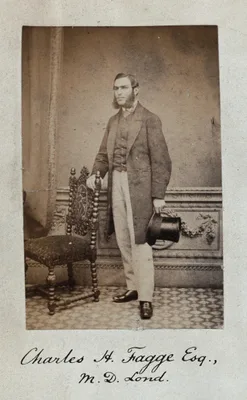
1871 FAGGE, Charles Hilton (1838 – 1883)
On sporadic cretinism.
In this paper Fagge, nephew of John Hilton of Guy’s Hospital, described sporadic cretinism as distinct from the endemic variety.
GMN 3822 · https://historyofmedicine.com/id/4837
1871 FANEAU DE LA COUR, Ferdinand-Valère (1843 – 1871); LORAIN, Paul Joseph (1827 – 1875)
Du féminisme et de l’infantilisme chez les tuberculeux.
In a letter prefaced to Faneau de La Cour’s thesis, Paul Joseph Lorain (1827-1875) described the idiopathic arrest of growth now known as “Lorain’s type”. It was subsequently ascribed to hypopituitarism. The word “inf…
GMN 3883 · https://historyofmedicine.com/id/5314
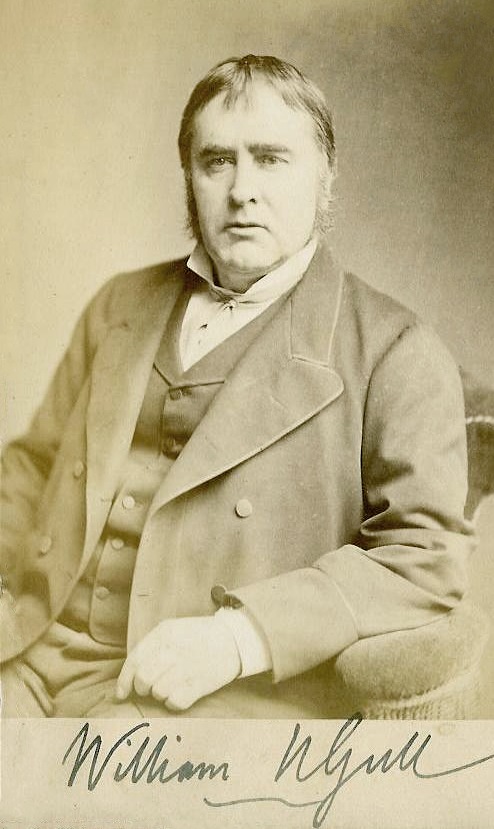
1873 –1874 GULL, Sir William Withey (1816 – 1890)
On a cretinoid state supervening in adult life in women.
Gull was among the first to point out the cause of myxedema, of which the above paper gives a classic description. Gull was associated with Guy’s Hospital, London, for most of his life.
GMN 3823 · https://historyofmedicine.com/id/4838
1874 WATSON, Sir Patrick Heron (1832 – 1907)
Excision of the thyroid gland.
Watson was a pioneer of thyroidectomy in the treatment of goitre, although Green (No. 3814) was the first to perform the operation. Also in Brit. med. J., 1875, 2, 386-88.
GMN 3824 · https://historyofmedicine.com/id/4839
1878 ORD, William Miller (1834 – 1902)
On myxoedema.
Ord coined the term “myxedema” for the condition noted earlier by Curling and Gull.
GMN 3825 · https://historyofmedicine.com/id/4840
1878 KOCHER, Emil Theodor (1841 – 1917)
Exstirpation einer Struma retroesophagea.
Kocher, a pupil of Billroth, was a pioneer of thyroidectomy for goitre. Before his time the operation was seldom performed. Garrison says that Kocher performed this difficult operation 2,000 times, with a mortality ra…
GMN 3826 · https://historyofmedicine.com/id/4841
1880 SANDSTRÖM, Ivar Victor (1852 – 1889)
Om en ny körtel hos menniskan och atskilliga däggdjur.
Remak, Owen, and Virchow had previously noted the presence of what may have been parathyroids; the first systematic account of them was given by Sandström. An English translation of this paper appeared in Bull. Inst. …
GMN 1127 · https://historyofmedicine.com/id/1257
1882 REVERDIN, Jacques-Louis (1842 – 1929)
Accidents consécutifs à l’ablation totale du goitre.
Reverdin produced myxedema by removal of the thyroid as a whole or in part. This confirmed the earlier work of Schiff, of which Reverdin had probably not heard. See also No. 3836.
GMN 3828 · https://historyofmedicine.com/id/4843
1883 KOCHER, Emil Theodor (1841 – 1917)
Ueber Kropfexstirpation und ihre Folgen.
Kocher coined the term “cachexia strumipriva” to describe the myxedema following total extirpation of the thyroid. His work on the subject led to a better understanding of the cause of myxedema.
GMN 3827 · https://historyofmedicine.com/id/4842
1883 REVERDIN, Jacques-Louis (1842 – 1929)
Note sur vingt-deux opérations de goitre.
GMN 3829 · https://historyofmedicine.com/id/4844
1883 MARIE, Pierre (1853 – 1940)
Sur la nature et sur quelques-uns des symptomes de la maladie de Basedow.
The fourth cardinal sign in exophthalmic goitre – tremor – was first mentioned by Pierre Marie.
GMN 3830 · https://historyofmedicine.com/id/4845
1883 SEMON, Sir Felix (1849 – 1921)
A typical case of myxoedema.
Semon argued that cachexia strumipriva, myxedema, and cretinism were all due to loss of function of the thyroid. His contention, at first criticized, was later fully endorsed by the report of a committee set up by the…
GMN 3831 · https://historyofmedicine.com/id/4846
1883 WÖLFLER, Anton (1850 – 1917)
Ueber die Entwickelung und den Bau des Kropfes.
Important classification of thyroid tumors; fetal adenoma is described on p. 40.
GMN 3832 · https://historyofmedicine.com/id/4848
1884 REHN, Ludwig (1849 – 1930)
Ueber die Exstirpation des Kropfs bei Morbus basedowii.
First thyroidectomy for exophthalmic goitre. The operation reported was performed in 1880.
GMN 3833 · https://historyofmedicine.com/id/4850
1884 HORSLEY, Sir Victor Alexander Haden (1857 – 1916)
A recent specimen of artificial myxoedema in a monkey.
By experimental removal of the thyroid Horsley produced artificial myxedema, confirming previous work by Reverdin and others. At the time his results were regarded as proof that total thyroidectomy produces operative …
GMN 3834 · https://historyofmedicine.com/id/4852
1886 HUTCHINSON, Sir Jonathan (1828 – 1913)
Congenital absence of hair and mammary glands with atrophic condition of the skin and its appendages in a boy whose mother had been almost wholly bald from alopecia areata from the age of six.
First description of progeria.
GMN 3790 · https://historyofmedicine.com/id/4710
1886 HORSLEY, Sir Victor Alexander Haden (1857 – 1916)
Functional nervous disorders due to the loss of thyroid gland and pituitary body.
GMN 3835 · https://historyofmedicine.com/id/4854
1886 FRÄNKEL, Felix
Ein Fall von doppelseitigem, völlig latent verlaufenen Nebennieren-tumor und gleichzeitiger Nephritis mit Veränderungen am Circulationsapparat und Retinitis.
Pheochromocytoma first described. Republished in book form.
GMN 3865 · https://historyofmedicine.com/id/4915
1886 MARIE, Pierre (1853 – 1940)
Sur deux cas d’acromégalie. Hypertrophie singulière non congénitale des extrémités supérieures, inférieures et céphalique.
In this, the first complete clinical description of the condition, Marie suggested the name “acromegaly”. The paper excited much interest and was translated into English and published by the New Sydenham Society, 1891.
GMN 3884 · https://historyofmedicine.com/id/4947
1887 REVERDIN, Jacques-Louis (1842 – 1929)
Contribution à l’étude du myxoedème consécutif à l’extirpation totale ou partielle du corps thyroïde.
GMN 3836 · https://historyofmedicine.com/id/4856
1887 MINKOWSKI, Oscar (1858 – 1931)
Lieber einen Fall von Akromegalie.
Minkowski called attention to the constancy of pituitary enlargement on acromegaly; he was the first definitely to note this relationship.
GMN 3885 · https://historyofmedicine.com/id/4948