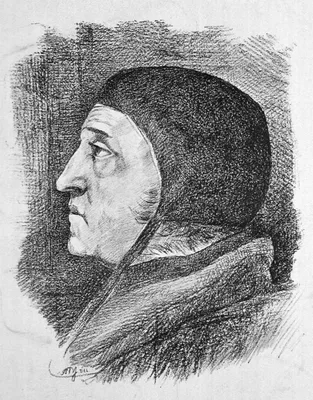
1465 SABUNCUOGLU (OTTOMAN TURKISH: شرف الدّین صابونجی اوغلی), Şerafeddin (1385 – 1468)
Cerrahiyyetu'l-Haniyye (Imperial Surgery)
In 1465, at the age of 80, Ottoman surgeon and physician Şerafeddin Sabuncuoğlu published in manuscript an illustrated atlas of surgery and dentistry. This was also the first medical textbook written in Turkish, proba…
GMN 6819 · https://historyofmedicine.com/id/8982
1471 BARTHOLOMAEUS ANGLICUS (1203 – 1272)
De proprietatibus rerum.
A condensed encyclopedia of what was then understood by natural science. The work was probably written about the middle of the 13th century. It was one of the most widely read scientific works of the Middle Ages. Caxt…
GMN 91 · https://historyofmedicine.com/id/52
1473 AVICENNA, [Abū ʿAlī al-Ḥusayn ibn ʿAbd Allāh ibn Al-Hasan ibn Ali ibn Sīnā] (980 – 1037); GERARD OF CREMONA, (Gerardus Cremonensis) (1114 – 1187)
Canon medicinae [Latin] (Lib I-V) (Tr: Gerardus Cremonensis) (5 vols.)
Avicenna is said to have written more than 100 books, most of which have perished. He wrote on the etiology of epilepsy and described diabetes, noticing the sweetish taste of the urine. His Canon is one of the most fa…
GMN 43 · https://historyofmedicine.com/id/8764
1484 VELASCUS DE TARENTA (VALESCO,VALASCUS) (1382 – 1426)
Practica quae alias Philonium dicitur.
A general treatise on medical practice. ISTC No. iv00005800
GMN 12651 · https://historyofmedicine.com/id/14894
c. 1496 BARTHOLOMAEUS ANGLICUS (1203 – 1272); TREVISA, John (John of Trevisa) (1342 – 1402)
De proprietatibus rerum. English translation by John of Trevisa.
This English translation of Bartholomaeus Anglicus was made by John of Trevisa in 1398. Bibliographically it is of interest as being one of the earliest books printed in London, one of the finest of the 15th century, …
GMN 92 · https://historyofmedicine.com/id/8784
1504 ARNALD OF VILLANOVA, (Arnaldus de Villa Nova; Arnau de Vilanova; Arnaldus Villanovanus; Arnaud de Ville-Neuve; Arnaldo de Villanueva) (1240 – 1311)
Hec sunt opera Arnaldi de Villa noua que in hoc volumine continentur.
Digital facsimile from Google Books at this link.
GMN 8345 · https://historyofmedicine.com/id/10521
1519 FERNÁNDEZ DE ENCISO, Martín (1470 – 1528)
Summa de Geografia que trata de todas las partidas e provincias del mundo en especial de las indias e trata largamente del arte del marcar...
This was the first book on the Americas printed in Spanish. "Enciso was the first conquistadore to take up his pen with educational intent." In this general treatise on geography Enciso included a discussion of the fa…
GMN 9962 · https://historyofmedicine.com/id/12151
1525
Here begynnyth a new mater, the whiche sheweth and treateth of ye vertues & proprytes of herbes, the whiche is called an Herball.
BANCKES' HERBAL
Earliest English printed herbal. Published anonymously, it is usually referred to as “Banckes’ Herbal”, after its publisher, Rycharde Banckes. The text was derived from a medieval manuscript, and although the work had…
GMN 1799 · https://historyofmedicine.com/id/1928
1525 OVIEDO Y VALDÉS, Gonzalo Fernández de (1478 – 1557)
Sumario de la natural historia de las Indias.
First known description of the medicinal plants of Central America. Oviedo first described chigoe (“jiggers”?) in this book. "The book is divided into 86 chapters, focused mostly on American flora and fauna. It begins…
GMN 1800 · https://historyofmedicine.com/id/1933
1527 AVICENNA, [Abū ʿAlī al-Ḥusayn ibn ʿAbd Allāh ibn Al-Hasan ibn Ali ibn Sīnā] (980 – 1037); ALPAGO, Andrea [Andreas Alpagus Bellunensis] (1450 – 1521)
Avicenne liber canonis medicinae. Cum castigationibus Andree Bellunensis.
Revised and improved text of the Canon and other works of Avicenna by Andrea Alpago of Belluno, who had acquired a deep understanding of both the language and the subject during his thirty years of service as physicia…
GMN 7202 · https://historyofmedicine.com/id/9369
1532 EDWARDES, David (1502 – 1542)
De indiciis et praecognitionibus, opus apprime utile medicis. Eiusdem in anatomicen introductio luculenta et brevis.
The first anatomical text by an Englishman, but only a very brief account of 15 pages. The only known copy of the original edition is in the British Library. Edwardes made the first recorded dissection in England (153…
GMN 368.1 · https://historyofmedicine.com/id/463
1533 PEDERSEN, Christiern (1480 – 1554)
En nyttelig laegebog for fattige og rige, unge og gamle.
Pedersen, a Danish canon, humanist scholar, writer, printer and publisher, wrote and published the earliest medical book issued in Scandanavia by a Scandanavian writer. Translated as "A useful doctor book for poor and…
GMN 9863 · https://historyofmedicine.com/id/12051
1534 PEDERSEN, Christiern (1480 – 1554)
Om UrteVand.
Petersen issued a second book, "On herbal extracts" in 1534. According to Stokker, Remedies and rituals: Folk medicine in Norway and the new land (2007) p. 111, Pedersen's two works together contained "250 medical her…
GMN 9864 · https://historyofmedicine.com/id/12052
1539 BOCK [TRAGUS], Hieronymus (1498 – 1554)
New Kreütter Buch.
Bock was the first to describe the local flora of Germany, discovering many new species. His work gave a fresh impetus to plant description, With Brunfels and Fuchs he was one of the three “German fathers of botany”. …
GMN 1806 · https://historyofmedicine.com/id/1959
1539 DIAZ DE ISLA, Ruy (147 – 1542)
Tractado cótra el mal serpentino.
Diaz de Isla, a Barcelonese surgeon, wrote of a disease “previously unknown, unseen and undescribed”, which appeared in Barcelona in 1493 and which was obviously syphilis. This is probably the earliest reference to th…
GMN 2367 · https://historyofmedicine.com/id/3213
1540 BERIS, Johannes von [PARIS] (1400 – )
Eyn new Wund Artznei M. Johans von Parisijs. Wie mann alle wunden, sie seien gestochen, gehawen, geschossen mit pfeil oder lot gequetzt vnd gestossen [et]c. mit salben, pflastern vnnd wundttranck, durch den gantzen leip dess menschens, vom Kopff an biss auff die füss, heylen solein kurtzer, ordenlicher Bericht M. Johan von Parisiis jtzunt am newsten auss gangen.
Johannes von Beris (or Paris) lived in the mid-15th century near Metz, and is thus the earliest identifiable German surgeon, and the first to write about gunshot wounds and wound surgery. His work, which was first pub…
GMN 6959 · https://historyofmedicine.com/id/9124
1542 LOBERA DE ÁVILA, Luis (1480 – 1551)
Libro de anatomia In: Remedio de cuerpos humanos y silva de experiencias y otras cosas utilissimas: nuevamente compuesto…
Text in Spanish and Latin. Digital facsimile from Google Books at this link.
GMN 374 · https://historyofmedicine.com/id/496
1544 PHAER, Thomas [PHAYER; PHAYR] (1510 – 1560); GOEUROT, Jean (1500 – 1551)
The regiment of life, whereunto is added a treatise of the pestilence, with the boke of children.
The “boke of children” is the first work on diseases of children to be written by an Englishman the English language. Phaer enabled Englishmen to read and think of pediatrics in their own language. The edition include…
GMN 6317 · https://historyofmedicine.com/id/8081
1546 SMID, Henrik (Smyth, Smith) (1495 – 1563)
Skøn lystig ny Urtegaard.
Smid was one of the first writers on medicine in Scandinavia who was trained in medicine, but according to Stokker, Remedies and rituals: folk medicine in Norway and the new land (2007) p. 111 "had trouble succeeding …
GMN 9865 · https://historyofmedicine.com/id/12053
1547 BOORDE, Andrew [BORDE] (1490 – 1549)
The breviary of helthe, for all manner of syckenesses and diseases the whiche may be in man, or woman doth folowe.
This, probably the earliest “modern” work on hygiene, throws some light on the condition of that subject in the 16th century.
GMN 1591 · https://historyofmedicine.com/id/1691
1549 XIMENO, Pedro [Jimeno] (1515 – 1551)
Dialogus de re medica compendiaria ratione, præter quædam alia, universam Anatomen humani corporis perstringens, summè necessarius omnibus Medicinæ canditatis.
The first Spanish medical book based on the writings of Vesalius, written by Vesalius’s student Pedro Jimeno, whose activities “constituted the cornerstone of the Valencian School of Anatomy and the Spanish Vesalian m…
GMN 8931 · https://historyofmedicine.com/id/11109
1551 MONTAÑA DE MONTSERRATE, Bernardino (1480 – 1558)
Libro de la anathomia del hombre.
The first Spanish anatomy book in the Spanish language, the second anatomy book ever published in Spain, and the work that introduced Vesalian illustrations to Spain. The text is a version of Henri de Mondeville’s med…
GMN 378.01 · https://historyofmedicine.com/id/550
1553 MÉNDEZ, Christóbal (1500 – 1553)
Libro de exercicio corporal y de sus provechos, por el qual cada uno podra entender que exercicio le sea necessario para conservar su salud.
The first separate book on exercise by a physician. Facsimile with English translation by Francisco Guerra as Book of bodily exercise, edited by Frederick G. Kilgour (New Haven: E. Licht, 1960).
GMN 4478.99 · https://historyofmedicine.com/id/8869
1553 BELON, Pierre [Pierre Belon du Mans; Petrus Bellonius Cenomanus] (1517 – 1564)
Les observations de plusieurs singularitez et choses memorables, trouuées en Grece, Asie, Iudée, Egypte, Arabie, & autres pays estranges, redigées en trois livres.
Belon was first trained as an apothecary, and worked in that capacity for the bishop of Clermont, Guillaume Duprat. Around 1542 he studied medicine In Paris, and obtained a licentiate in medicine, though he never took…
GMN 8982 · https://historyofmedicine.com/id/11161
1554 DODOENS, Rempert [DODONAEUS] (1517 – 1585)
Cruÿdeboeck.
Dodoens was the first Belgian botanist of international repute. Drawing on the illustrations of Fuchs, but preparing his own text, Dodoens improved on the alphabetical Fuchs organization scheme by grouping plants acco…
GMN 1812 · https://historyofmedicine.com/id/2012
1556 VALVERDE DE HAMUSCO, Juan (1525 – 1587)
Historia de la composicion del cuerpo humano…
Historia de la composicion del cuerpo humano Spanish physician Juan Valverde de Amusco was issued in Rome at the press of Antonio Salamanca. This was the first great original medical book in Spanish and the most origi…
GMN 378.02 · https://historyofmedicine.com/id/551
1562 BULLEIN, William (1515 – 1576)
Bullein's bulwarke of defẽce againste all sicknes, sornes, and woundes that dooe daily assaulte mankinde, which bulwarke is kepte with Hillarius the Gardiner, Health the Phisician, with their chyrurgian to helpe the wounded soldiors. Gathered and practised frō the moste worthie learned, both old and newe: to the greate comforte of mankinde. Doen by Williyam Bulleyn, and ended this Marche, Anno Salutis 1562.
A work of medical humanism written while Bullein and his wife were in prison for debts. Bullein was the only writer of medical works in English in the sixteenth century to employ the dialogue form, allowing the physic…
GMN 14123 · https://historyofmedicine.com/id/16434
1563 ORTA, Garcia de [Garcia d'Orta] (1501 – 1568)
Colóquios dos simples, e drogas he cousas mediçinais da Índia e assi dalgũas frutas achadas nella onde se tratam algũas cousas tocantes a medicina, pratica, e outras cousas boas pera saber.
The first account of Indian materia medica and the first textbook on tropical medicine written by a European. It includes a classic account of Asiatic cholera, the first account of this disease by a European. This is …
GMN 1815 · https://historyofmedicine.com/id/2046
1564 OCCO, Adolph (1524 – 1606)
Enchiridion, sive ut vulgo vocant dispensatorium, compositorum medicamentorum, pro Reipub. Augstburgensis pharmacopoeis.
One of the earliest pharmacopeias, and one which exerted a great influence on later pharmacopeias. Several new editions followed the first, and that of 1613 was adopted as the official pharmacopeia of Augsburg, the fa…
GMN 1816 · https://historyofmedicine.com/id/2064
1565 MONARDES, Nicolás Bautista (1493 – 1588)
Dos libros. El uno trata de todas las cosas que traen de nuestras Indias Occidentales, que sirven al uso de medicina, y como se ha de usar dela rayz del Mechoacan, purga excelentissima. El otro libro, trata de dos medicinas maravillosas que son contra todo veneno, la piedra Bezaar, y la yerva Escuerçonera. Con la cura de los venenados. Do veran muchos secretos de naturaleza y de medicina, con grandes experiencias.
The first treatise on Central and South American medicinal plants, and for many years the most important work on the medicinal plants of the New World. Working from Seville, Spanish doctor Nicolás Monardes managed to …
GMN 1817 · https://historyofmedicine.com/id/2068
1565 VALLAMBERT, Simon de [VALLEMBERT] (1525 – 1565)
Cinq livres, de la manière de nourrir et gouverner les enfans dès leur naissance.
The first French work on pediatrics. Vallambert considered a wider range of diseases than any previous writer, including the first reference to syphilis in children, and gave the best commentary up to his time on infa…
GMN 6318 · https://historyofmedicine.com/id/8085
1566 SECURIS, John (1530 – 1580)
A detection and querimonie of the daily enormities and abuses committed in physick.
Securis was a Latinized version of the English surname Hatchett.
GMN 7223 · https://historyofmedicine.com/id/9391
1567 ARIAS DE BENEVIDES, Pedro (1505 – )
Secretos de chirurgia, en especial de la enfermedades de morbo-galico y lamparones, y asimismo la manera como se curan los indos las llgas y heridas, y otras pasiones en las Indias, muy útil y provechoso par España, y otros muchos secretos de chirugia hasta ahora no escritos.
Arias de Benevides travelled to the New World where he observed native remedies and reported them in this book. In the book he also described his performance in Mexico City (1561) of the first neurosurgical interventi…
GMN 9053 · https://historyofmedicine.com/id/11232
1570 BRAVO, Francisco (1530 – 1594)
Opera medicinalia.
Opera medicinalia was the first medical book printed in the Western Hemisphere, and its botanical images were the first illustrations of plants printed in the Western Hemisphere. Of the original edition only two copie…
GMN 5372 · https://historyofmedicine.com/id/7014
1570 CAIUS, John [Johannes Caius; born John Kays] (1510 – 1573)
De canibus Britannicis liber unus. De rariorum animalium et stirpium historia, liber unus. De libris propriis, liber unus.
Caius, a pioneer naturalist as well as a physician, corresponded with Conrad Gessner, with whom he had made friends while returning from Padua. Caius wrote this study of British dogs to send to Gessner as a contributi…
GMN 9203 · https://historyofmedicine.com/id/11384
1570 MARTINEZ DE CASTRILLO, Francisco (1520 – 1585)
El Tratado breve y compendioso sobre la maravillosa obra de la boca y dentadura.
Martinez de Castrillo's second book on dentistry was based on richer clinical and therapeutic experience, and had a great influence in Spain for almost a century. It was partially copied or summarized by doctors, surg…
GMN 12610 · https://historyofmedicine.com/id/14850
1575 HUARTE Y NAVARRO, Juan [HUARTE DE SAN JUAN] (1529 – 1588)
Examen de ingenios para las ciencias.
Huarte was a distinguished Spanish physician and psychologist. His Examen, which gained for him a European reputation, was the first attempt to show the connection between psychology and physiology. English translatio…
GMN 4964 · https://historyofmedicine.com/id/6362
1577 VICARY, Thomas (1490 – 1561)
A profitable treatise of the anatomie of mans body.
A small book, of which only two copies survived, at the British Library and Cambridge University. As first shown by J F Payne in 1896, this work is very similar to a manuscript (MS 564) in the Wellcome Library. This m…
GMN 6836 · https://historyofmedicine.com/id/9000
1578 ACOSTA, Cristóbal [Cristóvão da Costa; Christophorus Acosta Africanus] (1540 – 1599)
Tractado de las drogas, y medicinas de las Indias Orientales, con sus plantas debuxadas al bivo.
This is mainly a translation of Garcia d’Orta’s Coloquios (No. 1815) with the addition of some illustrations. Acosta, a Portuguese Jesuit physician and surgeon, travelled to India where he met Garcia d’Orta. Acosta pi…
GMN 1819 · https://historyofmedicine.com/id/2084
1578 LÓPEZ DE HINOJOSOS, Alonso (1535 – 1597)
Summa y recopilacion de cirugia, con un arte para sangrar, muy util y provechosa.
Second edition, Mexico, 1595: Summa y recopilacion de cirugia, con un arte para sangrar, y examen de barberos ... va añadido en esta segunda impresion el origen ... de las reumas. López de Hinojos was a barber-surge…
GMN 8023 · https://historyofmedicine.com/id/10199
1579 FARFAN, Agustin (1531 – 1604)
Tractado breve de anathomia y chirurgia.
Includes some of the first studies of the plants and botanic remedies of the New World. Second edition, Tractado breve de medicina (1592). This is an abridgement of manuscripts left in Mexico by Francisco Hernández. S…
GMN 1819.1 · https://historyofmedicine.com/id/2088
1582 RAUWOLF, Leonhard (1535 – 1596)
Aigentlich Beschreibung der Raiss, so er vor diser Zeit gegen Auffgang inn die Morgenländer, fürnemlich Syriam, Iudaeam, Arabiam, Mesopotamiam, Babyloniam, Assyriam, Armeniam etc....
Rauwolf provided the first modern descriptions of the flora of the area east of the Levantine coast. He was also the first to describe the riparian flora of the Euphrates, and the first European to publish an account …
GMN 7327 · https://historyofmedicine.com/id/9498
1590 ACOSTA, José de (1539 – 1600)
Historia natural y moral de las Indias.
One of the earliest detailed and realistic descriptions of the New World. Acosta hypothesized that the indigenous peoples of Latin America had migrated from Asia. He also divided the native peoples into three barbaria…
GMN 2244 · https://historyofmedicine.com/id/3843
1591 ALPINI, Prospero [ALPINUS] (1553 – 1617)
De medicina Aegyptiorum, libri quatuor.
The first significant work on the history of Egyptian medicine, and one of the first European studies of non-European medicine. Alpini became professor of botany at Padua after having spent three years in Egypt. Frenc…
GMN 6468 · https://historyofmedicine.com/id/7666
1591 CÁRDENAS, Juan de (1563 – 1609)
Primera parte de los problemas y secretos maravillosos de las Indias. (All published).
Includes plant and mineral remedies of New Spain as well as natural history details. See DEUCHLER, W. Juan de Cárdenas. Eim Beitrag zur Geschichte der spanischem Naturbetrachtung und Medizin im Mexiko während des 16. …
GMN 8850 · https://historyofmedicine.com/id/11028
1591 CORTUSO, Giacomo Antonio (Cortusi) (1513 – )
L'horto dei semplici di Padova, oue si vede primieramente la forma di tutta la pianta con le sue misure: & indi i suoi partimenti distinti per numeri in ciascuna arella, intagliato in rame.
First catalogue of the Orto botanico di Padova, the oldest academic botanical garden that remains in its original location., Digital facsimile from fc.cab.unipd.it at this link.
GMN 13351 · https://historyofmedicine.com/id/15622
1593 AVICENNA, [Abū ʿAlī al-Ḥusayn ibn ʿAbd Allāh ibn Al-Hasan ibn Ali ibn Sīnā] (980 – 1037); RAIMONDI, Giovanni Battista (Giovan) (1536 – 1614)
Kitāb al-Qānūn fial-ţibb. [Libri V Canonis medicinae.]
Title transliterated. Text and title page (except imprint) are in Arabic. This is the first printing of the text in Arabic of Book V of al-Qānūn. See also S. M. Afnan, Avicenna, his life and works. London, 1958.
GMN 44 · https://historyofmedicine.com/id/8765
1598 PÉREZ DE HERRERA, Cristóbal (1558 – 1620)
Discvrsos del amparo de los legitimos pobres.
A plan for a state-funded public health system and poor relief program. An emblem introduces each of the ten essays, which treat hospital sanitation and kitchen gardens, care of disabled veterans, prisoners and the in…
GMN 10727 · https://historyofmedicine.com/id/12921
1598 PÉREZ DE HERRERA, Christóbal (1588 – 1620)
Discursos del amparo de los legitimos pobres y reduccion de los fingidos, y de la fundacion y principio de los albergues destos Reynos, y amparo de la milicia dellos.
In this rather utopian work with emblematic illustrations Pérez presented a plan for a state funded public health system and poor relief program. His ten essays concerned hospital sanitation, kitchen gardens, care of …
GMN 12829 · https://historyofmedicine.com/id/15075
1598 BELLEVAL, Pierre Richer de (1564 – 1632)
Onomatologia, seu nomenclatura stirpium quae in Horto Regio Monspeliensi recens constructo coluntur.
The first catalogue of medicinal plants in the Jardin des plantes de Montpellier, founded by Richer de Belleval in 1593. This was the first medical botanical garden in France. Reprinted in Opuscules de Pierre Richer d…
GMN 13347 · https://historyofmedicine.com/id/15618

![AVICENNA, [Abū ʿAlī al-Ḥusayn ibn ʿAbd Allāh ibn Al-Hasan ibn Ali ibn Sīnā] (980 – 1037)](/media/portraits/9572)
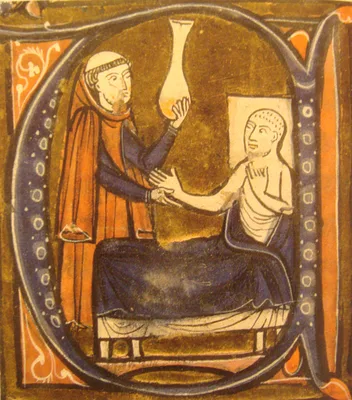
![BELON, Pierre [Pierre Belon du Mans; Petrus Bellonius Cenomanus] (1517 – 1564)](/media/portraits/9632)
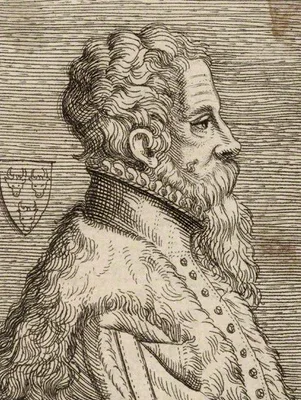
![ORTA, Garcia de [Garcia d'Orta] (1501 – 1568)](/media/portraits/2236)