1563 –1564 EUSTACHI, Bartolomeo [EUSTACHIUS] (1510 – 1574)
Opuscula anatomica.
Eustachius is credited with several anatomical discoveries, among them the tensor tympani muscle and the Eustachian tube, published in his chapter entitled De auditus organis. In the last respect, however, he was anti…
GMN 1093 · https://historyofmedicine.com/id/159
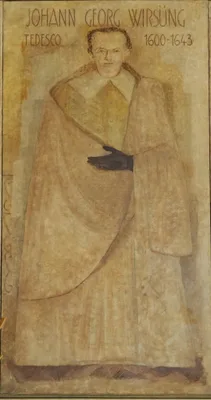
1642 WIRSUNG, Johann Georg (1589 – 1643)
Figura ductus cuiusdam cum multiplicibus suis ramulis noviter in pancreate in diversis corporibus humanis observati.
Wirsung, assistant to the celebrated German anatomist Johann Vesling, discovered the excretory duct of the pancreas named for him in 1642. To announce his discovery, Wirsung chose the extremely unusual method of publi…
GMN 7879 · https://historyofmedicine.com/id/10051
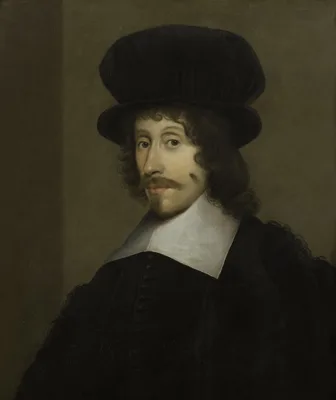
1656 WHARTON, Thomas (1614 – 1673)
Adenographia: sive, glandularum totius corporis descriptio.
Wharton described the duct of the submaxillary salivary gland (“Wharton’s duct”). He described the thyroid more accurately than his predecessors, naming it. He also described “Wharton’s jelly” of the umbilical cord (p…
GMN 1116 · https://historyofmedicine.com/id/1196
1775 BORDEU, Théophile de (1722 – 1776)
Recherches sur les maladies chroniques. Vol. 1. Analyse médicinale du sang.
De Bordeu first conceived the idea of internal secretion by his hypothesis that every organ, tissue, and cell discharges into the blood products which influence other parts of the body. His work was published in a col…
GMN 1117 · https://historyofmedicine.com/id/1198
1788 CAWLEY, Thomas
A singular case of diabetes, consisting entirely in the quality of the urine; with an inquiry into the different theories of that disease.
Cawley was the first to suggest a relationship between the pancreas and diabetes, observing that the disease may follow injury to that organ.
GMN 3929 · https://historyofmedicine.com/id/5108
1801 LE GALLOIS, Julien Jean César (Legallois) (1770 – 1814)
Le sang, est-il identique dans tous les vaisseaux qu’il parcourt?
Like de Bordeu, and more definitely, Legallois anticipated the conception of internal secretions. He surmised from the identity in composition of all varieties of arterial blood and the diversity of venous blood in di…
GMN 1118 · https://historyofmedicine.com/id/1200
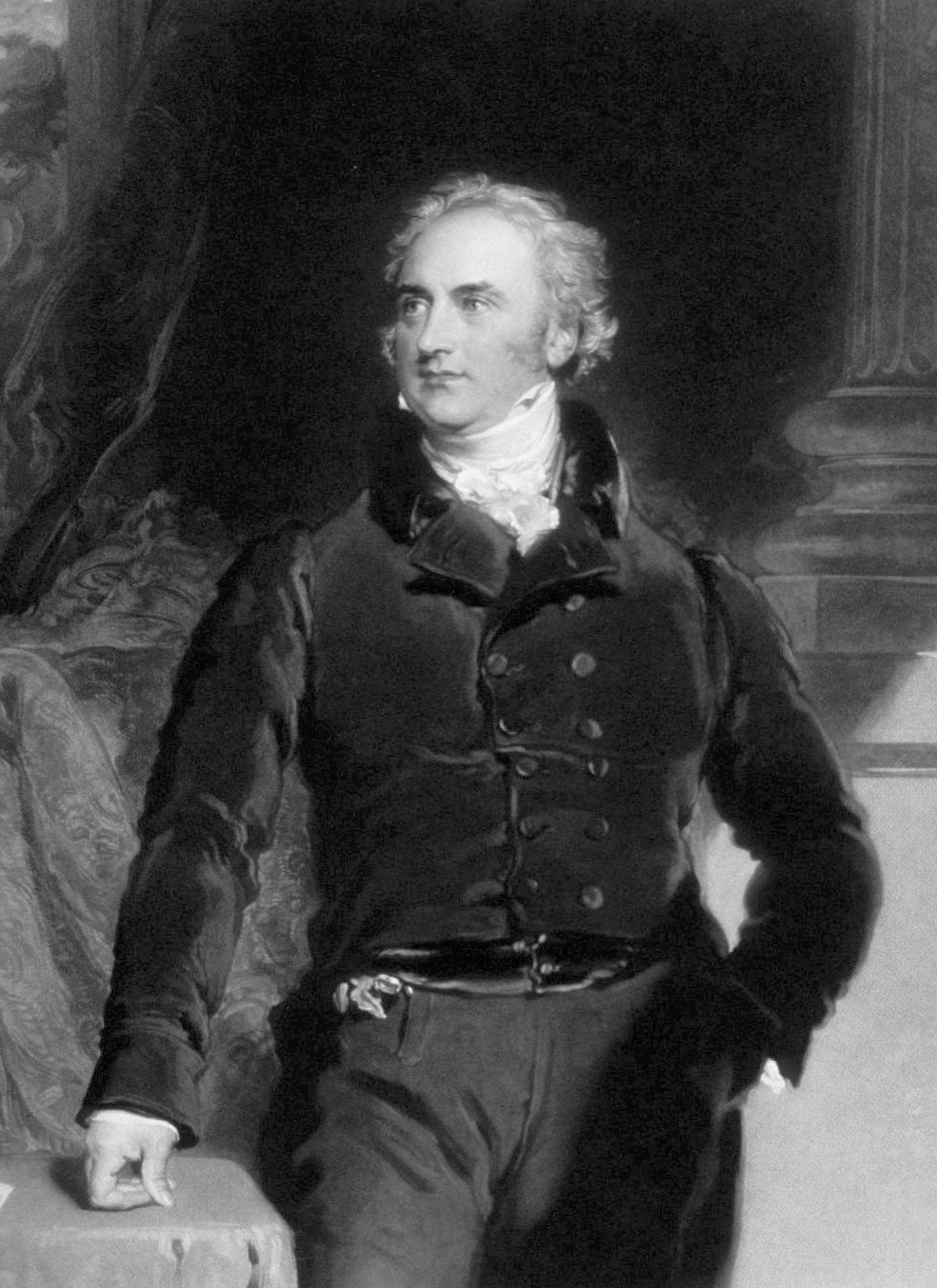
1832 COOPER, Sir Astley Paston (1768 – 1841)
The anatomy of the thymus gland.
Cooper, the most popular surgeon in London during the early part of the 19th century, was connected with both Guy’s and St. Thomas’s Hospitals. Among his best works is his description of the thymus; he described the “…
GMN 1119 · https://historyofmedicine.com/id/1224
1836 KING, Thomas Wilkinson (1809 – 1847)
Observations on the thyroid gland, with notes on the same subject by Sir Astley Cooper.
King, sometimes referred to as the “father of endocrinology”, antici-pated the endocrine action of the thyroid.
GMN 1126 · https://historyofmedicine.com/id/1250
1838 RATHKE, Martin Heinrich (1793 – 1860)
Ueber die Entstehung der Glandula pituitaria.
Important description of the pituitary.
GMN 1156 · https://historyofmedicine.com/id/1489
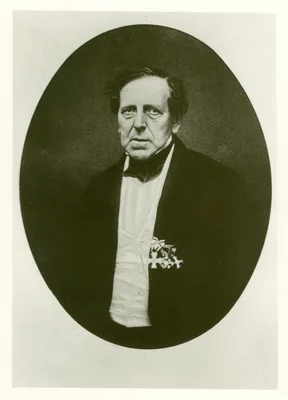
1849 BERTHOLD, Arnold Adolph (1803 – 1861)
Transplantation der Hoden.
Berthold showed that transplantation of a cock’s testes to another part of the body prevented atrophy of the comb, the usual sequel to castration. He was thus the first to prove the existence of an internal secretion.…
GMN 1176 · https://historyofmedicine.com/id/1600
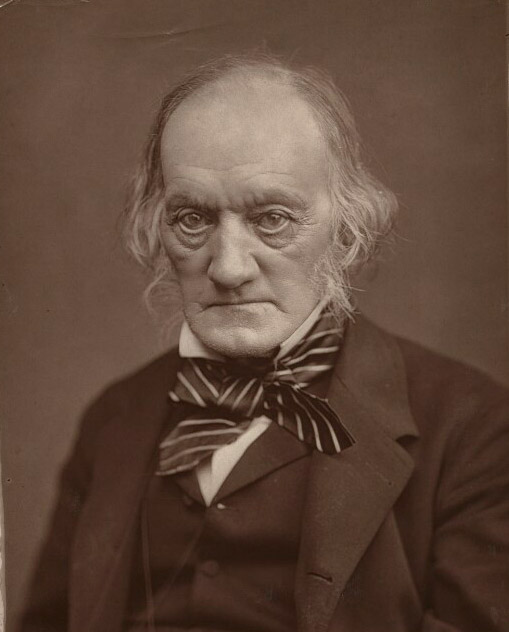
1852 OWEN, Sir Richard (1804 – 1892)
On the anatomy of the Indian rhinoceros (Rh. unicornis L.).
Owen was the first to describe the parathyroids, which he observed in his dissection of a Great Indian Rhinoceros that had lived at the Zoological Society of London from 1834 to 1849. See B. Modarai, A. Sawyer, & H. E…
GMN 1126.1 · https://historyofmedicine.com/id/1254
1856 BROWN-SÉQUARD, Charles Édouard (1817 – 1894)
Recherches expérimentales sur la physiologie et la pathologie des capsules surrénales.
Brown-Séquard found that excision of both adrenals in animals invariably proved fatal, thus determining their indispensability. He also believed that they had an antitoxic influence upon the blood. His experimental wo…
GMN 1140 · https://historyofmedicine.com/id/1363
1856 VULPIAN, Edmé Félix Alfred (1826 – 1887)
Note sur quelques réactions propres à la substance des capsules surrénales.
Vulpian discovered adrenaline in the adrenal medulla.
GMN 1141 · https://historyofmedicine.com/id/1365
1869 LANGERHANS, Paul (1847 – 1888)
Beiträge zur mikroskopischen Anatomie der Bauchspeicheldrüse. Inaugural-Dissertation.
First account of the islets of Langerhans. In 1893 Édouard Laguesse attached the name of Langerhans to the structures. Langerhans did not suggest any function for them. The book was reprinted with an English translati…
GMN 1009 · https://historyofmedicine.com/id/821
1877 LANCEREAUX, Étienne (1829 – 1910)
Notes et reflexions à propos de 2 cas de diabète sucré avec altération du pancreas.
Lancereaux was the first definitely to claim a causal relationship between lesions of the pancreas and diabetes.
GMN 3943 · https://historyofmedicine.com/id/5182
1878 HEIDENHAIN, Rudolf Peter Heinrich (1834 – 1897)
Ueber secretorische und trophische Drüsennerven.
Investigation of the secretory and trophic nerves of glands. Heidenhain considered all secretory phenomena to be intracellular, rather than mechanical, processes.
GMN 1120 · https://historyofmedicine.com/id/1226
1884 –1885 HORSLEY, Sir Victor Alexander Haden (1857 – 1916)
On the function of the Thyroid gland.
From his experimental work Horsley produced evidence to support the view that myxoedema, cretinism and operative cachexia strumpriva are all due to thyroid deficiency.
GMN 1128 · https://historyofmedicine.com/id/1265
1886 HORSLEY, Sir Victor Alexander Haden (1857 – 1916)
Functional nervous disorders due to loss of thyroid gland and pituitary body.
First successful experimental hypophysectomy; two dogs survived five and six months respectively after this operation.
GMN 1129 · https://historyofmedicine.com/id/1278
1889 BROWN-SÉQUARD, Charles Édouard (1817 – 1894)
Expérience démontrant la puissance dynamogénique chez l’homme d’un liquide extrait de testicules d’animaux.
Brown-Séquard injected into himself a testicular extract in order to bring about rejuvenation. He reported much benefit but his advocacy of this method evoked scepticism and criticism, although it stimulated research …
GMN 1177 · https://historyofmedicine.com/id/1606
1891 GLEY, Eugène (1857 – 1930)
Sur les fonctions du corps thyroïde.
Gley re-discovered the parathyroids and later came across Sandström’s description (see No. 1127). Gley seems to have been the first to understand their real significance; his work showed the necessity of the parathyro…
GMN 1130 · https://historyofmedicine.com/id/1283
1891 POEHL, Aleksandr Vasil'evich [VON PEL] (1858 – 1898)
On spermin.
Isolation of spermin from the testis.
GMN 1178 · https://historyofmedicine.com/id/1621
1892 VASSALE, Giulio (1862 – 1912); SACCHI, Ercole
Sulla distruzione della ghiandola pituitaria.
Vassale and Sacchi showed water and mineral metabolism to be affected by hypophysectomy.
GMN 1157 · https://historyofmedicine.com/id/1493
1895 –1896 BAUMANN, Eugen (1846 – 1896)
Ueber das normale vorkommen von Jod im Thierkörper.
Demonstration of the presence of iodine in organic combination in the thyroid. Baumann isolated an iodine-containing compound (“Thyrojodin”). The biochemical research stimulated by this work led eventually to the disc…
GMN 1131 · https://historyofmedicine.com/id/1294
1895 SHARPEY-SCHAFER, Sir Edward Albert (1850 – 1935); OLIVER, George (1841 – 1915)
The physiological effects of extracts of the suprarenal capsules.
These workers demonstrated the existence of a pressor substance (adrenaline) in the adrenal medulla. Preliminary communications regarding the above appeared in the proceedings of the Physiological Society, J. Physiol.…
GMN 1143 · https://historyofmedicine.com/id/1368
1896 HUTCHISON, Sir Robert (1871 – 1960)
The chemistry of the thyroid gland and the nature of its active constituent.
Isolation of a globulin afterwards named thyroglobulin.
GMN 1131.1 · https://historyofmedicine.com/id/1299
1896 KNAUER, Emil (1867 – 1935)
Einige Versuche über Ovarientransplantation bei Kaninchen.
Knauer implanted ovaries into immature or castrated animals, producing development of sexual characteristics, thus demonstrating the existence of an ovarian hormone.
GMN 1178.1 · https://historyofmedicine.com/id/1625
1896 SOBOTTA, Robert Heinrich Johannes (1869 – 1945)
Ueber die Bildung des Corpus luteum bei der Maus.
GMN 1179 · https://historyofmedicine.com/id/1629
1897 ABEL, John Jacob (1857 – 1938); CRAWFORD, Albert Cornelius (1869 – 1921)
On the blood-pressure-raising constituent of the suprarenal capsule.
Abel and Crawford further investigated the pressor substance of Oliver and Schäfer calling it “epinephrine”.
GMN 1144 · https://historyofmedicine.com/id/1386
1899 ABEL, John Jacob (1857 – 1938)
Ueber den blutdruckerregenden Bestandtheil der Nebenniere, das Epinephrin.
GMN 1145 · https://historyofmedicine.com/id/1432
1900 LAGUESSE, Gustave François Antoine, called Édouard (1861 – 1927)
Histologie du pancreas. In Traité d'anatomie humaine, edited by Paul Julien Poirier & Adrien Charpy, vol. 4, pp. 821-831.
Laguesse, who in 1893 named the islets of Langerhans, established in this work that the islets of Langerhans were the seat of internal secretion of the pancreas. On figures 425 and 427 he drew that are now called "the…
GMN 14160 · https://historyofmedicine.com/id/16475
1901 JÕKICHI, Takamine (1854 – 1922)
The blood-pressure-raising principle of the suprarenal glands.
Isolation of adrenaline.
GMN 1146 · https://historyofmedicine.com/id/1435
1901 ALDRICH, Thomas Bell (1861 – 1939)
A preliminary report on the active principle of the suprarenal gland.
Independently of Takamine, Aldrich succeeded in isolating adrenaline in a crystalline form. He gave it the formula C9H13NO3. Adrenaline was the first hormone to be isolated.
GMN 1147 · https://historyofmedicine.com/id/1438
1901 STARLING, Ernest Henry (1866 – 1927); MAGNUS, Rudolf (1873 – 1927)
The action of pituitary extracts on the kidney.
Magnus and Starling reported that pituitary extracts caused expansion of the kidney and a marked and often prolonged diuresis. This was the first indication that the neurohypophysis plays a part in the regulation of u…
GMN 1236.1 · https://historyofmedicine.com/id/1977
1904 STARLING, Ernest Henry (1866 – 1927); BAYLISS, Sir William Maddock (1860 – 1924)
The chemical regulation of the secretory process.
Bayliss and Starling developed the theory of hormonal control of internal secretion.
GMN 1121 · https://historyofmedicine.com/id/1229
1904 STOLZ, Friedrich (1860 – 1936)
Ueber Adrenalin und Alkylaminoacetobrenzcatechin.
Synthesis of adrenaline.
GMN 1147.1 · https://historyofmedicine.com/id/1443
1905 STARLING, Ernest Henry (1866 – 1927)
The Croonian Lectures on the chemical correlation of the functions of the body.
Starling constructed a general scheme of the “hormones” as he named the internal secretions. This is the first appearance of the word, which was suggested by W. B. Hardy.
GMN 1122 · https://historyofmedicine.com/id/1233
1905 –1906 STARLING, Ernest Henry (1866 – 1927); LANE-CLAYPON, Janet Elizabeth (1877 – 1967)
An experimental enquiry into the factors which determine the growth and activity of the mammary glands.
In their classic paper on the mammary gland, these workers attributed its changes during pregnancy to the fetus.
GMN 1180 · https://historyofmedicine.com/id/1633
1908 PAULESCO, Nicolas Constantin (1869 – 1931)
L’hypophyse du cerveau. I. Physiologie.
Paulesco found that the removal of the anterior pituitary had fatal results, while removal of the posterior lobe had negative results.
GMN 1158 · https://historyofmedicine.com/id/1495
1908 HITSCHMANN, Fritz (1870 – 1926); ADLER, Ludwig (1876 – 1958)
Der Bau der Uterusschleimhaut des geschlechtsreifen Weibes besonderer Berücksichtigung der Menstruation.
First definite description of the cyclical changes in the endometrium, which were shown to be a normal physiological process.
GMN 1181 · https://historyofmedicine.com/id/1638
1909 HUNT, Reid (1870 – 1948); SEIDELL, Atherton (1878 – 1961)
Studies on thyroid. I. The relation of iodine to the physiological activity of thyroid preparations.
GMN 1132 · https://historyofmedicine.com/id/1308
1909 DALE, Sir Henry Hallett (1875 – 1968)
The action of extracts of the pituitary body.
Oxytocic action of posterior pituitary injection.
GMN 1159 · https://historyofmedicine.com/id/1500
1909 MEYER, Jean de (1878 – 1934)
Action de la sécrétion interne du pancréas sur différent organes et en particulier sur la sécrétion rénale.
De Meyer was apparently the first to suggest the name “insuline” for the substance then believed to be secreted by the pancreas.
GMN 1204 · https://historyofmedicine.com/id/1843
1910 BIEDL, Artur (1869 – 1933)
Innere Sekretion.
Biedl showed that the adrenal cortex is essential for life. His classic work shows the rapid development of the knowledge concerning endocrinology. In 1890 there were few publications dealing with internal secretion, …
GMN 1123 · https://historyofmedicine.com/id/1239
1910 CUSHING, Harvey Williams (1869 – 1939); CROWE, Samuel James (1883 – 1955); HOMANS, John (1877 – 1955)
Experimental hypophysectomy.
First experimental evidence of the relationship between the pituitary and the reproductive system; demonstration that hypophysectomy causes genital atrophy.
GMN 1160 · https://historyofmedicine.com/id/1504
1910 CUSHING, Harvey Williams (1869 – 1939)
The functions of the pituitary body.
See No. 3896.
GMN 1161 · https://historyofmedicine.com/id/1505
1912 ASCHNER, Bernhard (1883 – 1960)
Über die Funktion der Hypophyse.
Aschner was able to keep his hypophysectomized dogs alive indefinitely. He found that they developed genital hypoplasia.
GMN 1162 · https://historyofmedicine.com/id/1509
1915 KENDALL, Edward Calvin (1886 – 1972)
The isolation in crystalline form of the compound containing iodine, which occurs in the thyroid; its chemical nature and physiologic activity.
Kendall isolated in crystalline form the thyroid hormone “thyroxine” on Christmas Day, 1914.
GMN 1133 · https://historyofmedicine.com/id/1316
1915 GAINES, Walter Lee (1881 – )
A contribution to the physiology of lactation.
Gaines demonstrated the action of the pituitary in lactation.
GMN 1162.1 · https://historyofmedicine.com/id/1527
1917 STOCKARD, Charles Rupert (1879 – 1939); PAPANICOLAOU, George Nicholas (1883 – 1962)
The existence of a typical oestrus cycle in the guinea-pig; with a study of its histological and physiological changes.
The vaginal smear test for estrus; it demonstrates the histological changes occurring in the vagina during the menstrual cycle.
GMN 1182 · https://historyofmedicine.com/id/1646
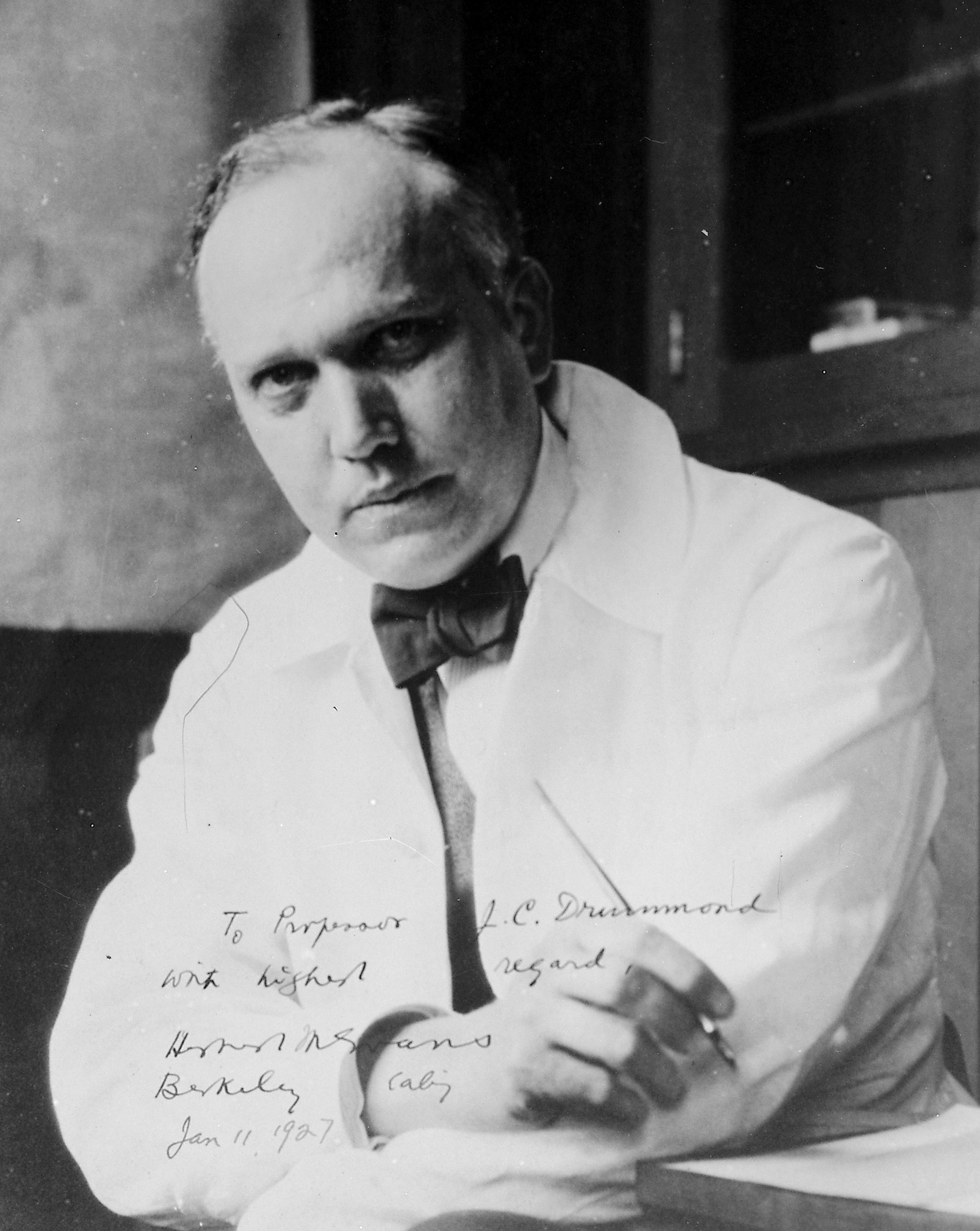
1921 EVANS, Herbert McLean (1882 – 1971); LONG, Joseph Abraham (1879 – 1953)
The effect of the anterior lobe administered intraperitoneally upon growth, maturity and oestrus cycles of the rat.
Evans and Long discovered the growth hormone of the anterior pituitary, showing that continued injections of an anterior pituitary extract produced an acceleration in the growth-rate of laboratory animals.
GMN 1163 · https://historyofmedicine.com/id/1531