1672 HUGHES, William ( – 1683)
The American physician : or, a treatise of the roots, plants, trees, shrubs, fruit, herbs, etc., growing in the English Plantations in America ; ... whereunto is added a discourse of the Cacao-nut-Tree, and the use of its fruit ; with all the ways of making Chocolate
The earliest work in English on the medicinal virtues of North American tropical plants. Based on first-hand observations made in the West Indies, Evidence suggests that Hughes began his career in 1651 with a privatee…
GMN 7007 · https://historyofmedicine.com/id/9173
1709 LAWSON, John (1674 – 1711)
A new voyage to Carolina; Containing the exact description and natural history of that country: Together with the present state thereof. And a journal of a thousand miles, travel'd Thro' several nations of Indians. Giving a particular account of Their customs, manners, &c.
Lawson, who characterized himself as "Surveyer-General of North Carolina" explored the interior of colonial North Carolina, South Carolina and George. He was guided by American Indians and made careful note of vegetat…
GMN 12474 · https://historyofmedicine.com/id/14707
1721 BOYLSTON, Zabdiel (1679 – 1766)
Some account of what is said of inoculating or transplanting the small pox by the learned Dr. Emmanuel Timonius, and Jacobus Pylarinus. With some remarks theron. To which are added, a few queries in answer to the scruples of many about the lawfulness of this method.
An abridgement of Nos. 5409 & 5410 together with Boylston’s remarks. From internal evidence this 24-page pamphlet would appear to be the first North American publication on inoculation. See No. 5415. Digital facsimile…
GMN 5410.1 · https://historyofmedicine.com/id/7308
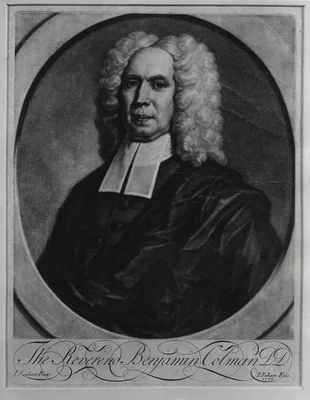
1721 COLMAN, Benjamin (1673 – 1747)
Some observations on the new method of receiving the smallpox by ingrafting or inoculating.
This work offers general support for the practice of Zabdiel Boylston, detailing some of Boylston’s cases, including accounts of occasions when patients died. Reprinted with additional material by Daniel Neal, as A na…
GMN 5411 · https://historyofmedicine.com/id/7309
1722 DOUGLASS, William (1691 – 1752)
Inoculation of the smallpox as practised in Boston.
GMN 5412 · https://historyofmedicine.com/id/7312
1722 DOUGLASS, William (1691 – 1752)
The abuses and scandals of some late pamphlets in favour of inoculation of the small-pox.
Douglass at first opposed inoculation for smallpox, but by 1730 he had changed his views and had become an advocate of inoculation.
GMN 5413 · https://historyofmedicine.com/id/7315
1722 MATHER, Cotton (1663 – 1728)
An account of the method and success of inoculating the small pox in Boston in New England.
Mather republished reports of earlier writers on inoculation. He persuaded Boylston to adopt the practice in June 1721, and he supported Boylston during a period of great opposition to inoculation.
GMN 5414 · https://historyofmedicine.com/id/7318
1726 BOYLSTON, Zabdiel (1679 – 1766)
An historical account of the small-pox inoculated in New-England, upon all sorts of persons, whites, blacks, and of all ages and constitutions: With some account of the nature of the infection in the natural and inoculated way, and their different effects on human bodies; with some short directions to the unexperienced in this method of practice .
Boylston was the first in America to inoculate for smallpox, at Boston on 26 June 1721. "During a smallpox outbreak in 1721 in Boston, he inoculated about 248 people[5] by applying pus from a smallpox sore to a small …
GMN 5415 · https://historyofmedicine.com/id/7324
1731 –1747 CATESBY, Mark (1683 – 1749)
The natural history of Carolina, Florida and the Bahama Islands: Containing the figures of birds, beasts, fishes, serpents, insects, and plants: Particularly, the forest-trees, shrubs, and other plants, not hitherto described, or very incorrectly figured by authors. Together with their descriptions in English and French. To which are added observations on the air, soil and waters: With remarks on agriculture, grain, pulse, roots &c. To the whole is prefixed a new and complete map of the countries treated of. 2 vols.
The only attempt to record the natural history of a region of America during the colonial period. Includes 220 fine handcolored etched plates after and by Catesby and mostly signed with his cipher, excepting plates 61…
GMN 9571 · https://historyofmedicine.com/id/11758
1734 TENNENT, John (1700 – 1760)
Every man his own doctor: or, The poor planter's physician. Prescribing plain and easy means for persons to cure themselves of all, or most of the distempers, incident to this climate, and with very little charge, the medicines being chiefly of the growth and production of this country.
The first medical hand-book for lay persons written and published in America. It is probable that this book was first published in 1734, though the earliest recorded copy or copies appear to be the "second edition" wi…
GMN 9675 · https://historyofmedicine.com/id/11862
1736 DOUGLASS, William (1691 – 1752)
The practical history of a new epidemical eruptive miliary fever, with an angina ulcusculosa, which prevailed in Boston New England in the years 1735 and 1736.
Douglass left the first adequate clinical description of scarlet fever, which he called angina ulcusculosa, in his account of New England’s first scarlet fever epidemic. He was one of the first American physicians to …
GMN 5076 · https://historyofmedicine.com/id/5925
1737 BRICKELL, John (1710 – 1745)
The natural history of North Carolina. With an account of the trade, manners and customs of the Christian and Indian inhabitants. Illustrated with copper-plates, whereon are curiously engraved the map of the country, several strange beasts, birds, fishes, snakes, insects, trees, and plants, &c.
Brickell accompanied provincial governor George Burrington to North Carolina in 1724, remaining in the region for six years and becoming one of the first medical doctors in North Carolina. Brickell took the material o…
GMN 12473 · https://historyofmedicine.com/id/14706
1743 KILPATRICK, James (Kirkpatrick) (1696 – 1770)
An essay on inoculation, occasioned by the small-pox being brought into South Carolina in the year 1738.
After its initial popularity, inoculation fell into disuse in England. Kirkpatrick, who became a prominent inoculator in England after experience in America, helped considerably in reviving its popularity. He attempte…
GMN 5416 · https://historyofmedicine.com/id/7327
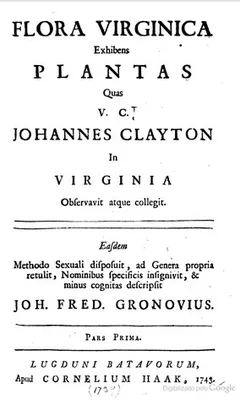
1743 GRONOVIUS, Jan Frederik (1690 – 1762); CLAYTON, John (1694 – 1773)
Flora Virginica exhibens plantas quas v. c. Johannes Clayton in Virginia observavit atque collegit. Easdem method sexuali-disposuit, ad genera propria retulit, nominbus specificis insignivit, & minus cognitas descriptsit.
The first flora of Virginia. As stated on the title page, Gronovius, a Dutch botanist, based this work on specimens collected by the Virginia plant collector and botanist John Clayton. While Clayton supplied the speci…
GMN 12478 · https://historyofmedicine.com/id/14711
1745 CADWALADER, Thomas (1708 – 1779)
An essay on the West-India dry-gripes… to which is added, an extraordinary case in physick.
Cadwalader, an American pupil of Cheselden, left a classical account of lead colic and lead palsy. This was later shown by Benjamin Franklin, printer of the above work, to be due to the consumption of Jamaica rum whic…
GMN 2094 · https://historyofmedicine.com/id/2586
1751 BARTRAM, John (1699 – 1777)
Descriptions, virtues, and uses of sundry plants of these northern parts of America, and particularly of the newly discovered Indian cure for the venereal disease.
Bartram founded one of the first botanical gardens in America (at Kingsessing). Linnaeus referred to him as the “greatest natural botanist in the world”. A few copies of this 7-page work printed by Benjamin Franklin w…
GMN 1832 · https://historyofmedicine.com/id/2171
1753 –1761 KALM, Pehr [Pietari; Peter] (1716 – 1779)
En Resa til Norra America. 2 vols.
Between 1748 and 1749, Kalm, a Swedish naturalist and student of Linnaeus, traveled throughout northeast America, specifically in Pennsylvania, Delaware, New Jersey, New York, and Canada, surveying the countryside, an…
GMN 9923 · https://historyofmedicine.com/id/12111
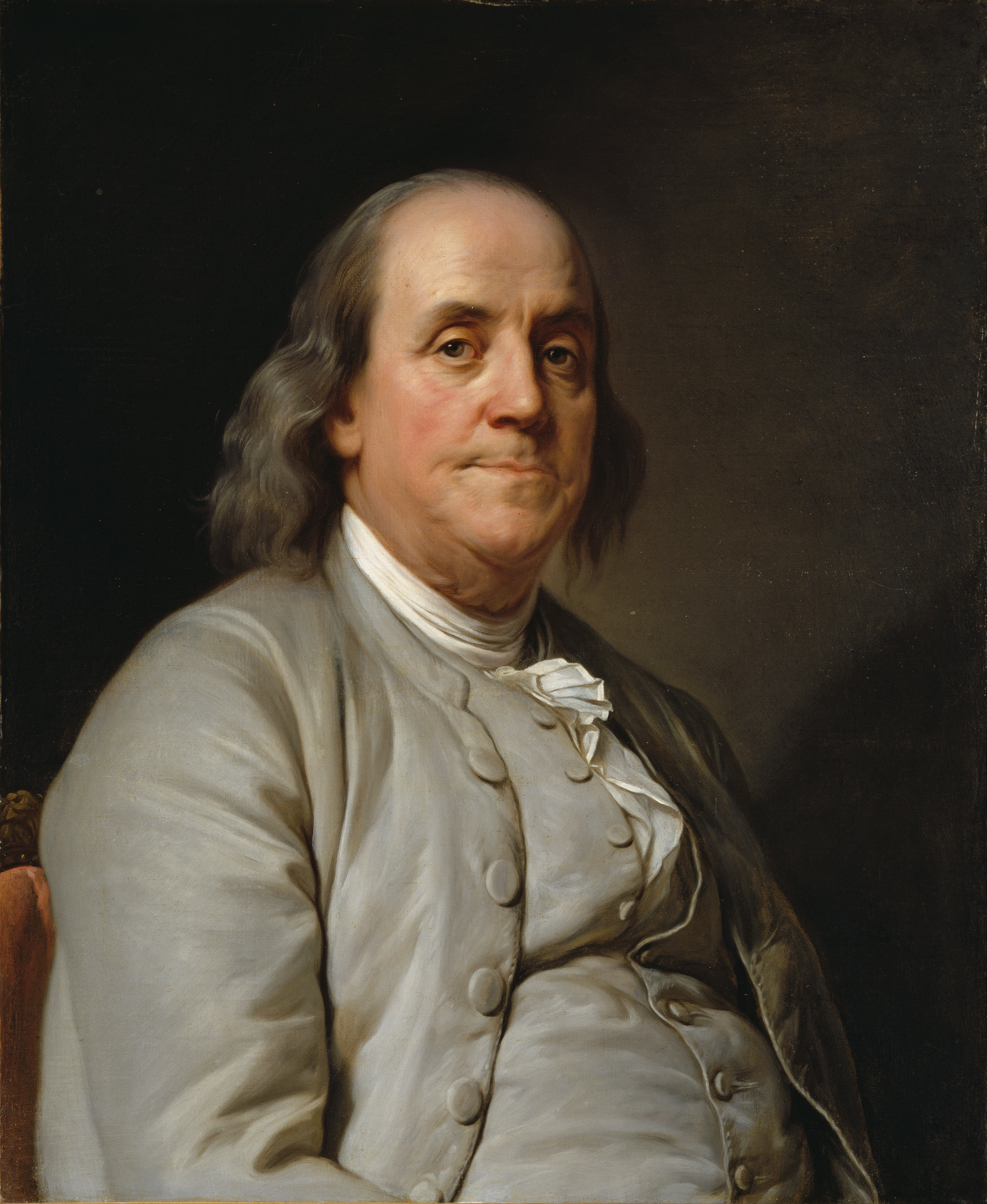
1754 FRANKLIN, Benjamin (1706 – 1790)
Some account of the Pennsylvania Hospital, from its first rise, to the beginning of the fifth month, called May 1754.
Franklin was a prime mover in establishing the Pennsylvania Hospital, the first permanent hospital built in the future United States. This publication included the text of most of the founding documents of the hospita…
GMN 7429 · https://historyofmedicine.com/id/9601
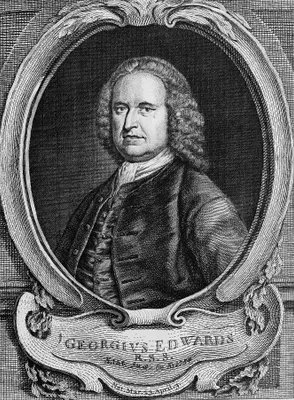
1754 CATESBY, Mark (1683 – 1749); EDWARDS, George (1693 – 1773)
The natural history of Carolina, Florida, and the Bahama Islands, containing the figures of birds, beasts, fishes, serpents, insects, and plants, particulary the forest trees, shrubs, and other plants, not hitherto described, or very incorrectly figured by authors. Together with their descriptions in English and French. To which are added, observations on the air, soil, and waters with remarks upon agriculture, grain, pulse, roots, &c. To the whole is prefixed a new and correct map of the countries treated of / by the late Mark Catesby; revised by Mr. [George] Edwards. 2 vols.
Second edition, edited by ornithologist George Edwards. Digital facsimile from the Internet Archive at this link.
GMN 7678 · https://historyofmedicine.com/id/9850
1759 FRANKLIN, Benjamin (1706 – 1790)
Some account of the success of inoculation for the small-pox in England and America. Together with plain instructions, by which any person may be enabled to perform the operation.
Franklin’s statistical account of smallpox inoculation in Boston during the epidemic of 1753-54, showing the beneficial effects of the practice, was written for William Heberden, who contributed the “Plain instruction…
GMN 5419 · https://historyofmedicine.com/id/7337
1761 FRANKLIN, Benjamin (1706 – 1790); RHOADS, Samuel (1711 – 1784)
Continuation of the account of the Pennsylvania Hospital, from the first of May 1754, to the fifth of May 1761.
Written in Franklin's absence, this continuation was printed in the same style and format as Franklin's 1761 work. Rhoads was an American architect who served as the 59th mayor of Philadelphia.
GMN 7430 · https://historyofmedicine.com/id/9602
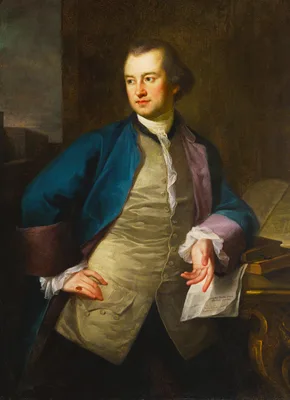
1765 MORGAN, John (1735 – 1789)
A discourse upon the institution of medical schools in America.…
The first American publication on medical education. Morgan founded the first medical school in the United States, in connection with what is now the University of Pennsylvania.
GMN 1766.5 · https://historyofmedicine.com/id/3208
1769 BARD, Samuel (1742 – 1821)
A discourse upon the duties of a physician, with some sentiments, on the usefulness and necessity of a public hospital: Delivered before the president and governors of King's College, at the commencement, held on the 16th of May, 1769. As advice to those gentlemen who then received the first medical degrees conferred by that university.
The first American treatise on medical ethics, and the first treatise on medical ethics published in the English language. Samuel Bard was one of the founders of King’s College, New York. Digital facsimile from the Na…
GMN 1763 · https://historyofmedicine.com/id/3195
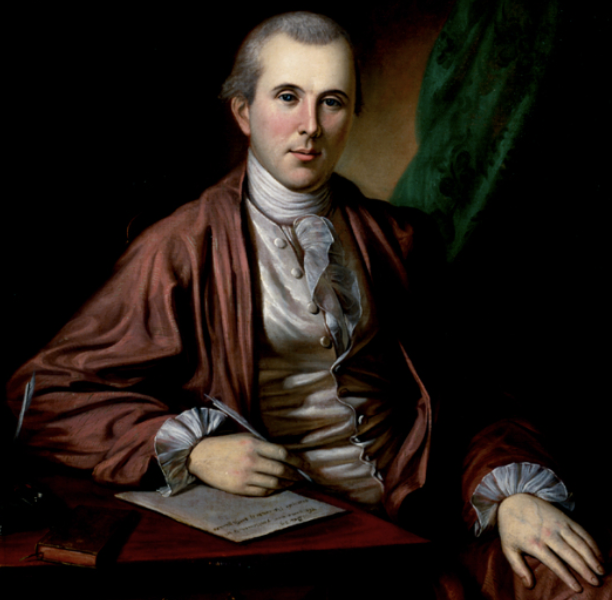
1770 RUSH, Benjamin (1745 – 1813)
Syllabus of a course of lectures on chemistry.
Rush inaugurated the first regular course of lectures on chemistry taught in America, at the College of Philadelphia. Includes much on pharmaceutical chemistry. Facsimile reprint with an introduction by L. H. Butterfi…
GMN 9204 · https://historyofmedicine.com/id/11385
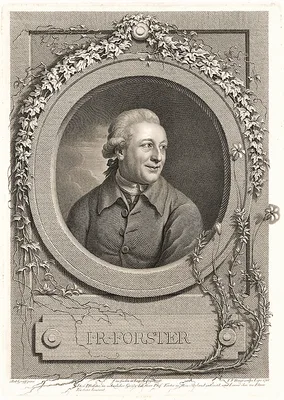
1771 FORSTER, Johann Reinhold (1729 – 1798); BOSSU, Jean Bernard (1720 – 1792)
Travels through that part of North America formerly called Louisiana by Mr. Bossu, ... Translated from the French by John Reinhold Forster, F.A.S. Illustrated with notes relative chiefly to natural history to which is added by the translator a systematic catalogue of all the known plants of English North America, or a Flora Americae Septentrionalis together with an abstract of the most useful and necessary articles contained in Peter Loefling's travels through Spain and Cumana in South America referred to the pages of the original Swedish edition. 2 vols.
This work is a series of 21 letters that Bossu wrote to the Marquis de L’Estrade describing his life and travels in the vast Louisiana country from 1751 to 1762. His ventures ranged from Fort Chartres, in present-day …
GMN 12472 · https://historyofmedicine.com/id/14705
1775 ADAIR, James (1709 – 1793)
The history of the American Indians; particularly those nations adjoining to the Missisippi [sic] East and West Florida, Georgia, South and North Carolina, and Virginia: containing an account of their origin, language, manners, religious and civil customs, laws, form of government, punishments, conduct in war and domestic life, their habits, diet, agriculture, manufactures, diseases and method of cure... With observations on former historians, the conduct of our colony governors, superintendents, missionaries, & c. Also an appendix, containing a description of the Floridas, and the Missisippi [sic] lands, with their productions--the benefits of colonizing Georgiana, and civilizing the Indians--and the way to make all the colonies more valuable to the mother country....
The author characterized himself on the title page as "a Trader with the Indians and a Resident in their Country for Forty Years." Digital facsimile from the Internet Archive at this link.
GMN 7505 · https://historyofmedicine.com/id/9677
1776 CHALMERS, Lionel (1715 – 1777)
An account of the weather and diseases of South-Carolina. 2 vols.
Originally published in the Gentleman’s Magazine, 1751-54.
GMN 1773 · https://historyofmedicine.com/id/3326
1778 BROWN, William (1752 – 1792)
Pharmacopoeia simpliciorum et efficaciorum.
The first original pharmacopeia published in the USA. Reproduced in facsimile, with translation, in The Badger Pharmacist, 1938. No. 22-25.
GMN 1834 · https://historyofmedicine.com/id/2180
1781 RUSH, Benjamin (1745 – 1813)
The new method in inoculating for the small pox.
GMN 5422 · https://historyofmedicine.com/id/7348
1785 MARSHALL, Humphrey (1722 – 1801)
Arbustrum Americanum: the American grove, or, an alphabetical catalogue of forest trees and shrubs…
Like his cousin, John Bartram (No. 1832), Marshall maintained a private botanical garden. According to W. Darlington the above work is “the first truly indigenous botanical essay published in the Western Hemisphere”. …
GMN 1836.1 · https://historyofmedicine.com/id/2189
1785 JEFFERSON, Thomas (1743 – 1826)
Notes on the State of Virginia; written in the year 1781, somewhat corrected and enlarged in the winter of 1782, for the use of a foreigner of distinction, in answer to certain queries proposed by him.
Jefferson wrote Notes on the State of Virginia in response to a series of questions sent in 1781 to various members of the Continental Congress by François Barbé-Marbois, then secretary to the French legation at Phila…
GMN 11450 · https://historyofmedicine.com/id/13649
1787 LATHROP, John (1740 – 1816)
A Discourse before the Humane Society, ... Delivered on the Second Tuesday of June, 1787.
The first separate work on resuscitation published in the United States. A list of “Methods of Treatment to be used with Persons apparently dead from drowning, &c.” appears on p. iv; these methods included warming the…
GMN 7214 · https://historyofmedicine.com/id/9381
1788 BEARDSLEY, Hezekiah (1748 – 1790)
Case of a scirrhus in the pylorus of an infant.
First American case report on congenital hypertrophic pyloric stenosis. Cases and observations by the Medical Society of New-Haven County…was the first American medical periodical. Only one volume was published. Beard…
GMN 3426 · https://historyofmedicine.com/id/5363
1789 RUSH, Benjamin (1745 – 1813)
An account of the bilious remitting fever. In his Medical inquiries and observations, 1, 104-21
One of the first important accounts of dengue (“breakbone fever”). Rush described the Philadelphia outbreak of 1780.
GMN 5470 · https://historyofmedicine.com/id/7607
1790 KAST, Thomas (1755 – 1820)
An account of an aneurism in the thigh, perfectly cured by the operation.
The first femoral ligation reported in America, and the first paper on a surgical topic to be published in an American medical periodical.
GMN 2925.1 · https://historyofmedicine.com/id/4938
1790 GARDETTE, James (1756 – 1831)
Remarks on the diseases of the teeth.
The first "scientific" paper on dentistry to appear in an American periodical. Trained in France, Gardette accepted a commission as a surgeon in the French navy and went to America in 1778 when France sent her ships t…
GMN 3677.1 · https://historyofmedicine.com/id/5543
1791 BARTRAM, William (1739 – 1823)
Travels through North & South Carolina, George, East & West Florida, the Cherokee country, the extensive territories of the Muscogulges, or Creek confederacy, and the country of the Chactaws [sic]...
Digital facsimile of London, 1794 second edition from the Internet Archive at this link.
GMN 7770 · https://historyofmedicine.com/id/9942
1793 CAREY, Mathew (1760 – 1839)
A short account of the malignant fever, lately prevalent in Philadelphia: With a statement of the proceedings that took place on the subject in different parts of the United States.
Carey was a Philadelphia publisher and economist rather than a physician. In this little book, which passed through four editions in a few months, Carey left a graphic description of the great yellow fever epidemic of…
GMN 5451 · https://historyofmedicine.com/id/7515
1793 CURRIE, William (1754 – 1828)
A description of the malignant, infectious fever prevailing at present in Philadelphia; with an account of the means to prevent infection, and the remedies and method of treatment, which have been found most successful.
Digital facsimile from the Internet Archive at this link.
GMN 5452 · https://historyofmedicine.com/id/7523
1794 RUSH, Benjamin (1745 – 1813)
An account of the bilious remitting yellow fever, as it appeared in the city of Philadelphia in the year 1793.
Benjamin Rush was the most eminent figure in Philadelphia medicine in his day. His description of the yellow fever epidemic of 1793 is classic. He did magnificent work in treating the sick during the epidemic and in p…
GMN 5453 · https://historyofmedicine.com/id/7528
1794 JONES, Absolom (1746 – 1818); ALLEN, Richard (1760 – 1831); CLARKSON, Matthew (1733 – 1800)
A narrative of the proceedings of the black people during the late awful calamity in Philadelphia, in the year 1793: and a refutation of some censures thrown upon them in some late publications.
A refutation of slights by Matthew Carey in his Short account of the malignant fever, lately prevalent in Philadelphia (1793; No. 5451) to the important contributions of black people, many of whom served as nurses and…
GMN 5453.1 · https://historyofmedicine.com/id/7530
1796 BAYLEY, Richard (1745 – 1801)
An account of the epidemic fever which prevailed in the city of New York, during part of the summer and fall of 1795.
Traces the spread of yellow fever in late July, 1795, to the ship Zephyr, recently arrived from the West Indies. After spreading to nearby ships and then into the neighborhoods surrounding the port, the epidemic kille…
GMN 13162 · https://historyofmedicine.com/id/15421
1797 SEAMAN, Valentine (1770 – 1817)
An inquiry into the cause of the prevalence of the yellow fever in New-York.
Includes four early plot maps; Seaman was one of the first to create maps that attempted to show the spread of contagious disease.
GMN 7687 · https://historyofmedicine.com/id/9859
1797 ABBOT, John (1751 – 1840); SMITH, Sir James Edward (1759 – 1828)
The natural history of the rarer lepidopterous insects of Georgia. Including their systematic characters, the particulars of their several metamorphoses, and the plants on which they feed. Collected from the observations of Mr. John Abbot, many years resident in that country, by James Edward Smith.
The earliest illustrated monograph on the butterflies and moths of North America. Text in English and French. 104 hand-colored plates. Digital facsimile from the Internet Archive at this link.
GMN 7768 · https://historyofmedicine.com/id/9940
1798 BARTON, Benjamin Smith (1766 – 1815)
Collections for an essay towards a materia medica of the United States. Read before the Philadelphia Medical Society, on the twenty-first of February, 1798.
Digital facsimile of the 1798 edition from the U.S. National Library of Medicine at this link. Digital facsimile of the much-expanded third edition (1810) from Google Books at this link.
GMN 9309 · https://historyofmedicine.com/id/11491
1799 BARTON, Benjamin Smith (1766 – 1815)
Fragments of the Natural History of Pennsylvania. Part First [All Published].
This 24-page pamphlet is the first work by an American devoted entirely to American birds. It deals predominantly with migratory birds, arranged according to the dates throughout the year 1791 in which they were first…
GMN 7218 · https://historyofmedicine.com/id/9386
1799 LINING, John (1708 – 1760)
A description of the American yellow fever, which prevailed at Charleston, in South Carolina, in the year 1748.
Digital facsimile from U.S. National Library of Medicine at this link.
GMN 10511 · https://historyofmedicine.com/id/12704
1800 –1802 WATERHOUSE, Benjamin (1754 – 1846)
A prospect of exterminating the small-pox, being the history of the variolae vaccinae, or kine-pox, commonly called the cow-pox; as it has appeared in England: With an account of a series of inoculations performed for the kine-pox in Massachusetts. [Part II:] A prospect of exterminating the small pox part II, being a continuation of a narrative of facts concerning the progress of the new inoculation in America; together with practical observations on the local appearance, symptoms, and mode of treating the variola vaccina, or kine pock; including some letters to the author, from distinguished characters, on the subject of this benign remedy, now passing with a rapid step through all ranks of society in Europe and America.
Waterhouse introduced Jennerian vaccination into the U.S.A. He vaccinated his own child as his first case. See J. B. Blake, Benjamin Waterhouse and the introduction of vaccination. A reappraisal. Philadelphia, 1957. D…
GMN 5424 · https://historyofmedicine.com/id/7359
1801 SKINNER, Richard Cortland ( – 1834)
A treatise on the human teeth, concisely explaining their structure and cause of disease and decay.
First American book on the teeth, a pamphlet of 26pp. It was intended for the lay public and listed sound rules of oral hygiene, explained the nature of dental diseases and their treatment, and stressed preventive mai…
GMN 3678 · https://historyofmedicine.com/id/5545
1806 PENNSYLVANIA HOSPITAL
A catalogue of the medical library, belonging to the Pennsylvania Hospital; exhibiting the names of authors and editors, in alphabetical order, and an arrangement of them under distinct heads. Also, a list of articles contained in the anatomical museum; and the rules of the museum and of the library.
Probably the first catalogue of a medical museum in the United States and also possibly the first catalogue of an institutional medical library. The library was open to users for a one time payment of $30, later raise…
GMN 10379 · https://historyofmedicine.com/id/12571