1473 GENTILI DA FOLIGNO, Gentile (Gentilis Fulginas; Gentilis de Flugineo) ( – 1348); CASTELLI, Bonaventura (Bonaventura de Castello) (1300 – 1353); PATRIZI, Francesco (1413 – 1494)
De balneis. Add: Francesco da Siena: Dicta de balneo Petrioli. Bonaventura de Castello: Recepta aquae balnei de Porrecta.
First printed edition of da Foligno's treatise on bathing together with the first printing with a definite date of Castelli's work. ISTC No. ig00133000. Remarkably the ISTC cites two different separate undated printin…
GMN 13028 · https://historyofmedicine.com/id/15278
c. 1477 –c. 1483 ARNALD OF VILLANOVA, (Arnaldus de Villa Nova; Arnau de Vilanova; Arnaldus Villanovanus; Arnaud de Ville-Neuve; Arnaldo de Villanueva) (1240 – 1311)
Regimen sanitatis Salernitanum (With commentary by [Pseudo-Arnoldus de Villa Nova]). Add: Arnoldus de Villa Nova: Regimen sanitatis ad regem Aragonum.
Probably originating about 1160, the Regimen sanitatis from the medical school at Salerno (where medicine was first treated as a separate science) had greater popular influence than virtually any other medieval medica…
GMN 1959.3 · https://historyofmedicine.com/id/8802
1485 SAVONAROLA, Giovanni Michele (1385 – 1468)
De balneis et thermis naturalibus omnibus Italiae.
The second printed book on balneology. Savonarola took a skeptical approach to the subject, relying on his own observations and rejecting the notion that baths owed their virtues to occult or supernatural properties. …
GMN 14113 · https://historyofmedicine.com/id/16424
1487 ISAAC JUDAEUS [ABU YA'QUB ISHAQ IBN SULAIMAN AL ISRA’ILI’], (Isaac Israeli ben Solomon) (832 – 932)
De particularibus diaetis.
The first separately printed treatise on diet was written by the Egyptian-Jewish physician and philosopher Isaac Judaeus who lived from about 832 to 932 CE. He was also known as Isaac Israeli ben Solomon and Abu Ya'qu…
GMN 1961 · https://historyofmedicine.com/id/8805
1491 KETHAM, Johannes de [Johannes von Kirchheim] ( – 1490); TOSSIGNANO, Pietro da (PETRUS DE TUSSIGNANO) (1350 – 1401)
Fasciculus medicinae. Add: Petrus de Tussignano: Consilium pro peste evitanda.
A collection of short medical treatises which circulated widely in manuscript, some as early as the 13th century, and was perhaps attributed by the printers to its former owner, Johannes von Kirchheim, a professor of …
GMN 363 · https://historyofmedicine.com/id/322
1492 PETRUS HISPANUS, Pope John XXI (Pedro Hispano; Peter of Spain) (1226 – 1277); BENCIVENNI, Zucchero (1270 – )
Thesaurus pauperum. [Italian:] Tesoro de poveri. Tr: Zucchero Bencivenni.
One of the most popular medical books of the Middle Ages; first written about 1260. After its first printing about 1492 it was reprinted many times in the next 100 years. "Petrus Hispanus was the only practicing physi…
GMN 1960 · https://historyofmedicine.com/id/8804
1498 GUY DE CHAULIAC, (Guido de Cauliaco) (1298 – 1368); ROGER OF SALERNO, (Rogerius Salernitanus, Frugard, Frugardi, Roggerio Frugardo, Rüdiger Frutgard, Roger of Parma) (1140 – 1195); LANFRANC OF MILAN, Guido [Lanfranchi, Lanfranco, Lanfrancus Mediolanensis] (1250 – 1306); BERTAPAGLIA, Leonardo (1380 – 1463); BRUNO DA LONGOBURGO (1200 – 1286); CASTELLI, Bonaventura (Bonaventura de Castello) (1300 – 1353); ROLANDO DA PARMA, (Rolandus Parmensis) (1220 – )
Chirurgia. Add: Brunus Longoburgensis: Chirurgia magna et minor; Bonaventura de Castello: Recepta aquae balnei de Porrecta; Theodoricus Cerviensis: Chirurgia; Rolandus: Libellus de chirurgia; Lanfrancus Mediolanensis: Chirurgia; Rogerius: Practica; Leonardus Bertapalia: Recollectae super quarto libro Avicennae.
This late 15th century edition of the surgery of Guy de Chauliac also contained the first printed editions of various lesser-known medieval surgeries such as those by Bruno da Longoburgo and Leonardo Bertapaglia. It a…
GMN 12925 · https://historyofmedicine.com/id/15172
1499 DIOSCORIDES, Pedanius [Πεδάνιος Διοσκουρίδης] (40 – 90); NICANDER OF COLOPHON (ΝΊΚΑΝΔΡΟΣ Ὁ ΚΟΛΟΦΏΝΙΟΣ; NIKANDER) (-125 – )
Dioscorides, De materia medica [Greek]. Add: Pseudo- Dioscorides, De venenis, De venenatis animalibus [Greek]; Add: Nicander, Theriaca; Add: Alexipharmaca; Scholia [Greek].
Nicander was a Greek poet and physician. His Theriaca, in 958 hexameters, dealt with the symptoms and treatment of poisoning by the bites of poisonous animals; the Alexipharmaca considered intoxications through animal…
GMN 2069 · https://historyofmedicine.com/id/2486
1519 GALEN, [Κλαύδιος Γαληνός; Galen of Pergamon] (129 – 216); LINACRE, Thomas (Lynaker) (1460 – 1524)
Galeni methodus medendi, vel de morbis curandis.
The first separately published Latin translation from the Greek by Thomas Linacre. Galen's Method of medicine was a systematic and comprehensive account of the principles of treating injury and disease and one of Gale…
GMN 1959 · https://historyofmedicine.com/id/9108
1528 SCRIBONIUS LARGUS (1 – 50)
De compositionibus medicamentorum liber unus
Written in 47 CE, this is an important compilation of drugs and prescriptions. Among the 271 remedies are the first use of electrotherapy (for headaches) using the shock of the torpedo fish. and it records the drinkin…
GMN 1785 · https://historyofmedicine.com/id/8816
1529 CAELIUS AURELIANUS (500 – ); SORANUS OF EPHESUS (ΣΩΡΑΝΌΣ) (100 – 150); ORIBASIUS (ὈΡΕΙΒΆΣΙΟΣ), [Oreibasius] (320 – 403); SICARD, Johannes [Sichardt;Sichardus] (1499 – 1552)
Caelii Aureliani Siccensis Tardarum passionum libri V. D. Oribasii Sardi Iuliani Caesaris archiatri Euporiston lib: III. Medicinae comperi: lib: 1. Curationum lib: 1. Trochiscoru confect: lib: 1.
From a clinical point of view, the two works of Caelius Aurelianus, which were translated into Latin from Greek originals by Soranus of Ephesus that were later lost, represent the high-point of Graeco-Roman medical ac…
GMN 1959.1 · https://historyofmedicine.com/id/6052
1539 VESALIUS, Andreas (1514 – 1564)
Epistola docens venam axillarem dextri cubiti in dolore laterali secandam: & melancholium succum ex venae portae ramis ad sedem pertinentibus, purgari.
In this early study, written in the form of a letter to his friend and mentor Imperial Physician, Nicolaus Florenas, who had encouraged him to study medicine, Vesalius reported his study of the venous system of the hu…
GMN 10165 · https://historyofmedicine.com/id/12354
1553
De balneis omnia quae extant apud Graecos, Latinos, et Arabas.
DE BALNEIS
This is a collective work, incorporating the writings of more than 70 authorities, among whom may be mentioned Avicenna, Averroës, Avenzohar, Guainerio, Gesner, Savonarola, Petrus de Abano, and Maimonides. It gives an…
GMN 1986 · https://historyofmedicine.com/id/8823
1560 PICTORIUS, Georg (1500 – 1569)
Baderbüchlin: Gantz kurtzer Bericht von allerhand Einfachten, und 38. Componierten mineralischen Teütsches Lands wild Bädern ... ; Mit angehenckter Beschreybung, was nutz Schrepffen Bringe.
In this short treatise on balneotherapy physician, humanist , and prolific writer Georg Pictorius described 38 different bathing facilities. Digital facsimile from Bayerische StaatsBibliothek at this link
GMN 10728 · https://historyofmedicine.com/id/12922
1569 MERCURIALE, Girolamo (1530 – 1606)
Artis gymnasticae apud antiquos celeberrimae, nostris temporibus ignoratae.
A history, based on extensive study of the classical literature, of the attitudes and practices of the Greeks and Romans concerning diet, hygiene, bathing, and exercise. This is one of the earliest books to discuss th…
GMN 1986.1 · https://historyofmedicine.com/id/3781
1570 BRAVO, Francisco (1530 – 1594)
Opera medicinalia.
Opera medicinalia was the first medical book printed in the Western Hemisphere, and its botanical images were the first illustrations of plants printed in the Western Hemisphere. Of the original edition only two copie…
GMN 5372 · https://historyofmedicine.com/id/7014
1571 BACCI, Andrea (1524 – 1600)
De thermis …libri septem. Opus ... in quo agitur de universa aquarum natura, deque differentiis omnibus, ac mistionibus cum terris, cum ignibus, cum metallis, de lacubus, fontibus, fluminibus, de balneis totius orbis, & de methodo medendi per balneas, deque lavationum simul atque exercitationum institutis in admirandis thermis Romanorum....
A comprehensive study of mineral waters, dealing with all the spas of the then-known world. Besides exhaustive coverage of the baths of antiquity and of Bacci’s own time, the work gives considerable attention to wines…
GMN 1986.2 · https://historyofmedicine.com/id/3784
1584 MAGNI, Pietro Paolo (1525 – 1586)
Discorsi intorno al sanguinar i corpi humani, il modo di ataccare le sanguisuche e ventose e far frittioni e vescicatorii con buoni et utili avertimenti.
Digital facsimile from Google Books at this link.
GMN 9654 · https://historyofmedicine.com/id/11841
1626 MALFI, Tiberio
Barbiere di Tiberio Malfi da Monte Sarchio Barbiere, e consule dell’arte in Napoli Libri Tre. Ne qualisi ragiona dell’eccellenza dell’Arte, e de’ suoi precetti. Delle Vene, e regole d’aprirle.
Published when barbers saw their work increasingly competed with by professional surgeons, Malfi’s book stresses medical knowledge of barbers and their expertise in performing medical procedures. It is Illustrated wit…
GMN 12781 · https://historyofmedicine.com/id/15027
1628 COLLE, Giovanni (1558 – 1631)
Methodus facile parandi iucunda tuta et nova medicamenta & eius applicatio aduersus chimicos.
Page 170 includes the first definite description of a blood transfusion, notably published in the same year as Harvey's discovery of the circulation of the blood in De motu cordis. Digital facsimile from Google Books …
GMN 2011 · https://historyofmedicine.com/id/1961
1632 D'AMATO, Cintio
Nuoua, et vtilissima prattica di tutto quello ch'al diligète barbiero s'appartiene: E particolarmente del cauar sangue ....
An extensively llustrated manual published specifically for barber surgeons, published in the vernacular, and instructing them in the art of bloodletting and phlebotomy, embalming dead bodies, curing headaches, and va…
GMN 12780 · https://historyofmedicine.com/id/15026
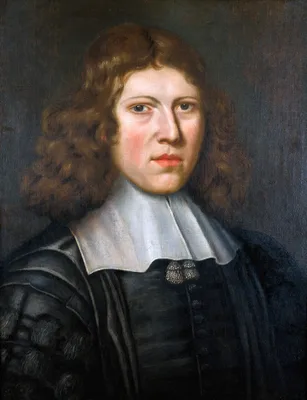
1665 –1666 LOWER, Richard (1631 – 1691)
The method observed in transfusing the blood out of one live animal into another.
In February 1665 Lower successfully transfused dogs with blood.
GMN 2012 · https://historyofmedicine.com/id/1966
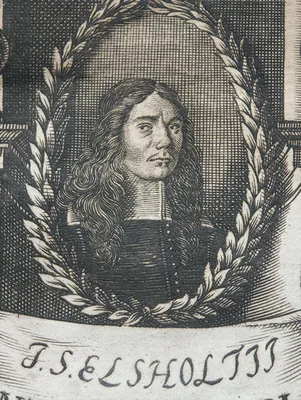
1665 ELSHOLTZ, Johann Sigmund (1623 – 1688)
Clysmatica nova; oder newe Clystier-Kunst.
Elsholtz’s book on the venous infusion of medicaments was one of the first works to deal with blood transfusion. Latin edition in 1667; English translation in 1677. Reprint of Latin 1667 edition, Hildesheim, G. Olms, …
GMN 1962 · https://historyofmedicine.com/id/3738
1667 DENIS, Jean Baptiste [DENYS] (1625 – 1704)
Lettre … touchant deux expériences de la transfusion faites sur des hommes.
The first transfusion of blood into a human was performed by Denis on June 15, 1667; he transfused lamb’s blood into a youth. For a partial translation, see Geoffrey Keynes’s Blood transfusion (Bristol, 1949) 14-15. D…
GMN 2013 · https://historyofmedicine.com/id/1971
1667 LOWER, Richard (1631 – 1691); KING, Sir Edmund (1630 – 1709)
An account of the experiment of transfusion, practised upon a man in London.
First transfusion of blood performed on a human in England, Nov. 23, 1667.
GMN 2014 · https://historyofmedicine.com/id/1979
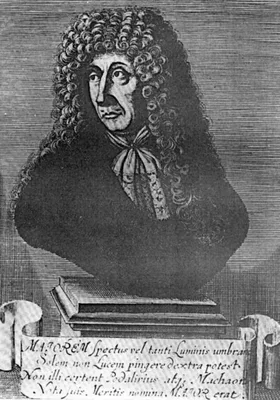
1667 MAJOR, Johann Daniel (1634 – 1693)
Chirurgia infusoria.
Major, the first Professor of Medicine at Kiel, was the first to make successful intravenous injections of drugs into the human body, in 1662. Sir Christopher Wren in 1656 had injected wine and ale into the veins of a…
GMN 1963 · https://historyofmedicine.com/id/3739
1671 BLONDEL, François (1613 – 1703)
Thermarum Aquisgranensium et porcetanarum descriptio. Congruorum quoque ac salubrium usuum balneationis et potationis elucidatio, opera.
An extenisvely illustrated work promoting the medicinal value of the sulphur springs of Aachen and Burscheid. Blondel devoted his life to the promotion of the medicinal value of these springs, becoming inspector of th…
GMN 12881 · https://historyofmedicine.com/id/15128
1679 MERCKLIN, Georg Abraham (1644 – 1702)
Tractatio med. curiosa, de ortu & occasasu transfusionis sanguins, qua haec, quae fit e bruto in brutum, a for medico penitus eliminatur; ila, quae e bruto in hominem peragitur....
The first detailed history of efforts at blood transfusion. Mercklin was one of the earliest writers to discuss the history, value, dangers, and methods of blood transfusion. He recognized and understood what we now c…
GMN 10604 · https://historyofmedicine.com/id/12797
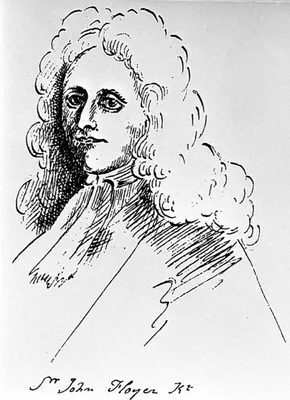
1702 FLOYER, Sir John (1649 – 1734)
The ancient ψυχρολουσια revived; or, an essay to prove cold bathing both safe and useful.
A history of cold bathing.
GMN 2029 · https://historyofmedicine.com/id/2131
1726 HENRIQUES, Francisco da Fonseca (1655 – 1731)
Aquilegio medicinal em que se dá noticia das agoas de caldas, de fontes, rios, poços, lagoas, e cisternas, do Reyno de Portugal, e dos Algarves, que ou pelas virtudes medicinaes, que tem, ou por outra alguma singularidade, são dignas de particular memoria.
The first inventory of Portuguese hot springs, fountains, rivers, wells, lakes and reservoirs reputed to have medicinal properties, including some with allegedly supernatural powers of healing. For the 337 entries, Fo…
GMN 9073 · https://historyofmedicine.com/id/11252
1737 HAHN, Johann Sigmund (1696 – 1773)
Unterricht von der wunderbare Heilkraft des frischen Wassers bei dessen innerlichem und äusserlichem Gebrauche durch die Erfahrung bestätigt.
The treatment of fevers by means of the cold pack was revived by S. Hahn and by his son J. S. Hahn; in his treatise, the latter advised the use of water in all diseases. A seventh edition of the book appeared as recen…
GMN 1987 · https://historyofmedicine.com/id/3793
1744 KRATZENSTEIN, Christian Gottlieb (1723 – 1795)
Abhandlung von dem Nutzen der Electricität in der Artzneywissenschaft.
A student of Johann Gottlob Krüger (No. 1987.2), Kratzenstein was apparently the first to publish a treatise on electrotherapy, although he may have been publishing experiments devised by Krüger. Second edition, Halle…
GMN 1987.1 · https://historyofmedicine.com/id/3802
1744 KRÜGER, Johann Gottlob (1715 – 1759)
Zuschrifft an seine Zuhörer worinnen er ihnen seine Gedancken von der Electricität mittheilet und ihnen zugleich seine künftige Lectionen bekant macht.
Along with Kratzenstein, is the one of the first two works to discuss the possible therapeutic uses of electricity. Krüger predicted that the best results would be with paralyzed limbs. See No. 1987.1. Second edition,…
GMN 1987.2 · https://historyofmedicine.com/id/3803
1748 JALLABERT, Jean (1712 – 1768)
Experiences sur l’électricité …
Discovery of stimulation of muscles by electricity, and the first proof that paralysis could be successfully treated by electricity.
GMN 1987.3 · https://historyofmedicine.com/id/3806
1754 SPENGLER, Lorenz (1720 – 1807)
Briefe welch einige Erfahrungen der electrischen Wirkungen in Krankheiten enthalten.
GMN 13065 · https://historyofmedicine.com/id/15317
1756 HALLER, Albrecht von (1708 – 1777)
Deux mémoires sur le mouvement du sang, et sur les effets de la saignée, fondés sur des experiences faites sur des animaux.
In these memoirs Haller described the results of 235 vivisections. Haller has been called "the founder of modern haemodynamics." "The myogenic theory of the heartbeat can be traced to Haller, who concluded on the basi…
GMN 11607 · https://historyofmedicine.com/id/13807
1777 –1790 STOLL, Maximilian (1742 – 1788)
Rationis medendi in nosocomio practico Vindobonensi. 7 pts.
A detailed record of Stoll’s practice year by year, between 1777 and 1790, giving numerous case histories and providing descriptions of diseases.
GMN 1964 · https://historyofmedicine.com/id/3758
1779 DEIMAN, Johan Rudolph (1734 – 1808)
Geneeskundige proeven en waarneemingen omtrent de goede uitwerking der electriciteit in verscheiden ziektens.
Digital facsimile of the Dutch edition from Google Books at this link. Translated into German by Karl Gottlob Kühn as Von den guten Würkungen der Electricität in verschiedenen Krankheiten. Mit eingien Anmerkungen und …
GMN 13066 · https://historyofmedicine.com/id/15318
1785 CARRÈRE, Joseph Barthélemy François
Catalogue raisonné des ouvrages qui ont été publiés sur les eaux minérales en général et sur celles de la France en particulier, avec un notice doutes des eaux minérales de ce royaume, et un tableau des différens degrés de température de celles qui son thermales.
The earliest bibliography of mineral springs. Digital facsimile from Google Books at this link. (Thanks to Webb Dordick for this reference.)
GMN 14118 · https://historyofmedicine.com/id/16429
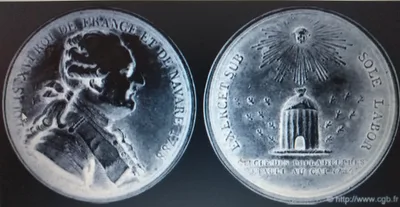
1788 ARTHAUD, Charles (1748 – 1791); CERCLE DES PHILADELPHES
Les eaux minérales et thermales de Saint-Dominique. Tome 1 (All Published).
One of the earliest medical publications printed in Haiti. Duvivier, Bibliographie générale et méthodique d'Haiti, 2, p. 206.
GMN 13366 · https://historyofmedicine.com/id/15637
1792 –1794 FRANK, Johann Peter (1745 – 1821)
De curandis hominum morbis epitome. 6 vols.
GMN 1965 · https://historyofmedicine.com/id/3743
1794 ASCLEPIADES OF BITHYNIA (ἈΣΚΛΗΠΙΆΔΗΣ) (-124 – -40); GUMPERT, Christian Gottlieb (1772 – 1832)
Aesclapiadis Bithyni fragmenta. Digessit et curavit Christianus Gottlieb Gumpert. Praefatus est Christian. Gothfridus Gruner.
After the fall of Corinth (146 BCE), Greek physicians migrated to Rome. There, before the advent of Asclepiades, Greek physicians were despised and distrusted. Asclepiades may be said to have established Greek medicin…
GMN 19 · https://historyofmedicine.com/id/4656
1794 NONNUS, Theophanes [Nonnos; Theophanes Chrysobalantes or Chrysobalantites ( Θεοφάνης Χρυσοβαλάντης or Χρυσοβαλαντίτης)] ( – 975); BERNARD, Johann Stephan (1718 – 1793)
Theophanis Nonni Epitome de cvratione morborvm graece ac latine: Ope codicvm manvscriptorvm recensvit notasqve adiecit I. O. Steph. Bernard. 2 vols.
Reprints text and translation from Martius's 1568 edition with extensive annotations by Bernard, and divergent manuscript readings based on the study of several codices. For an analysis of this Byzantine medical handb…
GMN 11830 · https://historyofmedicine.com/id/14032
1797 CURRIE, James (1756 – 1805)
Medical reports, on the effects of water, cold and warm, as a remedy in fever and febrile diseases.
Currie was among the first in Britain to use cold water packs in the treatment of fever. He made some original observations on the clinical use of the thermometer. It was Currie who first edited Robert Burns’s Collect…
GMN 1988 · https://historyofmedicine.com/id/3810
1798 PERKINS, Benjamin Douglas (1774 – 1810)
The influence of metallic tractors on the human body, in removing various painful inflammatory diseases, such as rheumatism, pleurisy, some gouty affections, &c. &c: Lately discovered by Dr. Perkins, of North America; and demonstrated in a series of experiments and observations....by which the importance of the discovery is fully ascertained, and a new field of enquiry opened in the modern science of Galvanism, or animal electricity
In 1795 Dr. Elisha Perkins (1741-1799) of Connecticut introduced the use of “Metallic Tractors” for the treatment of a wide range of disorders, including pains in the head, face, teeth, breast, side, stomach, back, rh…
GMN 8654 · https://historyofmedicine.com/id/10831
1798 HORN, George
An entire new treatise on leeches, wherein the nature, properties, and use of that most singular and valuable reptile, is most clearly set forth.
Digital facsimiel from WellcomeLibrary.org at this link.
GMN 11796 · https://historyofmedicine.com/id/13998
1801 GRAPENGIESSER, Carl Johann Christian (1764 – 1846)
Versuche des Galvanismus zur Heilung einiger Krankheiten.
Grapengiesser was the first physician to use Volta’s “pile”, the first battery, which Volta first described in print in 1800. Grapengiesser “noted that in paralyzed muscle excitability could be so poor that 150 elemen…
GMN 1988.1 · https://historyofmedicine.com/id/3813
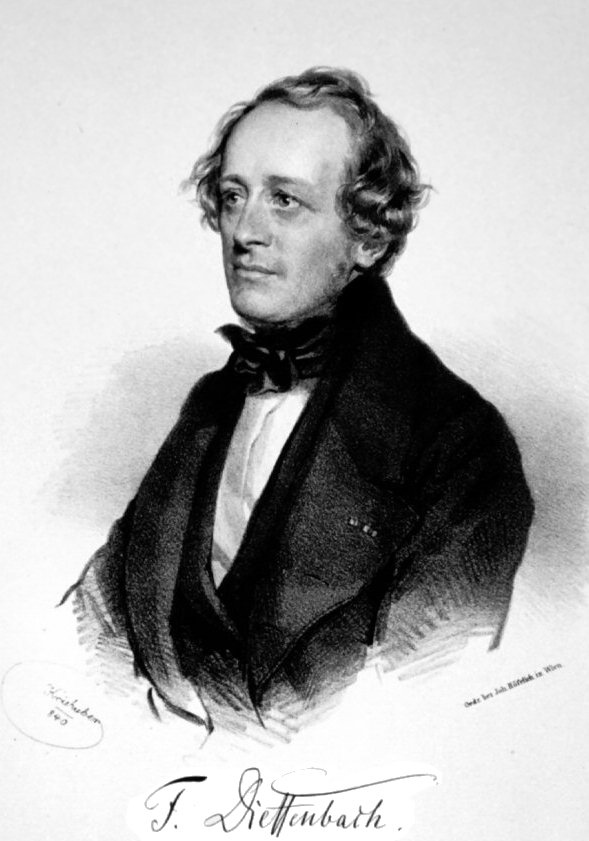
1802 –1803 SCHEEL, Paul (1773 – 1811); DIEFFENBACH, Johann Friedrich (1792 – 1847)
Die Transfusion des Blutes und Einspriitzung der Arzneyen in die Adem. Historisch und in Rücksicht auf die practische Heilkunde bearbeitet. 2 vols.
Schell was the author of the first 2 vols, which were the first major work on transfusion since the 17th century and an excellent early history of the subject. Scheel reviewed both transfusion and intravenous injectio…
GMN 2028.4 · https://historyofmedicine.com/id/2065
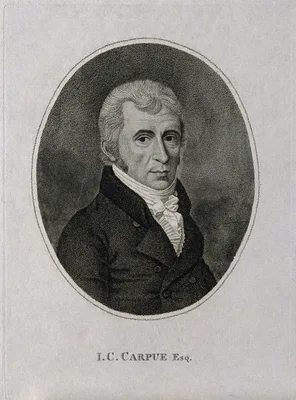
1803 CARPUE, Joseph Constantine (1764 – 1846)
An introduction to electricity and galvanism.
One of the first works in the English language entirely devoted to medical electricity. Carpue also played a key role in the development of rhinoplasty. See No. 5737.
GMN 1989 · https://historyofmedicine.com/id/3815
1809 VITET, Louis (1736 – 1809)
Traité de la sangsue médicinale.
A 585-page treatise on this later-debunked therapy published around the time of its greatest vogue. Digital facsimile from Google Books at this link.
GMN 11717 · https://historyofmedicine.com/id/13918

![DIOSCORIDES, Pedanius [Πεδάνιος Διοσκουρίδης] (40 – 90)](/media/portraits/2028)
![GALEN, [Κλαύδιος Γαληνός; Galen of Pergamon] (129 – 216)](/media/portraits/21)