1603
True bill of the vvhole number that hath died at London.
BILL OF MORTALITY
The collection, recording, and publishing of medical statistics in the form of Bills of Mortality began in England as a result of the epidemic of plague in 1592-93. The earliest surviving copy of the Bills of Mortalit…
GMN 6821 · https://historyofmedicine.com/id/8984
1662 GRAUNT, John (1620 – 1674)
Natural and political observations mentioned in a following index, and made upon the Bills of Mortality.
The first book on vital statistics. Graunt, a draper, studied the Bills of Mortality, which began as weekly lists of deaths and their causes, compiled by parish clerks. They gained much in importance after Graunt’s wo…
GMN 1686 · https://historyofmedicine.com/id/2399
1665
London’s dreadful visitation, or, a collection of all the Bills of Mortality for the present year: beginning the 27th of December 1664, and ending the 19th of December following…By the Company of Parish Clerks of London.
BILLS OF MORTALITY
This is a valuable statistical record of the great plague of 1665. (No. 6052 in the Bibliotheca Osleriana.)
GMN 5119 · https://historyofmedicine.com/id/8855
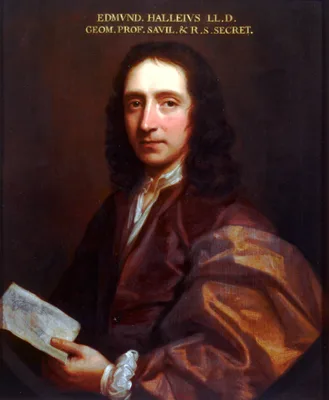
1693 HALLEY, Edmond (1656 – 1742)
An estimate of the degrees of mortality of mankind, drawn from curious tables of the births and funerals at the city of Breslaw, with an attempt to ascertain the price of annuities upon lives.
Halley, the astronomer, compiled the “Breslau tables” to show “the proportion of men able to bear arms … to estimate mortality rates, to ascertain the price of annuities upon lives, and was thus the virtual founder of…
GMN 1687 · https://historyofmedicine.com/id/2402
1699 PETTY, Sir William (1623 – 1687)
Several essays in political arithmetic.
A pioneer statistician, Petty took the first census of Ireland. He was Professor of Anatomy at Oxford and later Graham Professor of Music. SeeNo. 1686.
GMN 1688 · https://historyofmedicine.com/id/2404
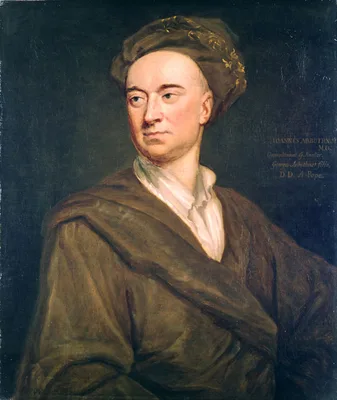
1710 ARBUTHNOT, John (1667 – 1735)
An argument for Divine Providence, taken from the constant regularity observed in the births of both sexes.
"Arbuthnot examined birth records in London for each of the 82 years from 1629 to 1710 and the human sex ratio at birth: in every year, the number of males born in London exceeded the number of females. If the probabi…
GMN 12498 · https://historyofmedicine.com/id/14731
1723 JURIN, James (1684 – 1750)
A letter … containing, a comparison between the mortality of the natural small pox, and that given by inoculation.
Jurin was an enthusiastic supporter of inoculation against smallpox, and proved statistically that the fatality of inoculated smallpox is very much less than the fatality of natural smallpox. This is one of the earlie…
GMN 1689 · https://historyofmedicine.com/id/2406
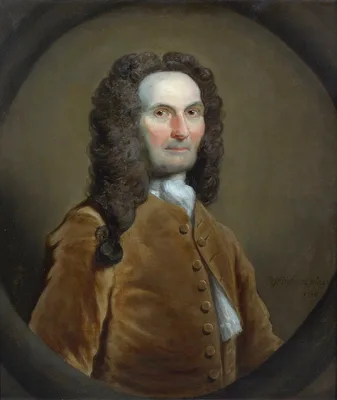
1725 MOIVRE, Abraham de (1667 – 1754)
Annuities upon lives; or, the valuation of annuities upon any number of lives; as also, of reversions. To which is added, an appendix concerning the expectations of life and probabilities of survivorship.
De Moivre, French Huguenot mathematician and demographer, formulated the hypothesis that among a body of persons over a certain age the successive annual decreases by death are nearly equal.
GMN 1690 · https://historyofmedicine.com/id/2410
1731 CLIFTON, Francis ( – 1836)
Tabular observations recommended as the plainest and surest way of practising and improving physick. In a letter to a friend.
Clifton argued that physicians should base their judgments about the effects of treatments on a sufficient number of their own observations, or trusted observations by other physicians, rather than on the correlation …
GMN 9461 · https://historyofmedicine.com/id/11644
1732 CLIFTON, Francis ( – 1836)
The state of physick, ancient and modern, briefly considered: with a plan for the improvement of it.
Instead of assessing the efficacy of therapies by their correlation with theories, Clifton argued that physicians should base their judgments about the effects of treatments on a sufficient number of their own observa…
GMN 9460 · https://historyofmedicine.com/id/11643
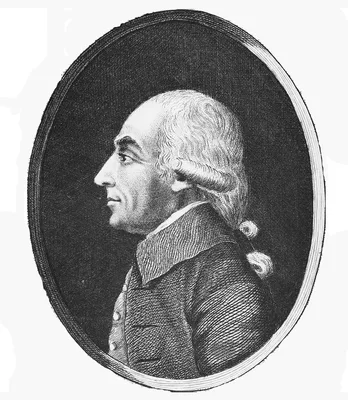
1742 SÜSSMILCH, Johann Peter (1707 – 1767)
Die göttliche Ordnung in denen Veränderungen des menschlichen Geschlechts.
Süssmilch, a German army chaplain, produced an important book on vital statistics, the title of which translates as The divine order in the circumstances of the human sex, birth, death and reproduction. Among other th…
GMN 1691 · https://historyofmedicine.com/id/2411
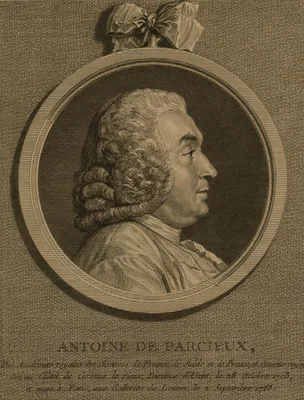
1746 DEPARCIEUX, Antoine (1703 – 1768)
Essai sur les probabilitiés de la durée de la vie humaine: d’où l’on déduit la manière de déterminer les rentes viagères, tant simples qu’en tontines.
Deparcieux was the first to construct correct life tables. Appendix in 1760. Digital facsimile from Google Books at this link.
GMN 1691.1 · https://historyofmedicine.com/id/2413
1750 SHORT, Thomas (1690 – 1772)
New observations, natural, moral, civil, political, and medical, on city, town, and country bills of mortality.
Original and suggestive work on vital statistics, showing vividly the changing conditions of life as he saw it (Greenwood).
GMN 1692 · https://historyofmedicine.com/id/2417
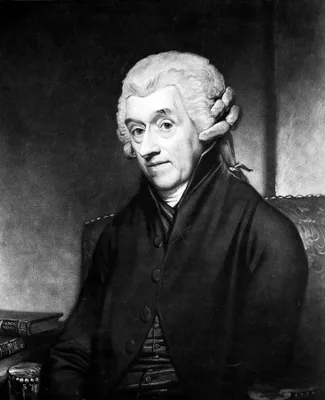
1759 HEBERDEN, William Sr. (1710 – 1801); PETTY, Sir William (1623 – 1687); MORRIS, Corbyn (1710 – 1779); POSTLETHWAYT, James ( – 1761)
A collection of the yearly bills of mortality, from 1657 to 1758 inclusive. Together with several other bills of an earlier date. To which are subjoined I. Natural and political observations on the bills of mortality; by Capt. John Graunt, F.R.S. reprinted from the sixth edition, in 1676. II. Another essay in political arithmetic, concerning the growth of city of London; with the measures, periods, causes, and consequences thereof. By Sir William Petty, Kt. F.R.S. reprinted from the edition printed at London in 1683. III. Observations on the past growth and present state of the city of London; reprinted from the edition printed at London in 175.1; with a continuation of the tables to the end of the year 1756
The only collected edition of early bills of mortality, which were generally published as broadsides and are not available separately. Includes reprints of Nos. 1686 and 1688. This work has traditionally been attribut…
GMN 1692.1 · https://historyofmedicine.com/id/2421
1761 –1762 SÜSSMILCH, Johann Peter (1707 – 1767)
Die gottliche Ordnung in den Veranderungen des menschlichen Geschlechts, aus der Geburt, dem Tode und der Fortpflanzung desselben erwiesen. Zwote und ganz umgearbeitete Ausgabe. 2 vols.
Twenty years after publication of the first edition (No. 1691), Süssmilch published a second edition "that was so different from the earlier book that it may well be called a separate work. While maintaining his origi…
GMN 11816 · https://historyofmedicine.com/id/14018
1767 SHORT, Thomas (1690 – 1772)
A comparative history of the increase and decrease of mankind in England, and several countries abroad, according to the different soils, situations, business of life, use of the non-naturals, &c. faithfully collected from, and attested by, above three hundred vouchers, and many of them for a long course of years, in two different Periods. To which is added a syllabus of the general States of health, air, seasons, and food for the last three hundred years; and also a meteorological discourse.
Digital facsimile from Google Books at this link.
GMN 13557 · https://historyofmedicine.com/id/15834
1786 DAIGNAN, Guillaume (1732 – 1812)
Tableau des variétés de la vie humaine. 2 vols.
Massive and early study of puberty among Europeans, with comparative data including mortality tables. Daignan was especially interested in the plight of urban youth. He concluded his work with tables of life expectanc…
GMN 7806 · https://historyofmedicine.com/id/9978
1789 BLACK, William (1749 – 1829)
An arithmetical and medical analysis of the diseases and mortality of the human species.
Black analyzed the London bills of mortality from 1701-1776. His work was the only study to provide a numerical account of insanity, a disease on people's minds because of George III's illness.
GMN 8371 · https://historyofmedicine.com/id/10548
1791 UNITED STATES
Return of the whole number of persons with the several districts of the United States, according to "An Act Providing for the Enumeration of the Inhabitants of the United States," passed March the first, one thousand seven hundred and ninety-one.
The first Census of the United States was conducted on August 2, 1790. The results were used to allocate Congressional seats (congressional apportionment), electoral votes, and funding for government programs.The fede…
GMN 8580 · https://historyofmedicine.com/id/10757
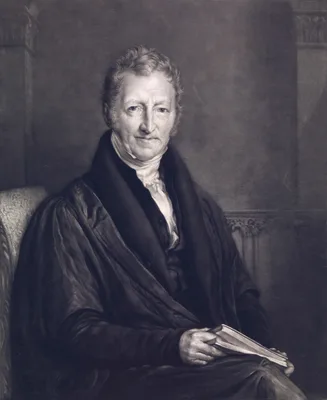
1798 MALTHUS, Thomas Robert (1766 – 1834)
An essay on the principle of population, as it affects the future improvement of society.
Malthus laid down the principle that populations increase in geometrical ratio, but that subsistence increases only in arithmetical ratio. He argued that a stage is reached where increase of populations must be limite…
GMN 1693 · https://historyofmedicine.com/id/8809
1801 PLAYFAIR, William (1759 – 1823)
The statistical breviary; shewing, on a principle entirely new, the resources of every state and kingdom in Europe; illustrated with stained copperplate charts, representing the physical powers of each distinct nation with ease and perspicuity. To which is added, a similar exhibition of the ruling powers of Hindoostan.
In this work Playfair invented the pie chart. It has also been suggested that Playfair, often short of funds, may have colored the charts in all the copies himself—the process he characterized as "staining" in the tit…
GMN 8148 · https://historyofmedicine.com/id/10324
1801 HEBERDEN, William Jr. (1767 – 1845)
Observations on the increase and decrease of different disease, and particularly of the plague.
Heberden observed that the number of deaths from dysentery sharply decreased over the 18th century, but that deaths attributed to apoplexy increased. Digital facsimile from the Internet Archive at this link.
GMN 8372 · https://historyofmedicine.com/id/10549
1801 –1802 RICKMAN, John (1771 – 1840)
Abstract of the answers and returns made pursuant to an act, passed in the forty-first year of His Majesty King George III. Intituled, “An act for taking an account of the population of Great Britain, and the increase or diminution thereof.” 2 vols. in 3.
The first census of England, Scotland and Wales. The study of population was one of the major concerns of political economy at this time and the first census came at a crucial point in the debate. When Malthus publish…
GMN 8579 · https://historyofmedicine.com/id/10756
1802 KING, Gregory (1648 – 1712); CHALMERS, George (1742 – 1825)
Natural and political observations and conclusions upon the state and condition of England, 1696. Pages 405-449 in An estimate of the comparative strength of Great-Britain; and of the losses of her trade from every war since the revolution; with an introduction of previous history. A new edition, corrected and continued to 1801. To which is now annexed Gregory King's celebrated state of England.
King has been called the first great economic statistician, surpassing Petty. King was an engraver, herald, surveyor, and Secretary to the Commissioners for the Public Accounts, but he is best known for his 1696 estim…
GMN 1694 · https://historyofmedicine.com/id/2438
1806 DUVILLARD, Emmanuel Etienne (1755 – 1832)
Analyse et tableaux de l’influence de la petite vérole sur la mortalité à chaque âge, et de celle qu’un préservatif tel que la vaccine peut avoir sur la population et la longevité.
Duvillard showed statistically the effect of smallpox vaccination on the mortality rate. Digital facsimile from Google Books at this link.
GMN 1695 · https://historyofmedicine.com/id/2441
1813 WATT, Robert (1774 – 1819)
Treatise on the history, nature, and treatment of chincough: Including a variety of cases and dissections. To which is subjoined an inquiry into the relative mortality of the principal diseases of children, and the numbers who have died under ten years of age, in Glasgow, during the last thirty years.
Probably the second book on whooping cough, written after two of Watt's children died from the disease. After vaccination for smallpox was introduced, Watt found, as he had expected, that the number of deaths from tha…
GMN 5086.1 · https://historyofmedicine.com/id/5963
1819 BATEMAN, Thomas (1778 – 1821)
Reports on the diseases of London, and the state of the weather, from 1804-1816; including practical remarks on the causes and treatment of the former; and preceded by a historical view of the state of health and disease in the metropolis in past times.
GMN 10065 · https://historyofmedicine.com/id/12254
1822 PLACE, Francis (1771 – 1854)
Illustrations and proofs of the principle of population including an examination of the proposed remedies of Mr. Malthus, and a reply to the objections of Mr. Godwin and others.
Place was the first important proponent of birth control in any English speaking country. The above work openly advocates contraception, though without indicating how it was to be achieved. Reprinted with additional m…
GMN 1696.1 · https://historyofmedicine.com/id/2447
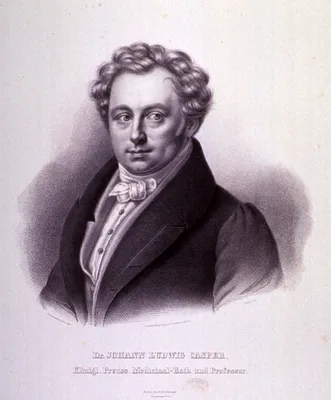
1825 –1835 CASPER, Johann Ludwig (1796 – 1864)
Beiträge zur medizinischen Statistik un Staatsarzneikunde. 2 vols.
GMN 1696 · https://historyofmedicine.com/id/2444
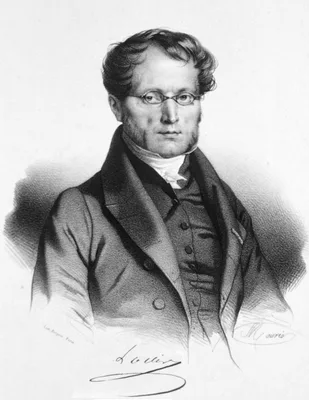
1825 LOUIS, Pierre Charles Alexandre (1787 – 1872)
Recherches anatomico-pathologiques sur la phthisis.
Louis’ researches were based on 358 dissections and 1,960 clinical cases, and included a numerical study of extra-pulmonary lesions. First edition in English, London, 1835. English translation, Boston, 1836. A transla…
GMN 3221 · https://historyofmedicine.com/id/5008
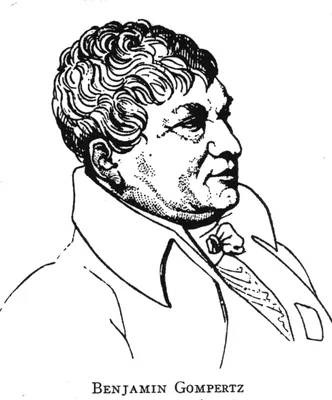
1825 GOMPERTZ, Benjamin (1779 – 1865)
On the nature of the function expressive of the law of human mortality, and on a new mode of determining the value of life contingencies.
Gompertz function. "Gompertz showed that over much of the adult human lifespan, age-specific mortality rates increased in an exponential manner. Gompertz's work played an important role in shaping the emerging statist…
GMN 8375 · https://historyofmedicine.com/id/10552
1829 HAWKINS, Francis Bisset (1796 – 1894)
Elements of medical statistics.
First English book devoted specifically to medical statistics. Hawkins was instrumental in obtaining the insertion of a column for the names of diseases or other causes of death, in connexion with the first Act for th…
GMN 1697 · https://historyofmedicine.com/id/2450
1834 CHÂTEAUNEUF, Louis-François Benoiston de (1776 – 1856)
Rapport sur la marche et les effets du choléra-morbus dans Paris et les communes rurales du département de la Seine par la commission nommée, avec l'approbation de M. le ministre du commerce et des travaux publics, par MM. les préfets de la Seine et de police; année 1832.
This work contained one of the earliest applications of spatial analysis in epidemiology—an early thematic map by geographer and cartographer Charles Picquet, in which the 48 districts of Paris were represented by gra…
GMN 7480 · https://historyofmedicine.com/id/9652
1835 LOUIS, Pierre Charles Alexandre (1787 – 1872)
Recherches sur les effets de la saignée dans quelques maladies inflammatoires, et sur l’action de l’émétique et des vésicatoires dans la pneumonie.
Louis refuted Broussais’s system of medicine, his “médicine physiologique.” Louis was instrumental in establishing medicine as an exact science by the introduction of the numerical or statistical method. English trans…
GMN 1698 · https://historyofmedicine.com/id/2455
1835 QUETELET, Lambert Adolphe Jacques (1796 – 1874)
Sur l’homme et le développement des facultés, ou essai de physique sociale. 2 vols.
Quetelet’s statistical researches on the development of the physical and intellectual qualities of man, and an exposition of his concept of the “average man”, which became the by-word of quantitative studies. "Quétele…
GMN 1698.1 · https://historyofmedicine.com/id/2457
1837 MCCULLOCH, John Ramsay (1789 – 1864)
A descriptive and statistical account of the British Empire, exhibiting its extent, physical capacities, population, industry and civil and religious institutions. 2 vols.
McCulloch indicated on the title page that he was "assisted by numerous contributors." Digital facsimile from the Hathi Trust at this link. Fourth edition, revised with an appendix of tables (2 vols., 1854). Digital f…
GMN 9651 · https://historyofmedicine.com/id/11838
1837 TERME, Jean-François (1791 – 1847); MONFALCON, Jean-Baptiste (1792 – 1874)
Histoire statistique et morale des enfants trouvés.
A thorough analysis of the problem of foundling children from a social, medical, legal and historical standpoint. The work begins with a history of the treatment of abandoned children from antiquity to the time of wri…
GMN 11813 · https://historyofmedicine.com/id/14015
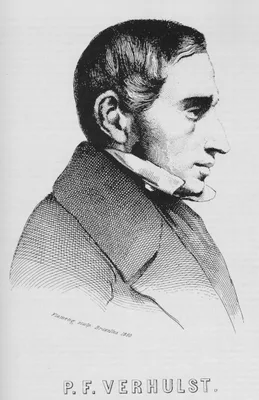
1838 VERHULST, Pierre François (1804 – 1849)
Notice sur la loi que la population suit dans son accroissement.
Verhulst constructed the simplest mathematical model of a continously growing population with an upper limit to its size.
GMN 145.57 · https://historyofmedicine.com/id/2473
1839 FARR, William (1807 – 1883); MCCULLOCH, John Ramsay (1789 – 1864)
Vital statistics. IN: A statistical account of the British Empire: exhibiting its extent, physical capacities, population, industries, and civil and religious institutions by J[ohn] R[amsey] McCulloch, 2nd ed., 2, 52-90.
Ranks with Graunt’s Observations as an original contribution to medical statistics. Significantly expanded from the first edition (1837). Digital facsimile from Google Books at this link.
GMN 1699 · https://historyofmedicine.com/id/2475
1839 FARR, William (1807 – 1883)
First annual report of the Registrar-General on births, deaths, and marriages in England.
In 1836 the Births and Deaths Registration Act was passed in England with provisions for inquiry into causes of death in the population, and registration began during the following year through the General Registratio…
GMN 12127 · https://historyofmedicine.com/id/14336
1840 –1856 LAWSON, Thomas (1789 – 1861); COOLIDGE, Richard Henry (1816 – 1866)
Statistical report on the sickness and mortality in the Army of the United States. Vol. 1 (1819-1839), Vol. 2 (1839-1855), Vol. 3 (1855-1860).
UNITED STATES. War Dept. Surgeon General's Office
Vol.1 by Thomas Lawson; Vols 2 & 3 by Richard H. Coolidge. Digital facsimiles from the Internet Archive at this link.
GMN 2163.1 · https://historyofmedicine.com/id/1025
1840 GAVARRET, Louis Denis Jules (1809 – 1890)
Principes généraux de statistique médicale.
In his work on medical statistics Gavarret improved and systematized the method of Louis and gave special consideration to therapeutic problems.
GMN 1700 · https://historyofmedicine.com/id/2480
1842 CHADWICK, Sir Edwin (1800 – 1890)
Report…from the Poor Law Commissioners on an inquiry into the sanitary conditions of the labouring population of Great Britain.
Chadwick devoted his life to social reform. He was secretary to the Poor Law Commission when he made the above report to Parliament. In it he included a careful analysis of causes of death in 1838 and 1839 and gave a …
GMN 1608 · https://historyofmedicine.com/id/1890
1845 VERHULST, Pierre François (1804 – 1849)
Recherches mathématiques sur la loi d’accroissement de la population.
In his second paper on population growth Verhulst introduced the term, logistic. He modified his equation so its early part is exponential and becomes logistic only after a definite length of time. Verhulst published …
GMN 145.58 · https://historyofmedicine.com/id/2477
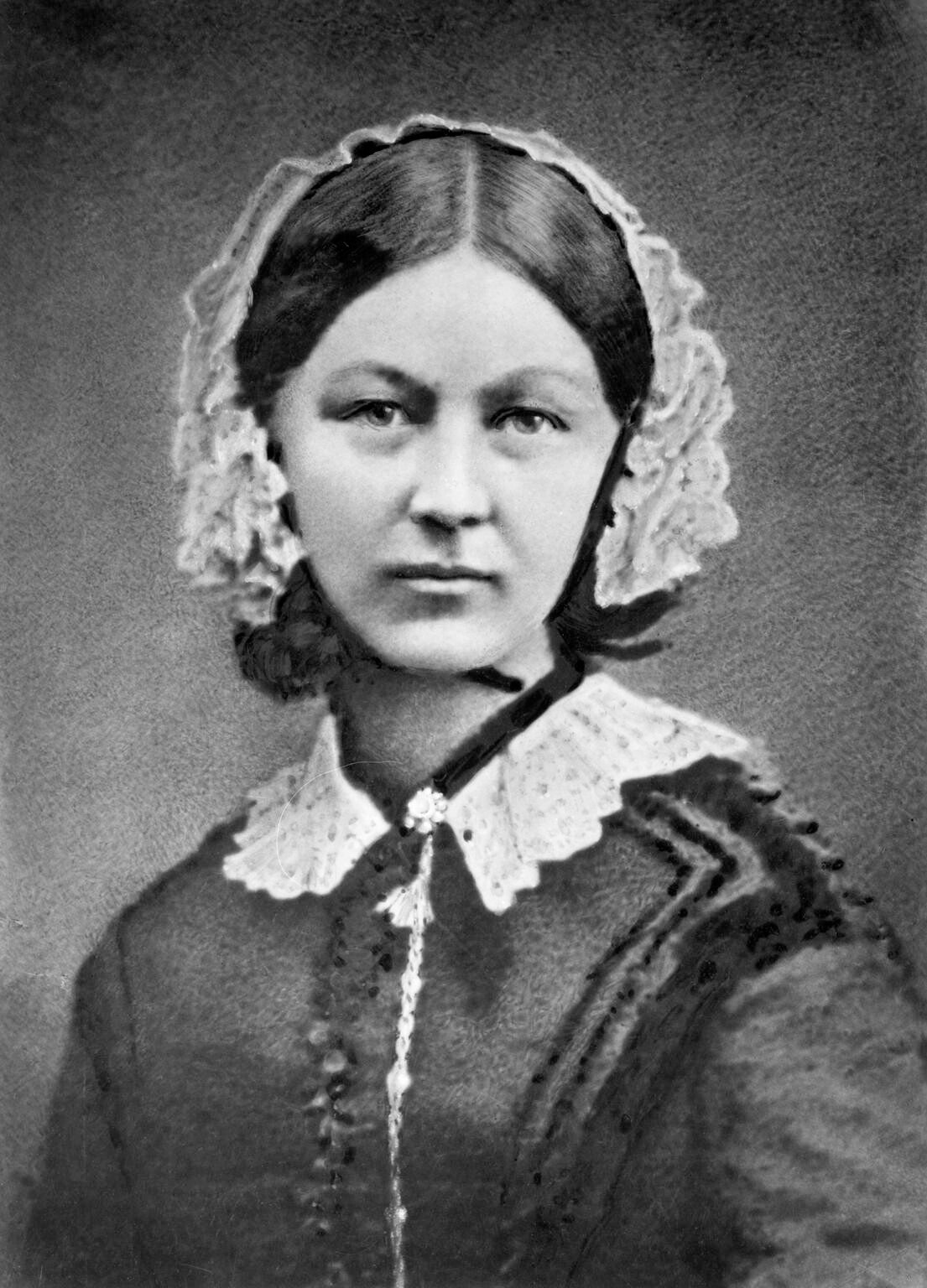
1858 NIGHTINGALE, Florence (1820 – 1910)
Notes on matters affecting the health, efficiency, and hospital administration of the British Army. Founded chiefly on the experience of the late war. Presented by request to the Secretary of State for War.
This privately printed pamphlet contained a color statistical graphic entitled "Diagram of the causes of mortality in the Army of the East" which showed that epidemic disease, which was responsible for more British de…
GMN 7481 · https://historyofmedicine.com/id/9653
1859 FARR, William (1807 – 1883)
On the construction of life-tables, illustrated by a new life-table of the healthy districts of England.
Preliminary report, describing the use of the Scheutz Engine no. 3, a Babbage-style difference engine, to prepare life tables. The report's table B1, "Life-Table of Healthy English Districts," printed from stereotype …
GMN 7388 · https://historyofmedicine.com/id/9560
1860 MAKEHAM, William Matthews (1826 – 1891)
On the law of mortality and the construction of annuity tables.
Gompertz-Makeham law. Makeham proposed the age-independent Makeham term that, together with the exponentially age-dependent Gompertz term, compose the Gompertz-Makeham law of mortality--one of the most effective theor…
GMN 8376 · https://historyofmedicine.com/id/10553
1864 FARR, William (1807 – 1883)
English life table. Tables of lifetimes, annuities, and premiums.
First extensive application of a mechanical computer to medical statistics. The appendix details the use of the Scheutz version of Charles Babbage’s calculating machine in the construction of English Life Table No. 3.…
GMN 1700.1 · https://historyofmedicine.com/id/2484
1870 QUETELET, Lambert Adolphe Jacques (1796 – 1874)
Anthropométrie, ou mesure des différentes facultés de l’homme.
In his classification of various populations, Quetelet adopted the plan of determining the standard or typical “mean man” as a basis, using stature, weight, or complexion, etc., as a measure in each particular race or…
GMN 171 · https://historyofmedicine.com/id/3258
1873 KÖRÖSI, József von (1844 – 1906)
Plan einer Mortalitäts-Statistik für Grossstädte.
The modern methods of interpreting vital statistics of large cities were devised by von Körösi.
GMN 1701 · https://historyofmedicine.com/id/2487