1550 ANONYMOUS
Ordnung eines erbarn Raths der Statt Regenspurg, die Hebammen betreffende.
The earliest public document in the vernacular containing legislation governing midwives. Digital facsimile from Google Books at this link.
GMN 6142 · https://historyofmedicine.com/id/7686
1573 LONITZER, Adam (Lonicer) (1528 – 1586)
Reformation oder Ordnung für die Hebammen.
Legislation governing the practice of midwifery was introduced in the city of Frankfurt in 1573, Digital facsimile from the Bayerische Staatsbibliothek at this link.
GMN 6143 · https://historyofmedicine.com/id/7689
1580 BARBER-SURGEONS
Les statutz et ordonnances royalles faictes par les roys de France, sur l'estat de barbier-chirurgien part tout le royaume de France, et confirmé par le roy Henry III de ce nom, roy de France et de Pologne [Mai 1575-13 août 1578].
The first regulations for barber surgeons published in France. https://catalogue.bnf.fr/ark:/12148/cb338125216
GMN 13731 · https://historyofmedicine.com/id/16015
1725 LOEW VON ERLSFELD, Johann Franz Ritter [Johann Franz Löw] (1648 – 1925)
Theatrum medico-juridicum, continens varias easque maxime notabiles tam ad tribunalia ecclesiastico-civilia, quam ad medicinam forensem, pertinentes materias. Ex diversis optimorum authorum ... voluminibus excerptum .... Opus jctis, physicis, practicis, studiosis, chirurgis, aliisque utile et necessarium.
Digital facsimile from Google Books at this link.
GMN 11387 · https://historyofmedicine.com/id/13586
1767 CUNNINGHAM, Timothy ( – 1789)
The law of physicians, surgeons, and apothecaries: Containing all the statutes, cases at large, arguments, resolutions, and judgments concerning them. Compiled, by desire of a great personage, for the use of such gentlemen of the faculty as are enemies to quackery, in order to point out the defects in the law, as it now Stands, relative to those professions, and To propose such expedients for remedying them as they shall think necessary, before the next session of parliament, when it is intended to apply for an act for regulating the practice of physick, and suppressing empirical nostrums.
Digital facsimile from Google Books at this link.
GMN 13081 · https://historyofmedicine.com/id/15333
1809 COURTIN, Charles (1777 – 1855)
Recueil général des lois, réglemens, décisions et circulaires sur le service des hôpitaux militaires. 2 vols.
On the organization and administration of French military hospitals during the Napoleonic era, and probably the most comprehensive account published up to this time on the administration of military hospitals in gener…
GMN 10267 · https://historyofmedicine.com/id/12458
1825 LOWELL, Charles (1793 – 1858)
Report of the trial of an action: Charles Lowell against John Faxon and Micajah Hawks, doctors of medicine, defendants, for malpractice in the capacity of physicians and surgeons: At the Supreme Judicial Court of Maine, holden at Machias for the county of Washington, June term, 1824, before the Hon. Nathan Weston, Jun., justice of the court.
A detailed narrative on the trial based on the transcript. Digital facsimile from the U.S. National Library of Medicine at this link.
GMN 11730 · https://historyofmedicine.com/id/13931
1826 WARREN, John Collins (1778 – 1856)
A letter to the Hon. Isaac Parker, chief justice of the Supreme court of the state of Massachusetts, containing remarks on the dislocation of the hip joint, occasioned by the publication of a trial which took place at Machias, in the state of Maine, June, 1824. By John C. Warren. With an appendix of documents from the trial necessary to illustrate the history of the case.
This work, illustrated with 5 plates, contains several clear and minute descriptions of dislocation of the hip joint. In the course of the monograph Warrenproved the possibility of a type of dislocation that was denie…
GMN 11728 · https://historyofmedicine.com/id/13929
1828 GREAT BRITAIN. PARLIAMENT
Report from the select committee on anatomy. House of Commons, 22 July 1828.
In the first half of 1828, in response to increasing calls for reform, the British Parliament appointed a committee to "enquire into the manner of obtaining subjects for dissection by schools of Anatomy and the State …
GMN 7096 · https://historyofmedicine.com/id/9263
1829 WARREN, John Collins (1778 – 1856); MASSACHUSETTS MEDICAL SOCIETY
Address to the community, on the necessity of legalizing the study of anatomy
The petition to the Massachusetts legislature to legalize "the procuring of subjects for anatomical dissections" (from George Hayward's printed notice on the verso of the title page). Nine members of the Massachusetts…
GMN 11760 · https://historyofmedicine.com/id/13961
1831 ROYAL COLLEGE OF SURGEONS OF ENGLAND
Anatomy. Copy of a letter from the council of the Royal College of Surgeons in London, to Viscount Melbourne.
On December 5, 1831, the notorious London "resurrection men" John Bishop and Thomas Williams were executed for the murder of an itinerant fourteen-year-old (known only as the "Italian Boy"), whose corpse they had then…
GMN 9995 · https://historyofmedicine.com/id/12184
1831 MASSACHUSETTS. GENERAL COURT. HOUSE OF REPRESENTATIVES
Report of the Select Committee of the House of Representatives ... legalizing the study of anatomy.
This was the first law passed in the United States consigning the bodies of those who died in workhouses, hospitals, and similar institutions, the bodies of whom were "unclaimed," to medical schools for dissection. "S…
GMN 11759 · https://historyofmedicine.com/id/13960
1832 NATIONAL POLITICAL UNION
Anatomy. Proceedings at the National Political Union, respecting legislative interference in the study of anatomy, and the supply of bodies for anatomical research.
Digital facsimile from the Internet Archive at this link.
GMN 9993 · https://historyofmedicine.com/id/12182
1832 TREBUCHET, Adolphe (1801 – 1865)
Code administratif des établissemens dangereux, insalubres ou incommodes.
Trebuchet's work sets out the rules and regulations governing dangerous and unhealthy work environments (particularly those involving steam engines) and public nuisances. Pages 281-301 contain a table of businesses cl…
GMN 10393 · https://historyofmedicine.com/id/12586
1834 TREBUCHET, Adolphe (1801 – 1865)
Jurisprudence de la médecine, de la chirurgie, et de la pharmacie en France, comprenant la médecine légale, la police médicale, la responsabilitié des médecins, chirurgiens, pharmaciens, etc, l'exposé et la discussion des lois, ordonnances, réglemens et instructions concernant l'art de guérir, appuyé des jugemens des cours et des tribunaux.
Digital facsimile from Google Books at this link.
GMN 10394 · https://historyofmedicine.com/id/12587
1844 HALMAGRAND, Charles-Nicolas (1803 – 1892)
Considérations médico-légales sur l'avortement suivies de quelques réflexions sur la liberté de l'enseignement médical à propos d'un procès en cour d'assises, mémoire adressé a l'Académie Royale de Médecine de Paris.
Digital facsimile from BnF Gallica at this link.
GMN 13608 · https://historyofmedicine.com/id/15888
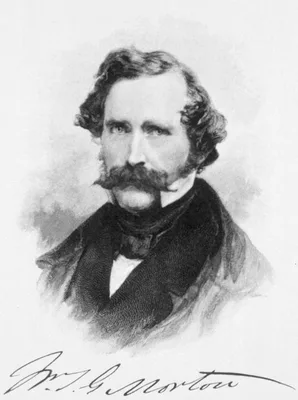
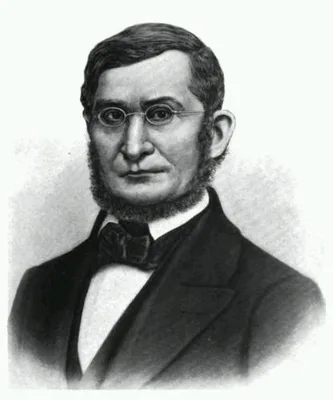
1846 MORTON, William Thomas Green (1819 – 1868); JACKSON, Charles Thomas (1805 – 1880)
U. S. Patent No. 4848. The United States of America. To all to whom these Letters Patent shall come.... November 12, 1846.
U.S. Patent No. 4848, issued to Charles T. Jackson and William T. G. Morton on November 12, 1846 for the discovery of sulfuric ether as a surgical anesthetic. This was the first truly significant medical patent ever i…
GMN 7310 · https://historyofmedicine.com/id/9480
1847 JACKSON, Charles Thomas (1805 – 1880)
Première Lettre. Boston, le 13 november 1846.
Jackson, a physician, geologist and chemist in Boston, wrote this letter to Élie de Beaumont in Paris on November 13, 1846, the day after he and William T. G. Morton jointly received U.S. Patent No. 4848 for Improveme…
GMN 7249 · https://historyofmedicine.com/id/9418
1860 ELWELL, John Johnson (1820 – 1900)
A medico-legal treatise on malpractice and medical evidence, comprising the elements of medical jurisprudence.
The first treatise on malpractice published in the United States and the first book to provide observations on the physician as an expert witness in malpractice cases. Digital facsimile from wellcomecollection.org at …
GMN 14204 · https://historyofmedicine.com/id/16520
1870 CHEEVERS, Norman (1818 – 1886)
A manual of medical jurisprudence for India, including the outline of a history of crime against the person in India.
Digital facsimile from the Internet Archive at this link.
GMN 11623 · https://historyofmedicine.com/id/13823
1877 BOWDITCH, Henry Ingersoll (1808 – 1892); PICKERING, Henry Goddard (1848 – 1926)
Public hygiene in America: Being the centennial discourse delivered before the International Medical Congress, Philadelphia, September, 1876 by Henry I. Bowditch. With extracts from correspondence from the various states. Together with a digest of American sanitary law by Henry G. Pickering.
Digital facsimile from the Internet Archive at this link.
GMN 9160 · https://historyofmedicine.com/id/11339
1879 BAKER, Sir George Edward Dunstan Sherston (1846 – 1923)
The laws relating to quarantine of Her Majesty's dominions at home and abroad, and of the principal foreign states, including the sections of the Public health act, 1875, which bear upon measures of prevention
Digital facsimile from the Internet Archive at this link.
GMN 9028 · https://historyofmedicine.com/id/11207
1890 FOSTER, Wallace
The deaf soldier: A brief synopsis of one hundred and two cases of deafness. Prepared for the consideration of the Senate and House of Representatives of the United States.
One of the earliest accounts of the recognition of loss of hearing due to firearms and explosions during war. Foster, secretary and treasurer of the Silent Army of Deaf Soldiers, Sailors and Marines, presented 100 cas…
GMN 7229 · https://historyofmedicine.com/id/9397
1896 BAILEY, James Blake ( – 1897)
The diary of a resurrectionist 1811-1812, to which are added an account of the resurrection men in London and a short history of the passing of the Anatomy Act.
First-hand account of the activities of the so-called “sack-em-up” men who flourished in England and Scotland until passage in 1832 of the Anatomy Act provided legal means for physicians to obtain cadavers for dissect…
GMN 444.1 · https://historyofmedicine.com/id/1108
1902 OLIVER, Sir Thomas (1853 – 1942)
Dangerous trades: the historical, social, and legal aspects of industrial occupations as affecting health, by a number of experts.
A collective work edited by Oliver. Digital fascimile from the Internet Archive at this link.
GMN 2129 · https://historyofmedicine.com/id/2663
1907 MURRAY, Hubert Montague (1855 – 1907)
In Report of the Departmental Committee on Compensation for Industrial Diseases. Cd. 3495 and 3496.
The first reported case of asbestosis was observed by Murray at Charing Cross Hospital, London, in 1899 and reported to the Committee (Report, p. 14: Minutes of Evidence, p. 127) in 1907.
GMN 2130 · https://historyofmedicine.com/id/2665
1908 OLIVER, Sir Thomas (1853 – 1942)
Diseases of occupation from the legislative, social, and medical points of view.
Digital facsimile from Google Books at this link.
GMN 10392 · https://historyofmedicine.com/id/12585
1910 SPAULDING, James Alfred (1846 – 1938)
Lowell vs. Faxon and Hawkes: A celebrated malpractice suit in Maine.
Digital facsimile from Google Books at this link.
GMN 11729 · https://historyofmedicine.com/id/13930
1925 ALLEN, Leslie H.
Bryan and Darrow at Dayton. The Record and documents of the "Bible-Evolution Trial." Edited and compiled by Leslie H. Allen.
Key documents from the Scopes Trial. Digital facsimile from the Hathi Trust at this link.
GMN 10615 · https://historyofmedicine.com/id/12808
1930 CARDOZO, Benjamin Nathan (1870 – 1938)
What medicine can do for law. The Anniversary Discourse delivered before the New York Academy of Medicine November 1, 1928.
When he delivered this presentation Cardozo was Chief Judge of the New York Court of Appeals. In 1832 President Herbert Hoover appointed Cardozo to the U.S. Supreme Court to succeed Oliver Wendell Holmes, Jr.
GMN 13387 · https://historyofmedicine.com/id/15658
1931 BOSENBERG, Henry F. (1883 – 1962)
U. S. Plant patent 1. Climbing or trailing rose. Filed Aug. 6, 1930. Issued Aug. 18, 1931.
This was the first patent granted for a life form. In response to complaints from the nursery industry that the future of the plant breeding industry was jeopardized by the “pirating” of new plant varieties, President…
GMN 14209 · https://historyofmedicine.com/id/16525
1951 LAWRENCE, Jerome (1915 – 2004); LEE, Robert Edwin (1918 – 1994)
Inherit the wind.
This play about the Scopes Trial that concerned creationism versus evolution was the subject of numerous film adaptations including the most famous one first screened in 1960 starring Spencer Tracy and Fredric March.
GMN 10616 · https://historyofmedicine.com/id/12809
1954 TEXON, Meyer (1910 – 2006)
Heart disease and industry with particular reference to workmen's compensation cases.
"The first monograph on the subject" (W. Bruce Fye).
GMN 11714 · https://historyofmedicine.com/id/13915
1967 HODGKINSON, Ruth G.
The origins of the National Health Service: The medical services of the New Poor Law, 1834-1871.
GMN 10396 · https://historyofmedicine.com/id/12589
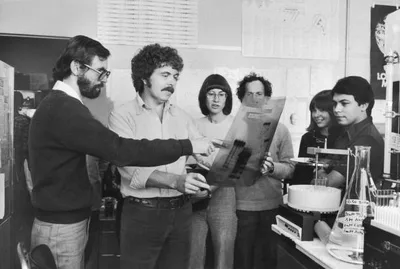
1969 –1972 BLUMBERG, Baruch Samuel (1925 – 2011); MILLMAN, Irving (1923 – 2012)
Vaccine against viral hepatitis and process. Serial No. 864,788 filed 10 /8 /[19]69. Patent 3636191 issued 1/ 18/ [19]72.
First description of the hepatitis B vaccine, the first cancer vaccine, US patent 3636191A. Millman and Blumberg discovered that the blood of individuals carrying the hepatitis B virus contained particles of the outsi…
GMN 6841 · https://historyofmedicine.com/id/9005
1973 COHEN, Stanley Norman (1935 – ); CHANG, Annie C.Y. (1936 – ); HELLING, Robert Bruce (1936 – 2006); BOYER, Herbert Wayne (1936 – )
Construction of biologically functional bacterial plasmids in vitro.
Cohen, Boyer and associates developed the first practical method for cloning genes, by the formation of recombinant plasmids which can be used to infect plasmid-free bacteria. The authors demonstrated that if DNA is f…
GMN 257.5 · https://historyofmedicine.com/id/8715
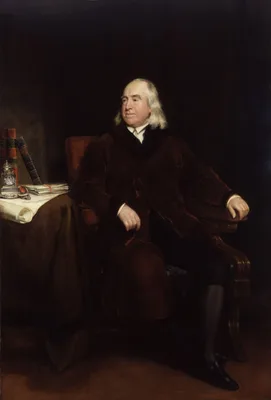
1978 BENTHAM, Jeremy (1747 – 1832); CROMPTON, Louis (1925 – 2009)
Offenses against one's self. Edited by Louis Crompton.
This is the first publication of Jeremy Bentham's essay on "Paederasty," written about 1785. Bentham suppressed the essay during his lifetime, for fear of public outrage at his views on liberalizing the laws concernin…
GMN 10209 · https://historyofmedicine.com/id/12398
1981 PRESIDENT'S COMMISSION FOR THE STUDY OF ETHICAL PROBLEMS IN MEDICINE AND BIOMEDICAL AND BEHAVIORAL RESEARCH
Defining death: A report on the medical, legal and ethical issues in the determination of death.
Digital facsimile from the Internet Archive at this link.
GMN 10045 · https://historyofmedicine.com/id/12234
1981 MAGEL, Charles R. (1920 – 2014)
A bibliography on animal rights and related matters.
"... restricted to literature in the English language, with over 3200 entries; it is also confined to the thought and practices of the Western world, from Biblical times to 1980." Concerns much on animal experimentati…
GMN 10834 · https://historyofmedicine.com/id/13030
1984 CHAPMAN, Carelton B. (1915 – 2000)
Physicians, law and ethics.
GMN 12281 · https://historyofmedicine.com/id/14502
1989 KNOWLTON, Charles (1800 – 1850); BESANT, Annie (1847 – 1933); CHANDRASEKHAR, Sripati (1918 – 2001)
"A dirty, filthy book." The writings of Charles Knowlton and Annie Besant on reproductive physiology and birth control and an account of the Bradlaugh-Besant trial, by S. Chandrasekhar. With the definitive texts of Fruits of Philosophy by Charles Knowlton, The Law of Population by Annie Besant, Theosophy and the Law of Population by Annie Besant.
GMN 7044 · https://historyofmedicine.com/id/9211
1989 YOUNG, James Harvey (1915 – 2006)
Pure food: Securing the Federal Food and Drugs Act of 1906.
GMN 12414 · https://historyofmedicine.com/id/14644
1990 DE VILLE, Kenneth
Medical malpractice in nineteenth-century America: Origins and legacy.
GMN 11265 · https://historyofmedicine.com/id/13462
1995 BYNUM, William F. (1943 – ); CREESE, Richard; BEARNE, J.
The health of prisoners: Historical essays edited by Richard Creese, W. F. Bynum and J. Bearn
GMN 13655 · https://historyofmedicine.com/id/15936
1997 LAW, Sylvia A. (1942 – ); ROSENBLATT, Rand E.; ROSENBAUM, Sara
Law and the American health care system.
Second revised edition, 2012, with extensive discussion of the Patient Protection and Affordable Care Act.
GMN 9137 · https://historyofmedicine.com/id/11316
1997 DOX, Ida G.
Attorney's illustrated medical dictionary.
GMN 13678 · https://historyofmedicine.com/id/15960
1998 REAGAN, Leslie J.
When abortion was a crime: Women, medicine, and law in the United States, 1867-1973.
GMN 8646 · https://historyofmedicine.com/id/10823
2002 MUSTO, David Franklin (1936 – 2010); KORSMEYER, Pamela (1945 – )
The quest for drug control: Politics and federal policy in a period of increasing substance abuse, 1963-1981.
GMN 12415 · https://historyofmedicine.com/id/14645
2004 GOLAN, Tal
Laws of men and laws of nature: The history of scientific expert testimony in England and America.
Includes some references to early expert testimony and related in France.
GMN 10650 · https://historyofmedicine.com/id/12843
2009 CREGAN, Kate
The theatre of the body: Staging death and embodying life in early-modern London.
"...The book takes as its specific focus seventeenth-century London, in a significant study encompassing the period from the incorporation of the Worshipful Company of Barber-Surgeons (1540) to the staging of Edward R…
GMN 9811 · https://historyofmedicine.com/id/11999