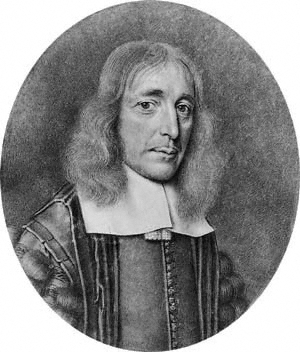
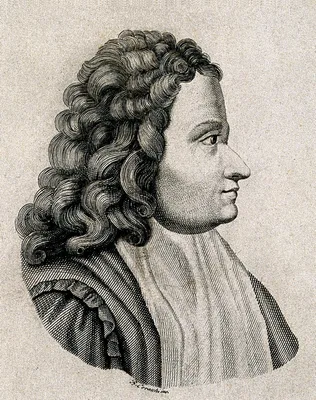
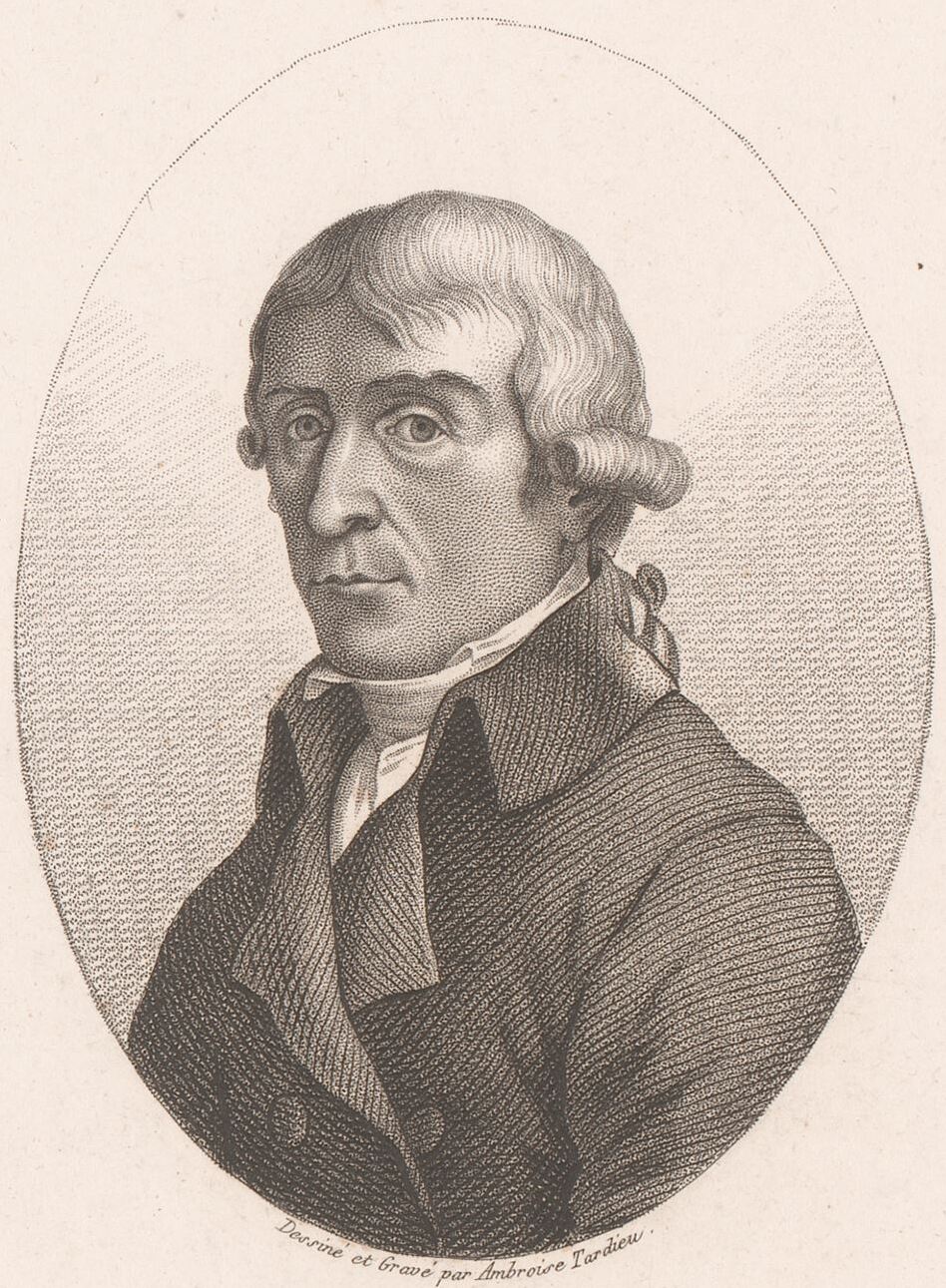
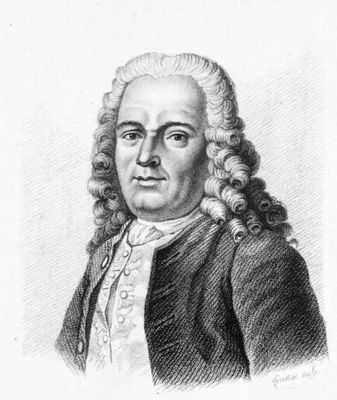
1529 CAELIUS AURELIANUS (500 – ); SORANUS OF EPHESUS (ΣΩΡΑΝΌΣ) (100 – 150); ORIBASIUS (ὈΡΕΙΒΆΣΙΟΣ), [Oreibasius] (320 – 403); SICARD, Johannes [Sichardt;Sichardus] (1499 – 1552)
Caelii Aureliani Siccensis Tardarum passionum libri V. D. Oribasii Sardi Iuliani Caesaris archiatri Euporiston lib: III. Medicinae comperi: lib: 1. Curationum lib: 1. Trochiscoru confect: lib: 1.
From a clinical point of view, the two works of Caelius Aurelianus, which were translated into Latin from Greek originals by Soranus of Ephesus that were later lost, represent the high-point of Graeco-Roman medical ac…
GMN 1959.1 · https://historyofmedicine.com/id/6052
1536 MASSA, Niccoló (1489 – 1569)
Liber introductorius anatomiae sive dissectionis corporis humani; in quo quam plurima membra, operationes, & utilitates tam ab antiquis, quam a modernis praetermissa manifestantur.
A practical manual for dissection, showing how to carry out an anatomy from the first incision onwards. Massa based his work on his experience gained from numerous dissections that he had undertaken in the hospital of…
GMN 1536 · https://historyofmedicine.com/id/2862
1549 XIMENO, Pedro [Jimeno] (1515 – 1551)
Dialogus de re medica compendiaria ratione, præter quædam alia, universam Anatomen humani corporis perstringens, summè necessarius omnibus Medicinæ canditatis.
The first Spanish medical book based on the writings of Vesalius, written by Vesalius’s student Pedro Jimeno, whose activities “constituted the cornerstone of the Valencian School of Anatomy and the Spanish Vesalian m…
GMN 8931 · https://historyofmedicine.com/id/11109
1561 FALLOPPIO, Gabriele [FALLOPPIUS] (1523 – 1562)
Observationes anatomicae.
Observationes anatomicae, a work of 232 leaves printed in the comparatively small octavo format, with no illustrations, was the only work Fallopio published before his death from tuberculosis at age thirty-nine, and i…
GMN 1208 · https://historyofmedicine.com/id/562
1563 –1564 EUSTACHI, Bartolomeo [EUSTACHIUS] (1510 – 1574)
Opuscula anatomica.
Eustachius is credited with several anatomical discoveries, among them the tensor tympani muscle and the Eustachian tube, published in his chapter entitled De auditus organis. In the last respect, however, he was anti…
GMN 1093 · https://historyofmedicine.com/id/159
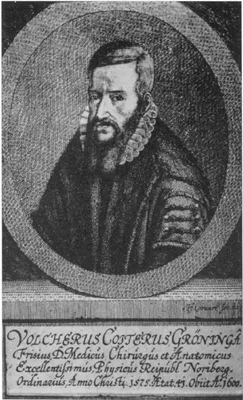
1572 –1573 COITER, Volcher (1534 – 1576)
Externarum et internarum principalium humani corporis partium tabulae.
Coiter made several important contributions to the study of human anatomy, and was the first to elevate comparative anatomy to the rank of an independent branch of biology. His Externarum et internarum principalium hu…
GMN 1539 · https://historyofmedicine.com/id/1251
1577 FERRARI, Ognibene (Omnibonus Ferrarius) ( – 1599)
De arte medica infantium libri quatuor. Quorum duo Priores de tuenda eorum sanitate, posteriores de curandis morbis agunt.
An early illustrated work on pediatrics. The three parts of his book deal with the management of the nurse and her milk, the care and feeding of the new-born, and diseases of children, including skin diseases, and cha…
GMN 7990 · https://historyofmedicine.com/id/10166
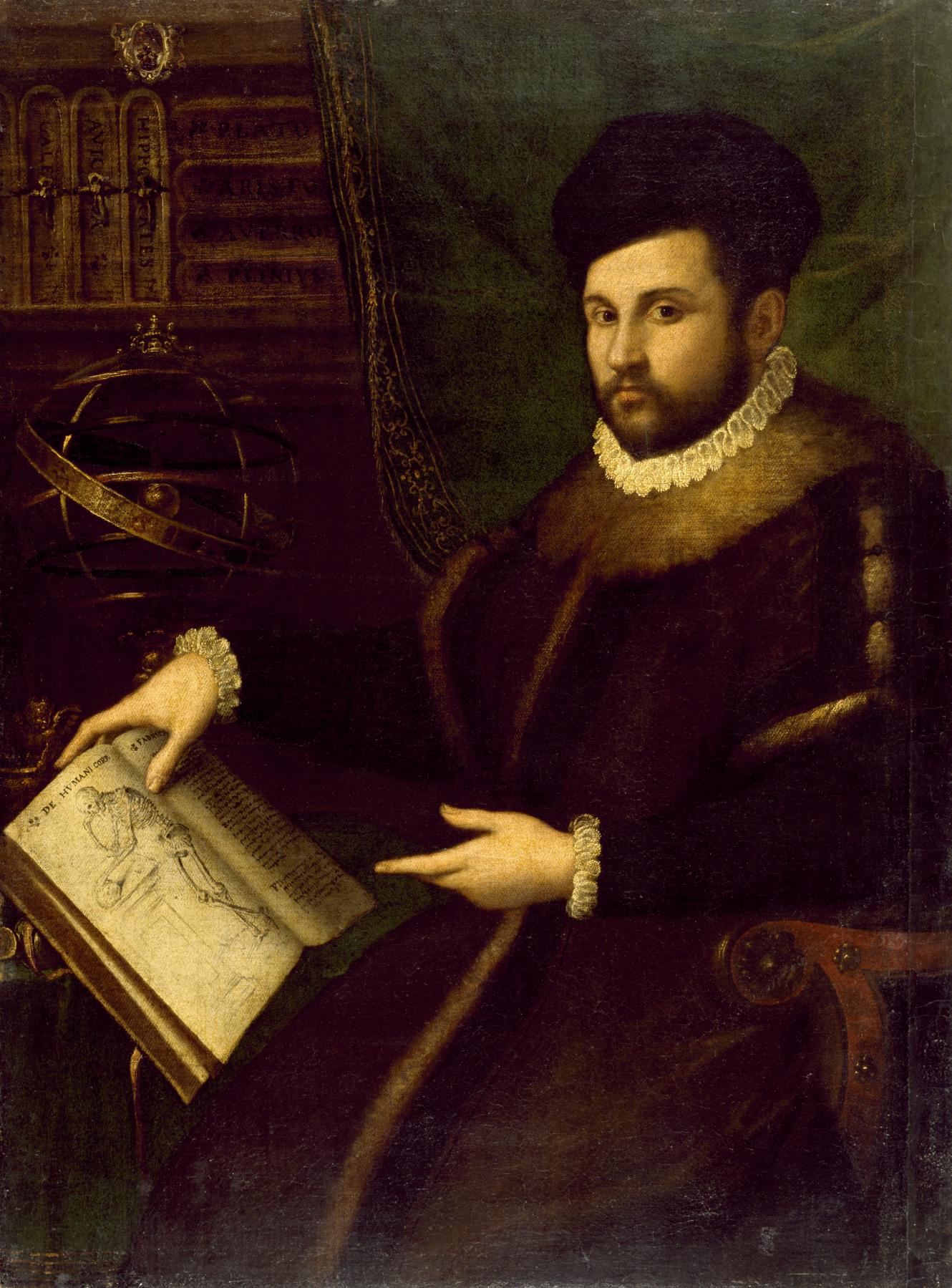
1590 MERCURIALE, Girolamo (1530 – 1606)
De compositione medicamentorum; De morbis oculorum, & aurium….
The De oculorum et aurium represents the first “clinical” manual on diseases of the ear. Mercuriali was primarily concerned with treatment.
GMN 3343 · https://historyofmedicine.com/id/4615
1600 –1601 CASSERI, Giulio Cesare [Julius Casserius Placentinus; Giulio Casserio] (1552 – 1616)
De vocis auditusque organis historia anatomica. 2 pts.
Casseri, originally a servant to Fabrizio, was personally trained by his employer and eventually succeeded to Fabrizio’s chair of anatomy. Like Fabrizio, who studied the development of the chick for clues to human emb…
GMN 1540 · https://historyofmedicine.com/id/2863
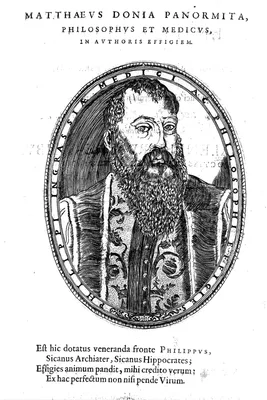
1603 INGRASSIA, Giovanni Filippo (Ioannis Philippi Ingrassiae) (1510 – 1580)
In Galeni librum de ossibus.
Ingrassia is by some accredited with the discovery of the stapes; he also observed the sound-conducting capacity of the teeth.
GMN 1541 · https://historyofmedicine.com/id/2864
1603 CAPIVACCIO, Girolamo (1520 – 1589)
Opera omnia quinque sectionibus comprehensa.
Demonstration (Cap. I, p. 587-91) that some people who cannot hear by air conduction can do so by bone conduction.
GMN 3343.1 · https://historyofmedicine.com/id/4619
1616 BONIFACIO, Giovanni (1547 – 1635)
L’arte de’ cenni, con quale, formandosi favella visible, si tratta della muta eloquenza.
Bonifacio’s sign-language for the deaf and dumb employed almost every part of the body for conversational purposes.
GMN 3344 · https://historyofmedicine.com/id/4622
1620 BONET, Juan Pablo (1579 – 1633)
Reduction de las letras, y arte para enseñar a ablar los mudos.
Bonet put into practice the “combined” system of teaching the deaf to speak and the dumb to communicate with others. He showed how the deaf could be taught to speak by reducing the letters to their phonetic value, and…
GMN 3345 · https://historyofmedicine.com/id/4625
1644 BULWER, John (1606 – 1656)
Chironomia: or, the art of manuall rhetorique.
GMN 3346 · https://historyofmedicine.com/id/4626
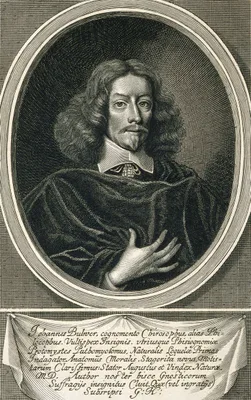
1644 BULWER, John (1606 – 1656)
Chirologia; or the naturall language of the hand. Composed of the speaking motions, and discoursing gestures thereof. Whereunto is added Chironomia: or, the art of manuall rhetoricke.
Bulwer was the first Englishman to write about the teaching of deaf-mutes. "Chirologia is often cited as Bulwer’s link to later Deaf studies because it focuses on hand gestures [15] which have come to be seen as the d…
GMN 3347 · https://historyofmedicine.com/id/4629
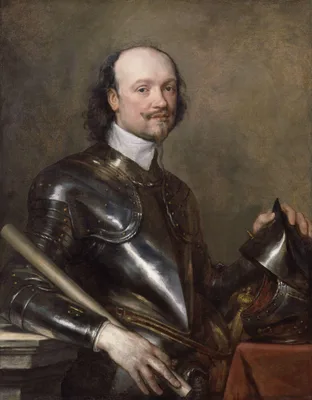
1644 DIGBY, Sir Kenelm (1603 – 1665)
Two treatises in the one of which the nature of bodies, in the other, the nature of mans soule is looked into in way of discovery of the immortality of reasonable soules.
"Digby's Two Treatises was intended to prove the immortality of the rational soul and its distinction from the material body, a dualistic view shared by many of his contemporaries. the work is noteworthy on several co…
GMN 11581 · https://historyofmedicine.com/id/13780
1645 FOLLI, Cecilio [FOLIUS, FUOLI] (1615 – 1660)
Nova auris internae delineatio.
An article which announces the discovery of the long process of the malleus. Folius “accurately discussed the general configuration of the middle ear, described the round and oval windows, delineated the three ossicle…
GMN 1542 · https://historyofmedicine.com/id/2865
1648 BULWER, John (1606 – 1656)
Philocophus: or the deafe and dumbe mans friend.
"Bulmer promoted what we would call today 'central nervous system plasticity,' in describing how one sense could take over the duties of another. This is well illustrated in the frontispiece of this work, which is the…
GMN 7230 · https://historyofmedicine.com/id/9399
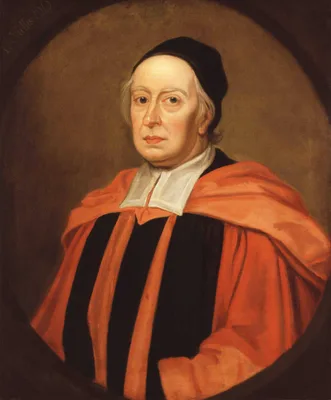
1653 WALLIS, John (1616 – 1703)
Grammatica linguae anglicae. Cui praefigitur, de loquela sive sonorum formatione tractatus grammatico-physicus.
Wallis, a prominent teacher of deaf-mutes, classified the various sounds of the human voice. He taught by writing and gesture. He was Savilian Professor of Mathematics at Oxford.
GMN 3348 · https://historyofmedicine.com/id/4704
1662 STENO, Nicolas [Niels Steensen, Nicholaus Stenonis] (1638 – 1686)
Observationes anatomicae, quibus varia oris, oculorum & narium vas describuntur novique salivae, lacrymarum & muci fontes deteguntur.
Includes the first account of the excretory duct of the parotid gland (“Stensen’s duct”), discovered by Stensen. He first reported his discovery in a letter to his teacher, Thomas Bartholin, dated April, 22, 1661. Ste…
GMN 1543 · https://historyofmedicine.com/id/567
1667 HELMONT, Franciscus Mercurius van (1614 – 1698)
Aphabeti verè naturalis Hebraici brevissima delineatio.
A work on the teaching of lip-reading and speaking to deaf-mutes based on the notion that letter-forms of the Hebrew alphabet resembled in profile the positions of the tongue required to produce their corresponding so…
GMN 13236 · https://historyofmedicine.com/id/15501
1669 HOLDER, William (1616 – 1698)
Elements of speech, an essay of inquiry into the natural production of letters; with an appendix concerning persons deaf and dumb.
Includes a section on the education of deaf-mutes. Paracusis is described in the Appendix, p. 166.
GMN 3349 · https://historyofmedicine.com/id/4705
1672 WILLIS, Thomas (1621 – 1675)
De anima brutorum
Chap. XIV is devoted to the sense of hearing; in it Willis described the “paracusis of Willis” (p. 73). English translation, 1683. A probable description of myasthenia gravis is given in Pars. 2, Cap. IX. In Pars 2, C…
GMN 1544 · https://historyofmedicine.com/id/3644
1680 DALGARNO, George (1626 – 1687)
Didascalocophus or the deaf and dumb mans tutor, to which is added a discourse of the nature and number of double consonants: both which tracts being the first (for what the author knows) that have been published upon either of the subjects.
Dalgarno considered that the deaf had an advantage over the blind in opportunities of learning languages. He invented an alphabet for the use of deaf-mutes.
GMN 3350 · https://historyofmedicine.com/id/4709
1683 DU VERNEY, Guichard-Joseph (Guichard Joseph Duverney) (1648 – 1730)
Traité de l’organe de l’ouie; contenant la structure, les usages et les maladies de toutes les parties de l’oreille.
The first scientific account of the structure, function and diseases of the ear. Du Verney showed that the bony external meatus develops from the tympanic ring and that the mastoid air cells communicate with the tympa…
GMN 1545 · https://historyofmedicine.com/id/2867
1684 SCHELHAMMER, Gunther Christopher (1649 – 1712)
De auditu liber unus.
An early account of the anatomy, physics and physiology of hearing, preceded by a historical summary of earlier work.
GMN 1545.1 · https://historyofmedicine.com/id/2868
1692 AMMAN, Johann Konraad (1663 – 1730)
Surdus loquens; seu, methodus, quâ qui surdus natus est loqui descere possit.
English translation, 1694, by John Wallis (see No. 3348).
GMN 3352 · https://historyofmedicine.com/id/4717
1700 AMMAN, Johann Konraad (1663 – 1730)
Dissertatio de loquela, qua non solum vox humana, & loquendi artificium ex originibus suis erruunter.
Amman’s method of instructing deaf-mutes. He was one of the most successful of all teachers in this sphere. English translation as A dissertation on speech. To which not only the human voice and the art of speaking ar…
GMN 3353 · https://historyofmedicine.com/id/4720
1704 VALSALVA, Antonio Maria (1666 – 1723)
De aure humana tractatus.
Valsalva, a pupil of Malpighi and teacher of Morgagni, is best remembered for his work upon the ear, in which he described and depicted its most minute muscles and nerves. He divided the ear into “external”, “middle”,…
GMN 1546 · https://historyofmedicine.com/id/2869
1724 GUYOT, Edmé-Gilles (1706 – 1786)
Instrument pour seringuer la trompe d’Eustache par la bouche.
Guyot, postmaster at Versailles, also physician, cartographer, inventor, etc., was the first to attempt catheterization of the Eustachian tube. This he did by way of the mouth.
GMN 3354 · https://historyofmedicine.com/id/4722
1734 –1735 CASSEBOHM, Johann Friedrich (1699 – 1743)
Tractatus quatuor anatomici de aure humana. Tractatus quintus anatomicus de aure humana. Cui accedit tractatus sextus de aure monstri humani.
Important tracts on the anatomy and physiology of the ear. Cassebohm’s studies of the embryonic ear far surpassed his predecessors, including Valsalva and Morgagni, and were not themselves surpassed until the work of …
GMN 1547 · https://historyofmedicine.com/id/1280
1740 VALSALVA, Antonio Maria (1666 – 1723)
Opera.
Valsalva described the aortic “sinus of Valsalva”.
GMN 803 · https://historyofmedicine.com/id/169
1742 PYL, Theodor
Dissertatio medica de auditu in genere et de illo que fit per os in specie.
Pyl was the first (page 20) to record the labyrinthine fluid and to discuss its rôle in the transmission of sound.
GMN 1548 · https://historyofmedicine.com/id/2871
1744 CLELAND, Archibald (1700 – 1771)
Instruments proposed to remedy some kinds of deafness proceeding from obstructions in the external and internal auditory passages.
Cleland, an army surgeon, devised the method of catheterization of the Eustachian tube by way of the nose; he designed the instruments necessary for the operation.
GMN 3355 · https://historyofmedicine.com/id/4723
1752 KNOLL, Johann Christian Friedrich (1726 – 1757)
Sendschreiben von den Wirkungen des Kafeetranks.
Discussing the consumption and reception of coffee from Britain to Turkey, Knoll dismissed criticisms of coffee, including that it reduced beauty and virility, or that it was contrary to Islam, instead promoting the m…
GMN 11719 · https://historyofmedicine.com/id/13920
1756 WATHEN, Jonathan (1728 – 1808)
A method proposed to restore the hearing, when injured from an obstruction of the tuba Eustachiana.
Wathen condemned Guyot’s method of Eustachian catheterization, and suggested a method of relieving catarrhal deafness by means of injections into the Eustachian tube through a catheter passed into the nose. Wathen was…
GMN 3356 · https://historyofmedicine.com/id/4726
1761 COTUGNO, Domenico [COTUNNIUS] (1736 – 1822)
De aquaeductibus auris humanae intemae.
Cotugno is sometimes accredited with the discovery of the “liquor Cotunnii”, the labyrinthine fluid, first noted by Pyl in 1742. He did, however, make important contributions to the knowledge on the structure and func…
GMN 1549 · https://historyofmedicine.com/id/2872
1768 MORAND, Sauveur-François (1697 – 1773)
Opuscules de chirurgie. Pt. 1.
Records, p. 161, a successful operation for temporo-sphenoidal abscess, 1752. The patient, a monk, had otorrhoea followed by a mastoid abscess, which Morand opened.
GMN 4851 · https://historyofmedicine.com/id/5594
1772 SCARPA, Antonio (1752 – 1832)
De structura fenestrae rotundae auris, et de tympano secundario anatomicae observationes.
Scarpa’s first scientific work, a comparative anatomical investigation of the ear, in which he offered a more accurate and complete description of the osseous labyrinth and demonstrated the true function of the round …
GMN 1550 · https://historyofmedicine.com/id/2873
1774 PETIT, Jean Louis (1674 – 1750)
Traité des maladies chirurgicales et des opérations qui leur conviennent. 3 vols.
Records (Vol, 1, pp. 153, 160) the first successful operation for mastoiditis, performed by Petit in 1736. “Petit’s hernia” and “triangle” described (vol. 2, pp. 256-58). (See also No. 3357.) A lumbar hernia had previ…
GMN 3357 · https://historyofmedicine.com/id/4731
1776 L'ÉPÉE, Charles-Michel de (1712 – 1789)
Institution des sourds et muets, par la voie des signes méthodiques.
Includes a reprint of the author’s Institution des sourds et muets; ou, recueil des exercices. Paris, 1774.
GMN 3358 · https://historyofmedicine.com/id/4735
1778 GEOFFROY, Étienne Louis (1725 – 1810)
Dissertations sur l’organe de l’ouie. 1. De l’homme. 2. Des reptiles. 3. Des poissons.
GMN 1551 · https://historyofmedicine.com/id/1133
1783 GREEN, Francis
Vox oculis. A dissertation on the … art of imparting speech to the naturally deaf; with a particular account of the academy of Messrs. Braidwood …
Thomas Braidwood (1715-1806) founded the first British school for the deaf and dumb, in Edinburgh. His method consisted of a combination of lip-reading and signs.
GMN 3360 · https://historyofmedicine.com/id/4742
1784 L'ÉPÉE, Charles-Michel de (1712 – 1789)
La véritable manière d’instruire les sourds et muets.
The Abbé de L’Épée met two deaf girls, decided to educate them, and soon had a class of 60 devoted pupils, whom he supported and amongst whom he lived. He based his methods on those of Bonet and Amman, and was the fir…
GMN 3359 · https://historyofmedicine.com/id/4737
1789 COMPARETTI, Andrea (1746 – 1801)
Observationes anatomicae de aure interna comparata.
GMN 1552 · https://historyofmedicine.com/id/1136
1789 SCARPA, Antonio (1752 – 1832)
Anatomicae disquisitiones de auditu et olfactu.
Scarpa made important researches concerning the auditory and olfactory apparatus of fishes, birds, reptiles, and man. See L. Sellers and B. Anson, [Scarpa’s] Anatomical observations on the round window, Arch. Otolaryn…
GMN 1453 · https://historyofmedicine.com/id/2342
1795 HERVÁS Y PANDURO, Lorenzo (1735 – 1809)
Escuela española de sordo mudos, ó arte par enseñaries á escribir y hablar el idoma española. 2 vols.
Digital facsimile from the Hathi Trust at this link.
GMN 13237 · https://historyofmedicine.com/id/15502
1799 SCARPA, Antonio (1752 – 1832)
De penitiori ossium structura commentarius.
GMN 1553 · https://historyofmedicine.com/id/1139
1801 COOPER, Sir Astley Paston (1768 – 1841)
Farther observations on the effects which take place from the destruction of the membrana tympani of the ear; with an account of an operation for the removal of a particular species of deafness.
Sir Astley Cooper reported three cases of Eustachian obstruction deafness relieved by perforation of the membrana tympani (myringotomy), an operation first performed by Eli, a quack, in 1760. Cooper’s earlier paper on…
GMN 3361 · https://historyofmedicine.com/id/4744
1801 ITARD, Jean Marie Gaspard (1774 – 1838)
De l’éducation d’un homme sauvage, ou des premier développemens physiques et moraux du jeune sauvage de l’Aveyron.
A pupil of Pinel, Itard pioneered in the attempt to educate a young “wild boy” who had lived since infancy entirely apart from human contact. In adapting the methods of teaching deaf-mutes to his extraordinary pupil, …
GMN 4969.1 · https://historyofmedicine.com/id/6381