c. 1474 VELASCUS DE TARENTA (VALESCO,VALASCUS) (1382 – 1426)
De epidemia et peste.
One of the earliest works written on public health, and one of the earliest printed medical books. It was first printed in Arnaldus de Villanova’s De arte cognoscendi venena (Padua, 1473; Mantua, 1473). Above is the f…
GMN 5113 · https://historyofmedicine.com/id/6077
1475 LIGNAMINE, Giovanni Filippo De [Johannes Philippus de Lignamine] (1428 – ); BENEDICT OF NURSIA, [Benedictus de Nursia, Benedetto da Norcia] (480 – 543)
De conservatione sanitatis. With additions by Johannes Philippus de Lignamine.
This medieval guide to health and hygiene is sometimes misattributed to Hugo Benzi. It was one of the earliest medical or health texts to appear in print, and is unusual in that the printer, who was not a physician, i…
GMN 9146 · https://historyofmedicine.com/id/11325
1478 –1482 JACME, Jean [Johannes Jacobi] ( – 1384)
Tractatus de pestilentia.
The most widely disseminated of all plague tracts from the time of the Black Death, of which 33 printed editions appeared in the 15th century. A French rhymed version appeared in 1476, but this version is very differe…
GMN 5115 · https://historyofmedicine.com/id/6082
1483 JACME, Jean [Johannes Jacobi] ( – 1384)
Regimen contra pestilentiam [English] Treatise on the Pestilence.
The earliest medical work printed in English. It was published without printer's name or date, but has been attributed to the press of William Machlinia, in London, and estimated to have been published in 1483."Althou…
GMN 6812 · https://historyofmedicine.com/id/8975
1487 FRONTINUS, Sextus Julius (40 – 103); VEROLI, Giovanni Sulpizio da (Johannes Sulpitius Verulanus or Verolensis) (1450 – 1500); LETO, Giulio Pomponio (Julius Pomponius Laetus) (1428 – 1498)
Frontinus: De aquaeductibus. Edited by Pomponius Laetus and Johannes Sulpitius Verulanus.
De aquaeductibus, or De aquis urbis Romae was written about 100 CE by the Roman senator Frontinus. Its title is sometimes translated as The Aquaducts of Rome, and most recently by Rodgers as On the Water-Management of…
GMN 1589 · https://historyofmedicine.com/id/1672
1517 GALEN, [Κλαύδιος Γαληνός; Galen of Pergamon] (129 – 216); LINACRE, Thomas (Lynaker) (1460 – 1524)
Galeni de sanitate tuenda libri sex.
First separate dated Latin translation of Galen's De sanitate tuenda (On the preservation of health), which contained his views on maintaining health and hygiene and preventing disease. Translated from the Greek by Th…
GMN 6944 · https://historyofmedicine.com/id/9109
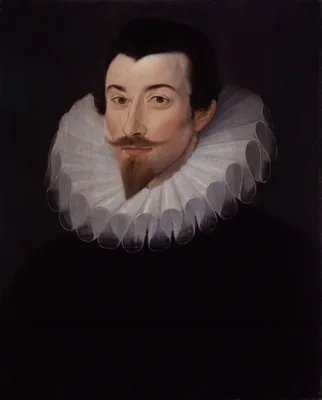
1596 HARINGTON, Sir John (1560 – 1612)
A new discourse of a stale subject, called the Metamorphosis of Aiax. Written by Misacmos to his friend Philostilpnos.
Harington invented a water-closet in which the disposal of excreta was for the first time controlled by mechanical means. He published several tracts on the device, the first appearing in 1596. These were elegantly re…
GMN 1594 · https://historyofmedicine.com/id/1707
1598 PÉREZ DE HERRERA, Cristóbal (1558 – 1620)
Discvrsos del amparo de los legitimos pobres.
A plan for a state-funded public health system and poor relief program. An emblem introduces each of the ten essays, which treat hospital sanitation and kitchen gardens, care of disabled veterans, prisoners and the in…
GMN 10727 · https://historyofmedicine.com/id/12921
1598 PÉREZ DE HERRERA, Christóbal (1588 – 1620)
Discursos del amparo de los legitimos pobres y reduccion de los fingidos, y de la fundacion y principio de los albergues destos Reynos, y amparo de la milicia dellos.
In this rather utopian work with emblematic illustrations Pérez presented a plan for a state funded public health system and poor relief program. His ten essays concerned hospital sanitation, kitchen gardens, care of …
GMN 12829 · https://historyofmedicine.com/id/15075
1665
London’s dreadful visitation, or, a collection of all the Bills of Mortality for the present year: beginning the 27th of December 1664, and ending the 19th of December following…By the Company of Parish Clerks of London.
BILLS OF MORTALITY
This is a valuable statistical record of the great plague of 1665. (No. 6052 in the Bibliotheca Osleriana.)
GMN 5119 · https://historyofmedicine.com/id/8855
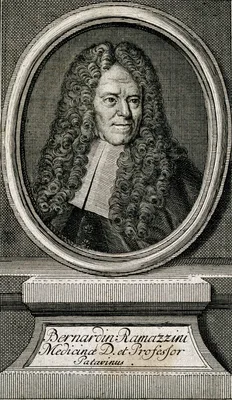
1700 RAMAZZINI, Bernardino (1633 – 1714)
De morbis artificum diatriba.
Ramazzini's study of the diseases of workers, De morbis artificium diatriba, was the first comprehensive and systematic treatise on occupational medicine; it was also the foundation work in ergonomics. It deals with p…
GMN 2121 · https://historyofmedicine.com/id/79
1714 COGROSSI, Carlo Francesco (1682 – 1769)
Nuovo idea del male contagioso de’ buoi.
In this study of an epizootic Cogrossi formulated much of the modern theory of infection. He speculated that infection might occur at the microscopic level, and argued that infected individuals should be isolated and …
GMN 2529.2 · https://historyofmedicine.com/id/3502
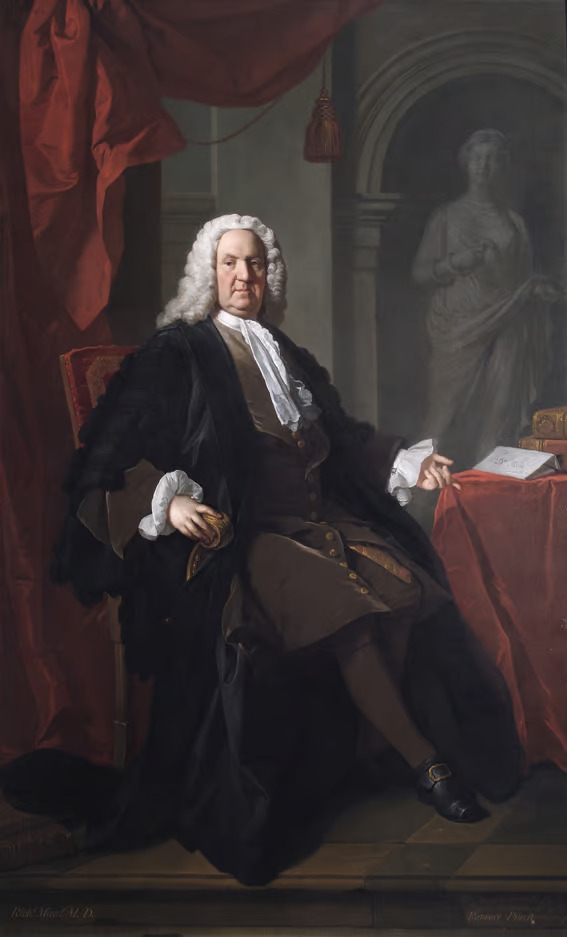
1720 MEAD, Richard (1673 – 1754)
A short discourse concerning pestilential contagion, and the methods to be used to prevent it.
In 1719 Mead was asked for advice concerning an outbreak of plague in Marseilles, and replied with the above tract of 59 pages, which has been called the first epidemiological report produced by a physician at the com…
GMN 5123 · https://historyofmedicine.com/id/6107
1742 MALDONAGO DE PUGA, Juan Manuel
Religiosa hospitalidad por los hijos del piadoso coripheo patriarcha y padre de pobres S. Iuan Ð Dios en su provincia de S. Raphael de las Islas Philipinas: Compendio substancial de su fundacion progressos y estado presente que en sucinto informatibo estilo...
Maldonado de Puga, a member of the Order of San Juan Hospitalier founded in 1572, reported on the introduction and practice of Western medicine in the Philippines, the foundation of hospitals and the relationship betw…
GMN 13321 · https://historyofmedicine.com/id/15588
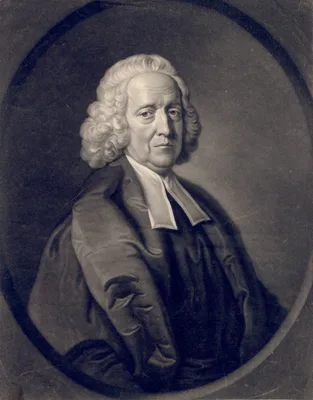
1743 HALES, Stephen (1677 – 1761)
A description of ventilators.
Hales devised a ventilator, by means of which fresh air could be introduced into jails, mines, hospitals, the holds of ships, etc. The invention met with immediate approval and contributed much towards health of those…
GMN 1596 · https://historyofmedicine.com/id/1709
1750 PRINGLE, Sir John (1707 – 1782)
Observations on the nature and cure of hospital and jayl-fevers.
Pringle was a strong advocate of better ventilation in prisons and hospitals as a means of preventing typhus, which he showed to be identical with “hospital fever”.
GMN 5374 · https://historyofmedicine.com/id/7023
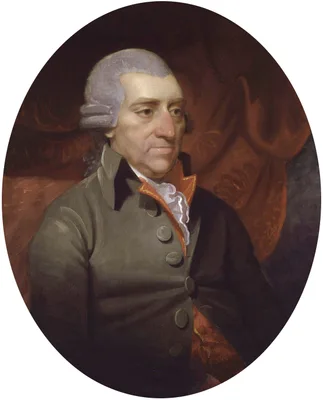
1777 HOWARD, John (1726 – 1790)
The state of the prisons in England and Wales.
Howard devoted much of his life to the improvement of the conditions then prevailing in prisons. The publication of his book led to legislation abolishing abuses in prisons and providing for their proper cleaning. The…
GMN 1598 · https://historyofmedicine.com/id/1716
1779 –1827 FRANK, Johann Peter (1745 – 1821)
System einer vollständigen medicinischen Polizey. 9 vols.
The first systematic treatise on public hygiene. Frank believed the ruler of a state should stand in the relation of a father to his children, among his duties being the safeguarding of the people’s health and the pre…
GMN 1599 · https://historyofmedicine.com/id/1718
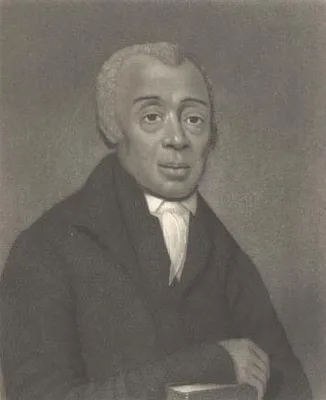
1794 JONES, Absolom (1746 – 1818); ALLEN, Richard (1760 – 1831); CLARKSON, Matthew (1733 – 1800)
A narrative of the proceedings of the black people during the late awful calamity in Philadelphia, in the year 1793: and a refutation of some censures thrown upon them in some late publications.
A refutation of slights by Matthew Carey in his Short account of the malignant fever, lately prevalent in Philadelphia (1793; No. 5451) to the important contributions of black people, many of whom served as nurses and…
GMN 5453.1 · https://historyofmedicine.com/id/7530
1809 ROBERTON, John (1776 – 1840)
A treatise on medical police, and on diet, regimen, &c. In which the permanent and regularly recurring causes of disease in general, and those of Edinburgh and London in particular, are described; with a general plan of medical police to obviate them, and a particular one adapted to the local circumstances of these cities. 2 vols.
First notable work on the subject in English. Digital facsimile from Google Books at this link.
GMN 1603 · https://historyofmedicine.com/id/1844
1814 WELLS, William Charles (1757 – 1817)
An essay on dew.
For this work Wells was awarded the Rumford Medal of the Royal Society. His researches on the subject were of major importance in the development of the science of ventilation, particularly in its relation to relative…
GMN 1604 · https://historyofmedicine.com/id/1851
1817 DAVIS, John Bunnell (1780 – 1824)
A cursory inquiry into some of the principal causes of mortality among children. With a view to assist in ameliorating the state of the rising generation, in health, morals, and happiness. To which is added an account of the universal dispensary for sick indigent children.
Davis called attention to the high infant mortality rate, especially in London. His suggestion that poor mothers should be instructed in the care of their infants resulted in a system of health-visiting by benevolent …
GMN 6330 · https://historyofmedicine.com/id/8115
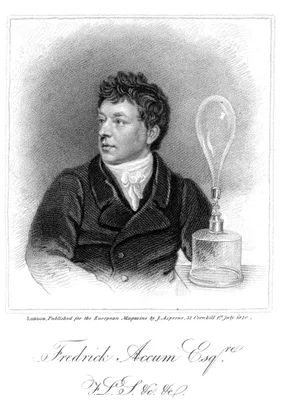
1820 ACCUM, Friedrich (1769 – 1838)
A treatise on the adulterations of food and culinary poisons: Exhibiting the fraudulent sophistications of bread, beer, wine, spirituous liquors, tea, coffee, cream, confectionery, vinegar, mustard, pepper, cheese, olive oil, pickles and other articles employed in domestic economy; and methods of detecting them.
One of the earliest exposures of food adulteration, written by a German chemist who spent most of his career in England. This sensational popular scientific work exposed established scandalous practices within the foo…
GMN 1604.2 · https://historyofmedicine.com/id/1865
1822 –1824 FODÉRÉ, François-Emmanuel (1764 – 1835)
Leçons sur les épidémies et l’hygiène publique. 4 vols.
GMN 1605 · https://historyofmedicine.com/id/1870
1822 RAMAZZINI, Bernardino (1633 – 1714); PATISSIER, Philibert (1791 – 1863)
Traité des maladies des artisans, et de celles qui résultent des diverse professions, d'après Ramazzini; Ouvrage dans lequel on indique les précautions que doivent prendre, sous le rapport de la salubrité publique et particulière, les fabricans, les manufacturiers, les chefs d'ateliers, les artistes, et toutes les personnes qui exercent des professions insalubres.
This second French edition of Ramazzini's De morbis artificum diabriba by Philibert Patissier provides so much new material on the diseases of workers in France as to virtually double the length of Ramazzini’s text. D…
GMN 9326 · https://historyofmedicine.com/id/11508
1830 SMITH, Thomas Southwood (1788 – 1861)
A treatise on fever.
Both a doctor and a minister, Smith, physician to the London Fever Hospital, called himself, “physician to body and soul.” He argued that the poor are impoverished by fever and that fever was preventable. This book in…
GMN 2211 · https://historyofmedicine.com/id/1689
1831 THACKRAH, Charles Turner (1795 – 1833)
The effects of the principal arts, trades and professions, and of civic states and habits of living on health and longevity.
The first systematic publication in Great Britain on industrial disease and its prevention. For comprehensiveness, first-hand clinical experience and constructive proposals for improvements, Thackrah’s monograph is su…
GMN 2123 · https://historyofmedicine.com/id/2637
1832 KAY-SHUTTLEWORTH, Sir James Phillips (1804 – 1877)
The moral and physical condition of the working classes employed in the cotton manufacture in Manchester
"At first engaged in a Rochdale bank, in 1824 he [Kay-Shuttleworth] became a medical student at the University of Edinburgh. Settling in Manchester about 1827, he was instrumental in setting up the Manchester Statisti…
GMN 10395 · https://historyofmedicine.com/id/12588
1834 TREBUCHET, Adolphe (1801 – 1865)
Jurisprudence de la médecine, de la chirurgie, et de la pharmacie en France, comprenant la médecine légale, la police médicale, la responsabilitié des médecins, chirurgiens, pharmaciens, etc, l'exposé et la discussion des lois, ordonnances, réglemens et instructions concernant l'art de guérir, appuyé des jugemens des cours et des tribunaux.
Digital facsimile from Google Books at this link.
GMN 10394 · https://historyofmedicine.com/id/12587
1836 PARENT-DUCHÂTELET, Alexandre Jean Baptiste [Parent du Châtelet] (1790 – 1836)
Hygiène publique. 2 vols.
The first volume reprints the author's Essai sur les cloaques ou égouts de la ville de Paris (1824). Parent-Duchâtelet wrote that he had visited all the places which he described in the text: ”J’ai surmonté sans hésit…
GMN 1606 · https://historyofmedicine.com/id/1879
1836 PARENT-DUCHÂTELET, Alexandre Jean Baptiste [Parent du Châtelet] (1790 – 1836)
De la prostitution dans la ville de Paris. 2 vols.
Traditionally viewed as a classic in public health, this work has also been characterized as the first scientific study in sexology. Third and most complete edition "complétée par des documents nouvelles et des notes"…
GMN 1607 · https://historyofmedicine.com/id/1882
c. 1839 ANONYMOUS
Deadly adulteration and slow poisoning unmasked; or, Disease and death in the pot and the bottle; in which the blood-empoisoning and life-destroying adulterations of wines, spirits, beer, bread, flour, tea, sugar, spices, cheese-mongery, pastry, confectionary medicines, &c. &c. &c. are laid open to the public, with tests or methods for the ascertaining and detecting the fraudulent and deleterious adulterations and the good and bad qualities of those articles: with an exposé of medical empiricism and imposture, quacks and quackery, regular and irregular, legitimate and illegitimate: and the frauds and mal-practices of the pawn-brokers and madhouse keepers. New edition
Digital facsimile from the Hathi Trust at this link.
GMN 10003 · https://historyofmedicine.com/id/12192
1841 CRUZ, Francisco Ignacio dos Santos (1787 – 1859)
Da prostituição na cidade de Lisboa; ou considerações historicas, hygienicas e administrativas em geral sobre as prostitutas, e em especial na referida cidade: com a exposição da legislação portugueza a seo respeito, e proposta de medidas regulamentares, necessarias para a manutenção da saude publica, e da moral.
In this comprehensive study of prostitution in Lisbon Cruz analyzed the history of prostitution in Portugal and compared it to the practice in Japan, India, Egypt, ancient Greece and Rome, as well as a number of moder…
GMN 9063 · https://historyofmedicine.com/id/11242
1842 CHADWICK, Sir Edwin (1800 – 1890)
Report…from the Poor Law Commissioners on an inquiry into the sanitary conditions of the labouring population of Great Britain.
Chadwick devoted his life to social reform. He was secretary to the Poor Law Commission when he made the above report to Parliament. In it he included a careful analysis of causes of death in 1838 and 1839 and gave a …
GMN 1608 · https://historyofmedicine.com/id/1890
1844 –1845 CHADWICK, Sir Edwin (1800 – 1890)
First [Second] report of the commissioners for inquiring into the state of large towns and populous districts [Appendix- Part II].
The publication of Chadwick's 1842 Report inspired the creation in 1843 of the Royal Commission for Inquiry into the State of Large Towns and Populous Districts, in which Chadwick once again played a leading role, dra…
GMN 8884 · https://historyofmedicine.com/id/11062
1845 GRISCOM, John Hoskins (1809 – 1874)
The sanitary condition of the laboring population of New York with suggestions for its improvement.
Digital facsimile from the Internet Archive at this link.
GMN 9556 · https://historyofmedicine.com/id/11742
1850 SHATTUCK, Lemuel (1793 – 1859)
Report of a general plan for the promotion of public and personal health, devised, prepared, and recommended by the commissioners appointed under a resolve of the legislature of Massachusetts relating to a sanitary survey of the State.
Compiled by a team, but entirely written by Shattuck, this report was the first general blueprint for the promotion of public health presented to an American governmental body. Its first proposal was for the creation …
GMN 1609 · https://historyofmedicine.com/id/1896
1850 CHEVALLIER, Jean Baptiste Alphonse (1793 – 1879)
Dictionnaire des altérations et falsifications des substances alimentaires, médicamenteuses et commerciales. 2 vols.
Chevallier, a chemist, was a prolific writer. Above is probably his most important publication.
GMN 1610 · https://historyofmedicine.com/id/1901
1851 –1853 LA CROIX, Paul (1806 – 1884)
Histoire de la prostitution chez tous les peuples du monde depuis l'antiquité la plus reculée jusqu'a nos jours, par Paul Dufour. 6 vols.
Dufour was a pseudonym of the writer Paul Lacroix. Translated into English by Samuel Putnam as History of prostitution among all the peoples of the world, from the most remote antiquity to the present day, 3 vols., Ch…
GMN 1654.1 · https://historyofmedicine.com/id/2182
1851 –1876 DAREMBERG, Charles Victor (1817 – 1872); ORIBASIUS (ὈΡΕΙΒΆΣΙΟΣ), [Oreibasius] (320 – 403); BUSSEMAKER, Ulco Cats (1810 – 1865); MOLINIER, Auguste (1851 – 1904)
Oeuvres d’Oribase, texte grec, en grande partie inédit…traduit pour la première fois en français; par les Drs. Bussemaker et Daremberg. 6 vols.
Oribasius was a compiler of existing knowledge rather than an original writer. His output was immense; he compiled the Synagoge, an encyclopedic digest of medicine, hygiene, therapeutics, and surgery from Hippocrates …
GMN 31 · https://historyofmedicine.com/id/8755
1852 MINISTÈRE DES AFFAIRES ÉTRANGÈRES
Procès-verbaux de la Conférence Sanitaire Internationale ouverte a Paris le 27 juillet 1851. 2 vols.
Reports of the first international public health conference, in which the representatives of 12 European states conferred from July 27, 1851 to January 19, 1852. Digital facsimile from the Hathi Trust at this link.
GMN 1610.1 · https://historyofmedicine.com/id/10668
1854 TARDIEU, Auguste Ambroise (1818 – 1879)
Dictionnaire d'hygiène publique et de salubrité ou répertoire de toutes les questions relatives à la santé publique, considérées dans leurs rapports avec les subsistances, les épidémies, les professions, les établissements et institutions d'hygiène et de salubrité, complété par le texte des lois, décrets, arrêtés, ordonnances et instructions qui s'y rattachen. 3 vols.
For the second edition (1862) Tardieu expanded the work to 4 volumes. Tardieu described the terrible working conditions of children in factories and mines. He also reported the ill consequences of theses conditions on…
GMN 8892 · https://historyofmedicine.com/id/11070
1855 HASSALL, Arthur Hill (1817 – 1894)
Food and its adulterations: Comprising the reports of the analytical sanitary commission of "The Lancet" for the years 1851 to 1854 inclusive, revised and extended being records of the results of some thousands of original microscopical and chemical analyses of the solids and fluids consumed by all classes of the public; and containing the names and addresses of the various merchants, manufacturers, and tradesmen of whom the analysed articles were purchased.
Digital facsimile from wellcomecollection.org at this link. Significantly expanded as Food: its adulterations and methods for their detection, London: Longmans, Green, 1876. Digital facsimile of the 1876 edition from …
GMN 13734 · https://historyofmedicine.com/id/16018
1858 NIGHTINGALE, Florence (1820 – 1910)
Notes on matters affecting the health, efficiency, and hospital administration of the British Army. Founded chiefly on the experience of the late war. Presented by request to the Secretary of State for War.
This privately printed pamphlet contained a color statistical graphic entitled "Diagram of the causes of mortality in the Army of the East" which showed that epidemic disease, which was responsible for more British de…
GMN 7481 · https://historyofmedicine.com/id/9653
1862 DUNANT, Jean Henri (1828 – 1910)
Un souvenir de Solferino.
Dunant’s account of the great sufferings endured by the wounded at Solferino inspired the creation of the International Committee of the Red Cross (ICRC) in 1863, and resulted in the Geneva Convention of 1864. In 1901…
GMN 2166 · https://historyofmedicine.com/id/1099
1862 PETTENKOFER, Max Josef von (1818 – 1901)
Ueber eine Methode die Kohlensäure in der atmosphärischen Luft zu bestimmen.
Pettenkofer was the founder of experimental hygiene; he was the first to institute a laboratory for hygienic investigation.
GMN 1613 · https://historyofmedicine.com/id/1917
1866 –1869 BAZALGETTE, Sir Joseph William (1819 – 1891)
Metropolitan Board of Works Report on experiments with respect to the ventilation of sewers. 3 parts.
Bazalgette planned the sewers of London.
GMN 1615 · https://historyofmedicine.com/id/1926
1866 STILLÉ, Charles Janeway (1819 – 1899)
History of the United States Sanitary Commission: being the general report of its work during the War of the Rebellion.
Digital facsimile from the Internet Archive at this link.
GMN 7799 · https://historyofmedicine.com/id/9971
1868 VIRCHOW, Rudolf Ludwig Karl (1821 – 1902)
Ueber die Canalisation von Berlin.
Virchow advocated a canal sewer system for Berlin. Such a system was constructed by Hobrecht. See No. 1624.
GMN 1616 · https://historyofmedicine.com/id/1930
1868 VIRCHOW, Rudolf Ludwig Karl (1821 – 1902)
Ueber den Hungertyphus und einige verwandte Krankheitsformen.
Virchow was instrumental in introducing into Germany an epidemiology based on the study of multiple factors – sociological as well as bacteriological. In the above report on the reappearance of typhus in Berlin and Ea…
GMN 5376 · https://historyofmedicine.com/id/7033

![GALEN, [Κλαύδιος Γαληνός; Galen of Pergamon] (129 – 216)](/media/portraits/21)