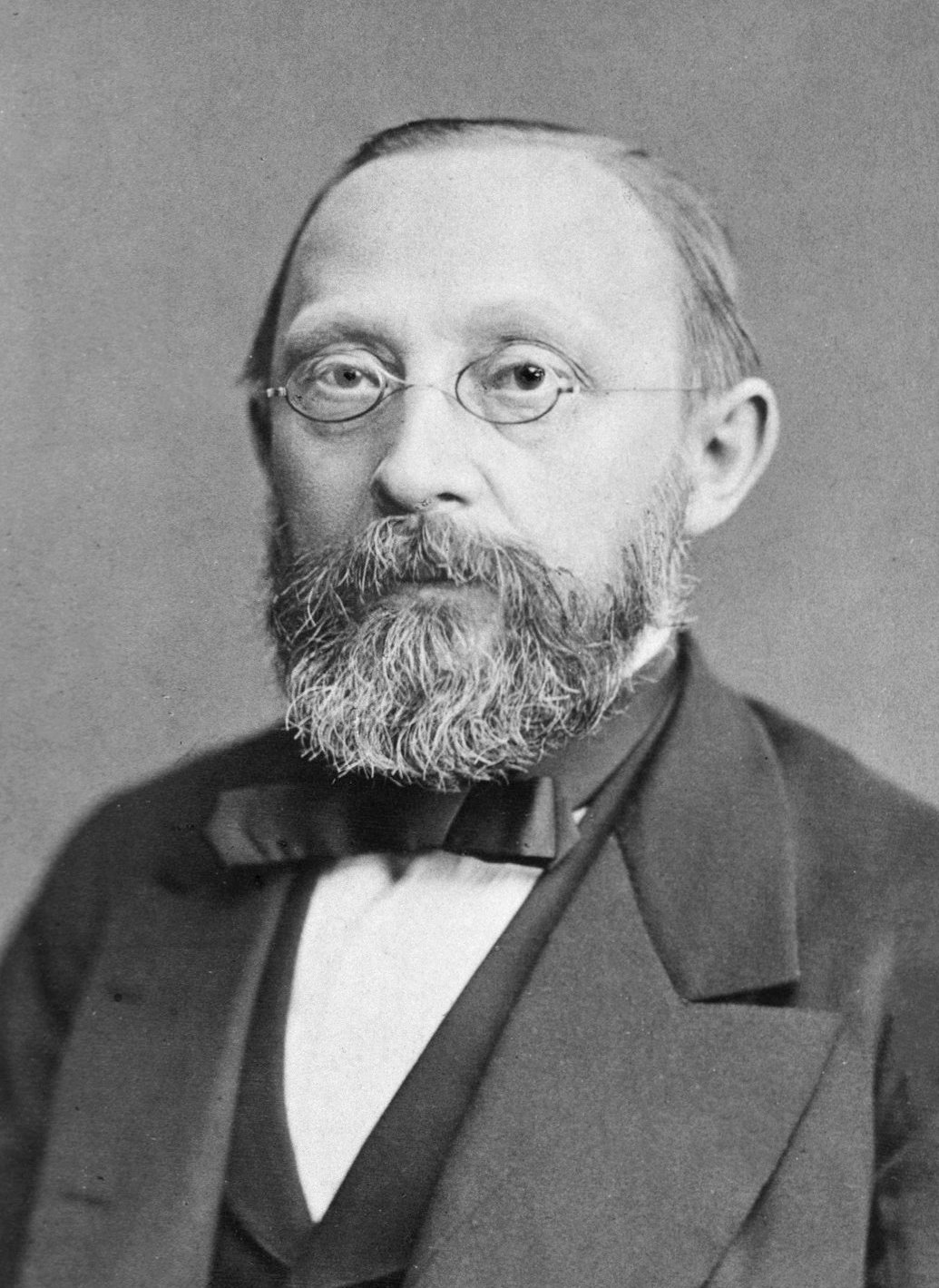
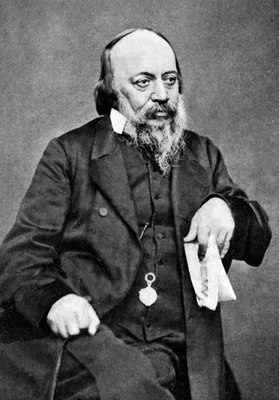
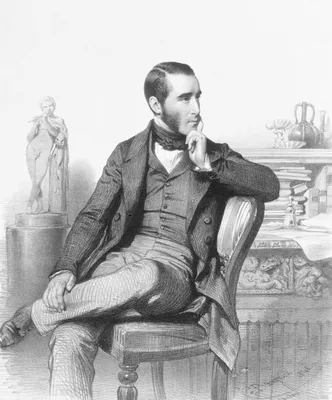
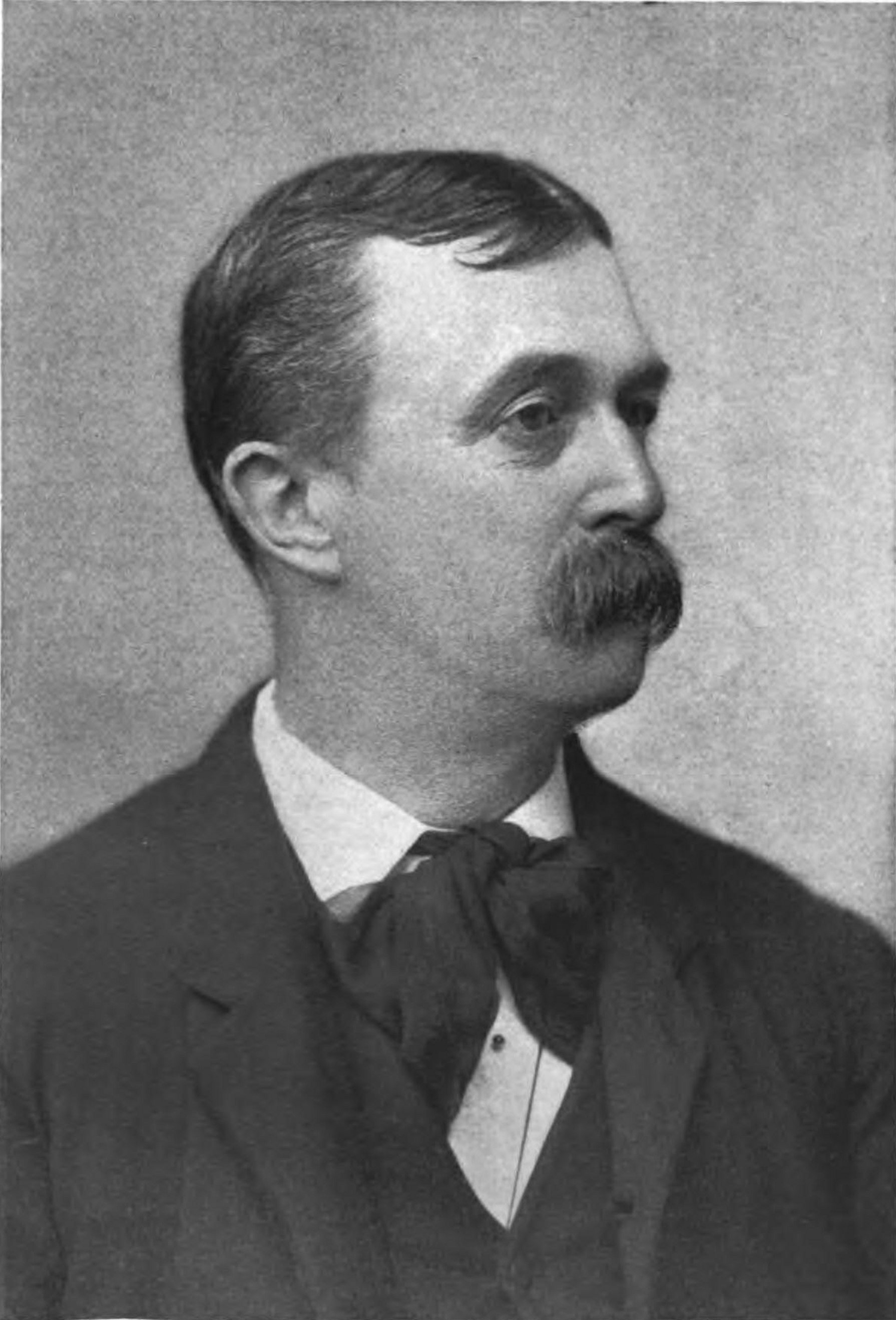
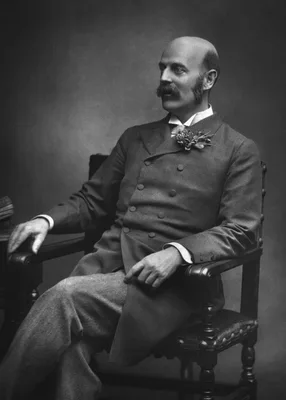
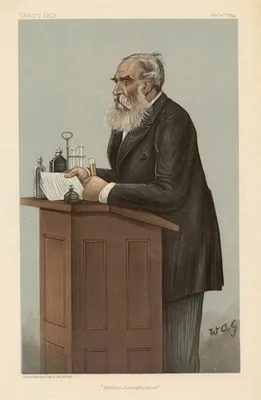
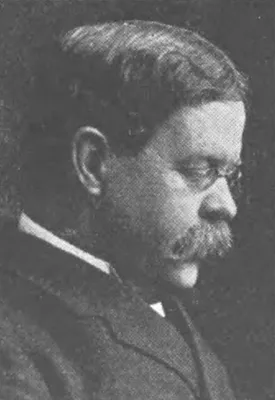
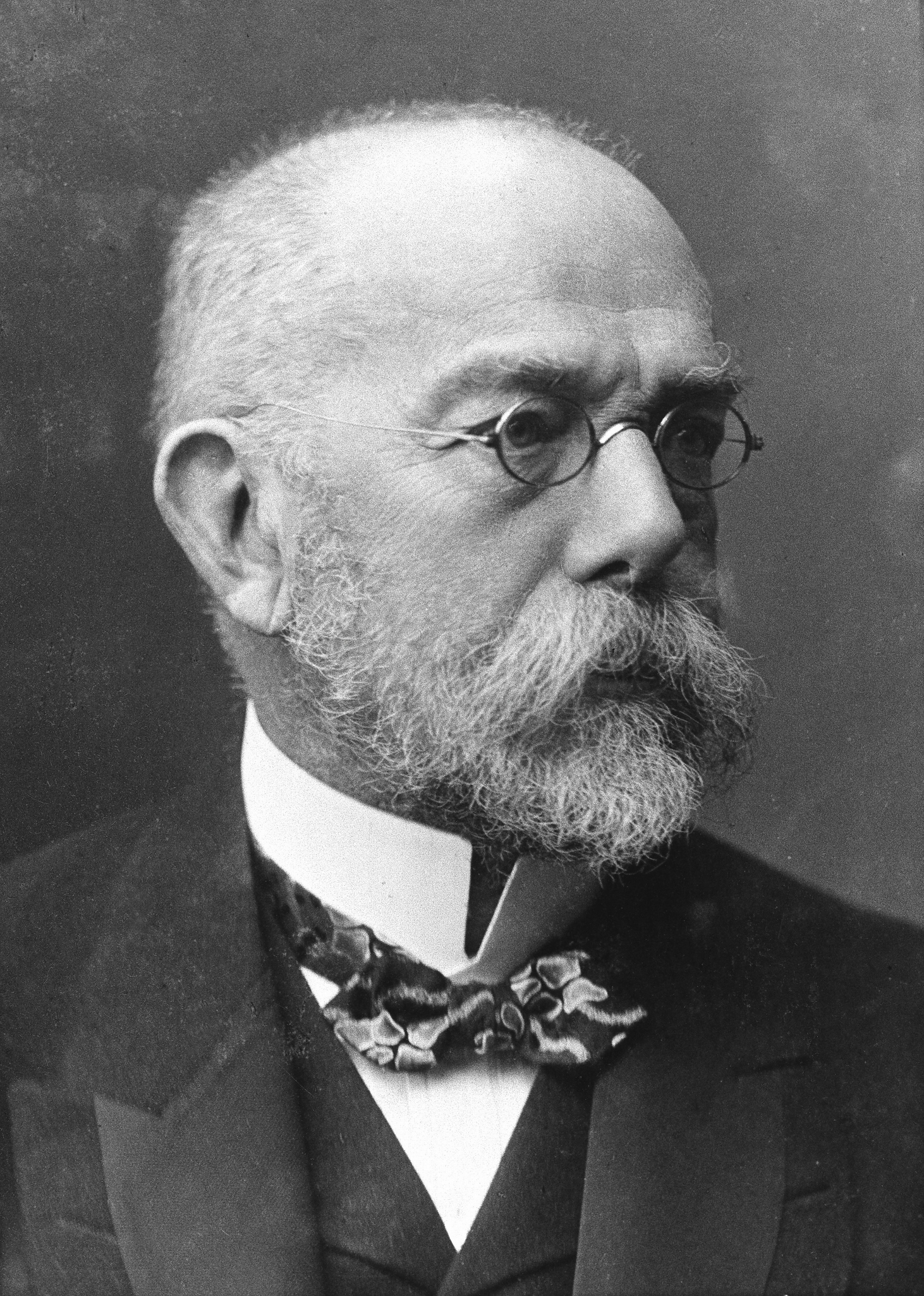
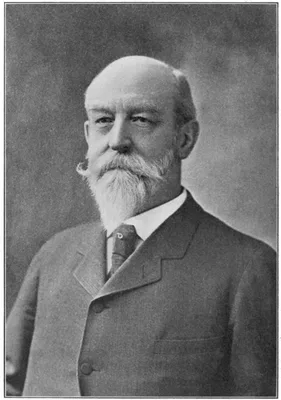
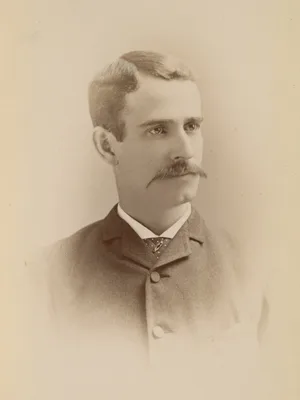
1869 VIRCHOW, Rudolf Ludwig Karl (1821 – 1902)
Ueber gewisse, die Gesundheit benachtheiligende Einflüsse der Schulen.
Improvements in school hygiene and the regular inspection of school children were brought about by the efforts of Virchow. English translation, New York, 1871. Virchow’s papers on public health were collected, annotat…
GMN 1617 · https://historyofmedicine.com/id/1932
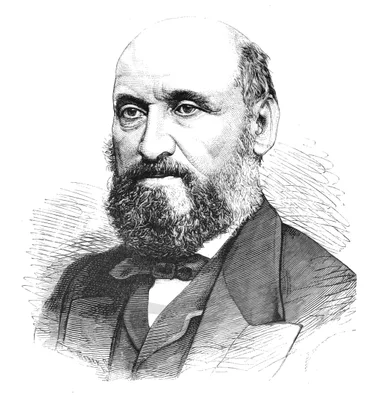
1869 PETTENKOFER, Max Josef von (1818 – 1901)
Das Kanal- Oder Siel-System in München.
Pettenkofer was responsible for the installation of the modern system of sewage disposal in Munich, and thus succeeded in almost completely ridding that city of typhoid.
GMN 1618 · https://historyofmedicine.com/id/1934
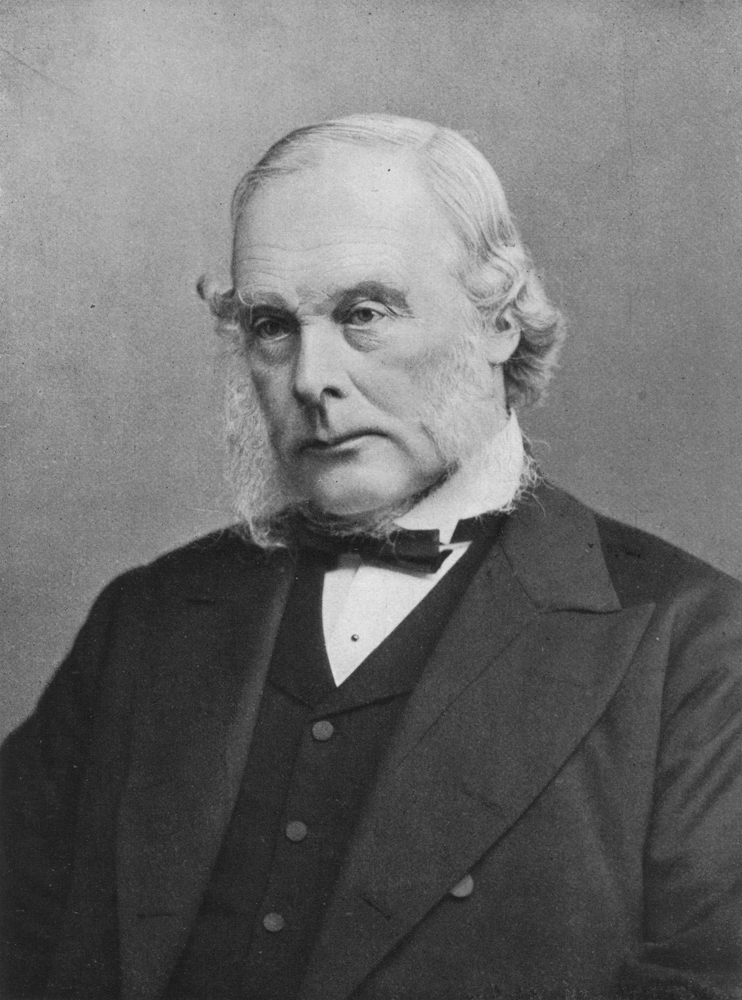
1870 LISTER, Joseph, 1st Baron Lister (1827 – 1912)
On the effects of the antiseptic system of treatment upon the salubrity of a surgical hospital.
GMN 1619 · https://historyofmedicine.com/id/1937
1872 –1887 BELGRAND, Marie François Eugène (1810 – 1878)
La Seine. Etudes hydrologiques. Régime de la pluie, des sources, des eaux courantes. (Les travaux souterrains de Paris.) 4 vols. and atlas.
Belgrand designed the Paris sewers.
GMN 1620 · https://historyofmedicine.com/id/1940
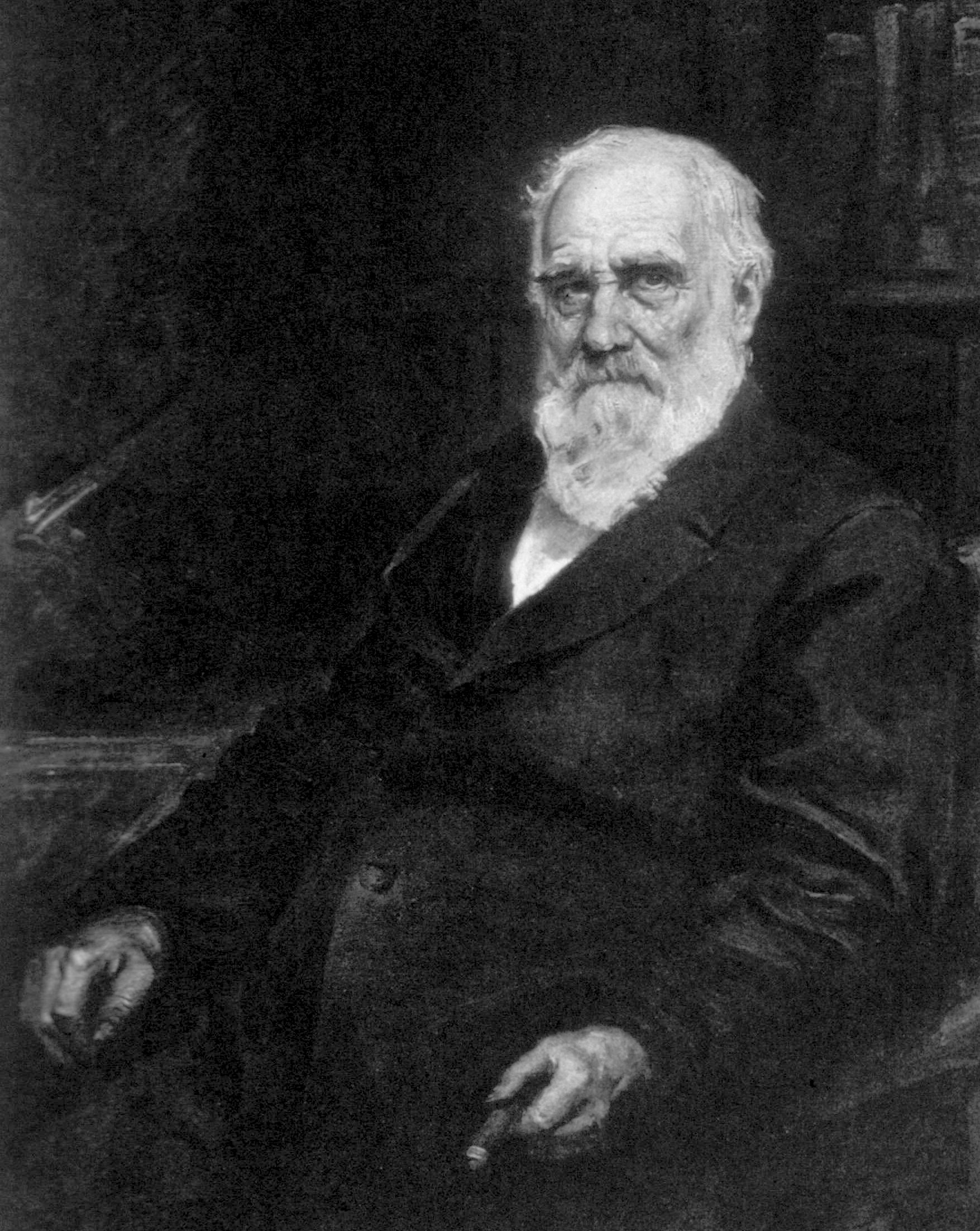
1874 KEDZIE, Robert Clark (1823 – 1902)
Shadows from the walls of death: Facts and inferences prefacing a book of specimens of arsenical wall papers.
To drive home the dangers of arsenic in wallpaper Kedzie took the step of publishing one of the most unusual books ever issued: Shadows from the Walls of Death: Facts and Inferences Prefacing a Book of Specimens of Ar…
GMN 9643 · https://historyofmedicine.com/id/11830
1875 VIOLLET LE DUC, Eugène Emmanuel (1814 – 1879)
Histoire de l’habitation humaine depuis les temps préhistoriques jusqu'à nos jours.
Viollet-Le-Duc traced the history of domestic architecture among the different "races" of mankind. Translated into English by Benjamin Bucknall as Habitations of man in all ages (1876). Digital facsimile of the French…
GMN 1646 · https://historyofmedicine.com/id/2134
1875 FARR, William (1807 – 1883)
Supplement to the thirty-fifth annual report of the Registrar-General of Births and Marriages in England.
Includes statistical calculations of the effect on life expectation if certain preventable diseases were eliminated.
GMN 1703 · https://historyofmedicine.com/id/2502
1876 RICHARDSON, Sir Benjamin Ward (1828 – 1896)
Hygeia: A city of health.
Imaginative outline for an utopian city of 100,000 people which Richardson, as public health reformer, hoped would reduce mortality to five per thousand in two generations. Includes details of the laying out of street…
GMN 9316 · https://historyofmedicine.com/id/11498
1876 RICHARDSON, Sir Benjamin Ward (1828 – 1896)
Diseases of modern life.
Digital facsimile from the Internet Archive at this link.
GMN 9527 · https://historyofmedicine.com/id/11713
1877 BOWDITCH, Henry Ingersoll (1808 – 1892); PICKERING, Henry Goddard (1848 – 1926)
Public hygiene in America: Being the centennial discourse delivered before the International Medical Congress, Philadelphia, September, 1876 by Henry I. Bowditch. With extracts from correspondence from the various states. Together with a digest of American sanitary law by Henry G. Pickering.
Digital facsimile from the Internet Archive at this link.
GMN 9160 · https://historyofmedicine.com/id/11339
1879 BAKER, Sir George Edward Dunstan Sherston (1846 – 1923)
The laws relating to quarantine of Her Majesty's dominions at home and abroad, and of the principal foreign states, including the sections of the Public health act, 1875, which bear upon measures of prevention
Digital facsimile from the Internet Archive at this link.
GMN 9028 · https://historyofmedicine.com/id/11207
1879 VIRCHOW, Rudolf Ludwig Karl (1821 – 1902)
Gesammelte Abhandlungen aus dem Gebiete der öffentlichen Medicin und der Seuchenlehre. 2 vols.
Virchow "articulated that the moral goal of the political role of medicine was to become an active agent in eliminating social inequality" (Dorothy Porter, Doctors, the state and the ethics of political medical practi…
GMN 12084 · https://historyofmedicine.com/id/14293
1880 GALTON, Sir Douglas Strutt (1822 – 1899)
Observations on the construction of healthy dwellings.
Galton spent some years in the army; he had a variety of interests, chief among them being railways, education and sanitary science. He designed the Herbert Hospital at Woolwich and he invented a ventilating fire grate.
GMN 1621 · https://historyofmedicine.com/id/1946
1881 UFFELMANN, Julius August Christian (1837 – 1894)
Die öffentliche Hygiene im alten Rom.
GMN 1647 · https://historyofmedicine.com/id/2142
1882 KANE, Harry Hubbell (1854 – )
Opium-smoking in America and China: A study of its prevalence, and effects, immediate and remote, on the individual and the nation.
The author claims (p. 1) that "the first white man who smoked opium in America is said to have been a sporting character named Clendenyn. The second—induced to try it by the first—smoked in 1871." Digital facsimile fr…
GMN 9506 · https://historyofmedicine.com/id/11691
1883 COHN, Hermann Ludwig (1838 – 1906)
Die Hygiene des Auges in den Schulen.
Cohn did much to promote school hygiene. He advocated regular examination of the eyes of school children, an idea which was put into practice in 1885. An English translation of the book appeared in 1886.
GMN 1622 · https://historyofmedicine.com/id/1953
1883 FORT, George Franklin (1809 – 1872)
Medical economy during the Middle Ages; a contribution to the history of European morals, from the time of the Roman Empire to the close of the 14th century.
GMN 1648 · https://historyofmedicine.com/id/2146
1884 BOLTON, Sir Francis John (1831 – 1887)
London water supply, including a history and description of the London waterworks.
GMN 1623 · https://historyofmedicine.com/id/1958
1884 HORBRECHT, James Friedrich Ludolf (1825 – 1902)
Die Canalisation von Berlin.
Hobrecht was responsible for the construction of the Berlin sewers.
GMN 1624 · https://historyofmedicine.com/id/1965
1884 GORDON, Sir Charles Alexander (1821 – 1899)
An epitome of the reports of the medical officers to the Chinese Imperial Maritime Customs Office from 1871 to 1882. With chapters on the history of medicine in China: Materia medica: Epidemics: Famine: Ethnology: And chronology in relation to medicine and public health.
Apart from studies of common diseases, public health issues, and epizootics, this work contains a chapter on opium smoking and a chapter on the castration of Chinese eunuchs, of which there were around a thousand work…
GMN 9422 · https://historyofmedicine.com/id/11605
1885 PLUNKETT, H. M. (1826 – )
Women, plumbers, and doctors: or, household sanitation
Dedicated "To Dr. Henry I. Bowditch, whose early, persistent, and enthusiastic labors make him the apostle of sanitation in America." Digital facsimile from the Hathi Trust at this link.
GMN 9159 · https://historyofmedicine.com/id/11338
1886 HAWAII. BOARD OF HEALTH
Leprosy in Hawaii. Extracts from reports of presidents of the board of health, government physicians and others, and from official records, in regard to leprosy before and after the passage of the “Act to prevent the spread of leprosy”, approved Jan. 3, 1865. The laws and regulations in regard to leprosy in the Hawaiian Kingdom.
GMN 10521 · https://historyofmedicine.com/id/12714
1887 CHADWICK, Sir Edwin (1800 – 1890); RICHARDSON, Sir Benjamin Ward (1828 – 1896)
The health of nations: A review of the works of Edwin Chadwick, with a biographical dissertation by Benjamin Ward Richardson. 2 vols.
Chadwick may be said to have initiated the public health era. Largely through his efforts the Public Health Act 1848 came into existence in England. He was the greatest sanitarian of the 19th century; among other thin…
GMN 1625 · https://historyofmedicine.com/id/1972
1887 SIMON, Sir John (1816 – 1904); SEATON, Edward
Public health reports by John Simon. Edited for the Sanitary Institute of Great Britain by Edward Seaton. 2 vols.
Simon was the first medical officer for the City of London. Together with his English sanitary institutions, the above work played a great part in paving the way for modern reforms in the sphere of hygiene and public …
GMN 1626 · https://historyofmedicine.com/id/1976
1890 BILLINGS, John Shaw (1838 – 1913)
Description of the Johns Hopkins Hospital.
Billings was responsible for the designing of the Johns Hopkins Hospital, Baltimore. “It marked a new departure in hospital construction…It was the most perfect and best equipped institution of its time” (Kelly & Burr…
GMN 1627 · https://historyofmedicine.com/id/1982
1890 KOTELMANN, Ludwig Wilhelm Johannes (1839 – 1908)
Gesundheitspflege im Mittelalter.
GMN 1650 · https://historyofmedicine.com/id/2151
1890 SIMON, Sir John (1816 – 1904)
English sanitary institutions, reviewed in their course of development, and in some of their political and social relations.
Simon "viewed the state as provider of the basic conditions needed for subsistence (without interfering in the iron law of wages) through sanitary reform of the environment, prevention of epidemic diseases, and the re…
GMN 1650 · https://historyofmedicine.com/id/2163
1891 –1893 BURDETT, Sir Henry Charles (1847 – 1920)
Hospitals and asylums of the world. 4 vols. and atlas.
This great work deals with the history, administration, and planning of hospitals, and includes a bibliography. The author was an English financier and philanthropist rather than a professional historian or hospital a…
GMN 1628 · https://historyofmedicine.com/id/1989
1891 NORDTMEYER, H
Ueber Wasserfiltration durch Filter aus gebrannter Infusorienerde.
Berkefeld kieselguhr filter.
GMN 2506.1 · https://historyofmedicine.com/id/3225
1892 –1894 STEVENSON, Sir Thomas (1838 – 1908); MURPHY, Sir Shirley Foster (1848 – 1923)
A treatise on hygiene and public health. Edited by T. Stevenson and S. F. Murphy. 3 vols.
GMN 1629 · https://historyofmedicine.com/id/1994
1892 ARLIDGE, John Thomas (1822 – 1899)
The hygiene, diseases, and mortality of occupations.
Remarkably comprehensive discussion, with an innovative classification, of a very wide range of occupations. Digital facsimile from the Internet Archive at this link.
GMN 7614 · https://historyofmedicine.com/id/9786
1897 DIBDIN, William Joseph (1850 – 1925)
The purification of sewage and water.
Dibdin introduced the bacterial system of sewage purification. Previously he had devised the contact system.
GMN 1631 · https://historyofmedicine.com/id/1997
1897 OGATA, Masanori (1852 – 1919)
Ueber die Pestepidemie in Formosa.
Ogata considered the flea (principally Xenopsylla cheopis) to be the principal, if not the sole, vector of bubonic plague infection.
GMN 5128 · https://historyofmedicine.com/id/6130
1898 SIMOND, P. L.
La propagation de la peste.
Simond provided substantial evidence to support Ogata that fleas transmitted plague from rat to man.
GMN 5128.1 · https://historyofmedicine.com/id/6132
1901 STODDART, Frederick Wallis (1860 – 1917)
Some points in the construction of the continuous sewage filter.
GMN 1632 · https://historyofmedicine.com/id/2003
1902 –1912 GREAT BRITAIN. PARLIAMENT
Royal Commission on sewage disposal. Reports 1-8.
GMN 1633 · https://historyofmedicine.com/id/2007
1902 SEDGWICK, William Thompson (1855 – 1921)
Principles of sanitary science and the public health, with special reference to the causation and prevention of infectious diseases.
Digital facsimile of the 1902 first edition from the Hathi Trust at this link.
GMN 12263 · https://historyofmedicine.com/id/14480
1903 KOCH, Robert Heinrich Hermann (1843 – 1910)
Die Bekämpfung des Typhus.
The prophylactic measures for the control of typhus suggested by Koch have been adopted almost everywhere.
GMN 5040 · https://historyofmedicine.com/id/5814
1903 BOWDITCH, Henry Pickering (1840 – 1911); ATWATER, Wilbur Olin (1844 – 1907); CHITTENDEN, Russell Henry (1856 – 1943); WELCH, William Henry (1850 – 1934); BILLINGS, John Shaw (1838 – 1913)
Physiological aspects of the liquor problem. Investigations made by and under the direction of W. O. Atwater, John S. Billings, H. P. Bowditch, R. H. Chittenden, and W. H. Welch Sub-Committee of the Committee of Fifty to Investigate the Liquor Problem. 2 vols.
Digital facsimile from the Internet Archive at this link.
GMN 11627 · https://historyofmedicine.com/id/13827
1905 –1908 CALMETTE, Léon Charles Albert (1863 – 1933)
Recherches sur l’épuration biologique et chimique des eaux d’égout. 8 vols.
GMN 1634 · https://historyofmedicine.com/id/2013
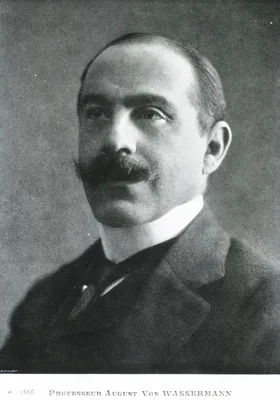
1905 WASSERMANN, August von (1866 – 1925)
Die Bedeutung der Bakterien für die Gesundheitspflege.
GMN 1636 · https://historyofmedicine.com/id/2021
1905 LAWRENCE, Charles (1837 – )
History of the Philadelphia almshouses and hospitals from the beginning of the eighteenth to the ending of the nineteenth centuries, covering a period of nearly two hundred years. showing the mode of distributing public relief through the management of the Boards of Overseers of the Poor, Guardians of the Poor and the Directors of the Department of Charities and Correction.
Digital facsimile from the Internet Archive at this link.
GMN 8689 · https://historyofmedicine.com/id/10866
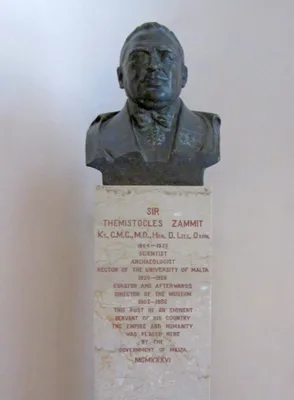
1905 ZAMMIT, Themistocles (1864 – 1935)
A preliminary note on the susceptibility of goats to Malta fever.
Zammit discovered that contaminated goat milk was the vector for transmission to humans of the Malta fever bacterium, Brucellosis melitensis. At the time goat milk was a primary source of milk in Malta and other parts…
GMN 10780 · https://historyofmedicine.com/id/12976
1906 WINSLOW, Charles-Edward Amory (1877 – 1957); PHELPS, Earle Bernard (1876 – 1953)
Investigation on the purification of Boston sewage, with a history of the sewage-disposal problem.
GMN 1637 · https://historyofmedicine.com/id/2026
1906 DELAUNAY, Henri (1865 – )
L’hygiène publique à travers les âges.
GMN 1652 · https://historyofmedicine.com/id/2169
1906 SINCLAIR, Upton Beall Jr. (1878 – 1968)
The jungle.
Sinclair wrote The jungle to portray the harsh conditions and exploited lives of immigrants in the United States in Chicago and other industrialized cities. His primary purpose in describing the meat industry and its …
GMN 12739 · https://historyofmedicine.com/id/14985
1909 TODD, Frank Morton
Eradicating plague in San Francisco. Report of the Citizen's Health Committee and an account of its work. With brief descriptions of the measures taken, copies of ordinances in aid of sanitation, articles by sanitarians on the nature of plague and the best means of getting rid of it, facsimiles of circulars issued by the committee and a list of subscribers to the health fund. March 31, 1909. Prepared by Frank Morton Todd, historian for the Committee.
Digital facsimile from the Internet Archive at this link.
GMN 10406 · https://historyofmedicine.com/id/12599
1910 HENRI, Victor (1872 – 1940)
Stérilisation de grandes quantités d’eau par les rayons ultraviolets.
With A. Helbronner and M. de Recklinghausen.
GMN 1638 · https://historyofmedicine.com/id/2033
1910 HOAG, Ernest Bryant (1868 – 1924)
The health index of children.
Hoag was medical director of the public schools in Berkeley, California. As Hoag wrote in his introduction, the object of this work was "to show teachers and parents how to detect easily those ordinary physical defect…
GMN 11446 · https://historyofmedicine.com/id/13645
1910 CHAPIN, Charles Value (1856 – 1941)
The sources and modes of infection.
Digital facsimile from the Hathi Trust at this link.
GMN 13159 · https://historyofmedicine.com/id/15418