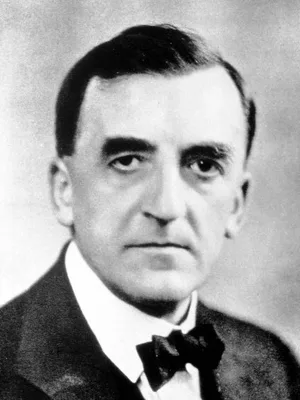
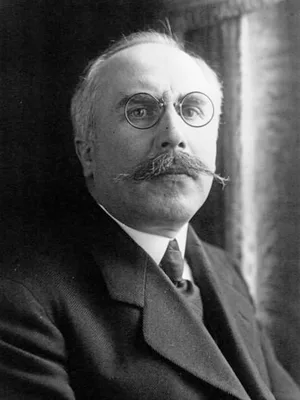
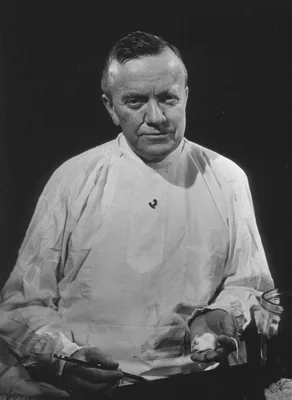
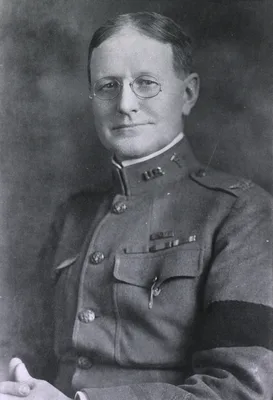
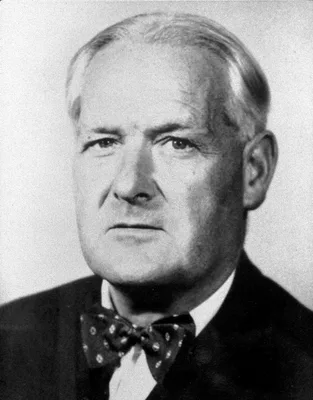
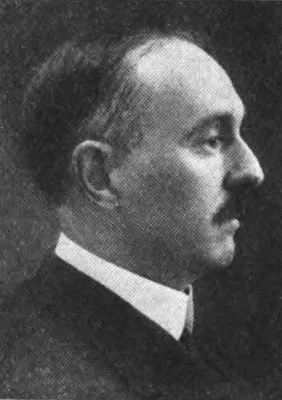
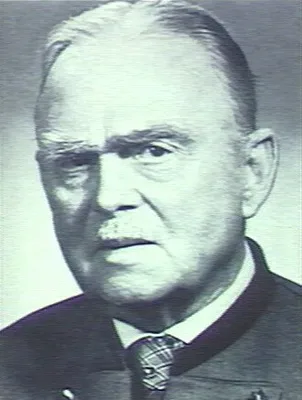
1917 ECONOMO, Constantin von (1876 – 1931)
Encephalitis lethargica.
Economo’s classic description of epidemic encephalitis (“von Economo’s disease”) was published on 10 May 1917; see No. 4649.
GMN 4650 · https://historyofmedicine.com/id/8868
1918 U.S. PUBLIC HEALTH SERVICE
"Spanish influenza," "Three-day fever," "The flu".
Public health advice from the U.S. Public Health Service published during the pandemic.
GMN 11922 · https://historyofmedicine.com/id/14127
1919 LOEWE, Leo (1896 – ); STRAUSS, Israel (1873 – 1955)
Etiology of epidemic (lethargic) encephalitis. Preliminary note.
Experimental transmission of encephalitis lethargica.
GMN 4651 · https://historyofmedicine.com/id/750
1920 GREAT BRITAIN. MINISTRY OF HEALTH
Report on the pandemic of influenza 1918-19.
Reports on Public Health and Medical Subjects, No. 4. The most widespread and serious pandemic of influenza occurred in 1918-19. It spread throughout Europe, Russia, Canada, S. America, New Zealand, Australia, Africa,…
GMN 5492 · https://historyofmedicine.com/id/6441
1920 U.S. BUREAU OF THE CENSUS
Special tables of mortality from influenza and pneumonia in Indiana, Kansas, and Philadelphia, Pa., September 1 to December 31, 1918.
Digital facsimile from the Hathi Trust at this link.
GMN 11921 · https://historyofmedicine.com/id/14126
1920 U.S. BUREAU OF THE CENSUS
Mortality Statistics 1918. Nineteenth Annual Report.
From Causes of Death, p. 27: "Influenza and pneumonia (All forms). "In 1918 the registration area (exclusive of Hawaii) 477,467 deaths wee assigned to influenza and pneumonia (all forms). In the latter part of that ye…
GMN 12068 · https://historyofmedicine.com/id/14277
1921 VAUGHAN, Warren Taylor (1893 – 1944)
Influenza: An epidemiological study. The American Journal of Hygiene. Monographic Series No. 1.
A comprehensive survey written two years after the pandemic, including historical information back to 1893. Digital facsimile from Google Books at this link.
GMN 11920 · https://historyofmedicine.com/id/14125
1921 U.S. BUREAU OF THE CENSUS
Mortality statistics 1919. Twentieth annual report.
From "Influenza and pneumonia (All forms)" p. 28: "In the later part of 1918 a pandemic of influenza swept over the country and did not fully spend its force until well into 1919.... "In the registration area (exclusi…
GMN 12069 · https://historyofmedicine.com/id/14278
1922 ZINSSER, Hans (1878 – 1940)
The etiology and epidemiology of influenza.
Digital facsimile from Harvard Library at this link.
GMN 11919 · https://historyofmedicine.com/id/14124
1922 STERN, Felix (1884 – 1941)
Die epidemische Encephalitis. (Monographien aus dem Gesamtgebiete der Neurologie und Psychiatrie. Bd. 30).
Felix Stern was the leading German specialist in encephalitis lethargica . No national statistics for this disease, first described in Vienna in 1916, were kept in Germany. For this reason, the data collected by Stern…
GMN 12637 · https://historyofmedicine.com/id/14878
1923 JONES, William Henry Samuel (1876 – 1963); HIPPOCRATES, [Ἱπποκράτης; Hippocrates of Kos] (-460 – -370)
Epidemics I and III. In [Works] with English translation by W.H.S. Jones, 1, 139-287
Hippocrates may be regarded as the first malariologist; he clearly and fully described the intermittent fevers; he was acquainted with seasonal and topographical variations in the distribution of malaria; and he recog…
GMN 5228 · https://historyofmedicine.com/id/7854
1923 JONES, William Henry Samuel (1876 – 1963); HIPPOCRATES, [Ἱπποκράτης; Hippocrates of Kos] (-460 – -370)
Epidemics I and III. In: [Works] with an English translation by W.H.S. Jones.
Hippocrates introduced the inductive method of studying epidemics.
GMN 1672 · https://historyofmedicine.com/id/8603
1923 SEN, Rajendra Kumar
A treatise on influenza, with special reference to the pandemic of 1918.
Sen, company doctor on the Hurmutty Tea Estate in Assam, estimated that the pandemic killed about 15,000,000 people in India.
GMN 12109 · https://historyofmedicine.com/id/14318
1928 KANEKO, Renjiro (1886 – ); AOKI, Y
Ueber die Encephalitis epidemica in Japan.
Japanese encephalitis distinguished from encephalitis lethargica.
GMN 4654 · https://historyofmedicine.com/id/760
1929 ECONOMO, Constantin von (1876 – 1931)
Die Encephalitis lethargica, ihre Nachkrankheiten und ihre Behandlung.
Translated and adapted by K. O. Newman as Encephalitis lethargica its sequelae and treatment. London: Oxford University Press, 1931.
GMN 12642 · https://historyofmedicine.com/id/14883
1930 SYLVEST, Ejnar Oluf Sorenson (1880 – 1931)
En Bornholmsk epidemi-myositis epidemica.
First full description of epidemic myositis, “Bornholm disease”. See also Sylvest’s monograph on the subject, London, 1934.
GMN 5540 · https://historyofmedicine.com/id/6728
1931 CARTER, Henry Rose (1852 – 1925)
Yellow fever: an epidemiological and historical study of its place of origin. Edited by Laura Armistead Carter and Wade Hampton Frost.
Digital facsimile from the Internet Archive at this link.
GMN 5468 · https://historyofmedicine.com/id/8625
1932 GREENWOOD, Major (1880 – 1949)
Epidemiology, historical and experimental.
GMN 1683 · https://historyofmedicine.com/id/2378
1932 DUGUET, Firmin (1876 – ); GODART, Justin (1871 – 1956)
Le pèlerinage de la Mecque au point de vue religieux, social et sanitaire par le docteur Duguet. Avec un préface de Justin Godart.
"Duguet also served as inspector general of health services of Lebanon and Syria under the French Mandate and was responsible for the medical supervision of the pilgrimage to Mecca. The first part of the book gives so…
GMN 12051 · https://historyofmedicine.com/id/14259
1934 HAYASHI, Michitomo
Übertragung des Virus von Encephalitis epidemica auf Affen.
Experimental transmission of Japanese B encephalitis.
GMN 4657 · https://historyofmedicine.com/id/767
1934 ARMSTRONG, Charles (1886 – 1967); LILLIE, Ralph Dougall (1896 – 1979)
Experimental lymphocytic choriomeningitis of monkeys and mice produced by a virus encountered in studies of the 1933 St. Louis encephalitis epidemic.
Isolation of the virus of benign lymphocytic choriomeningits.
GMN 4688 · https://historyofmedicine.com/id/966
1934 ZINSSER, Hans (1878 – 1940)
Varieties of typhus virus and the epidemiology of the American form of European typhus fever (Brill’s disease).
Zinsser advanced the theory that Brill’s disease is a recrudescence of epidemic typhus in persons who have contracted the typhus some time previously. The condition has subsequently been renamed “Brill-Zinsser disease”.
GMN 5396.4 · https://historyofmedicine.com/id/7180
1935 GREENWOOD, Major (1880 – 1949)
Epidemics and crowd diseases: An introduction to the history of epidemiology.
GMN 1683.1 · https://historyofmedicine.com/id/2383
1936 TANIGUCHI, Tenji (1889 – 1961); ET AL
A virus isolated in 1935 epidemic of summer encephalitis in Japan.
T. Taniguchi, M. Hosokawa, and S. Kuga established a virus etiology for Japanese B encephalitis.
GMN 4659 · https://historyofmedicine.com/id/774
1941 MAJOR, Ralph Hermon (1884 – 1970)
War and disease.
GMN 1684 · https://historyofmedicine.com/id/2388
1941 ADLER, Saul (1895 – 1956); BER, Mordechai ( – 1952)
The transmission of Leishmania tropica by the bite of Phlebotomus papatasii.
Proof of the transmission of L. tropica by P. papatasii.
GMN 5301.2 · https://historyofmedicine.com/id/6543
1941 SILBERBERG, Szprynca (Stephania) (1898 – 1942)
Jak zapobiegać chorobom zakaźnym i jak je zwalczać? Biblioteczka Zydowskiej Samopomocy Spolecznej. Nr. 1.
A 14-page pamphlet on epidemiology published by the Żydowska Samopomoc Społeczna, Prezydium (Jewish Social Self-Help Organization) in the Kraków Ghetto to educate Jewish activists and physicians. The author perished a…
GMN 10769 · https://historyofmedicine.com/id/12965
1942 SWAMINATH, C. S.
Transmission of Indian kala-azar to man by the bites of Phlebotomus argentipes, Ann. and Brun.
Successful transmission of kala-azar to man by the bite of Phlebotomus argentipes reported, showing it to be the vector of Leishmania. With H. E. Shortt and L. A. P. Anderson.
GMN 5302 · https://historyofmedicine.com/id/6545
1942 BURNET, Sir Frank Macfarlane (1899 – 1985); CLARKE, Ellen
Influenza: A survey of the last fifty years in the light of modern work on the virus of epidemic influenza.
GMN 12108 · https://historyofmedicine.com/id/14317
1943 SANDERS, Murray Jonathan (1910 – 1987); ALEXANDER, R. C.
Epidemic keratoconjunctivitis. I. Isolation and identification of a filterable virus.
GMN 5990 · https://historyofmedicine.com/id/7088
1944 SIMMONS, James Stevens (1890 – 1954); WHAYNE, Tom French (1905 – ); ANDERSON, Gaylord West (1901 – 1979); HORACK, Harold Maclachlan (1912 – 1977)
Global Epidemiology: A geography of disease and sanitation. Vol. 1: India and the Far East/The Pacific Area; Vol. 2: Africa and the Adjacent Islands; Vol. 3: The Near and Middle East. Edited by James Stevens Simmons, Tom F. Whayne, Gaylord West Anderson, Harold Maclachlan Horack... and United States. Surgeon-General's Office. Preventive Medicine Service.
GMN 9032 · https://historyofmedicine.com/id/11211
1947 ASHBURN, Percy Moreau (1872 – 1940)
The ranks of death: A medical history of the conquest of America
Digital facsimile from the Hathi Trust at this link.
GMN 10216 · https://historyofmedicine.com/id/12405
1950 DOLL, Sir William Richard Shaboe (1912 – 2005); HILL, Sir Austin Bradford (1897 – 1999)
Smoking and carcinoma of the lung. Preliminary report.
A study of 1,465 cases of lung cancer and 1,465 matched controls, which confirmed and extended the studies of Wynder and Graham, and others. See also later papers by the same authors in Brit. med. J., 1952, 2,1271-86;…
GMN 3215.2 · https://historyofmedicine.com/id/4373
1950 COHN, Alfred Einstein (1879 – 1957); LINGG, Claire
The burden of diseases in the United States. 2 vols. (text + portfolio of color charts).
In this very attractively produced publication the authors called attention to the decreasing trend of death rates from infectious diseases and the increasing trend of death from chronic diseases such as cancer, cephr…
GMN 11571 · https://historyofmedicine.com/id/13770
1950 ALIVIZATOS, G. P.
The early smallpox epidemics in Europe and the plague of Athens after Thucydides.
GMN 13804 · https://historyofmedicine.com/id/16091
1952 WINSLOW, Charles-Edward Amory (1877 – 1957)
Man and epidemics.
GMN 1685 · https://historyofmedicine.com/id/2391
1952 –1961 RODENWALDT, Ernst Robert Karl (1878 – 1965); BADER, Richard-Ernst (1912 – 1996); JUSATZ, Helmut Joachim (1907 – 1991)
World-atlas of epidemic diseases. Welt-Seuchen-Atlas: Weltatlas der Seuchenverbreitung und Seuchenbeweng. In collaboration with Richard-Ernst Bader ... [et al.]. Edited by Ernst Rodenwaldt; assistant scientific editors: Ludwig Bachmann, Helmut J. Jusatz. Organization, Heinz Dörrfuss. Cartography, Konrad Voppel, in cooperation with Fritz Hölzel and Henry Petersen. Sponsorship, Bureau of Medicine and Surgery, Navy Dept., Washington, D.C. 3 vols.
In English and German.
GMN 9033 · https://historyofmedicine.com/id/11212
1953 RODENWALDT, Ernst Robert Karl (1878 – 1965)
Pest in Venedig 1575-1577. Ein Beitrag zur Frage der Infektkette bei den Pestepidemien West-Europas.
Rodenwaldt studied of the course of plague in Venice from 1575-1577 and the measures taken to combat the epidemic, considering symptoms, transmitter, environment, climatic influences, and the success and failure of th…
GMN 10504 · https://historyofmedicine.com/id/12697
1955 SCHÄFER, Werner (1912 – 2000)
Vergleichende sero-immunologische Untersuchungen über die Viren der Influenza und klassischen Geflügelpest.
Schäfer showed the close serological relationship between human influenza viruses and their avian counterparts and suggested that members of this group might change their host specificity.
GMN 5500.1 · https://historyofmedicine.com/id/6467
1955 COOK, Sherburne Friend (1896 – 1974)
The epidemic of 1830-1833 in California and Oregon.
Digital facsimile from the Hathi Trust at this link.
GMN 10852 · https://historyofmedicine.com/id/13048
1958 LUMSDEN, Leslie Leon (1875 – 1946)
St. Louis encephalitis in 1933; observations on epidemiological features.
In a report to the Surgeon General in 1933, Lumsden concluded that the Culex mosquito was the vector of the St. Louis encephalitis virus. His report was not published until 1958.
GMN 4661.2 · https://historyofmedicine.com/id/791
1959 POLLITZER, Robert (1885 – 1968)
Cholera.
Includes a section on the history of cholera. WHO Monograph Series,No. 43.
GMN 5111.4 · https://historyofmedicine.com/id/6070
1964 SCHWABE, Calvin W. (1927 – 2006)
Veterinary medicine and human health.
Foundational work on veterinary epidemiology. At the University of California, Davis in 1966 Schwabe founded the first epidemiology department and graduate program in a school of veterinary medicine. Unusually extensi…
GMN 10363 · https://historyofmedicine.com/id/12555
1965 ACKERKNECHT, Erwin Heinz (1906 – 1988)
History and geography of the most important diseases.
Originally published in German, 1963.
GMN 1685.1 · https://historyofmedicine.com/id/2394
1965 COOPER, Donald B.
Epidemic disease in Mexico City 1761-1813: An administrative, social, and medical study.
GMN 7933 · https://historyofmedicine.com/id/10107
1965 SCOTT, David (1916 – )
Epidemic disease in Ghana 1901-1960.
GMN 10680 · https://historyofmedicine.com/id/12873
1965 HILL, Sir Austin Bradford (1897 – 1999)
The Environment and disease: Association or causation?
"In 1965, the English statistician Sir Austin Bradford Hill proposed a set of nine criteria to provide epidemiologic evidence of a causal relationship between a presumed cause and an observed effect. (For example, he …
GMN 10883 · https://historyofmedicine.com/id/13079
1967 LANGLANDS, Bryan Wooleston (1928 – 1989)
The sleeping sickness epidemic of Uganda 1900-1920: A study in historical geography.
GMN 10679 · https://historyofmedicine.com/id/12872
1968 KANNEL, William B. (1923 – 2011)
The Framingham Study: An epidemiological investigation of cardiovascular disease.
"The Framingham Heart Study is a long-term, ongoing cardiovascular cohort study on residents of the town of Framingham, Massachusetts. The study began in 1948 with 5,209 adult subjects from Framingham, and is now on i…
GMN 10213 · https://historyofmedicine.com/id/12402
1968 STEINER, Paul Eby (1902 – 1978)
Disease in the Civil War: Natural biological warfare in 1861-1865.
GMN 10802 · https://historyofmedicine.com/id/12998

![HIPPOCRATES, [Ἱπποκράτης; Hippocrates of Kos] (-460 – -370)](/media/portraits/50)