1811 TYLER, Mary Hunt Palmer (1775 – 1866)
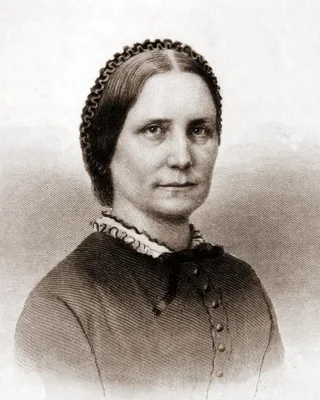
The maternal physician; a treatise on the nurture and management of infants, from the birth until two years old. Being the result of sixteen years' experience in the nursery. Illustrated by extracts from the most approved medical authors
The first American book on pediatrics, in the tradition of "advice books" or childcare manuals for mothers. This was the first American printed book on a medical subject written by a woman. Pages 248-75 publish a list…
GMN 7801 · https://historyofmedicine.com/id/9973
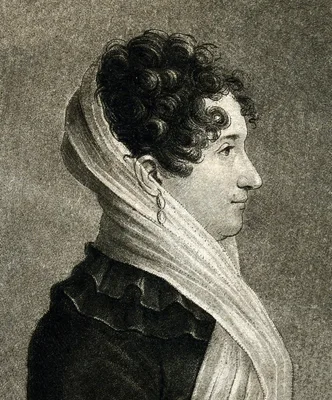
1812 BOIVIN, Marie Anne Victoire (1773 – 1841)
Mémorial de l’art des accouchements.
Mme Boivin was one of the most famous of the Paris midwives. She improved the speculum and wrote intelligently on hydatidiform mole.
GMN 6165 · https://historyofmedicine.com/id/7752
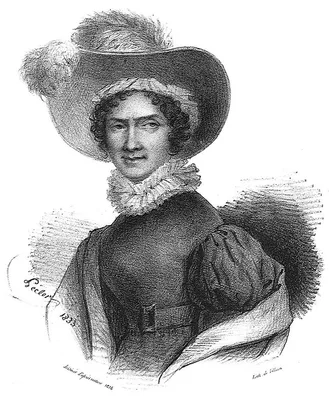
1821 –1825 DUGÈS, Antoine Louis (1798 – 1838); LACHAPELLE, Marie-Louise (1769 – 1821)
Pratique des accouchemens…par Marie Louise La Chapelle. Publiés par Antoine Dugès. 3 vols.
Mme La Chapelle was a famous midwife and a colleague of Baudelocque. She supervised 5,000 deliveries and her vast experience enabled her to write her book. She reduced the 94 theoretical presentations suggested by Bau…
GMN 6170 · https://historyofmedicine.com/id/7762
1826 GRIFFITH, Mary (1772 – 1846)
Observations on the May-Bug, and its ravages on plum and other trees, and also on the means of preventing the mischief.
Griffth was probably the first American woman to publish in the sciences outside of materia medica and childcare. This article was probably her earliest non-geological publication. See Robt S. Cox, "A spontaneous flow…
GMN 11415 · https://historyofmedicine.com/id/13614
1827 BOIVIN, Marie Anne Victoire (1773 – 1841)
Nouvelles recherches sur l’origine, la nature et le traitement de la mole vésiculaire ou grossesse hydatique.
Classic description of hydatidiform mole.
GMN 6172 · https://historyofmedicine.com/id/7766
1833 BOIVIN, Marie Anne Victoire (1773 – 1841); DUGÈS, Antoine Louis (1798 – 1838)
Traité pratique des maladies de l’utérus et de ses annexes. 2 vols. and atlas.
Boivin and Dugès practiced amputation of the cervix for chronic ulceration. On page 648 of vol. 2 is the first recorded case of cancer of the female urethra. English translation, 1834.
GMN 6028 · https://historyofmedicine.com/id/7255
1836 GRIFFITH, Mary (1772 – 1846)
Discoveries in light and vision; with a short memoir containing discoveries in the mental faculties.
The first work on vision written by a woman and published in the United States. Griffith published the work anonymously. "Griffith’s work had its start in print in 1834, when she published two articles on vision in Da…
GMN 11430 · https://historyofmedicine.com/id/13629
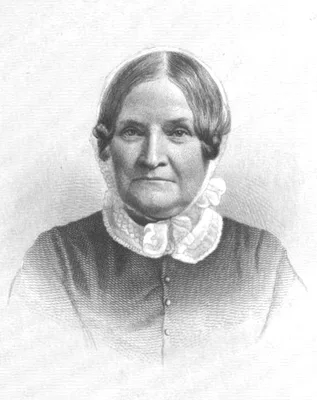
1837 CHILD, Lydia Maria Francis (1802 – 1880)
The family nurse; or companion of the frugal housewife. Revised by a member of the Massachusetts Medical Society.
Child was was an abolitionist, women's rights activist, Native American rights activist, novelist, journalist, and opponent of American expansionism. Her journals, both fiction and domestic manuals, reached wide audie…
GMN 10411 · https://historyofmedicine.com/id/12604
1837 HEY, Rebecca
The spirit of the woods, illustrated by coloured engravings
Little is known of the anonymous author of this early illustrated work on trees except that she was also "Mrs. William Hey" and had previously published The moral of flowers. The beautiful hand-colored plates presumab…
GMN 11467 · https://historyofmedicine.com/id/13666
1838 GRIFFITH, Mary (1772 – 1846)
Barn-Yard rhymes; showing what opinions the turkey, the cock, the goose, and the duck, enterain of allopathia, homopathia, electro-galvanism and the animalcule doctrines.
A critique of medical practice and procedures in 80 pages of rhymed couplets voiced by farmyard animals. Mary Griffith, who published these satirical poems anonymously, dedicated the work to the Philadelphia physician…
GMN 11431 · https://historyofmedicine.com/id/13630
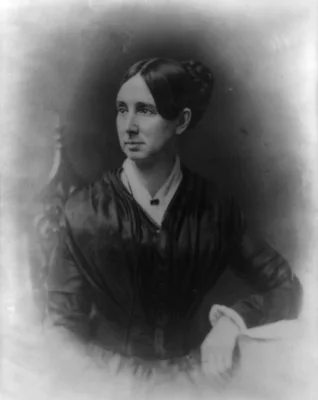
1843 DIX, Dorothea Lynde (1802 – 1887)
Memorial. To the Legislature of Massachusetts.
Dorothea Dix played an instrumental role in the founding or expansion of more than 30 hospitals for the treatment of the mentally ill in various U.S. states. This was probably the first of her many publications advoca…
GMN 13612 · https://historyofmedicine.com/id/15892
1846 WILLARD, Emma (1787 – 1870)
A treatise on the motive powers which produce the circulation of the blood.
The author was an American women's rights activist and educator rather than a physician or physiologist. Digital facsimile from U.S. National Library of Medicine at this link.
GMN 11734 · https://historyofmedicine.com/id/13935
1849 BLACKWELL, Elizabeth (1821 – 1910)
Ship fever. An inaugural thesis, submitted for the degree of M.D., at Geneva Medical College, Jan. 1849.
Elizabeth Blackwell was the first woman to graduate M.D. in the United States. This paper on typhus was her first publication, and is thus the first publication in America by a woman physician educated in the United S…
GMN 11948 · https://historyofmedicine.com/id/14153
1851 HUTCHINSON, E.
Ladies' indispensable assistant: Being a companion for the sister, mother, and wife ... Here are the very best directions for the behavior and etiquette of ladies and gentlemen ... ; also, safe directions for the management of children ... a great variety of valuable recipes, forming a complete system of family medicine ... : to which is added one of the best systems of cookery ever published ....
In spite of the verbose title, the Table of Contents of this work indicates that roughly the first half of the book concerns home remedies for the widest range of complaints and illnesses, and medical properties of pl…
GMN 10416 · https://historyofmedicine.com/id/12609
1852 BLACKWELL, Elizabeth (1821 – 1910)
The laws of life, with special reference to the physical education of girls.
Blackwell's first book, a volume about the physical and mental development of girls, emphasizing the value of exercise, intended to help prepare young women for motherhood. Digital facsimile from Google Books at this …
GMN 11950 · https://historyofmedicine.com/id/14155
1856 TAYLOR, Frances Margaret (1832 – 1900)
Eastern hospitals and English nurses; the narrative of twelve months' experience in the hospitals of Koulali and Scutari by a lady volunteer. 2 vols.
Taylor accompanied Florence Nightingale to Scutari, and worked as nurse in the military hospitals. She provided one of the first eye-witness acounts of military hospitals at Scutari and Koulali, and wrote about the ma…
GMN 7809 · https://historyofmedicine.com/id/9981
1856 FOOTE, Eunice Newton (1819 – 1888)
Circumstances affecting the heat of the sun's rays.
Foote was the first scientist known to have experimented on the warming effect of sunlight on different gases. In this two-page paper she theorized that changing the proportion of carbon dioxide in the atmosphere woul…
GMN 13464 · https://historyofmedicine.com/id/15738
1856 HUNT, Harriot Kezia (1805 – 1875)
Glances and glimpses; or fifty years social, including twenty years professional life.
The autobiography of the first woman to practice medicine professionally in the United States. Digital facsimile from U.S. National Library of Medicine at this link.
GMN 14125 · https://historyofmedicine.com/id/16436
1858 NIGHTINGALE, Florence (1820 – 1910)
Notes on matters affecting the health, efficiency, and hospital administration of the British Army. Founded chiefly on the experience of the late war. Presented by request to the Secretary of State for War.
This privately printed pamphlet contained a color statistical graphic entitled "Diagram of the causes of mortality in the Army of the East" which showed that epidemic disease, which was responsible for more British de…
GMN 7481 · https://historyofmedicine.com/id/9653
1859 NIGHTINGALE, Florence (1820 – 1910)
Notes on hospitals.
Includes four plans of hospitals. A third edition, completely revised, was published by Longmans, Green & Co., London, 1863.
GMN 1611 · https://historyofmedicine.com/id/1907
1860 NIGHTINGALE, Florence (1820 – 1910)
Notes on nursing: what it is, and what it is not.
After receiving training in Germany and France, Florence Nightingale had some nursing experience in England. The Crimean war gave her an opportunity to demonstrate the value of trained nurses. Within a few months of h…
GMN 1612 · https://historyofmedicine.com/id/1912
1860 BLACKWELL, Elizabeth (1821 – 1910)
Medicine as a profession for women.
GMN 6649.9 · https://historyofmedicine.com/id/7778
1863 ALCOTT, Louisa May (1832 – 1888)
Hospital sketches.
Digital facsimile of the 1863 edition from the Internet Archive at this link. Alcott expanded the work for the edition of 1869. Edited, with an extensive introduction by Bessie Z. Jones (Cambridge: Harvard University …
GMN 7419 · https://historyofmedicine.com/id/9591
1864 EDMONDS, Sarah Emma (1841 – 1898)
The female spy of the union army. The thrilling adventures, experiences, and escapes of a woman nurse, spy, and scout, in hospitals, camps and battlefields.
Digital facsimile of a reprint of the 1864 edition from the Internet Archive at this link. Reissued in 1865 as Nurse and spy in the Union Army: Containing the adventures and experience of a woman in hospitals, camps, …
GMN 8994 · https://historyofmedicine.com/id/11173
1867 BROCKETT, Linus Pierpont (1820 – 1893); VAUGHAN, Mary C.
Woman's work in the Civil War: A record of heroism, patriotism and patience.
Details the work of women in the American Civil War in the fields of nursing, supply and sanitary organization (i.e. the Sanitary Commission) with biographies of notable women. Digital facsimile from the Internet Arch…
GMN 7748 · https://historyofmedicine.com/id/9920
1867 HOLSTEIN, Anna Morris (1824 – 1900)
Three years in field hospitals of the Army of the Potomac.
Digital facsimile from Google Books at this link.
GMN 13345 · https://historyofmedicine.com/id/15616
1868 WOOLSEY, Jane Stuart (1830 – )
Hospital days.
Woolsey participated in the first meetings of the Women's Central Relief Association, which preceded the U.S. Sanitary Commission. In 1863 she became Superintendent of Nurses at Fairfax Seminary Hospital, and served t…
GMN 8998 · https://historyofmedicine.com/id/11177
1872 JEX-BLAKE, Sophia Louisa (1840 – 1912)
Medical women: Two essays. I. Medicine as a profession for women. II. Medical education for women
From the time of her admission to medical school Jex-Blake became virtually the leader of the movement in Great Britain to open the medical profession to women. Greatly expanded second edition, Edinburgh, 1886.
GMN 6649.91 · https://historyofmedicine.com/id/7780
1875 EDDY, Mary Baker (1821 – 1910)
Science and health.
Includes an exposition of the system of faith healing that holds a significant place in Christian Science.
GMN 6643.9 · https://historyofmedicine.com/id/7763
1877 JACOBI, Mary Corinna Putnam (1842 – 1906)
The question of rest for women during menstruation.The Boylston Prize Essay of Harvard University for 1876.
"Jacobi's paper was a response to Dr. Edward H. Clarke's earlier publication, Sex in Education; or, A Fair Chance for the Girls (1875), a book claiming that any physical or mental exertion during menstruation could le…
GMN 11912 · https://historyofmedicine.com/id/14117
1881 POPE, Emily F.; CALL, Emma Louise (1847 – 1937); POPE, C. Augusta
The practice of medicine by women in the United States.
"Emily F. Pope, C. Augusta Pope, and Emma Call, doctors on the staff of the New England Hospital, published a study on women physicians. Their sample included a group of 430 women doctors who had graduated from variou…
GMN 11021 · https://historyofmedicine.com/id/13217
1881 BODLEY, Rachel Litter (1831 – 1888)
The college story: Valedictory address to the twenty-ninth graduating class of the Woman's Medical College of Pennsylvania.
"Bodley sought to survey all the graduates of the Woman's Medical College of Pennsylvania from its founding 1850 through 1880. Of the total 276 graduates, 244 were alive. Her survey is based on the 186 graduates who r…
GMN 11022 · https://historyofmedicine.com/id/13218
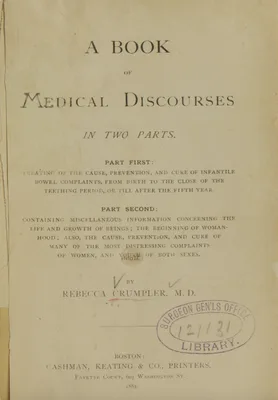
1883 CRUMPLER, Rebecca Lee (1831 – 1895)
A book of medical discourse in two parts. Part first: Creating of the cause, prevention, and cure of infantile bowel complains, from birth to the close of the teething period, or till after the fifth year. Part second: Containing miscellaneous information concerning the life and growth of beings; the beginning of womanhood; also, the cause, prevention, and cure of many of the most distressing compains of women and youth of both sexes.
Crumpler was the first Black woman to receive a medical degree in the United States. Digital facsimile from the Internet Archive.
GMN 14145 · https://historyofmedicine.com/id/16459
1885 DEJERINE-KLUMPKE, Augusta (1859 – 1927)
Contribution à l’étude des paralysies radiculaires du plexus brachial.
First description of atrophic paralysis of the muscles of the hand following lesion of the brachial plexus and eighth cervical and first dorsal nerves (“Klumpke’s paralysis”).
GMN 4748 · https://historyofmedicine.com/id/1347
1885 PLUNKETT, H. M. (1826 – )
Women, plumbers, and doctors: or, household sanitation
Dedicated "To Dr. Henry I. Bowditch, whose early, persistent, and enthusiastic labors make him the apostle of sanitation in America." Digital facsimile from the Hathi Trust at this link.
GMN 9159 · https://historyofmedicine.com/id/11338
1885 SINCLAIR, Isabella (1842 – 1900)
Indigenous flowers of the Hawaiian Islands: Forty-four plates painted in water-colours and described by Mrs. Francis Sinclair, Jr.
The first color-illustrated book on Hawaiian flora. "The following collection of flowers was made upon the islands of Kauai and Niihau, the most northern of the Hawaiian archipelago. It is not by any means a large col…
GMN 10575 · https://historyofmedicine.com/id/12768
1887 SEAMAN, Elizabeth Cochran [Nelly Bly] (1864 – 1922)
Ten days in a mad-house.
By newspaper reporter Nellie Bly, this book was initially published as a series of articles for the New York World newspaper. The book collected Bly's reportage while on an undercover assignment in which she feigned i…
GMN 9121 · https://historyofmedicine.com/id/11300
1888 LIVERMORE, Mary Ashton Rice (1820 – 1905)
My story of the war: The Civil War memories of the famous nurse, relief organizer and suffragette.
GMN 8996 · https://historyofmedicine.com/id/11175
1889 DEJERINE-KLUMPKE, Augusta (1859 – 1927)
Des polynévrites en général et des paralysies et atrophies saturnines en particulier.
Madame Dejerine-Klumpke, famous neurologist, contributed an important work on lead palsies.
GMN 2100 · https://historyofmedicine.com/id/2596
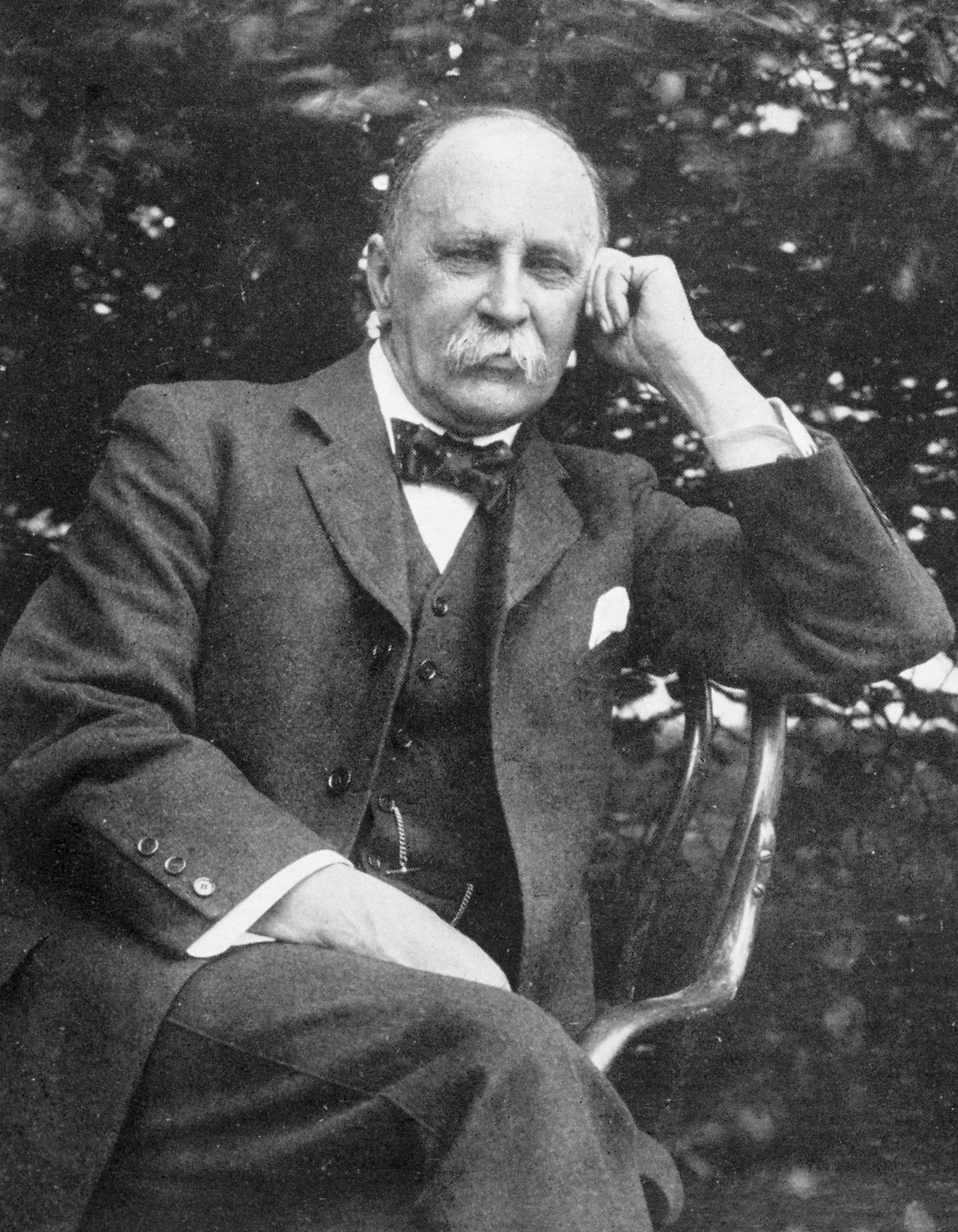
1891 OSLER, Sir William (1849 – 1919); JACOBI, Mary Corinna Putnam (1842 – 1906); ET AL
The opening of the Johns Hopkins Medical School to women. Reprinted from Open Letters in the Century Magazine for February 1891.
A collection of articles by various experts supporting the opening of the planned Johns Hopkins Medical School to women. Contributors included Cardinal Gibbons, Mary Putnam Jacobi, Josephine Lowell, C. F. Folsom, Care…
GMN 11911 · https://historyofmedicine.com/id/14116
1892 GILMAN, Charlotte Perkins (1860 – 1935)
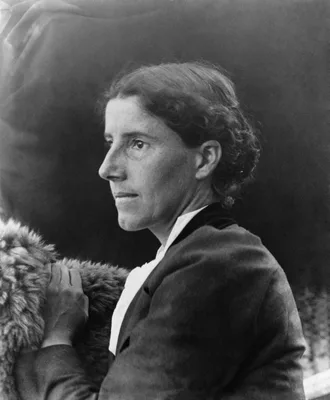
The yellow wall-paper.
This 6,000-word short story by is regarded as an important early work of American feminist literature, illustrating and critiquing 19th century attitudes toward women's health, both physical and mental. Digital facsim…
GMN 9725 · https://historyofmedicine.com/id/11912
1893 LADD-FRANKLIN, Christine (1847 – 1930)
Eine neue Theorie der Licht-Empfindung.
Ladd-Franklin theory of vision.
GMN 1522 · https://historyofmedicine.com/id/2847
1893 ROBB, Isabel Adams Hampton (1859 – 1910)
Nursing: Its principles and practice for hospital and private use.
Isabel Hampton Robb was the first Superintendent of Nurses at the Johns Hopkins School of Nursing. Her textbook standardized the education of nursing in the U.S. and abroad. It included an outline for a 3-year long nu…
GMN 14364 · https://historyofmedicine.com/id/16696
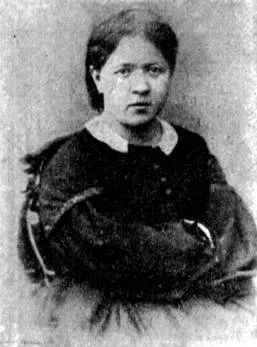
1894 MANASEINA, Maria Mikhailovna (Marie de Manacéine) (1841 – 1903)
Quelques observations expérimentales sur l'influence de l'insomnie absolue.
The first experimental study of sleep deprivation. Manaseina "performed her experimental investigation on 10 puppies (2, 3, or 4 months old), fed by their mothers, by keeping the animals in constant activity. The expe…
GMN 12456 · https://historyofmedicine.com/id/14688
1895 –1901 DEJERINE, Joseph Jules (1849 – 1917); DEJERINE-KLUMPKE, Augusta (1859 – 1927)
Anatomie des centres nerveux. 2 vols.
Classic summary of neuroanatomy at the end of the nineteenth century—comprehensive, beautifully illustrated, and scholarly. It is a goldmine of historical information with an outstanding bibliography.
GMN 1424 · https://historyofmedicine.com/id/2158
1895 BLACKWELL, Elizabeth (1821 – 1910)
Pioneer work in opening the medical profession to women; autobiographical sketches.
Blackwell led the movement in America to open the medical profession to women.
GMN 6649.92 · https://historyofmedicine.com/id/7781
1895 HOLLAND, Mary A. Gardner
Our army nurses. Interesting sketches, addresses, and photographs of nearly one hundred of the noble women who served in hospitals and on battlefields during our civil war.
Digital facsimile from the Internet Archive at this link.
GMN 9001 · https://historyofmedicine.com/id/11180
1896 MANASEINA, Maria Mikhailovna (Marie de Manacéine) (1841 – 1903)
Le sommeil, tiers de notre vie. Pathologie, physiologie, hygiène, psychologie. Traduit de Russe avec l'autorisation de l'auteur par Ernest Jaubert.
Perhaps the first book on the physiology of sleep. The author examines the physiology, pathology, hygiene, and psychology of sleep, including the differences between the waking and sleeping states, the general phenome…
GMN 12454 · https://historyofmedicine.com/id/14686
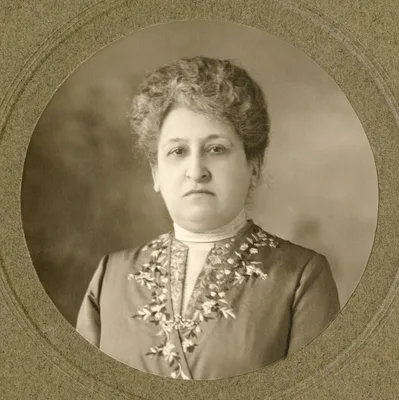
1897 JACOBS, Aletta Henriëtte (1854 – 1929)
De Vrouw: Haar bouw en haar inwendige organen. Een populaire schets.
Jacobs was the first woman in the Netherlands to graduate from medical school. In 1882 she founded the first birth control clinic in the Netherlands and "the first clinic in the world devoted solely to dissemtinating …
GMN 14308 · https://historyofmedicine.com/id/16633
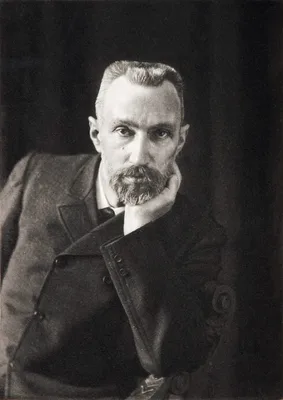
1898 CURIE, Pierre (1859 – 1906); CURIE, Marie Sklodowska (1867 – 1934)
Sur une substance nouvelle radio-active, contenue dans la pechblende.
The Curies, studying the radioactivity of minerals containing uranium and thorium, isolated from pitchblend a substance which they called radium and which they showed to possess an astonishing degree of radioactivity.…
GMN 2003 · https://historyofmedicine.com/id/1914