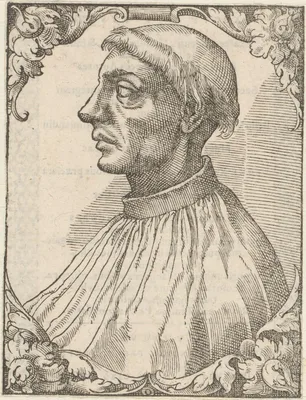
1505 SAVONAROLA, Giovanni Michele (1385 – 1468)
De gotta la preservation e cura.
The earliest separately printed treatise on gout by the physician/humanist grandfather of the Dominican friar Girolamo Savonarola. Giovanni Savonarola emphasized the dietary causes of gout, and the dangers of eating r…
GMN 11107 · https://historyofmedicine.com/id/13303
1534 BURGAUER, Dominicus (1500 – )
Ob das Podagra möglich zu generen oder nit. Nutzlich zu wissen allen denen, die damit behafft.
Abridged English translation by W. S. C. Copeman and M. Winder in Med. Hist., 1969, 13, 288-93, who write: "This small treatise contains a surprising amount of sound advice regarding the prevention and cure of the dis…
GMN 4484.1 · https://historyofmedicine.com/id/8876
1567 PEPAGOMENOS, Demetrios (Demetrius Pepagomenus) (1200 – 1300); MUSURUS, Marcus (Μάρκος Μουσοῦρος) ) (1470 – 1517)
De podagra libellus incerti auctoris e graeco in latinum conversus. [Edited and translated by Marcus Musurus]. IN: Medicae artis principes post Hippocratum et Galenum. Graeci Latinitate donati. 2 vols.
This Byzantine treatise on gout underwent several editions between the 16th and 18th centuries. The translator Musurus worked with Aldus Manutius in the preparation of several editiones principes. The translation, for…
GMN 12711 · https://historyofmedicine.com/id/14957
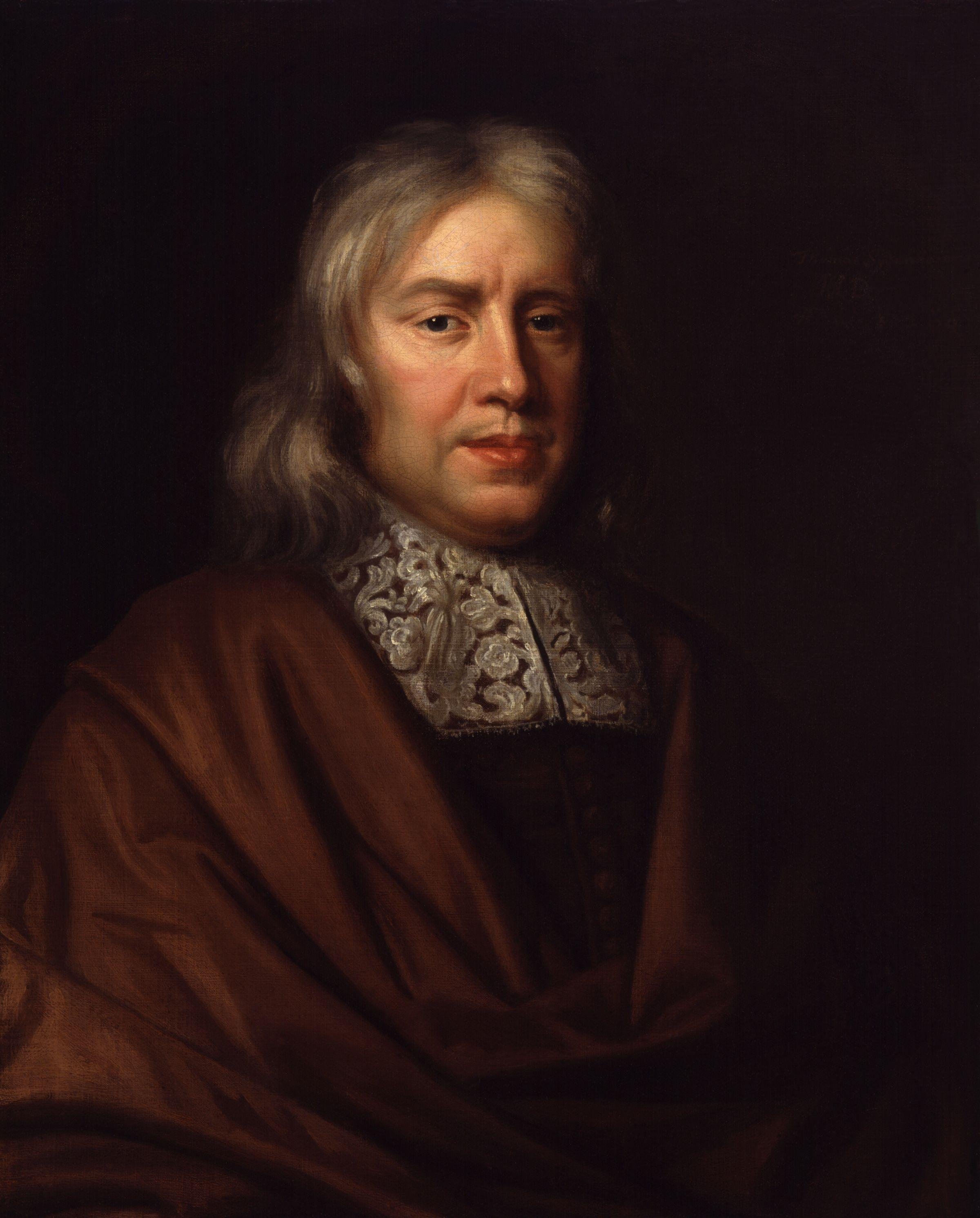
1683 SYDENHAM, Thomas (1624 – 1689)
Tractatus de podagra et hydrope.
Of the many great works of Sydenham, this is considered his masterpiece. He clearly differentiated gout from rheumatism. For an English translation, see his Works, published by the Sydenham Society, 1850, 2, 123-84.
GMN 4486 · https://historyofmedicine.com/id/89
1720 CHEYNE, George (1671 – 1743)
Observations concerning the nature and due method of treating the gout.
GMN 4487 · https://historyofmedicine.com/id/345
1764 SWIETEN, Gerard L. B. van (1700 – 1772)
Podagra. In his Commentaria in Hermanni Boerhaave aphorismos de cognoscendis et curandis morbis, 4, 287-393
GMN 4488 · https://historyofmedicine.com/id/8878
1771 CADOGAN, William (1711 – 1797)
A dissertation on the gout, and all chronic diseases, jointly considered, as proceeding from the same causes; what those causes are; and a rational and natural method of cure proposed.
This book excited great attention and ran through eight editions in one year. Cadogan’s advice on moderate exercise and moderation in drinking as a cure for gout caused much criticism.
GMN 4489 · https://historyofmedicine.com/id/90
1782 PERCIVAL, Thomas (1740 – 1804)
Observations on the medical uses of the oleum jecoris aselli, or cod liver oil, in the chronic rheumatism, and other painful disorders.
First record of the clinical use of cod liver oil in England.
GMN 1835 · https://historyofmedicine.com/id/2181
1791 BEER, Georg Joseph (1763 – 1821)
Praktische Beobachtungen über verschiedene, vorzüglich aber über jene Augenkrankheiten, welche aus allgemeinen Krankheiten des Körpers entspringen.
“This is the first monograph ever published dealing with ocular signs of systemic disease. It deals with lacrimal fistulas, trichiasis, adhesions of the lids, lid ulcers, ephiphora, and ocular inflammations. He illust…
GMN 5833.2 · https://historyofmedicine.com/id/7103
1797 WOLLASTON, William Hyde (1766 – 1828)
On gouty and urinary concretions.
Wollaston showed that, in addition to stones consisting of uric acid, renal calculi might also consist of calcium phosphate, magnesium, ammonium phosphate, and calcium oxalate, or a mixture of these.
GMN 4287 · https://historyofmedicine.com/id/5346
1798 PERKINS, Benjamin Douglas (1774 – 1810)
The influence of metallic tractors on the human body, in removing various painful inflammatory diseases, such as rheumatism, pleurisy, some gouty affections, &c. &c: Lately discovered by Dr. Perkins, of North America; and demonstrated in a series of experiments and observations....by which the importance of the discovery is fully ascertained, and a new field of enquiry opened in the modern science of Galvanism, or animal electricity
In 1795 Dr. Elisha Perkins (1741-1799) of Connecticut introduced the use of “Metallic Tractors” for the treatment of a wide range of disorders, including pains in the head, face, teeth, breast, side, stomach, back, rh…
GMN 8654 · https://historyofmedicine.com/id/10831
1800 LANDRÉ-BEAUVAIS, Augustin Jacob (1772 – 1840)
Doit-on admettre une nouvelle espèce de goutte sous la dénomination de goutte asthénique primitive? an VIII
Landré-Beauvais gave the first reasonably accurate description of rheumatoid arthritis.
GMN 4490 · https://historyofmedicine.com/id/8879
1802 HEBERDEN, William Sr. (1710 – 1801)
Commentarii de morborum historia et curatione.
Samuel Johnson called Heberden “the last of our learned physicians”. The above work included all his important papers, which had earned him his great reputation, and which are dealt with elsewhere in this database (se…
GMN 2207 · https://historyofmedicine.com/id/3677
1825 SARLANDIÈRE, Jean-Baptiste (1787 – 1838)
Mémoires sur l’électro-puncture, considerée comme moyen nouveau de traiter efficacement la goutte, les rheumatisme et les affections nerveuses…
The first treatise on electro-puncture – the only significant Western contribution to acupuncture, and one of the most widely used methods of acupuncture today.
GMN 6374.16 · https://historyofmedicine.com/id/8328
1839 –1841 RAYER, Pierre François Olive (1793 – 1867)
Traité des maladies des reins. 3 vols, and atlas.
Rayer insisted on the exhaustive analysis of the urine as an aid to the diagnosis of lesions. He classified “albuminus nephritis” into six distinct forms and distinguished these from other forms of nephritis associate…
GMN 4208 · https://historyofmedicine.com/id/6240
1844 SYDENHAM, Thomas (1624 – 1689); GREENHILL, William Alexander (1814 – 1894)
Thomae Sydenham, M. D., Opera omnia. Edidit Gulielmus Alexander Greenhill.
Sydenham has been called the “Father of English Medicine”. His reputation rests on his first-hand accounts of such conditions as the malarial fevers of his times, gout, scarlatina, measles, etc. A better edition of th…
GMN 63 · https://historyofmedicine.com/id/991
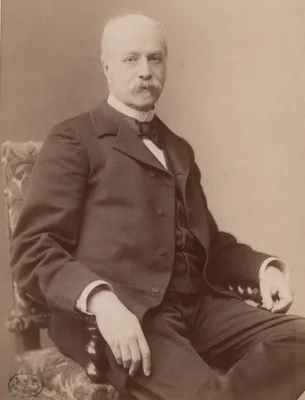
1848 GARROD, Sir Alfred Baring (1819 – 1907)
Observations on certain pathological conditions of the blood and urine in gout, rheumatism and Bright’s disease.
The “thread test” in gout was introduced by Garrod. Later he wrote more fully on gout and rheumatism (see No. 4497).
GMN 4495 · https://historyofmedicine.com/id/8881
1857 ADAMS, Robert (1791 – 1875)
A treatise on rheumatic gout, or chronic rheumatic arthritis, of all the joints.
An excellent description of chronic rheumatic arthritis. Adams also published Illustrations of the effects of rheumatic gout, London, 1857.
GMN 4496 · https://historyofmedicine.com/id/94
1859 GARROD, Sir Alfred Baring (1819 – 1907)
The nature and treatment of gout and rheumatic gout.
Garrod was the leading authority of his time on gout, which he separated from other forms of arthritis by his discovery of excess of uric acid in the blood of gouty sufferers. He gave to rheumatoid arthritis its prese…
GMN 4497 · https://historyofmedicine.com/id/95
1864 CHARCOT, Jean Martin (1825 – 1893); CORNIL, André Victor (1837 – 1908)
Contributions à l’étude des altérations anatomiques de la goutte.
Charcot and Cornil gave an important description of the renal lesions in gout.
GMN 4498 · https://historyofmedicine.com/id/8882
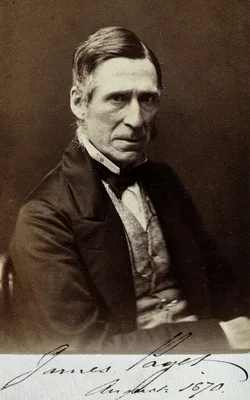
1866 PAGET, Sir James (1814 – 1899)
On gouty and some other forms of phlebitis
Paget-Schroetter syndrome, venous obstruction in the upper extremity.
GMN 2996 · https://historyofmedicine.com/id/5298
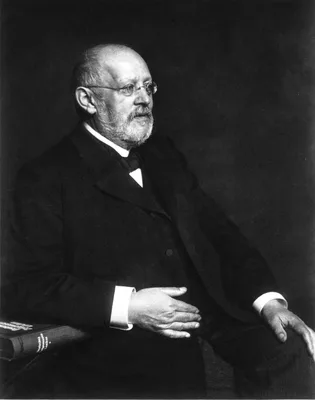
1885 EBSTEIN, Wilhelm (1836 – 1912)
Das Regimen bei der Gicht.
A pupil of Frerichs, Virchow, and Romberg, Ebstein became Professor of Medicine at Göttingen.
GMN 4502 · https://historyofmedicine.com/id/96
1908 NICOLAIER, Arthur (1862 – 1942); DOHRN, Max (1874 – 1943)
Ueber die Wirkung von Chinolincarbonsäuren und ihrer Derivate auf die Ausscheidung der Harnsäure.
Introduction of cinchophen in the treatment of gout.
GMN 4505.1 · https://historyofmedicine.com/id/350
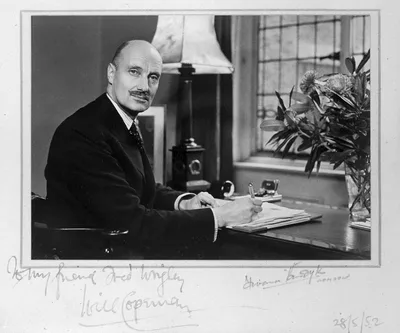
1964 COPEMAN, William Sydney Charles (1900 – 1970)
A short history of the gout and the rheumatic diseases.
GMN 4509.1 · https://historyofmedicine.com/id/101
1984 LECA, Ange-Pierre
Histoire illustrée de la rhumatologie.
GMN 13811 · https://historyofmedicine.com/id/16100