1528 SCRIBONIUS LARGUS (1 – 50)
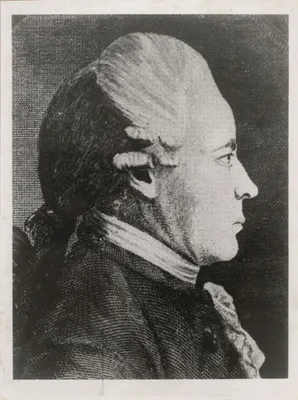
De compositionibus medicamentorum liber unus
Written in 47 CE, this is an important compilation of drugs and prescriptions. Among the 271 remedies are the first use of electrotherapy (for headaches) using the shock of the torpedo fish. and it records the drinkin…
GMN 1785 · https://historyofmedicine.com/id/8816
1744 KRATZENSTEIN, Christian Gottlieb (1723 – 1795)
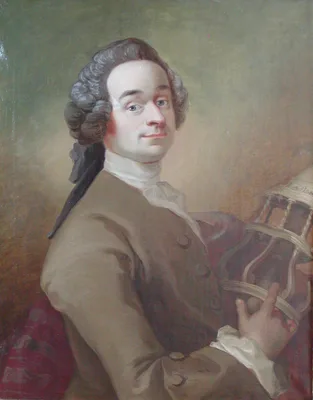
Abhandlung von dem Nutzen der Electricität in der Artzneywissenschaft.
A student of Johann Gottlob Krüger (No. 1987.2), Kratzenstein was apparently the first to publish a treatise on electrotherapy, although he may have been publishing experiments devised by Krüger. Second edition, Halle…
GMN 1987.1 · https://historyofmedicine.com/id/3802
1744 KRÜGER, Johann Gottlob (1715 – 1759)
Zuschrifft an seine Zuhörer worinnen er ihnen seine Gedancken von der Electricität mittheilet und ihnen zugleich seine künftige Lectionen bekant macht.
Along with Kratzenstein, is the one of the first two works to discuss the possible therapeutic uses of electricity. Krüger predicted that the best results would be with paralyzed limbs. See No. 1987.1. Second edition,…
GMN 1987.2 · https://historyofmedicine.com/id/3803
1748 JALLABERT, Jean (1712 – 1768)
Experiences sur l’électricité …
Discovery of stimulation of muscles by electricity, and the first proof that paralysis could be successfully treated by electricity.
GMN 1987.3 · https://historyofmedicine.com/id/3806
1754 SPENGLER, Lorenz (1720 – 1807)
Briefe welch einige Erfahrungen der electrischen Wirkungen in Krankheiten enthalten.
GMN 13065 · https://historyofmedicine.com/id/15317
1779 DEIMAN, Johan Rudolph (1734 – 1808)
Geneeskundige proeven en waarneemingen omtrent de goede uitwerking der electriciteit in verscheiden ziektens.
Digital facsimile of the Dutch edition from Google Books at this link. Translated into German by Karl Gottlob Kühn as Von den guten Würkungen der Electricität in verschiedenen Krankheiten. Mit eingien Anmerkungen und …
GMN 13066 · https://historyofmedicine.com/id/15318
1798 PERKINS, Benjamin Douglas (1774 – 1810)
The influence of metallic tractors on the human body, in removing various painful inflammatory diseases, such as rheumatism, pleurisy, some gouty affections, &c. &c: Lately discovered by Dr. Perkins, of North America; and demonstrated in a series of experiments and observations....by which the importance of the discovery is fully ascertained, and a new field of enquiry opened in the modern science of Galvanism, or animal electricity
In 1795 Dr. Elisha Perkins (1741-1799) of Connecticut introduced the use of “Metallic Tractors” for the treatment of a wide range of disorders, including pains in the head, face, teeth, breast, side, stomach, back, rh…
GMN 8654 · https://historyofmedicine.com/id/10831
1801 GRAPENGIESSER, Carl Johann Christian (1764 – 1846)
Versuche des Galvanismus zur Heilung einiger Krankheiten.
Grapengiesser was the first physician to use Volta’s “pile”, the first battery, which Volta first described in print in 1800. Grapengiesser “noted that in paralyzed muscle excitability could be so poor that 150 elemen…
GMN 1988.1 · https://historyofmedicine.com/id/3813
1803 CARPUE, Joseph Constantine (1764 – 1846)
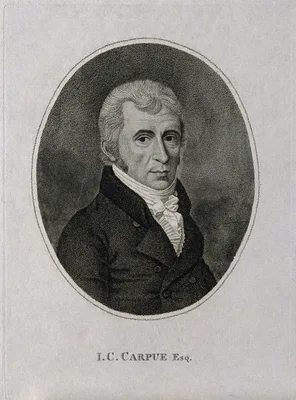
An introduction to electricity and galvanism.
One of the first works in the English language entirely devoted to medical electricity. Carpue also played a key role in the development of rhinoplasty. See No. 5737.
GMN 1989 · https://historyofmedicine.com/id/3815
1837 ADDISON, Thomas (1793 – 1860)
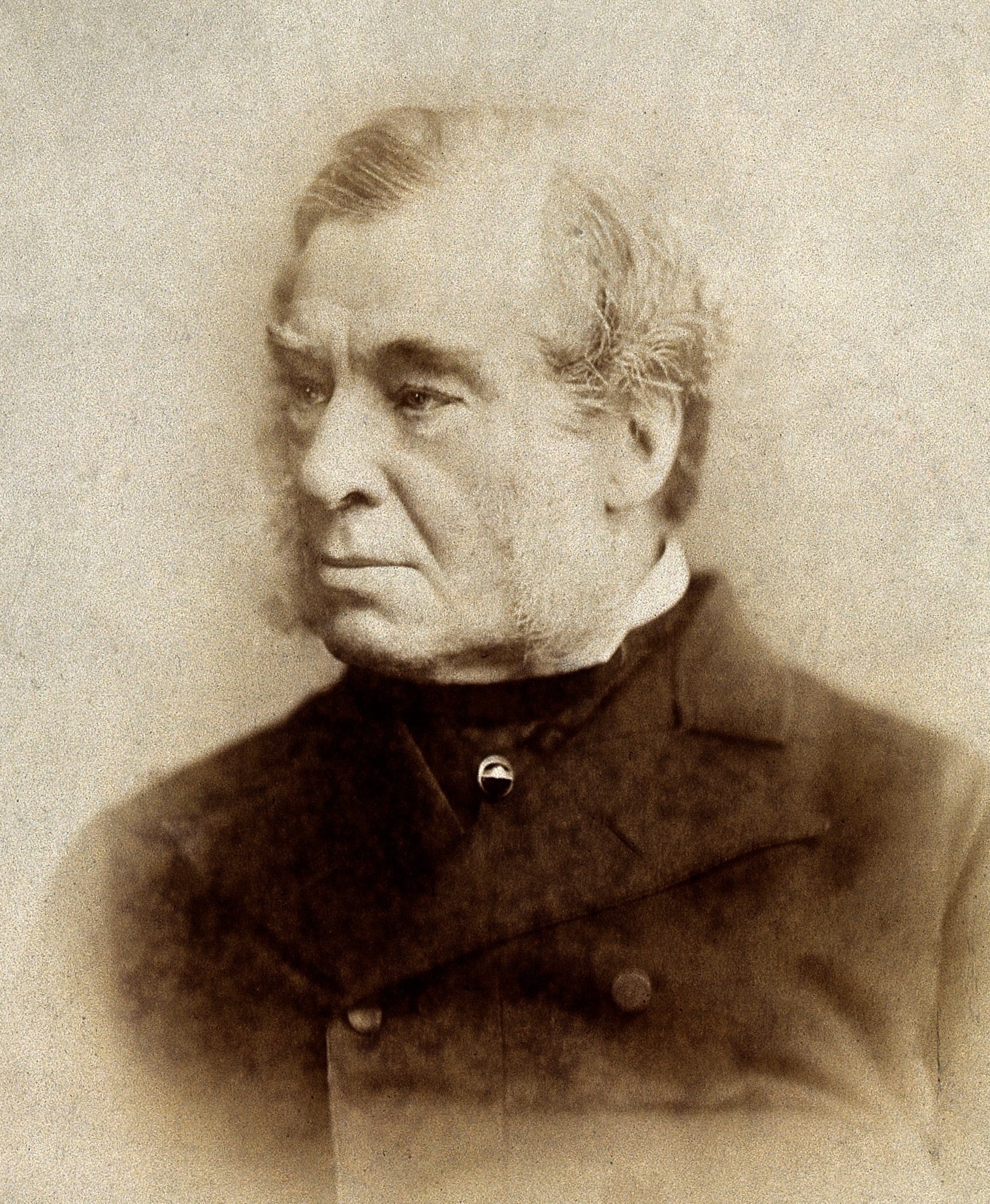
On the influence of electricity, as a remedy in certain convulsive and spasmodic diseases.
First therapeutic employment of static electricity.
GMN 4524 · https://historyofmedicine.com/id/385
1841 –1843 CRUSELL, Gustaf Samuel (1810 – 1858)
Ueber den Galvanismus als chemisches Heilmittel gegen örtliche Krankheiten.
Crusell began to use electrolysis as a cauterizing agent in 1839. See No. 5604.
GMN 1994 · https://historyofmedicine.com/id/1838
1855 DUCHENNE DE BOULOGNE, Guillaume Benjamin Armand (1806 – 1875)
De l’électrisation localisée et de son application à la physiologie, à la pathologie, et à la thérapeutique.
Duchenne classified the electrophysiology of the entire muscular system and summed up his findings in the above work. The application of his results to pathological conditions marks him as the founder of electrotherap…
GMN 1995 · https://historyofmedicine.com/id/1848
1857 ZIEMSSEN, Hugo Wilhelm von (1829 – 1902)
Die Electricität in der Medicin.
Ziemssen confirmed Remak’s discovery of the motor points, established their exact location, and published exact instructions for finding the motor points for stimulating the various muscles of the body.
GMN 1996 · https://historyofmedicine.com/id/1855
1858 REMAK, Robert (1815 – 1865)
Galvanotherapie der Nerven- und Muskelkrankheiten.
Remak was a pioneer of galvanotherapy. Having treated some 700 patients with galvanic current, he believed that it was superior to faradic current for electrotherapy.
GMN 1996.1 · https://historyofmedicine.com/id/395
1867 ALTHAUS, Julius (1833 – 1900)
On the electrolytic treatment of tumors, and other surgical diseases.
Althaus introduced Duchenne’s methods into England. He was the first to employ electrolysis for medical purposes. Greatly expanded third edition, 1873.
GMN 1996.3 · https://historyofmedicine.com/id/1861
1867 VOLTOLINI, Friedrich Eduard Rudolph (1819 – 1889)
Die Anwendung der Galvanokaustik im Innern des Kehlkopfes und Schlundkopfes.
Voltolini was the first to use the galvanocautery in laryngeal surgery.
GMN 3275 · https://historyofmedicine.com/id/3985
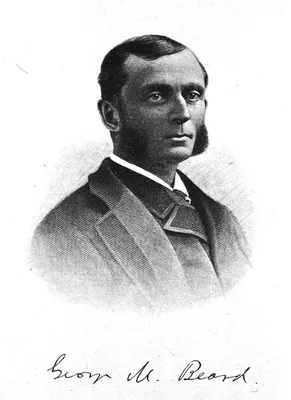
1871 BEARD, George Miller (1838 – 1883); ROCKWELL, Alphonse David (1840 – 1933)
A practical treatise on the medical and surgical uses of electricity, including localized and general electrization.
Beard and Rockwell were the leading American electrotherapists of the 19th century. This is the most influential American treatise ever published on electrotherapy. It is of especial value today for its comprehensive …
GMN 1996.4 · https://historyofmedicine.com/id/1866
1884 APOSTOLI, Georges (1847 – 1900)
Sur la faradisation utérine double ou bipolaire.
Apostoli was the first to employ the double faradic current in the electrotherapy of uterine diseases.
GMN 6079 · https://historyofmedicine.com/id/7477
1892 D'ARSONVAL, Jacques Arsène (1851 – 1940)
Recherches d’électrothérapie: la voltaisation sinusoïdale.
Introduction of high-frequency currents in electrotherapy.
GMN 1999 · https://historyofmedicine.com/id/1878
1909 NAGELSCHMIDT, Karl Franz (1875 – 1952)
Ueber Diathermie. (Transthermie, Thermopenetration.)
Nagelschmidt employed high frequency currents in treatment after the suggestions of Tesla and the work of Nernst, claiming priority over the latter in the use of this method. Nagelschmidt named this form of treatment …
GMN 2007 · https://historyofmedicine.com/id/1931
1922 COLWELL, Hector Alfred (1875 – 1946)
An essay on the history of electrotherapy and diagnosis.
GMN 2047 · https://historyofmedicine.com/id/2257
1930 SCHLIEPHAKE, Erwin Friedrich Karl Georg Heinrich Victor (1894 – 1995)
Therapeutische Versuche im elektrischen Kurzwellenfeld.
Introduction of short-wave diathermy.
GMN 2009 · https://historyofmedicine.com/id/1936
1930 LARSSON, Sven
Operative Behandlung von Netzhautabhebung mit Elektroendothermie und Trepanation; vorläufige Mitteilung.
Superficial diathermy treatment of retinal detachment. See also Arch Ophthal. (N.Y.), 1932, 7, 661-80.
GMN 5977 · https://historyofmedicine.com/id/7043
1938 CERLETTI, Ugo (1877 – 1963); BINI, Lucio (1908 – 1964)
Un nuovo metodo di shockterapia: “L’elettroshock”. (Riassunto.)
Introduction of electric convulsion therapy.
GMN 4962 · https://historyofmedicine.com/id/6322